Chinese tech giant ByteDance released its new AI video model Seedance 2.0 last week. Videos generated with Seedance 2.0 hit social media by storm, as they showcased impressive levels of realism (although not entirely without artifacts) that haven’t been achieved by AI models before. And the internet immediately did what the internet does best: it used possibly the most advanced AI video model we’ve ever had to create memes.
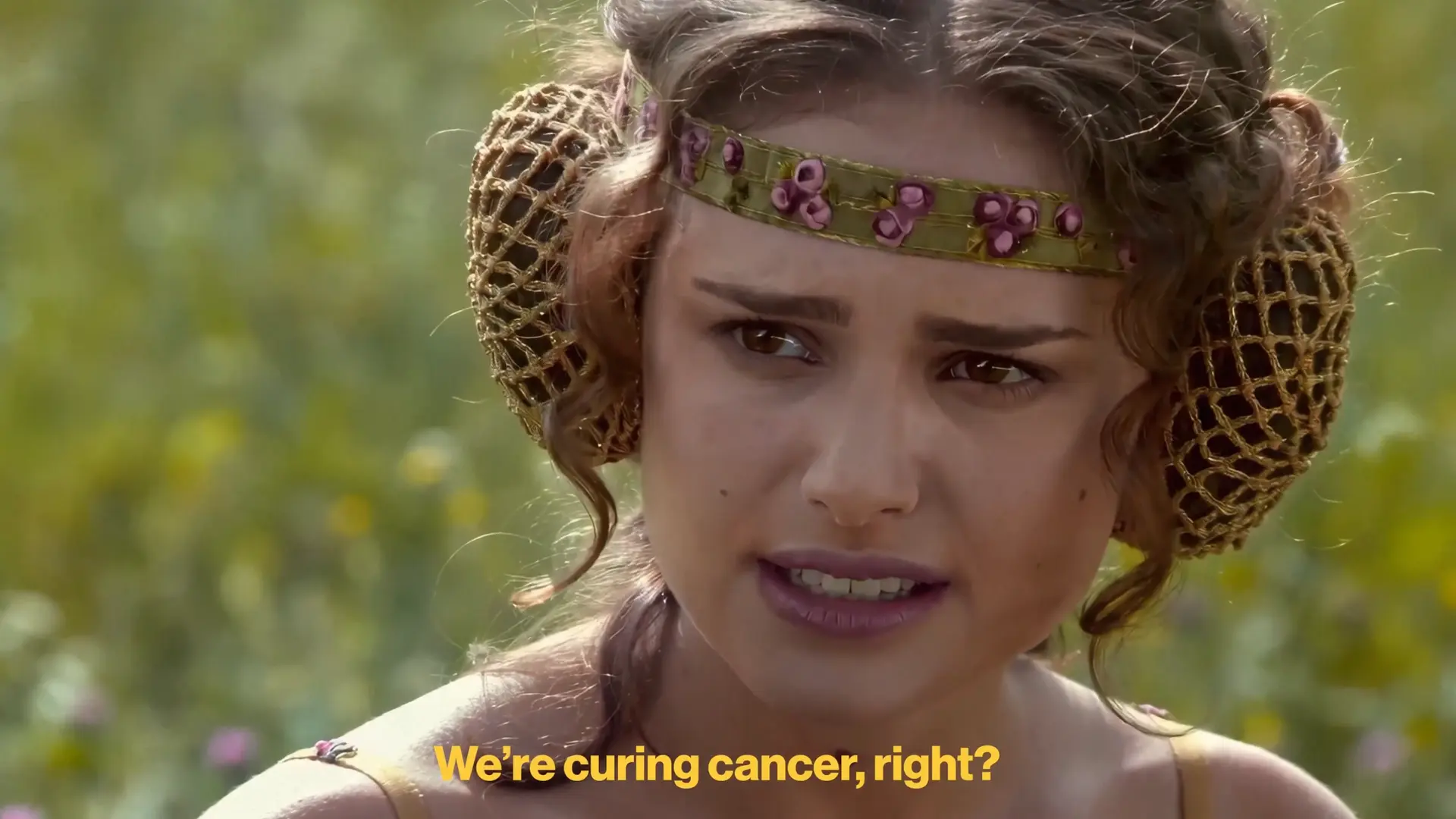
Among the flood of AI-generated clips, one particular video went viral. It’s a recreation of a classic pre-AI meme, a scene from Star Wars: Episode II – Attack of the Clones featuring Anakin Skywalker and Padmé. It follows the familiar format, where Anakin says, “We need to build more data-centers, AI needs it.” To which Padmé naively asks, “To cure cancer, right?” The video then cuts to Anakin’s well-known sinister smile, followed by the last frame (and the punchline of the joke) where Padmé’s breasts are artificially enlarged with Seedance 2.0. The video works as meta commentary, as it shows, both literally and symbolically, what AI videos are actually being used for.
The reception to the video has been split. Some praised the technical abilities of Seedance 2.0 that allowed it to recreate the famous clip without any visible artifacts. Others were calling out the perverted tendencies of AI creators who immediately reached for the most predictable use case.
Among those who weren’t thrilled about the meme was also Disney, the company that holds the intellectual properties to the original Star Wars movie. Disney sent a cease-and-desist letter to ByteDance on Friday, accusing the Chinese company of using pirated material, including footage from Star Wars, Marvel, and various cartoons, to train Seedance 2.0.
ByteDance was quick to respond to Disney’s accusations. The Chinese giant promised to adjust Seedance 2.0 and implement safeguards to prevent the unauthorized use of intellectual property by users.
On Monday, ByteDance told the BBC that it "respects intellectual property rights and we have heard the concerns regarding Seedance 2.0."
Disney hasn’t launched a legal action against ByteDance yet, and likely won’t, if the Chinese company follows through with its promise to limit Seedance 2.0.
This doesn’t mean users who want to create AI videos featuring Disney characters have no way of doing so. Disney recently signed a massive $1 billion licensing deal with OpenAI, which allows users to generate videos based on more than 200 Disney, Marvel, Pixar, and Star Wars movies using Sora AI video models.
Disney’s case isn’t isolated. The Motion Picture Association, which represents other major US studios like Warner Bros Discovery, Paramount, and Netflix, has also demanded that ByteDance "immediately cease[s] its infringing activity".
What about smaller creators?
You don’t have to be a financial expert to understand that major corporations are either fine with their content being used in AI training (as long as they’re shielded with licensing deals) or quick to enforce copyright laws when their profit is at stake.
In contrast, smaller creators, artists, or media outlets that lack the financial or institutional power to fight copyright battles are getting the short end of the stick. Companies often use their content to train AI models without providing any value in return to the original creators.
The biggest example of this is Google’s AI Overviews feature. This new, AI-powered way to search the web serves instant summaries as answers to queries, eliminating the need for users to visit actual websites. While AI Overviews do link to sources, these links occupy just a small portion of the screen. The majority of users don’t bother visiting the listed sources, which has had a devastating impact on independent websites across the web.
This has provoked numerous lawsuits alleging unauthorized use of artworks, photos, books, or music in AI training data. However, only a handful of independent creators manage to come out on top. One such case is when authors scored a landmark $1.5 billion settlement from Anthropic in 2025 over pirated books used for training Claude. This sounds massive on paper, but when spread across hundreds of thousands of works, the settlement paid just around $3,000 per work on average.
Anthropic’s settlement followed a massive legal fight that dragged on for months. This is also the case for other lawsuits pitting individual creators against corporations, such as the Andersen vs Stability AI case, which started in 2024 and is still ongoing. Most individual creators can’t afford these lengthy processes, so they often take no action.
Even when a Big Tech player loses a legal battle against a smaller creator and is forced to compensate for the damages, the amounts paid rarely hurt them in any meaningful way. As a reminder, tech giants paid almost $8 billion in fines just in 2025, and it had the same effect on them as paying a parking ticket would have on a regular person. With these dynamics in place, breaking the law is a profitable strategic decision, and paying for it is just the cost of doing business.