Ask any Assassin’s Creed fan what they consider to be the best game in the series, and there is a good chance of the answer being Black Flag. After six games of exploring cities and assassinating historical figures, Ubisoft managed to grab lightning in a bottle in 2013, delivering a game that offered an astoundingly good open sea and a pirating experience that is still yet to be recreated in modern titles.
13 years later, recreating it is exactly what Ubisoft has attempted with Assassin"s Creed Black Flag Resynced, a complete remake of the game for modern systems. It’s a new engine, a new development team, and there is even a sprinkling of new features. Led by Ubisoft Singapore, the massive project has received support from almost every studio under Ubisoft worldwide.
With pre-release access from Ubisoft, I have spent over 20 hours in the remake. This was played across PC and Xbox Series X, which also gave me the chance to check out the performance and visual differences of the two versions. In this review, I will try to judge the remake as a standalone game for the most part instead of assuming you have played the original. Read on to see what I thought of Assassin’s Creed Black Flag Resynced.
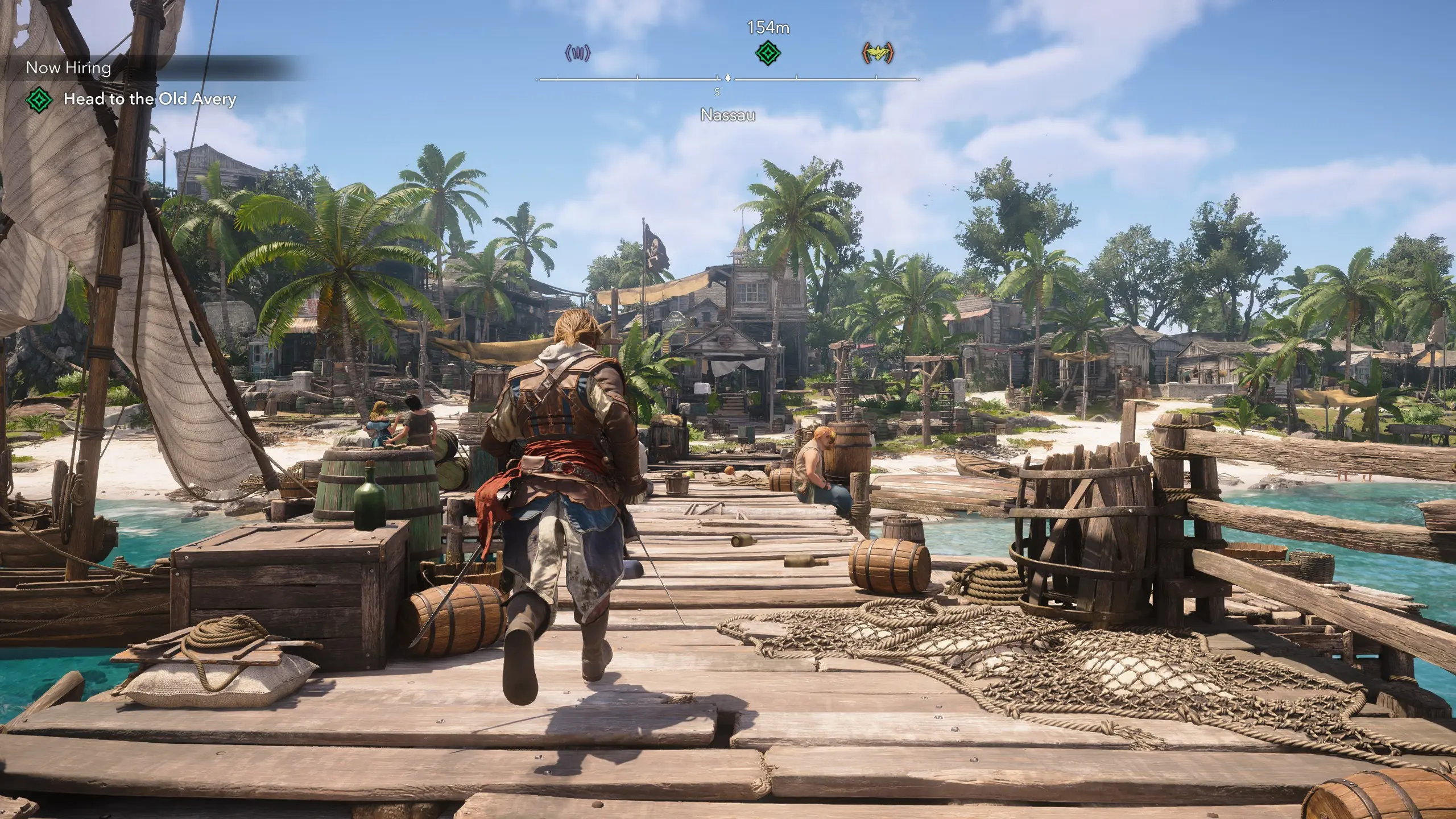
A Pirate’s Life
Like most games in the series, our protagonist, Edward Kenway, does not start off as an assassin. In fact, he sticks to his pirate roots for a large portion of the game, letting players indulge in the buccaneering fantasy without taking on the heavy duties of being a part of the Brotherhood of Assassins. It’s clear that he is out for his own gains, and helping the “good guys” just happens to coincide with his own goals of wanting to be absurdly rich and a free man.
The storyline doesn’t deliver anything unexpected, but getting to meet and work with infamous pirates, like Blackbeard or Anne Bonny, as they attempt to build a utopia for like-minded people is entertaining to be a part of. The age-old battle between Assassins and Templars happens in between all this, wrapping the historical title in a sci-fi conspiracy wrapper that’s fun to see unfold throughout the campaign.
It"s outside of the main campaign where the freedom of Black Flag really shines. Sure, there are side missions to gather new crewmates, catch up on friends, and make your own island paradise. All these almost always culminate in a big battle or a showdown. But just jumping on our ship, the Jackdaw, sailing to a random patch of sand, and finding its treasures and secrets is an activity I could complete a hundred times and not get bored.
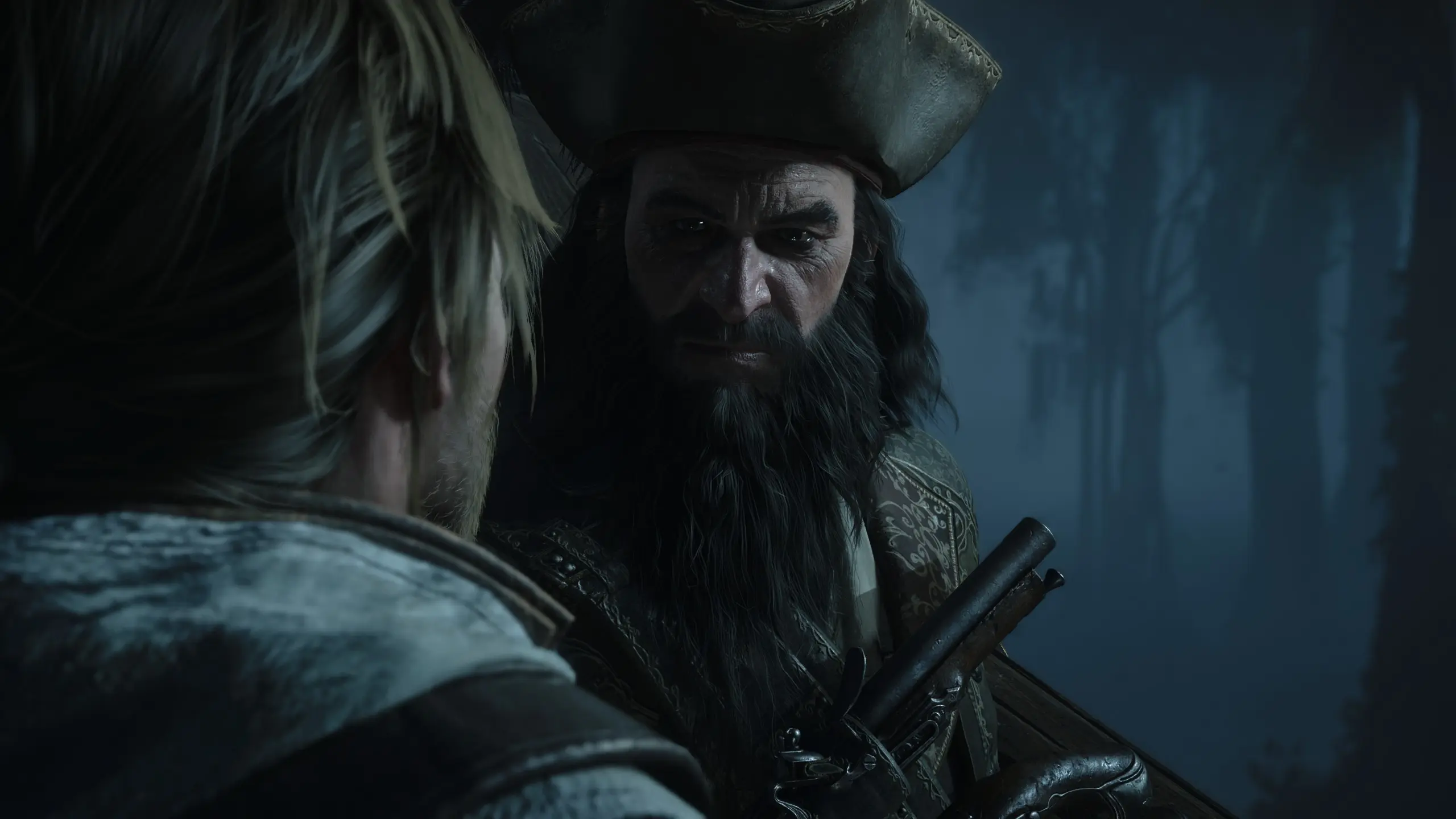
Speaking of quests, fans of the classic game shouldn’t be worried about those dreaded tailing missions or modern-day scenarios that were excruciatingly slow. Other than some what-if scenarios that are shown off in a corrupted world, there is almost no mention of the real-world happenings anymore. Stealth missions also don’t fail if Kenway gets caught being a terrible assassin anymore, as there are more options to get information or find the target instead of restarting missions and breaking immersion.
Gameplay
Black Flag feels like two games in one package. On land, we get to play a pirate turned assassin that can climb from any stronghold and take down entire islands" worth of enemies in a single night. Heading off the islands, it transforms into a naval action game with the freedom to explore the seas and loot its treasures with almost no restrictions. Despite both portions not being very deep experiences on their own, the combined arcade action is a winning formula.
There aren’t any RPG elements here. Assassinations are instant. If you’re able to sneak up (or down) on a target, it’s a one-hit kill without any fuss about armor or levels. The Jackdaw and Kenway have upgrades that can be unlocked for better armaments and style points, but enemies don’t magically get better just because you invested money into new types of mortars.
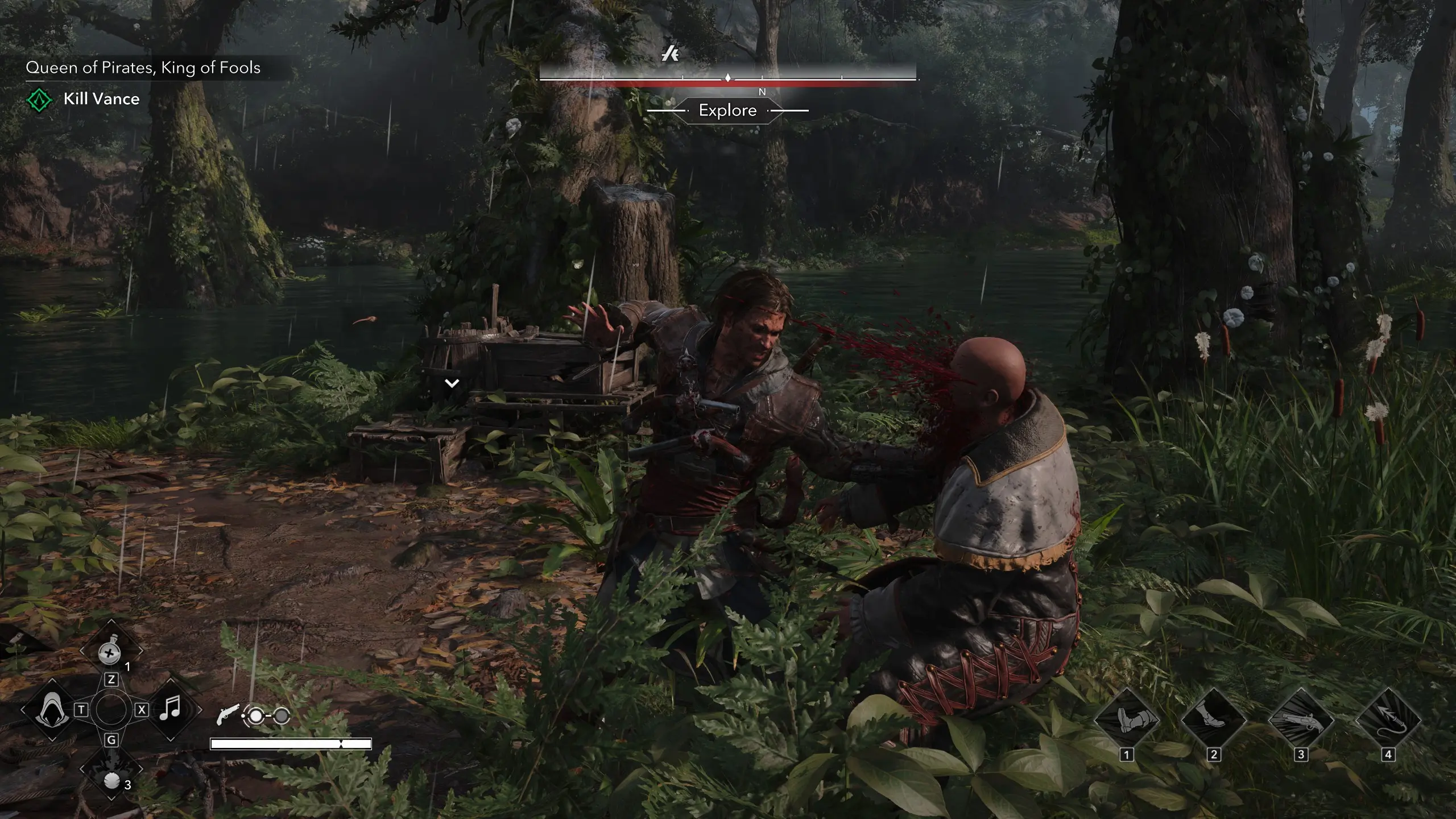
This wouldn’t be an Assassin’s Creed game without parkour. Climbing the sides of massive forts, jumping across streets from rooftops, scrambling through busy markets trying to catch targets, or doing the iconic leap of faith, there is no shortage of moments of feeling like a pirate daredevil. There is even a toggle to enable Advanced Parkour in the menu to remove all the safety options. I did end up leaping off wrong walls or plummeting to my death more with this enabled, but that feeling of extra control should be appreciated by fans of the franchise.
Outside of using the hidden blade for instant kills and finishers, Kenway’s melee combat style differs slightly depending on the type of double blades he is wielding. These can range from heavy attacks that hit multiple foes to firing even more hidden guns (other than the four he can carry on his vest) from the swords themselves. Dodges, a powerful parry, two types of kicks, a rope dart, blowpipe darts, and the multitude of flintlock pistols make Kenway a powerful fighter that needs a literal army to take down. However, this is where I found myself hitting one major pain point.
While the stealth gameplay and assassinations are fast and satisfying to pull off, especially with good planning, that satisfaction goes away the moment that combat breaks out. Killing an enemy involves hitting them until their poise bar depletes to initiate a finisher. If the health bar goes down first, they get taken out that way instead, which also involves spamming attacks. Of course, when an enemy attacks, Kenway can parry to open them up for a finisher. The problem here is that there are only a handful of these animations. So just a few hours in, I was already getting tired of the sudden camera shifts and the same old slow-motion finisher animations triggering.
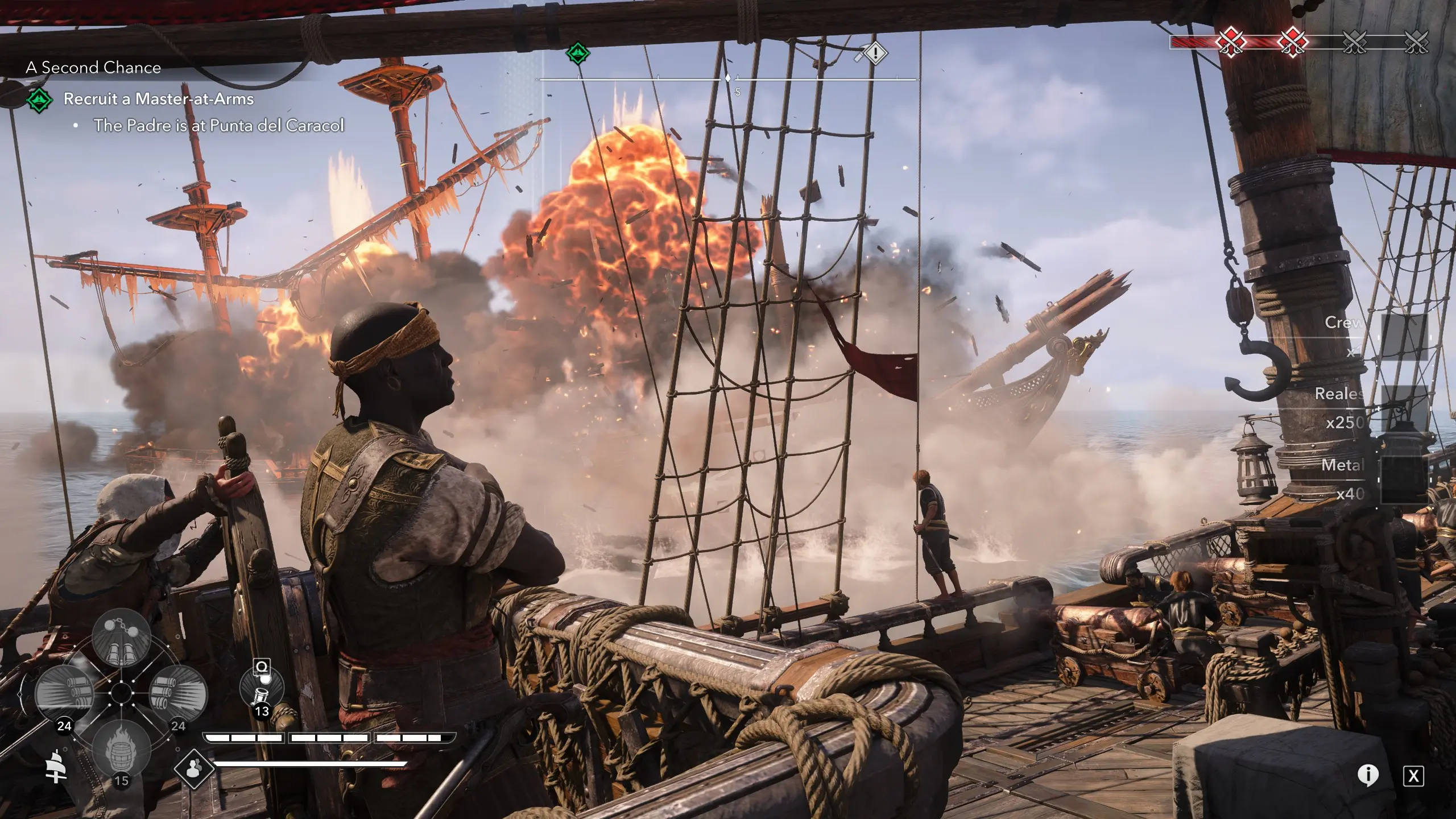
The High Seas
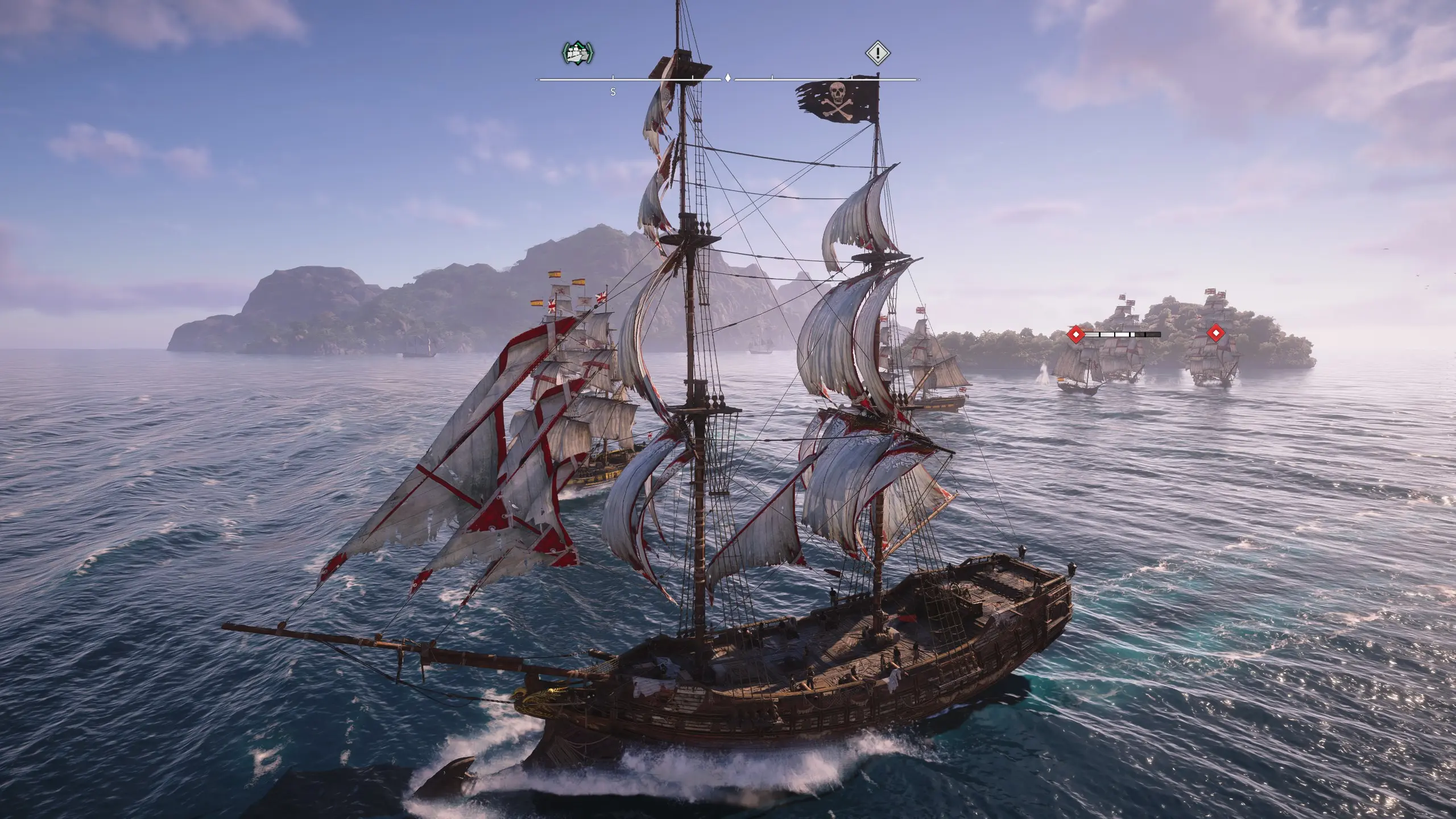
The Jackdaw may be a small ship, but just like its captain, it’s capable of taking down even the biggest foes in the sea. This mighty ship’s arsenal includes fast-reloading cannons on the side, long-range mortars for peppering enemy vessels, chain shots up front for disabling ship sails, mounted swivel cannons to take out weak points, and explosive barrels that can be thrown off the back as quick and dirty mines.
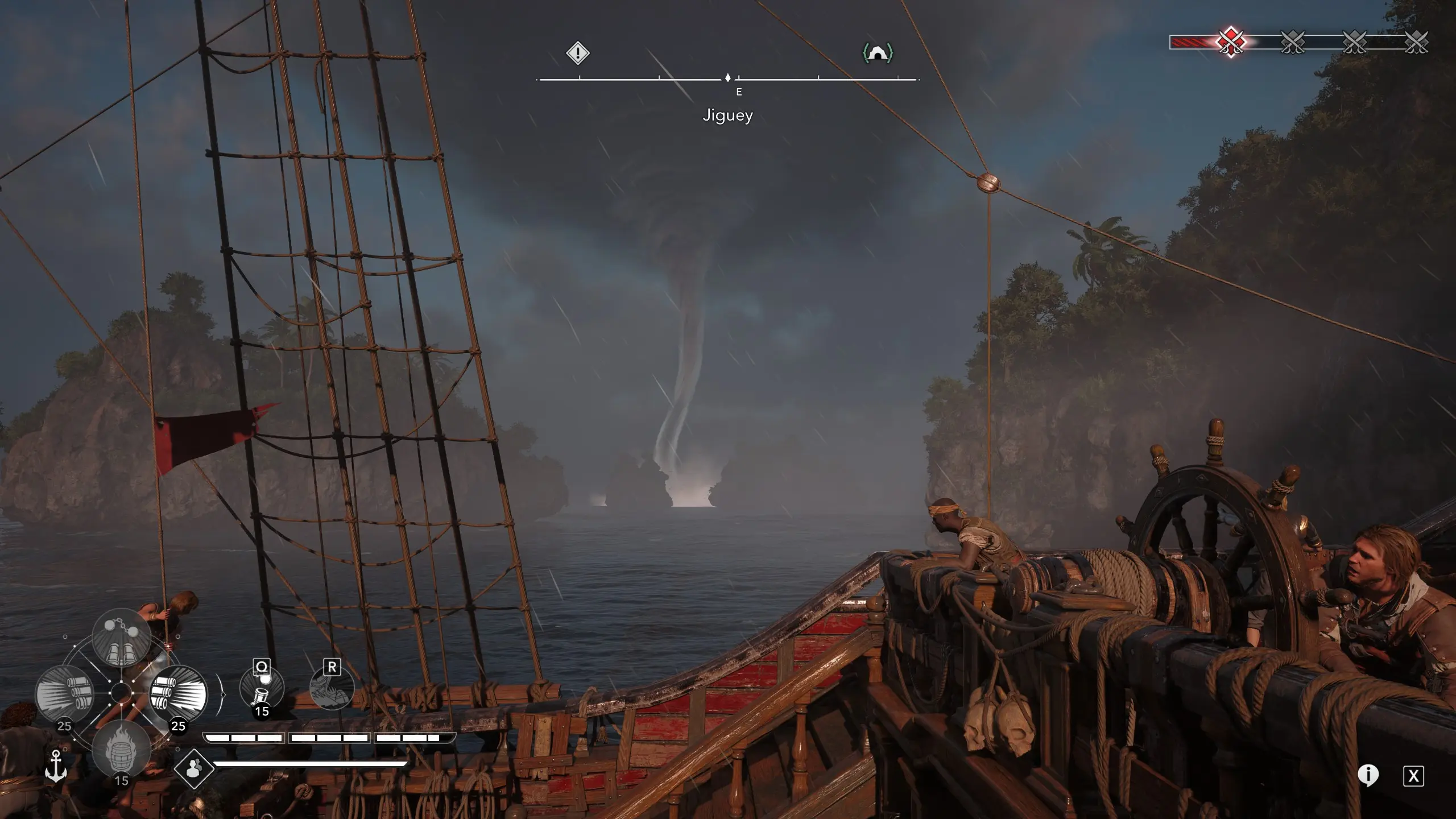
Even with all this firepower (with more available via unlocks), outmaneuvering ships with clever wind management, especially when there are multiple opponents, is the surest way to victory. The weather effects can play a part in these battles as well. A battle taking place in a storm can get hit by rogue waves that completely change attack plans. I"ve accidentally sailed straight into waterspouts a few times already while being distracted in battle, quickly ending Kenway"s journey before needing to save and reload.
Combined with all these aspects, ship combat is my favorite part of the game. I even devised my own strategies for taking down legendary foes in the early parts of the campaign, just to see how I would fare.
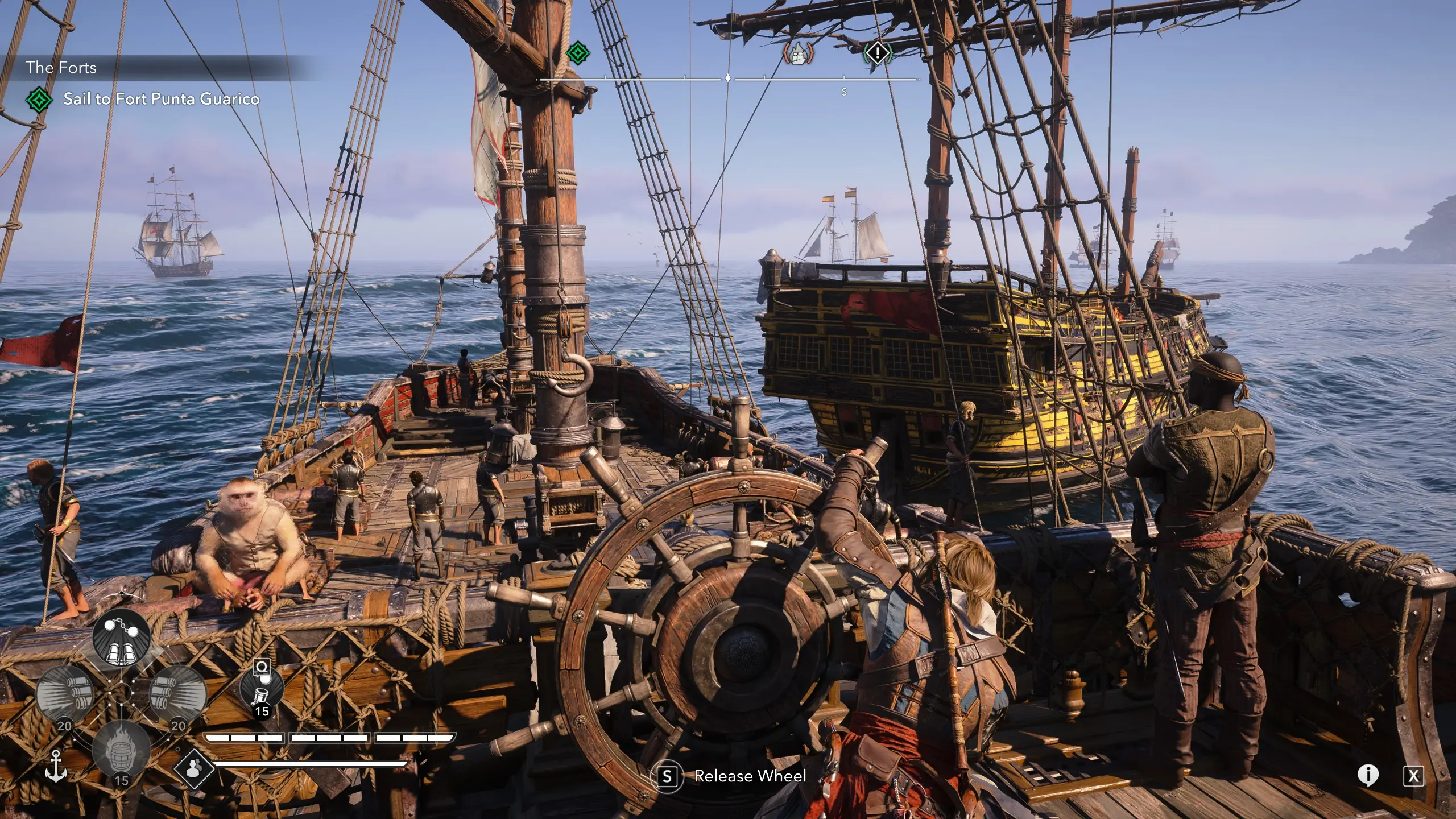
Once a ship’s health goes down enough, Kenway and his crew can board the disabled vessel to make sure most loot is harvested. Pulling up next to a vessel on its last legs just to cut down its crew sounds quite distressing, but somehow it’s a delightful adventure every time. It’s a special feeling to hear Kenway shout orders to board the ship just as the crew roars and the iconic soundtrack kicks in.
It’s not just my crew fighting out here either. Massive Spanish and English convoys frequently battle it out in the open seas. These epic battles are visible even from land at times, with the boom of their dozens of cannons echoing over the waters as I’m sneaking around in some jungle, hunting for leopards. Fire a shot into the crowd though, and both sides will abandon their personal issues to hunt the brave pirate ship that decided to disturb their traditions.
The campaign missions have Kenway traveling to islands all across the massive map, but there’s no time limit or restrictions on when these should be completed. I could create my own balance of how much time I spent on land on my assassin missions and at sea exploring random islands. I could relax and let the crew sing my favorite sea shanties while heading towards the sunset with no worry in the world. There is also something fulfilling about pulling up to a deserted island, diving off the side of the Jackdaw, and exploring for 30 minutes.
There are so many other systems to spend time in as well, like hunting for sharks and whales, beating back pirate hunters, sieging forts, exploring underwater shipwrecks, and building a pirate fleet. These mostly stay out of the way unless interacted with, so it never becomes a chore or a notification fest.
Performance and Visuals
As you can see from the screenshots, Black Flag Resynced is packing some impressive visuals, which look drastically better in motion. The engine being used is Ubisoft Anvil, the same one that powered titles like Assassin"s Creed Shadows. Daytime is when the visuals shine the most. There were times when I would slow down and walk around in the dense towns or jungles, just marveling at just how good it looks.
The development team has delivered a colorful and bright game, with everything just popping when looking over the landscape from a high vantage point. It’s not just the land either. The shades of the sea as the hours go by, the sunset behind burning wreckages, and intricately detailed ship exteriors all come together to make this a visually stunning experience no matter what platform.
On PC, I played the game on an AMD Radeon RX 9070 XT 16GB (26.6.2 driver) paired with an eight-core Ryzen 7 3700X and 32GB of RAM. I used the FSR 4.1 upscaler in the Quality setting while playing at 1440p resolution.
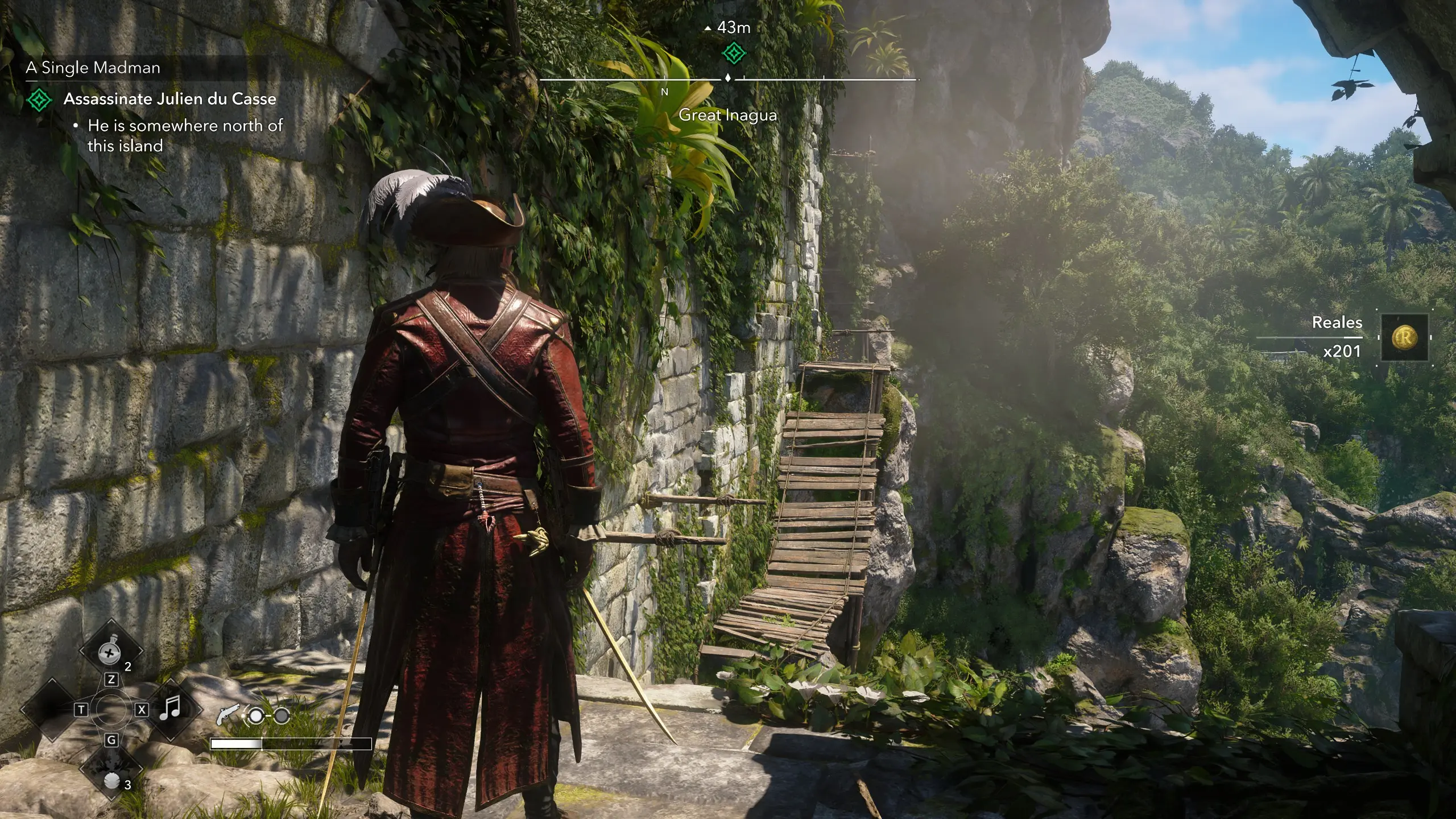
I played with every graphics setting and ray tracing option set to the maximum Ultra High position and managed to get consistently over 60 FPS. Note that this is with the field of view slider also maximized, which can lower performance. Turning down a few graphics settings or increasing the FSR presets would easily get me to 100 FPS, and AMD’s excellent upscaling tech gave me no issues with shimmering or artifacts in this implementation. Frame generation is also available if you don’t mind the added input latency. With the massive number of settings available, and considering how this engine handled previous games, Black Flag Resynced shouldn’t have any issues running on older PC hardware. The 16GB minimum RAM requirement might be the only sour point if you’re on a really tight budget.
Hopping over to the Xbox version, I also spent time inside cities and sailing the seas on my Series X. There aren’t granular graphics options here, but Ubisoft has given three tiers of performance options to select when playing at 4K resolution (with upscaling), each with their own resolution, ray tracing, and frame rate targets. Despite being an action game, there aren’t many fast-paced elements or pinpoint aiming to speak of here.
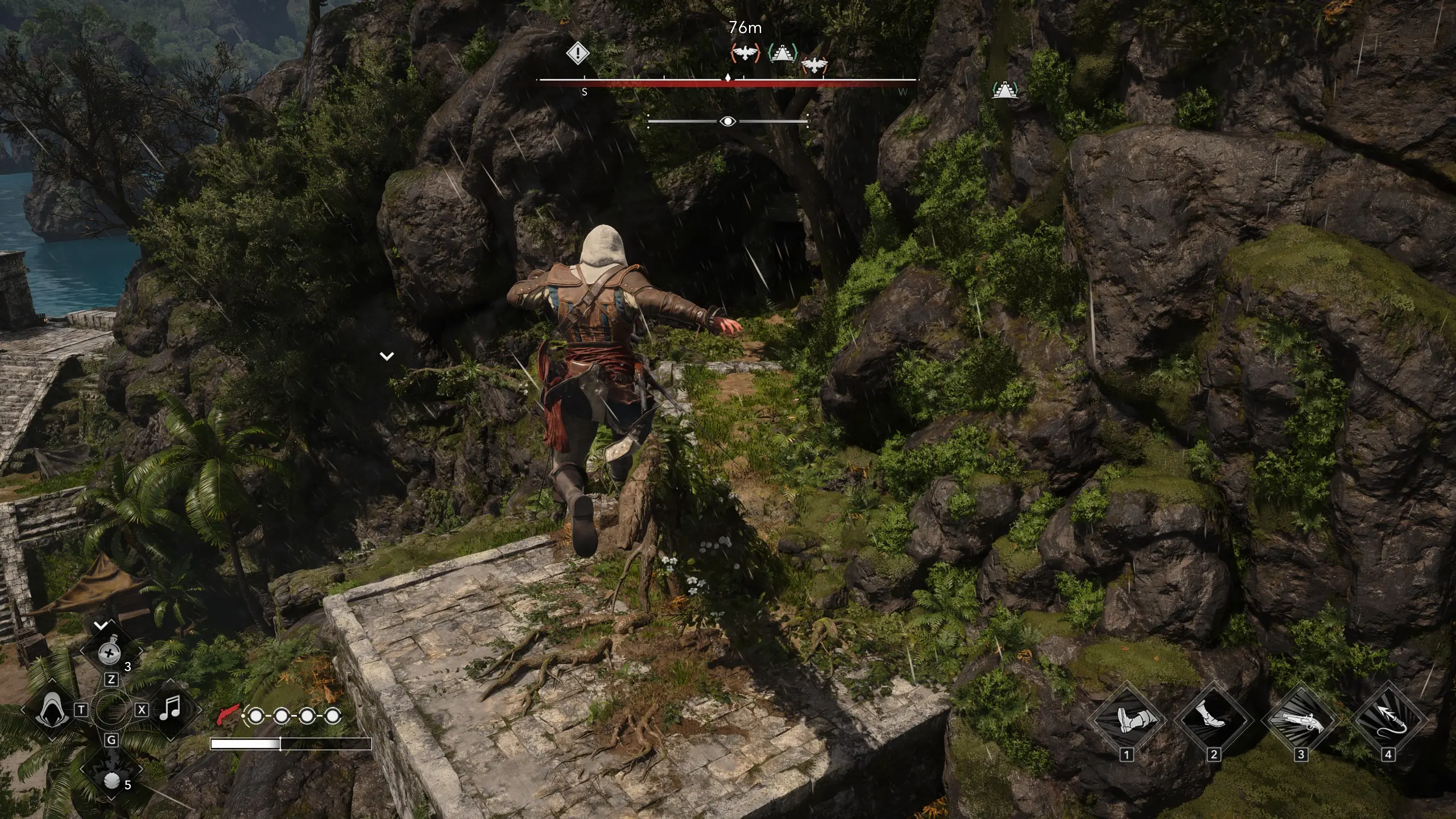
This means even the 30 FPS “Fidelity” mode is a fine setting if you’re playing on a big screen from far away to get the best eye candy when blowing up fleets. I am more sensitive to input latency, and I really like my games to be smooth, so the Performance mode at 60 FPS was more my go-to. If you want the best of both worlds, the Balanced 40 FPS mode is the way to go, offering just enough smoothness without losing too much of the visuals.
I should also mention the UI customization options are top-notch. Ubisoft lets you toggle each element one by one or even disable everything altogether for a much more cinematic look. This can mean dying to random gunfire and getting lost in the wrong islands at times, but having the option is always a good thing. Even with the default UI enabled, most of the HUD disappears dynamically when it’s not required to be shown as well.
Conclusion
Playing the remake, I first felt as if the game looked exactly like I remembered it. It only took a quick look at the 13-year-old game to realize just how mistaken I was. Ubisoft’s visual teams are some of the best in the business, and they flex their talents well. The characters, ships, islands, their towns, ancient ruins, jungles, and sandy beaches are brilliantly crafted.
The balance between the game"s assassin identity and the absurdly fun naval gameplay is also an excellent one. Whenever I felt tired of seafaring and plundering, I could pop over to a nearby island, parkour across rooftops, and go do my assassin duties. The plotline isn’t a groundbreaking one, but the likeable side characters and the quick-witted protagonist with plenty of growth make for a fun playthrough. If there are fans of the classic who are concerned about the absurdly slow tailing and modern-era missions, know that those have been ripped out entirely from the remake.
There is one aspect that could have been deepened to make this a better package, and that’s the melee combat. The spammy feeling of swords and the repeating slow-motion finisher animations, like this is a PlayStation superhero game, felt distractingly monotonous after a few hours.
The original Black Flag arrived at a time when Assassin’s Creed felt like Ubisoft was a juggernaut, and the remake lands when the publisher needs a big win. In my eyes, Black Flag Resynced has managed to bring back the proper action-adventure flavor that has been missing from the series for some time.
Assassin’s Creed Black Flag Resynced is releasing on PC (Ubisoft Store, Steam, Epic Games Store), Xbox Series X|S, and PlayStation 5 on July 9, 2026, with a $59.99 price tag. It will also be a part of the Ubisoft+ subscription at launch.
This review was conducted on the PC and Xbox Series X versions of the game provided by Ubisoft.