The puzzle game genre has almost entirely been taken over by independent developers in recent years, with hits like The Outer Wilds, The Witness, and Return of the Obra Dinn making big waves in the space. If you’re a fan of the genre, last year’s Blue Prince should have already been on your radar, delivering another unique take on the puzzle adventuring formula. Inspired by that, a new development team is taking a crack at building a game with a similar room-drafting system but with a horror twist.
Titled Incoherence: Dark Rooms, the title is being developed by pmrd, a name you might recognize if you frequent Neowin forums. While there’s no timeframe yet on a full release date, I decided to check out the demo of Dark Rooms to see how it’s shaping up. I usually don’t play many horror games, but considering I did get a tinge of creepiness when playing Blue Prince, I decided to give this a shot to see how the gameplay would transform.
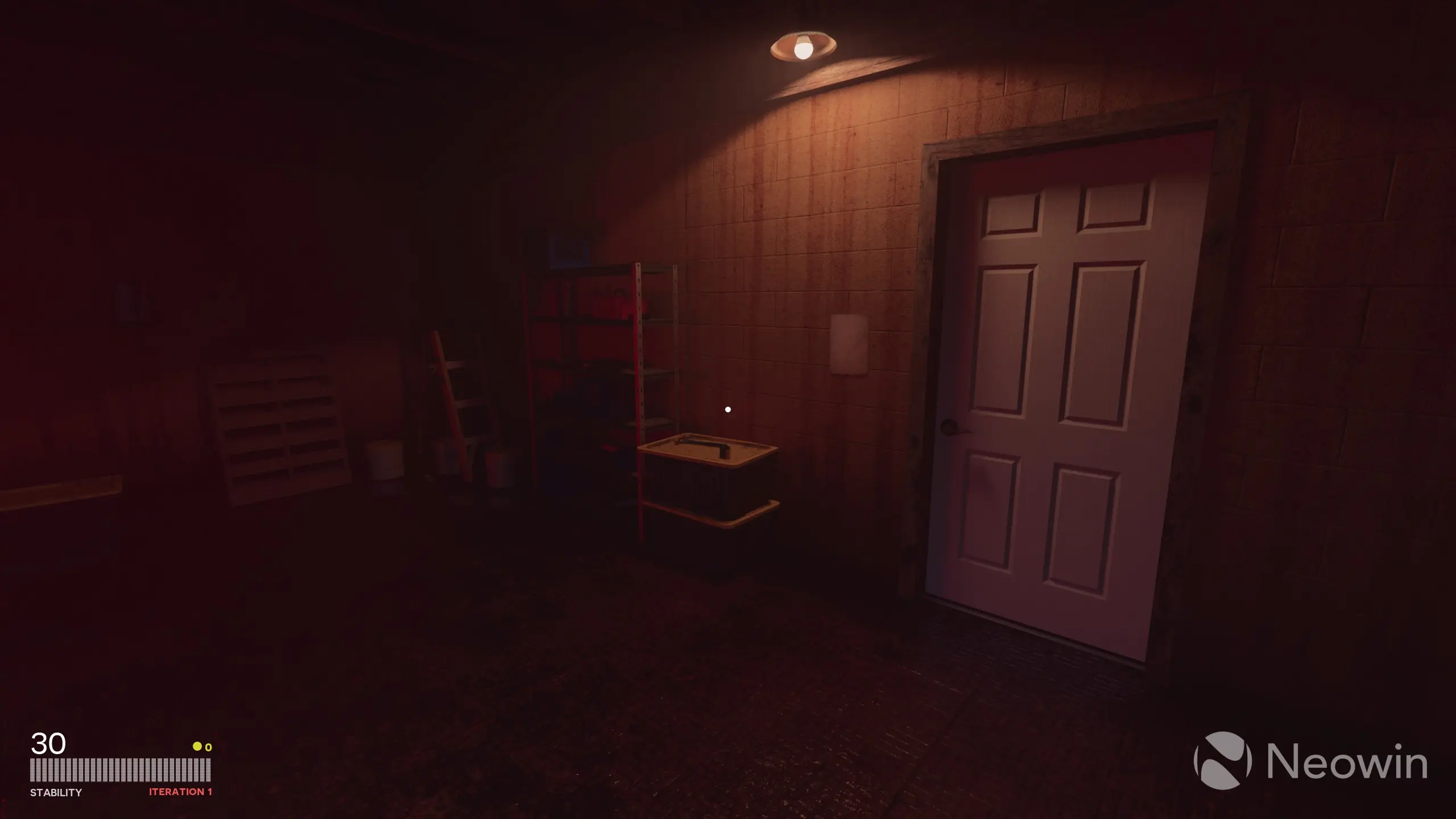
Following a quick introduction about the setting and protagonist, the game dropped me into a dimly lit room facing a closed, white door. Off to the side is a table for developing old-school film rolls, which I come to learn is how the game lets me unlock more areas to explore. Looking around, I could already find several prompts for locked areas that need tools I don’t have to unlock. Interacting with the door, I find myself with a familiar UI for spawning the next room.
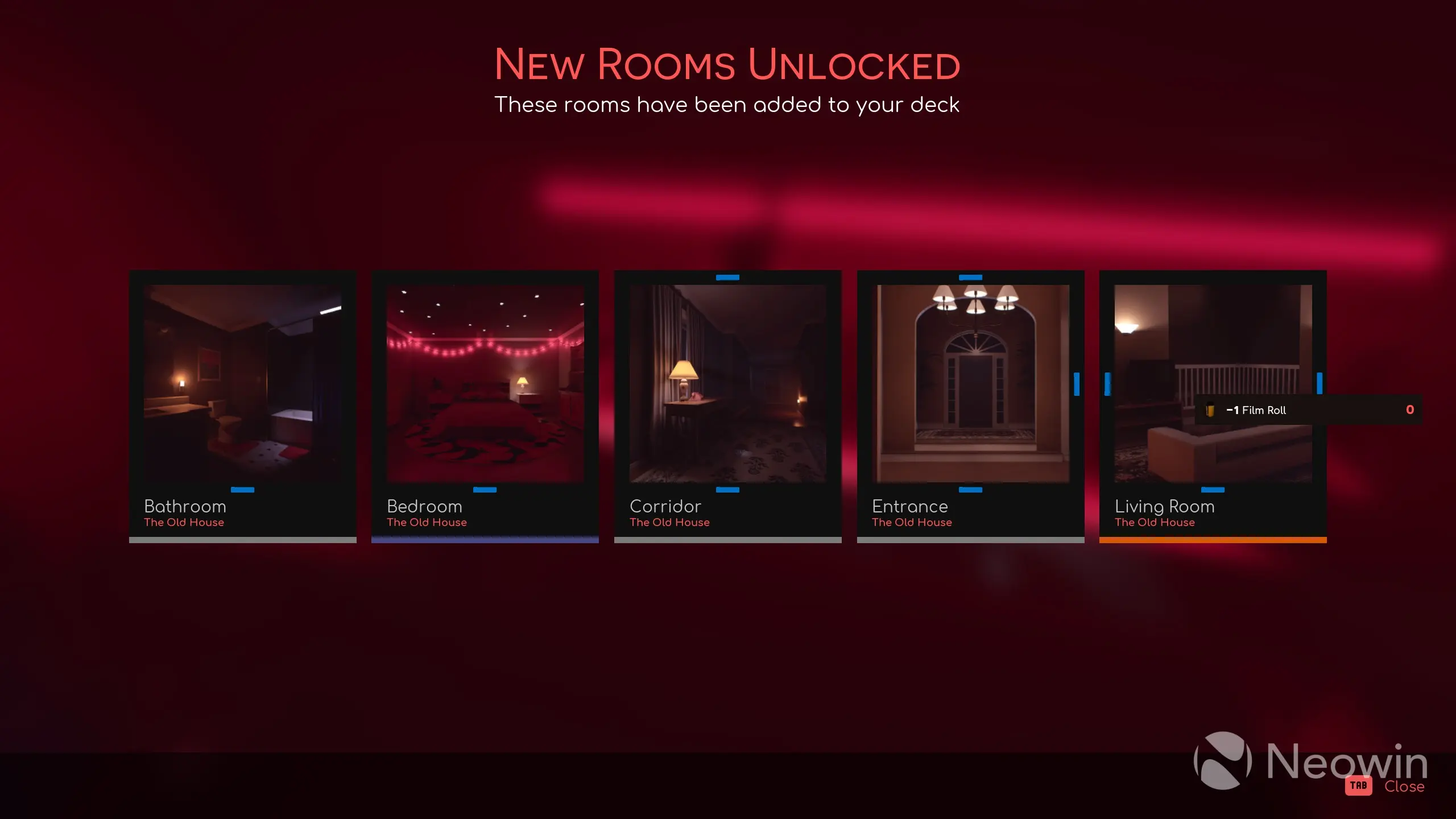
To break things down, every time you approach a closed door in Dark Rooms, a choice is given to select where it leads. Blue Prince players should find this instantly recognizable. The available rooms depend on the currently found roster, where the more film roles you find, the more rooms that can be spawned. Each time I solved a puzzle that rewarded me with a new roll of film, I quickly ran back to the starting room to develop it and see what new types of options I have for exploring.
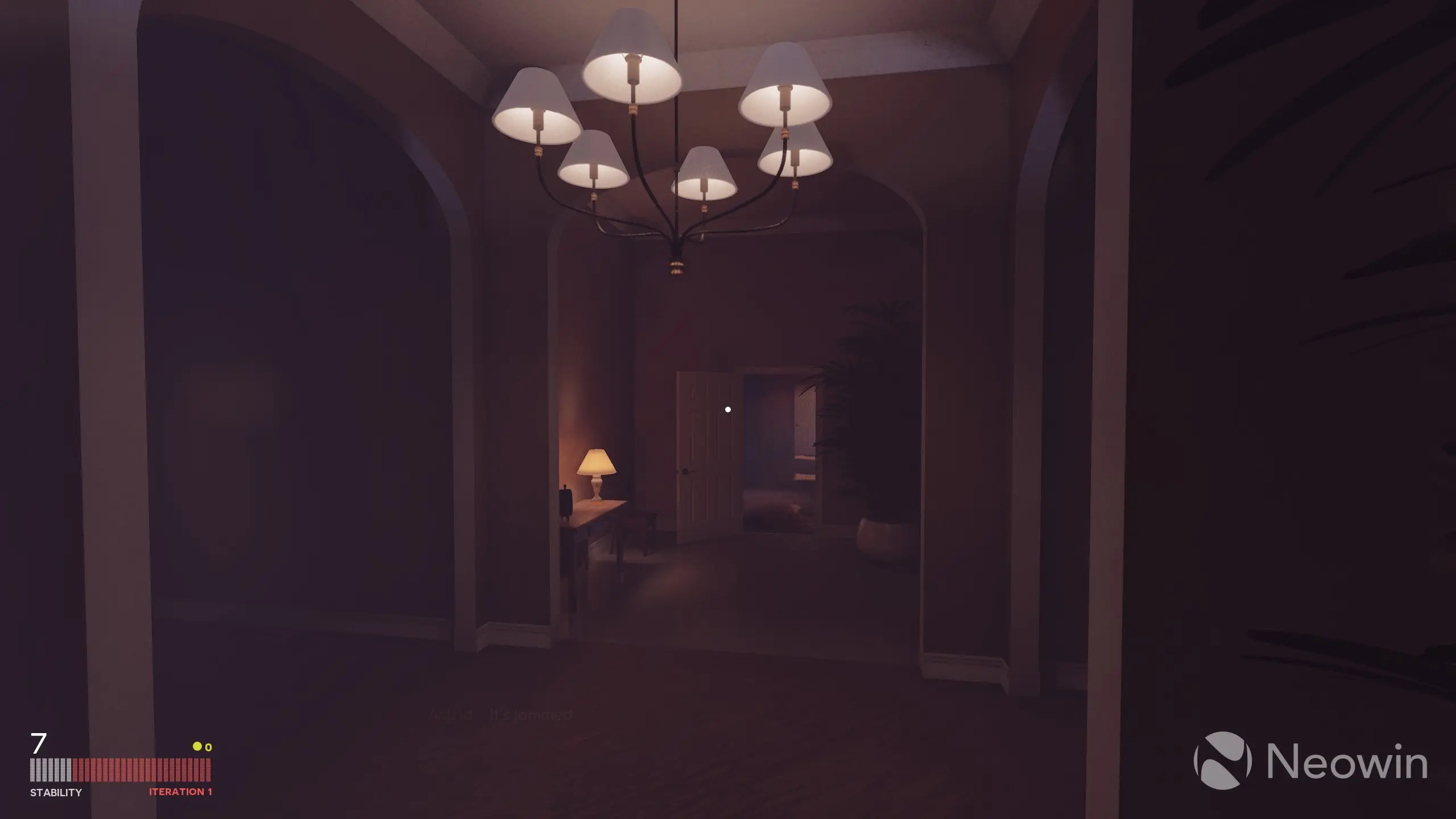
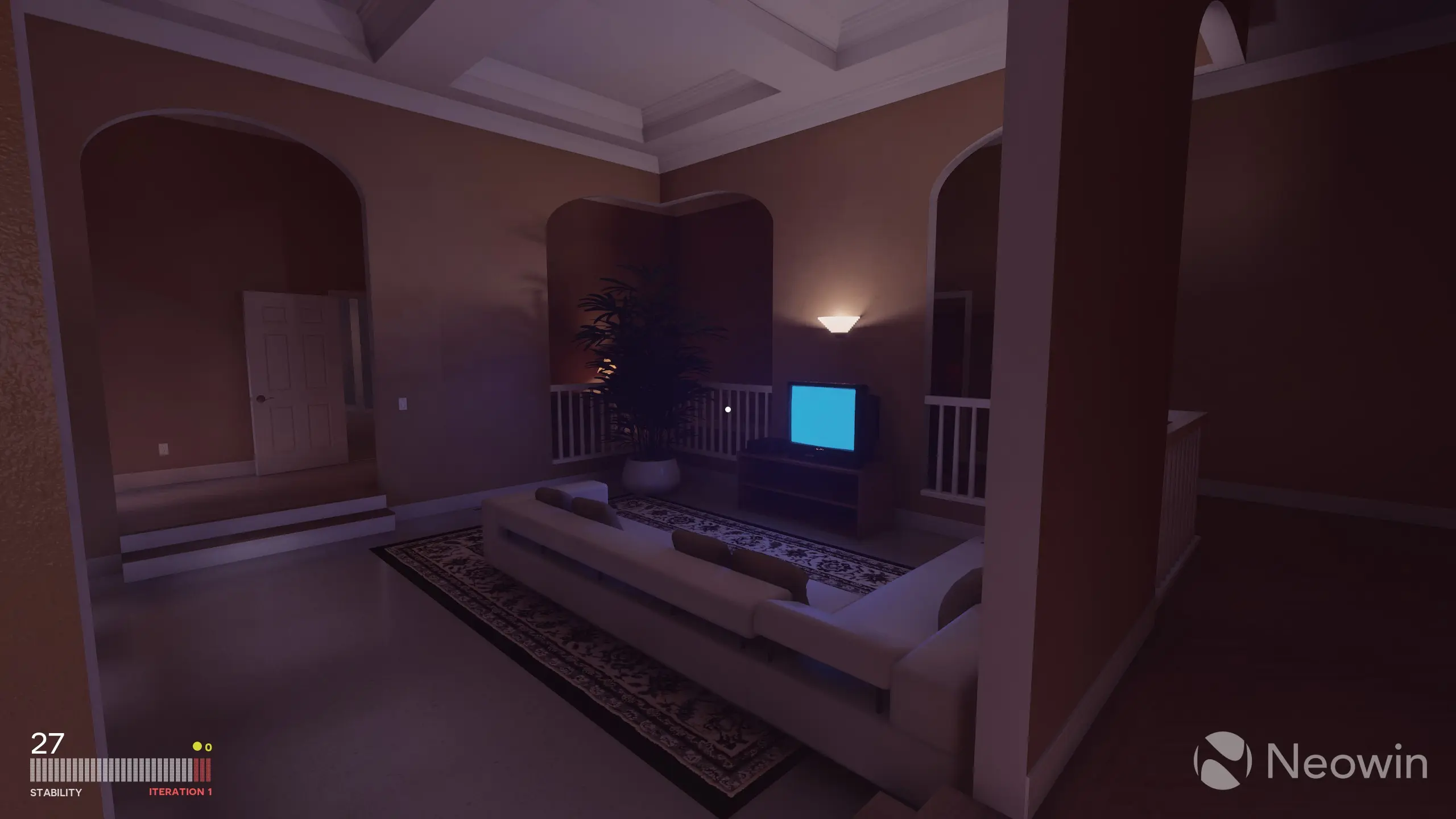
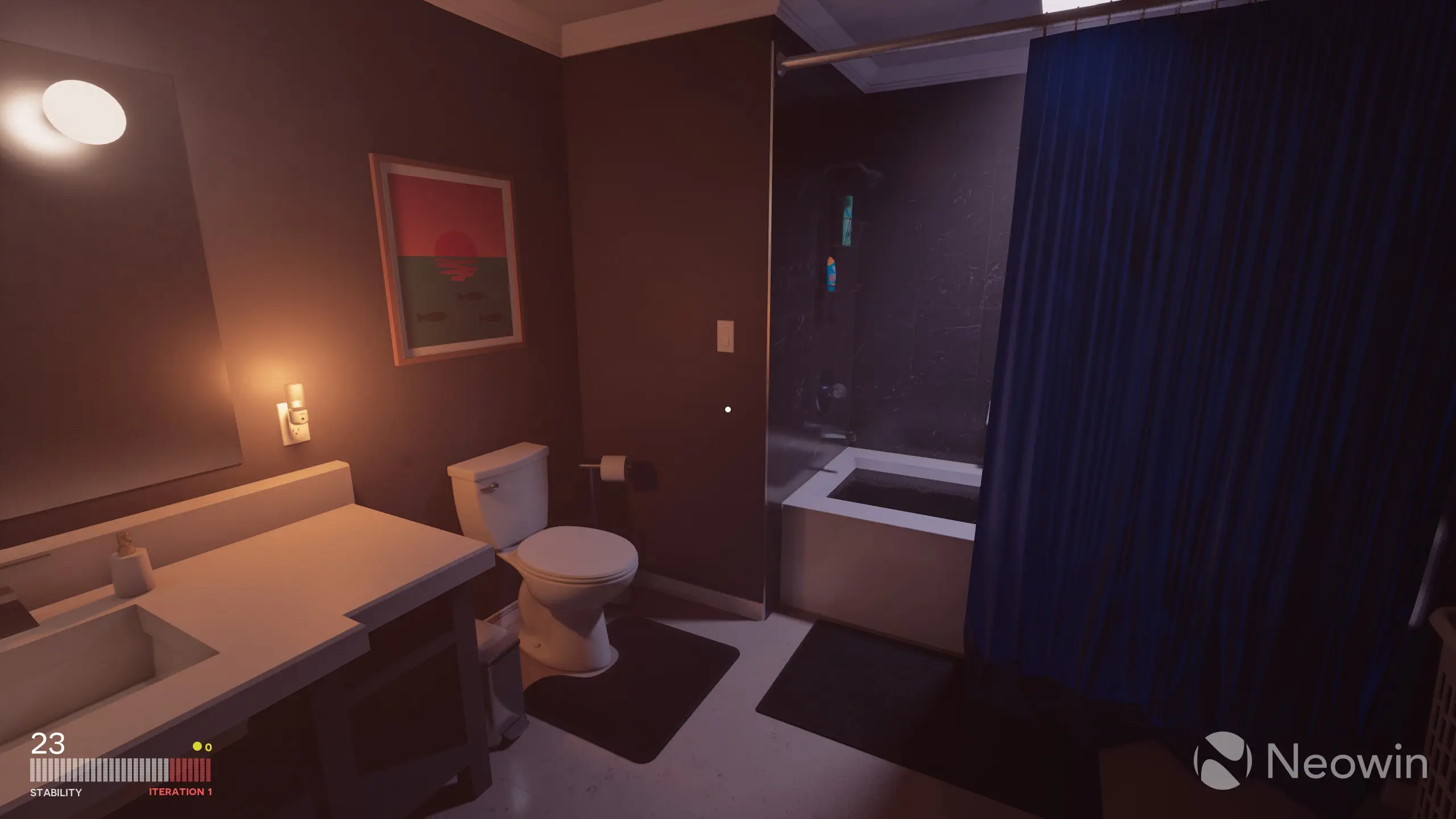
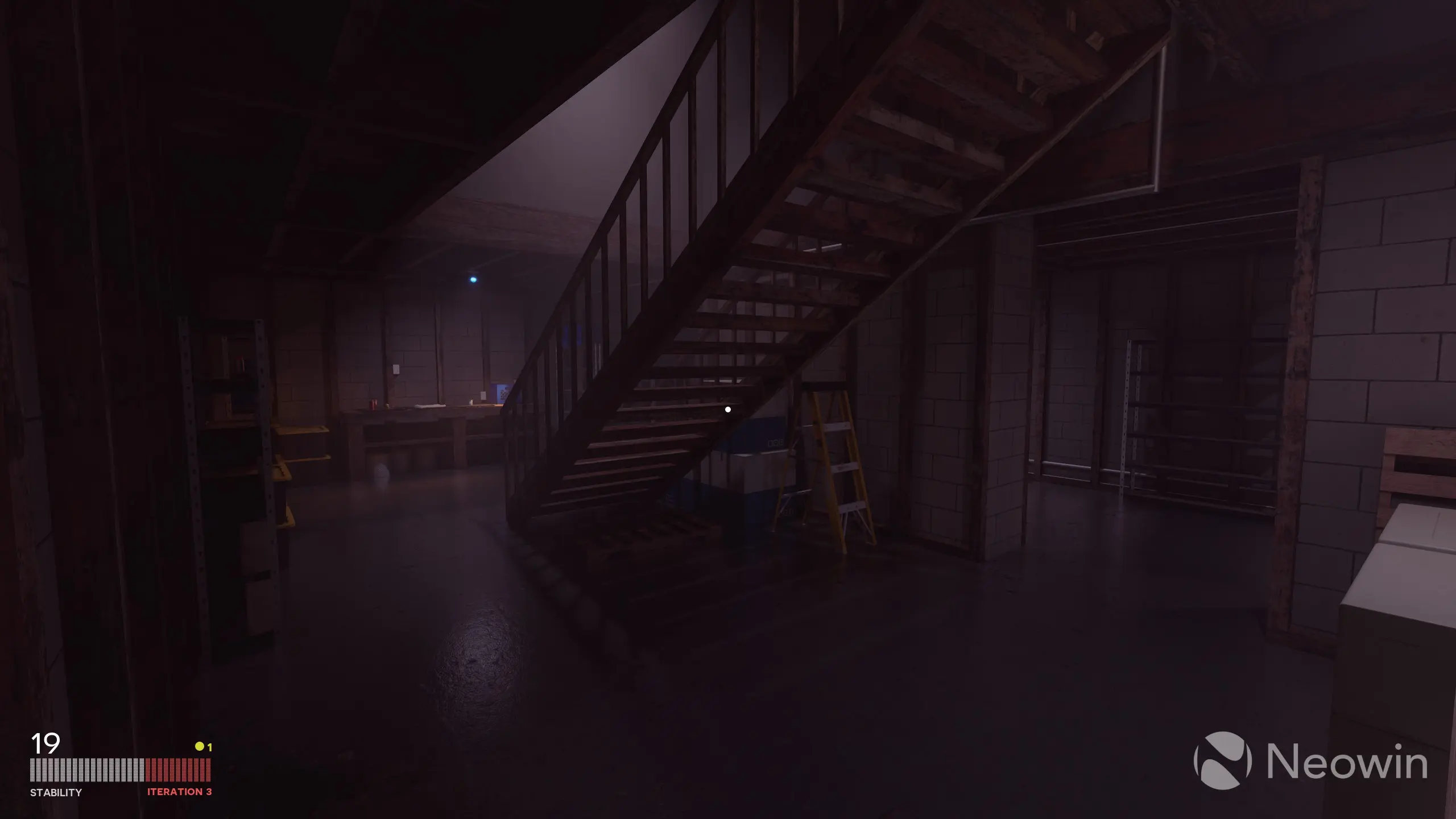
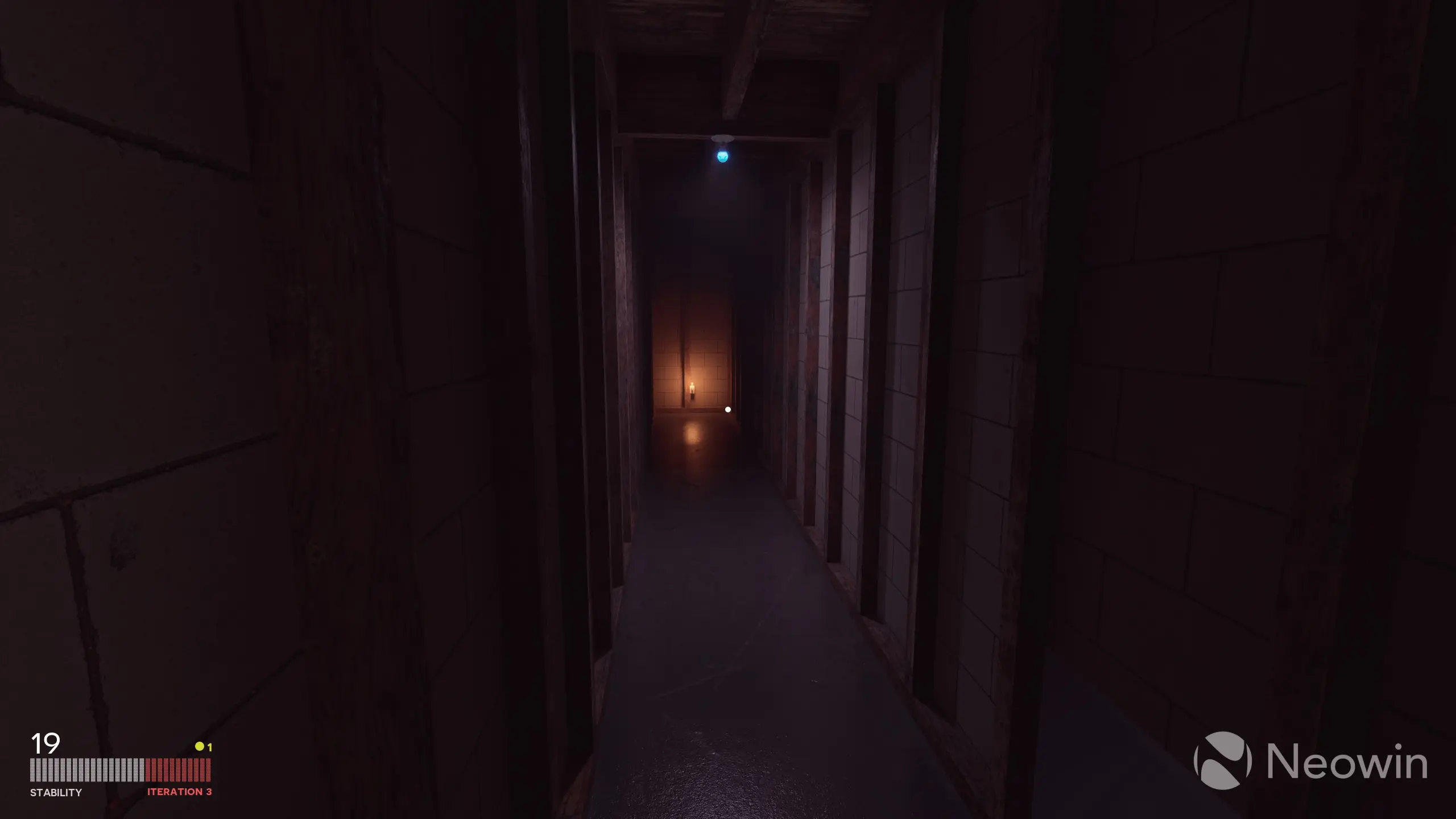
The rooms come in a variety of flavors, and in the current demo build, they are what you’d find in a large home. There is a bedroom, an office, a backyard, a kitchen, a basement, and others for unlocking, spawning, and exploring. Almost every one of these spaces has an interactive element, but some of these, like a media center and a bathtub full of dark water, are still in development. While no dangers were present at the beginning, each room’s dim lighting and ‘too clean’ nature had me on edge while exploring. All the while, ominous newspaper clippings and recorded messages on phones drop some hints at what seems to be happening in this story.
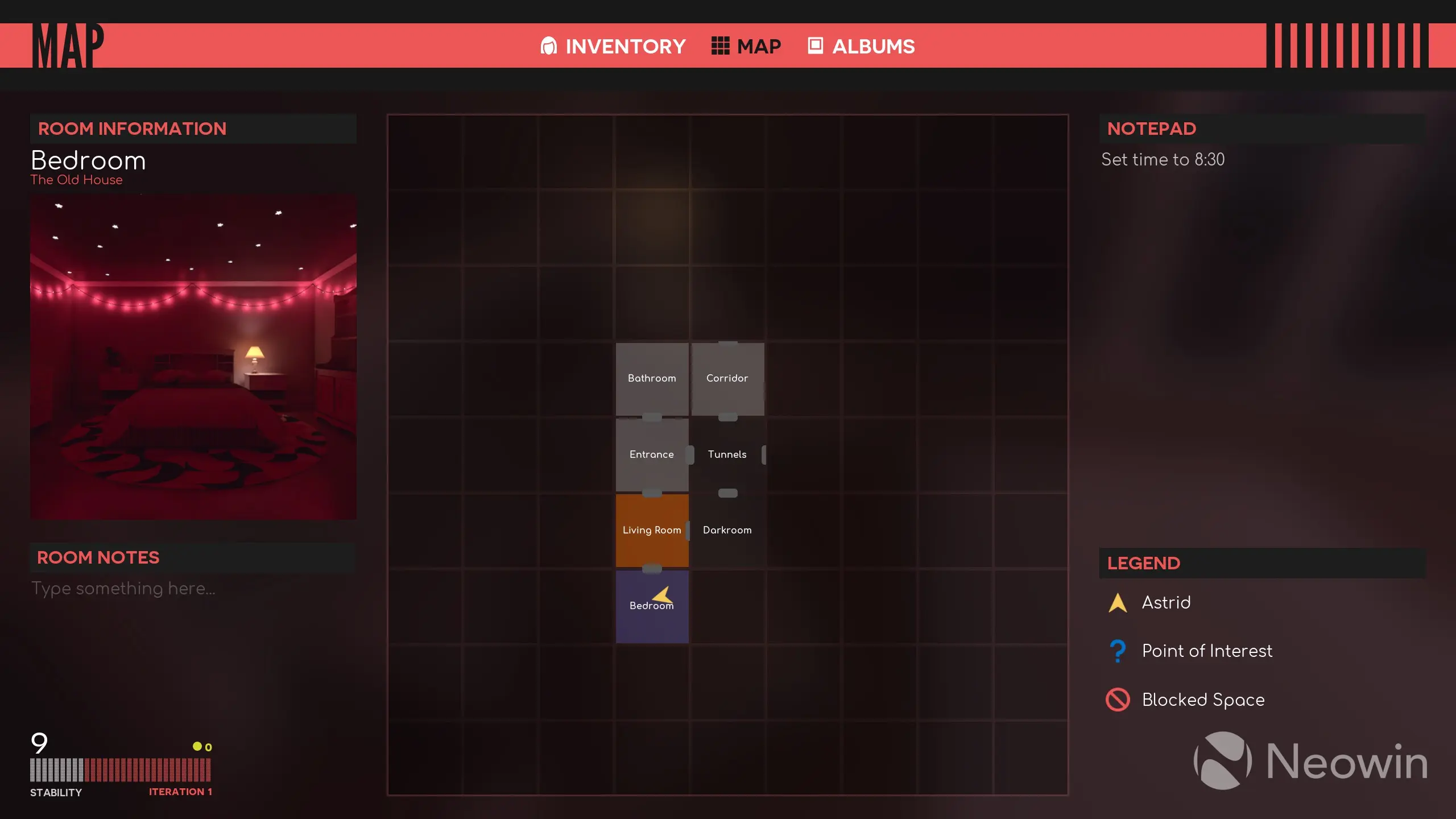
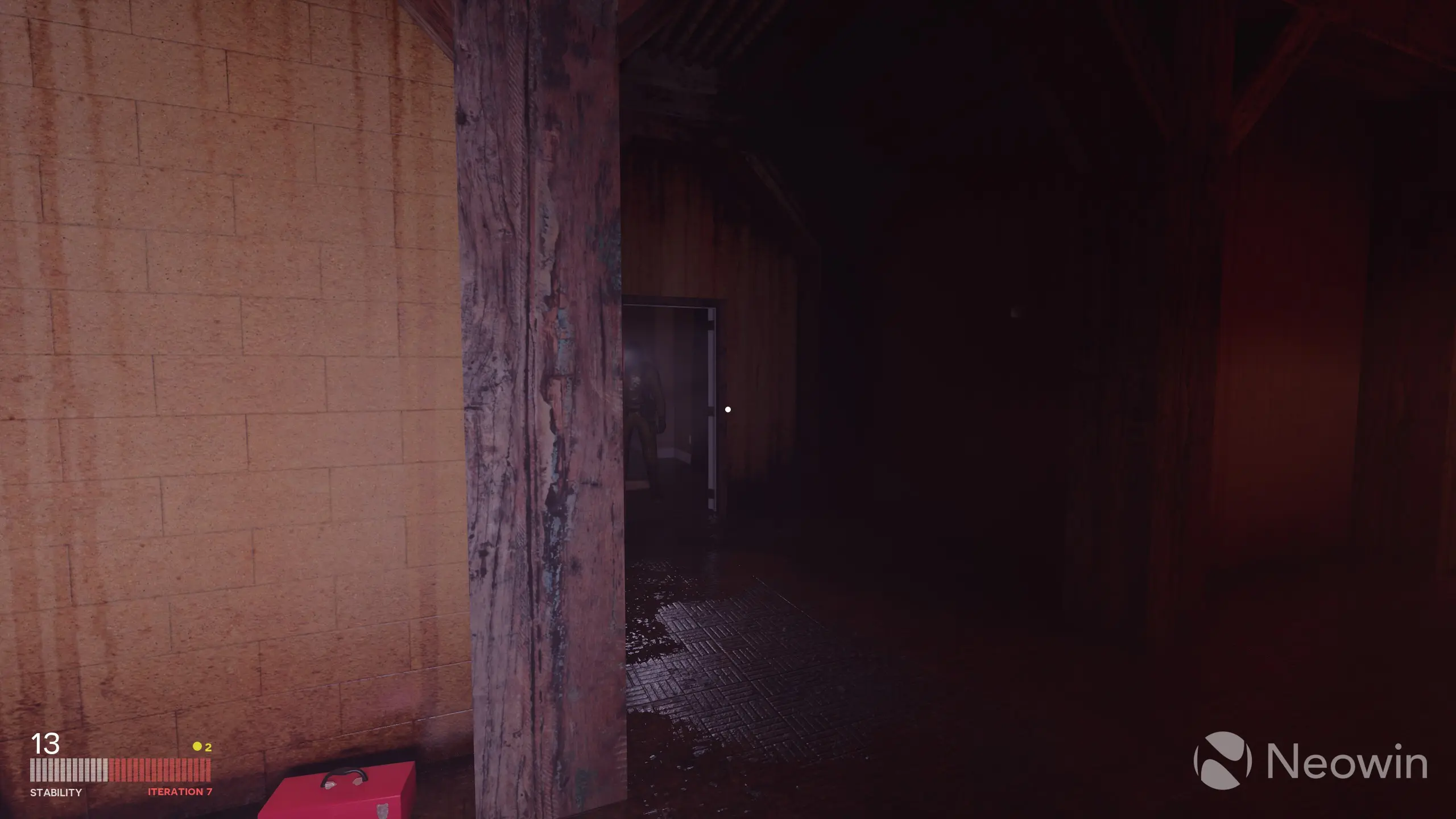
There is a cost attached to all this exploring though. Every time I cross the boundary between two rooms, a visual effect blurs the world and its colors for a brief moment. Looking at the corner of the UI, I realize that the stability of the protagonist’s mind has gone down by one. It seems being trapped in this supernatural house with moving rooms is not doing any favors for the mind. Lowering this to zero restarts the current run, so randomly exploring without focus doesn’t end well.
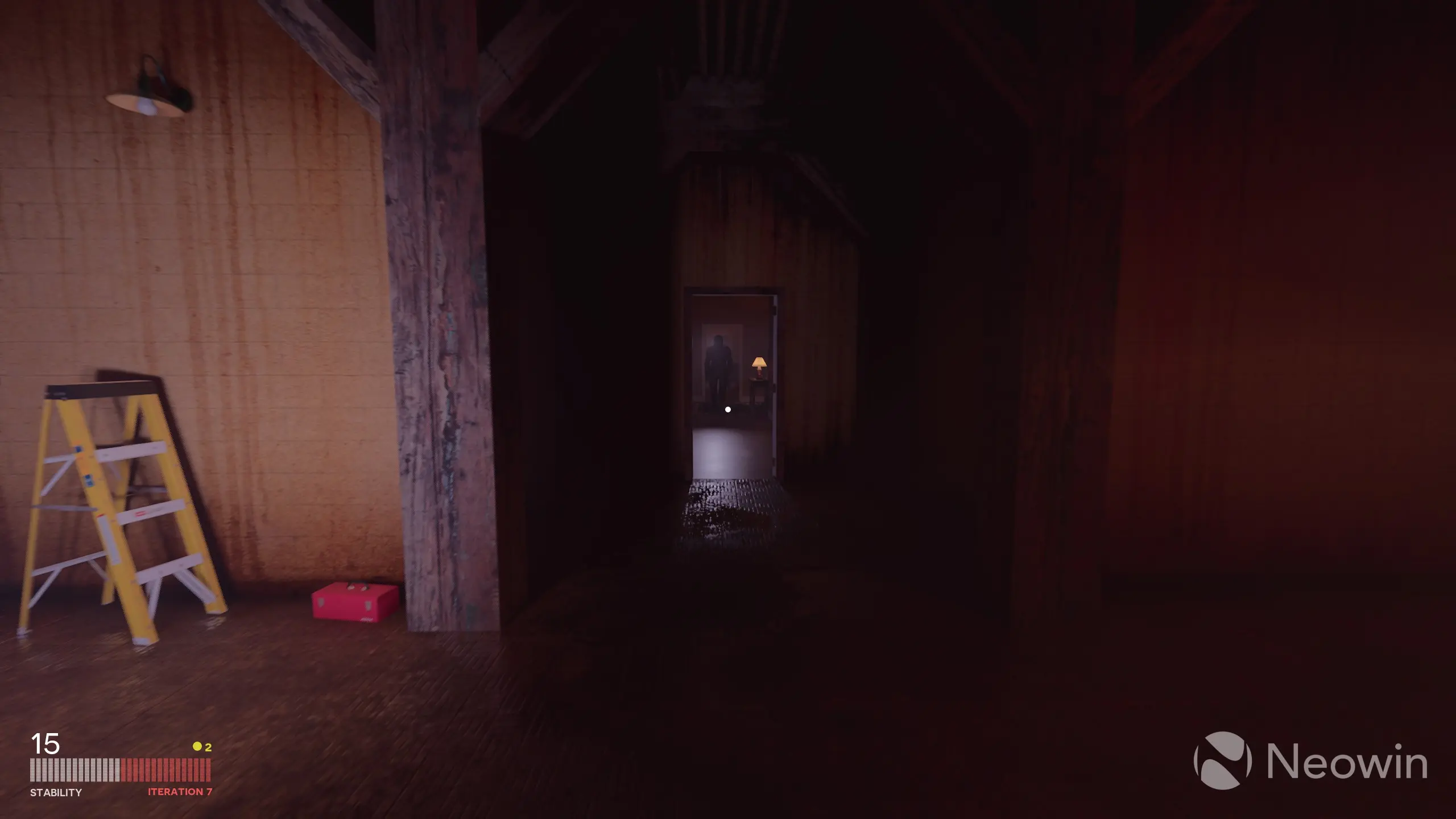
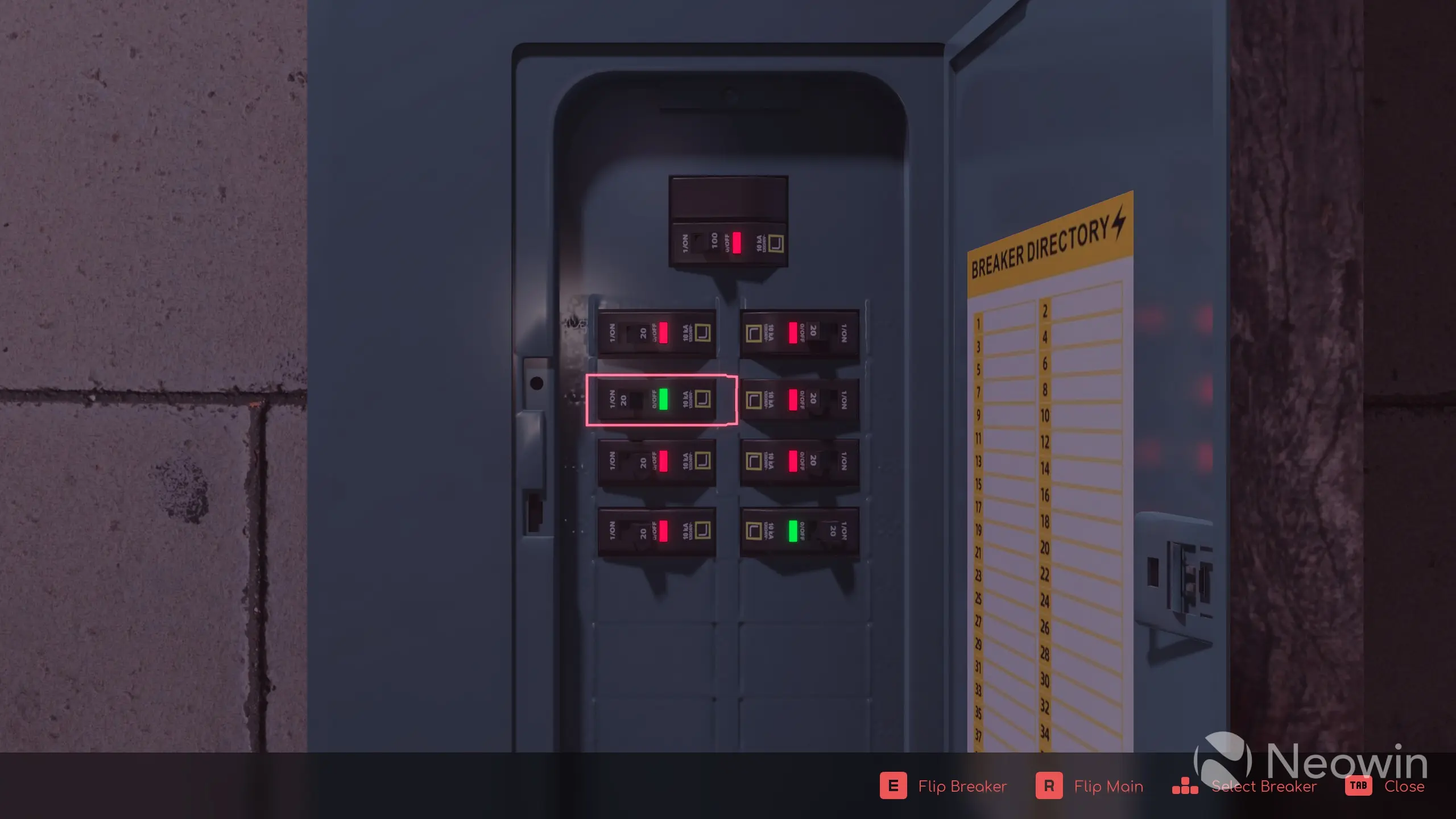
To advance and find out more about this world requires completing puzzles. These were rather simple endeavors for now, but I liked that many of them had an exploration element. This meant that they required me to head out into other rooms, which I may not even have spawned, to find the information needed to solve them. Sometimes, this needed tools and information from multiple playthroughs, with the helpful Storage Room keeping multiple valuable items from despawning when restarting a run.
The puzzles had me deciphering children’s rhymes, melting down solder to make a strange key, listening to a creepy radio for sound signals, and hunting for hanging artwork. Something I appreciated here was a built-in note-taking system. Opening the menu, I could manually jot down information I found for later runs, with both room-specific and global notes sections available.
While I was slowly making my way to new areas and checking all corners for items and hints, I had almost forgotten about this being a survival horror game. It was when I saw the light of a torch coming from another room when I realized I wasn"t alone anymore. I got some glimpses of the stranger while I dodged through my maze-like map as the music ramped up, showing a humanoid shape wearing a gas mask. Soon, my stability ran out and the run refreshed. Escaping this being was the only choice for survival in the demo, making some puzzle solutions a real tension builder as it might just slip into the same room while I’m not paying attention. Even with this early implementation, it reminded me of the stalker-type villains in Resident Evil, like Mr. X.
Despite being an early look at the project, there are enough good puzzles and horror ideas here to put the game on my radar for the future. If you want to try out the Incoherence: Dark Rooms playtest for yourself, it can be accessed from the game’s Steam store page.
After playing through the available content, I got ahold of studio pmrd"s lead developer Matt to answer some questions about the project and its ongoing development.
Was combining horror with the room drafting of Blue Prince always the plan for Dark Rooms? How did you come up with the idea?
Matt - I came up with the idea while playing Blue Prince. I thought the game was great but was missing a bit of tension. I loved the idea of drafting rooms, but it didn"t feel like you were making meaningful progress early on, so I wanted to fix that. I also wanted to tone down the randomness.
Why choose film processing as the way players unlock the house? Is this related to the narrative being planned for the project?
Matt - Yes, Astrid, the player character, was an amateur photographer, and these pictures are fragments of her memory. It was also a way of limiting the number of options the player has at the start of the game.
There is a distinct blurring and color-shifting effect when crossing room boundaries. Is this hinting at a supernatural cause for the room drafting aspect or related to the protagonist’s mental stability?
Matt - Without going into spoilers, there"s a very good explanation story-wise for everything that is happening to Astrid, including all the rooms resetting. And yes, it is supernatural.
Do you have plans to expand the full game out of the house setting? Perhaps add in rooms from other buildings or even ones with supernatural themes?
Matt - Yes, there will be 6 albums in total, and each one is a fragment of Astrid"s life, from her childhood, 20 years ago, to the present. The next album is "The University", that"s as much as I can say without spoiling the story.
Are you a one-person army on this project, or are you working with others to bring the house to life?
Matt - Right now we are a 3-person team, but it"s me doing most of the heavy lifting. My team consists of a 3D modeler who made all the props you see in the game and a musician who made all the ambient music. I took care of programming, design, story, UI, the environments, etc. I even did some voice acting and composed the main theme. I also worked with Snutt Treptow (the former Satisfactory community manager and programmer) for a couple of months. He helped me with game and puzzle design. Half of the puzzles in the current build were made by him.
What engine are you building this in, and what made it the right tool for handling a game where the map is being "rewritten" by the player constantly?
Matt - Unreal Engine 5. Blueprint Actors make it so easy to build and manage the rooms. I can spawn and rotate them around super easily. I also did a lot of work to optimize the game so it runs on lower-end hardware. People who tried it on Steam Deck have been telling me they are getting a solid 30-40 fps.
The use of generative AI in game development is a controversial subject nowadays. How is this project being handled by your team?
Matt - No AI was used to make my game, and it will remain that way until it"s done.
What does the development, release, and platform roadmap look like for Incoherence: Dark Rooms?
Matt - I"m hoping for a late 2027/early 2028 release. Right now the plan is to add more content to the current playtest and release it as an official demo soon. My goal is to find a publisher and hire more people. I have many scenarios on how it will play out depending on what happens. I"m also considering crowdfunding and early access. It will release on Windows, Linux, and Mac on launch and on Xbox Series X|S, PS5, and Switch 2 later on.
Incoherence: Dark Rooms is available for wishlisting on Steam now.