Tim Schafer’s Double Fine studio has largely been silent since Psychonauts 2, and that was over four years ago. As time keeps flying, the Microsoft-owned first party studio unveiled Keeper in June. It was a bizzare trailer featuring a lighthouse learning how to walk. I wasn’t even sure what was going on, but I was instantly hooked. And now, only a few months later, Keeper is ready for prime time.
I am a massive fan of Psychonauts 2, so my hopes for Keeper were already high. After getting my hands on the game and finishing it over a couple of days, I would say it has surpassed my expectations handily. The game is the brainchild of 20 year Double Fine veteran Lee Petty, who has been behind releases like Stacking, Headlander, and RAD in the past. Keeper lands as a short, single-player puzzle adventure that’s light on answers but heavy on wonder.
Read on for my full review, where I also try to avoid as many spoilers as possible, as difficult as it can be. I felt like every step I took in this weird and wonderful world was a spoiler in some way if I described it to someone instead of letting them experience it themselves. Still, let’s see what I can manage.
A Surreal World Brimming with Life
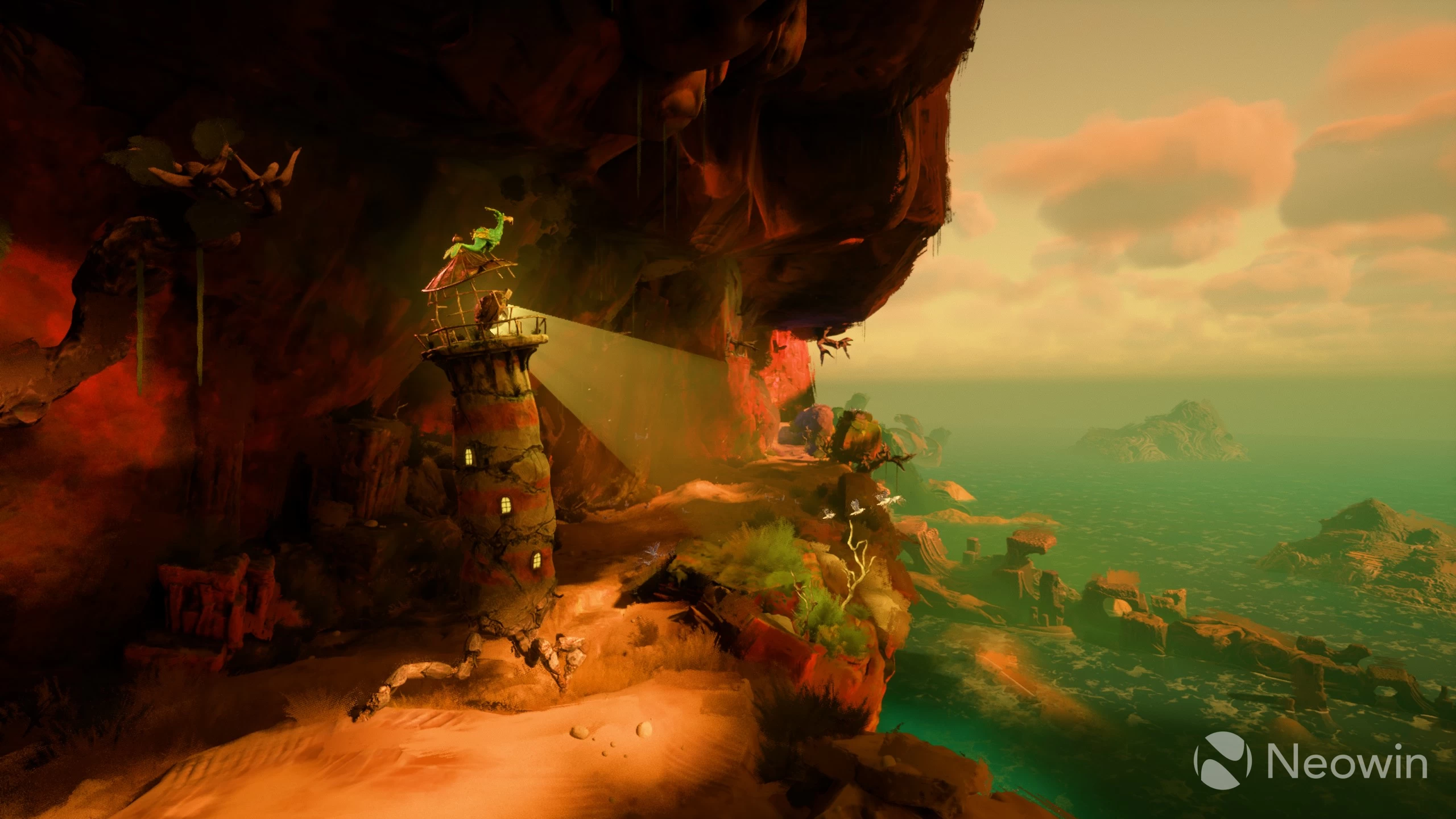
An unlikely individual steps into the protagonist role in Keeper, setting the stage for just how weird the game turns out to be. In the introduction, an abandoned lighthouse somehow gains consciousness to make friends with a little bird in trouble. Being a building, not much is possible on the movement side of things. Of course, breaking off from the foundation and growing legs is the only option. After a wobbly start, which includes a wonderful lesson in leaning and scrambling to not fall down, the building and the flying companion, who is called Twig by the way, are off on an adventure.
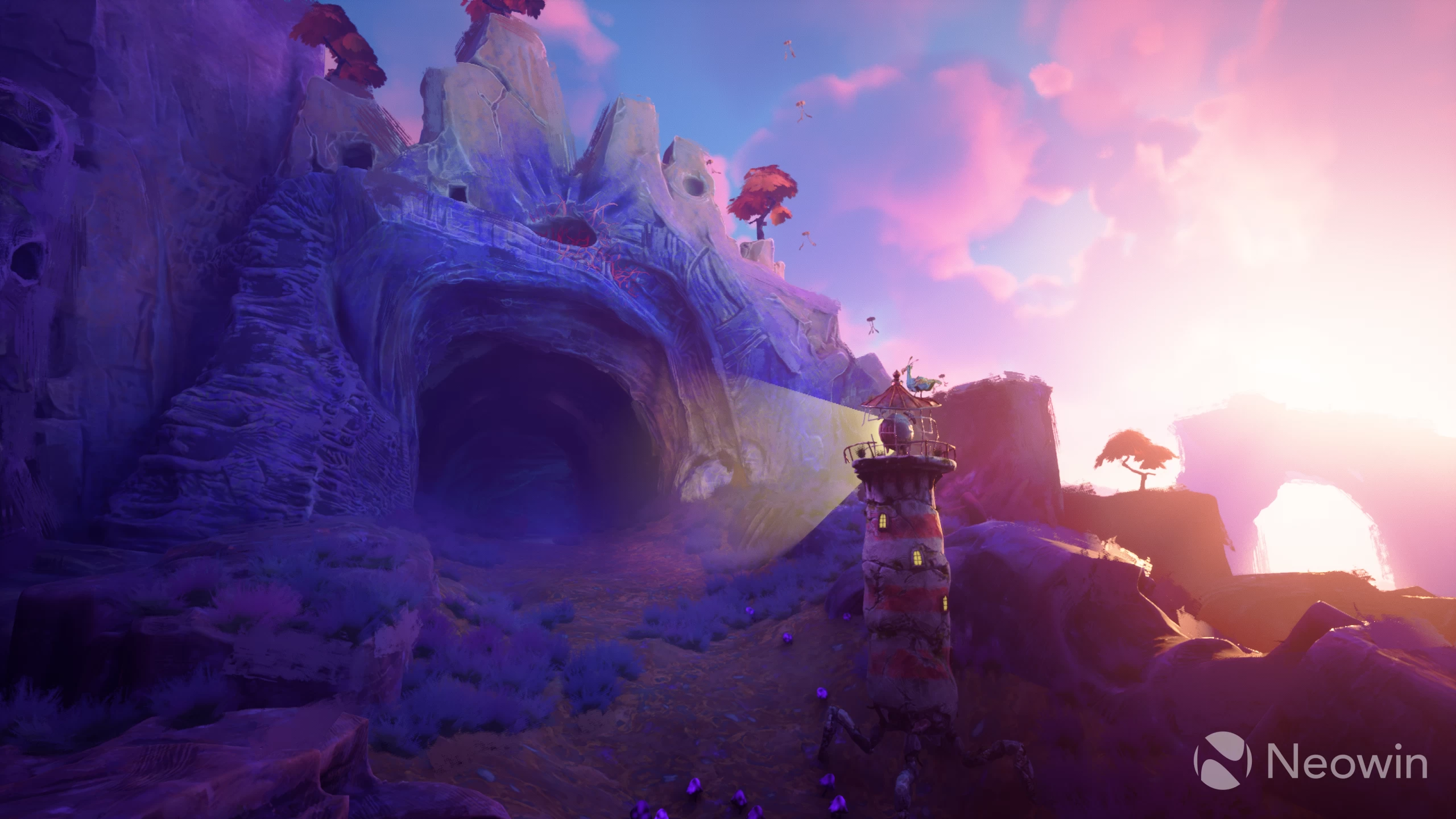
Humans don’t seem to be a factor in this world anymore, with only their creations like the protagonist building remaining. The starting landscape is littered with what looks like human houses eons old. They crumble under the spindly legs of the lighthouse as it stumbles and rolls along the desolate landscape. It"s not long before the lighthouse learns to use its lamp. Plants that look more like mushrooms, or alien wildlife, spring up wherever this light lands, clearing away the darkness that seems to have smothered this world.
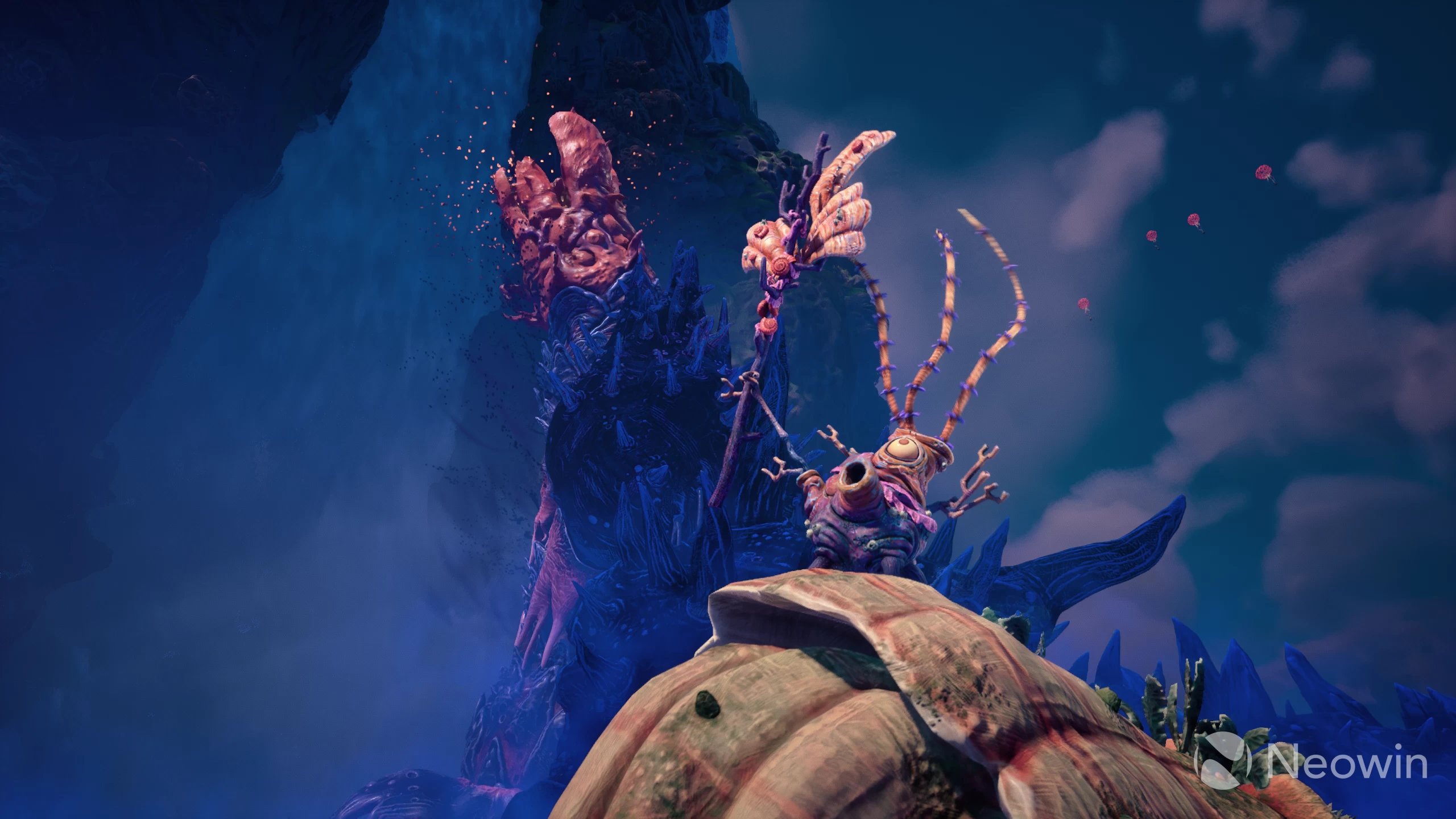
Other than the plants, some life still roams around in these lands, but nothing recognizable. I soon witness flying whale-like giants, a town full of tiny creatures seemingly made of metal, sea-dwelling critters preparing for something big, and even entire levels that seem alive or seemingly built up of living organs and veins.
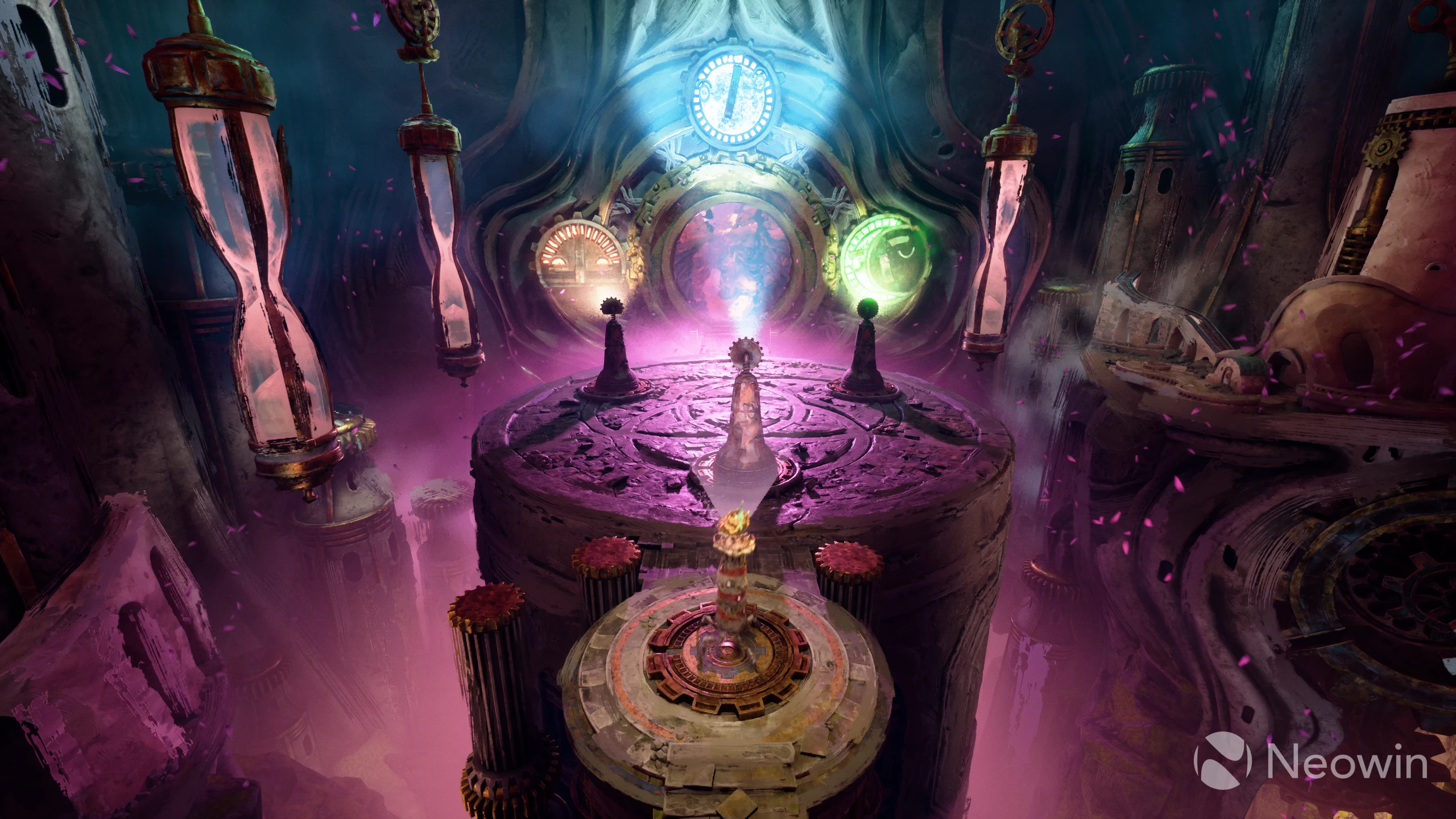
The lighthouse’s journey to the top of the nearby mountain, which is somehow calling towards it, is riddled with absurd adventures. At one point I was changing time itself to bring a city and its dwellers back to life and beat back the corruption. Another time I was simply lending a hand to some ocean creatures by ferrying the little guys and helping them clear the water. Little did I know I was essentially helping an army that is preparing for a massive assault against a nearby monstrosity.
Of course, all this is from my perspective. I should mention that there is absolutely no dialogue in Keeper. The only text that appears on screen are hints about the controls when puzzles or new mechanics are introduced. Other than that, everything is an interpretation from the way the lighthouse, Twig the bird, the environment, and other creatures behave or emote using their own animated ways.
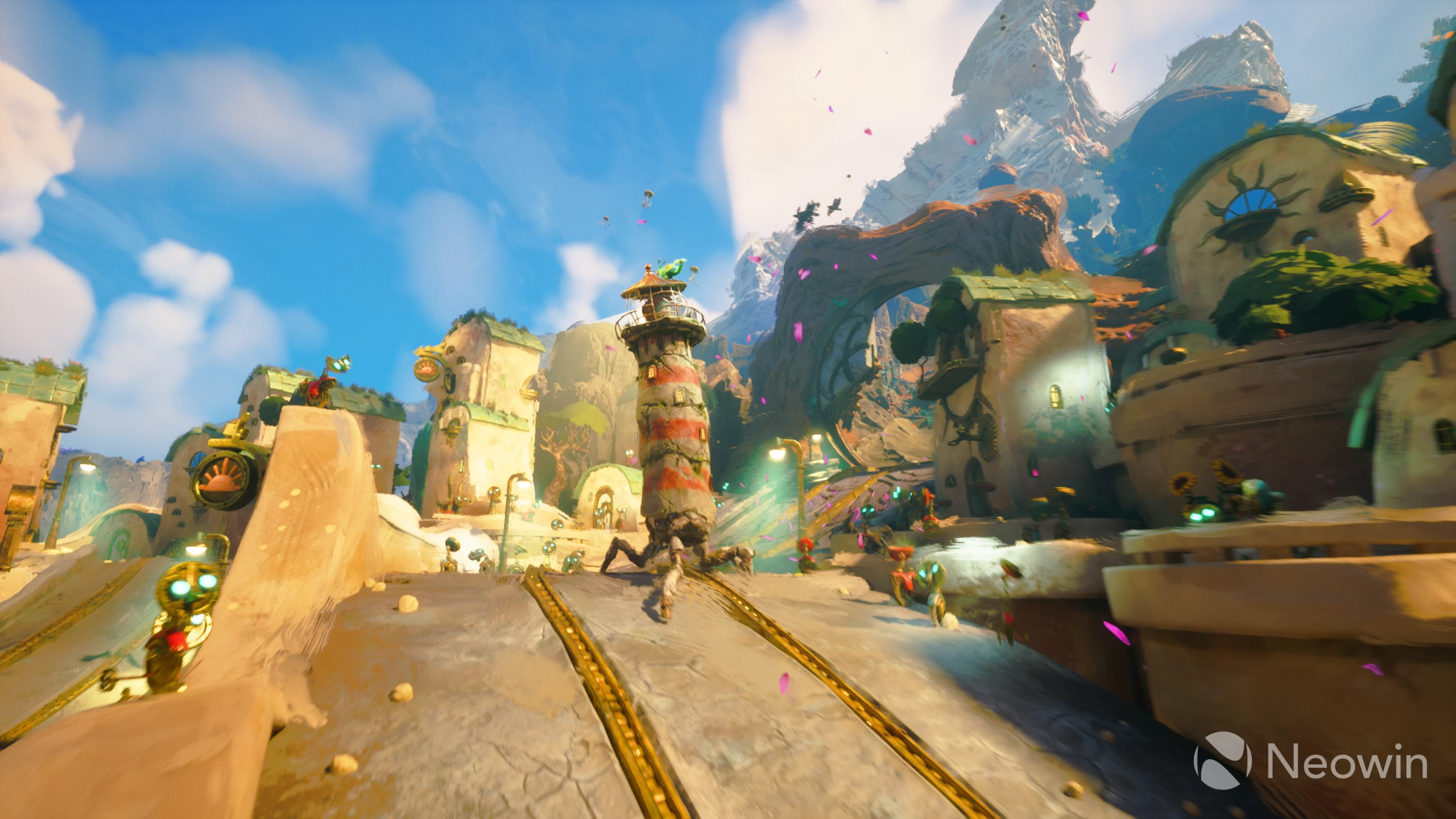
I quickly realized that Keeper is a game where things just happen. If explanations or causes are even shown, they have questions of their own that sort of exist without ever giving a proper conclusion. It’s a comforting feeling, knowing that this world makes absolutely no sense, but my actions are still having a positive effect on it.
There is a history that can be uncovered by exploring the world a little more. But even these revelations arrive via achievement descriptions and not an actual in-game lore drop. It’s one of the most interesting game worlds I have ever explored. However, all this would have been wasted if the gameplay did not match the engagement levels.
Puzzles and Transformations
Other than being a bringer of life, the lamp of the Lighthouse and its focus function begins the puzzle-solving journey of Keeper. Twig, the bird friend, also plays a big part in it.
The light burns away obstructions, opening up pathways. It gives growth spurts to mysterious land-altering plants to build literal bridges. It spots plant stems and levers for Twig to tug on and use. All that’s required is pointing it at the surface and increasing the energy to activate whatever function the surface has. Even without the puzzle-solving elements, I was frequently using it simply to light up interesting-looking architecture or nearby living things to see how they react. It’s a simple but effective way to interact with the world that became second nature.
There are no camera controls, so every scene that illuminates when the lighthouse walks into a new area is one that Double Fine has chosen. I can’t think of a single time that I was frustrated with the angle or what I could see regarding the camera. It also elevates the moments where nothing is really happening except for the lighthouse quietly traveling through regions. The odd angles the studio sometimes chose to present give the feeling of moving through a massive world with unreachable mysteries around every corner.
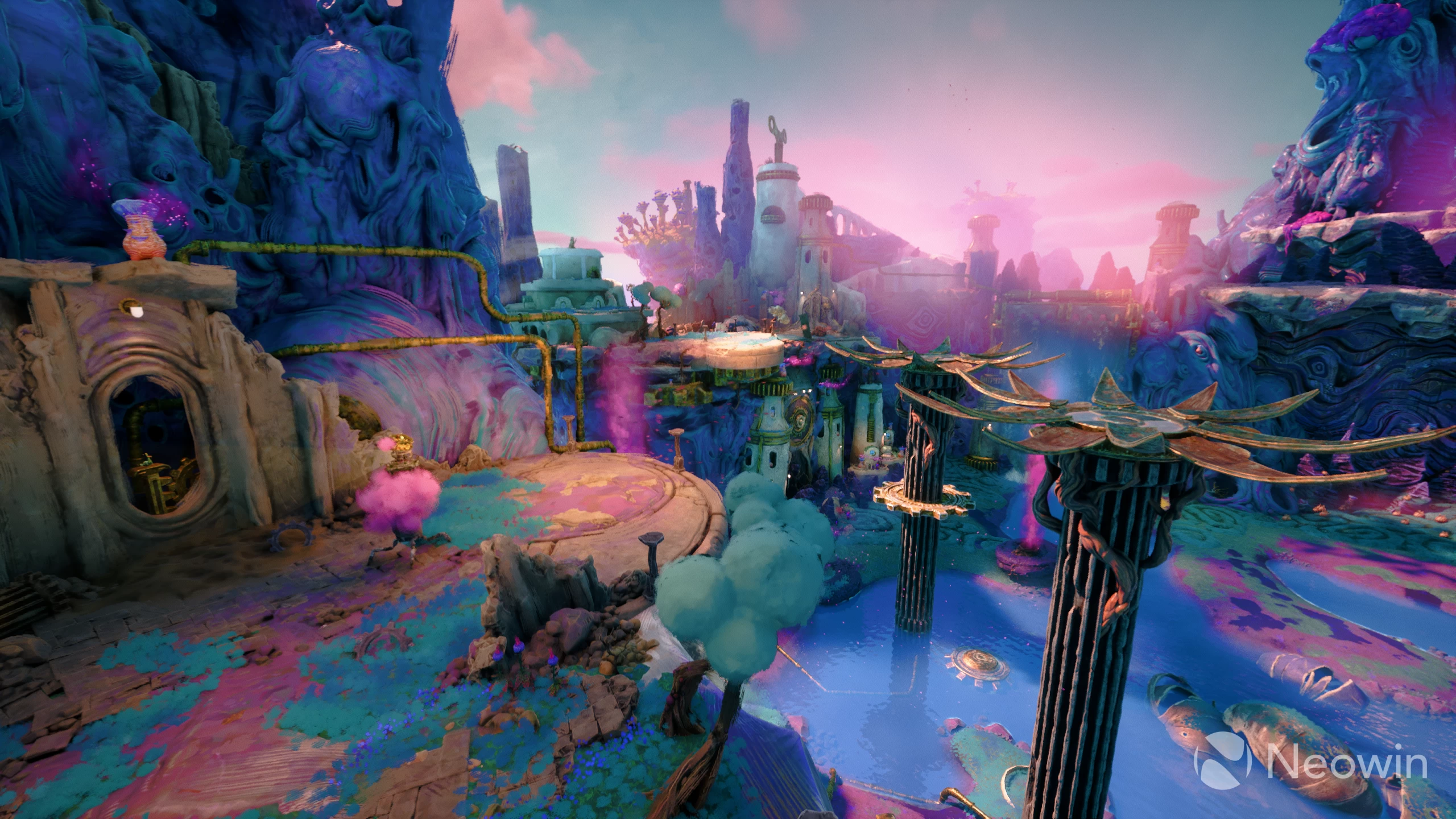
Each region has its own unique type of puzzle elements. These can range from the lighthouse gaining the ability to jump using cotton candy all the way to gaining time-altering powers, temporarily of course. The game isn’t afraid of ditching these elements entirely once their specific region is completed, so every new area we step into feels completely fresh.
While I could explain the puzzles seen in the starting levels as simple, Keeper never really ramps up the difficulty to frustrating levels at any point. It would much rather expand on taught mechanics slowly, but staying in line with the rest of the game, I never found there to be a stressful nature to it, like needing fast reactions or pinpoint accuracy. Shortcut pathways open up frequently to avoid backtracking, and simple light- or sound-based directions appear in larger environments to gently guide me towards objectives. It’s a very chill experience for the most part.
While I won’t spoil you, the title ramps up in speed and pace about halfway through the game, changing the gameplay entirely. These imaginative transformations happen a couple of more times as the story continues. The surprises never stop coming in Keeper, and they are never ones I could have guessed would be happening in a game about a walking lighthouse.
Visuals, Animations, and Performance
The animations are masterfully done. As there aren’t any humans, or anything resembling one, even the most bizarre movements are believable and never fall into the uncanny valley. Of course, the lighthouse and Twig take the spotlight here. Things like the little expressions of the lighthouse as it wordlessly absorbs the environment around it or the way it responds to its bird friend when it is in danger manage to humanize the building and the creatures it meets in an impressive way.
Everything from the way that tiny metal creatures cheer my lighthouse as celebrative festivities kick off across their city to how a crustacean-like being is rousing troops while doing a very good impression of a shaman, it can all somehow be weird and endearing at the same time. The music and sound effects come and go with both orchestral and electronic mixes, reflecting the environment"s weirdness.
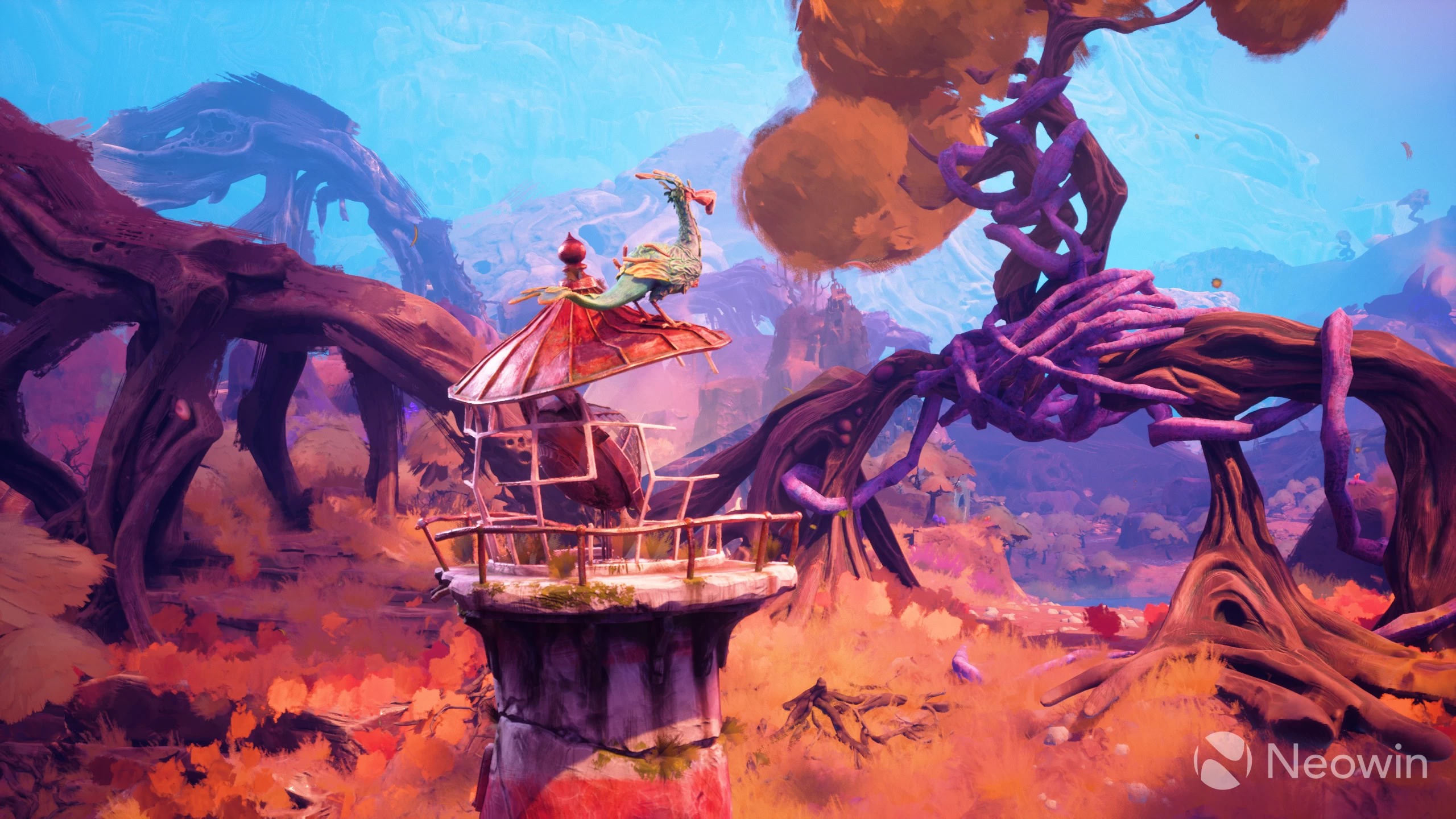
I have already talked about the visuals being impressive. However, it’s not just the impressive graphics or good use of volumetric clouds. The little side windows of the lighthouse glow with light whenever the building is exerting itself. The confusing and hazy effects that follow time travel shenanigans. The cotton candy-like cloud structure is seen at a certain level. These and so many more unique aspects elevate the visuals drastically, showing off just how much care has been put into the experience.
On my RX 9070 XT graphics card, with the game running at 1440p, hitting 60FPS at maxed-out graphics required me to use FSR upscaling at the Quality setting. It’s a gorgeous game, with largely slower-paced gameplay, so I can’t complain too much. Still, if you look at Keeper’s system requirements, they ask for some beefy internals on PC to play with some eye candy.
Conclusion
With Keeper, Double Fine has crafted an alien world to get lost in, a world that has a few answers but plenty of discoveries. The walking lighthouse was only the beginning of the game’s amazing weirdness, somehow delivering an exciting and emotional storyline using a building as a protagonist. The wordless campaign with its interesting puzzle-solving elements that shake up the gameplay for every region was a delight to go through, and I was looking forward to each reveal eagerly just as I would be parting ways with one.
Everything from the surreal visuals and peculiar animations to the cinematic camera angles all have a distinct quality. It’s a rather short game. I managed to finish it in six hours with around half the collectible achievements unlocked. This is a plus in my mind, considering there wasn’t even a second where I was thinking about a level overstaying its welcome. The pricing reflects this, as Keeper costs $30 to purchase outright.
Not everyone may be a fan of the wordless presentations or the focus on companionship. But for me, Keeper was a remarkable experience that I wish I could replay once more without having any memory of it.
Keeper launches on October 17, 2025, on PC via Steam and Microsoft Store, as well as Xbox Series X|S with a $29.99 price tag. It will also be available on Xbox Game Pass Ultimate and PC Game Pass on the same day.
This review was conducted on a pre-release PC version of the game provided by Microsoft.