December 2025 has been quite an eventful month so far in terms of major hardware driver releases. We have got a couple of them which bring Windows 11 version 25H2 support in the form of AMD"s new chipset driver release as well as Intel"s Wi-Fi and Bluetooth driver. Perhaps the biggest launch is AMD"s Adrenalin 25.12.1 display driver which enables users to use the suite of new AI-powered Redstone features.
Speaking of display drivers, Nvidia also recently rolled out its new graphics driver with version 591.44. The release brings Battlefield 6 optimizations, but other than that it also packs support for 32-bit PhysX for RTX 5000 cards, something that was originally missing.
As such, users who wanted to play older PhysX titles had to resort to using a separate graphics card for aid in the PhysX processing.
Now that PhysX is here on the latest Nvidia GPUs, we decided to test the new driver versus the previous one to see how big of a difference having hardware-accelerated PhysX on-board can be.
For the unfamiliar, Nvidia"s PhysX, originally developed by Ageia as NovodeX, is a real-time physics simulation engine, used for creating realistic motion and interactions in applications like gaming and robotics. It handles rigid body dynamics, deformable objects, and fluid simulations. The tech was open-sourced earlier this year.
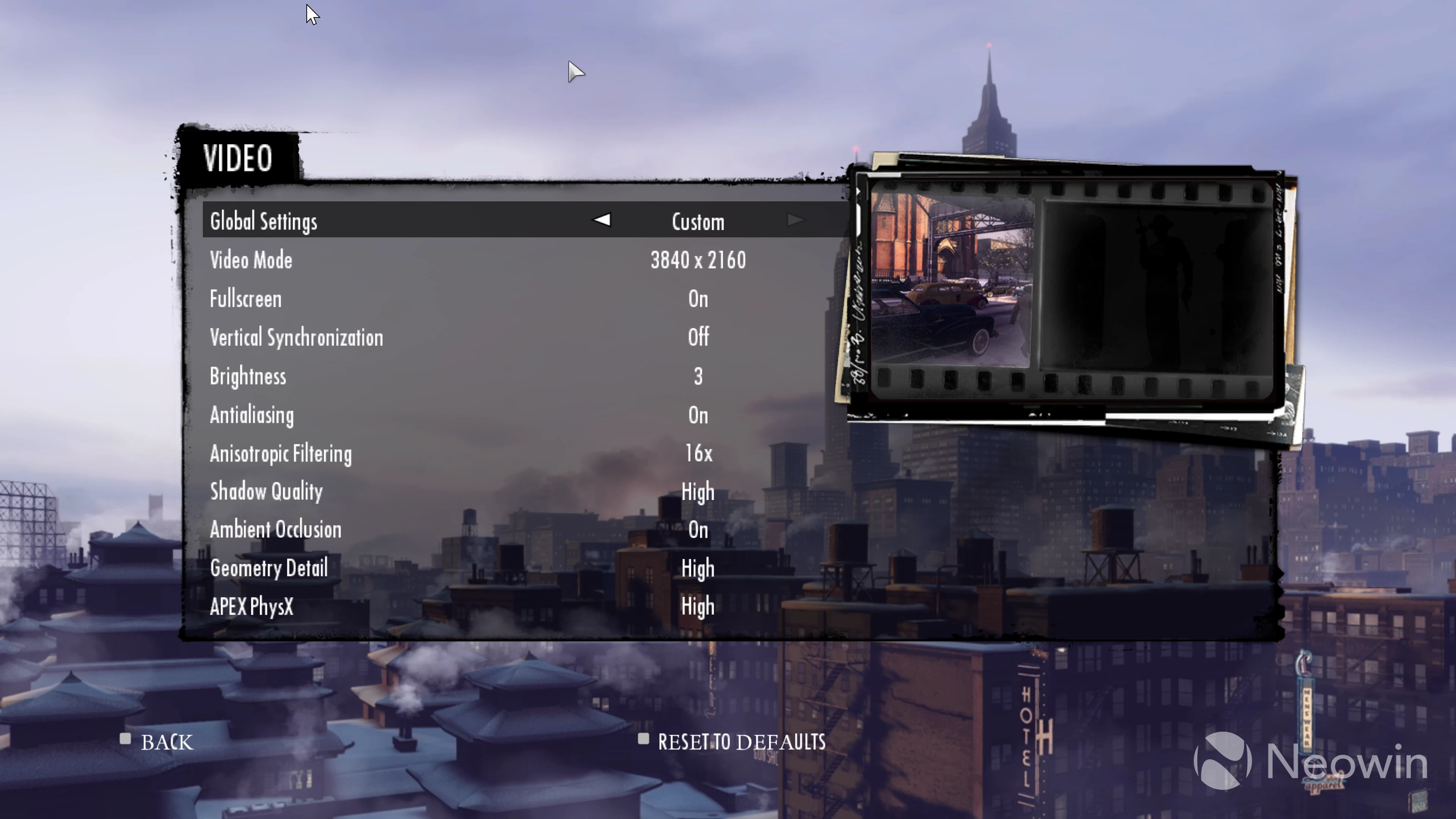
Without GPU-accelerated PhysX support, a system has to essentially do all those extra advanced game physics computing on the processor, which can be very taxing. To test how hard it is for a CPU, we selected CPU-bound settings to put the maximum possible load on the processor.
To do so, we turned down screen resolution and every graphically intense setting to the lowest, except shadows and geometry, as those two settings affect the physics of game scenes. Of course, the APEX PhysX setting was kept on the "Highest" to stress the CPU to the max.
Before that, here"s our AMD test rig (Thanks, Steven Parker, for lending me the rig and also for the help in conducting this test!):
- AMD Ryzen 9 9950X3D
- Gigabyte X870E AORUS MASTER (BIOS F9e)
- Corsair RM1000x (2024)
- Thermal Grizzly Kyronaut (33x33x0,2mm)
- 2x 32GB Kingston Fury Beast RGB DDR5 6000MT/s CL36-38-38-80
- T-Force Z540 2TB (PCIe Gen5)
- NVIDIA GeForce RTX 5090 Founders Edition (NVIDIA)
- Windows 11 24H2 Pro
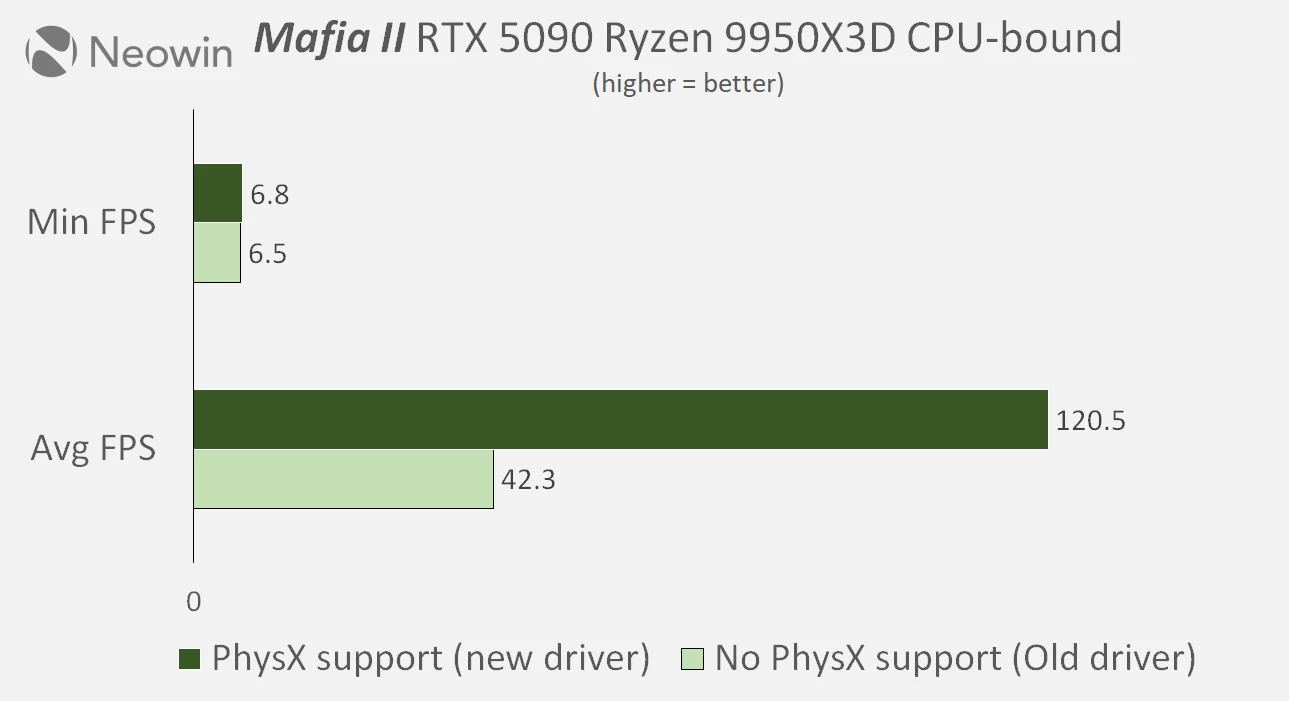
As you can see in the image above, the new Ryzen 9 9950X3D performs in a whole tier above with the newer PhysX-capable Nvidia GeForce 591.44 driver. There is a 2.85X or 185% improvement in performance on the newer driver in terms of average framerate output.
Thus even such a powerful 16-core 32-thread CPU was brought to its knees in a relatively old title due to the advanced physics simulations.
RTX 4070 FE and 5070 FE
Up next, we tested a GPU-bound scenario by setting all of the graphics options to the maximum so as to shift the workload focus from the CPU to the GPU. In this test we wanted to check the generational difference between a 4000 and a 5000 series card using the newer PhysX-capable driver.
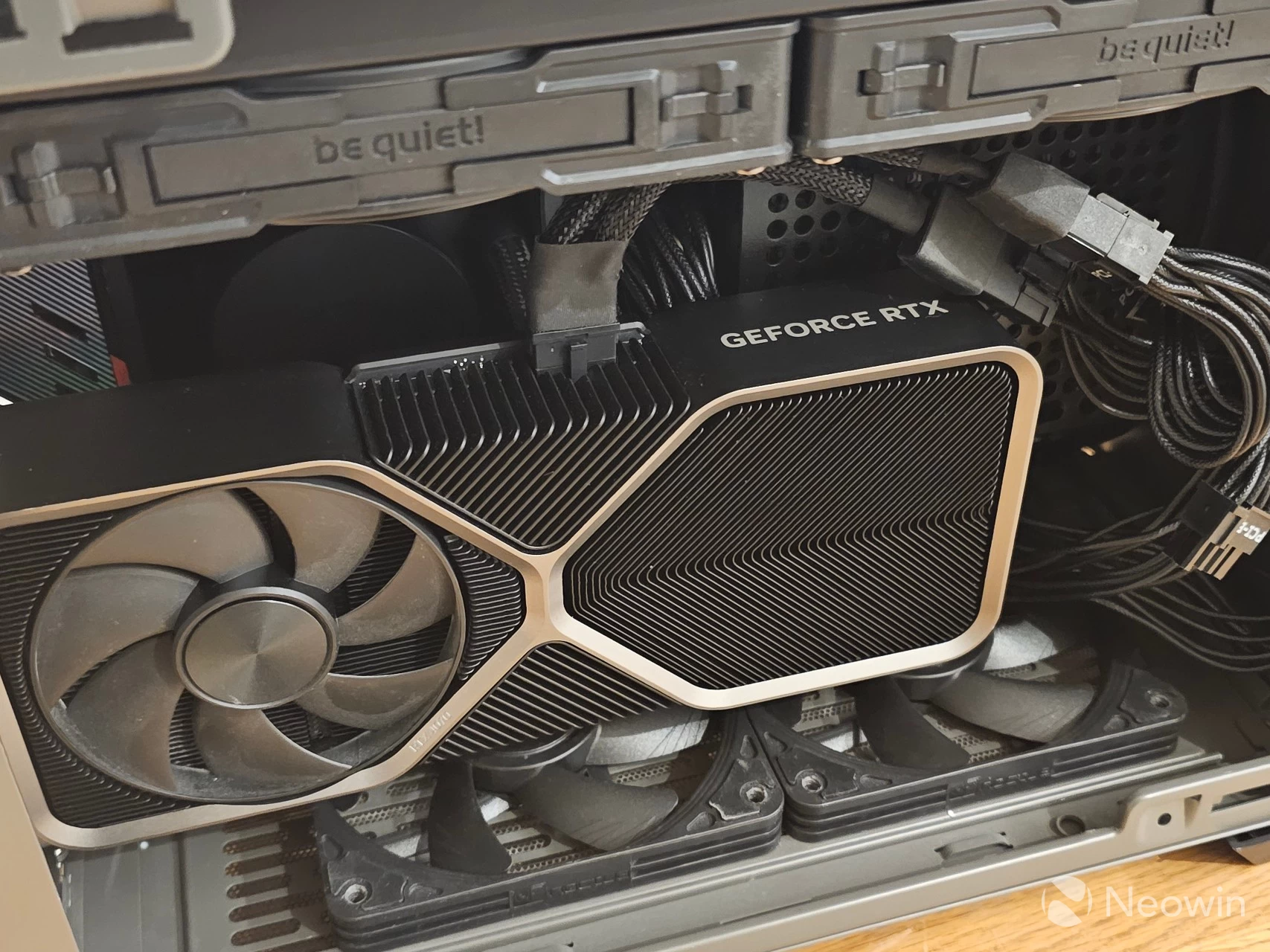
Before that, here"s our Intel test rig (Thanks, Steven Parker, for lending me the rig and also for the help in conducting this test!):
-
Cooler Master MasterBox NR200P MAX
-
ASRock Z790 PG-ITX/TB4
-
Intel Core i7-14700K with Thermal Grizzly Carbonaut Pad
-
RTX 4070 FE
-
RTX 5070 FE
-
Kingston Fury Renegade SSD
-
Windows 11 24H2
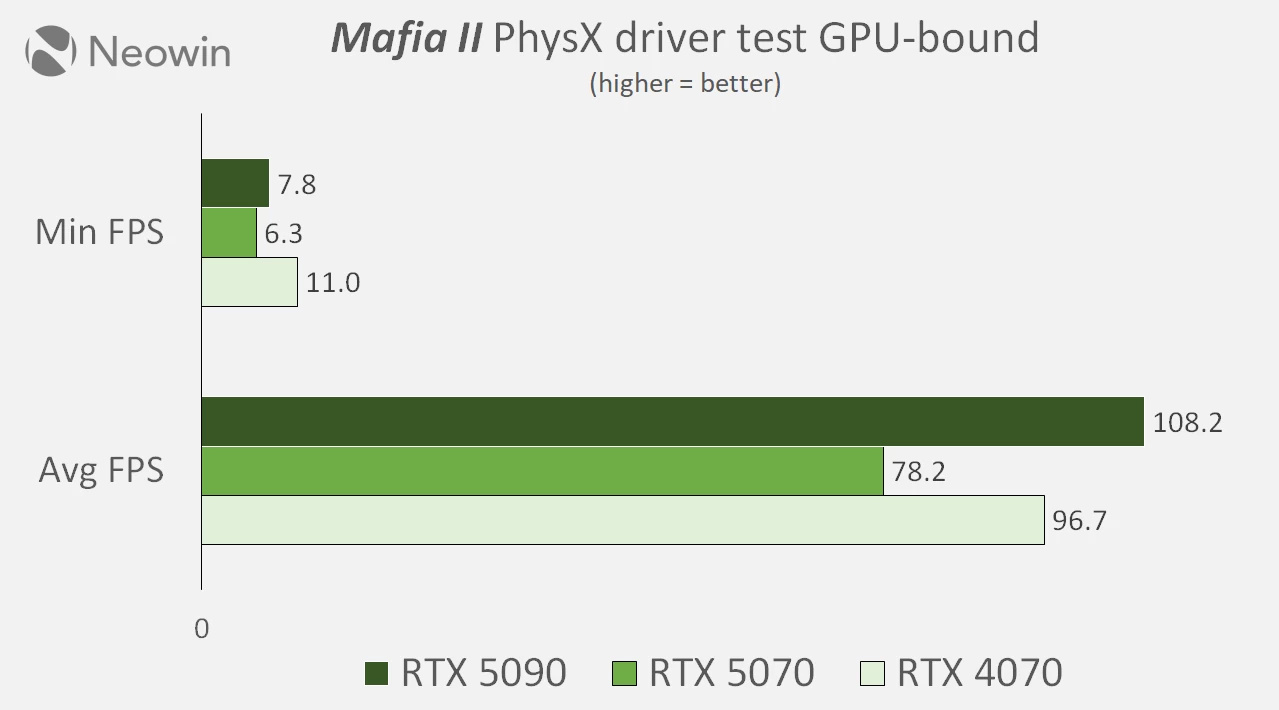
Interestingly, as can be seen above, the RTX 4070 is able to easily outperform the 5070 and this shows that the 50-series driver has a lot of overhead in it, either due to optimization factors or other potential reasons. The processor used here was an Intel Core i7-14700K.
We also have the RTX 5090 here as reference and that was paired with the 9950X3D. Since these are GPU-bound settings, the two different CPUs should have little to no effect on the scores.
The Takeaway
... is that hardware accelerated PhysX support still matters in 2025 and 2026 as processors are simply not built for that purpose. In the CPU-bound test we saw nearly three times better performance with it in place compared to when the driver did not support it. The difference is enormous as one of them is sub-60 FPS while with the other you can get a high refresh rate smooth experience.
Another key finding is the comparatively poor performance of Nvidia"s latest generation of cards versus the previous gen.
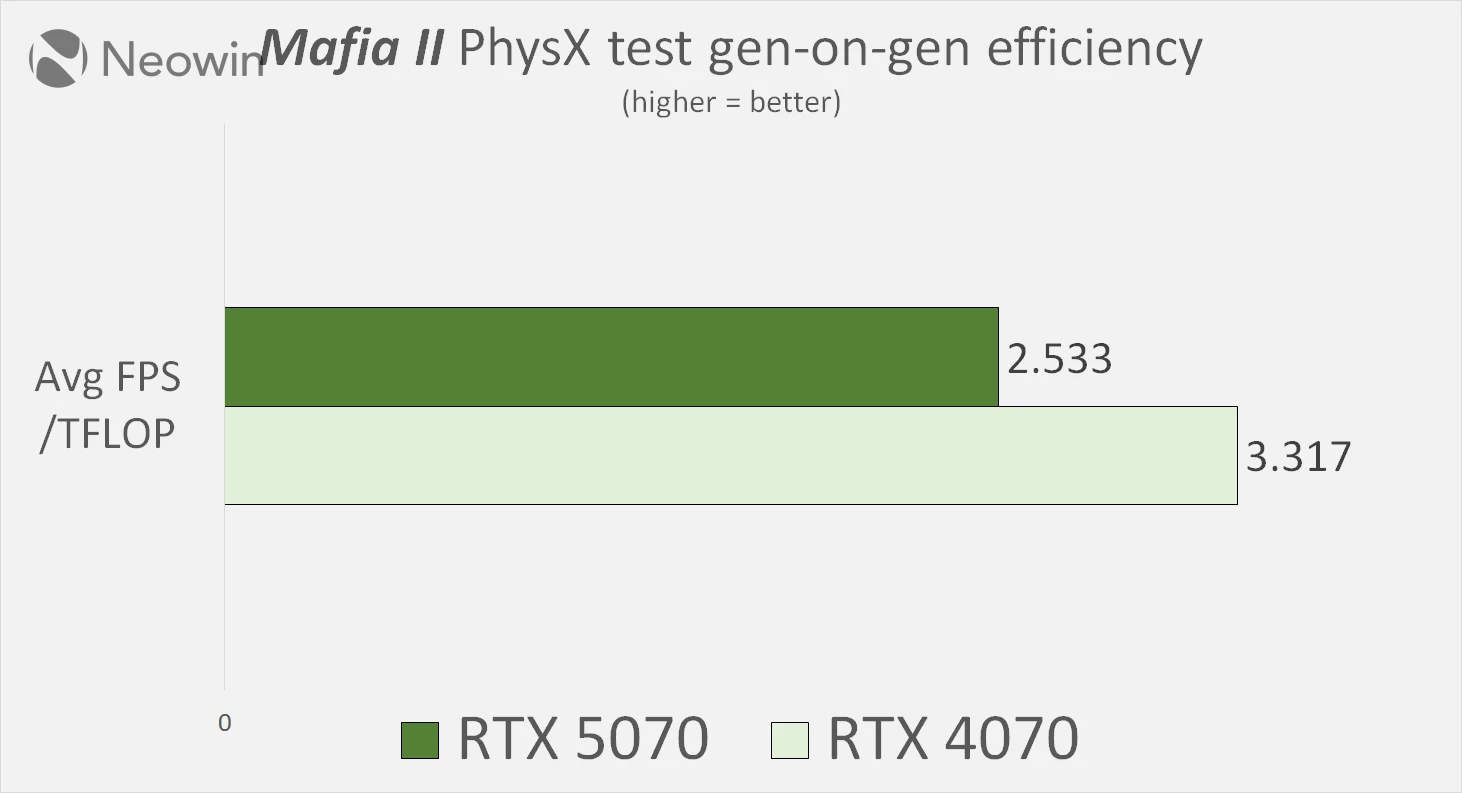
The above chart shows how many frames per second the 4070 and 5070 each delivered for every TFLOP of their shader performance. The former was clearly ahead by ~31% and this is despite it being on an earlier architecture, showing that PhysX optimization has some catch up to do on new GeForce GPUs.