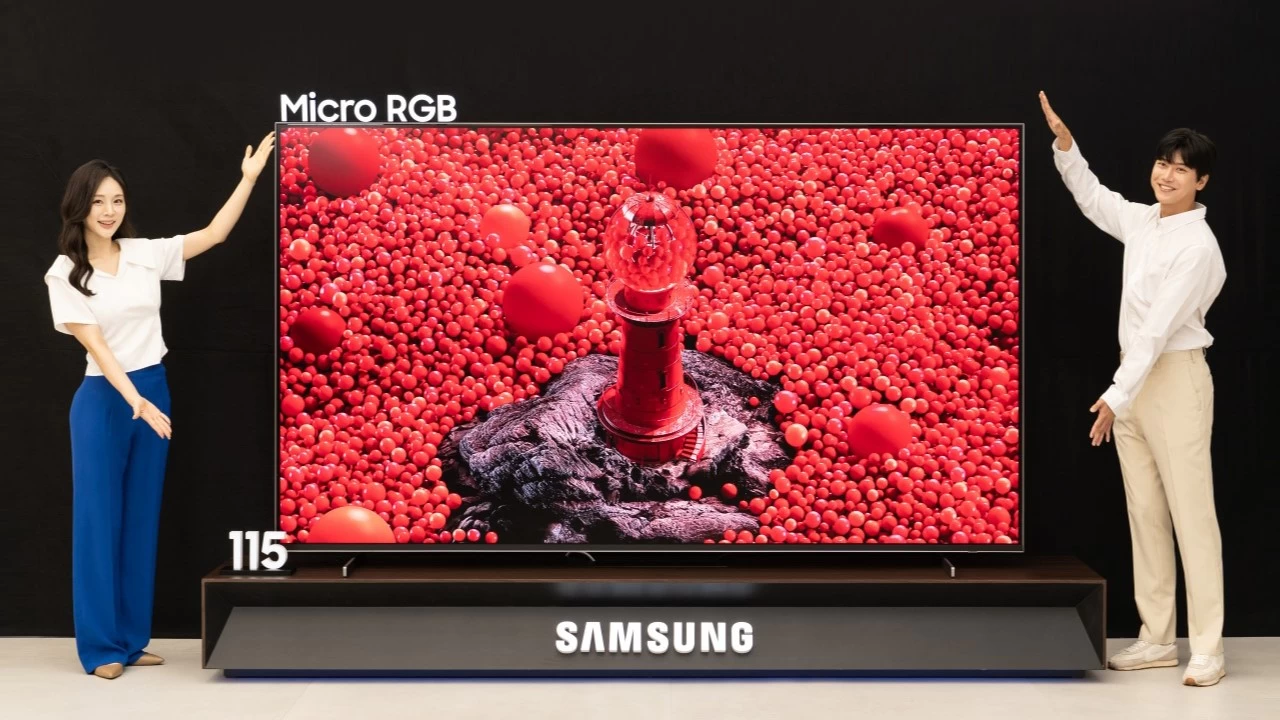
Samsung today announced the official launch of Micro RGB, the world’s first display to feature a micro-scale RGB LED backlight behind a large 115-inch screen. By mapping individually controlled red, green and blue LEDs at the micrometer scale, Samsung aims to redefine visual fidelity for home theaters, corporate showrooms and luxury venues.
The South Korean giant expects Micro RGB to "establish a new benchmark for color accuracy, contrast and immersive viewing in the ultra-premium TV segment."
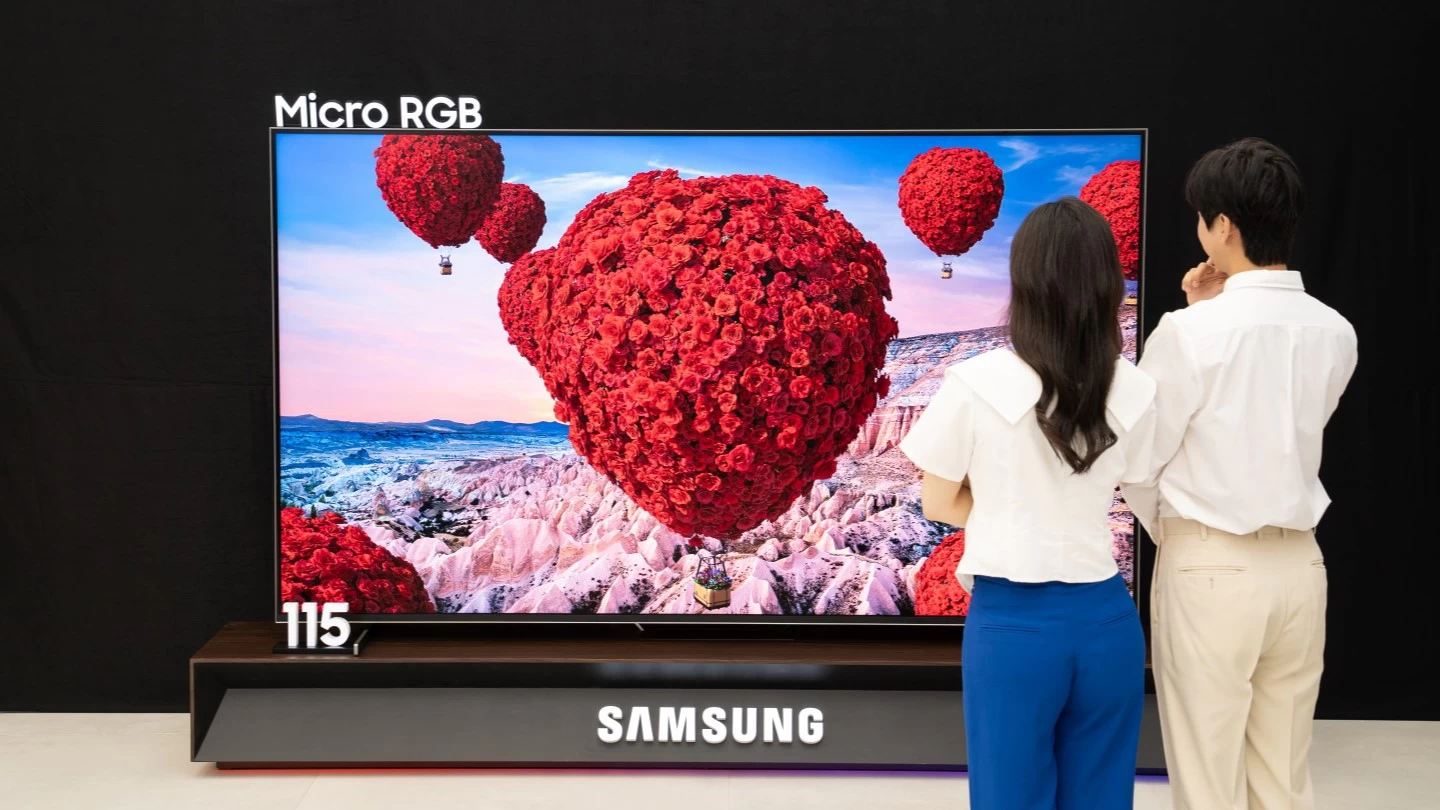
Samsung has explained how the technology works. Essentially, the display arranges every micro-scale (less than 100 µm in size) red, green and blue (RGB) LEDs in an ultra-fine pattern behind the panel. Unlike conventional backlighting, this architecture is said to enable precision control over each LED subpixel for subtle color gradations.
“Micro RGB achieves unprecedented precision in the control of micrometer-sized RGB LEDs, raising the bar for color accuracy and contrast in consumer displays,” said Taeyong Son, Executive Vice President and Head of the R&D Team of the Visual Display Business at Samsung Electronics. “With this launch, we’re setting the standard in the large-sized, ultra-premium TV market and reinforcing our commitment to next-generation display innovation.”
The display’s Micro RGB AI engine optimizes picture and sound in real time. Each frame is analyzed to adjust color output dynamically, while Micro RGB Color Booster Pro identifies scenes with dull tones and promises to intelligently enhance saturation for a more vivid experience. This claims to deliver 100 percent coverage of BT.2020, the International Telecommunication Union (ITU)’s standard for color space and gamut.
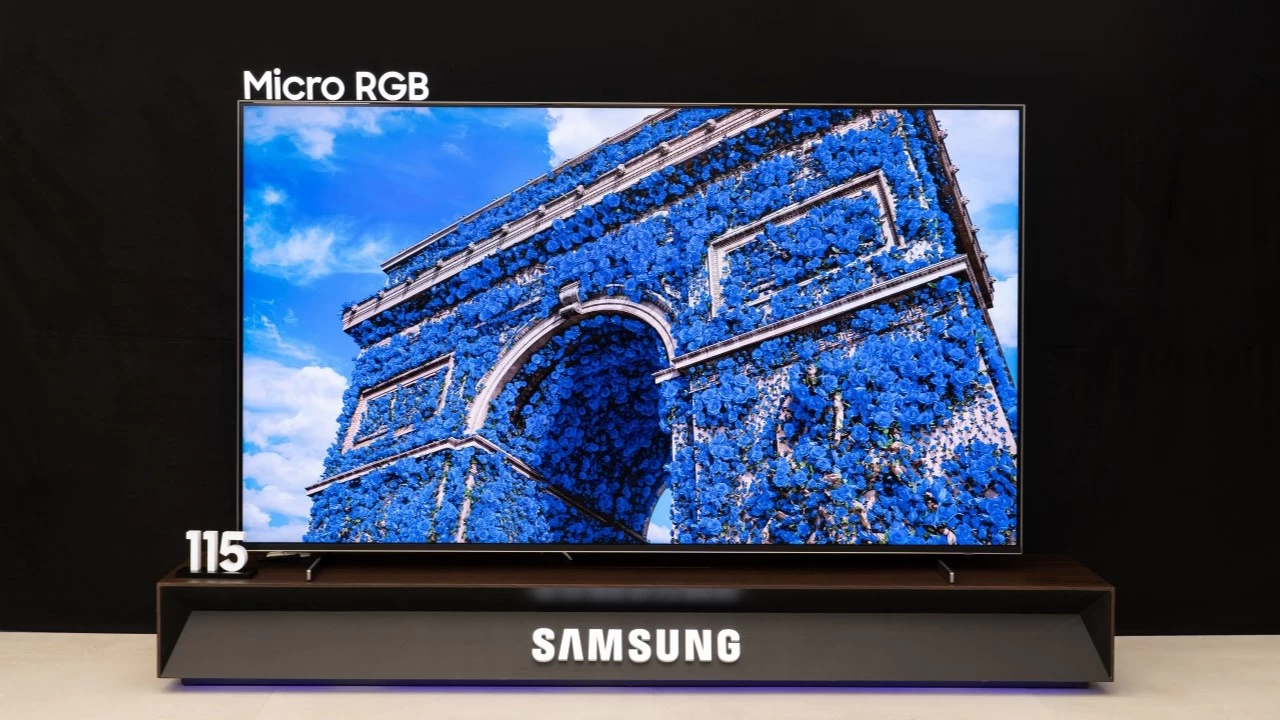
The tech giant also promises a seven-year free Tizen OS upgrade program for long-term support. Samsung’s Micro RGB has currently debuted in Korea but is set to launch in the US later this year, with a global rollout planned across various sizes to meet customer needs at different budget points.
Speaking of which, Samsung did not disclose any pricing information but it"s from the "ultra-premium TV segment" so must be very expensive.