This article is based on a preview build of The Outer Worlds 2. This is not a full review, so please note that certain aspects may still change before release.
I am a big fan of role-playing games. Whether in the form of first-person shooters, third-person action games, isometric turn-based experiences, or in tabletop form, I am there for any RPG that looks interesting. When Obsidian reached out to see if I wanted to play a section of its latest game prior to launch, I decided to jump in and see how it’s coming along.
While it seems much closer in my mind, The Outer Worlds 2 is coming five whole years after the original RPG. Like all good sequels, it aims to upgrade and overhaul many things while keeping what worked in the previous experience intact. From what I could see in my short time with the game, Obsidian has done everything according to plan.
Obsidian provided me with access to the prologue of the RPG. This meant I could go through the character creation process, select how many limbs I still had, choose my background and starting skills, select a weakness (I’ll get into that later), and go through the beginning of the game with no restrictions. It’s around an hour of gameplay from start to finish. Still, I did multiple playthroughs with new characters to see just how different the intro goes depending on the chosen skills, dialog options, and actions during gameplay.
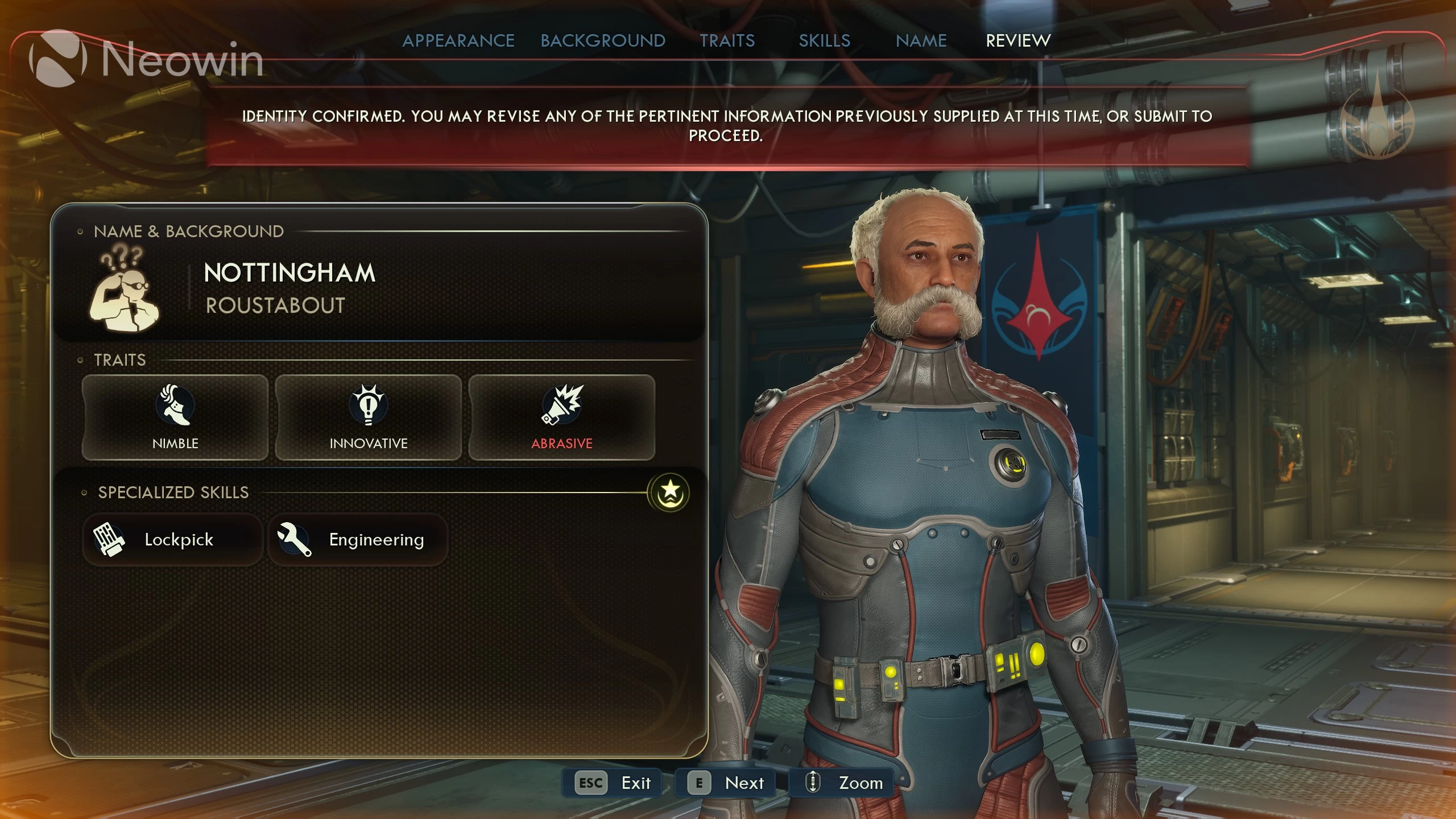
The Outer Worlds 2 takes place in a whole different part of the universe compared to the previous adventures, and this time, the protagonist is a part of the Earth Directorate faction as a commander.
After I quickly created a dashing soldier fit for the job, I picked one of the six personal backgrounds that the world and NPCs would react to while playing. These included some fun ones like Ex-Convict, Gambler, and my personal favorite: Roustabout. This made my character someone who stumbled upon greatness completely accidentally and still doesn’t know what exactly is going on.
Next came the Traits, letting me choose up to two positive characteristics I could attach to my role-playing experience. These included the usual stars like Brawny, Lucky, Nimble, Suave, and Brilliant, affecting what skills I could utilize. However, choosing two positive Traits has the downside of coming down with a negative Trait, which could mess with skills, combat effectiveness, or conversations. It’s a fun little mechanic to make sure not everything goes to plan in every situation.
Without going into heavy spoiler territory, the Earth Directorate is investigating a string of disasters tied to the Skip Drives that this universe’s people use to travel faster than light, and this is where we come in to see how we can resolve or mess up the situation even further. As the actual game begins, I am introduced to the rest of my squad as we prepare for a special covert mission. Each member of the team has their own personal agenda and outlook on how they should serve the Earth Directorate, ranging from loyal subjects to those who only look after their own backs.
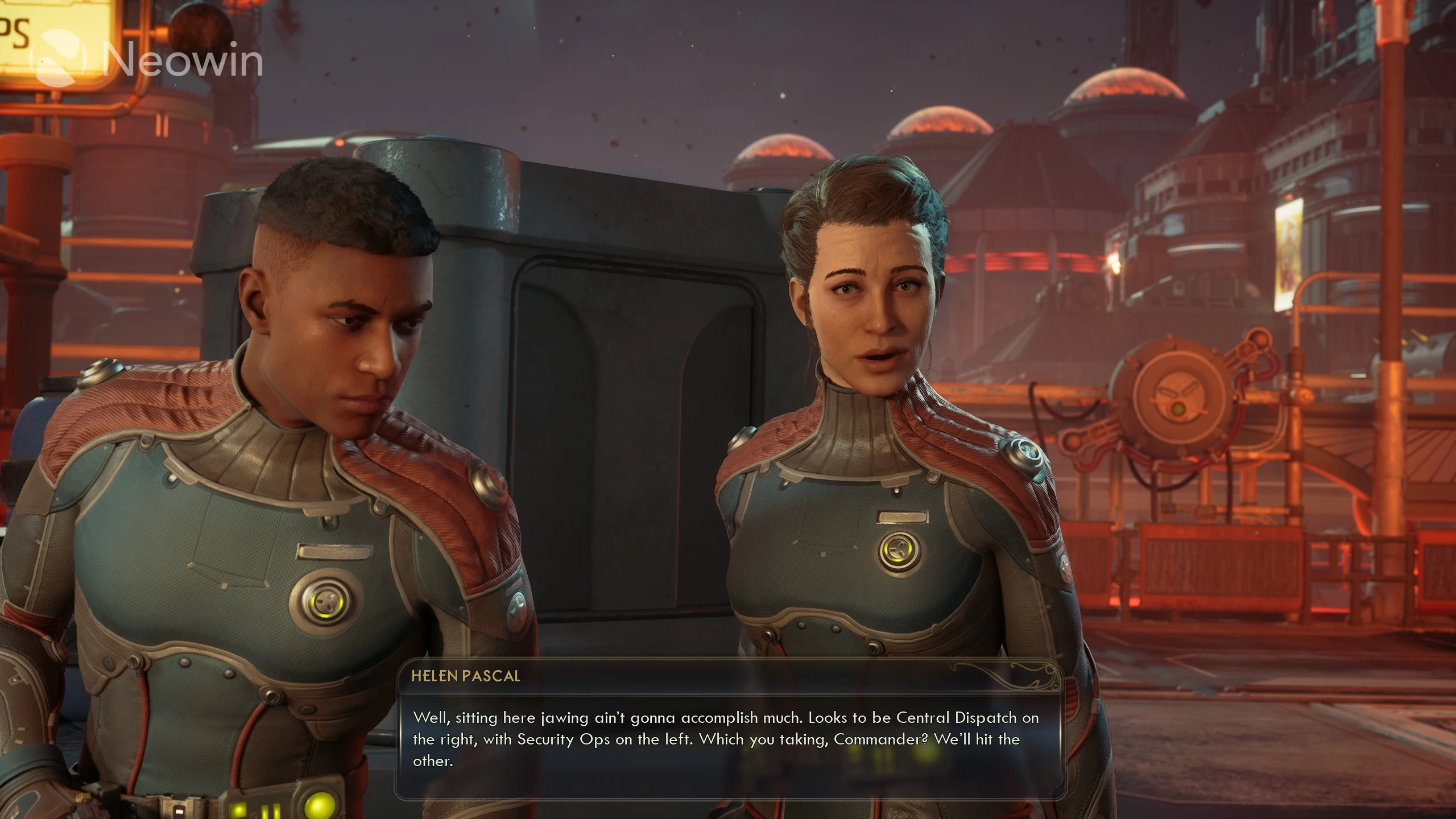
Niles is one of the soldiers under my command, and from the start, he is highly impressionable. Just a few conversations are enough for him to look at his job in a new light. Through my multiple playthroughs of the prologue, I saw that depending on how I responded to his questions or statements, his whole demeanor and later actions would change. Considering he is already confirmed as one of the companions we would have in the campaign, I can’t wait to see just how much the relationship evolves going forward.
Right from the start, my character’s movements and animations feel smooth, with movements like sliding, jumping, and sneaking all feeling solid to perform. Even actions like wrestling open a stuck door, lock picking, and turning engineering knobs inside wall panels (all depending on what skills are unlocked) have a certain spark thanks to the smoothness of the animations and gestures.
I should also mention that third-person perspective is now an option in the sequel, too, letting you play the title as an over-the-shoulder action experience instead of an FPS. There is even a third, more drawn-back, third-person camera option, but I found looting or paying attention to details more difficult with this. A simple keyboard shortcut switches between all three on the fly.
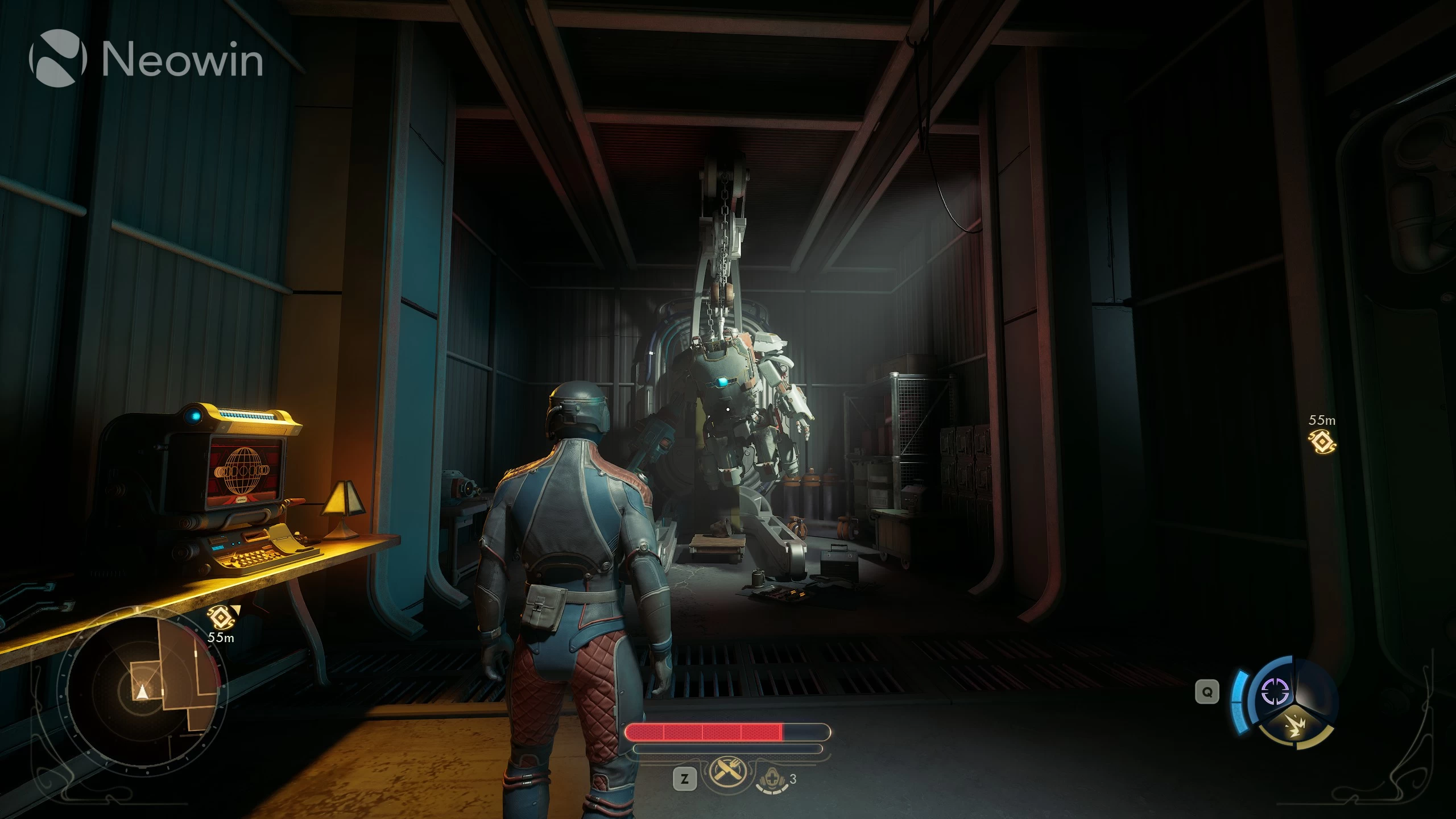
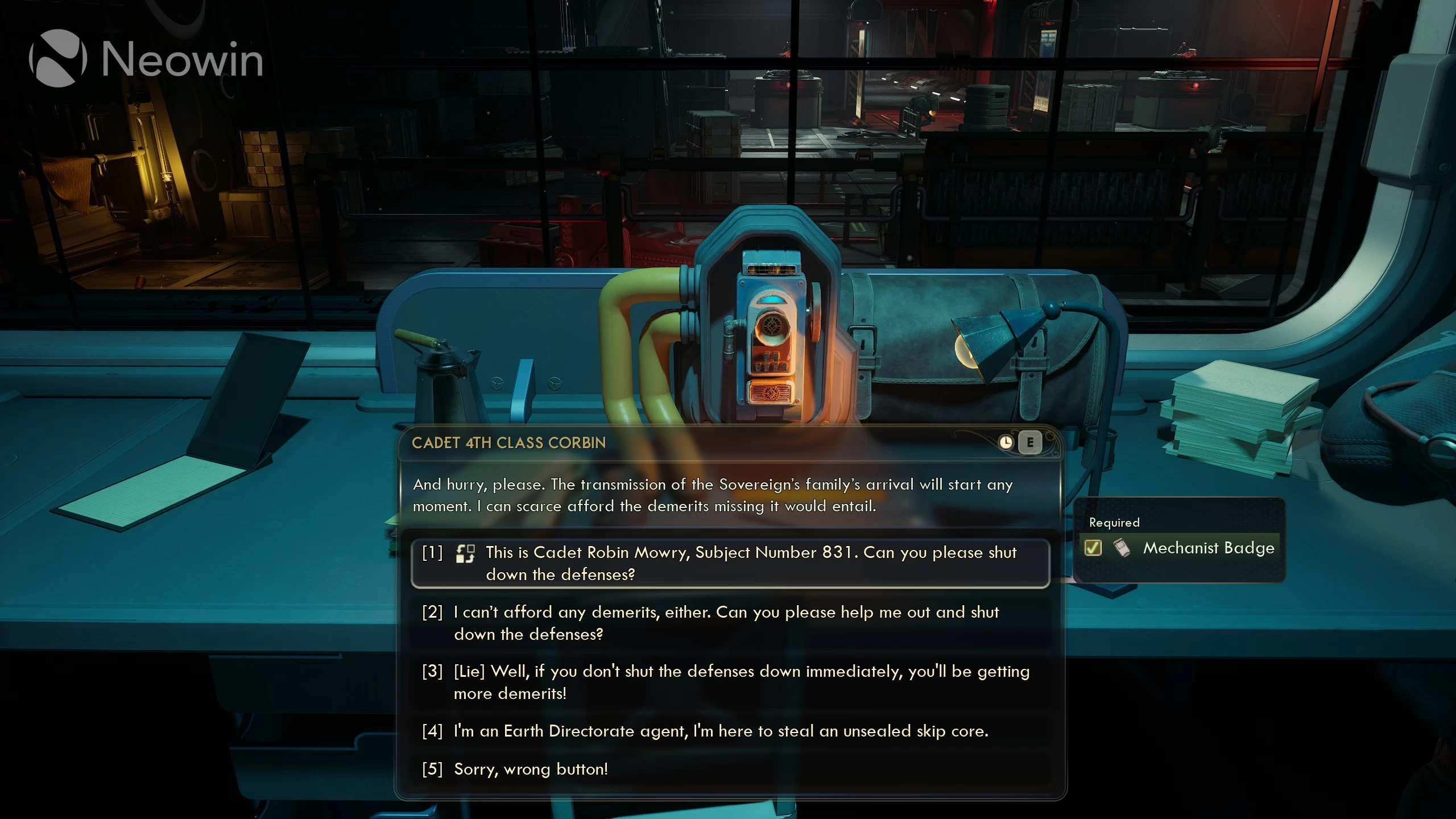
Heading into the secret science facility, the game begins throwing multiple options for solving issues. Once a random alarm goes off, I could talk down a security guard using my Speech skills and the information on a note I found, or sneak through a hidden grate after lockpicking, or simply blast through the entire section with my trusty sidearm. The game continued to offer solutions like these throughout the prologue, making it seem more like an immersive sim at times.
There was also a split-off point where I could choose to tackle a more combat-heavy section or a stealth-oriented part of the mission. Whatever option I choose, my squad will do the remaining objective. I found the stealth section to be much more enjoyable. It involved gaining a melee weapon, killing guards using silent takedowns (finally!), using ducts to move around, and even hacking giant robots to betray their masters.
When action would break out, I was fighting soldiers with firearms, melee weapon users that would rush me, and several types of robots. I only got to use the pistol and rifle during the prologue as long-range weapons, and they felt quite satisfying to use. While underwhelming compared to some of the energy weapons with crazy effects that will undoubtedly return later in the game, the smooth animations and sound design of the weapons made me a fan of combat quite quickly. My weapons made just the right amount of clicks and pops to satisfy me. The bullet-time ability is still here, too, letting me make quick work of any enemies out of position or rushing me with their batons. I could even shoot grenades out of the air while I slow-mo.
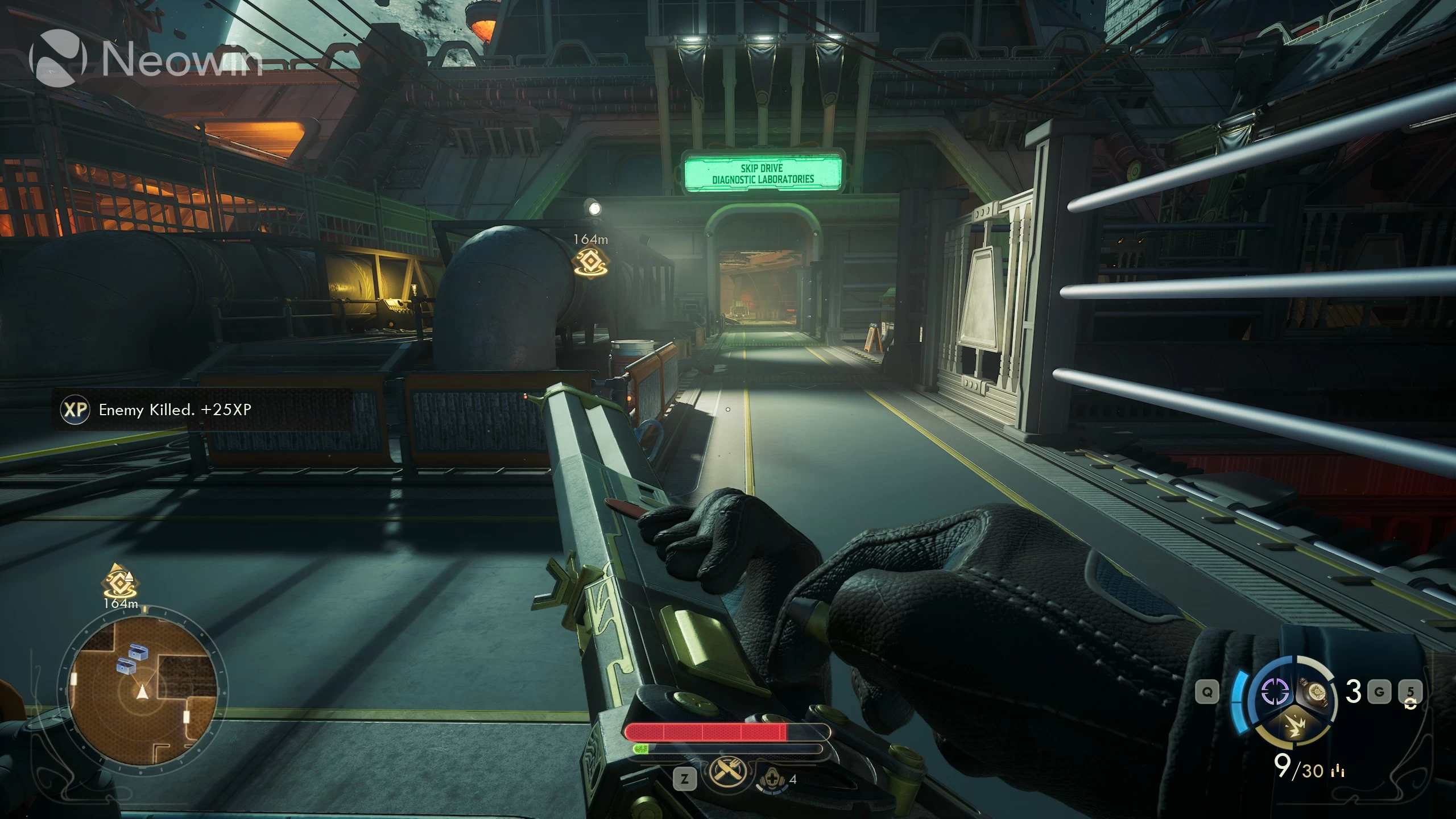
Much like the original, it’s clear that Obsidian isn’t going for an open-world sandbox RPG experience. Instead, it is focusing on offering interesting characters, quests with multiple solutions, and overall, a deeper narrative. Exploration is still deeply rewarding. Other than valuable loot, my unwarranted escapades around the science facility usually had me stumbling on new solutions to use with objectives and alternate paths, as well as collectibles.
Even guard patterns would change depending on previous choices made within the quest. Playing a certain propaganda broadcast on all displays within the facility at an earlier stage, as an optional decision, had a group of guards huddling around a large television later in the mission. Scouting around this area’s ventilation, I found a hidden panel that would trigger an electric discharge on the broken floor paneling near the display, instantly removing the room’s defenses. Next time I came around to the room without the video swap, the guards were patrolling the area like normal, making me find another way to pass through if I didn’t want to start a firefight.
Depending on the skills and background I chose during character creation, entire pathways or loot could be blocked off from use. This can sometimes make the head-on guns-blazing option the only solution. I once did not have hacking or lockpicking to go through a side door, and also didn’t have enough speech skills, or luck, to convince a guard to let me through quietly. This ended up being a large fight involving squads of human and robot enemies. If the rest of the game’s quests follow the same patterns, the number of variations players will have available for completing tasks will be impressive.
This was a pre-release preview build, and while I probably shouldn’t get into the nitty-gritty performance details, the game ran phenomenally on my PC. It is housing an AMD Radeon RX 9070 XT and a Ryzen 7 3700X, with the display being 1440p. The only hiccup I experienced and reported to the studio was a crash I could replicate when playing with ray tracing enabled. The game did look extra shiny with it enabled, though.
After this little taste, I am solidly in the ‘can’t wait’ group for The Outer Worlds 2. The above prologue delivered interesting characters and a sci-fi mystery that has a larger draw on me than the original’s overarching plotline. Obsidian’s iconic dark humor has returned in a good way, too. So far, the game doesn’t overdo it, as I found that not all characters are attempting to make a joke out of every conversation. It’s a hard balance to keep, but if a studio can nail it, it’s probably this one.
By the end of my preview access, I was itching to go beyond and try out the new skills system, the expanded world zones, meet the newly revealed companions, and find out where the story goes beyond the prologue’s flashy ending. I guess I will just have to wait and see like everyone else.
The Outer Worlds 2 is coming out on October 29, 2025, across PC (Steam and Microsoft Store), Xbox Series X|S, and PlayStation 5. It will also be available via Xbox Game Pass Ultimate and PC Game Pass subscriptions.