With the AI race in full swing, Big Tech companies are constantly at each other’s throats to come out on top. Every day we get news about new LLMs, integrations, and breakthroughs. We’re long past the “chatbot phase,” as AI is now infiltrating new industries and finding fresh use cases almost weekly.
All this innovation requires massive infrastructure, and companies are spending hundreds of billions on it. Or more precisely, companies are spending billions on building AI data centers.
These giant facilities are the hidden backbone of today’s tech. On the consumer side, though, people have grown allergic to even hearing the words “AI data center.” The boom has triggered massive hardware shortages and skyrocketing prices. It forced memory makers to shift almost all their best chips away from gaming/consumer cards to feed the enterprise hunger of the hyperscalers.
Despite being in the headlines nonstop, AI data centers still feel abstract to most people. Everyone knows they exist, many blame them for the current GPU nightmare, but very few truly grasp just how enormous, expensive, and power-hungry these things really are.
To put the scale in perspective, here’s our list of the 10 currently largest AI data centers owned (or heavily controlled) by the major players.
Top 10 biggest AI data centers in the US
AI data centers are giant, super-powered computer warehouses built specifically to run today"s advanced artificial intelligence. Companies use these supercomputers to train and run the AI models and support their integration into their services. These “factories” are crunching insane amounts of data at blistering speeds.
Regular data centers handle the “old-school” infrastructure like websites, emails, or cloud storage with standard processors. But these beasts are stuffed with hundreds of thousands of the most powerful GPUs (or custom chips) money can buy. They’re also connected with ultra-fast networking and cooled by liquid systems that prevent meltdown.
Each of the data centers on this list draws 200 MW to over 1 GW of power capacity, which is as much electricity as a small city. If you were shocked by how much electricity the Bitcoin network consumes, you may want to sit down for the rest of this article.
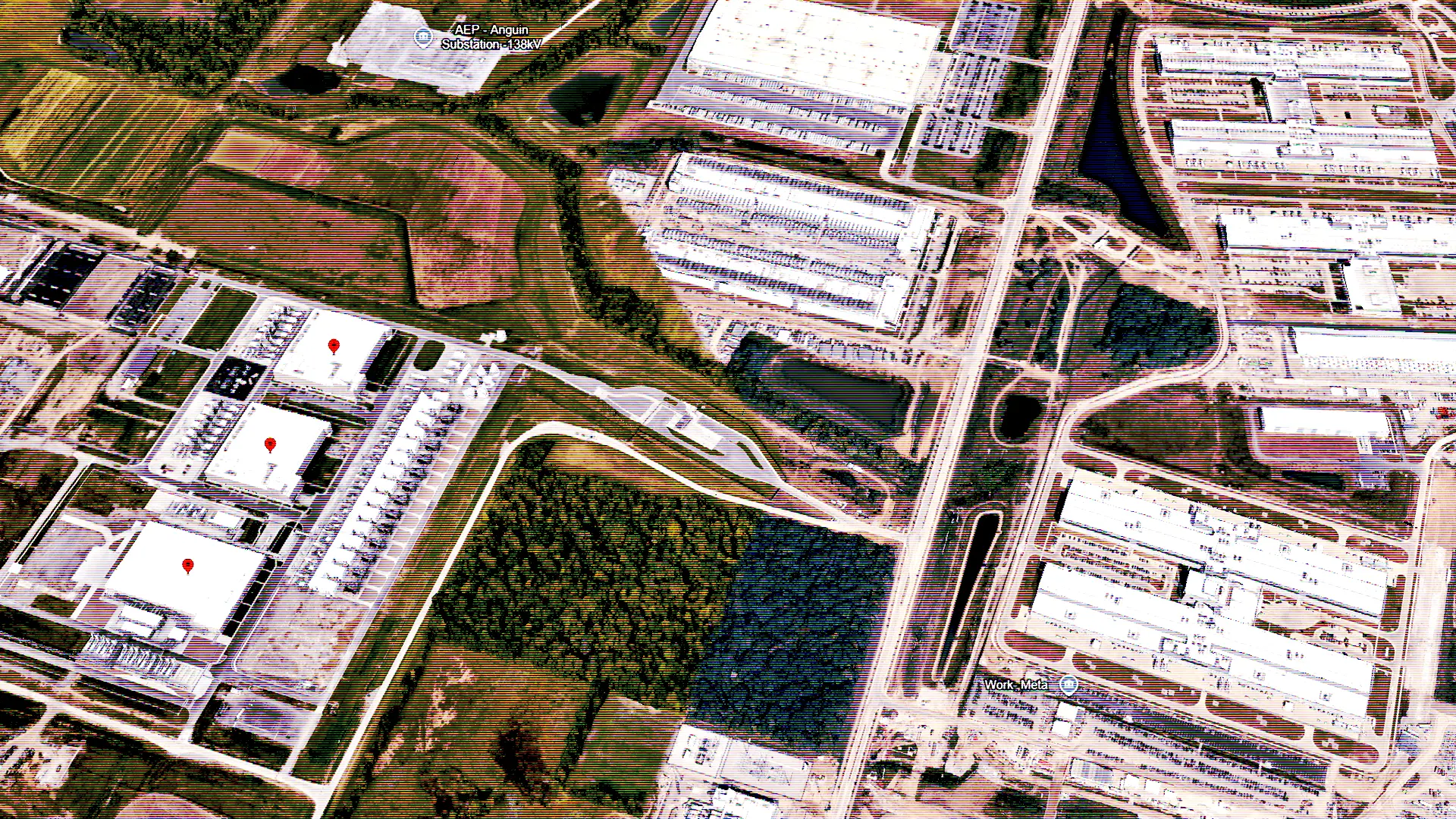
The data centers are ranked based on their estimated power capacity. However, you should look at these scores more as “ballpark” numbers, as companies often don’t disclose the full “specs” of their facilities. The rankings are based on available public data, as well as unique insights from the research firm SemiAnalysis. Matter of fact, the data centers are spawning so rapidly, that Google Earth shows just construction sites where some of the facilities are located today.
So without further ado, these are the biggest AI data centers owned by Big Tech:
10. xAI - Colossus 1 (Memphis, Tennessee)
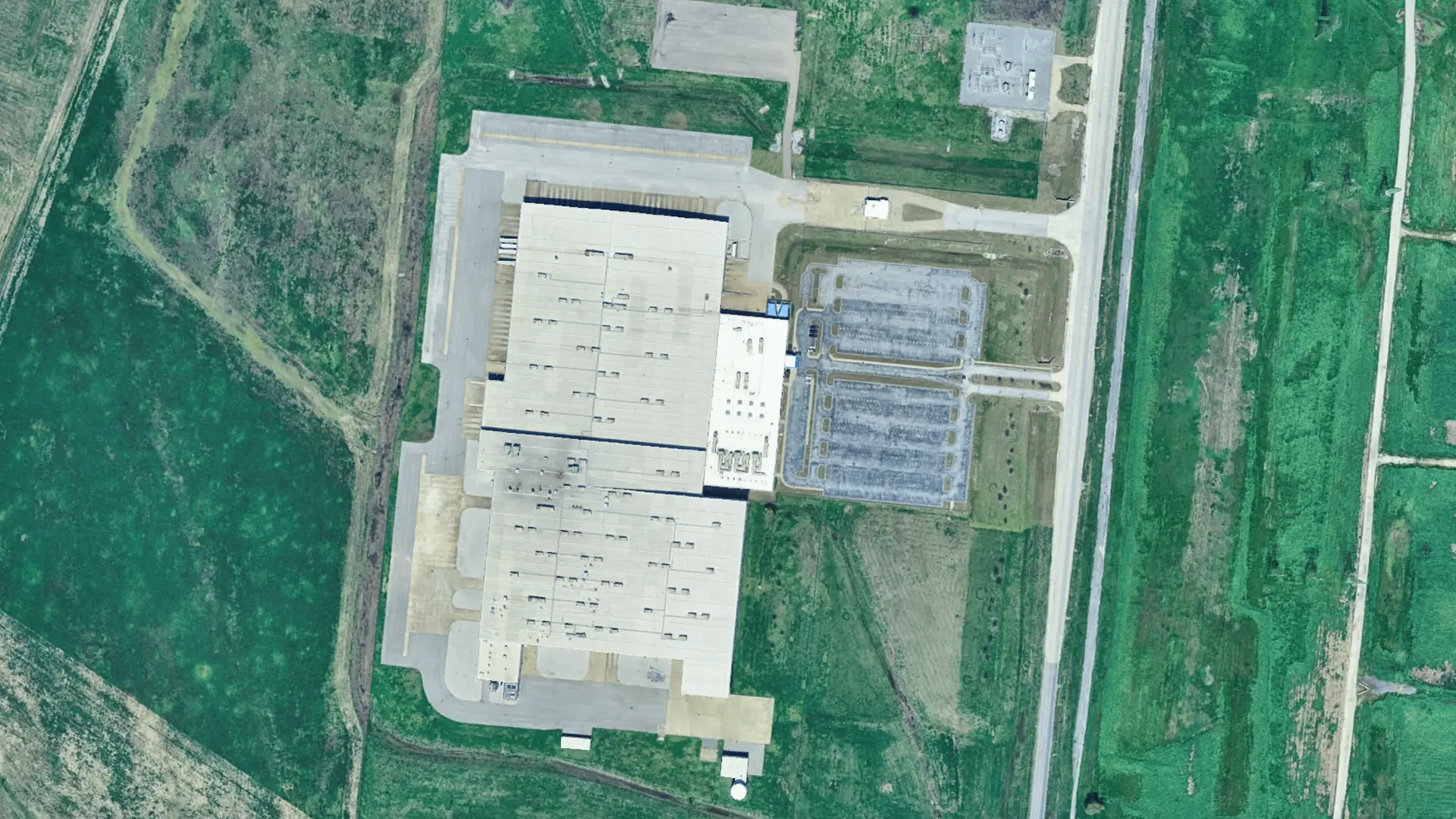
Elon Musk’s original site that kicked off xAI"s existence. This is where Elon"s AI assistant, Grok was first trained. The entire facility was built in just 122 days. It remains fully operational, although bigger projects were moved to Colossus 2.
- Power capacity: ~300 MW operational.
- Number of GPUs: ~200,000–230,000 NVIDIA (Hopper + GB200 mix).
- Total investment: Approximately $30–40 billion, including Colossus 2 (recently secured $20B series E funding)
- Operational since: September 2024.
9. OpenAI - Stargate Project (Abilene, Texas flagship + additional sites)
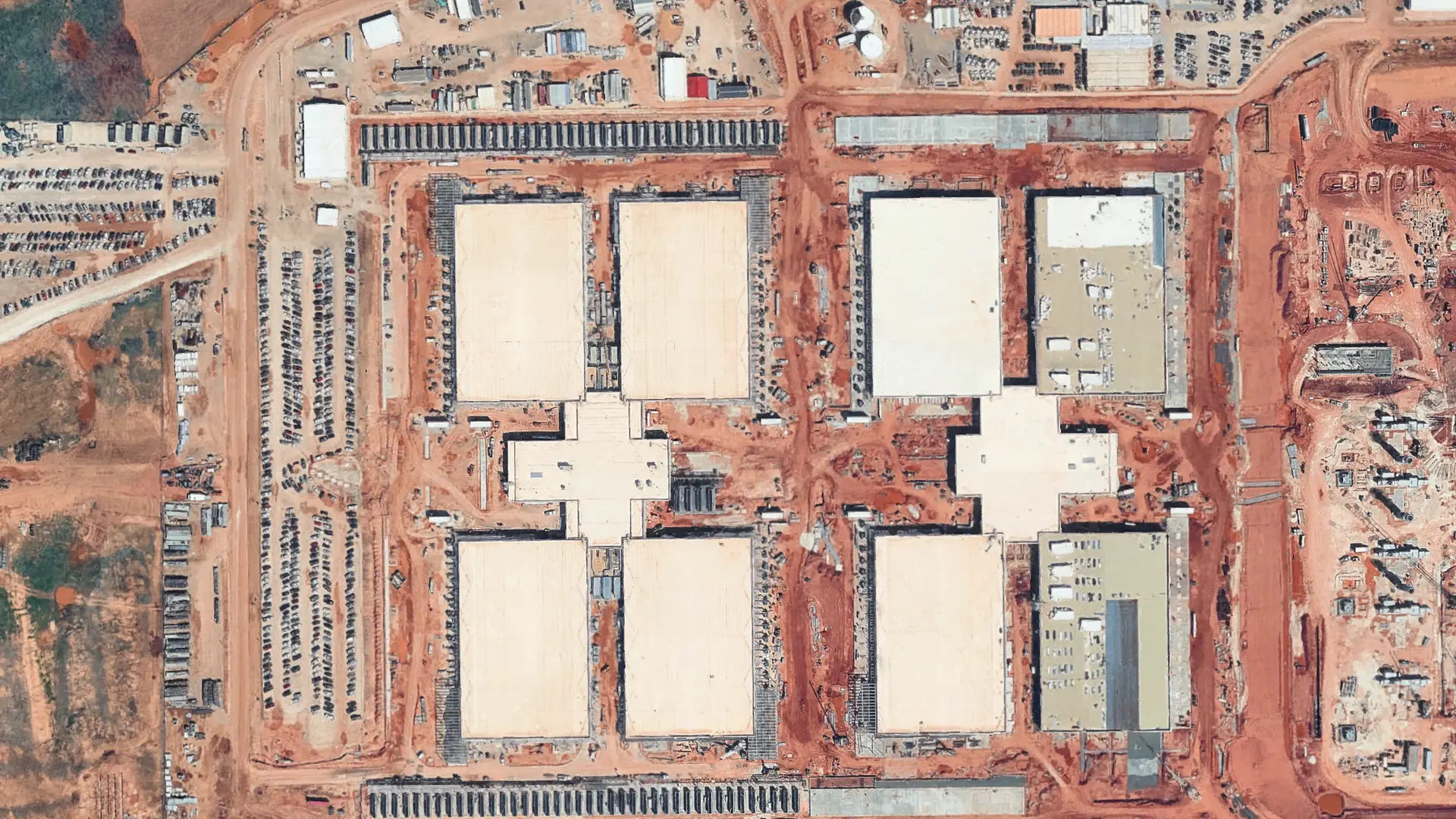
OpenAI"s multi-partner mega-project with Oracle, Crusoe, and SoftBank. First buildings operational since late 2025, with five more planned for mid-2026.
- Power capacity: ~200 MW initial operational (scaling toward 1+ GW across sites).
- Number of GPUs: Up to ~150,000 NVIDIA GB200 in phases (first racks already running).
-
Total investment: Full reported investment: $100 billion (initial deployment phase), with long-term vision of $500 billion across multiple sites.
-
Operational since: Late 2025 (initial training workloads running, full campus expansion expected by mid-2026)
8. Amazon (AWS) - Mississippi data center (Canton, Mississippi)
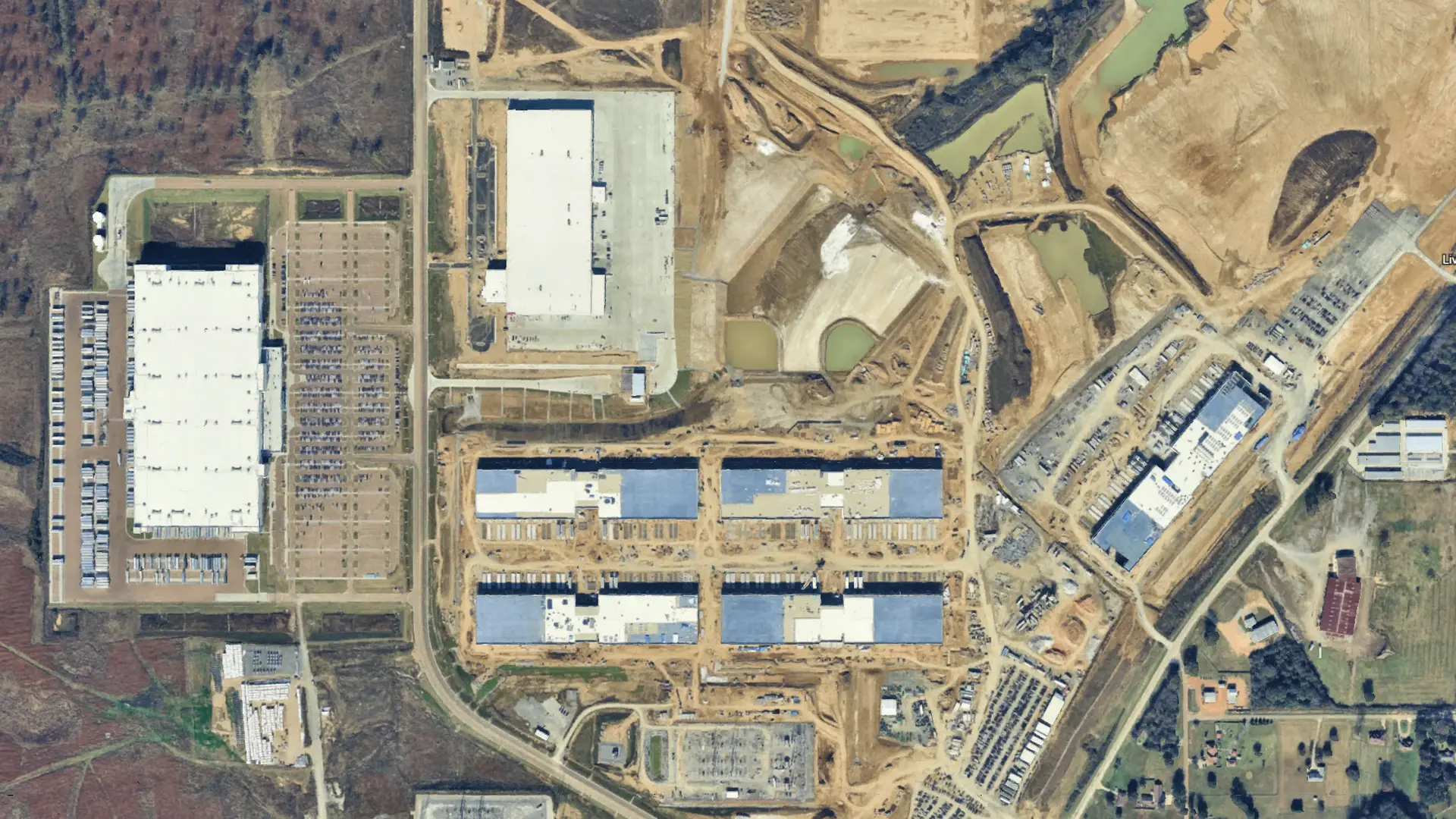
Still partially under construction. The site is close to existing AWS facilities, which it leverages for logistics and power. Unlike most data centers owned by other companies that use NVIDIA GPUs, it stores Amazon’s own custom-made Trainium 2 chips.
- Power capacity: >300 MW (scaling to 1 GW by mid-2027).
- Number of accelerators: Hundreds of thousands of Trainium 2 ASICs.
- Initial investment: $3 billion.
-
Operational since: Partial from 2025, full scale expected by 2027.
7. Microsoft - Fairwater campus (Mount Pleasant, Wisconsin)
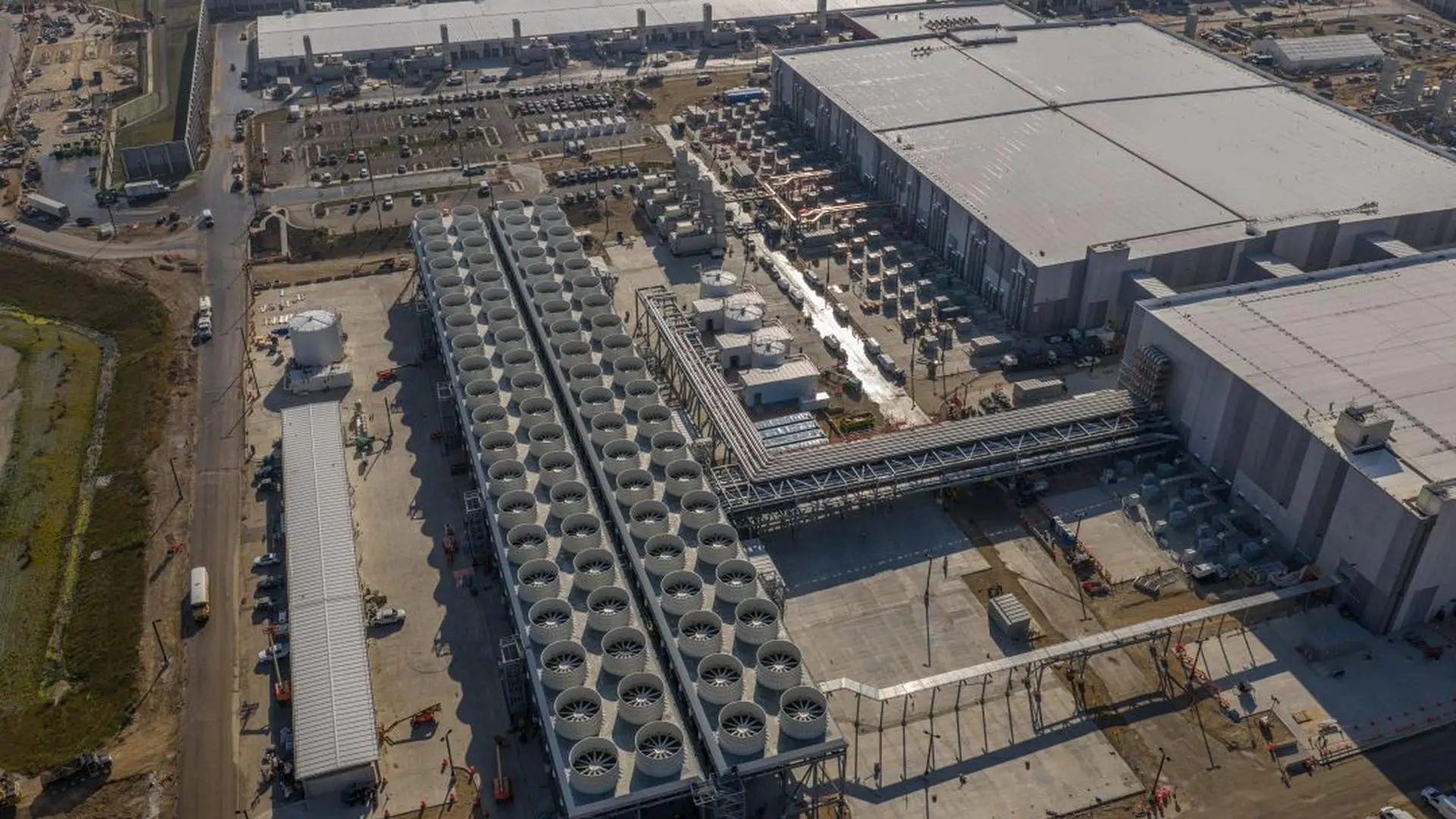
The original Fairwater prototype, which Microsoft claims is the world’s most powerful AI data center. The data center pioneered zero-water liquid cooling on 315 acres of land, and is the blueprint for Microsoft’s other AI factories that are now emerging.
- Power capacity: >350 MW (scaling higher across buildings).
- Number of GPUs: Hundreds of thousands of Nvidia GB200/GB300.
- Initial investment: $7+ billion.
-
Operational since: Early 2026.
6. xAI - Colossus 2 (Memphis, Tennessee)
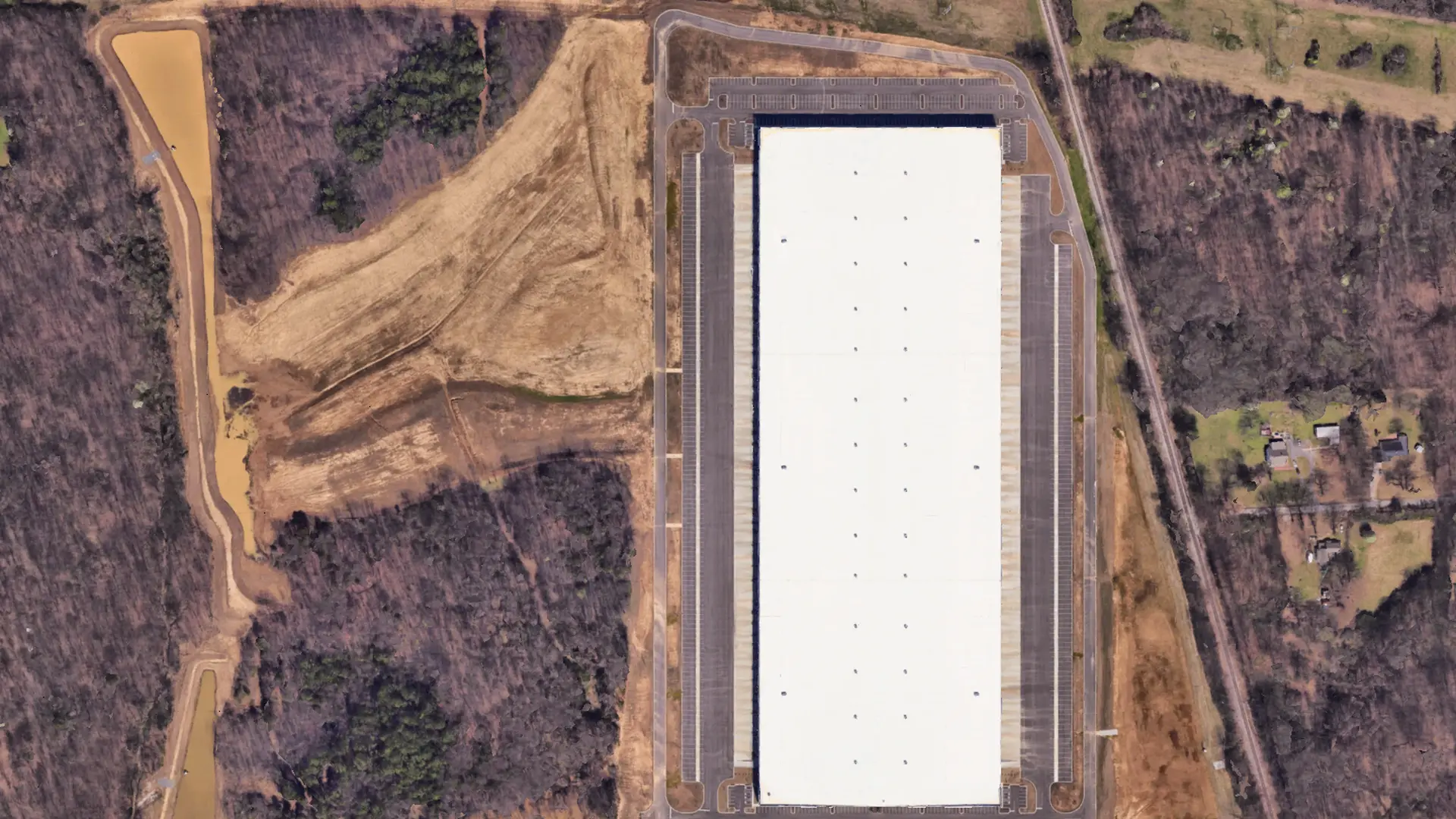
The successor to Colossus 1, often listed as the biggest supercomputer in the world. It will serve as the backbone for Macro Hard, Elon Musk’s new project that aims to build a fully AI-run software company.
- Power capacity: 350–400 MW operational (targeting 1 GW mid-2026; satellite estimates cap current cooling near 350 MW).
- Number of GPUs: >110,000 NVIDIA GB200 (part of broader cluster mix).
- Operational since: Partial from mid-2025, full scale expected by mid-2026.
5. Microsoft - Atlanta site (Atlanta, Georgia)
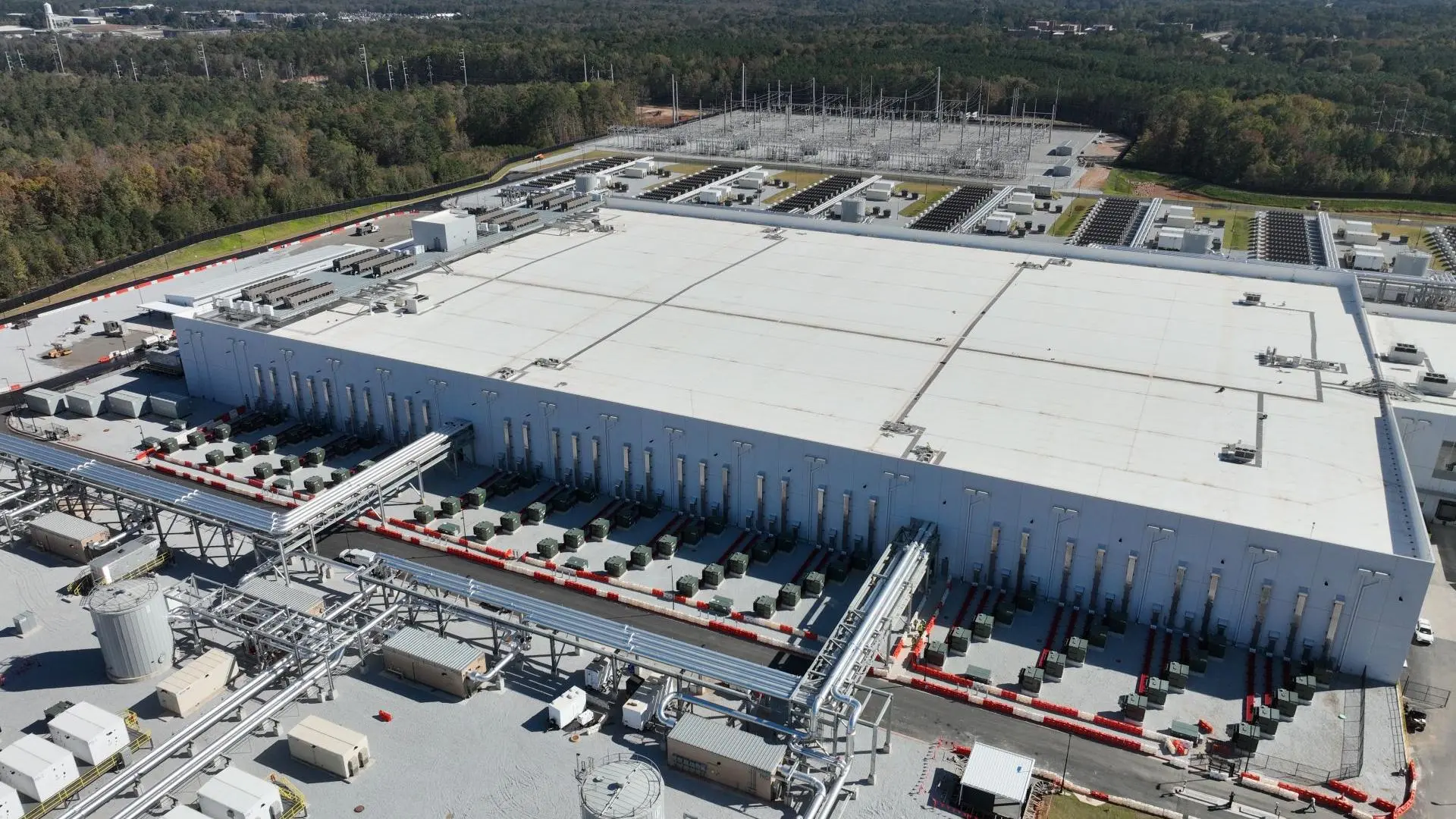
Part of Microsoft"s "Fairwater" family, this site connects with Wisconsin to form a distributed "AI superfactory" for OpenAI and Azure AI training. It"s doubling its capacity soon by interconnecting with other sites. This is likely where your prompts end up when you’re using Copilot in Notepad or Paint.
- Power capacity: >350 MW.
- Number of GPUs: Hundreds of thousands of NVIDIA GB200/GB300 (high-density racks).
- Investment: Precise numbers unknown, likely a multi-billion investment.
- Operational since: October 2025.
4. Amazon (AWS) - Project Rainier (New Carlisle, Indiana)
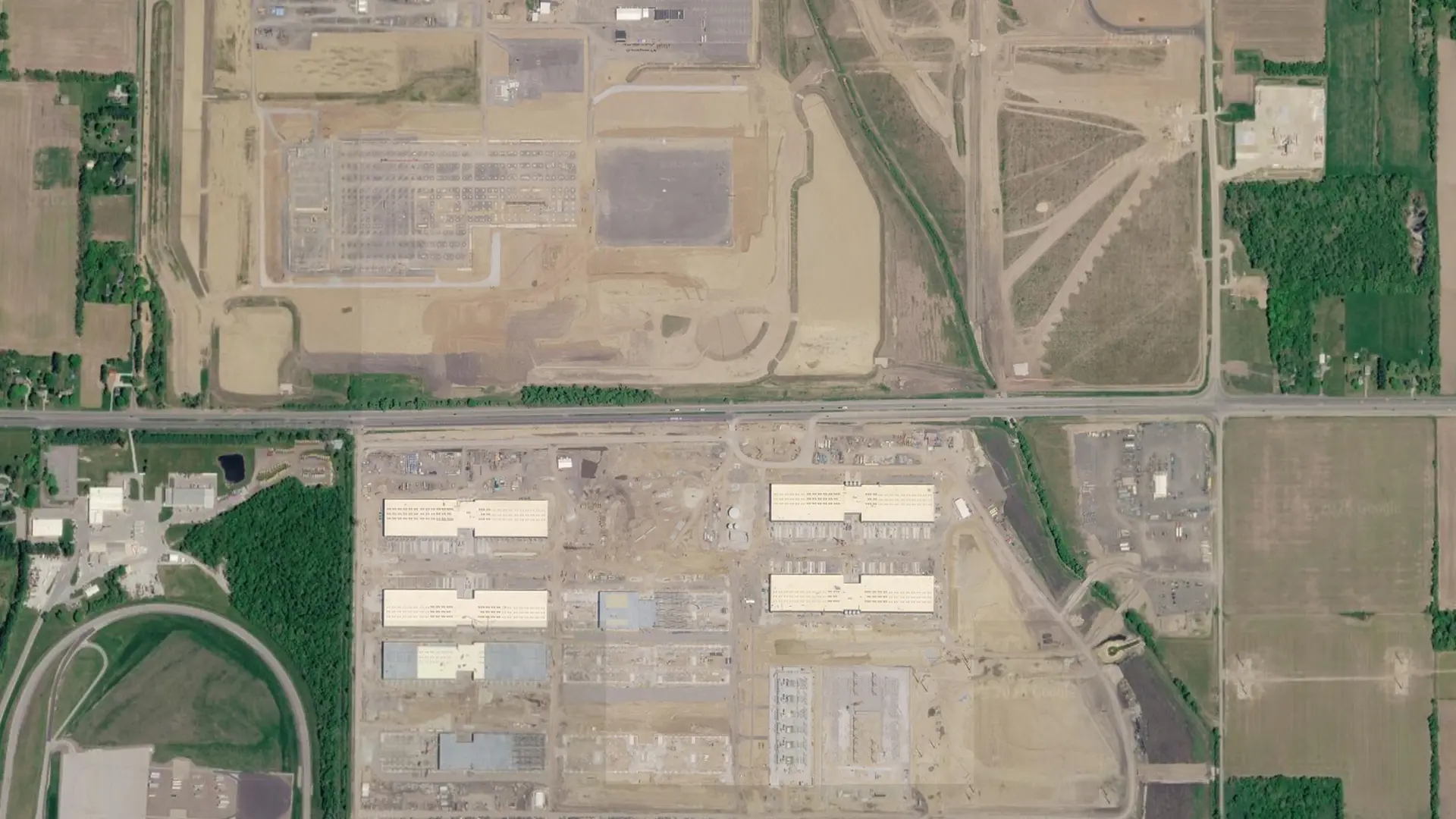
Fully online since late 2025 on 1,200+ acres, this data center provides major infrastructure for training Anthropic"s Claude models. It’s the first major non-NVIDIA AI clusters at hyperscale, built entirely on Amazon"s custom silicon.
- Power capacity: ~420–500 MW operational (scaling toward 2+ GW).
- Number of accelerators: Nearly 500,000 Trainium 2 ASICs (doubling plans underway).
- Initial investment: $11 billion.
-
Operational since: Late 2025.
3. Meta - Columbus site (Columbus / New Albany, Ohio)
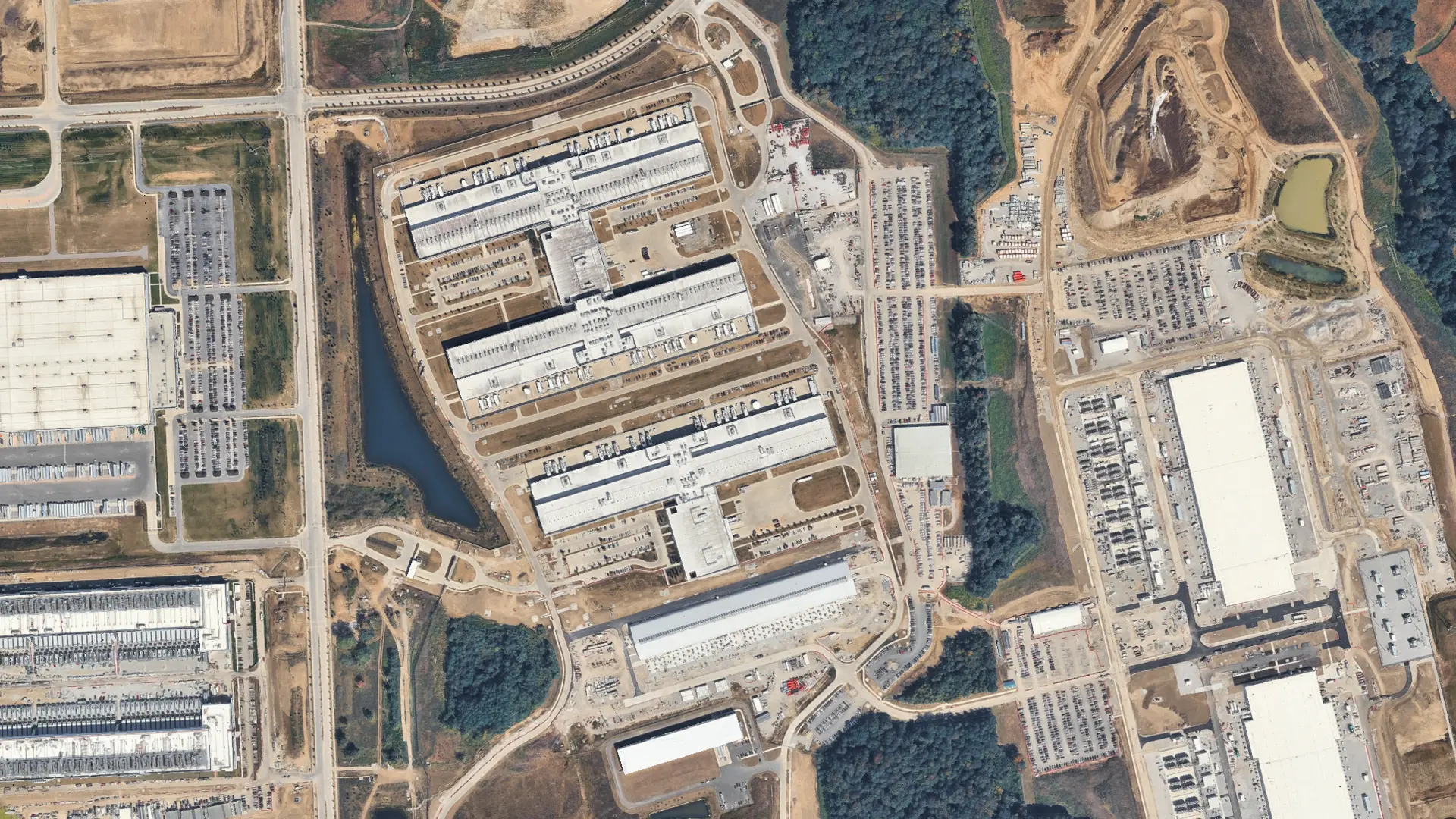
Located literally across the street from Google"s Columbus facility, Meta"s site (including the Prometheus supercluster) focuses on training the company’s latest Llama. It mixes traditional buildings with temporary high-density "tents" for faster rollout.
- Power capacity: >500 MW.
- Number of GPUs: Dense mix (hundreds of thousands of accelerators).
- Total investment: $1.5+ billion.
- Operational since: New Albany campus operational since ~2019, Prometheus expansion targeted for 2026.
2. Google - Omaha cluster (Omaha, Nebraska / Council Bluffs, Iowa)
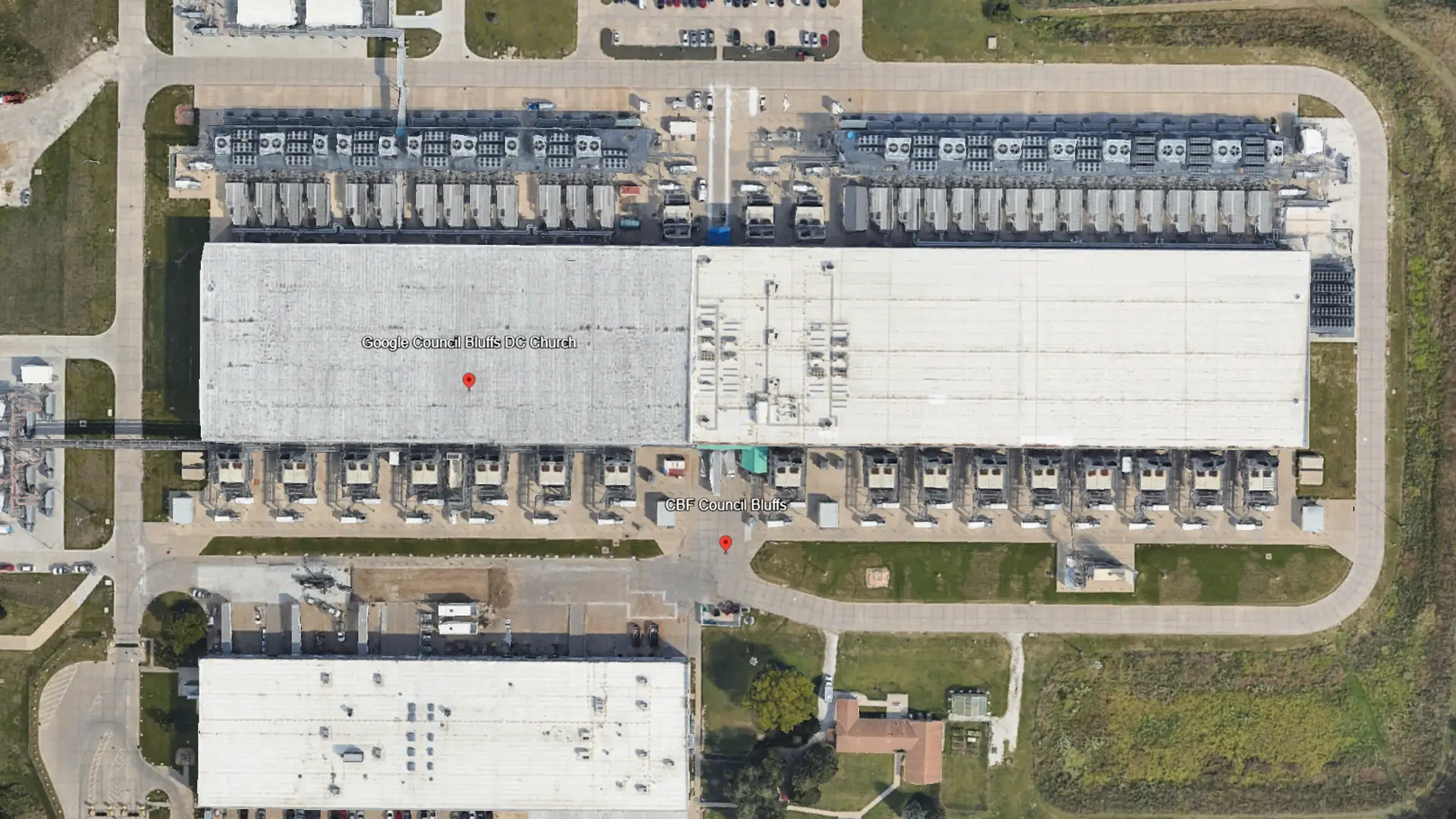
Very similar in philosophy to Columbus, this cluster links multiple sites with high-bandwidth fiber, which powers Google’s unified AI training. It’s close in scale to Columbus, and rapidly expanding.
- Power capacity: Over 1 GW total campus (>500 MW AI-dedicated).
- Number of accelerators: Hundreds of thousands of TPUs (multi-generation).
- Total investment: $4-5billion.
- Operational since: Construction started around 2017–2018, heavy AI utilization from 2022–2023 onward.
1. Google - Columbus cluster (New Albany/Columbus Area, Ohio)
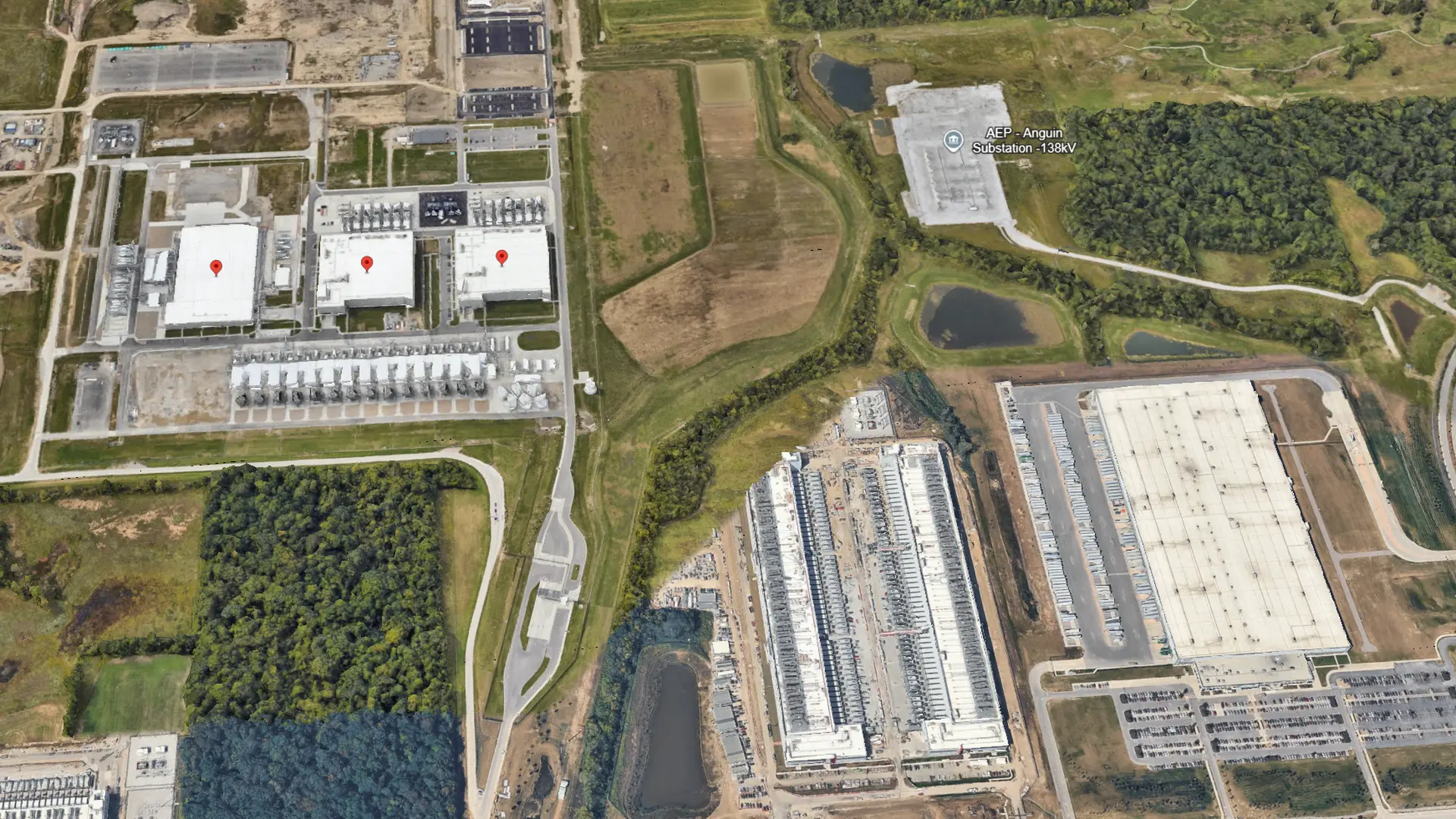
Google"s Columbus Cluster is currently the world"s largest unified AI data center by many metrics. It uses a multi-campus, fiber-interconnected design that allows massive distributed training across buildings and even nearby sites. This is where Gemini models “live,” and Google develops DeepMind research.
- Power capacity: Over 1 GW total campus (>500 MW AI-dedicated).
- Number of accelerators: Hundreds of thousands of TPUs (multi-generation).
- Total investment: $7-8+ billion.
- Operational since: Construction started around 2007–2008, heavy AI utilization from 2022–2023 onward.
With the AI arms race heating up, these numbers will quickly become obsolete. Big Tech is announcing new investments worth billions almost on a weekly basis, and the results are showing. NVIDIA is already the first company in history to reach $5 trillion in value (currently valued at $4.2-4.4T), with the rest of the pack all valued at over $1.6 trillion.
The emergence of these massive data centers also raises environmental concerns. Although companies are making efforts to become more efficient and environmentally friendly, they’re still consuming enough resources to power entire nations.
In Microsoft CEO Satya Nadella’s own words, these companies need to provide equivalent value to people, or they “will quickly lose even the social permission to actually take something like energy, which is a scarce resource, and use it to generate these tokens.”