Australian startup Cortical Labs has launched the CL1, described as the world’s first code‑deployable biological computer made as part of an effort to create an advanced and sustainable form of AI, known as “Synthetic Biological Intelligence” (SBI).
The device integrates 800,000 lab‑grown human neurons with a silicon chip, enabling sub‑millisecond closed‑loop communication between living cells and software. It is designed for neuroscience and biotechnology research, giving scientists a new way to study how neurons adapt and respond to inputs in real time.
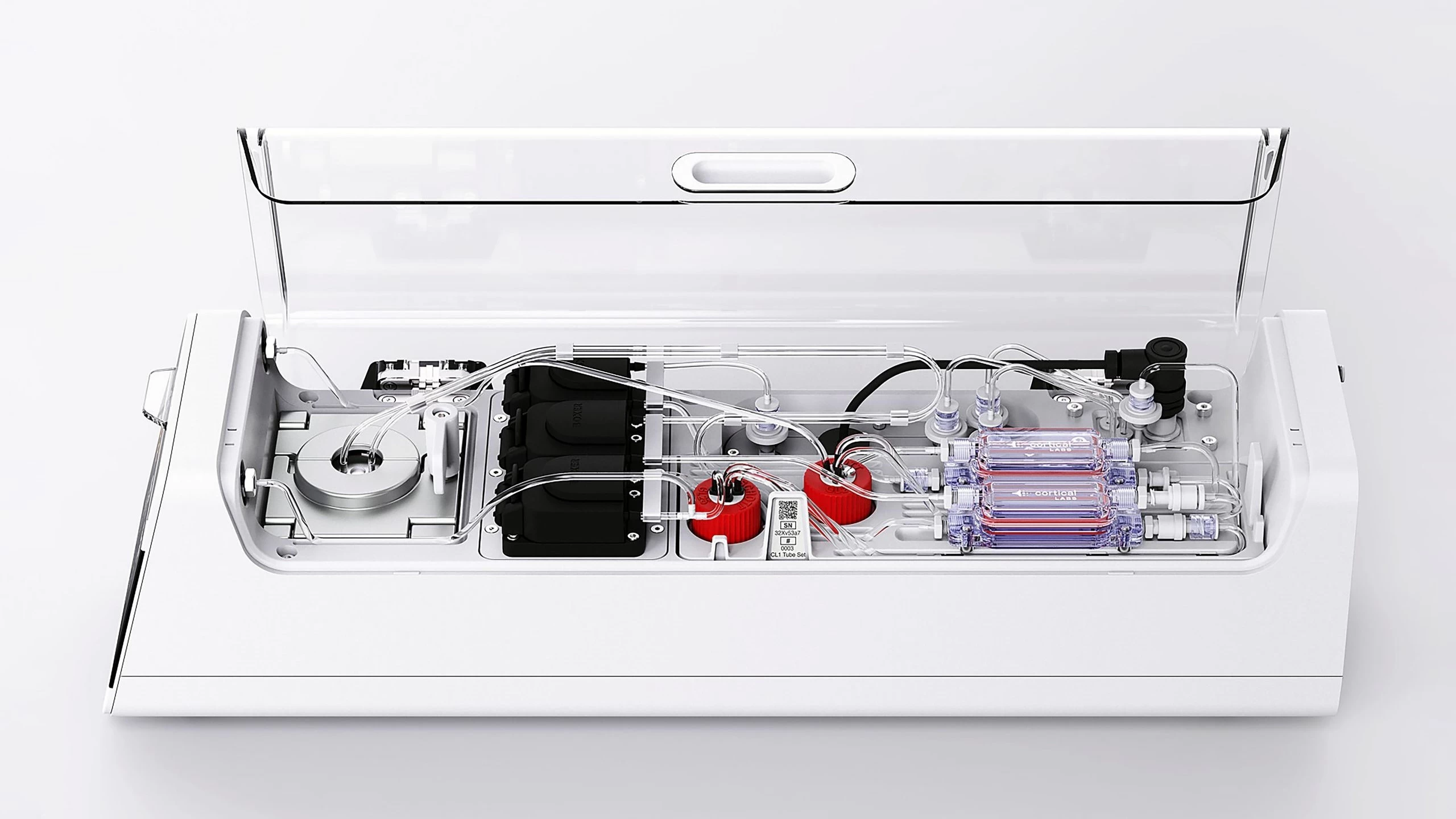
The neurons, reprogrammed from adult donor skin or blood cells, are kept alive for up to six months by an internal life‑support module that delivers nutrients, regulates temperature, filters waste, and maintains fluid balance. They grow across a silicon chip that sends and receives electrical impulses through the company’s Biological Intelligence Operating System (biOS), which runs a simulated environment and exchanges information directly with the cells.
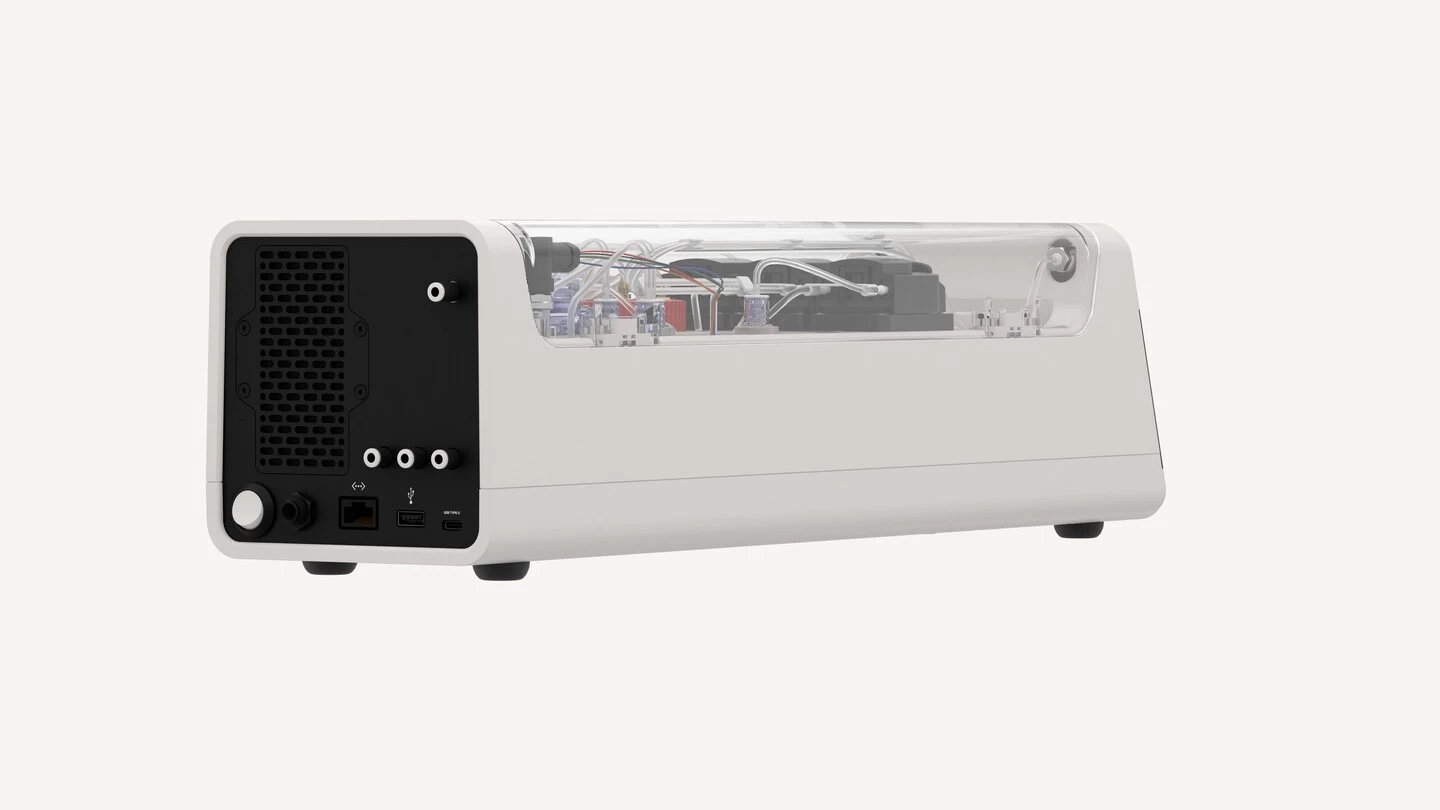
The system operates without external computing hardware and has USB and peripheral ports for cameras, actuators, and other devices, as well as a touchscreen to monitor status, view live data, or run assays. It consumes 850 to 1000 watts per 30‑unit rack, far less than typical data center AI workloads.
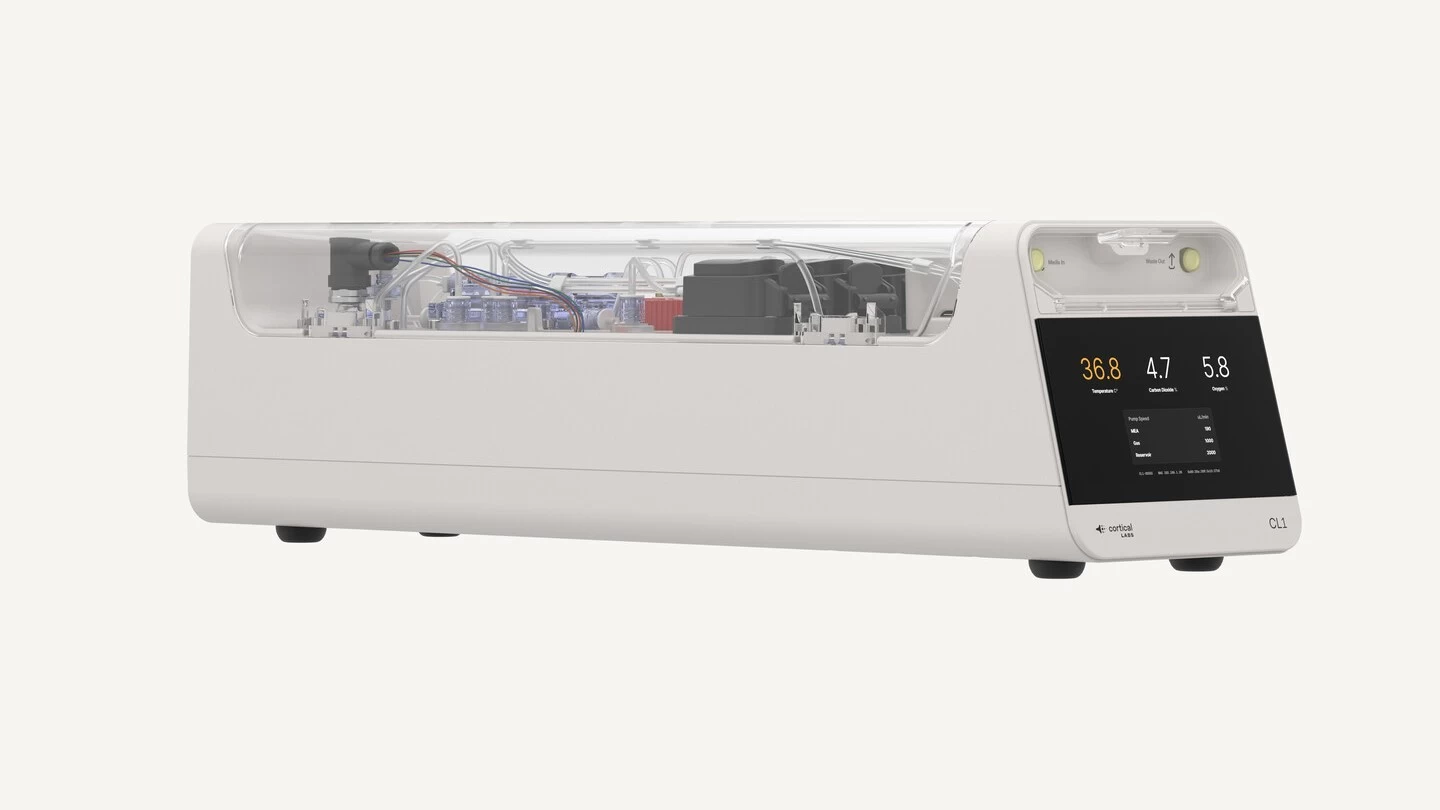
Cortical Labs positions the CL1 as a self‑contained, plug‑and‑play platform that can be connected to other systems for broader testing. It offers programmable stimulation and read interfaces for neural communication and learning, and is promoted as an ethically preferable alternative to animal testing by providing more relevant human neuron data. The platform is also intended to support long‑term experiments with minimal inputs and low energy needs.
The first 115 units are shipping this summer at $35,000 each, or $20,000 per unit in 30‑unit server racks. A cloud‑based “wetware‑as‑a‑service” Cortical Cloud subscription costs $300 per week per unit , allowing remote access to in‑house cultures.
Chief Scientific Officer Brett Kagan explains that brain cells communicate by generating small electrical pulses, and the CL1 mimics this by sending electrical signals that represent bits of information, then reading the neuronal responses. Sub‑millisecond loops allow the system to read, act, and write new information in real time.
For biomedical research, the CL1 can model conditions like epilepsy and Alzheimer’s by using neurons from different donors or cell lines to identify genetic links or individual differences. Kagan notes that many neuropsychiatric drugs fail in clinical trials because standard models cannot replicate how human neurons handle live information, and that the CL1 enables tests of computation and cell function in tandem. In one study using an in vitro epilepsy model, CL1 restored learning capacity to impaired cultures after treatment with antiepileptic drugs.
The CL1 builds on Cortical Labs’ earlier DishBrain prototype, which trained neurons to play Pong. The new device increases input channels from 8 to 59 and cuts latency from 5 milliseconds to less than 1 millisecond. Experiments with DishBrain showed neurons learning within minutes and sometimes outperforming AI algorithms in efficiency.
The work applied Karl Friston’s free‑energy principle to probe active inference in biological neural systems. Friston calls the CL1 an enabling tool for studying how neuronal circuits learn and adapt in closed‑loop exchanges with simulated worlds, describing it as a long‑imagined “brain in a vat.”
Cortical Labs says neuron production scales efficiently, with hundreds of millions achievable without major changes to the process, though scaling to billions would require different technology. Buyers must have ethical approval for generating cell lines and a suitable lab environment. The company’s long‑term aim is to advance bioengineered intelligence that combines the adaptability, regeneration, and efficiency of biology with controllability and safety, and potentially exceed current biological or silicon‑based systems.
Source: Cortical Labs, IEEE Spectrum
This article was generated with some help from AI and reviewed by an editor. Under Section 107 of the Copyright Act 1976, this material is used for the purpose of news reporting. Fair use is a use permitted by copyright statute that might otherwise be infringing.