One of the most interesting code editors to emerge in recent years is Zed. Created by the original team behind Atom, which Microsoft bought and eventually shut down in favour of VS Code.
There are many VS Code forks out there, but Zed is not one of them. It"s written from the ground up using its own special UI framework, GPUI. The team built GPUI in Rust because they wanted something that worked like a game engine, using the GPU to make everything feel incredibly fast. This approach also makes Zed far more memory-efficient than its Electron-based rivals.
Zed offers features like real-time collaboration, Vim mode, and of course, AI that can help you write and refactor code (which you can disable, by the way). But for a while, if you wanted to enjoy these perks, you"d have to be on a Mac or Linux machine. That has now changed, as Zed Industries, the company behind Zed, has announced that the Windows version is now stable.
Zed Industries promises that it will maintain a dedicated Windows team. This team is responsible for integrating DirectX 11 and DirectWrite for rendering and text rendering, respectively. The goal was to "match the Windows look and feel" instead of just porting over a generic interface. It"s a direct integration with the operating system, not a web app pretending to be a desktop app.
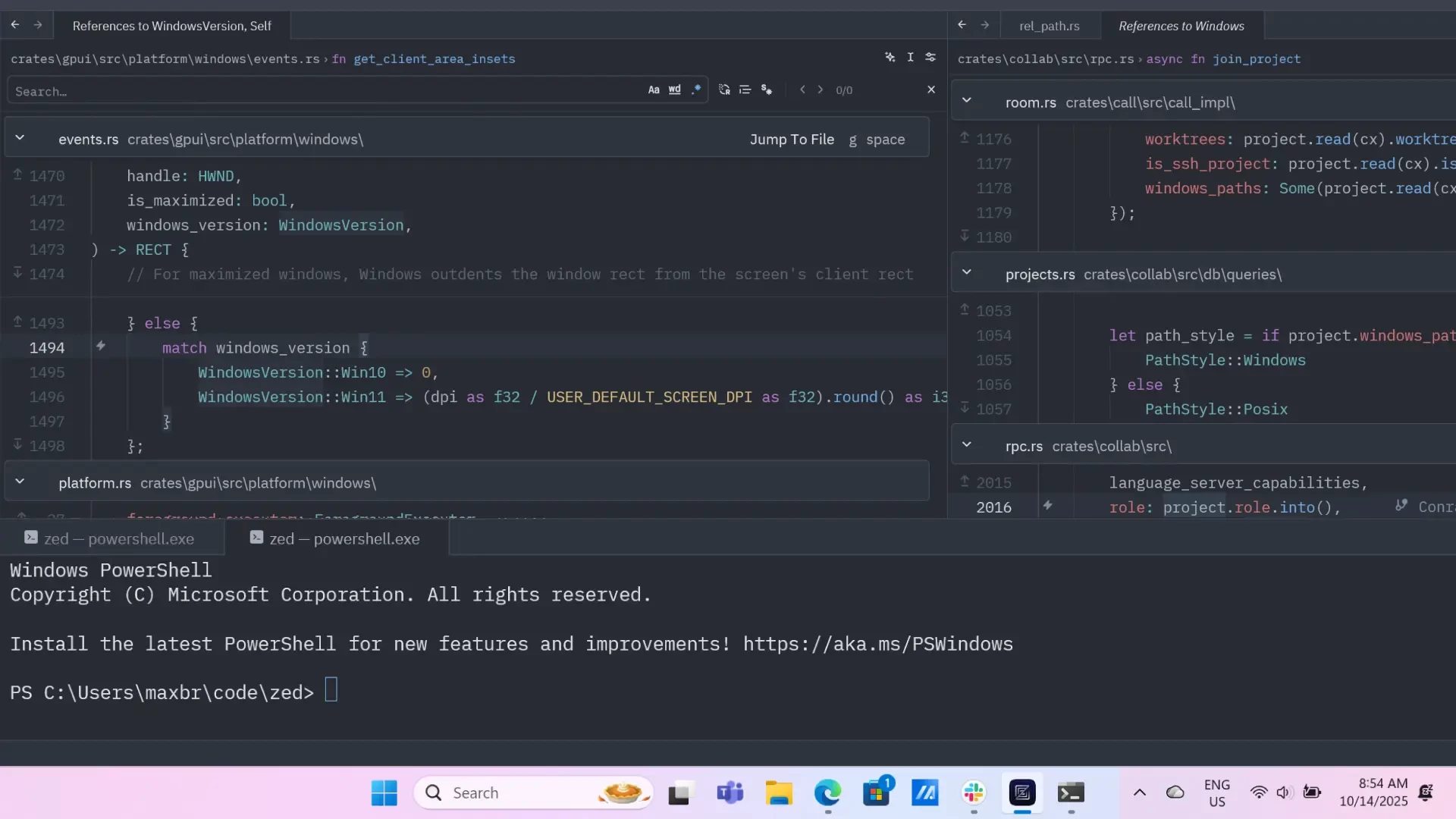
Features Zed on Windows ships with include deep integration with the Windows Subsystem for Linux and SSH remoting. You can open a WSL folder right from the terminal or connect to a remote server inside the editor. All the heavy lifting, like file operations and running language servers, happens on the remote machine.
Extensions are also fully compatible, powered by WebAssembly. This also means extension developers do not need to write special code for Windows paths, as Zed will handle it for them. AI was also not left out, with all its features like edit predictions, Agent Client Protocol (ACP)-powered agents, working on the platform.
The journey to get this thing running properly for Windows has been quite bumpy because of major platform differences between Windows and macOS/Linux. At first, the team wanted to use the same Vulkan-based rendering backend for Windows as they did for Linux, but that caused a bunch of compatibility problems. So, they had to build a whole new renderer using DirectX 11.