

-
Posts
-

By hellowalkman · Posted
Amazon Prime Day 2026: Best Dolby soundbar deals from Sony, Samsung, JBL, Polk, and more by Sayan Sen Yesterday we covered the JBL BAR 800 which is a 5.1.2 Dolby Atmos/Vision soundbar. The unit is on sale for its lowest ever price of just $800 making it a solid offer. However, there are many more options to choose from and in this article, we have made a compilation of the best deals including from Sony, Polk, Yamaha, Denon, Samsung and more. Sony's BAR models are currently at their lowest prices which makes them solid offerings. The company's BRAVIA Theatre Bar lineup is designed to suit different home cinema needs. The Bar 5 is an entry-level 3.1-channel soundbar with a wireless subwoofer, supporting Dolby Atmos®, DTS:X, S-Force PRO Front Surround, and Vertical Surround Engine for immersive audio with clear dialogue. The Bar 6 upgrades to a 3.1.2-channel configuration by adding dedicated up-firing speakers for more convincing overhead Atmos effects while retaining the wireless subwoofer. At the premium end, the Bar 7, Bar 8, and flagship Bar 9 are single-soundbar solutions featuring Sony’s 360 Spatial Sound Mapping technology, which creates phantom speakers for a wider surround field. Bar 7 includes nine speaker units, Bar 8 increases this to eleven, and Bar 9 offers thirteen speaker driver units promising the most expansive soundstage and acoustic performance. All models should integrate seamlessly with compatible BRAVIA TVs and support the BRAVIA Connect app for setup and control. Get them at the links below: Sony BRAVIA Theater Bar 9 Soundbar (HT-A9000): $998.00 (Amazon US) (Was: $1498) Sony BRAVIA Theater Bar 8 Soundbar (HT-A9000): $798.00 (Amazon US) (Was: $998) Sony BRAVIA Theater Bar 7 Soundbar (HT-A7100): $618.00 (Amazon US) (Was: $768) Sony BRAVIA Theater System 6: $548.00 | Sony BRAVIA Theater Bar 6: $448.00 Sony BRAVIA Theater Bar 5 (HT-B500): $278.00 (Amazon US) (Was: $348) Sony HT-S400 2.1 soundbar: $198.00 (Amazon US) (Was: $248) Aside from those, we also have more discounts including from Samsung, Polk Audio, and more: Samsung Q-Series Soundbar HW-QS90H 7.1.2: $797.99 (Amazon US) (Was: $998) Polk Audio Signa S4: $336.00 (Amazon US) (Was: $449) Hisense AX3120Q: $229.00 (Amazon US) (Was: $259) Check out more soundbar deals that you may like at this link. Good to know This Amazon deal is U.S. specific, and not available in other regions unless specified. We only use first-party seller links (at the time of article publishing); ensure that you purchase from a first-party seller link only. Check out Today's Deals on Amazon | or our recent tech deals. Become a Prime member (for Students or SNAP) via Neowin Get Prime Access - Prime for half price (for qualifying Medicaid, EBT, SNAP) Subscribe to Prime Video, Audible Plus, Music Unlimited or Kindle Unlimited via Neowin As an Amazon Associate, we earn from qualifying purchases. -
By QuantumBigfoot · Posted
Better luck next time. -

By Copernic · Posted
Stellarium 26.2 by Razvan Serea Stellarium is a free open source planetarium for your computer. It shows a realistic sky in 3D, just like what you see with the naked eye, binoculars or a telescope. It is being used in planetarium projectors. Just set your coordinates and go. Stellarium key features: Realistic simulation of the sky, sunrise and sunset Default catalogue of over 600,000 stars Downloadable additional catalogues for up to 210 million stars Catalog data for all New General Catalogue (NGC) objects Images of almost all Messier objects and the Milky Way Artistic illustrations for all 88 modern constellations More than a dozen different cultures with their constellations Solar and lunar eclipse simulation Photorealistic landscapes (more are available on the website) Scripting support with ECMAScript (a few demo scripts are included) Extendable with plug-ins: 8 plug-ins installed by default, including: artificial satellites plug-in (updated from an on-line TLE database) ocular simulation plug-in (shows how objects look like in a given ocular) Solar System editor plug-in (imports comet and asteroid data from the MPC) telescope control plug-in (Meade LX200 and Celestron NexStar compatible) The major changes of this version: Added new sky culture Added new plugin: Planes Many improvements in plugins Many improvements in Core and GUI Many updates in sky cultures. [full release notes] Download: Stellarium 26.2 (64-bit) | 456.0 MB (Open Source) View: Stellarium Home Page | Other Operating Systems | Screenshot Get alerted to all of our Software updates on Twitter at @NeowinSoftware -

-
By hellowalkman · Posted
NASA: This asteroid may not kill us but it probably won't be far off either by Sayan Sen Image by Zelch Csaba via Pexels New observations by NASA's James Webb Space Telescope have eliminated the last remaining impact threat posed by asteroid 2024 YR4, ruling out the possibility that the near-Earth object could strike the Moon in December 2032. NASA said observations collected by Webb on February 18 and 26, 2026, enabled scientists to refine the asteroid's orbit enough to "rule out a chance of lunar impact on Dec. 22, 2032." Instead, asteroid 2024 YR4 is now expected to pass the Moon at a distance of about 13,200 miles (21,200 km). The agency stressed that the update "reflects improved precision in our understanding of where the asteroid is expected to be in 2032 rather than a shift in its orbital path." The announcement closes a remarkable chapter in planetary defence that began in late 2024, when the approximately 60-metre-wide asteroid briefly became the most closely watched near-Earth object in the world. Discovered on December 27, 2024, by the ATLAS telescope in Chile, 2024 YR4 initially appeared to have a small chance of colliding with Earth on December 22, 2032. As astronomers gathered more observations, the impact probability briefly climbed to around 3%—the highest ever recorded for an asteroid of its size—before steadily falling as its orbit became better understood. By early 2025, international observations had ruled out any significant risk to Earth. However, astronomers were left with another possibility: a roughly 4% chance that the asteroid could instead strike the Moon. "The probability that asteroid 2024 YR4 will strike the Moon on 22 December 2032 is now approximately 4%," the European Space Agency (ESA) had said last year, noting that "there is a 96% chance that the asteroid will not impact the Moon." ESA said such an impact, while unlikely, would have presented an extraordinary scientific opportunity. "It is a very rare event for an asteroid this large to impact the Moon – and it is rarer still that we know about it in advance. The impact would likely be visible from Earth, and so scientists will be very excited by the prospect of observing and analysing it," said Richard Moissl, Head of ESA's Planetary Defence Office. "It would certainly leave a new crater on the surface. However, we wouldn't be able to accurately predict in advance how much material would be thrown into space, or whether any would reach Earth," he added. The asteroid also exposed an important blind spot in planetary defence. Because 2024 YR4 approached Earth from the direction of the Sun, it remained hidden from ground-based telescopes until after its closest approach. "We looked into how Neomir would have performed in this situation, and the simulations surprised even us," Moissl said. "Neomir would have detected asteroid 2024 YR4 about a month earlier than ground-based telescopes did. This would have given astronomers more time to study the asteroid's trajectory and allowed them to much sooner rule out any chance of Earth impact in 2032." He added, "As an infrared telescope, like Webb, Neomir would have also immediately given us a much better estimate for the asteroid's size, which is very important for assessing the significance of the hazard." The latest NASA observations underscore the value of space-based infrared telescopes in tracking faint asteroids. According to NASA, Webb made "among the faintest ever observations of an asteroid," extending the object's observational record by nearly eight months at a time when it had become too faint for other telescopes. That additional data allowed scientists to eliminate the remaining uncertainty surrounding its 2032 flyby. Although asteroid 2024 YR4 is now confirmed to pose no threat to either Earth or the Moon, scientists say its discovery remains one of the most significant real-world tests of the international planetary defence system, demonstrating how continued observations can rapidly transform an object once considered hazardous into one whose future path is known with high confidence. Source: NASA, ESA This article was generated with some help from AI and reviewed by an editor. Under Section 107 of the Copyright Act 1976, this material is used for the purpose of news reporting. Fair use is a use permitted by copyright statute that might otherwise be infringing.
-
-
Recent Achievements
-

 Admir earned a badge
Conversation Starter
-

 The_Focal_Point earned a badge
First Post
-

 daryld went up a rank
Apprentice
-
 Carltonbar went up a rank
Contributor
-
 The_Focal_Point earned a badge
One Month Later
-
-
Popular Contributors
-
Tell a friend







.thumb.png.b7089ebbdf00d96b3b92dddbd04bac02.png)


Question
sathenzar
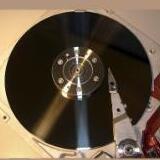
So my hdd died yesterday. My previous backup around 2 months old. Is there anyway to use my assemblies/debugger files generated to reverse engineer my code so I don't have to re-write everything? This whole thing has been a nightmare.
EDIT: I'm using .net 4.0 and WPF/C#.
Link to comment
https://www.neowin.net/forum/topic/1102701-c-hdd-died-net-reverse-eng/Share on other sites
16 answers to this question
Recommended Posts