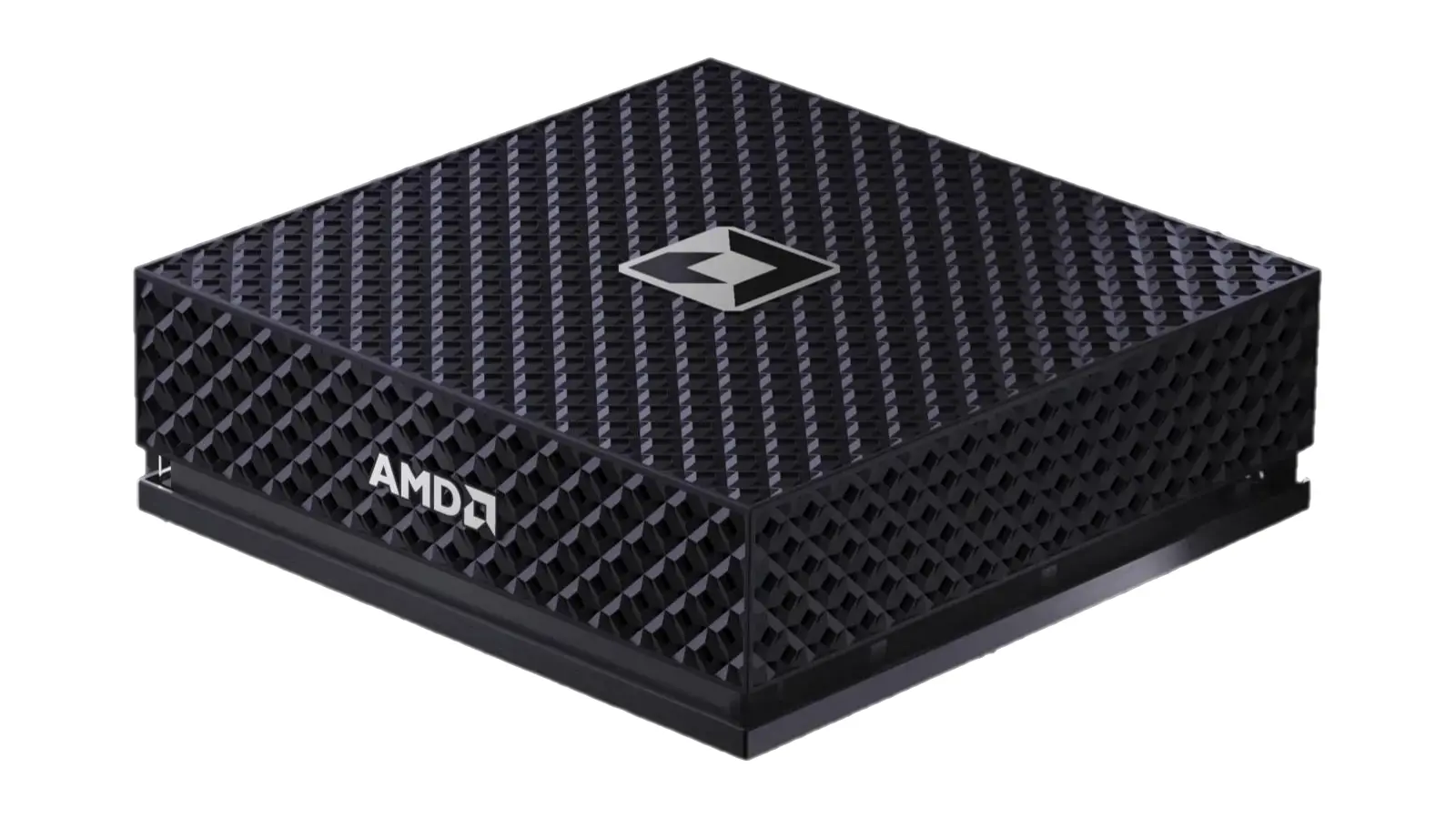
AMD feels that there are challenges developers and users alike face at every step in trying to arrange a local AI processing hub. The company points out how installing AI models locally can be difficult since there is no simple, ready-to-go stack that is easy and simple to configure and set up; hence this can potentially lead to a toolchain sprawl situation at your desk.
This is where the new Ryzen AI Halo platform can be of help, AMD believes, as it brings both the hardware and the software to make it work easily. First up the company notes how its ROCm platform is ready out of the box with optimized performance and state-of-the-art (SOTA in short) model support. If you recall, AMD"s ROCm (or Radeon Open Compute) is the company"s open-source software stack for developers, and in a similar sense, the company today is launching Ryzen AI Development Center, and like ROCm it should provide easy access to various features, tools and updates. Playbooks will be there too with five of them pre-installed and 10 additional available online.
ROCm received a major update earlier this year with version 7.2 as it brought hefty improvements related to both Linux and Windows.
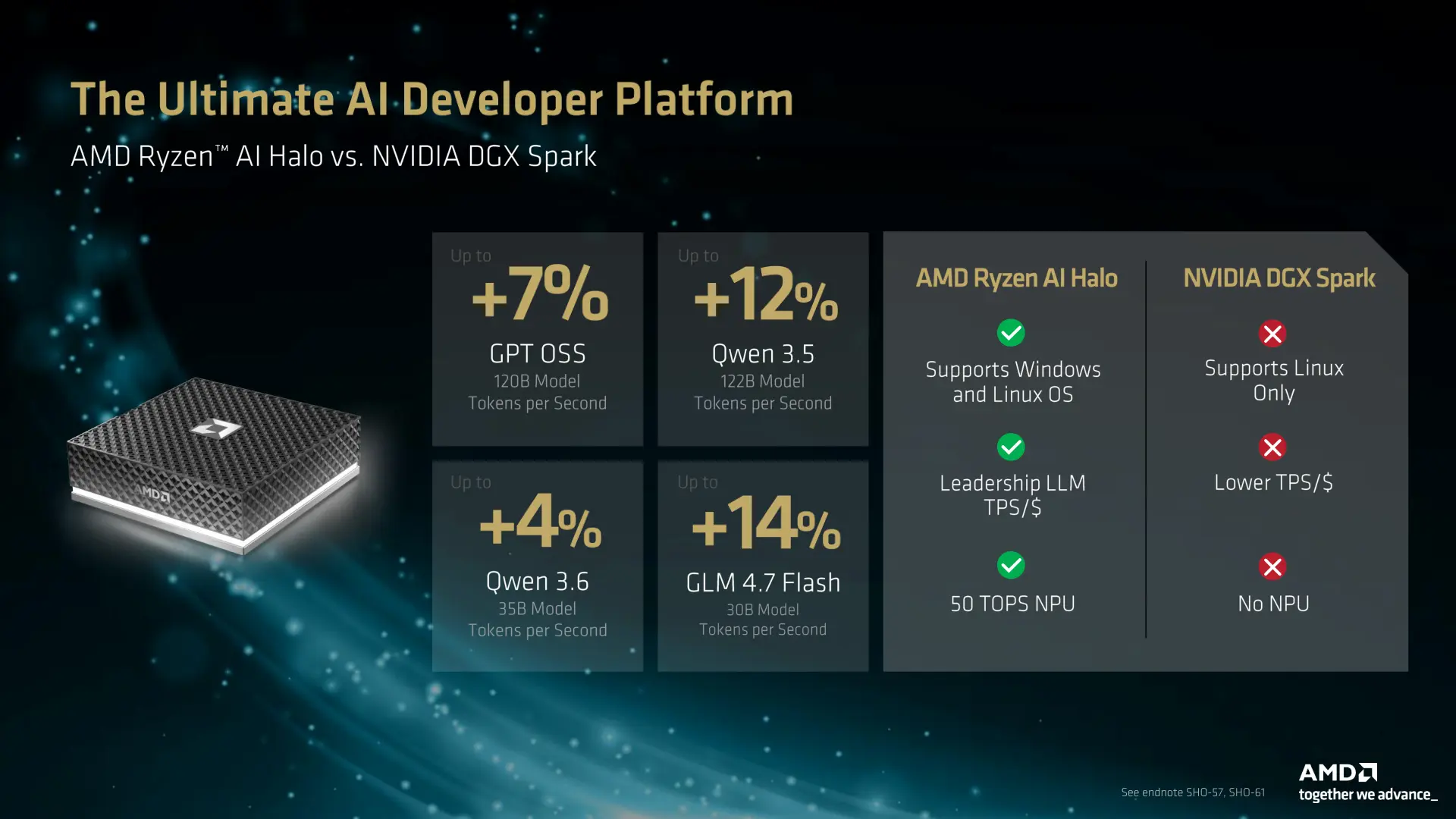
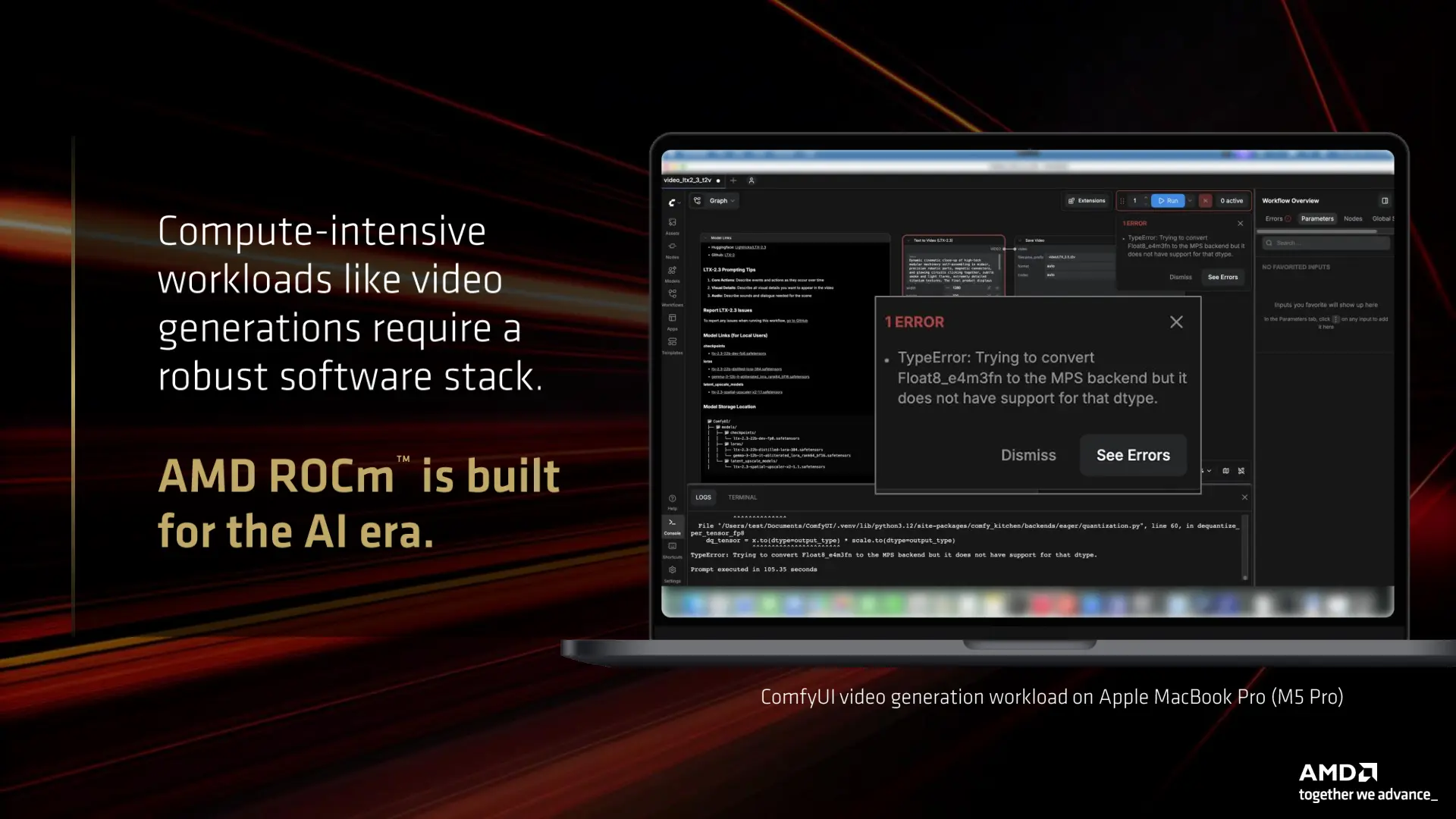
Speaking of Windows, AMD touts that the Ryzen Halo platform is the only device that can work on Microsoft"s desktop OS. It has compared Ryzen Halo with Nvidia"s DGX Spark which only supports Linux. AMD has claimed up to 14% higher performance expressed via TPS (tokens per second) per dollar. Even in the worst case AMD is promising 4% higher TPS/$ than DGX Spark.
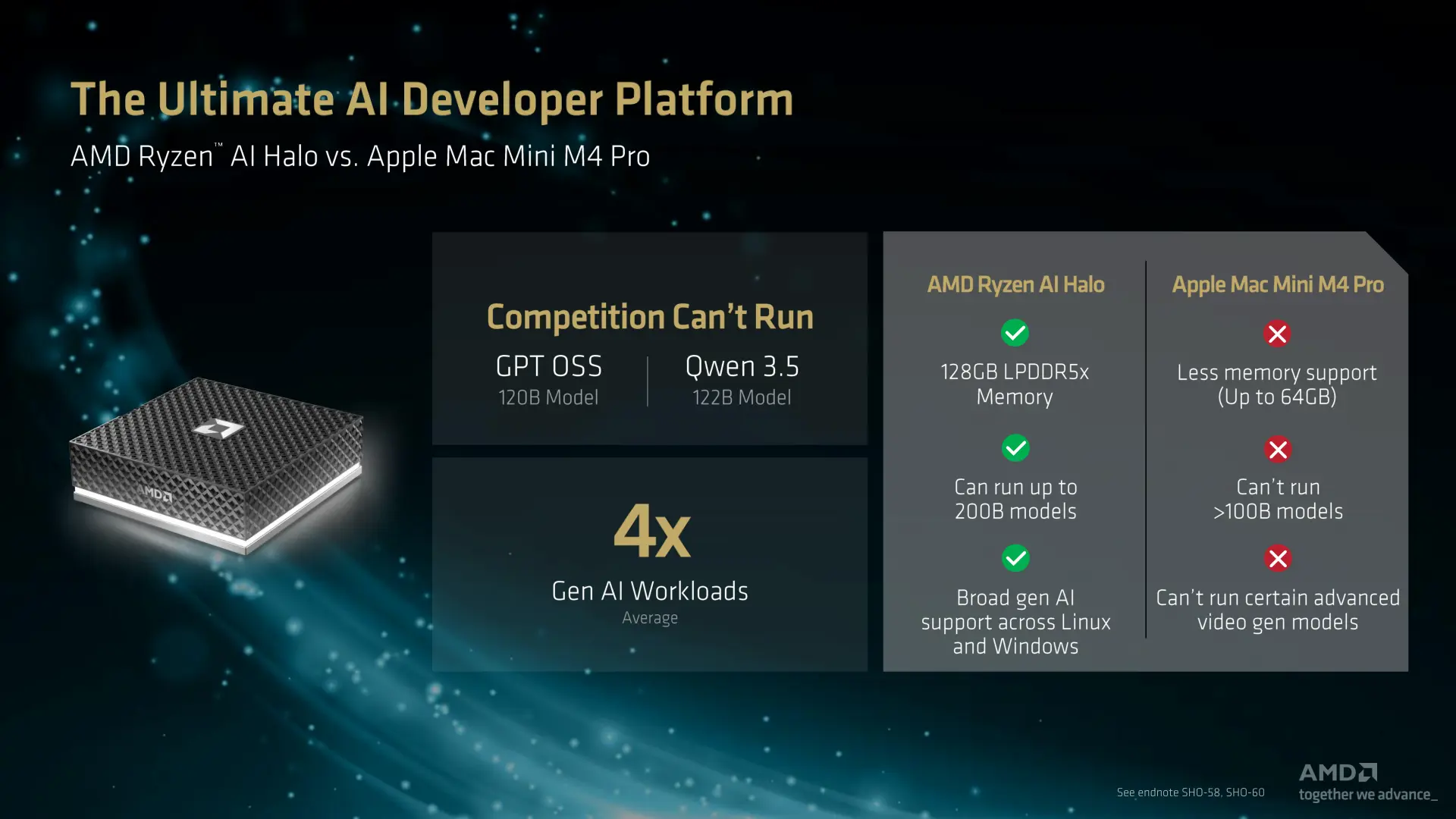
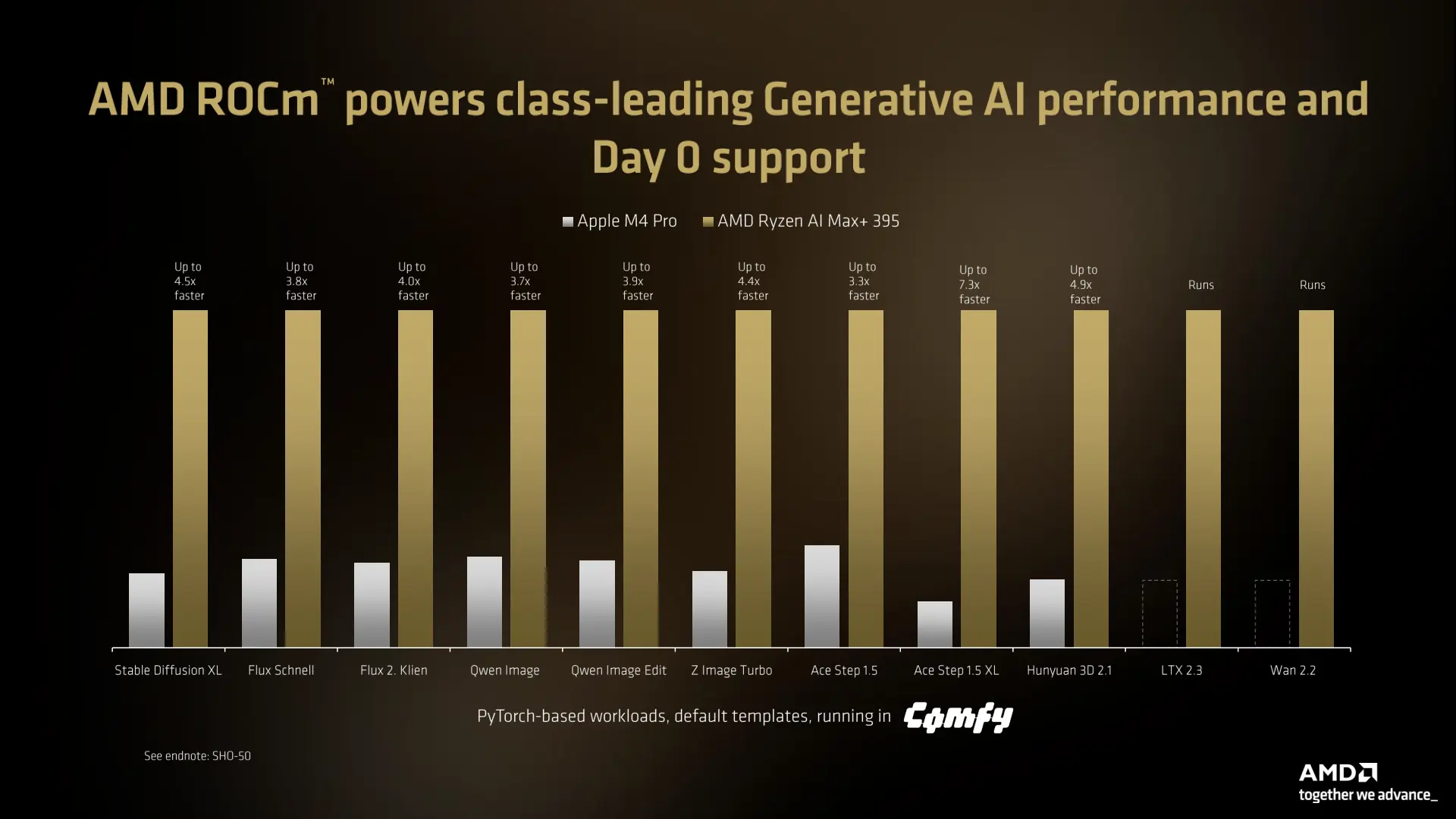
And compared to Apple Mac Mini M4 Pro, AMD boasts four times better showing on average in generative AI (gen AI) workloads. The company has provided benchmarks to showcase its lead.
Aside from that, AMD"s Ryzen Halo supports larger models, up to 200 billion, compared to the Mac Mini M4 Pro which does less than 100. In particular AMD has highlighted how creatives can use Ryzen Halo to generate AI music and videos.
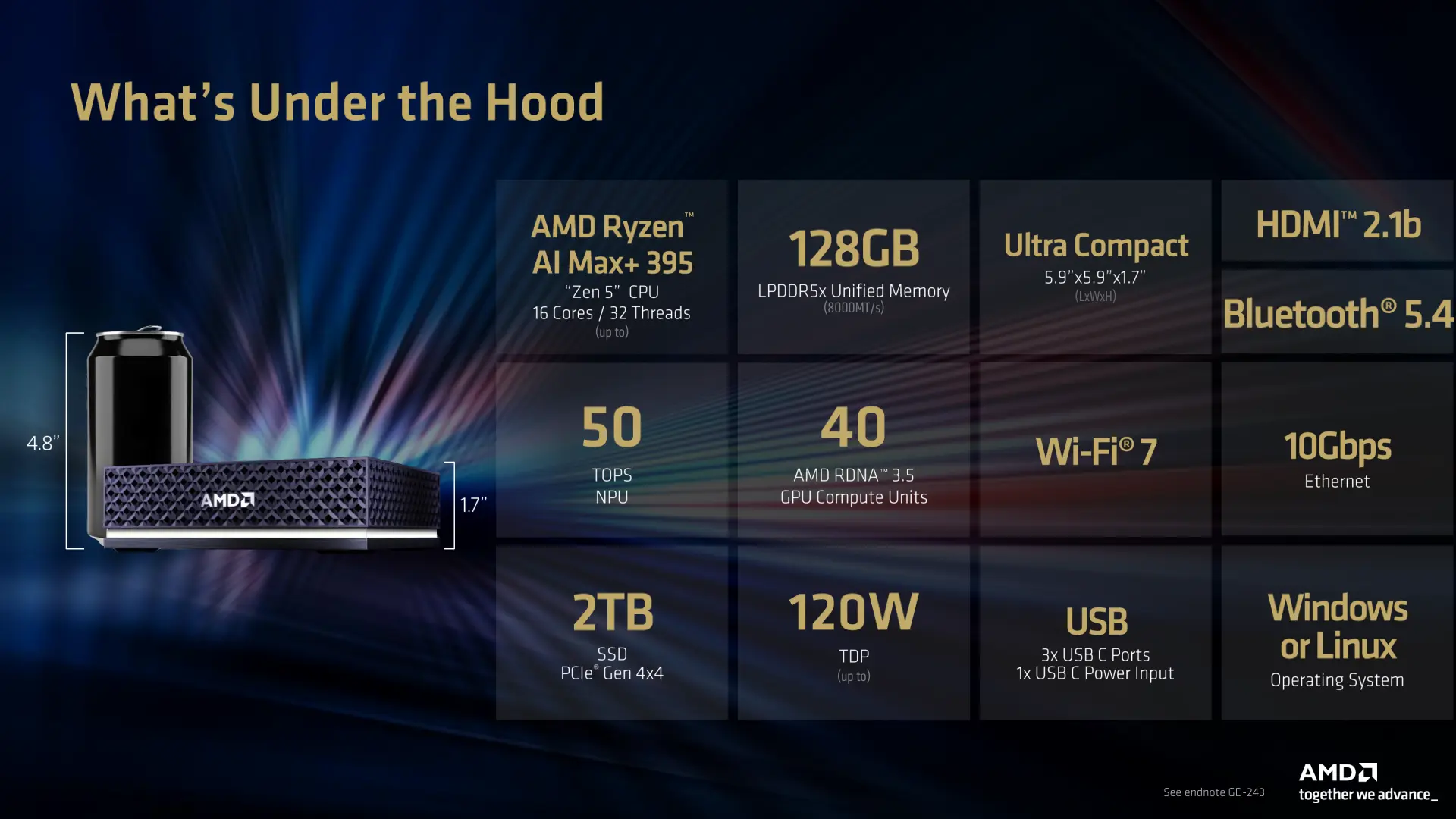
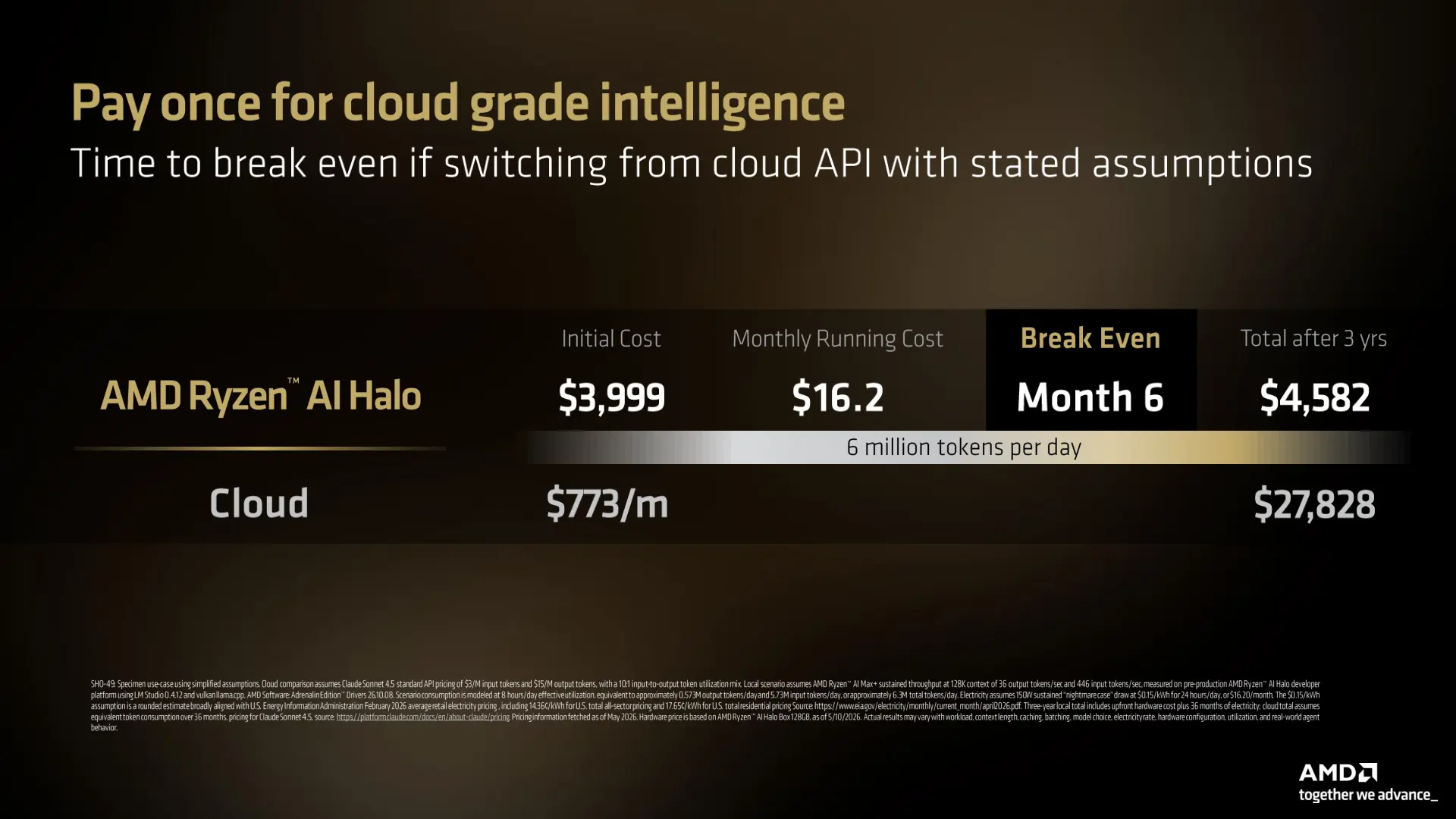
Finally AMD mentions the cost benefits. It used a token usage comparison to note that the Ryzen AI Max+ 395 APU, powering the Halo, consumes around 68 TPS compared to 160 on a Radeon AI Pro 9700. This was on Qwen 3.6 35b. The company also demonstrated how its Ryzen AI Halo platform can actually save you an absolutely huge amount of money in the long run assuming a usage rate of 18 million tokens per day.
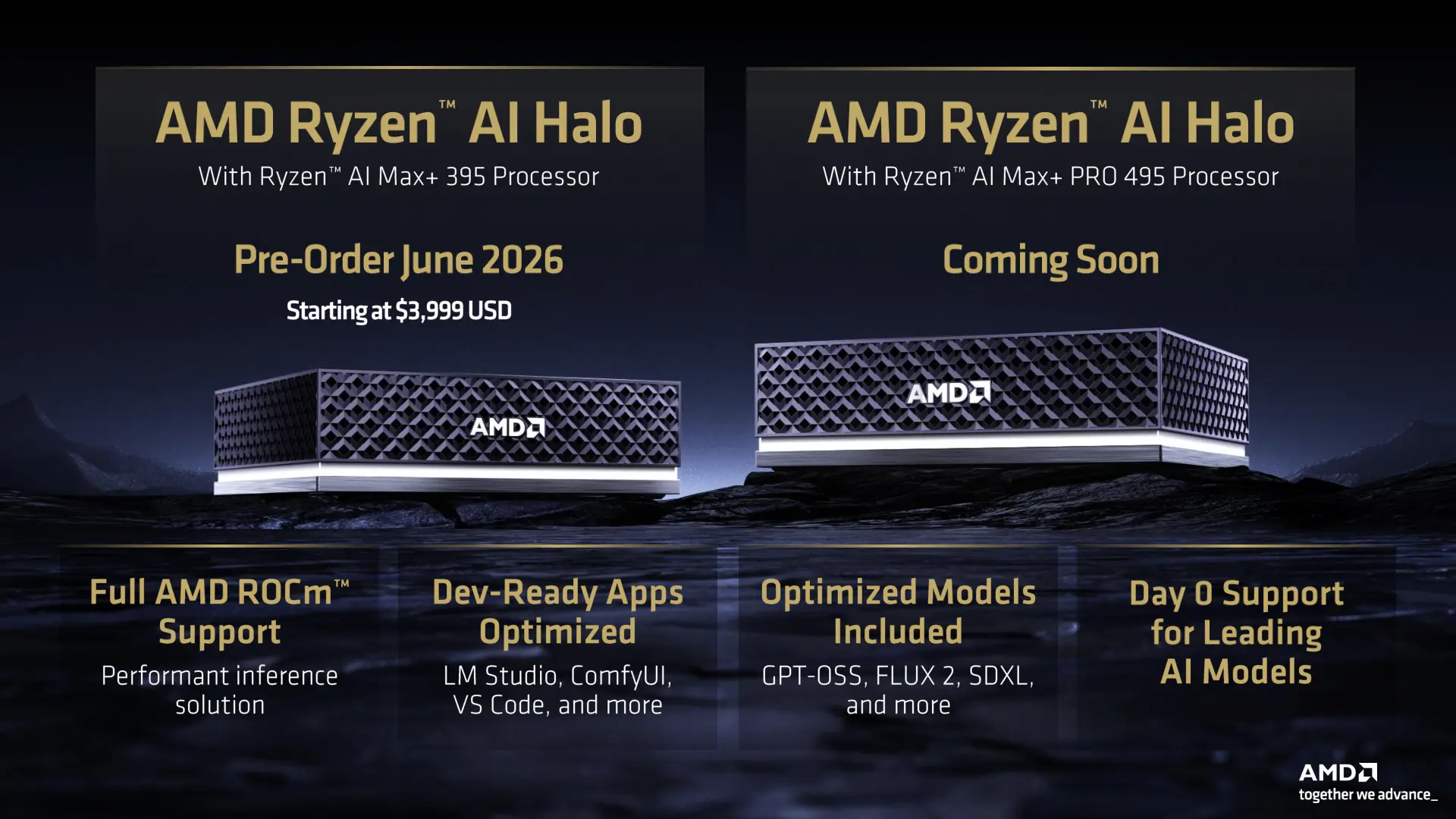
If you think this is interesting you can pre-order it next month (June 2026). This is the Ryzen AI Max+ 395 model which will cost your $3999. However AMD has also teased the next-gen platform that will be based on Ryzen AI Max+ PRO 495 which will be available in Q3, 2026.