
With the Black Friday 2025 week set to start in just a couple of days, we thought this would be a good time to publish a best GPU recommendation list, considering many people may be looking to buy new systems or upgrade their existing ones.
Typically with lists like these, often the price of a graphics card is the yardstick to measure in order to determine what kind of value it provides and how well it stacks up against others. However, pricing is a very volatile thing in the PC market nowadays.
So, instead, we are going to base our list on the display screen resolution and refresh rate of the monitor you plan to pair your GPU with. This can be immensely helpful since you would know exactly the kind of performance you are looking for and how much you"d need to spend and budget for your system in order to get that level.
In this guide, we look at our 1080p recommendations across various refresh rates, from the most common 60 Hz all the way up to 300+ Hz.
We are mainly considering AAA titles for this, so if you play indie games, the card should be able to handle them fairly easily, as most indies are generally less graphically intensive.
Best for 1080p 60-75Hz
We start off the list with the most common refresh rate for 1080p monitors. This is how the vast majority of gamers experience their games. People who buy stuff around this budget generally tend to hold on to their GPUs longer than enthusiasts.
As such, you will want something that lasts a while and for that, you need some headroom, especially in the case of VRAM. That is because VRAM is typically most readily occupied by graphics assets like texels and decals which help shape a game"s texture maps, and while textures are typically not very hard to process, they do eat up memory. So if you have enough VRAM, you can turn up textures, and that will help improve the visuals of the game without making it harder to run.
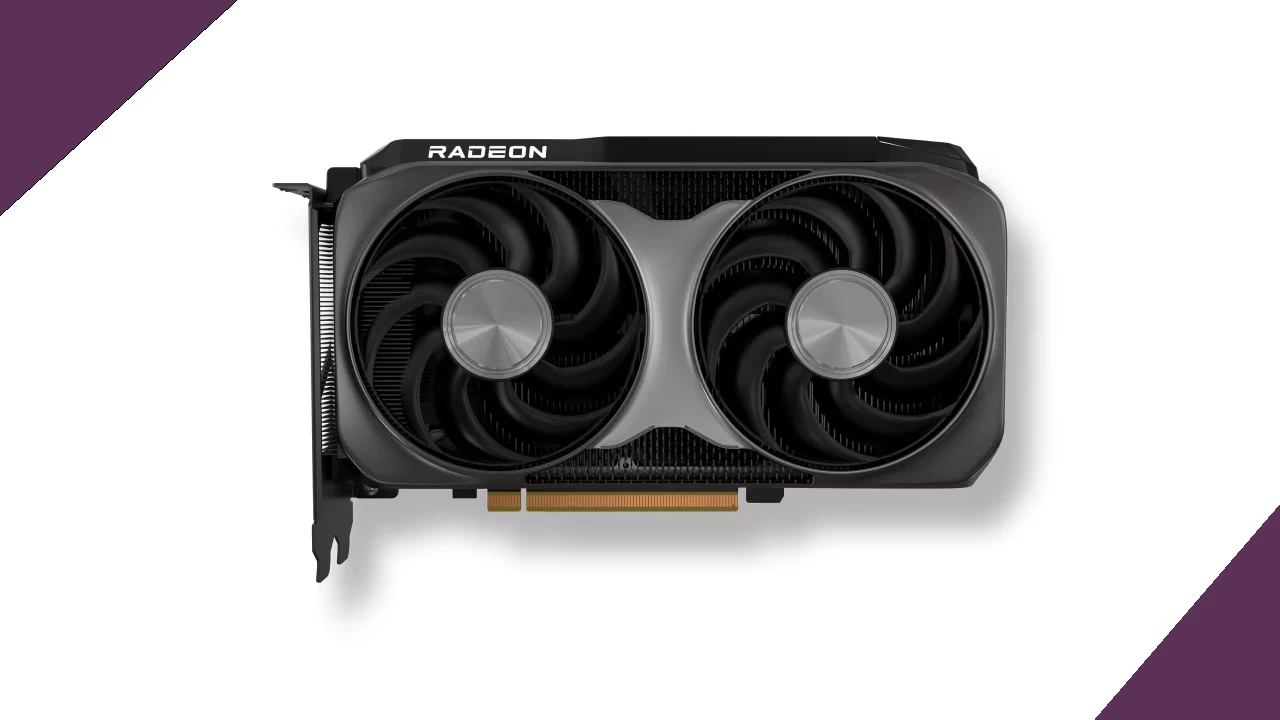
AMD"s RX 9060 XT 16GB variant is the ideal candidate for this. The 9000 series GPUs from AMD are based on the company"s RDNA 4 architecture. The card has 16GB memory, so that is much more than you will ever need for 1080p gaming, and you can find good deals for around $350. For lighter games, Intel Arc B-series cards are a good option too for around $250 in the case of lightweight titles.
- Get the RX 9060 XT 16GB on Amazon US || Newegg US || Amazon UK
- Get the Arc B580 on Amazon US || Newegg US || Amazon UK
Best for 1080p 120-180 Hz
Moving on to the next category, if you are someone who enjoys playing lighter, non-AAA titles on a high-refresh-rate (120~180Hz) 1080p screen, the Arc B580 is a good place to start. However, the AMD 9060 XT 8GB is the better alternative performance-wise, as is the Nvidia RTX 5060 8GB.
Compared to the Intel GPU, please note that you will get around 30-35% more performance with the 9060 XT and about 25% improvement with the 5060. Overall though, we have to hand it to AMD again, as it is indeed the best pick for this job. It is similarly priced to the RTX 5060 8GB and is ever so slightly faster.
AAA gaming, on the other hand, is not something the 9060 XT or the 5060 can handle at 120+ FPS. For that you need much more powerful GPUs. The best overall pick for this segment should be the RX 9070 XT, all things considered, including the MSRPs. However, it seems like AMD"s Radeon GPUs are currently more expensive than Nvidia"s corresponding equivalent options, and so the GeForce RTX 5070 is the one to go for.
We have noticed some of these cards going for under $500 while typically the equally good RX 9070 (non-XT) is $500+. The 12GB VRAM on the 5070 should also be enough for your 1080p gaming desires.
Alternatively, if for some reason you require higher VRAM (say you like to play with texture mods and such), the AMD RX 9070 XT is a good option too, albeit more expensive currently, though you do get more performance too in a lot of situations outside of ray tracing. And now with things like FSR Redstone Ray Regeneration, you will get near-feature-parity with Nvidia.
Best for 1080p 240-360 Hz
Finally, we move into the super high refresh rate segment for monitors that feature clock rates of 240Hz or more. Since this is a premium segment, you also need the most powerful graphics cards to push such high frames. Note also that to achieve such high framerates, you will also need a processor powerful enough to deliver that output, as the CPU and GPU are meant to work in tandem or else you will run into a bottleneck. To understand this better, you can read about this in detail in my editorial.
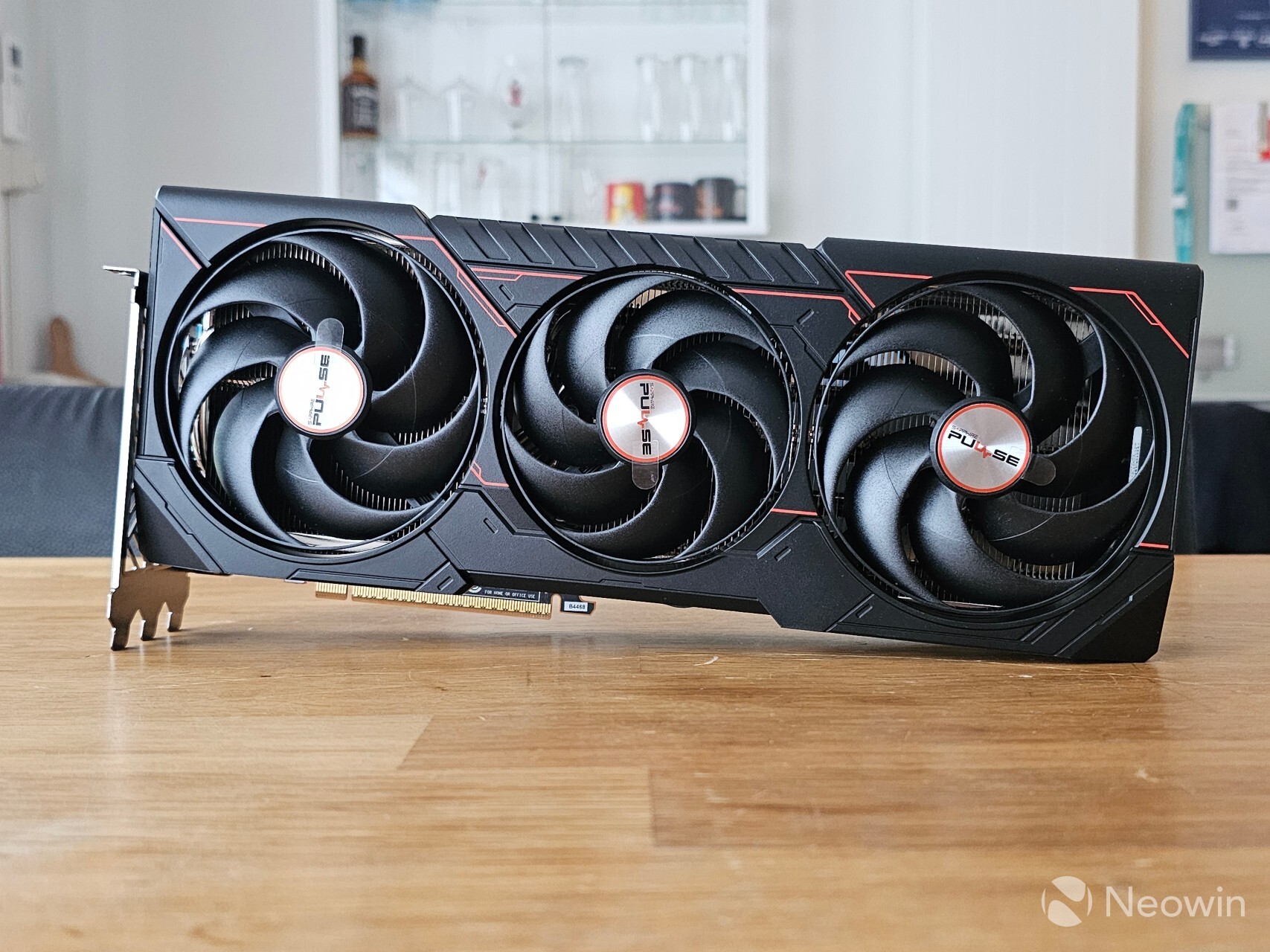
Unfortunately for AMD fans, Radeon is not an option in this range and you will have to stick with Nvidia only. The RTX 5070 Ti and 5080 (depending on your budget) are two options in this range. Both pack 16 GB of VRAM so it is more than sufficient at 1080p.
- Get the RTX 5080 on Amazon US || Newegg US || Amazon UK
- Get the RTX 5070 Ti on Amazon US || Newegg US || Amazon UK
For above 300 Hz, ie, closer to 360 Hz, the only feasible option is to opt for the best graphics card from this generation, the RTX 5090. The card is very powerful and with its 32GB VRAM, you will probably never run out of video memory at 1080p, even if you enable the highest ray tracing settings and install some 16K texture pack.
And there you have it. These are our picks for the best GPUs for 1080p gaming across the various available refresh rates. We have made our picks from both the Red and Green camps with a tinge of blue, as all of them offer some pretty compelling options across their whole range of products.
In part two of this series, we will be looking at 1440p/QHD and 2160p/4K gaming. The former, especially, is slowly but surely growing in adoption.
As an Amazon Associate we earn from qualifying purchases.