Anthropic has updated its AI assistant Claude with yet another feature upgrade, this time allowing it to render data visualizations, interactive user interfaces, and architectural diagrams directly within a dedicated pane next to the chat history.
Claude will now automatically recognise when a user might need a visual or interactive element, like an SVG vector graphic, a complex chart, or a functional React component, without even explicit requests. Rather than just returning the underlying code, the system’s backend will execute and translate that code on the fly. Users would be immediately presented with the rendered, interactive result. The feature is enabled by default on the free as well as paid subscriptions.
Here"s an example that shows an interactive periodic table visualisation, which a user can click around for more details:
The company notes that these visuals are rather evolving and continuously changing as the conversation carries on, which is different from its Artifacts feature, which is more of a permanent document designed by Claude.
Anthropic has been on a roll lately with a lot of improvements to Claude, which may partly be due to stiff competition from other AI products like ChatGPT and Gemini. Last week, OpenAI released GPT-5.4, which outperformed Claude Opus 4.6 in many benchmarks and brought significant improvements to its developer tool Codex, giving Claude Code a run for its money.
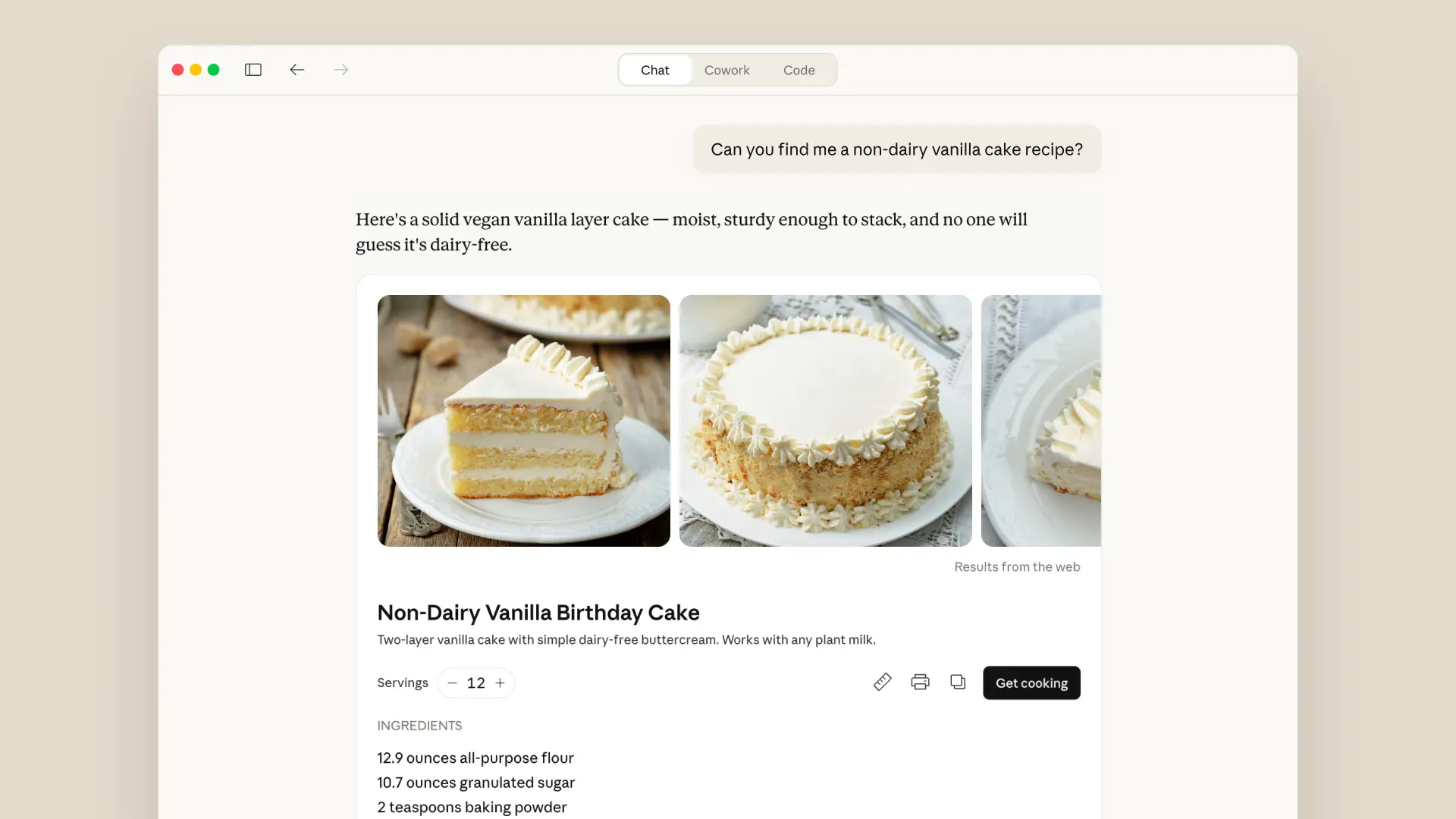
Other than this update, Anthropic added that it is bringing a broader change in visual style to Claude. For example, recipes now show ingredients and steps, and Claude also provides a visual when users ask it for the weather.
It should be noted that while OpenAI, Google, and even Grok from xAI all have image generation models, the feature above is the closest Anthropic has ever come to for generating visualisations natively, and still doesn"t have a full image generation model at all.