The UK government has announced $49 million of investment to expand the DAWN supercomputer, located at the University of Cambridge, so that its processing capacity is increased sixfold. The funding is aimed at providing British researchers and startups with the high-performance computing power needed to compete with tech giants from the US and China.
The upgrade is scheduled to come online by spring 2026. It will integrate advanced hardware to support large-scale AI development in critical sectors. The researchers using the DAWN supercomputer will be attempting to accelerate breakthroughs in a range of fields such as healthcare diagnostics, environmental modeling, and the efficiency of public services.
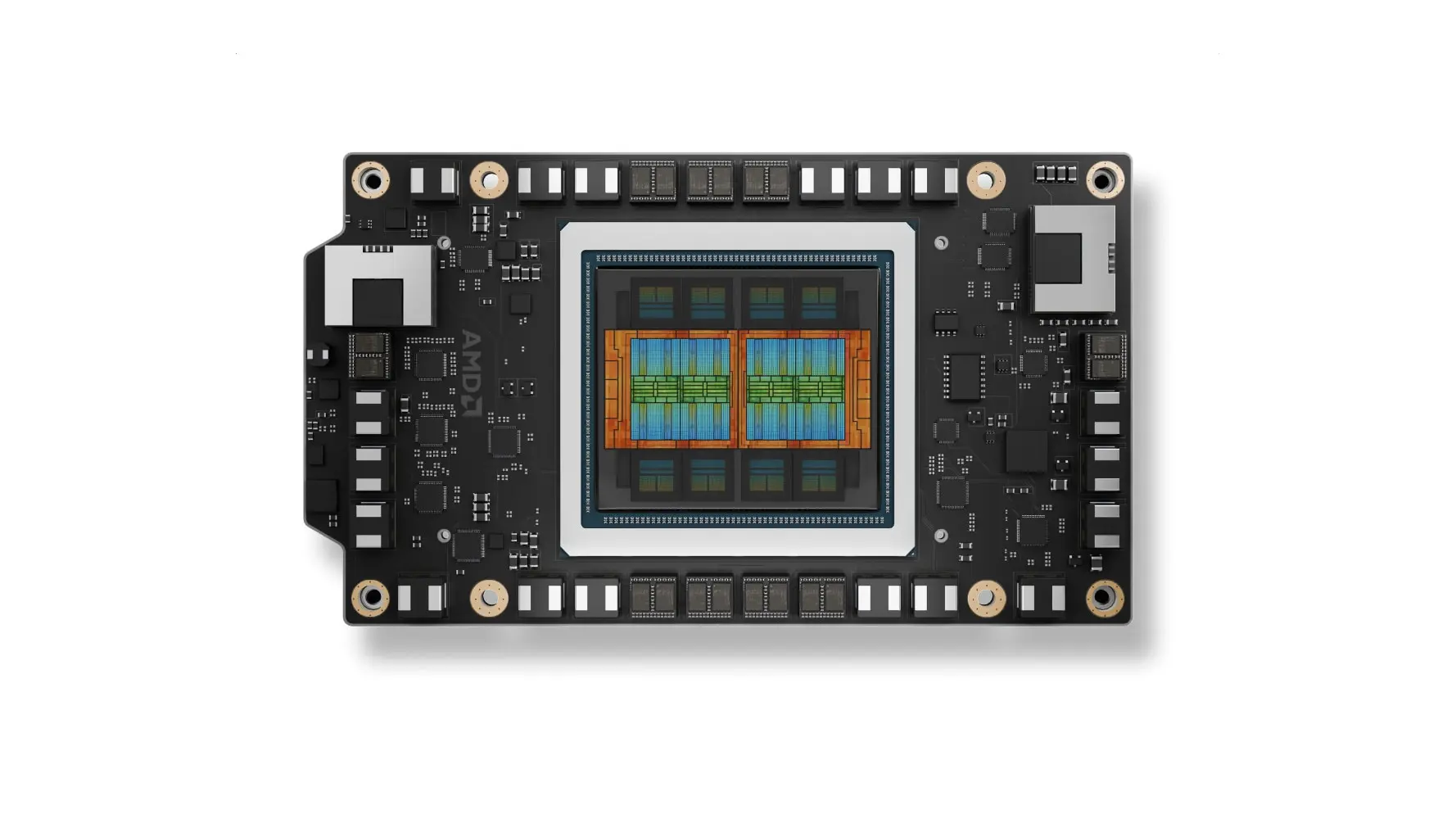
The government said that the enhanced computer will feature AMD CDNA4-based Instinct MI355X chips. This is the first time that researchers will have access to these specific AI processors via national infrastructure. Dell is set to manage the integration of these chips into the existing DAWN infrastructure.
Here are some key specs of the MI355X:
| Feature | Specification |
|---|---|
| GPU Architecture | AMD CDNA™ 4 |
| Video Memory | 288 GB (HBM3E) |
| Memory Bandwidth | 8 TB/s |
| Peak Power (TBP) | 1400W |
| AI Performance | 10.1 PFLOPS (FP8) |
| Interconnect | PCIe 5.0 x16 |
| Transistors | 185 Billion |
In terms of access, the government is planning to allow eligible UK scientists and small businesses to use the hardware for free via the AI Research Resource (AIRR) program. This will ensure resource-intensive projects with huge datasets can go ahead without prohibitive costs associated with private supercomputing.
By introducing the new AMD MI355X chips, the government is reducing its dependency on a limited range of technology providers. The government also said this diversity allows for a broader variety of AI models and research methodologies to be explored within the domestic ecosystem.
The expansion is expected to deliver societal benefits such as the development of personalized cancer vaccines and more accurate climate modeling for disaster preparedness. For the tech sector, it lowers the barrier to entry for startups, allowing them to train more ambitious AI models to compete with bigger players.
The AI Research Resource was established in July 2025 and includes the DAWN supercomputer and the Isambard-AI supercomputer in Bristol. The project falls within the government’s $2.7 billion commitment to public compute infrastructure and reinforces the Oxford-Cambridge corridor’s role as a primary hub of European science and innovation.
The expansion is expected to be fully operational in the spring and gets the country some way to achieving its goal of expanding AIRR twentyfold by 2030. Future phases of the national computer strategy will include the construction of a new national supercomputer in Edinburgh, Scotland.