
Google has announced a new tool that can help if you come across non-consensual intimate images (NCII) of yourself on Google Search. You can quickly take action against such content before it spreads online and get it removed from Search.
You can access the tool by clicking on the three dots present on an image. Click on "Remove result" from the drop-down menu, then choose "It shows a sexual image of me." Google will ask you to provide some details in a form, where you can report multiple images in a single request. This saves some effort, since you don"t need to report each image individually.
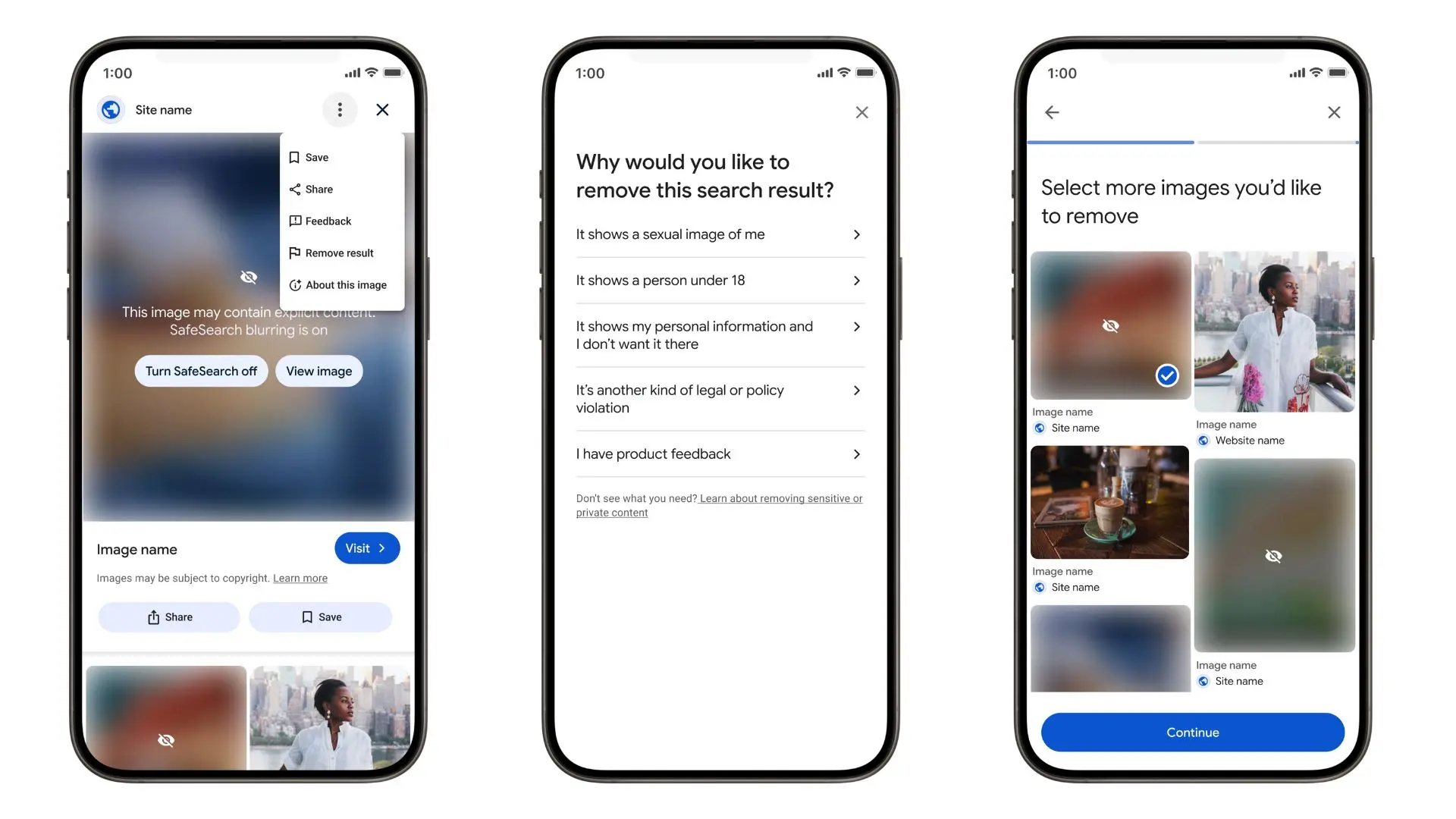
The tool also offers opt-in safeguards to filter out more explicit images that may appear in search results. Such non-consensual content typically includes images of a person shared online, manipulated images, or AI-generated, explicit deepfakes.
Google will send you email notifications to keep you updated on the status of the request. The company will remove the images from Search results if its personal content policies are violated. You or your representative can initiate the request, provided you"re the subject of the image. You can track all image removal requests through the dedicated "Results about you" hub.
"We hope that this new removal process reduces the burden that victims of non-consensual explicit imagery face," the company said in a blog post, adding that the new image removal tool is rolling out in most countries, with plans to expand to additional regions soon.
The tool builds on Google"s existing efforts to protect users" privacy and safety on the web. It partnered with StopNCII.org last year to identify and remove content violating its NCII policy using image hashes or digital footprints. The search giant also updated its algorithm to reduce the reach of such content on Google Search.