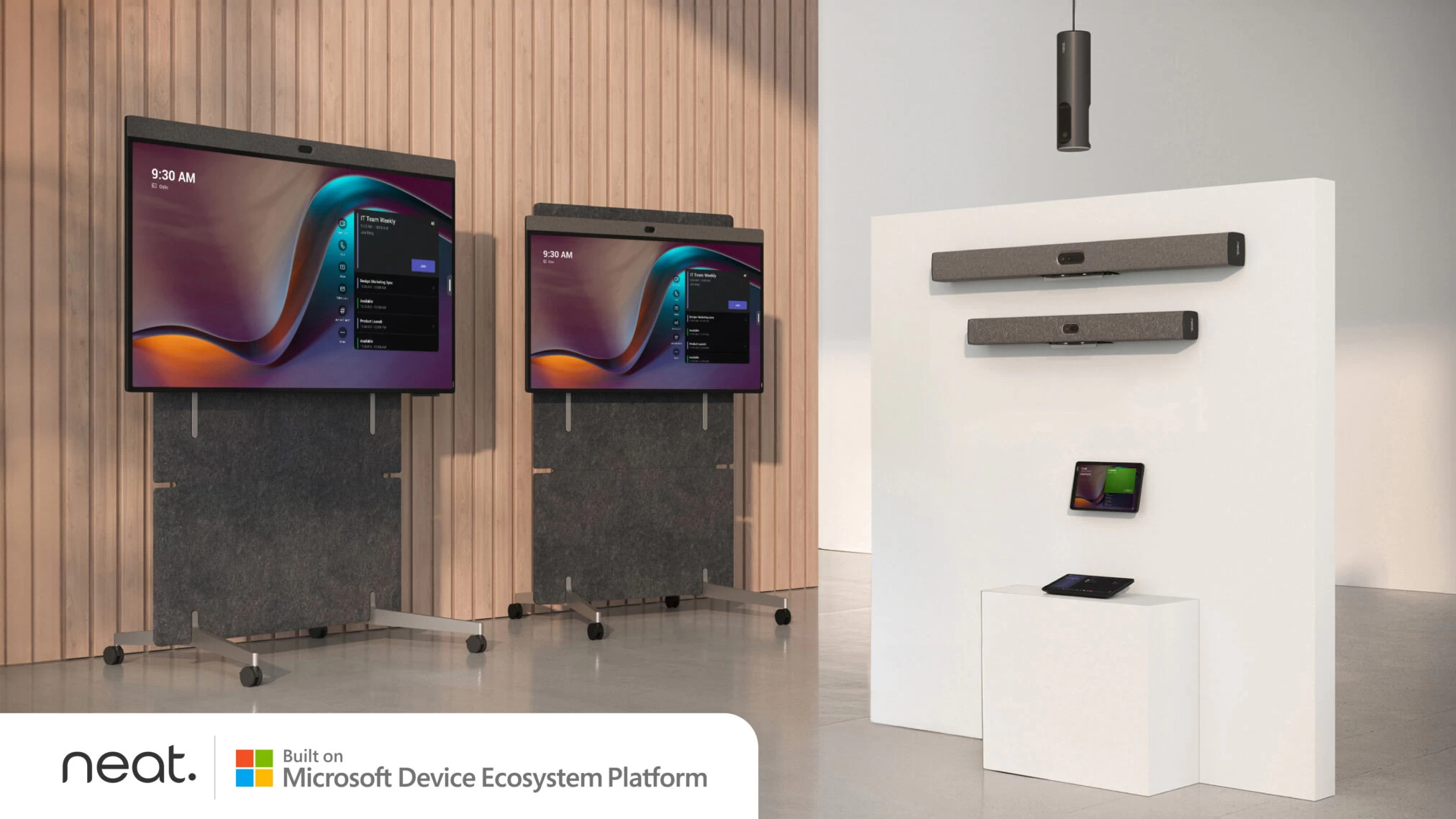
The Microsoft Device Ecosystem Platform (MDEP) provides a secure, manageable, and consistent Android foundation for collaboration and IoT devices. Now, Neat has officially joined the MDEP, which will combine its “intuitive, versatile, design-forward devices” with MDEP’s enterprise fundamentals. By joining MDEP, Neat wants to deliver secure, smart, and consistent meeting experiences alongside predictable operations at scale.
Microsoft’s Head of MDEP, Juha Kuosmanen, said that the move “underscores our shared commitment to empowering users with superior experiences.”
By joining MDEP, Neat secures several core benefits, including tightened, integrated security protocols, a security-first approach, and a steady update rhythm that keeps fleets current. It also ensures that Neat adheres to Microsoft’s standards for performance, security, user experience, and manageability, which Neat’s Chief Product and Engineering Officer, Tormod Ree, described as “rigorous”. He said:
"Microsoft is a longtime, valued Neat partner. MDEP represents a significant opportunity for us to deepen our collaboration in service of our shared customers. By joining this program, we open a new avenue for innovation, ensuring that our offering continues to adhere to Microsoft’s rigorous standards for performance, security, user experience, and manageability."
The main promise of the combined offering for enterprise customers is that Neat’s products now promise a secure, smart, and consistent meeting experience and trusted, predictable operations at scale. MDEP offers enterprises standardized device management that aims to simplify IT operations for large organizations. Neat already has a reputation for “innovative, versatile, and scalable video communications,” so it should be able to enhance the MDEP community.
Microsoft and Neat will continue to work closely to bring the benefits of MDEP to customers and partners. The future roadmap will advance capabilities specifically around security, management, and platform features. The two companies expect that this collaboration will open a “new avenue for innovation.”
Source: Microsoft