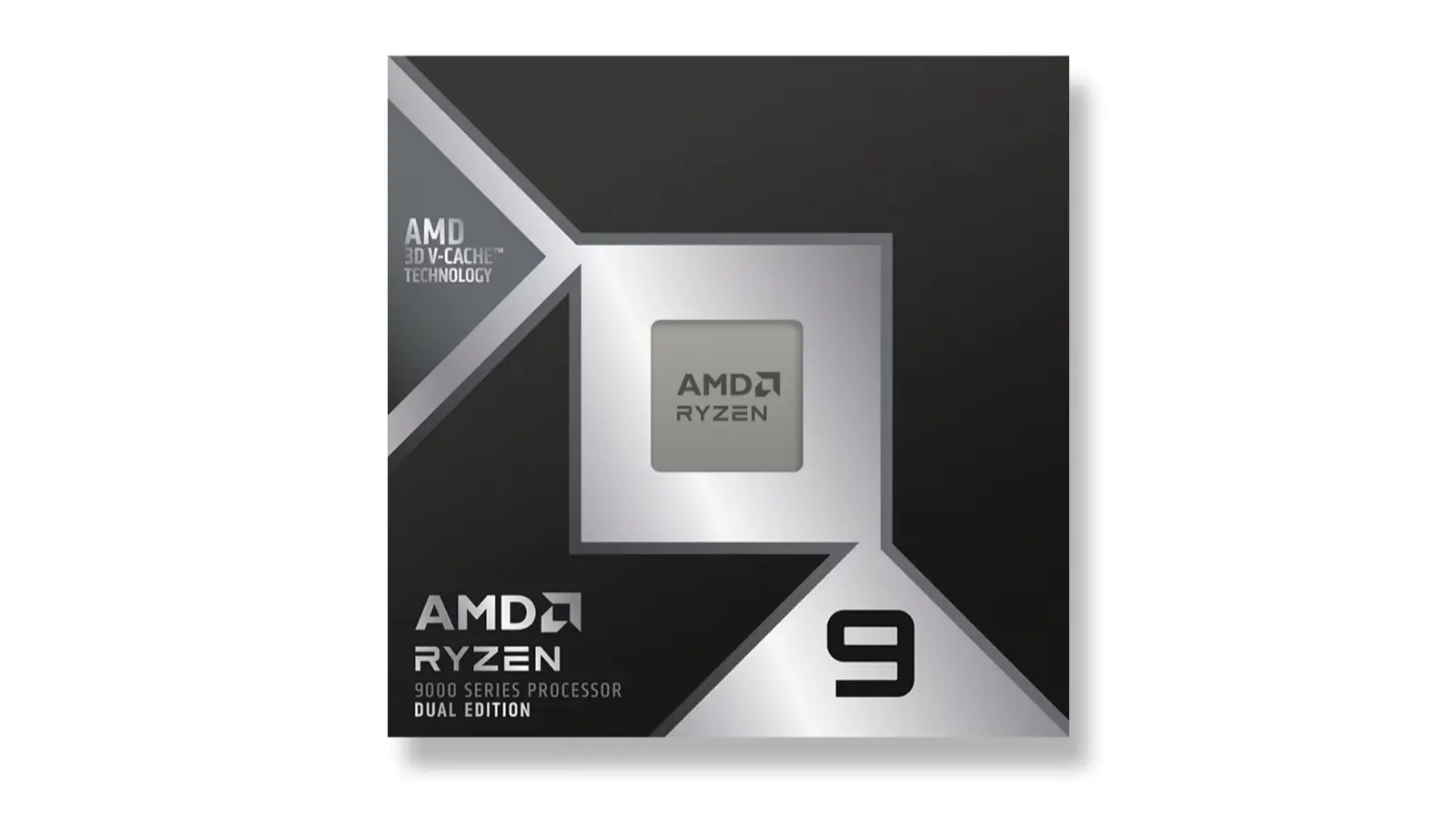
Last month AMD announced the Ryzen 9 9950X3D2, a new flagship processor that pushes cache capacity to near-insane levels. Built on the same Zen 5 architecture as the rest of the Ryzen 9000 series processors, the chip features 16 cores and 32 threads, with a base clock of 4.3 GHz and a boost clock reaching up to 5.6 GHz.
As alluded to above, what sets it apart is its massive 208 MB of cache, comprised of 192MB of L3 and 16MB of L2, making it the largest cache ever seen in a Ryzen desktop processor. This is achieved through dual 3D V-Cache technology, which stacks cache on both CCDs, a first for AMD’s consumer lineup as thus far, the company has stuck to using 3D V-Cache on one of the two CCDs.
AMD had already disclosed the release date for this, which is set to happen on April 22, but today, the company also unveiled its SEP (suggested etail price), which is at a whopping $899. This makes the new Ryzen 9 9950X3D2 AMD"s most expensive 3D V-cache processor ever.
The table below shows the prices of all the Ryzen X3D AM4 and AM5 parts, including the new 9950X3D2, which is right at the top:
| Processor | SEP (USD) |
|---|---|
| Ryzen 9 9950X3D2 | $899 |
| Ryzen 9 9950X3D | $699 |
| Ryzen 9 9900X3D | $599 |
| Ryzen 9 9850X3D | $499 |
| Ryzen 9 9800X3D | $479 |
| Ryzen 9 7950X3D | $699 |
| Ryzen 9 7900X3D | $599 |
| Ryzen 7 7800X3D | $449 |
| Ryzen 7 5800X3D | $399 |
In terms of headroom specs, the processor carries a power headroom of 200W TDP, slightly higher than the Ryzen 9 9950X3D, which had a 170W rating. The boost clock is expectedly low given that 3D V-cache CCDs are not the best for clocking too high, which has been the main reason for sticking to single CCD X3D.
Of course gaming should be great on this but beyond gaming too, the company highlighted up to 10 percent improvements in professional workloads such as rendering, compiling, AI, and content creation.