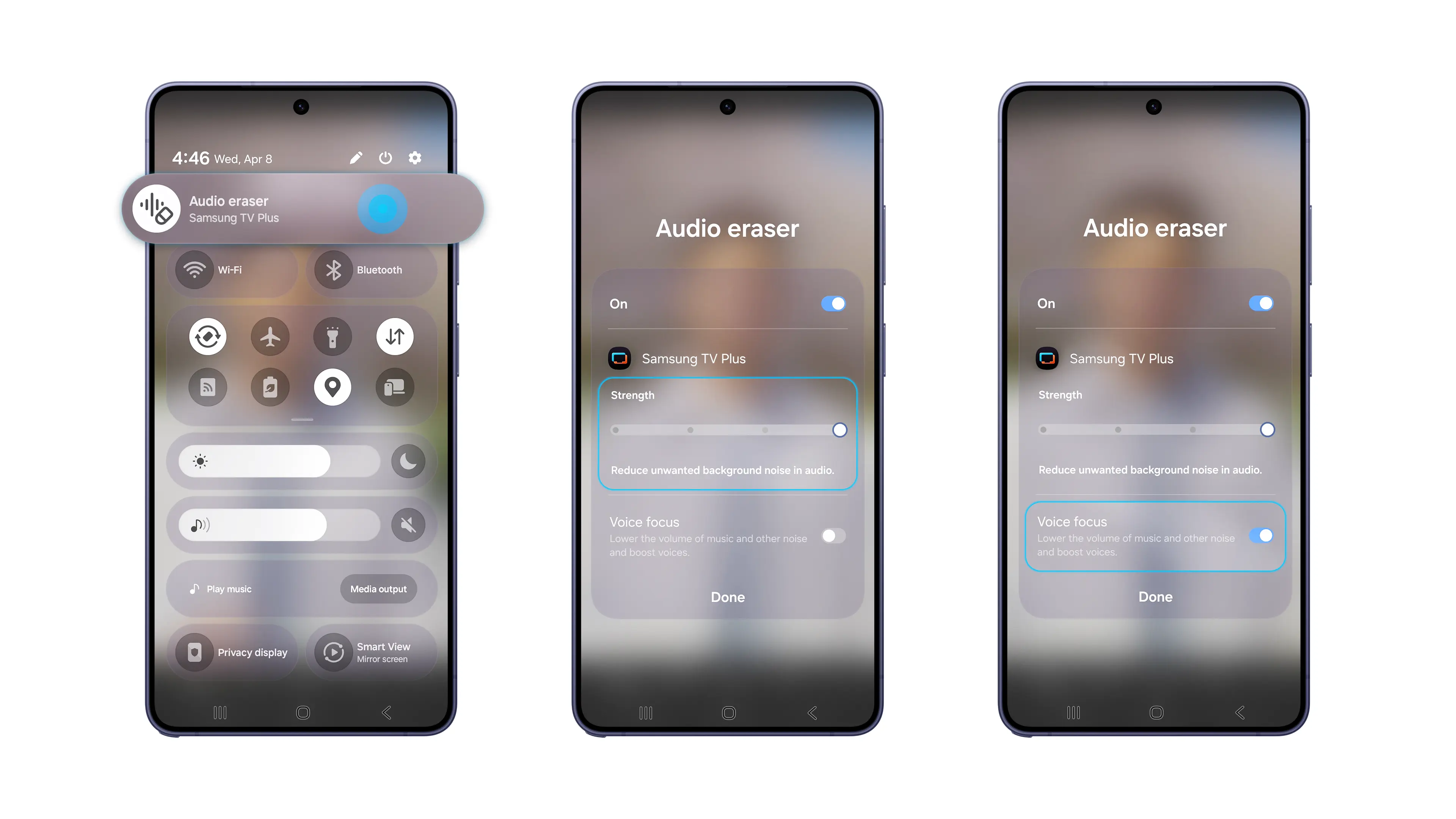
Samsung says it"staking its AI-powered audio tools to the next level with the latest version of Audio Eraser, now debuting on the Galaxy S26 series. Back in late 2024, early leaks suggested the company was working on a feature that closely resembled Audio Magic Eraser, introduced by Google with the Pixel 8. That tool allowed users to reduce unwanted noise in videos by adjusting elements like voices, wind, and ambient sound.
Samsung"s take initially appeared to follow a similar path, focusing on post-processing tools for recorded clips. And when Audio Eraser officially debuted on the Galaxy S25 series, it largely delivered on that promise, offering users a way to clean up audio after the fact.
With the Galaxy S26 series, however, the tech giant is moving well beyond imitation. Audio Eraser has evolved into a real-time audio control system that works not only on recorded content but also across streamed media, including OTT platforms and social apps. This marks a major shift in functionality. Instead of fixing audio after recording, users can now adjust sound dynamically as content plays, effectively turning Audio Eraser into a live audio engine.
The upgrade is powered by an AI sound engine combined with advanced sound separation technology. The system can reportedly identify and isolate different audio layers such as voices, music, and background noise in real time. This should allow users to reduce distractions and prioritise important sounds instantly.
Samsung has also focused on ease of use; Audio Eraser can be accessed directly from the Quick panel while content is playing, eliminating the need to pause or rewind. Once activated, users gain access to a range of controls designed to fine-tune the listening experience. These include a Strength slider for adjusting the level of noise reduction and a Voice Focus option that enhances dialogue clarity. All adjustments can be made in real time without interrupting playback.
With this latest evolution, users can tailor sound output on the fly, depending on their environment and the type of content they’re consuming. While the feature may have started as Samsung"s answer to Google"s approach, its real-time capabilities on the Galaxy S26 series suggests a clear step forward, one that could redefine how users interact with audio on their devices.