WhatsApp is rolling out a new “Writing Help” assistant feature to a limited number of users in WhatsApp beta for Android (version 2.25.23.7). The feature is powered by a new architecture called “Private Processing” and helps users by giving them writing suggestions to improve their messages. The feature is optional and disabled by default, requiring users to manually enable it.
The move marks quite a significant shift by WhatsApp to integrate generative AI features directly into its core messaging experience and aligns with the broader industry trend of adding AI tools to daily communication apps. To ensure that it works as intended, Meta is trialing the feature with a “very limited audience” and will gradually roll it out to more users over the coming weeks.
One of the key points about this feature is its reliance on an architecture called Private Processing, which has been developed by Meta. The system uses encrypted connections and anonymous routing to prevent user requests from being linked to their identity. No original message data or suggestions are stored to ensure no traces are left behind. It only processes the specific message a user chooses to send to the AI, not the entire conversation.
The Private Processing information screen in the app assures users that neither Meta nor WhatsApp can access their messages. Users must also explicitly tap the AI button to send the message for suggestions. This contrasts with some AI models that store and use user data for training.
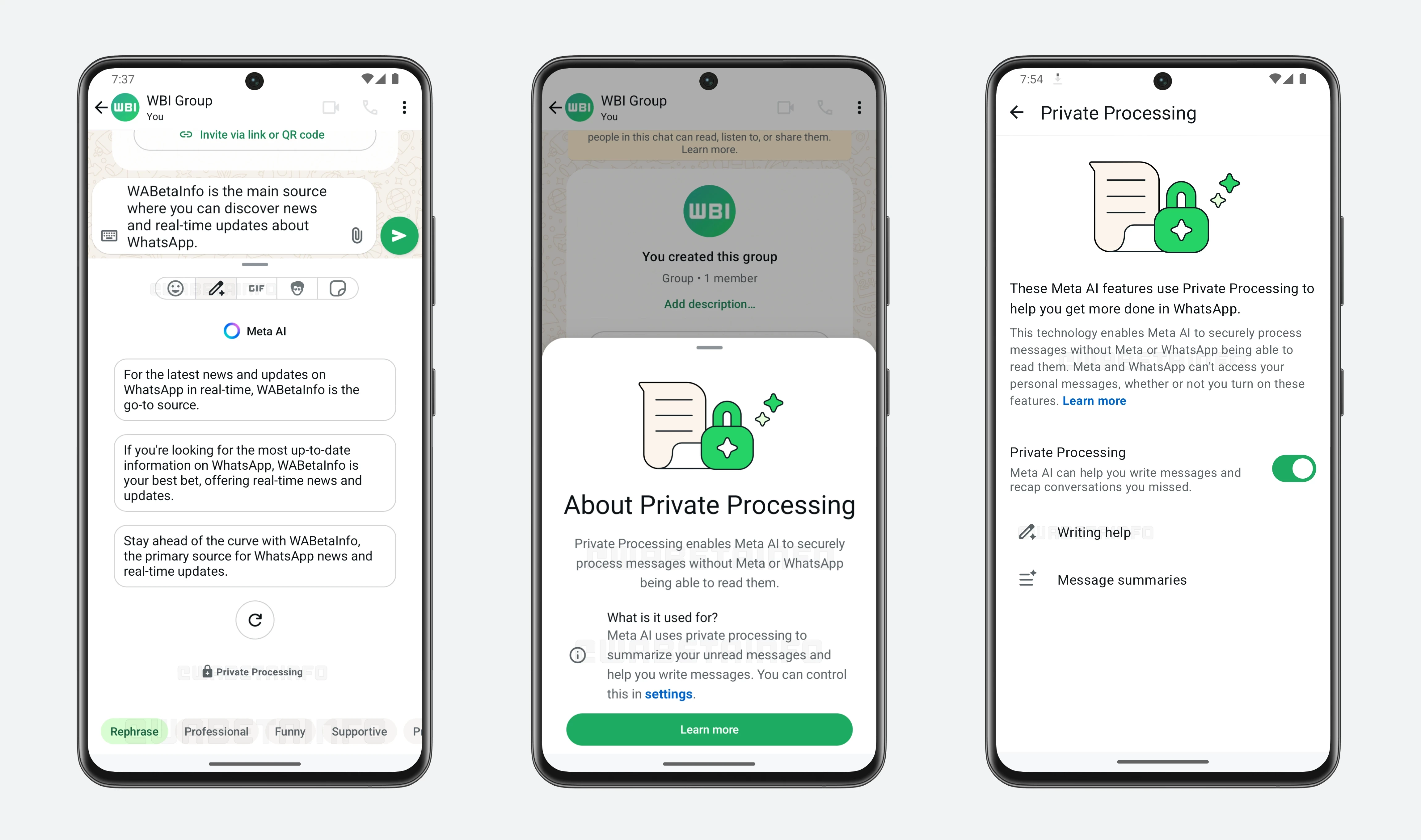
With Writing Help, users will be given at least three suggestions with five available tones: rephrase, professional, funny, supportive, and proofread. Users can choose to replace their original message with one of the AI-enhanced options. Thankfully for the people who use this feature, the recipient will not be able to judge the sender for using AI because they will not know, at least WhatsApp won’t tell them. Additionally, if beta testers want to give feedback about the feature, they can report their satisfaction without the message content being sent.
This move by Meta marks a cautious, limited rollout to ensure that the feature is reliable before a potential broader release for beta testers. The Private Processing architecture is pretty interesting and could become a blueprint for how other apps integrate AI securely. As a reminder to any skeptical users of WhatsApp worried about AI, this feature is completely optional and isn’t available in the stable version yet. Broader availability will depend on initial feedback and performance monitoring. If you don’t want it, just disable it.
Source and image via WABetaInfo