AMD reached out to us asking if we were interested in testing the Radeon RX 9070 GRE. It originally launched just over a year ago as a China-exclusive, but now AMD is releasing it globally to compete against NVIDIA"s RTX 5060 Ti.
We will be pitching it against the data we already have for the RX 9070, and RX 9070 XT, but also the NVIDIA 5070 FE, MSI GeForce RTX 4070 VENTUS 2X 12G, and Gigabyte Radeon RX 7800 XT GAMING OC 16G as they are in a similar price class, but also because we do not have a comparable 5060 Ti card lying around here that we can compare it against.
Before we get underway, this is a collaboration between Steven Parker and Sayan Sen, who provided the benchmark graphics and input on the data points I collected during benchmarking.
First up, the specs of the RX 9070, 9070 XT, and 9070 GRE, which were given to us by AMD:
| Radeon RX 9070 GRE | Radeon RX 9070 | Radeon RX 9070 XT | |
|---|---|---|---|
| Boost Clock: Game Clock: | up to 2.79GHz up to 2.20GHz | up to 2.52GHz up to 2.07GHz | up to 2.97GHz up to 2.40GHz |
| Stream Processors | 3,072 (48 CU) | 3,584 (56 CU) | 4,096 (64 CU) |
| Ray Accelerator | 48 | 56 | 64 |
| AI Accelerator | 96 | 112 | 128 |
| ROPs | 96 | 128 | |
| Texture Mapping Units | 192 | 224 | 256 |
| Memory | 12 GB GDDR6, 18Gbps Clock, 192-bit Bus | 16 GB GDDR6, 20Gbps Clock, 256-bit Bus Effective Memory Bandwidth: 640 GB/s | |
| Infinity Cache | 48 MB (3rd Gen) | 64 MB (3rd Gen) | |
| Card Bus | PCI-E 5.0 X16 | ||
| Output | 2x HDMI 2.1b 2x DisplayPort 2.1a | ||
| Power consumption | 220W | 304W | |
| Recommended PSU | 650W | 750W | |
| Slot width | 2x | 3x | |
| Price (SEP) | $549 | $599 | |
As you can see from the specs above, it is less than the standard RX 9070 in every way that counts, except for slightly higher Boost and Game clock speed.
AMD Pricing hell
The list price according to AMD is $549, which is the same MSRP announced for the standard 9070, but as we saw, card manufacturers immediately inflated pricing for both the 9070 and 9070 XT cards. However, considering the 9070 can be found for around $530 online, there may not be that much wiggle room for manufacturers to inflate the GRE at the point of sale.
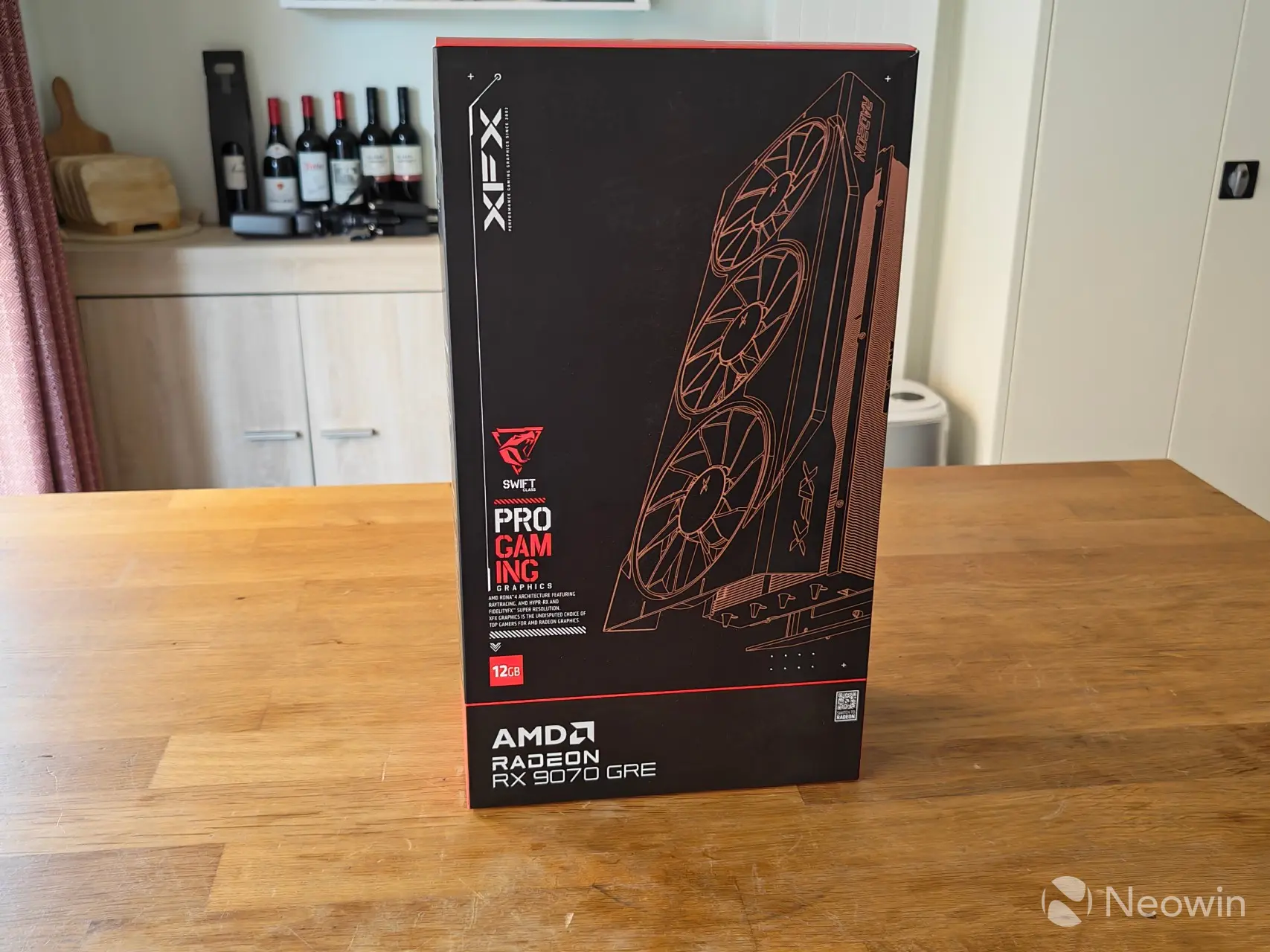
Design
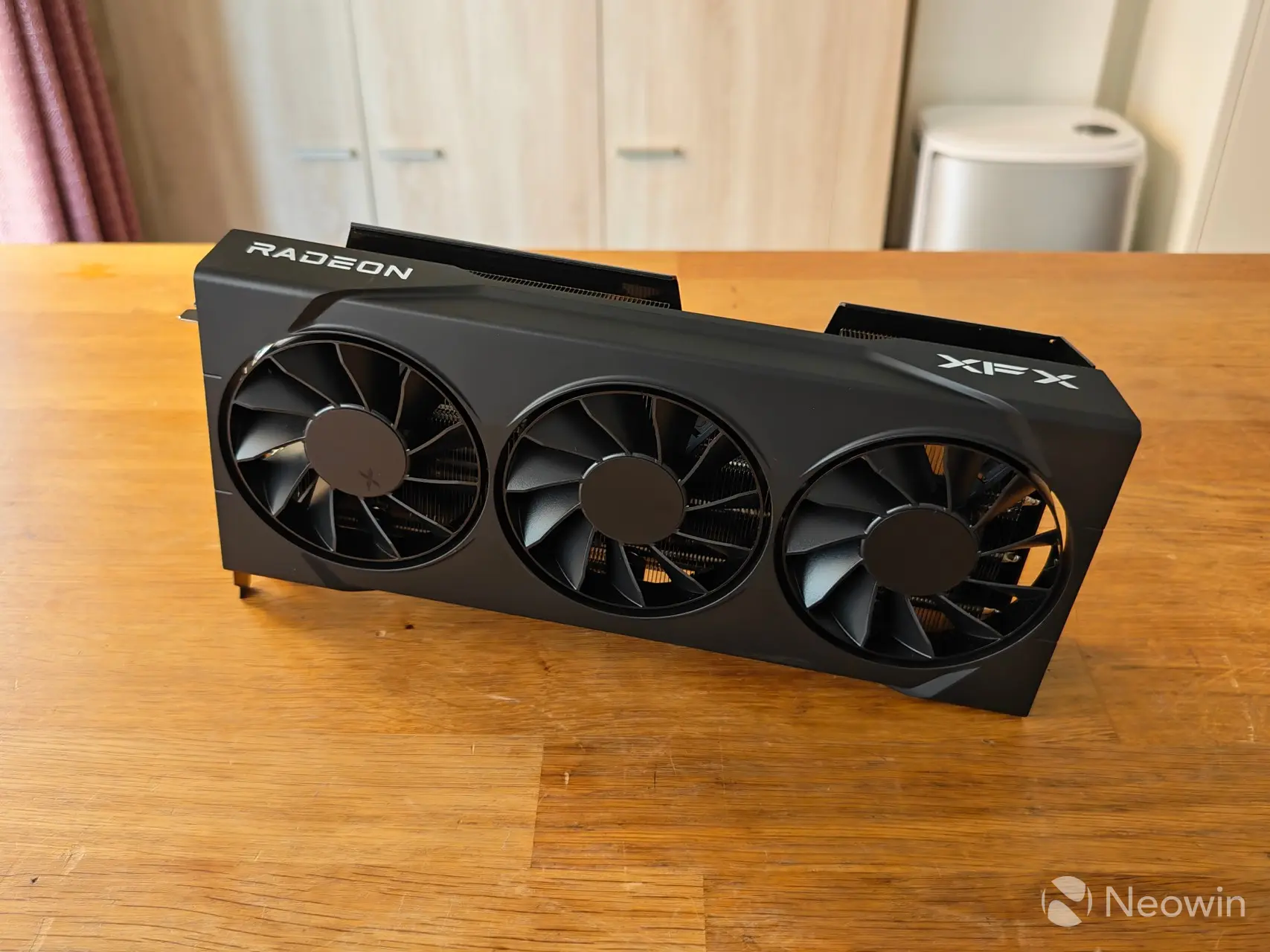
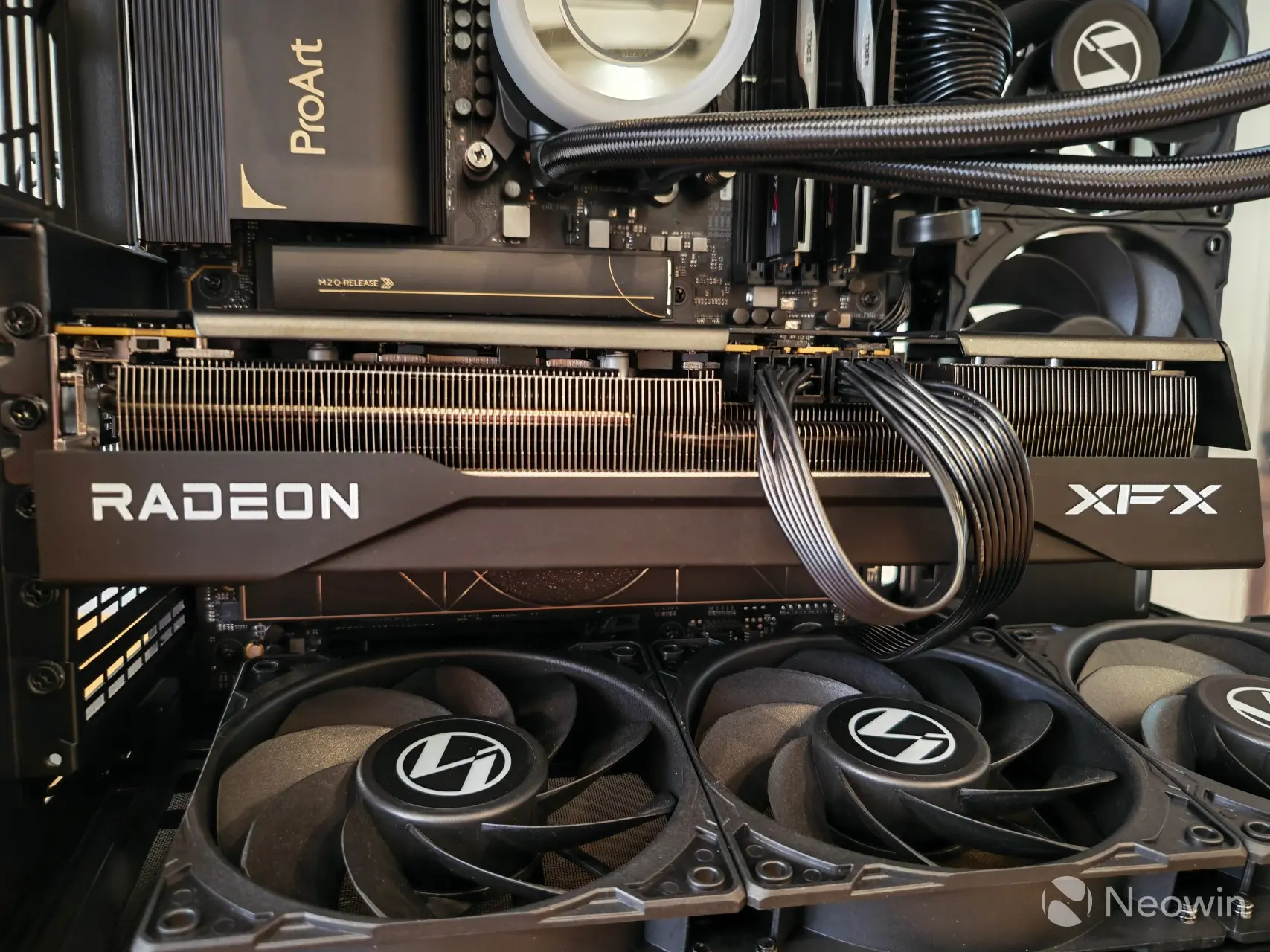
Moving on, the RX 9070 GRE we were given is an XFX Swift triple-fan, dual-slot design with two 8-pin connectors. At 30cm (self-measured) it will fit in most systems easily. There is no RGB on our RX 9070 either.
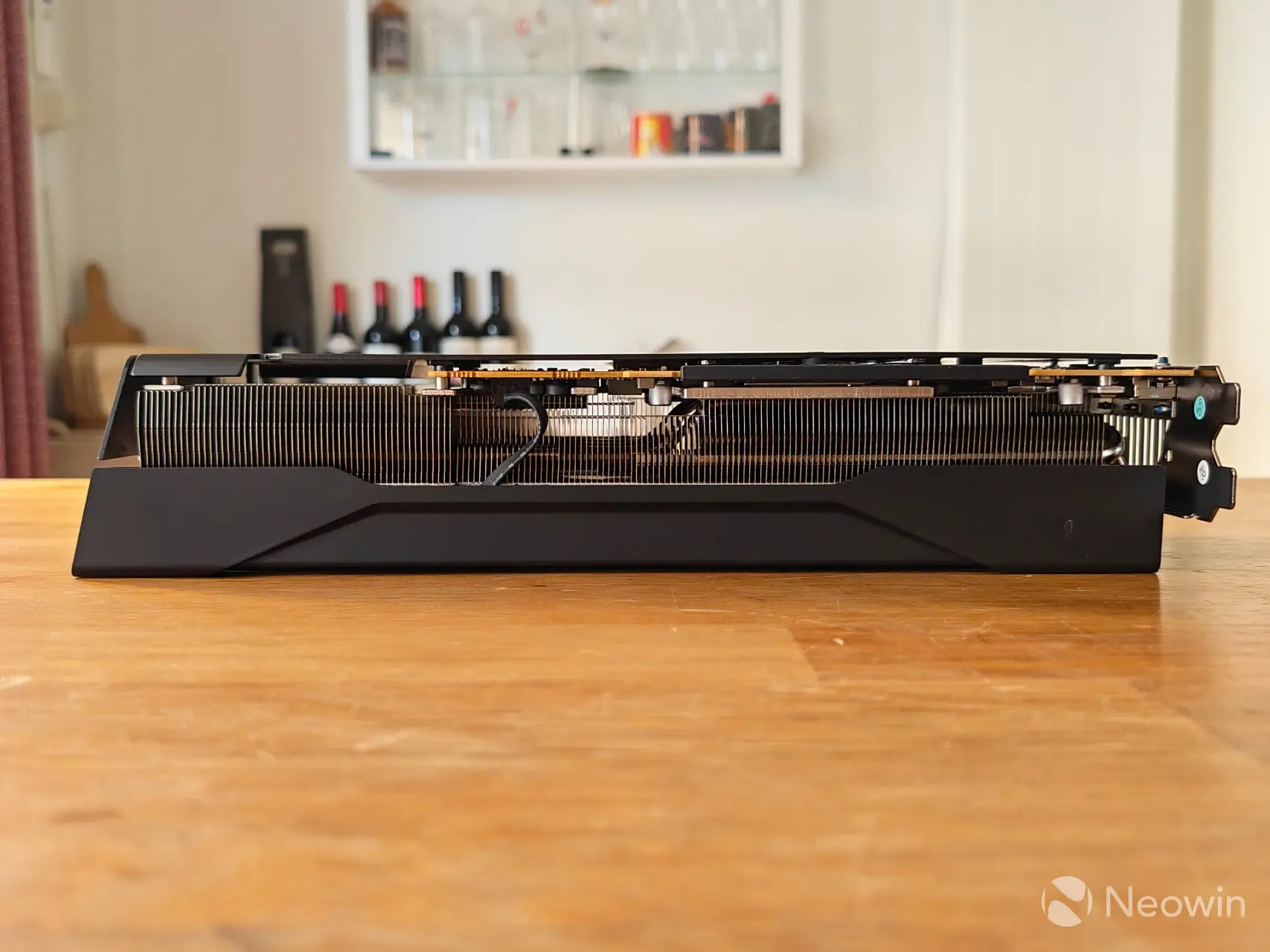
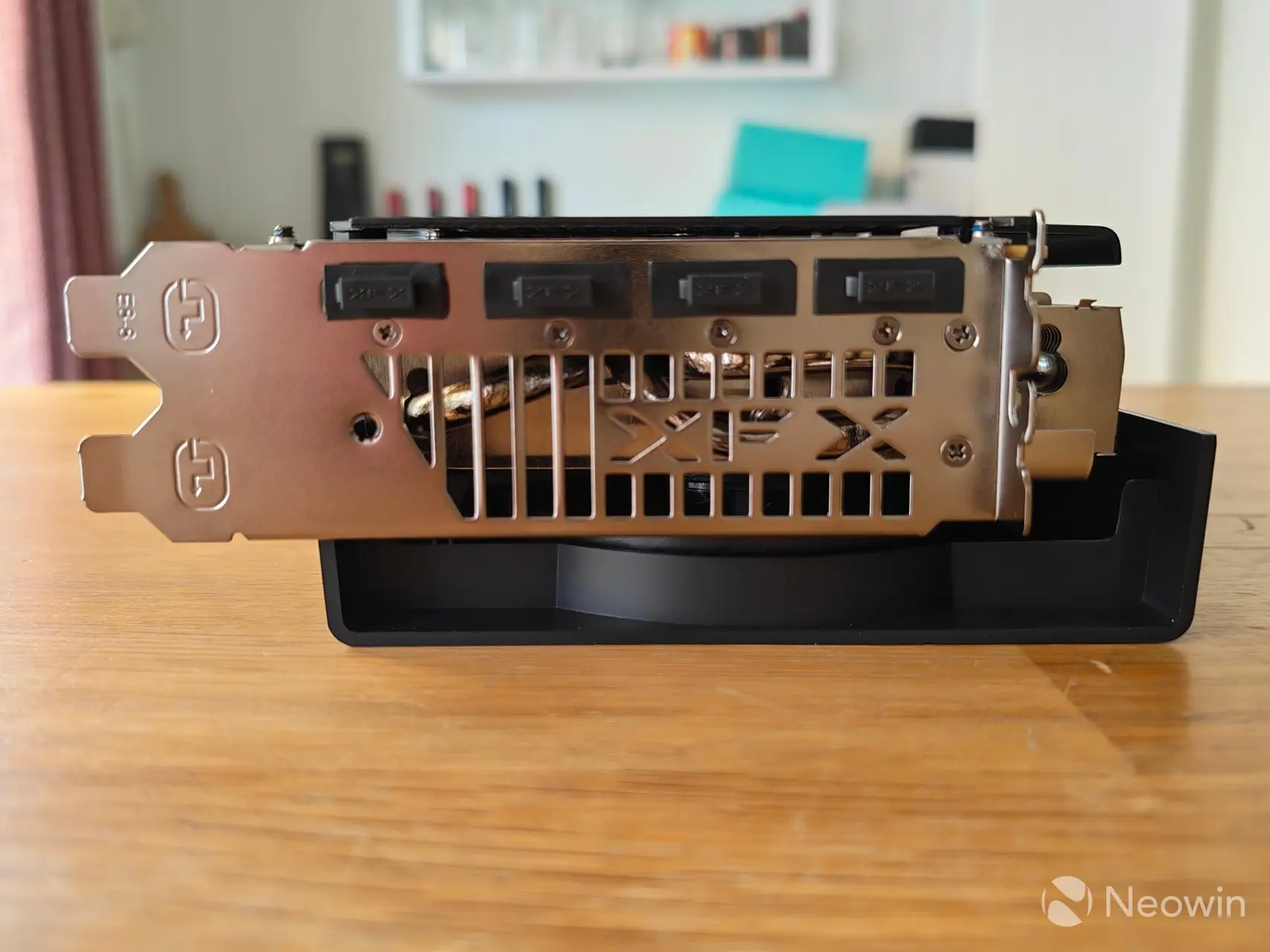
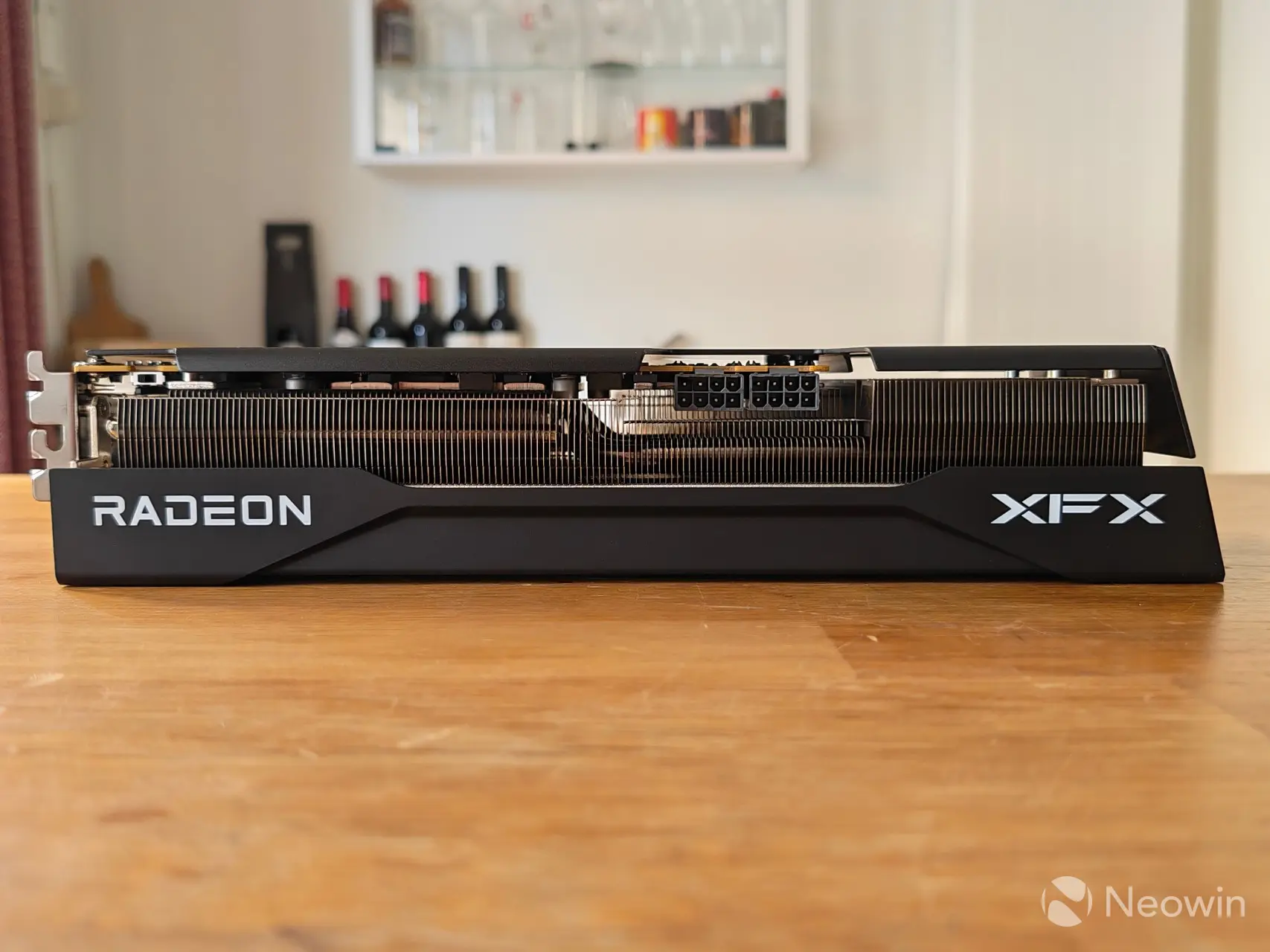
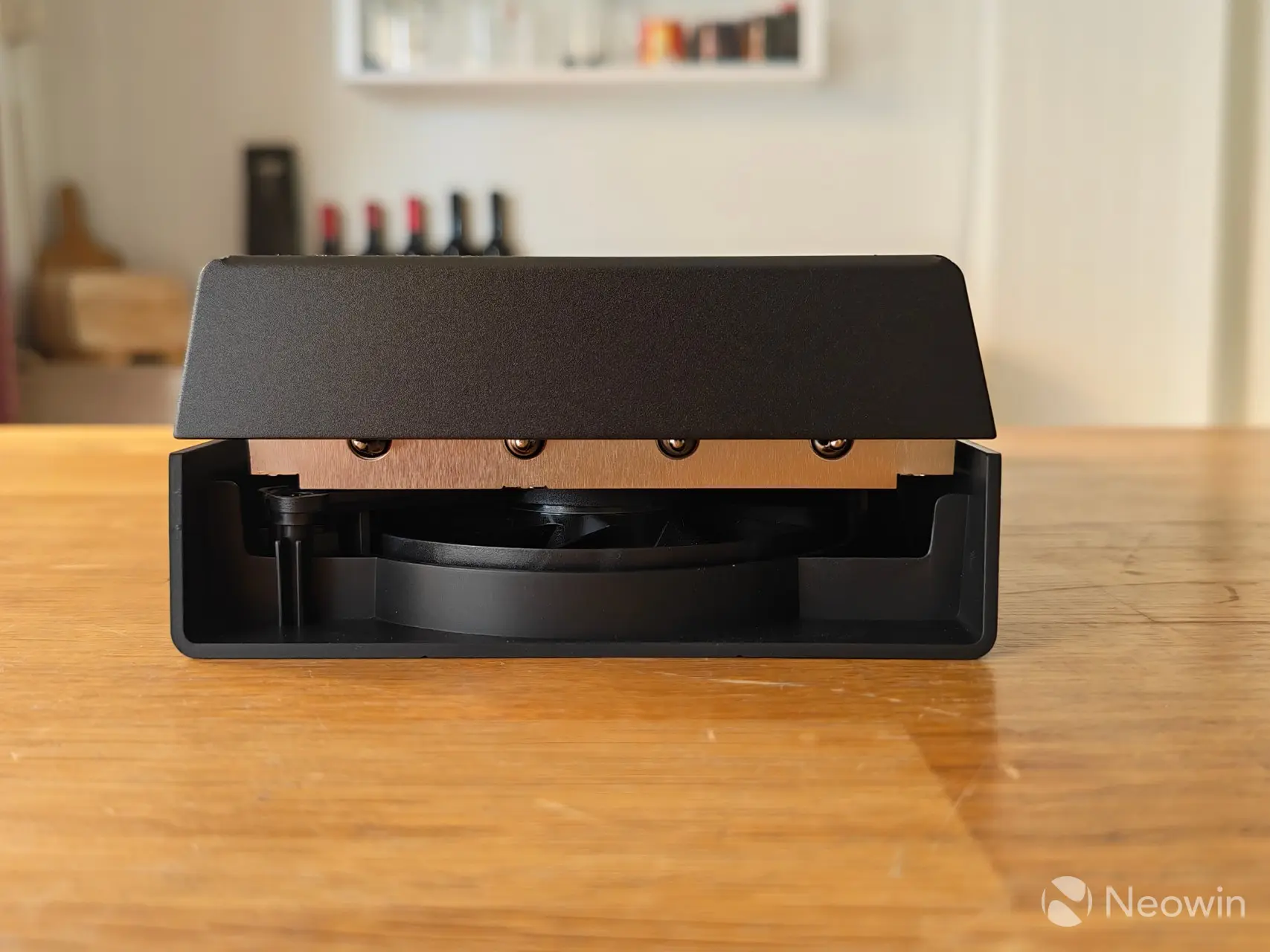
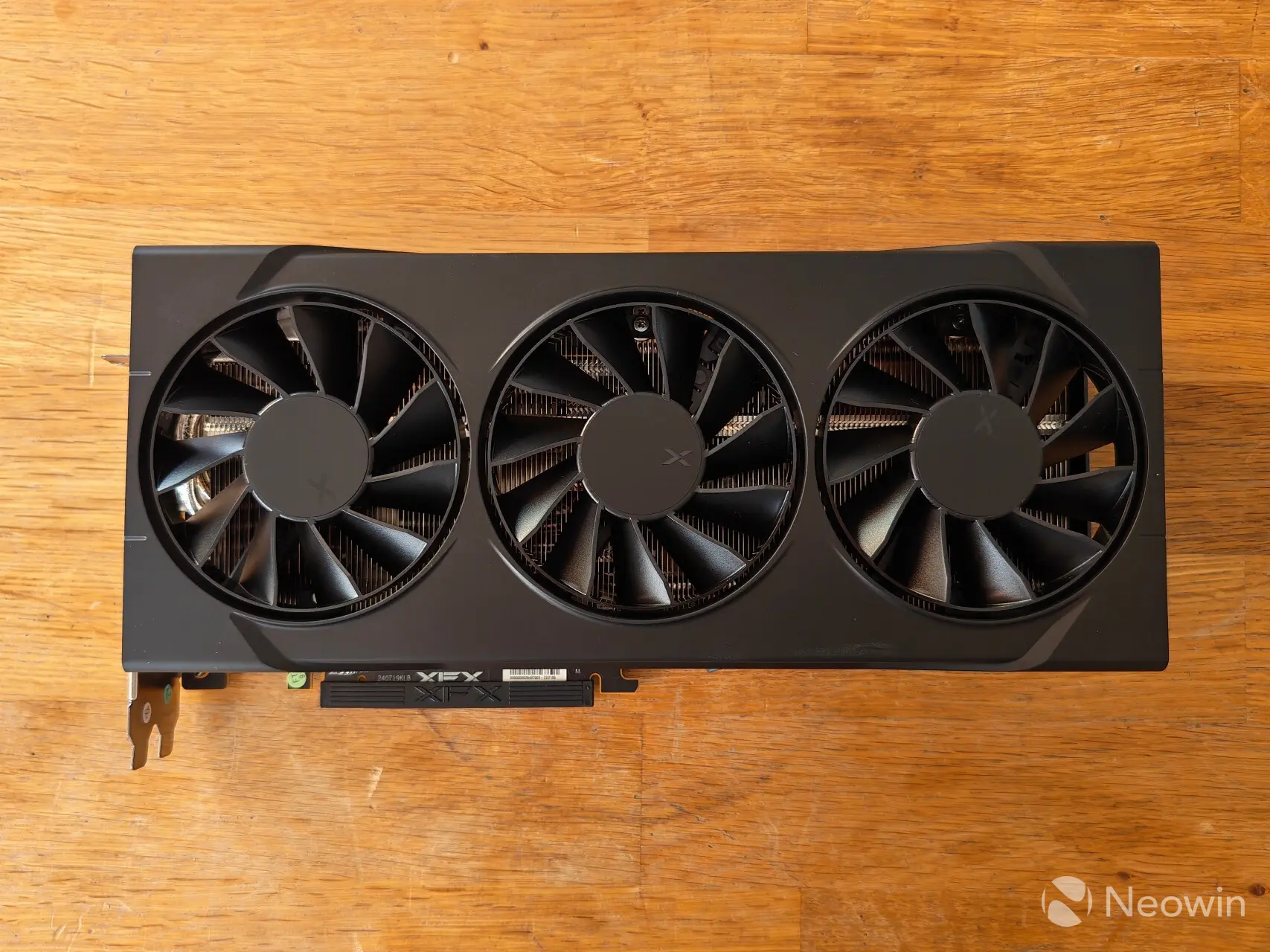
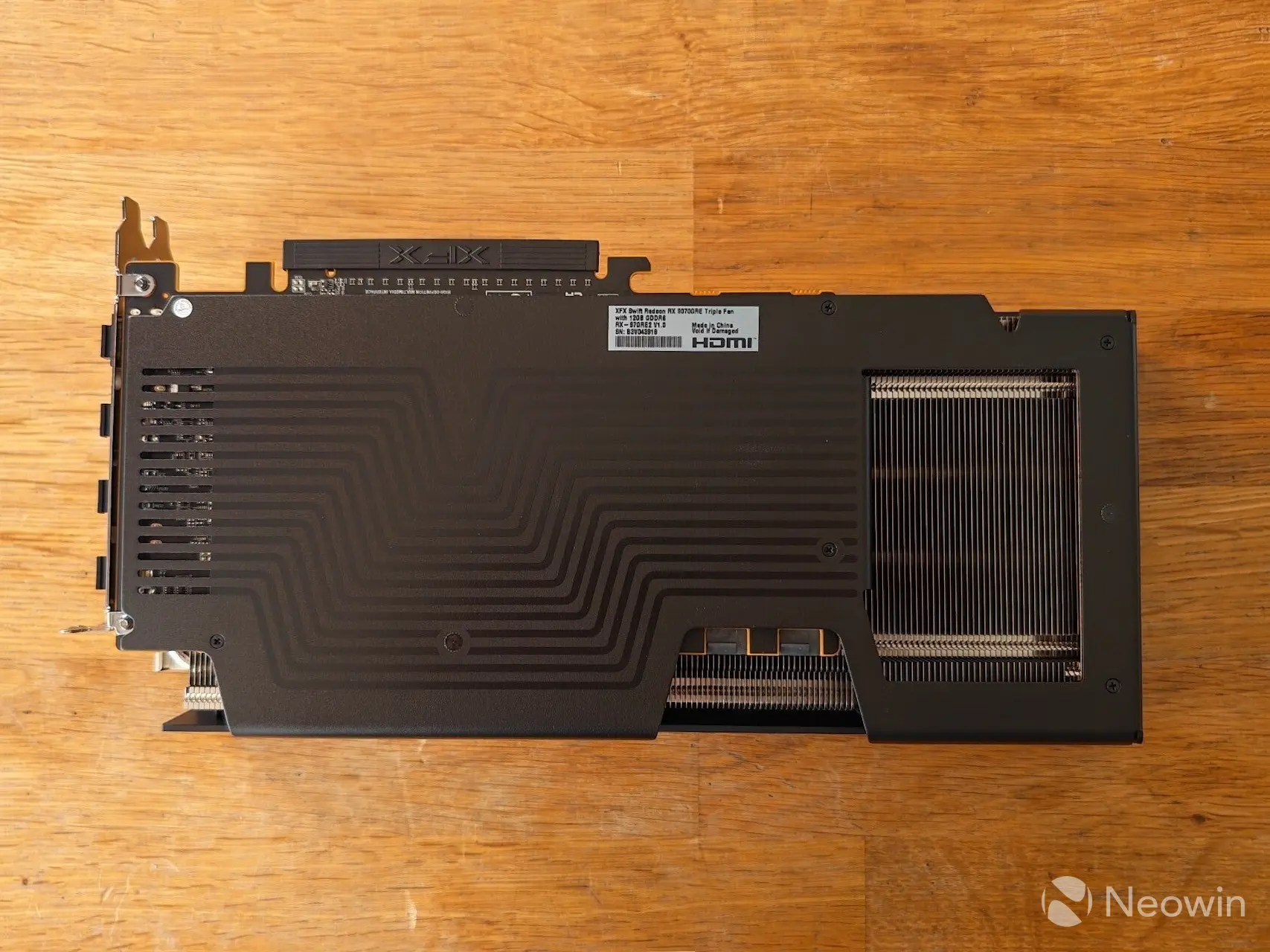
The AMD Radeon RX 9070 GRE by XFX from all angles.
As you may remember from our 9070 XT review, our 9070 GRE is pretty similar to the Sapphire Pulse RX 9070 XT, other than being dual-slot versus triple-slot on the XT variant, which significantly reduces its overall size in the case.
Test system
Our test system consists of the following:
- Lian Li O11 Dynamic Mini V2 Flow (Amazon|Newegg)
- ASUS Z890 ProArt Creator WiFi (Amazon|Newegg)
- Intel Core Ultra 7 270K Plus (Amazon|Newegg)
- 2x 16GB G.Skill Trident Z5 RGB (7200 MT/s in XMP) (Amazon|Newegg)
- Sabrent Rocket4 Plus 2TB SSD (Amazon)
- Windows 11 25H2 (Build 26200.8246)
AMD shared a press driver based on the recently released Adrenaline 26.5.2 that we were required to use.
Benchmarks
For our benchmarks, hwinfo.com provided a commercial license of HWiNFO, and UL Solutions provided us with Professional (commercial use) licenses for 3DMark, VRMark, and Procyon.
We start our gaming performance testing using 3DMark synthetic benchmarks to give a rough idea of how the cards stack up against each other. In these results, we have also added the scores for the $1999+ GeForce RTX 5090 and the $250+ Intel Arc B580 since they are the highest-end and one of the lowest-end GPUs, respectively, of the current generation.

On 3DMark Fire Strike Ultra, which measures DirectX 11 performance at 4K, the 9070 GRE was neck and neck with the RX 7800 XT, both scoring in the 12-13,000 points zone. The former easily outpaces Nvidia"s last-gen 4070.

On Time Spy Extreme, which is a DirectX 12-based 4K benchmark, the RX 9070 GRE gets ahead of the 7800 XT and is trading blows with the 5070, which is supposed to be a higher-tier card.

Up next, we have Steel Nomad, which is also based on DirectX 12 but is more intense than Time Spy Extreme as it aims to measure modern rasterization workload performance. Once more, the 9070 GRE does quite well here and actually manages to get ahead of the 5070.

We then move on to ray tracing performance testing using 3Dmark"s Speed Way. A bit of a disappointing result here for sure, as the GRE is only shoulder to shoulder with the last-gen Nvidia RTX 4070. This means the RTX 5070, RX 9070, and 9070 XT are all significantly better.
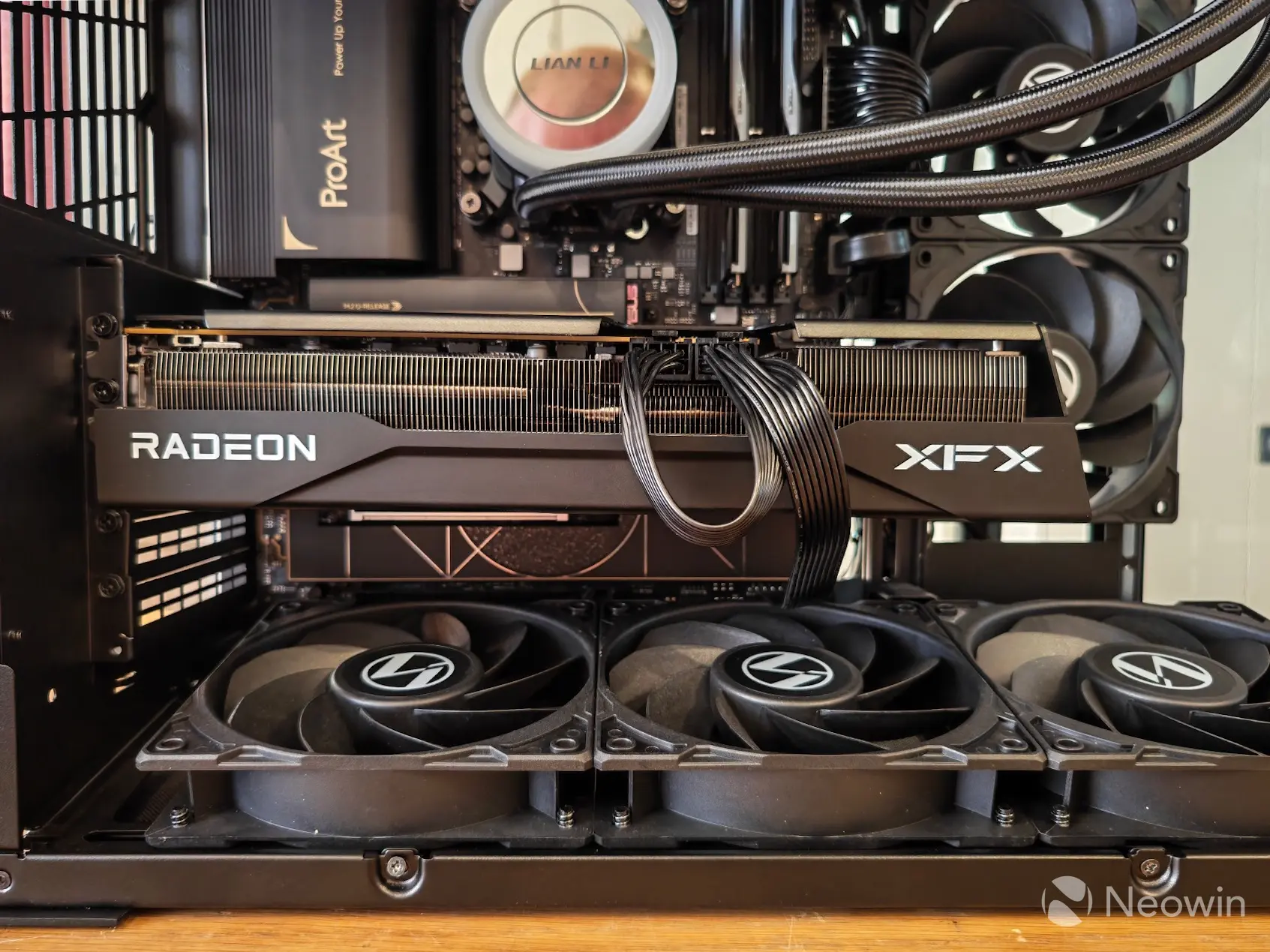
Our LIAN LI O11D MINI V2 Flow test system with the XFX Swift RX 9070 GRE.
With that, we wrap up our synthetic testing and move on to real games. The RX 9070 GRE is advertised as being built for 1440p gaming, and as such, we tested our GPU at 2560x1440.

We start with 2016"s Deus Ex: Mankind Divided, powered by the Dawn Engine. This is one of the first major AAA titles sporting DirectX 12. The Radeon 9070 GRE sort of ties with the RTX 4070 here. The two other 9070 series GPUs are substantially ahead.
The Dawn Engine makes an appearance again later, so we shall see if things have changed for the better with newer games.

Following that, we have another 2016 title in the form of Final Fantasy XV (FFXV), based on Luminous Engine, though running DX11. This game, even with Nvidia"s GameWorks features disabled, sees the Nvidia GPUs generally easily beat the Radeon cards.

Up next, in 2018"s Assassin"s Creed Odyssey running on AnvilNext 2.0, another DX 11 title, the RX 9070 is on par with the Nvidia 5070. This is definitely a win in our book for the GRE. The minimum FPS is substantially better, so gamers may expect a smoother experience if they have a Radeon 9000 series GPU.
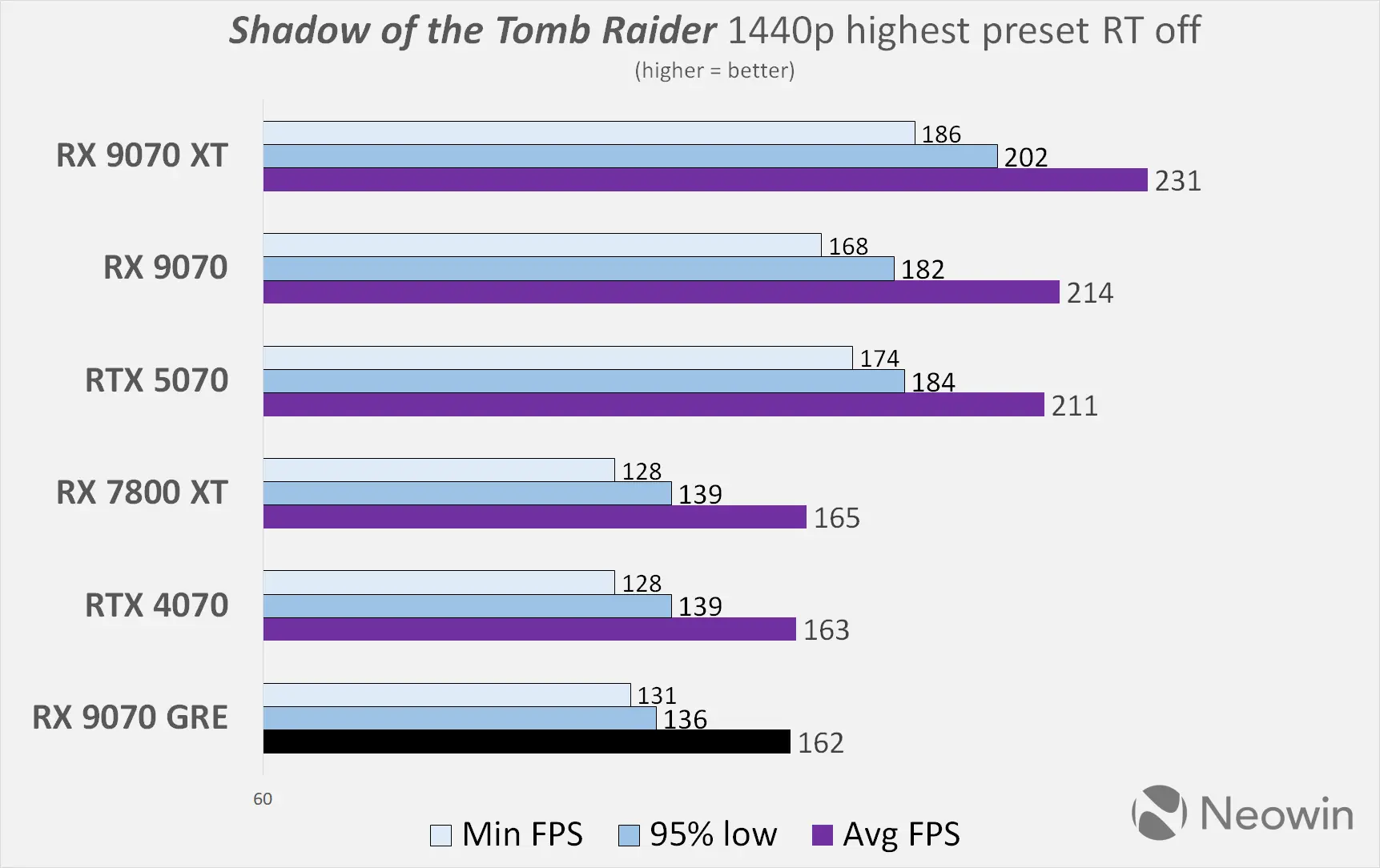
We are back to DX 12 with 2018"s Shadow of the Tomb Raider, based on the Foundation Engine. Here, the 9070 GRE and 4070 are essentially tied. In fact, the 7800 XT is also essentially in the same league.

We tested our only Vulkan API title with 2019"s World War Z, which is based on the Swarm Engine. It has to be said that Nvidia completely outdid AMD here, as both 5070 and 4070 beat the 9070 and 9060 GRE, respectively.

We wanted to test ray-tracing performance too, and 2020"s Cyberpunk 2077 was our game of choice for that. We also enabled upscaling in this title. We stuck to FSR quality on both AMD and Nvidia GPUs since we wanted to make it an apples-to-apples comparison. Very surprisingly, the 9070 GRE was at the top of the charts both in average and minimum framerates.

Next up, with path tracing also enabled, the 9070 GRE slides back down; it looks like the memory subsystem on the GPU is also getting overwhelmed as these are quite VRAM and bandwidth-heavy.

We also looked at another ray-traced test in the form of Bright Memory Infinite. This title is built on Unreal Engine 4 and does not feature as heavy a ray tracing as Cyberpunk, making it representative of slightly lighter ray-traced situations. Here, the 9070 GRE was significantly better than the last-gen 7800 XT and managed to edge out the 4070.
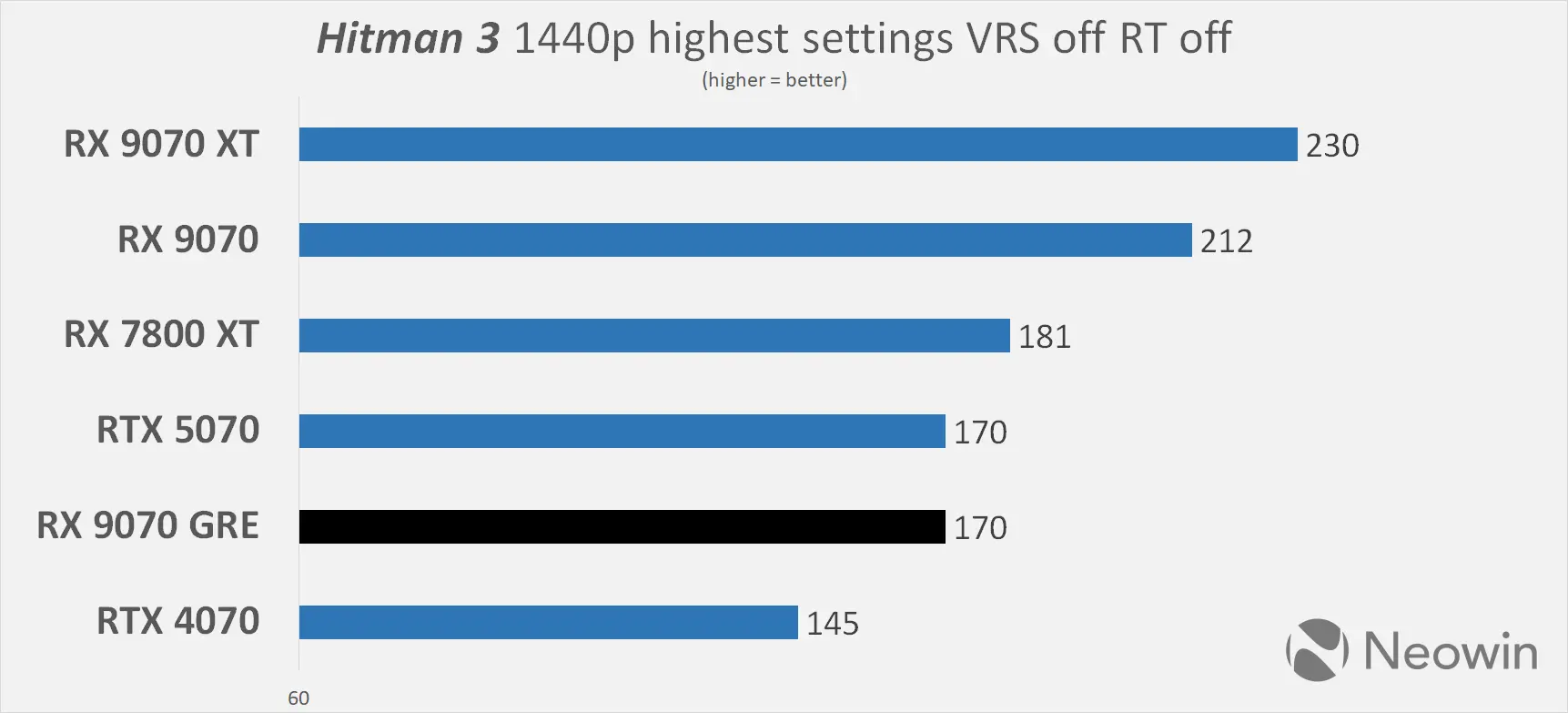
Released in 2021 and based on the Glacier 2 engine, Hitman 3 sees a huge divide between the AMD and Nvidia cards. The GRE is able to match the 5070 here, though the 7800 XT too is no slouch either, despite being a previous generation product..

We find that in 2021"s Far Cry 6, built on the Dunia Engine, the new Radeon 9070 GRE was ever so slightly ahead of the 7800 XT. This game is known to be single-thread heavy, though it did not seem to favour either AMD or Nvidia, at least in this test case.

Dawn engine is back again next in Marvel"s Guardians of the Galaxy, and for some reason, the 9070 GRE performed spectacularly here. Not only was it better than the 7800 XT and 4070, but it also beat the RX 9070, RTX 5070, and tied with the RX 9070 XT.

In The Callisto Protocol, which is another Unreal Engine-based game, the RX 9070 GRE put up a poor showing for rasterization. However, you are still getting over 150 FPS, so gameplay should be smooth, barring perhaps shader compilation hiccups that could happen in such titles.
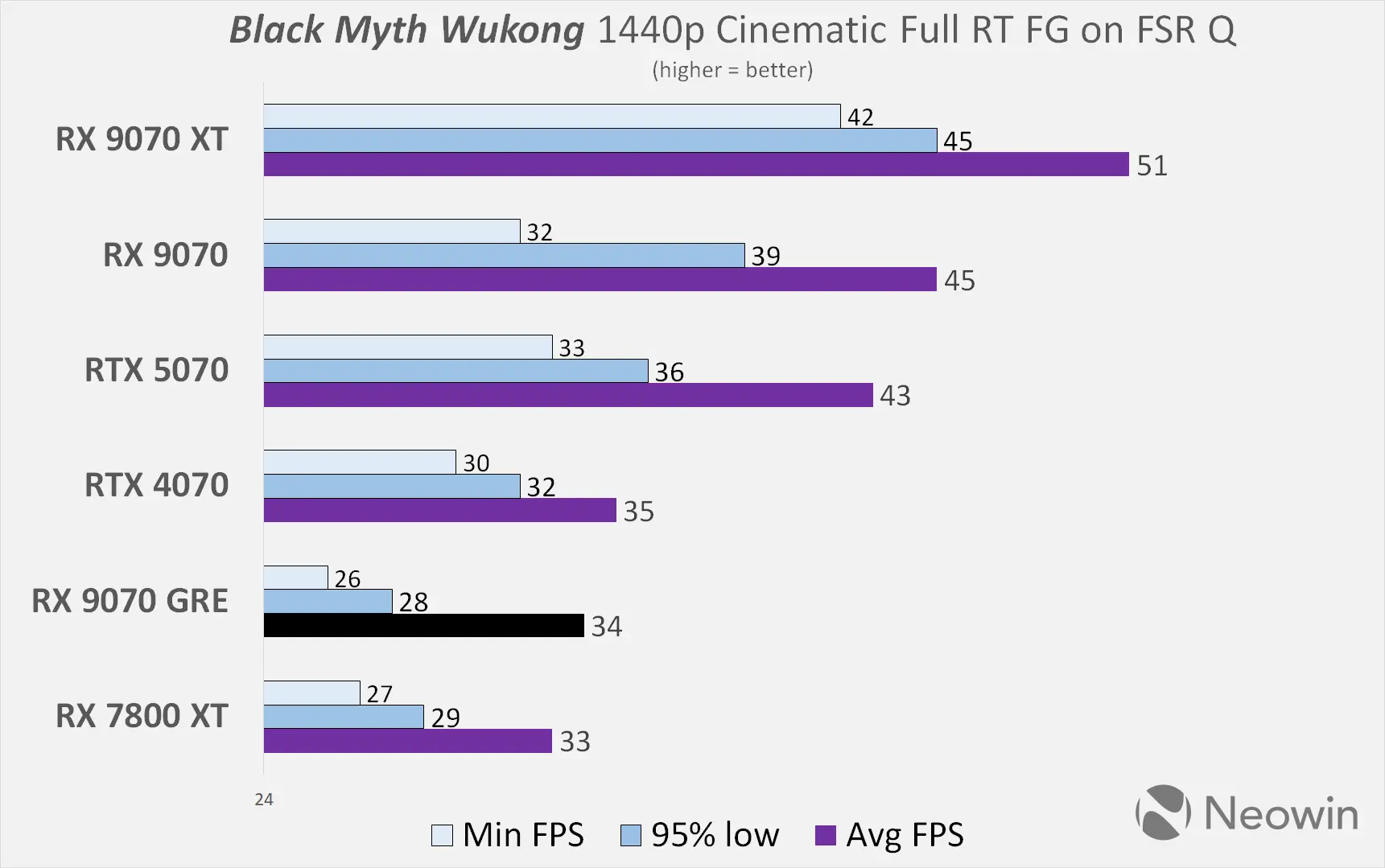
Speaking of Unreal Engine (UE), Black Myth Wukong is next and our final game for today. This one runs on the newer UE 5; the heavy "cinematic" setting, even with FSR frame generation and 75 super-resolution, overwhelms the 9070 GRE and 7800 XT. There is a clear divide here, and it seems again that the 12GB VRAM and the lower bandwidth of the 9070 GRE are probably affecting it more than on the other 9070 series GPUs.
VRAM usage
We now highlight the VRAM usage of the cards in our arena. Keep in mind, these are the actual used ("dedicated") VRAM amounts, not the total allocated by a game. To make sense of the data, we have a look at the percentage of the dedicated memory against the fully available VRAM capacity. The RTX 4070, 5070, and 9070 GRE are all equipped with 12GB, while the 9070, 9070 XT, and 7800 XT pack 16GB.

The 9070 GRE alongside the RTX 5070 gets close to 100% usage in some cases, like Cyberpunk 2077, both with path tracing and ray tracing. Black Myth Wukong also sees around 85% VRAM consumption on both the GPUs. Thankfully, though these were the highest memory usages at a certain point, and not the average constant consumption. Still overflowing the available buffer, even momentarily, can lead to stutters and judders.
On the positive side, in the three instances that we see the high usages, the performance isn"t exactly what you"d call very playable. So chances are high that a user is going to turn settings down anyway, and in that case, the VRAM consumption will be lowered. Hence, it is fair to say that the 9070 GRE and all other GPUs in this comparison have sufficient memory buffer for gaming.
Power Efficiency
In terms of power efficiency, the 9070 GRE seems to be limited to around 220 watts of usage, similar to the RX 9070. As such, the latter wins this round easily, as in most cases, it was substantially faster than the new GRE.
So who wins among them all? The Nvidia RTX 5070 overall victor thanks to its 200-watt maximum power draw.
We also ran HWiNFO64 and observed the following Hot Spot core temps (Max) for each card with an ambient temperature of 21.5 °C:
- RTX 4070: 91°C
- RX 7800 XT: 92°C
- RX 9070: 74°C (Max memory temp.: 84°C)
- RX 9070 XT: 85°C (Max memory temp.: 92°C)
- RX 9070 GRE: 83°C (Max memory temp.: 69°C)
You will notice that we have not included the hotspot temp for the 5070, and that is because Nvidia has removed that sensor on its 50-series cards.
So it looks like the XFX Swift model we received is doing a fantastic job at cooling this thing down, especially the memory chips, in spite of being in the very small Lian Li O11 Dynamic Mini V2 Flow. Let us also add here that the fan speed under load was hovering around 1700-2000 RPM, and it was not loud at all.
Value for Money
We finally come to the value-for-money category that we measure by average performance per dollar. Sadly, in the current state of affairs, it is very difficult to have a proper gauge of this metric as pricing varies quite widely.
AMD is launching the 9070 GRE at $549, which is equivalent to 9070 and 5070"s SEP (suggested e-tail price), and hence on paper the GRE is a terrible value card, right? Well, not so fast, as the actual typical market price of the 9070 is much higher, generally selling for around $650 to 750, outside of flash sales or discounts. The same is the case for the 5070, too, often selling at well over $600.
So if the $549 SEP of this truly holds, then the Radeon RX 9070 GRE can surely be a great value for money product. Only time will tell.
Conclusion
The concluding remarks for the RX 9070 GRE depend entirely, as alluded to above, on the actual aftermarket pricing following its release.
Interestingly AMD has pitched this against the Nvidia RTX 5060 Ti 16GB which is typically sold at around this price range; sadly we didn"t have it in our test bed today but seeing how the GRE managed to do quite well against both the 7800 XT and the 4070, often beating them, we are confident that clash will go most often in favor of the new AMD 9000 GPU, aside from power efficiency.
The 9070 GRE has done pretty fine overall and shows no major or glaring weakness, aside from maybe ray tracing, though, as noted previously, users are unlikely to run into problems with it under normal gaming scenarios.
One area where we hoped it would have been better is its overall power efficiency. While the card itself is not super power hungry or anything, at just around 222 watts max consumption, it would have been nice to see it closer to the RX 9070, as both of them are 220-watt TBP products.
Purchase links: RX 9070 / XT / GRE (Amazon US)
As an Amazon Associate, we earn from qualifying purchases.