
Apple"s latest attempt to streamline its app installation flow to comply with the Digital Markets Act (DMA) is a classic example of deceptive design, at least this is what Epic says.
In response to the new regulatory requirements of the DMA in the European Union, Apple opened up its iOS platform to third-party app stores and alternative payment options. However, Epic says that Apple"s improved install flow for these non-App Store apps remains riddled with friction points.
Epic points out that users must click through six separate warning screens, some ominously worded, emphasizing security and privacy risks associated with alternative app sources. The video game store company argues that these steps can be seen as "scare screens" that are deliberately crafted to dissuade users from proceeding, by making the process seem risky or complicated.
Apple has historically defended its install flow by citing security and privacy concerns for its users, while claiming that the prompts are necessary to ensure users understand the risks of bypassing Apple"s curated App Store.
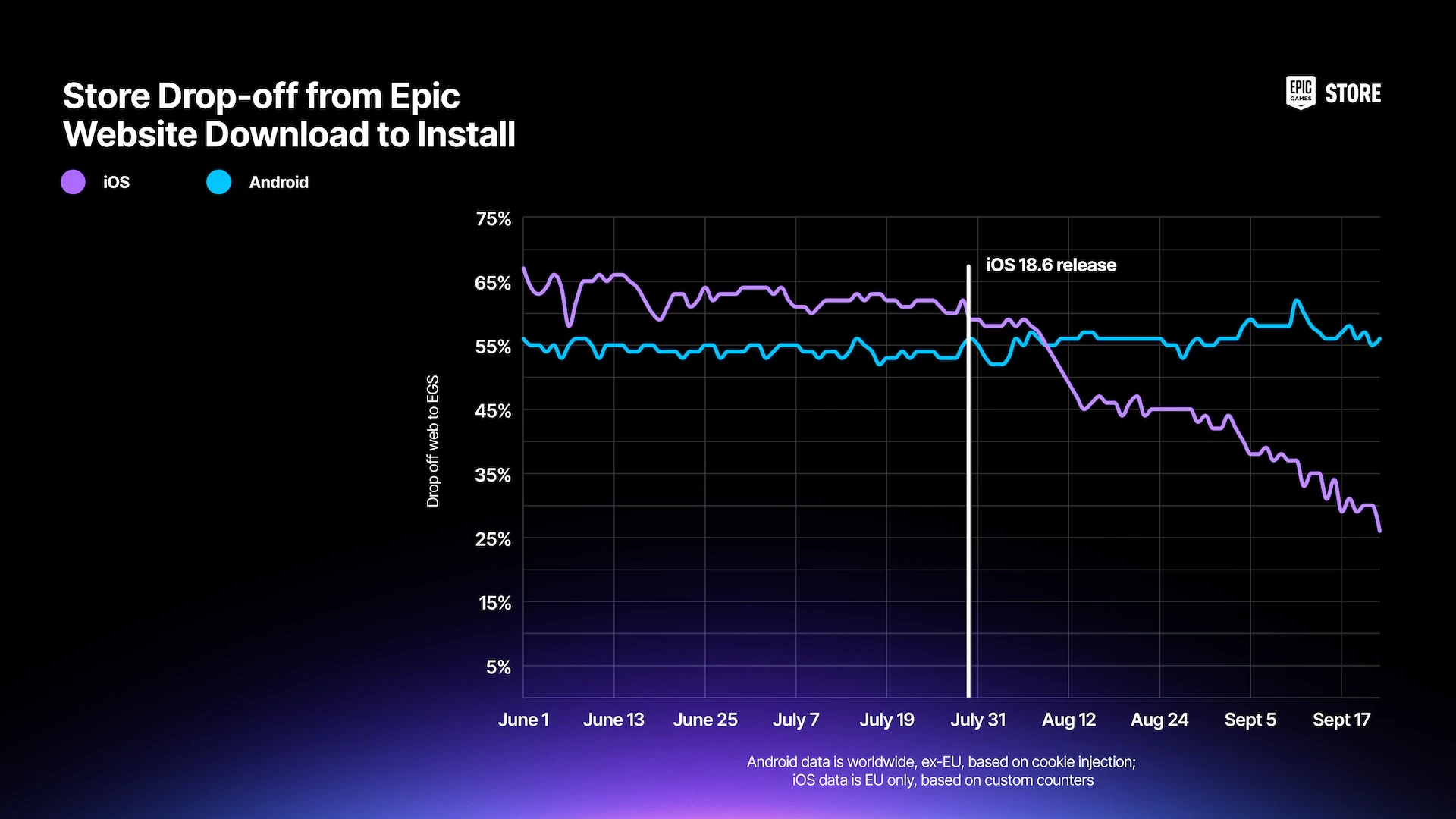
Epic says that this flow is still better than Apple"s previous 15-step flow prior to iOS 18.6, which had even more misleading messages and had a dead-end that left the user stranded in iOS Settings. As a result, Epic reports a stunning 60% decrease in player drop-off during attempts to install the Epic Games Store.
The company, however, argues that Android continues to violate the DMA rules with its 12-step flow.
Google continues to blatantly violate the Digital Markets Act with a 12-step install flow, a misleading scare screen that says software from prominent and reputable Google competitors "may be harmful.” On Android worldwide, Google"s deceptive user interface sabotages Epic Games Store install attempts on Android more 50% of the time. Beyond the EU, Epic is challenging this behavior in the United States in the new Epic v. Google case.
The U.S. is also considering a similar legislation to the DMA under the App Store Freedom Act, aiming to boost competition and allow consumers more choice in app marketplaces.
Regulatory changes, such as the DMA, have lately forced Apple to open its platform and payment services, albeit with strong caveats and still-heavy gatekeeping. Despite complying on paper with the new rules, Apple keeps finding ways to maintain its dominant market position through design rather than technical restrictions.
Image via DepositPhotos.com