Epic Games has been fighting Google for several years in courts to open up the Android ecosystem. Today, Google announced that it has settled all disputes with Epic worldwide, including in the US, Australia, and the UK. As part of the settlement, Google has announced significant changes to open up the Android ecosystem.
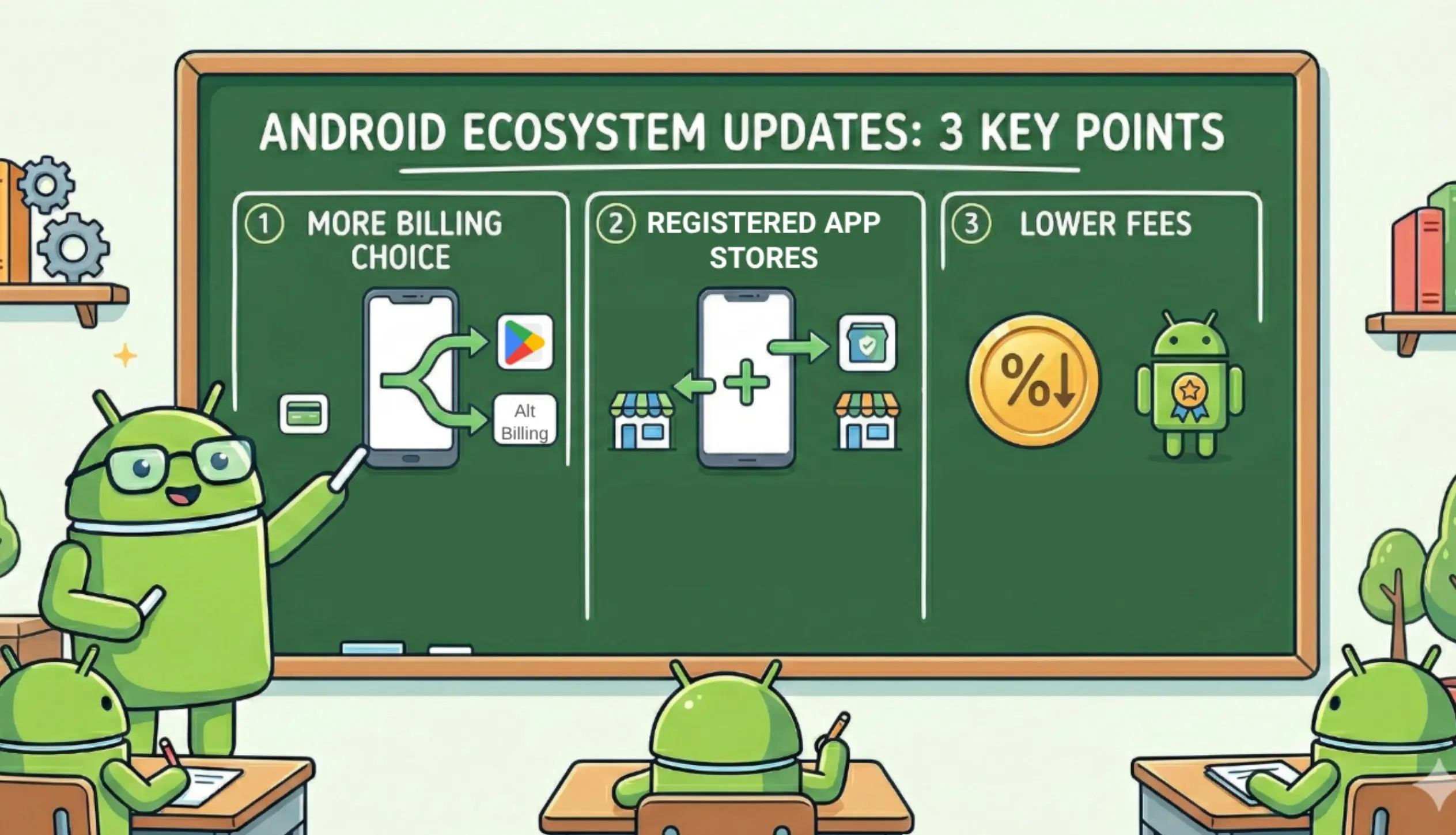
Until now, for any paid transactions inside an app or game downloaded from the Google Play Store, the billing could be made only through Google Play"s billing system. Now, as part of the settlement, Google will allow developers to use their own billing systems in their apps and games.
Google is also reducing the fees it charges developers distributing apps and games via the Play Store. If a developer uses Google Play’s billing system, Google will charge a market-specific billing rate on top of the service fee. In the EEA, the UK, and the US, that billing rate will be 5%.
On the service-fee side, Google is cutting the in-app purchase (IAP) service fee to 20% for new installs (first-time installs after the new fees go live in a region). It’s also launching an Apps Experience Program and revamping the Google Play Games Level Up program, with lower rates for developers who meet specific quality benchmarks. Developers in these programs will pay 20% on transactions from existing installs and 15% on transactions from new installs. For recurring subscriptions, Google says the service fee will be 10%.
This updated pricing will go live as per the schedule mentioned below:
- By June 30: EEA, the United Kingdom, and the US.
- By September 30: Australia.
- By December 31: Korea and Japan.
- By September 30, 2027: The updates will reach the rest of the world.
Google is also making it easier to sideload third-party app stores on Android with a new optional program called the Registered App Stores program. With this program, app stores that meet Google’s quality and safety benchmarks can register with Google and get a more streamlined installation flow when users sideload them from an app store"s website. If an app store does not join the program, users can continue to download and sideload the app on Android as before.
Google plans to roll out the program outside the US first. After court approval, this will be supported inside the US as well.