Today, Google Cloud introduced six new agents that the company says are "designed to act as expert partners for every data user, from data scientists and engineers to business analysts."
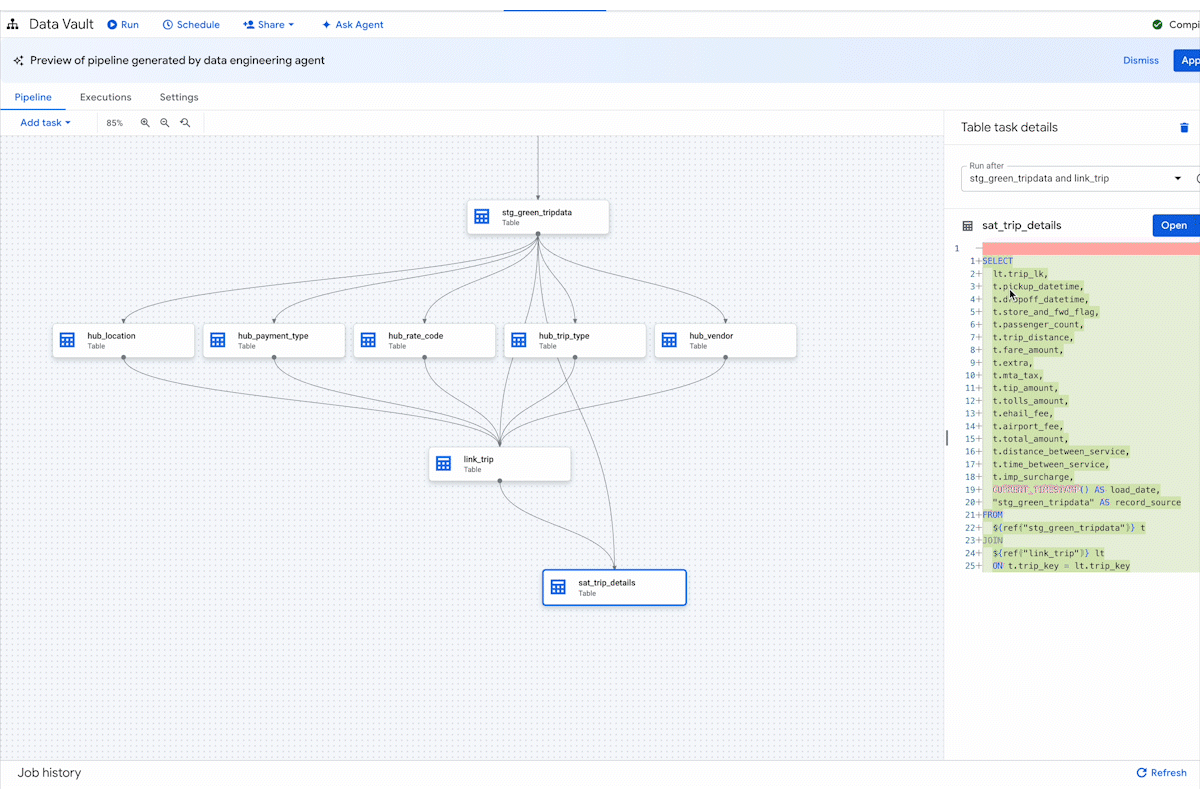
The first agent is the Data Engineering Agent, targeting data engineers, which is now in preview. It works within BigQuery to help you build and manage data pipelines using plain English instead of wrestling with complex configurations. You can just describe the workflow you want, and the agent generates and runs it.
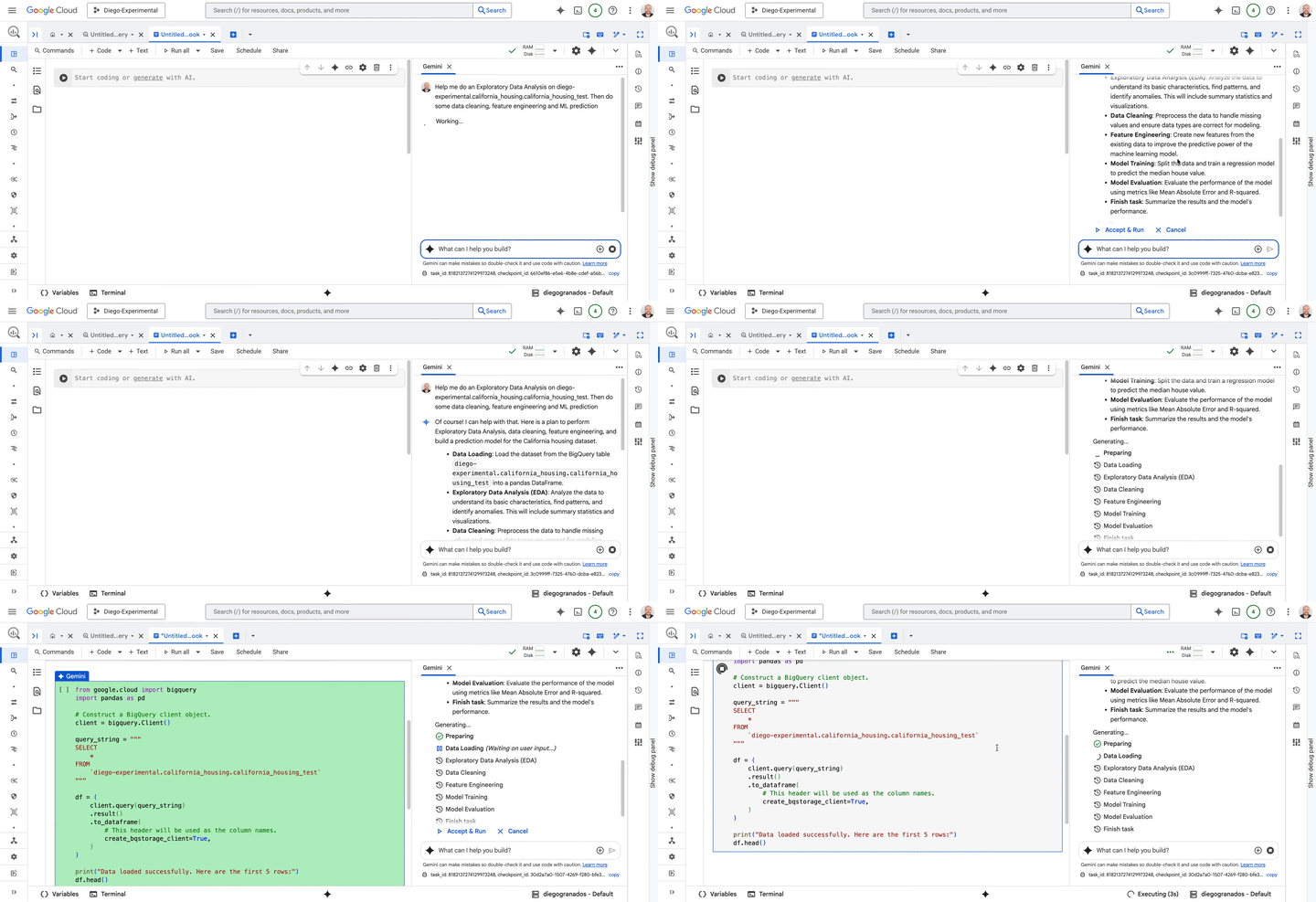
Next, there is the Data Science Agent for exploratory data analysis, which is integrated into the Colab Enterprise Notebook experience. It is designed to handle entire analytical workflows, from cleaning up data to running machine learning predictions, creating a plan, and then executing the code.
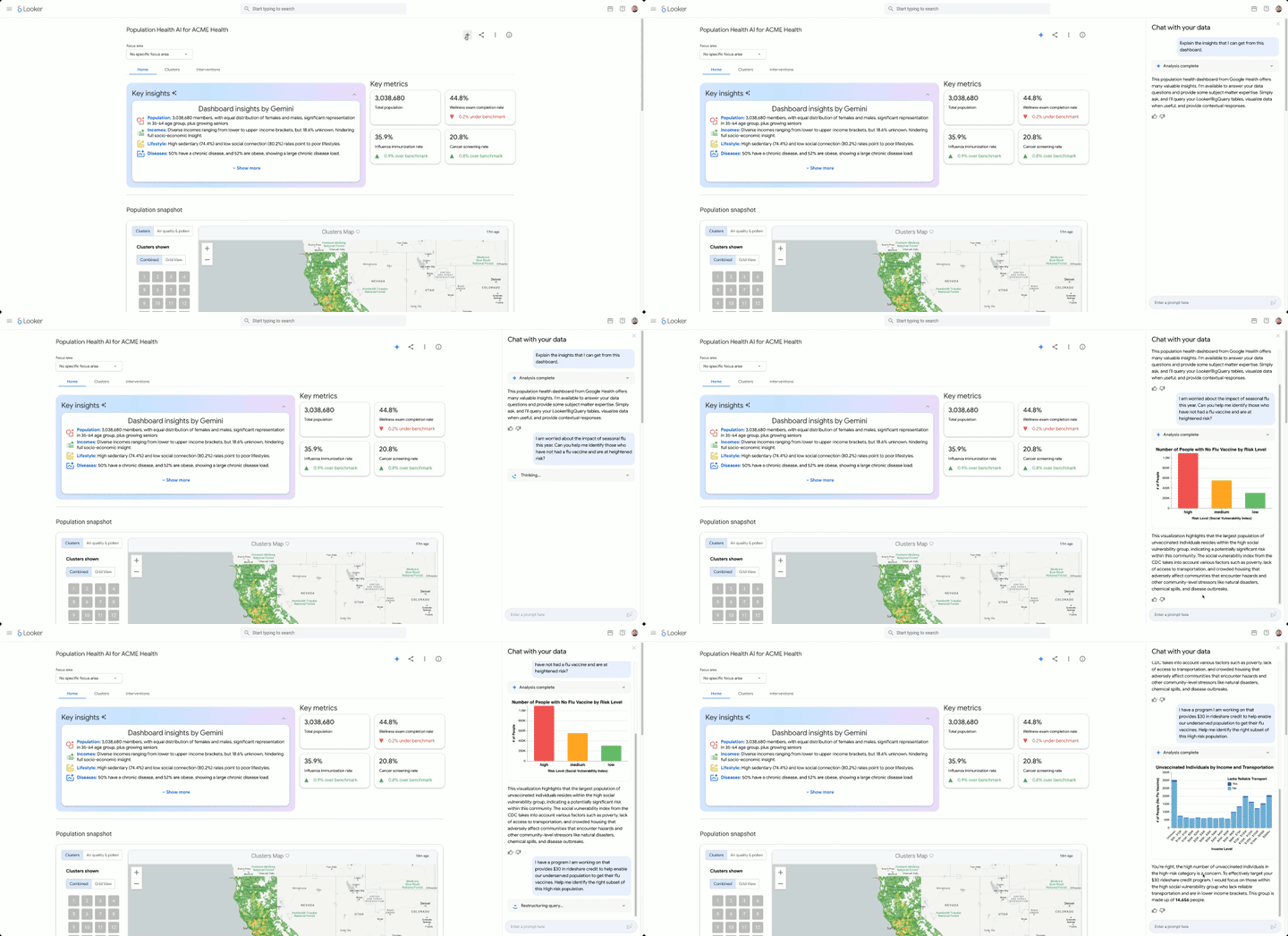
Thirdly, we have the Code Interpreter agent for business users and analysts. This builds upon the Conversational Analytics Agent announced at the Google Cloud Next "24 conference to help with natural language queries. The Code Interpreter takes it a step further by generating and executing Python code for complex requests; for example, it can perform a full customer segmentation analysis from a simple prompt, delivering charts and explanations right inside the platform"s secure environment.
For users of Spanner, Google"s ACID-compliant relational DB service, there is a new Spanner Migration Agent that simplifies moving operational data. For developers who want to build their own stuff, Google also introduced the Gemini Data Agents API that lets devs embed these conversational capabilities directly in their apps.
And lastly, for command-line fans, Google has introduced Gemini CLI GitHub Actions built on top of the Gemini CLI to automate repository tasks like pull request reviews.
In addition to the new agents, Google says Gemini 2.5 Flash is now available for in-region machine learning processing in Japan and several other countries. The BigQuery AI Query Engine is now in preview, which fundamentally changes how you interact with data by embedding generative AI capabilities directly into SQL.
For smarter search, Google launched Hybrid Search in BigQuery, which combines semantic search with regular keyword search. It also announced adaptive filtering in AlloyDB for optimizing vector queries. The new Spanner Columnar Engine should accelerate large analytical queries on operational data. Finally, data workers can now run Oracle applications in new Tokyo locations, with Osaka support arriving in early 2026.
You can learn more from the official announcement.