Be it Windows or Linux, AMD processors and their performance and power scaling are done by the OS through a feature called the CPPC. CPPC or Collaborative Processor Performance Control is part of the Advanced Configuration and Power Interface (ACPI) and it helps the OS manage the P-states or C-states of a processor.
If you are not familiar, P-states or performance states handle CPU voltage-frequency scaling, C-states deal with CPU sleep states so that some of the CPU functions, which are not necessary at that moment, are disabled. The P-states and C-states work together to make the processor run more efficiently. It helps the OS and apps determine which cores can be parked.
Currently this function of the CPPC is called the "Preferred cores" which allows the OS to schedule tasks to the faster available core by prioritizing it. However, AMD is adding a new CPPC feature soon which will be available in the company"s upcoming Zen 6 CPUs. As shown in a recent Linux kernel patch, the new feature is called "Performance Priority", and it is again designed to maximize the performance and efficiency of AMD Zen 6-based Ryzen 10000 (Olympic Ridge) processors.
The patch reveals that the new CPPC Performance Priority extension will allow high priority cores to maintain a higher minimum "floor" performance level, compared to a lower priority core. Thus, thanks to this new feature, the main task in hand should be completed faster. The patch notes says:
"This patchset adds support to the amd-pstate driver for a for a new feature named "CPPC Performance Priority" that will be available on some of the future AMD processors.
This feature allows userspace to specify different floor performance levels for different CPUs. The platform firmware takes these different floor performance levels into consideration while throttling the CPUs under power/thermal constraints."
Typically, Windows is generally ahead in terms of getting these CPU-specific optimization features out, and if this trend continues, then Windows 11 users should also see these benefits on the upcoming versions 26H2 or 27H2 as it is reasonable to expect them with such releases.
Microsoft has been alternating how it ships Windows 11 as each alternate version of the OS is based on the same underlying codebase, this has been repeated twice now with 23H2 (eKB5027397) and 25H2 (eKB5054156), and it is likely the pattern will repeat with 26H2 and 27H2 as well.
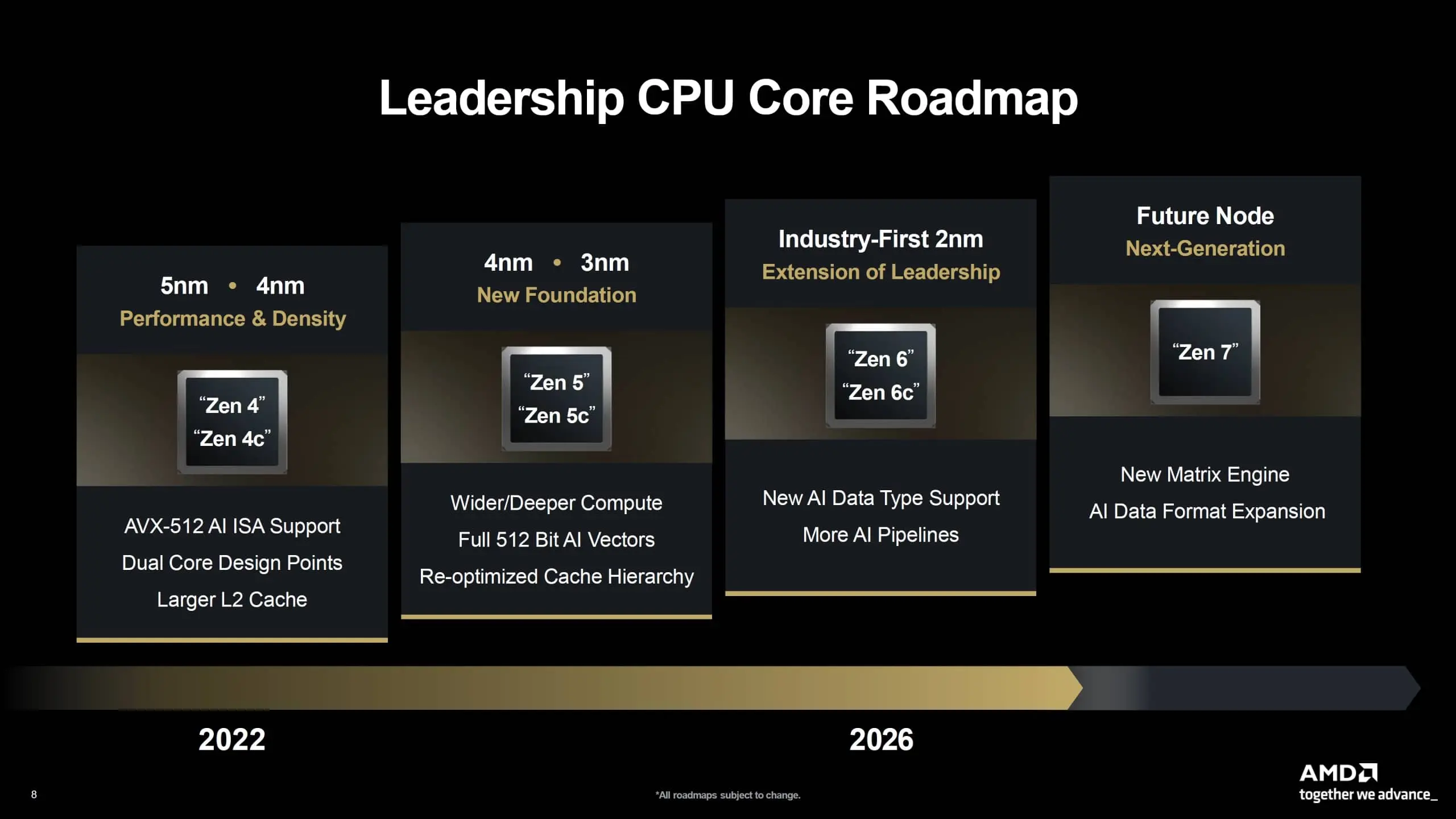
AMD"s Zen 6 EPYC processors for servers could land later this year, while desktop and mobile consumer variants are rumored to be out early next year in 2027 (via BenchLife). So it would also make sense to have CPPC Performance Priority support on Windows 11 26H2, if such rumors hold true.
Source: LKML