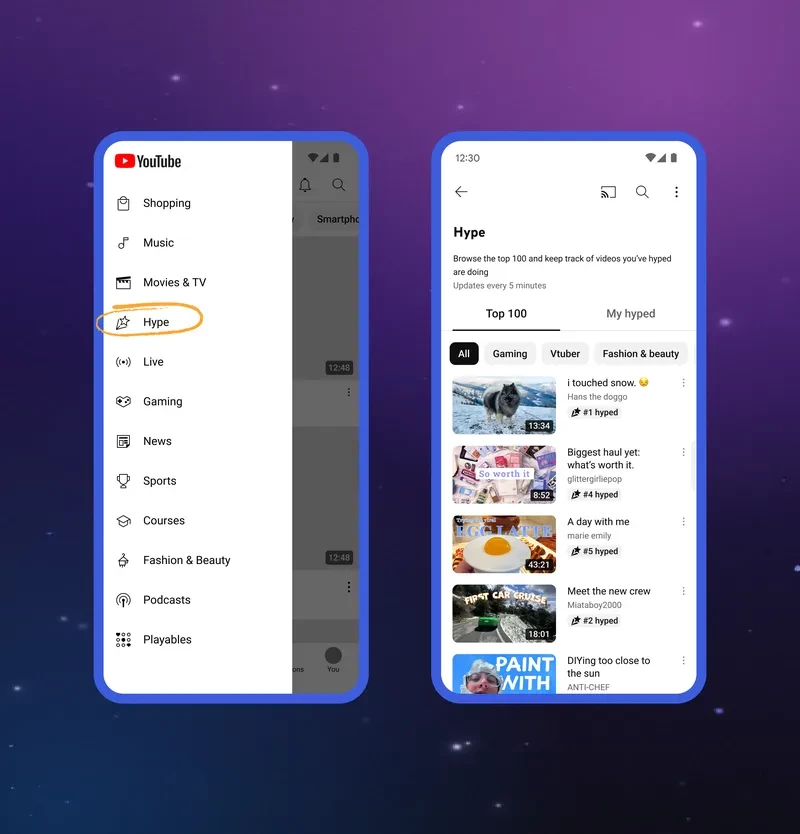
In June last year, YouTube announced a new feature for the platform called "Hype." The way this feature works is that viewers can select up to three videos per week from creators with fewer than 500,000 subscribers to "hype." Hyped videos gain points and get a shot at landing on a special ranked leaderboard in the Explore menu, with videos from smaller creators getting a larger point bonus to help them get discovered.
The feature first launched in testing in Brazil, Taiwan, and Turkey. Now, YouTube is expanding it to even more places, bumping the total up to 39 countries, including the US, UK, Japan, Korea, Indonesia, and India. The video giant has also added some improvements to the feature that it claims are "dedicated to fuel fandom and help creators get recognized."
The new improvements are split between two groups: the fans and the creators. For the fans, the company is bringing a dedicated hype button right under a video, making it easier to show support.
Videos that have been hyped will also display a "hyped" badge across the platform, and you can even filter your Home feed using a new "hyped" category to find these videos specifically. YouTube will also send notifications when a video you supported is getting close to making the leaderboard. The most active supporters can earn a new monthly "hype star badge."
In the YouTube Studio app, creators will be able to see exactly how many hypes and hype points their videos have received on the mobile version of the application. The platform has also integrated a new hype card directly into video analytics. A recap of hype performance will also appear in creators" weekly data stories. YouTube says it has more plans, including leaderboards for specific interests like gaming and style.
In related news, you might have heard about YouTube bringing its age-detection tech to the US. The system uses a machine learning algorithm to infer if a user is a minor based on signals like viewing history and search queries.
When the platform identifies an account as belonging to a teen, it will do things like halt personalized advertising and turn on digital well-being features automatically. If a user feels they were incorrectly flagged, they will need to verify their age with a government ID or credit card.