YouTube has announced several updates to its AI-powered auto-dubbing feature, now available to everyone and supporting 27 languages. It"s been a while since the Google-owned video-sharing platform has been working to add multi-language audio support for videos.
YouTube announced the AI-powered auto-dubbing feature in 2024, with access limited to a select group of creators, and later expanded it to millions of creators globally in September last year.
The feature lets you watch videos in languages other than your native language and helps creators reach a wider audience. YouTube assures creators that using the AI auto-dub feature doesn"t negatively affect the original video’s discovery algorithm and may improve discovery in other languages. Creators who don"t like AI dubbing can still supply their own dubs or disable the feature entirely.
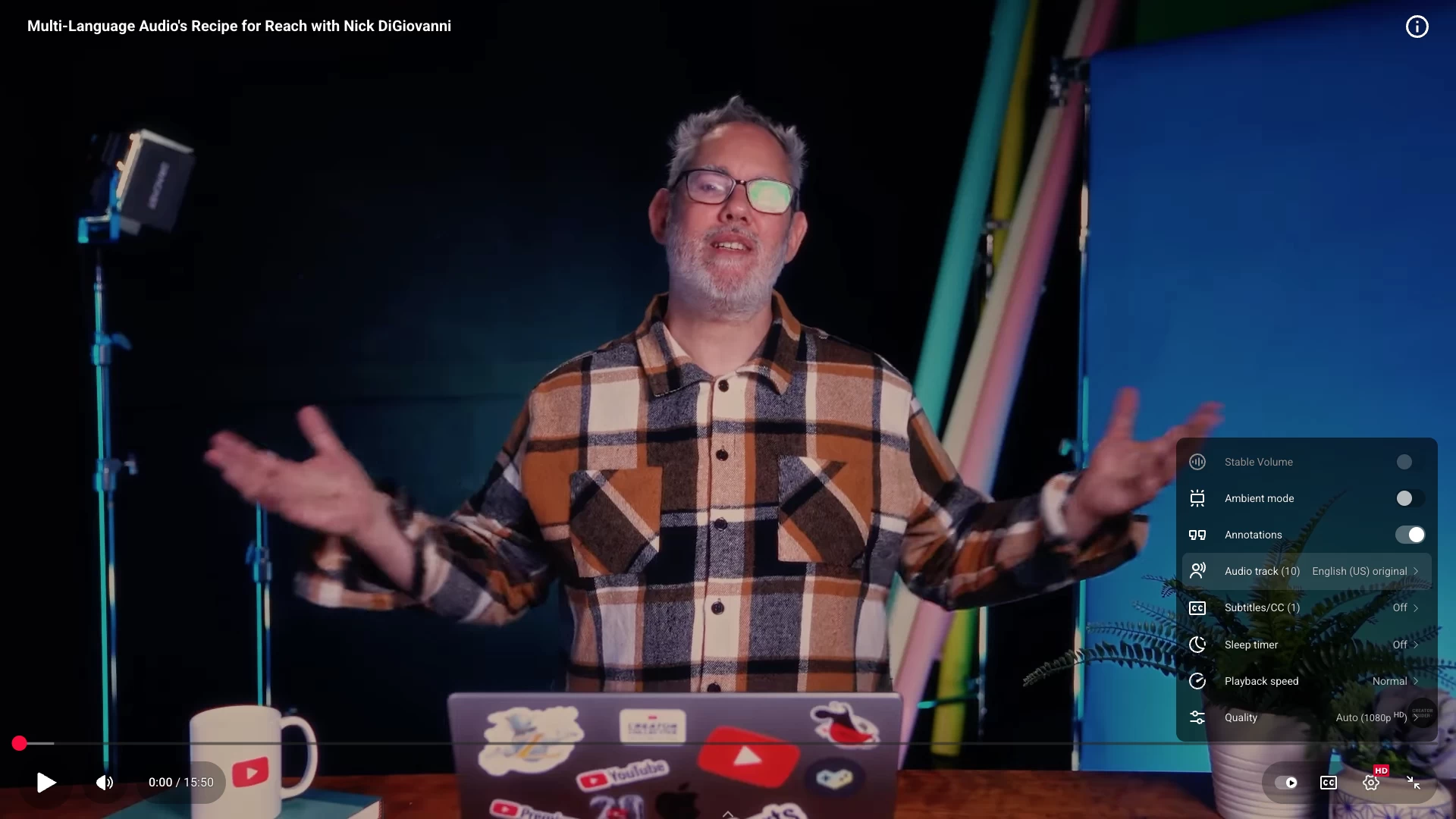
While watching a video, click the gear icon, then select Audio track from the menu to see if additional languages are available.
YouTube reported that it averaged more than six million daily viewers in December who watched at least 10 minutes of AI-dubbed content. However, using AI to dub videos also means there may be occasions when the machine can"t capture a creator"s tone, emotion, or the ambient environment.
Expressive Speech is now rolling out to all YouTube channels to address such nuances in eight languages: English, Hindi, French, German, Indonesian, Italian, Portuguese, and Spanish. The feature was also previewed in 2024 at the Made by YouTube event.
It is a few steps ahead of Expressive Captions, which compensate for the lack of nuance in language and sound by adding emphasis, tone, and personality to the captions.
YouTube uses your watch history to select a default language for videos. Its new "Preferred Languages" option in the settings lets you choose the languages you want to watch videos in. On your desktop, tap on your profile icon > Settings > Playback and performance. Here, click "Add or edit languages" under Language to tick your choices.
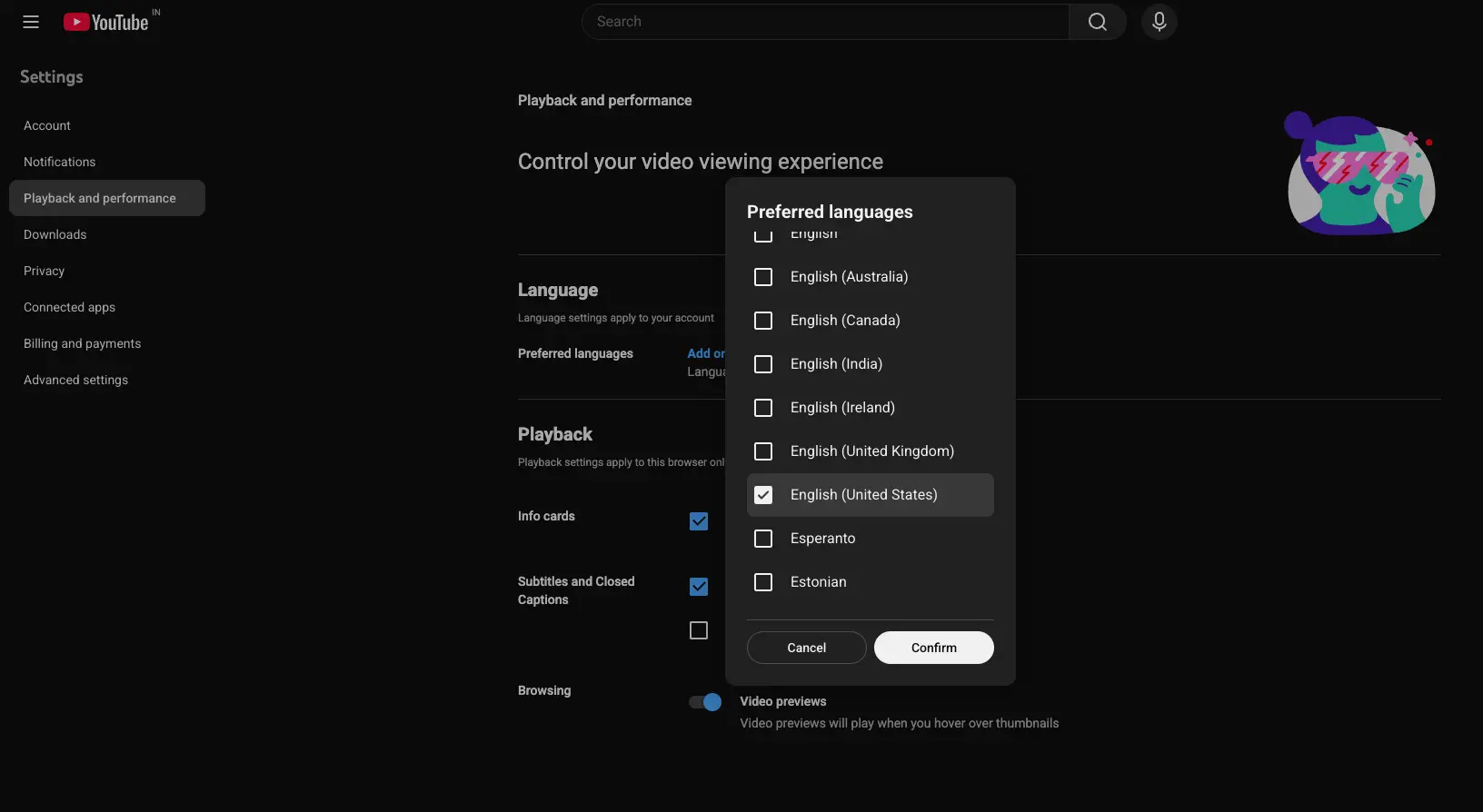
Available on Android, iOS, and the web, this setting applies to audio dubs, titles, and descriptions. YouTube won"t use AI dubs and will default to the original audio if the video is available in one of your preferred languages.
The video sharing platform is also piloting a feature called Lip Sync, which subtly matches the "speaker’s lip movements to the translated audio so a dubbed video feels as seamless as watching the original," it said.
Apart from that, YouTube has Automatic Smart Filtering for creators to figure out when a video shouldn"t be dubbed to keep the content authentic, for instance, when someone uploads music videos or silent vlogs.
Speaking of AI, YouTube recently promised to combat AI slop and announced new deepfake tools for creators. It experienced a server-side outage, resulting in a "content isn"t available" error for users, and patched a YouTube Premium background playback loophole.
Image via DepositPhotos.com