Another day, and a new Gemini announcement from Google has arrived. The search giant said it"s starting a new series, called Gemini Drops, to showcase monthly updates and tips on how to get the most out of its AI chatbot.
Google has also set up the Gemini Drops Hub, a new web page where it populates the latest updates and features related to the Gemini app. "Gemini is constantly evolving, but Gemini Drops makes it easier to keep up with what’s being released," the web page reads.
These updates are similar to the other "Drops" Google has in place for its products. Pixel Feature Drops are software updates typically released once every quarter for Google"s lineup of Pixel-branded smartphones, smartwatches, and earbuds.
Android Feature Drops is a more marketable name for Android QPR (Quarterly Platform Releases), which Google pushes for non-Pixel smartphones and other devices. Similarly, the company has Workspace Drops to discuss new features coming to its work apps, including Gmail, Docs, Sheets, and more.
That said, Gemini Drops appear to be more of a roundup of all the updates pushed throughout the month instead of an update package. For July, Google highlighted how the Gemini app can convert photos to videos using the Veo 3 model. You can use the feature to create eight-second video clips complete with sound.
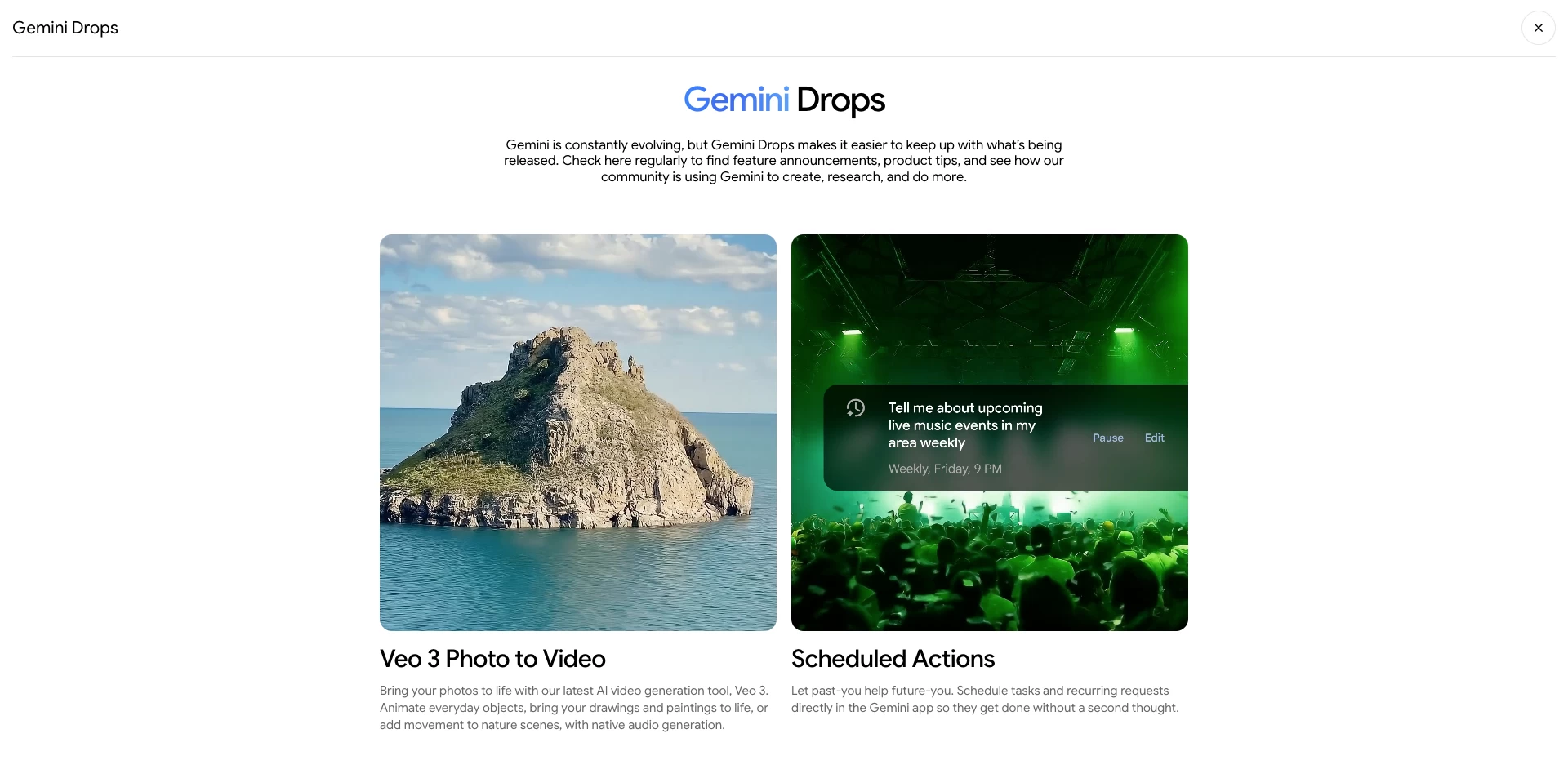
Gemini is now available for Wear OS 4+ watches, allowing you to interact with the AI chatbot without needing to take your phone out of your pocket. Google also introduced Scheduled Actions to automate tasks, such as providing a summary of your calendar and unread emails every morning.
Gemini Live has added support for captions to read along during conversations with the AI chatbot. The Gemini 2.5 Pro model improved in coding, science, reasoning, and multimodal benchmarks.
The search giant is turning every stone to make its AI models and features reach a wider audience. It helped recreate a classic movie from 1939 and started a new initiative to fund short films exploring the relationship between humanity and AI.