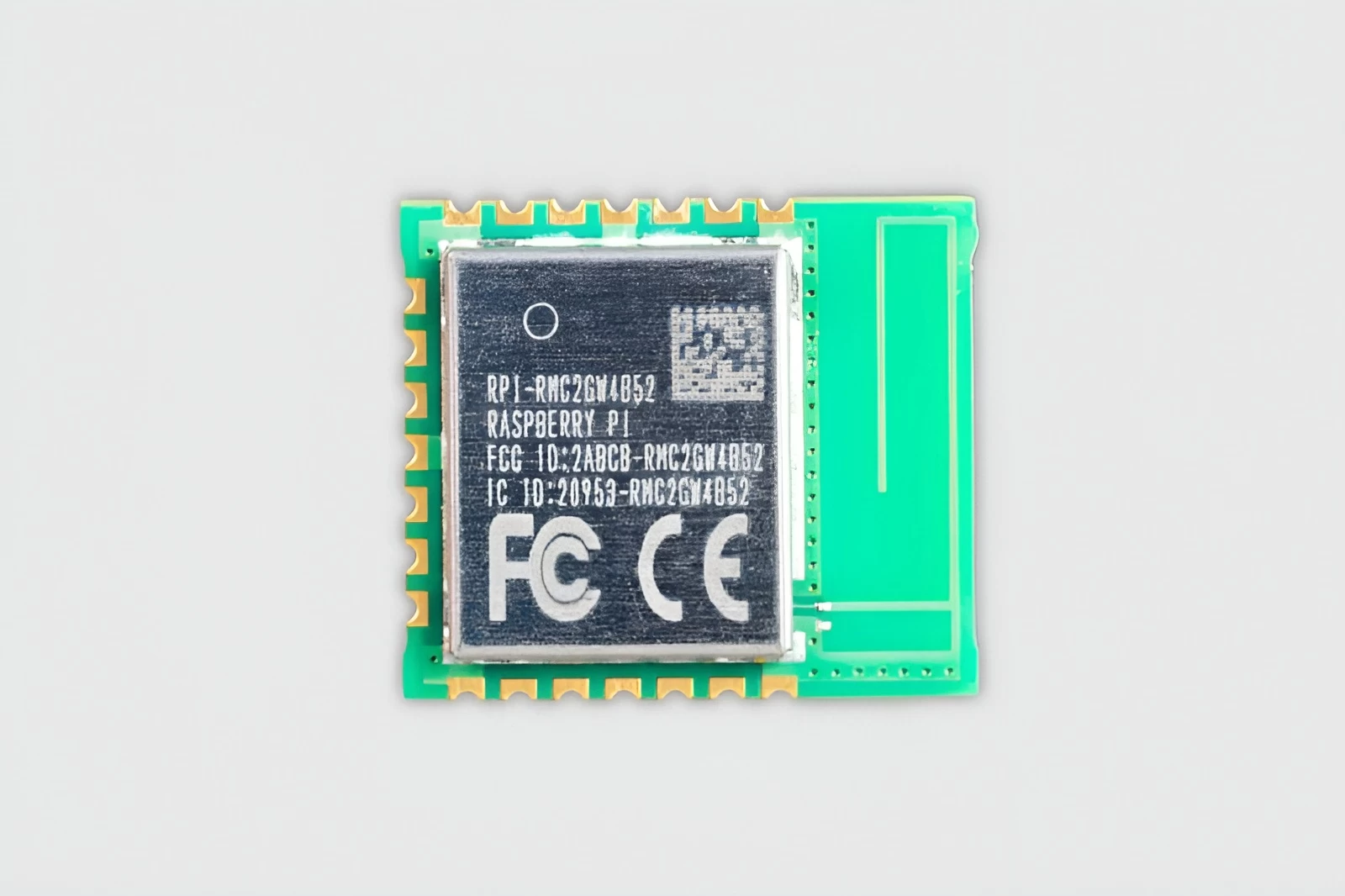
The affordable computer company, Raspberry Pi, has just announced the release of the Radio Module 2 for just $4, making it extremely accessible to people around the world. The company said that RP2040 and RP2350 customers often ask for a wireless solution that offers software and feature-set compatibility with Raspberry Pi Pico devices and now they have it.
This module actually uses the same Infineon CYW43439 radio found in the Pico W and Pico 2 W ensuring compatibility. The company said that it’s a great option for organizations too because it comes with full modular certification, helping customers avoid expensive radio certification processes.
It’s not just big organizations that benefit from the availability of this product either, independent developers and smaller projects will now have an easier time enabling Wi-Fi and Bluetooth in their RP2040 and RP2350-based projects.
The $4 Radio Module 2 features castellated edge pads to more easily mount the module to your board and there’s an on-board 2.4GHz antenna. Raspberry Pi has opted for a low-pin-count Serial Peripheral Interface (SPI) host interface to make efficient use of the host CPU’s input/output budget. It also features a compact 16.5mm x 14.5mm form factor and works with just a host CPU and power. The small form factor and requirements will help to drive down mass-production costs.
The module supports single-band Wi-Fi 4 (802.11n) and Bluetooth 5.2 (Classic and Low Energy). It’s certainly not going to deliver the best Wi-Fi connectivity but it should be acceptable for many hardware projects you’ll want to use it in.
Raspberry Pi says that the Radio Module 2 has an integrated Power Amplifier, Low Noise Amplifier, and Transmit/Receive switch which delivers “excellent wireless performance even when sharing a single antenna between Wi-Fi and Bluetooth.”
The new Radio Module 2 has already been used in a number of Raspberry Pi’s partners’ products including the SparkFun’s Thing Plus and Pimoroni’s Pico Plus 2 W. If you want to learn more about the technicals, check out this datasheet.
To get your mitts on this new component, go to the product page and press Buy now, you’ll then be shown approved retailers who have it for sale.