It was not too long ago that I had the FiiO K13-R2R on my desk, praising its excellent sonic performance and general features. Today I am pleased to present the WARMER R2R, a fully balanced R2R DAC using quad vacuum tubes at the buffer output stage.
Whilst the K13-R2R is also a DAC, it is an all-in-one device comprising of headphones amplifier and pre-amplifier with line level outputs at the back to connect to powered speakers or another amplifier feeding passive speakers. The DAC board is the same on the WARMER as on the K13-R2R, though there are implementation differences that attribute to different sound signatures which I will discuss later. The WARMER is a DAC only, so in order to use it with headphones or passive speakers, a pre-amplifier must be used.
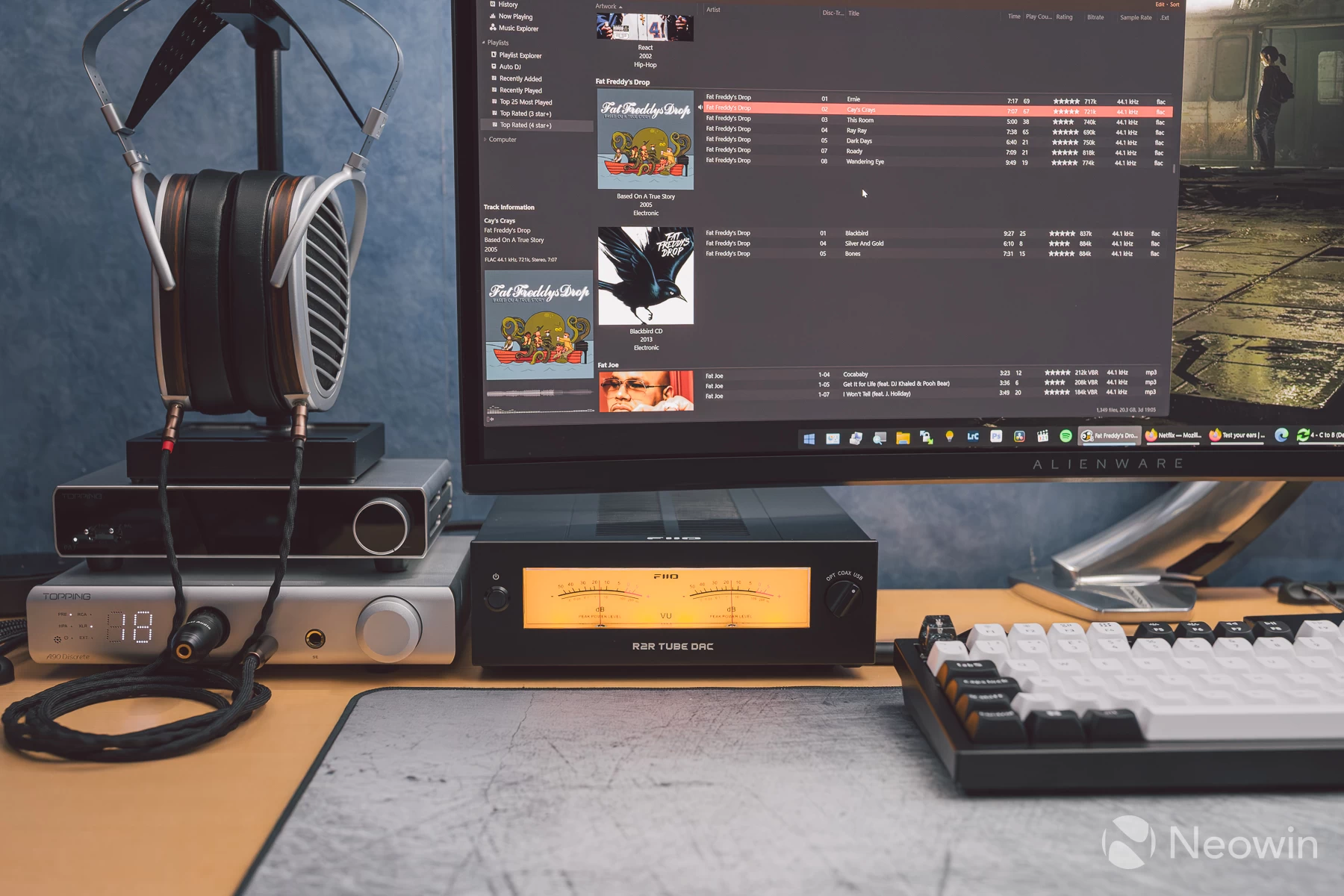
In my case, the rather excellent Topping A90 Discrete serves pre-amplifier and headphones amp duty as it is mostly transparent, and is able to distinctly articulate the source DAC"s character.
To listen to my passive speakers (TRIANGLE Comete 40th Anniversary), the Topping PA7 is more than happy being the power amplifier for that role. All connections between separates are via XLR balanced cables, and the DAC is connected to my PC via USB.
The FiiO USB driver has also been installed, with the Always On setting enabled in the FiiO control panel which removes the initial playback delay that happens with mostly USB DACs connected to a computer over USB.
"A tube buffer can introduce harmonic distortion, particularly second-order harmonics, which many people find pleasant and describe as "tube warmth". Unlike some tube preamps, a buffer has a gain of 1.0, so it doesn"t add volume, but it can still add a harmonic character to the signal by altering its timbre. While the presence and amount of this distortion vary, it is a key characteristic that differentiates tube buffers from their solid-state counterparts. " - Gemini
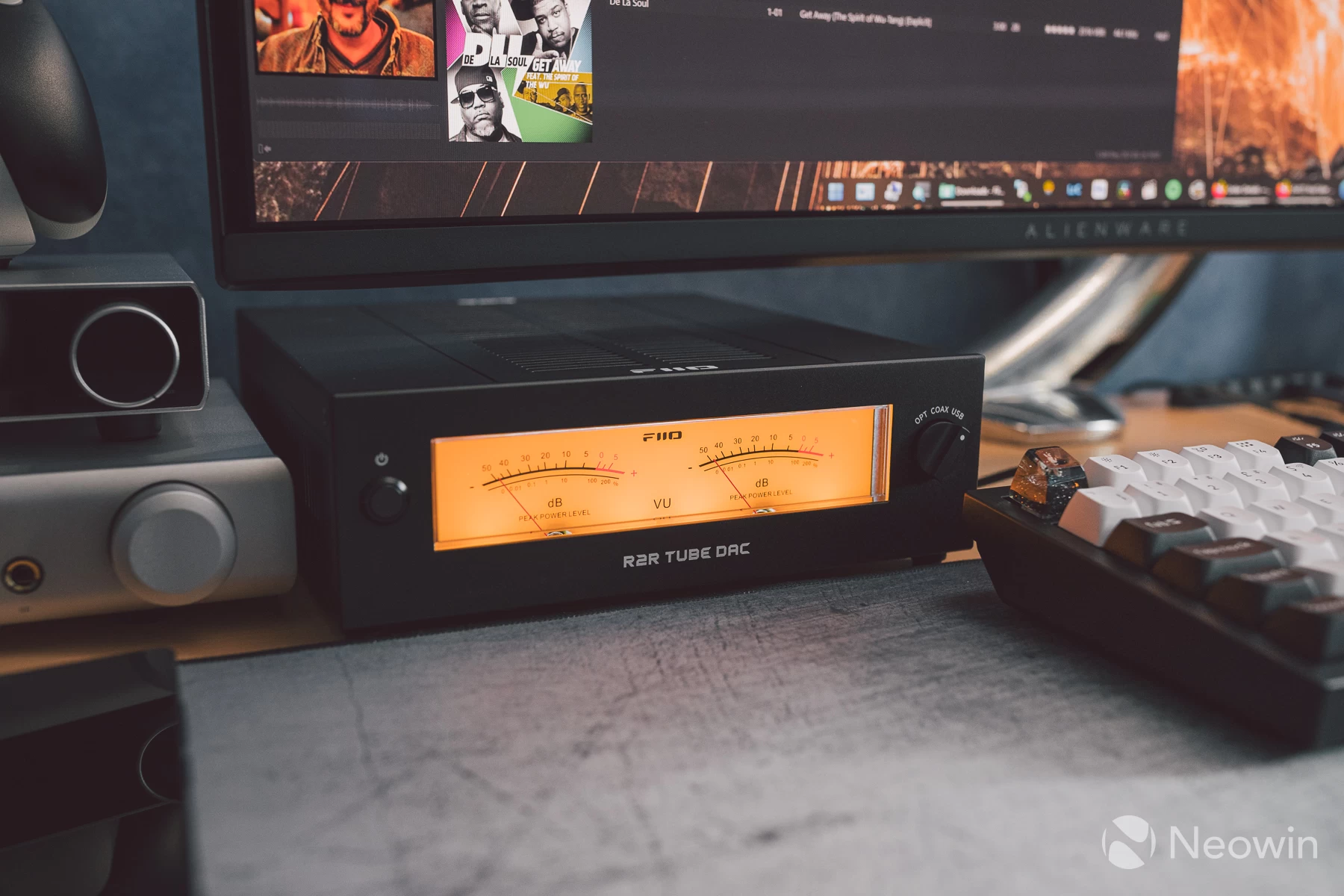
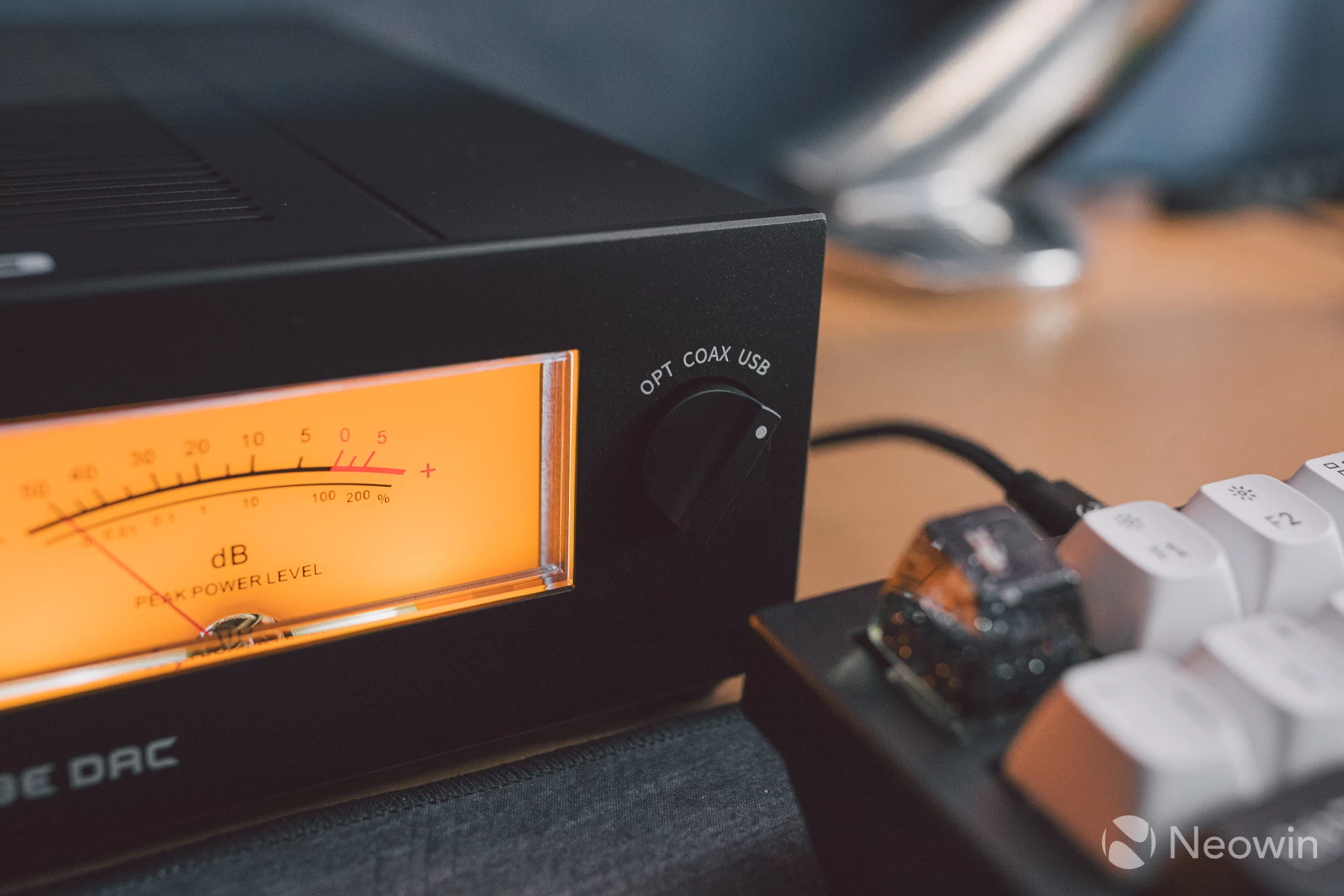
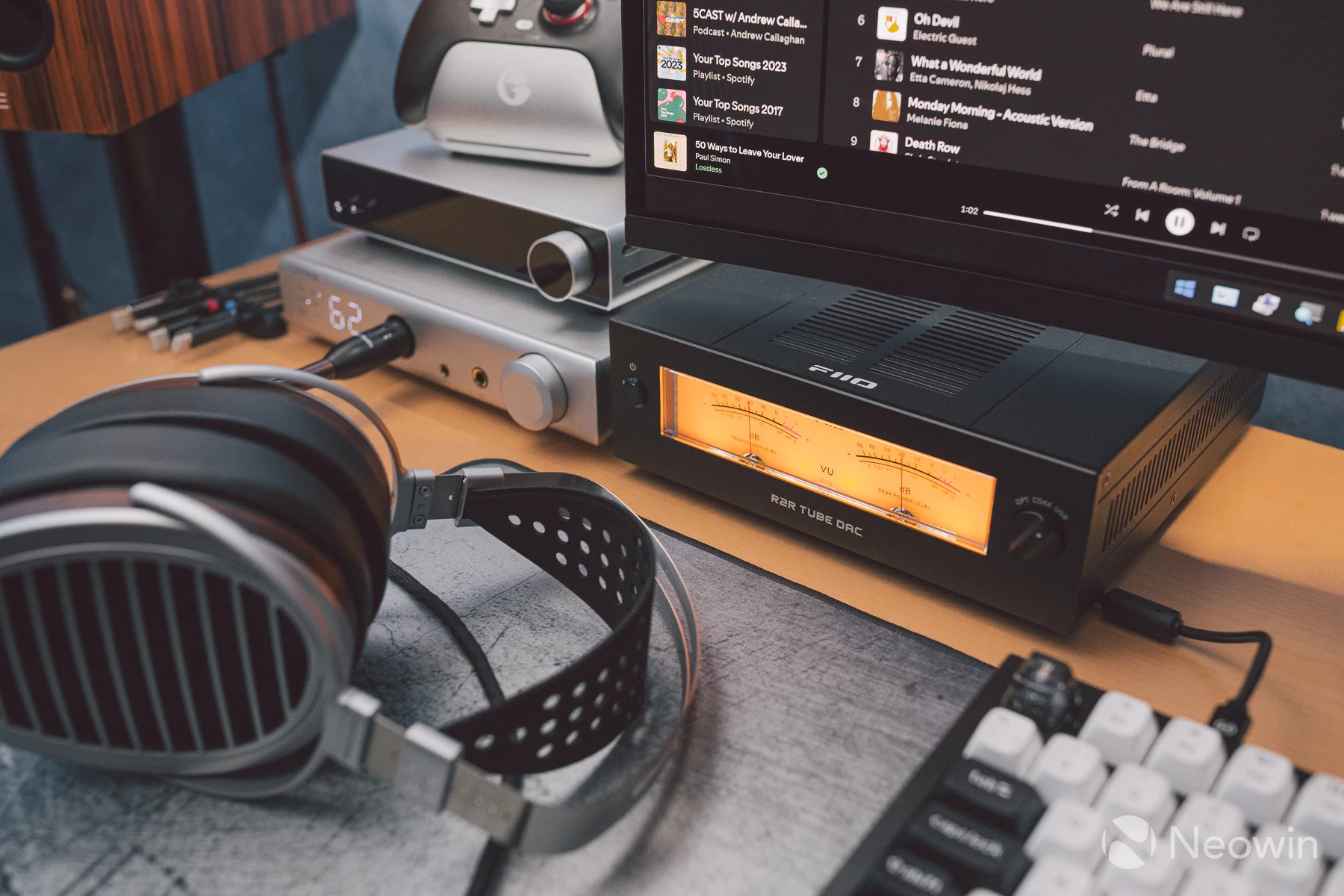
Other products with a tube buffer do exist, though the implementation and general specifications in the WARMER R2R are quite unique as of now. This is partly why the release of this DAC has been hotly anticipated among the audiophile community, the other reason being that the WARMER R2R just looks so good with a retro-modern aesthetic. Its analogue meters, amber glow display window and simple mechanical switches form an experience to interact with.
FiiO"s CEO, James Chung, spoke to Darko Audio outlining his reasons for wanting to release a tube-based R2R DAC, and the trials and tribulations that came about seeing this dream through to fruition. Speaking about his nostalgia for tube products from the past, and the difficulty sourcing (in mass) components needed meant that some outside the box thinking had to take place.
"Chung says he is looking beyond the specs and the measurements. “Sure, these technologies are outdated on paper, but they have this irreplaceable charm,” he notes. Cassettes, vinyl and tubes might lag behind digital gear on measured performance, but “that unique flavour? Digital can never fully replicate it.” His philosophy is simple: “The real world is still analogue at its core.” - Darko Audio
And this notion is where my own love of affordable yet high quality modern day audio equipment resides. I fully embrace digital, but my fondness of analogue goes back to the 90s and early 2000s when I owned Rotel and NAD amps, these were not tube based, but they carried that flavoured DNA often labelled as smoothness and warmth that many of my audio based reviews talk about, such as with the AKM Velvet powered Luxsin X9.
For me, it is this flavour that drives the excitement to find what works in my personal setup, and what new things are out there, or coming soon, that I could get my hands on to experience details in music that I have not yet heard before the same way.
As you will read a bit later, the WARMER R2R has the ability to extract previously unnoticed details from music, and this is why I love this hobby so much, because you never quite know what to expect when something new comes out,and old music suddenly has a new lease of life.
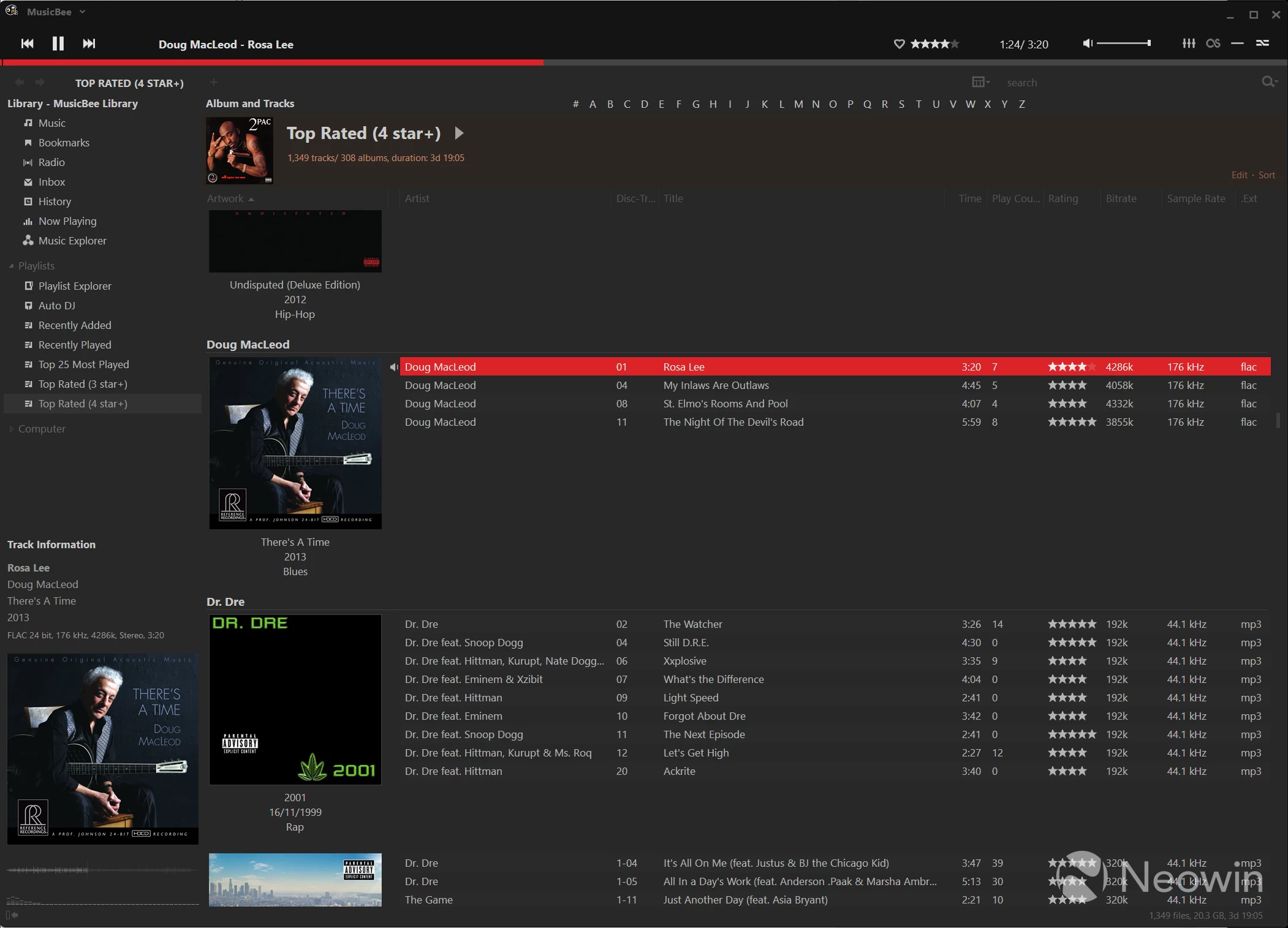
All of the listening during testing was done via local FLAC files in MusicBee (ASIO), as well as streaming via Spotify Lossless from my curated playlist - Yes, I am aware that some pockets of the web do not consider Spotify to be truly lossless because the lossless file being streamed is being resampled by the OS.
This debate has been beaten to death and I have done my own testing to come to the conclusion that it sounds the same as Quboz/TIDAL and local music when playing the same masters. Spotify has said it will be adding WASAPI Exclusive support to the desktop app in the near future for those who still demand bit-perfect playback only.
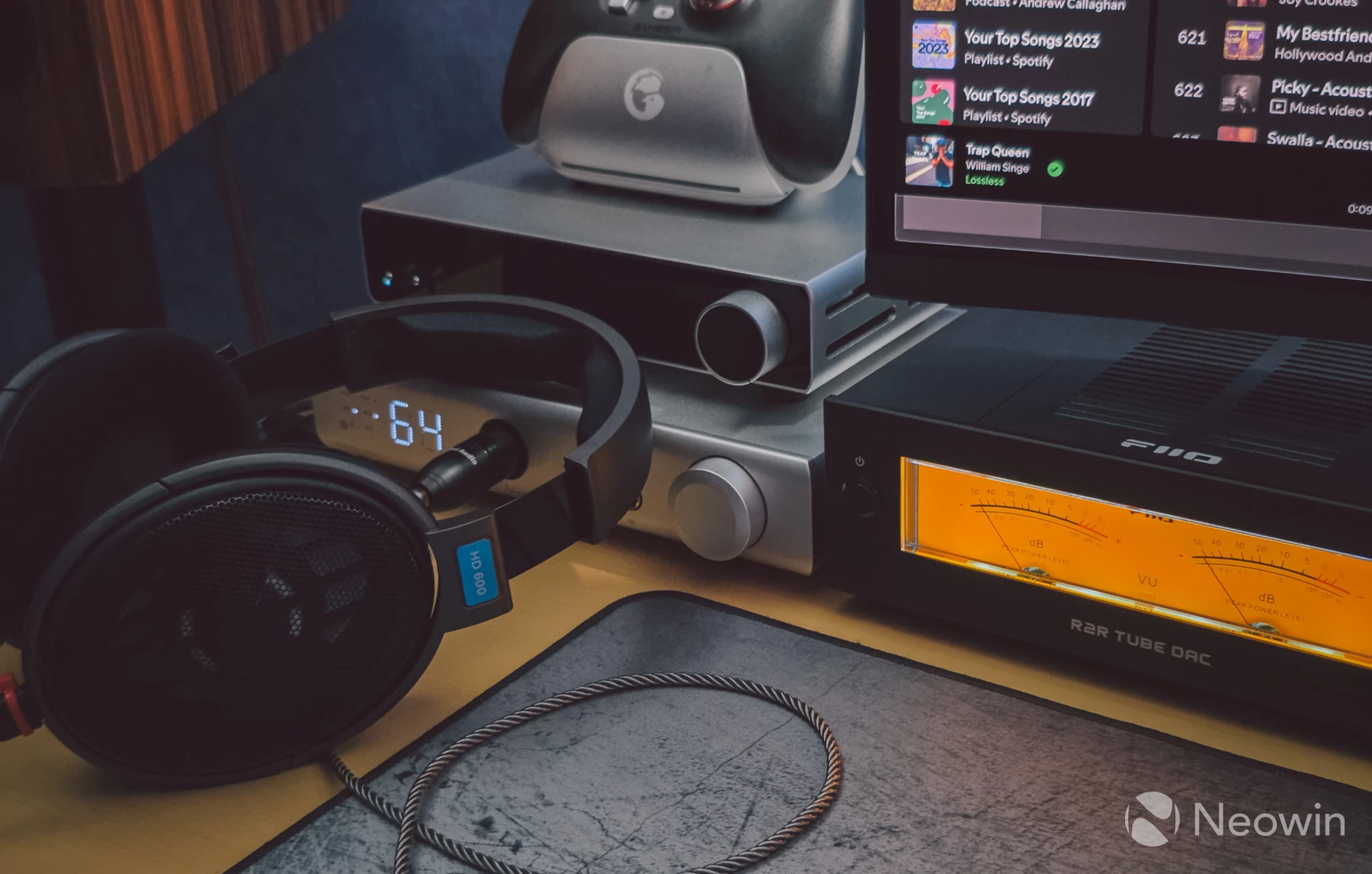
The headphones used for testing are the legendary Sennheiser HD600, headphones that have been around for so long, that probably almost everyone on the planet knows how they sound, and of course my personal reference, the HiFiMAN HE1000se. Both are used via balanced cables.
| Specifications | |
|---|---|
| Display | Mechanical VU meters |
| DAC solution | 24-bit fully differential in-house R2R (0.1% tolerance) |
| PEQ/processing | Toggle switch for Non-oversampling mode / Oversampling mode |
| Tubes | JJ Electronics E88CC tubes (x4) (Slovakia sourced) |
| USB solution | Savitech Corp SA9312L |
| 12v trigger support | None |
| Front controls | Power switch, Input switch |
| Rear controls | NOS/OS switch, UAC 1.0/2.0 switch |
| Rear ports | Inputs: USB-C, RCA, digital COAX, XLR3 balanced Outputs: RCA, XLR3 balanced Power: IEC connector |
| Sampling rates | USB decoding: 384kHz/32bit; DSD256 Coaxial decoding: 192kHz/24bit Optical decoding: 96kHz/24bit |
| THD+N | RCA: 0.052% (1kHz - 7dB@10KΩ) XLR: 0.053% (1kHz - 7dB@10KΩ) |
| Crosstalk | RCA: ≥96dB XLR: ≥104dB |
| Frequency response | 20Hz~45kHz (attenuation under 2.4dB) |
| SNR | RCA: ≥112dB (A-weighted) XLR: ≥114dB (A-weighted) |
| Line output level | RCA: 1.8Vrms (1kHz@10kΩ) |
| Power supply | Internal linear, 46W |
| Weight | 2.86 KG |
| Dimensions | 223.5 x 213 x 66.8 mm (L x D x H) |
| In the box | WARMER R2R DAC, paperwork, IEC power cable, spare fuse |
| Price | £334 / €379 / $431 |
First impressions
At 2800 grams, the WARMER R2R is no lightweight, that"s more mass in a smaller footprint than the Keychron Q6 Max, and that thing takes effort to lift up. The weight is mostly due to the fairly large toroidal transformer forming the core part of the 46W internal linear power supply.
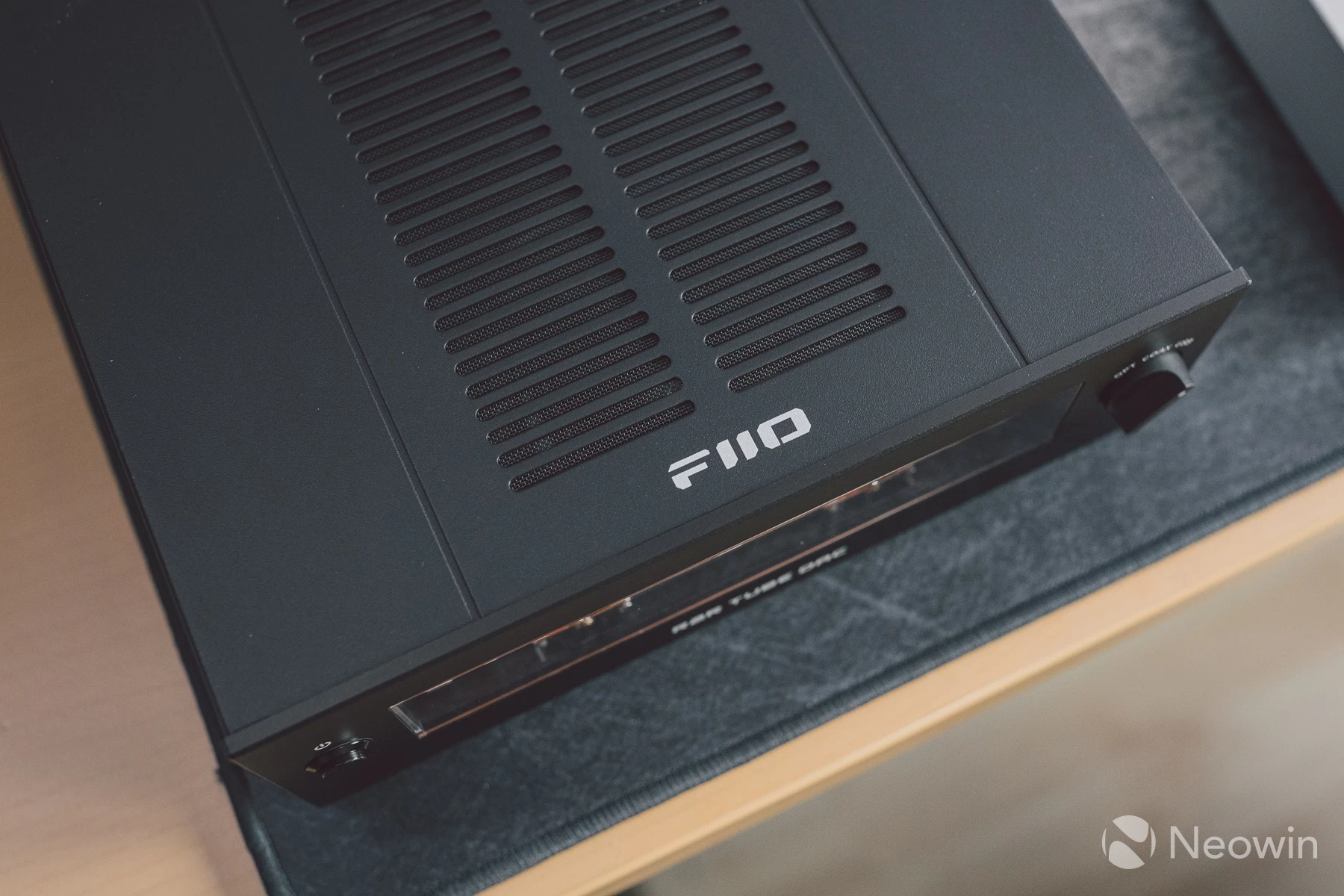
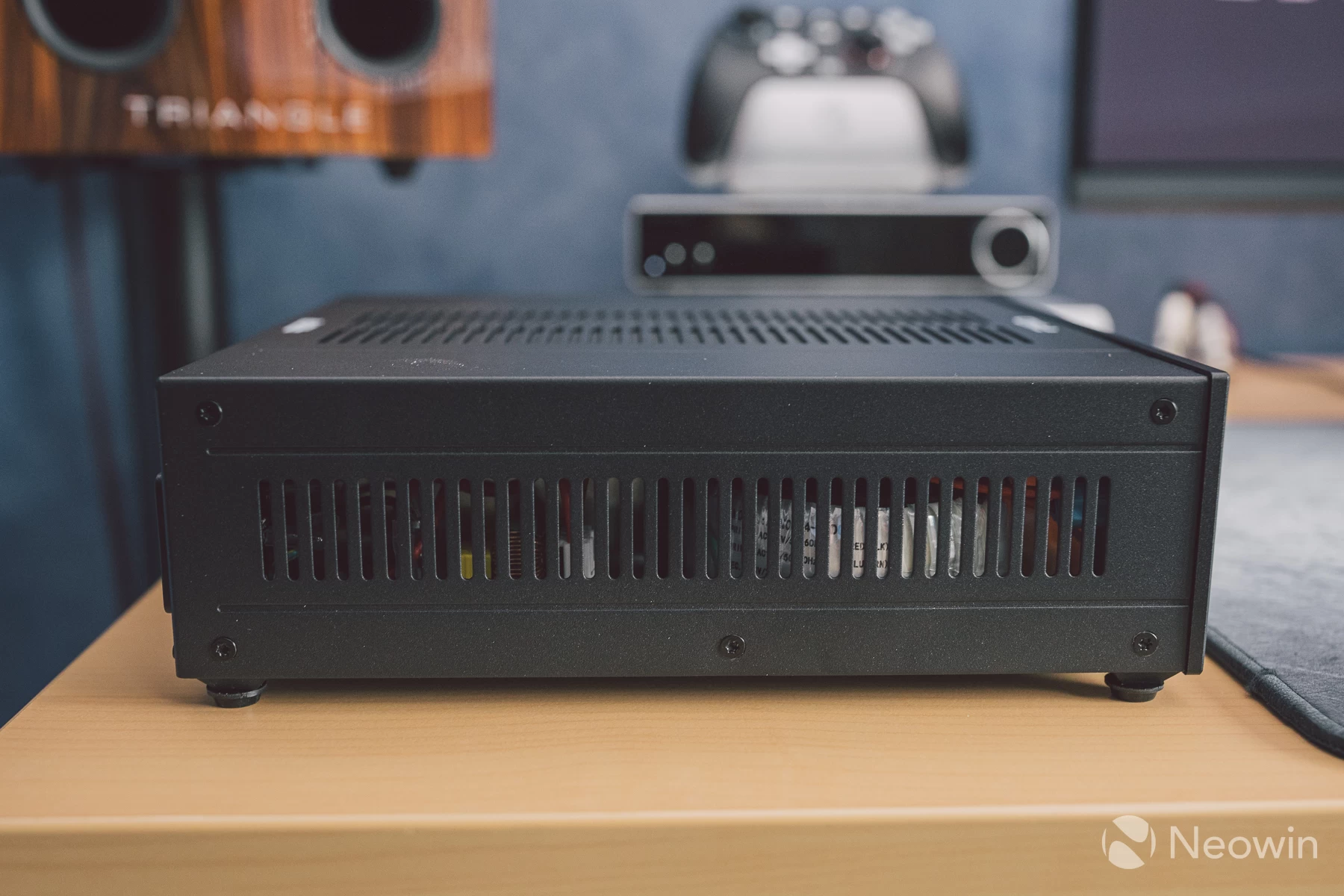
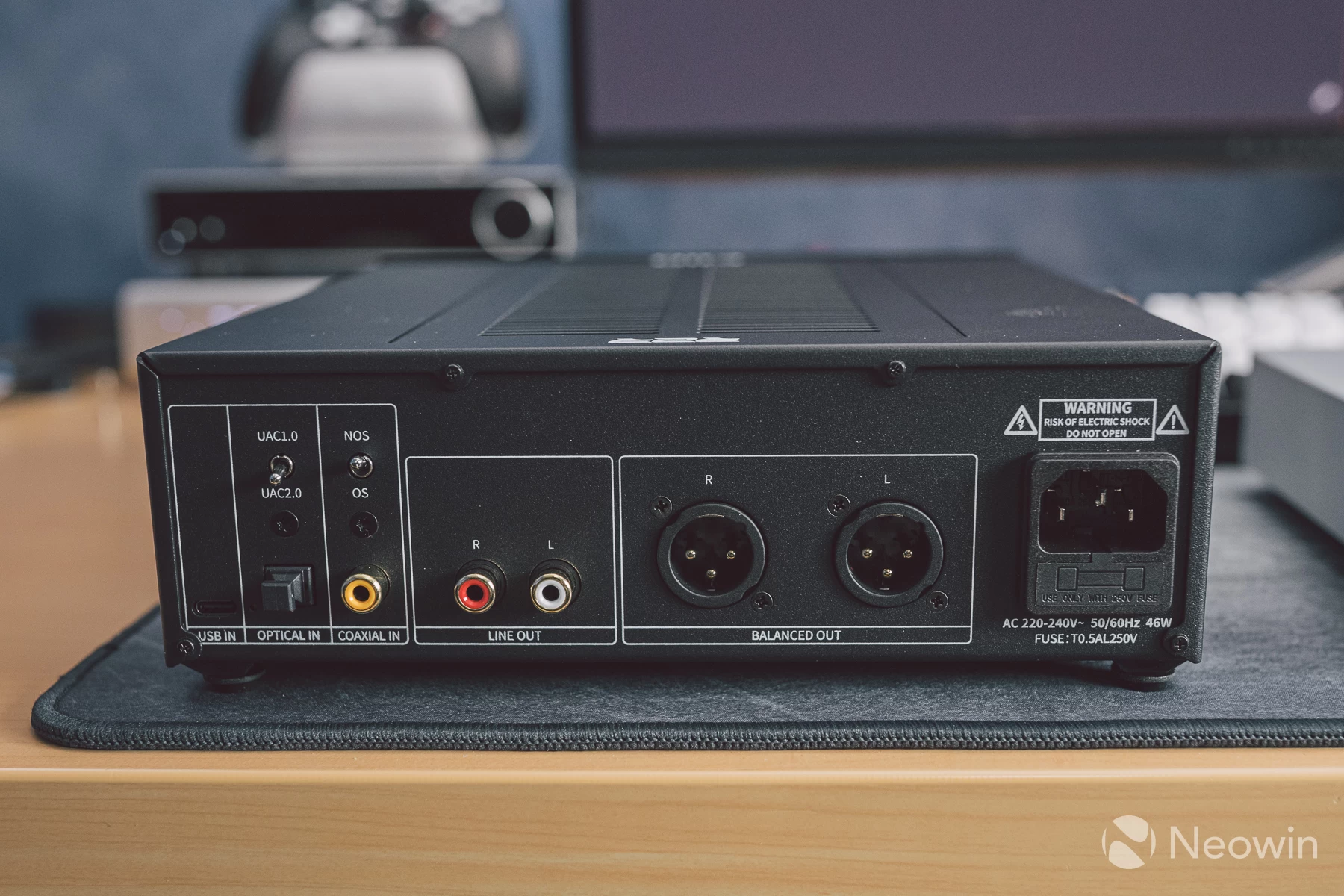
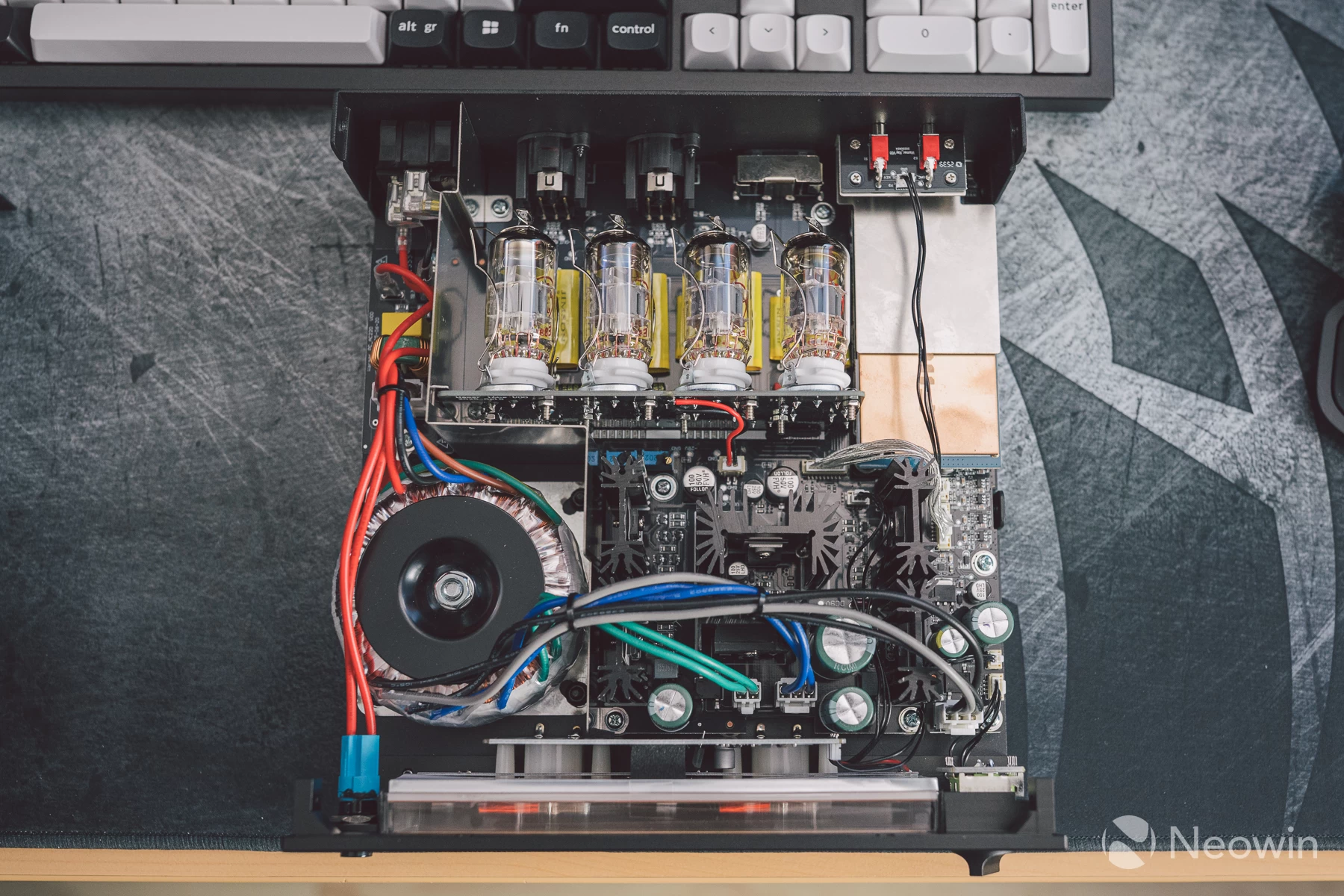
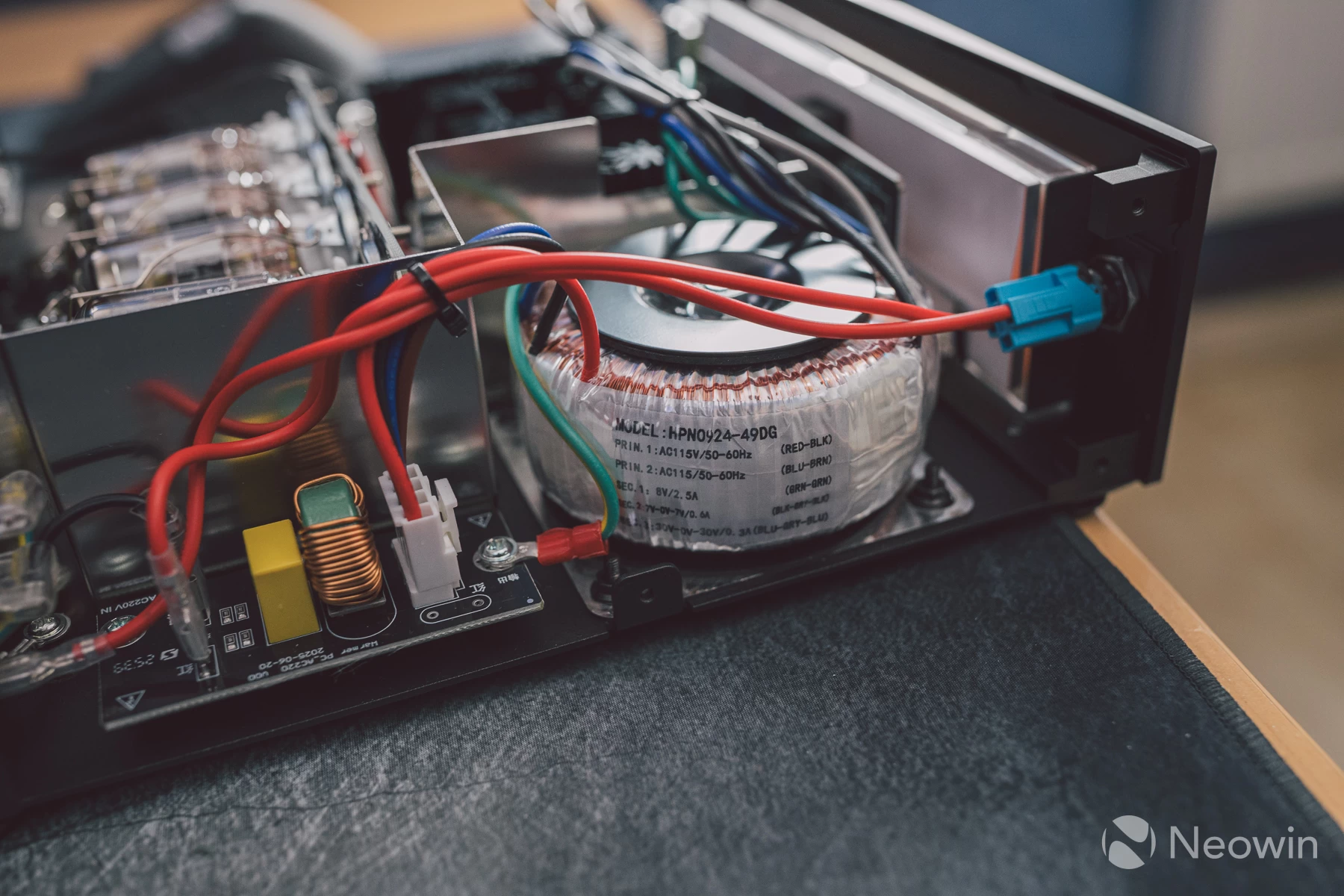
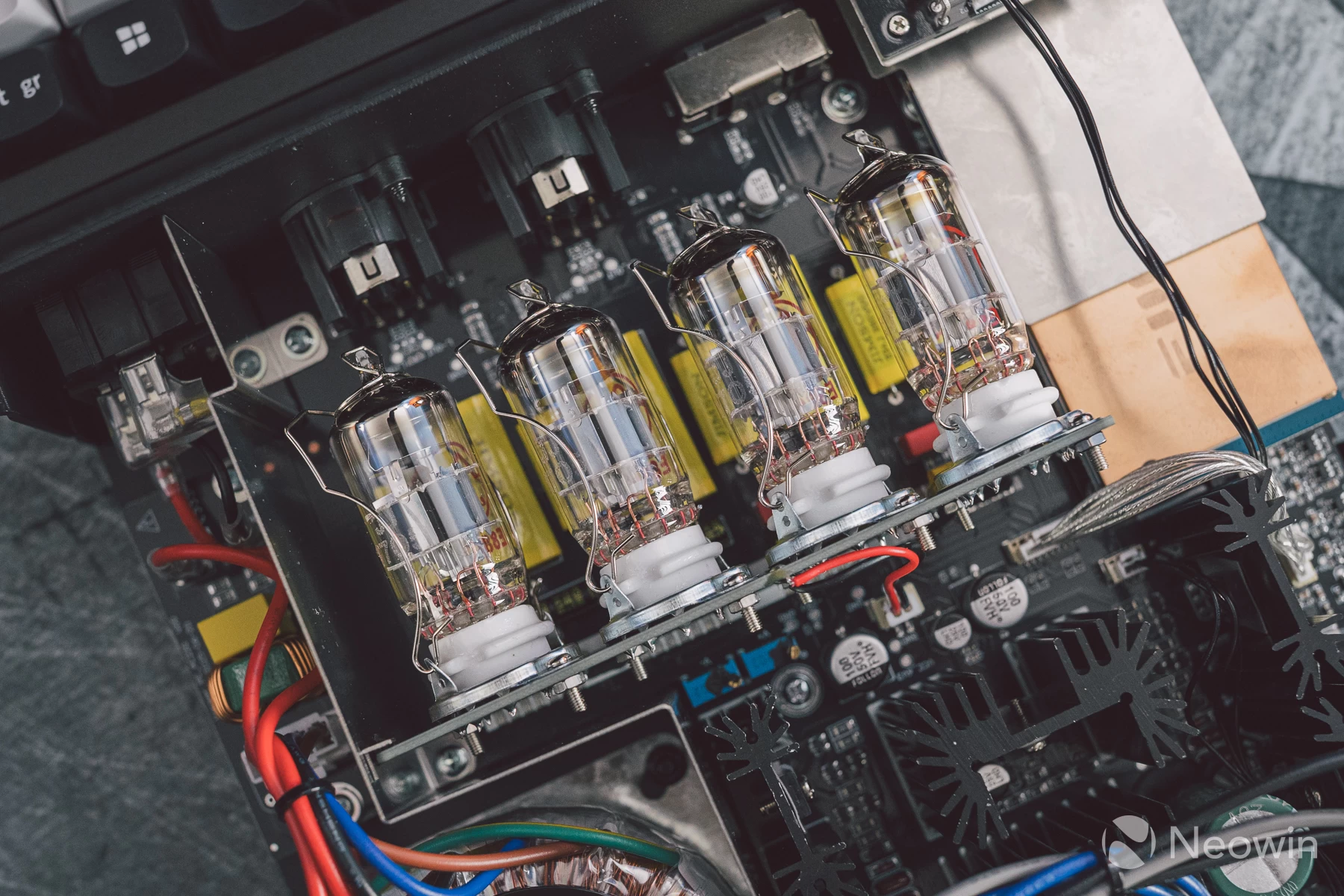
Opening up the WARMER isn"t a quick affair. There are ten star headed screws holding the sides of the one-piece folded cover in place, and a further four cross-head screws at the back. Those wishing to experiment with tube rolling may wish to do this in one session to save yourself the time from having to remove so many screws each time.
The interior is clean and organised. The PCBs are sectioned off, with a rather novel layout for the JJ Electronics E88CC tubes to be oriented horizontally as opposed to vertically as found on most tube-based amps and DACs.
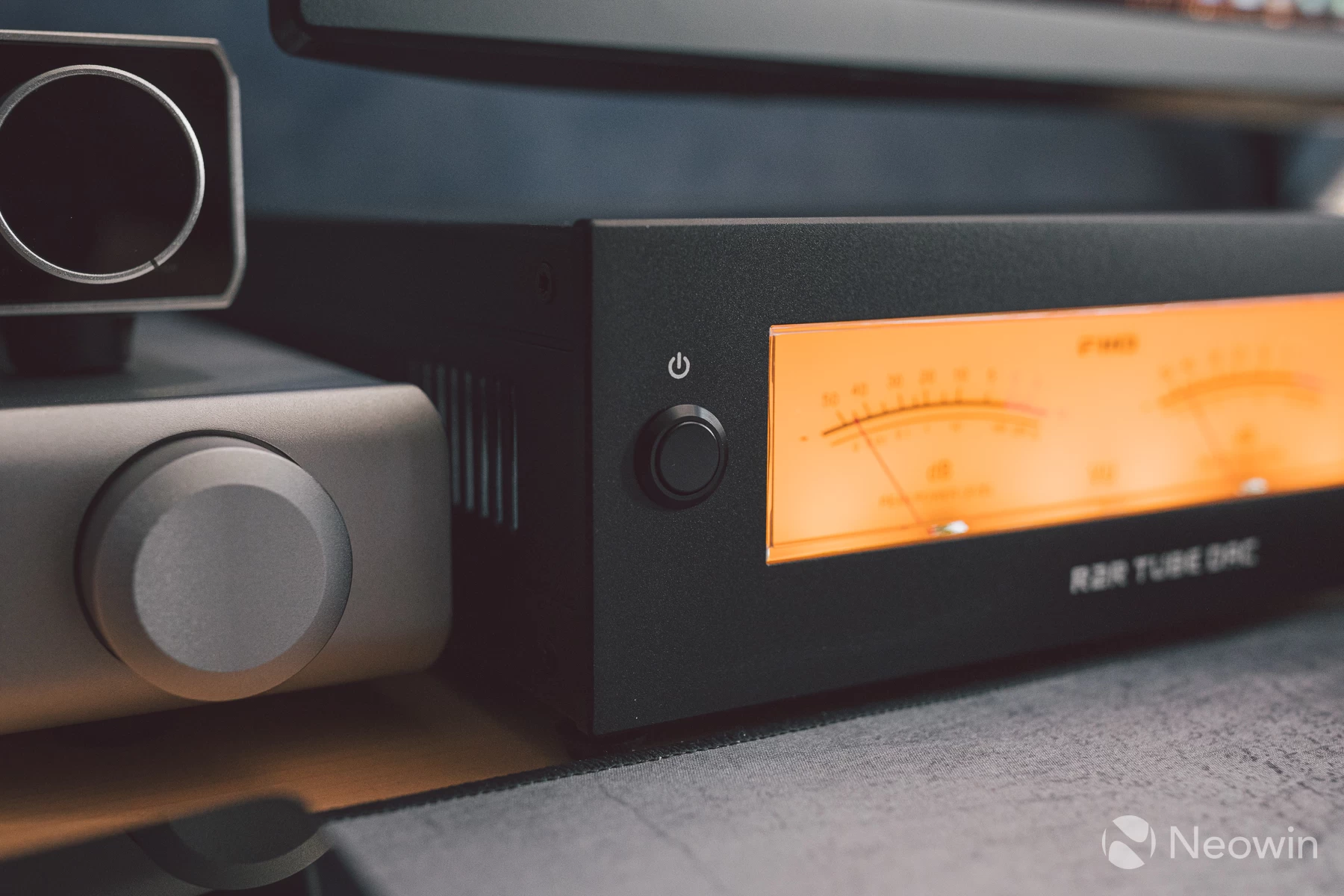
The power switch is mechanical switch as opposed to the usual digital type, and apart from the input select dial, that is it up front, there isn"t even a way to dim or turn off the display. Whilst he display is not too bright in the dark, it can sometimes distract, especially if playing a dark game in dim lighting.
I may at some point DIY a switch from the wiring of the backlight and Dremel a hole for it in the housing. Until then, I just place a solid object in front of the WARMER to block the glow if I don"t want distractions. Not ideal, but it is what it is.
Performance
For anything audio related, performance really boils down to two areas specifically, measured performance and subjective performance.
To repeat what I have said in the past, being aware of measurements is one thing, but know that measurements don"t always dictate how something sounds. For example, soundstage is not something that can be easily measured, neither can smoothness and warmth. These qualities rely on human ears and individual subjectivity.
With that in mind, the WARMER R2R presents the thickest sounding music I have heard yet, in a good way, of course. Through my speakers, the upper frequency range details are articulated with a level of precision that makes instruments appear as if they are in the room with me rather than being played through speakers.
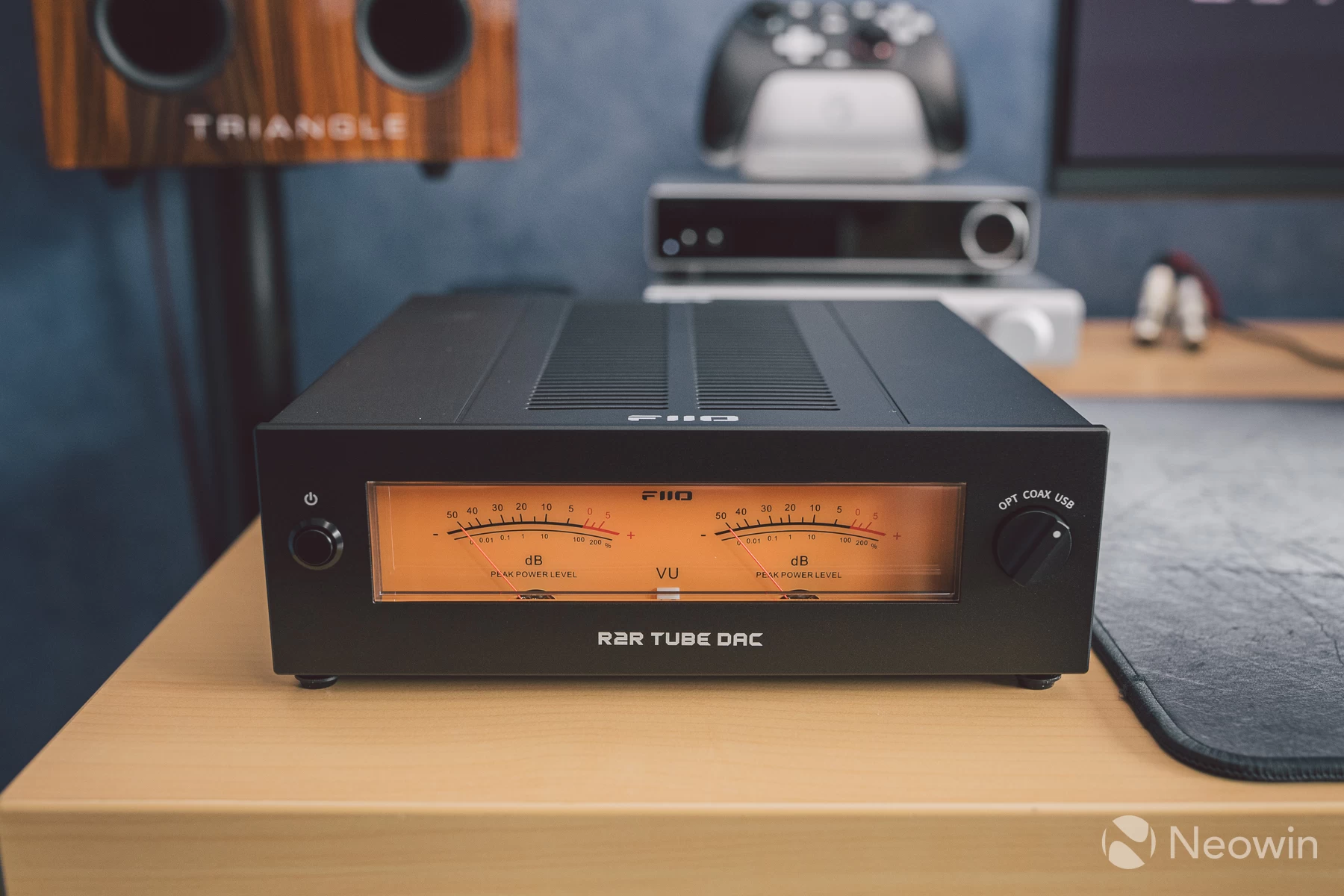
The wide soundstage and tight handle of the mid-range feels analogue to the core with that lush smoothness and a thick warm sound that many of us grew up with. The difference now is that the noise floor has zero hiss or anomaly, it is pitch black whatever the volume with both XLR balanced and the RCA outputs.
The soundstage is what immediately stands out; it is expansive with a body of air between vocals and instruments, each of which are layered to a degree that pin-pointing exactly where something is playing in 3D space is very easy.
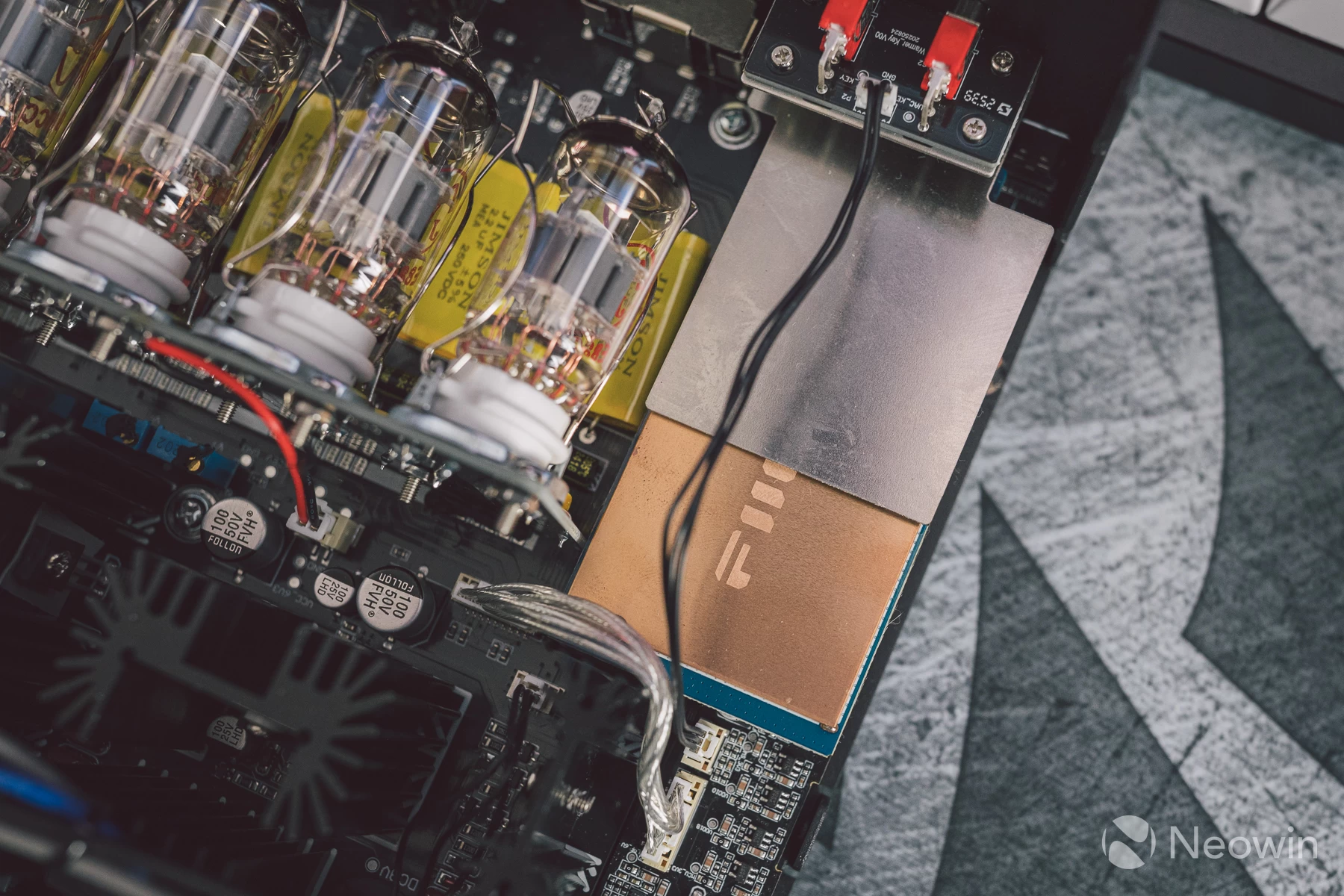
Comparing it to the K13-R2R, since they both have the same R2R DAC (shown above) shows that whilst the K13-R2R is also excellent, the WARMER is able to do a better job with a wider soundstage and greater stereo image, more detail in the upper frequency range and a more composed mid-range.
The only area where the K13 wins is its ability to produce sub-bass extension which is especially noticeable through speakers instead of headphones. There is a level of instant punch in music through the K13-R2R that adds extra dynamic which I really enjoy.
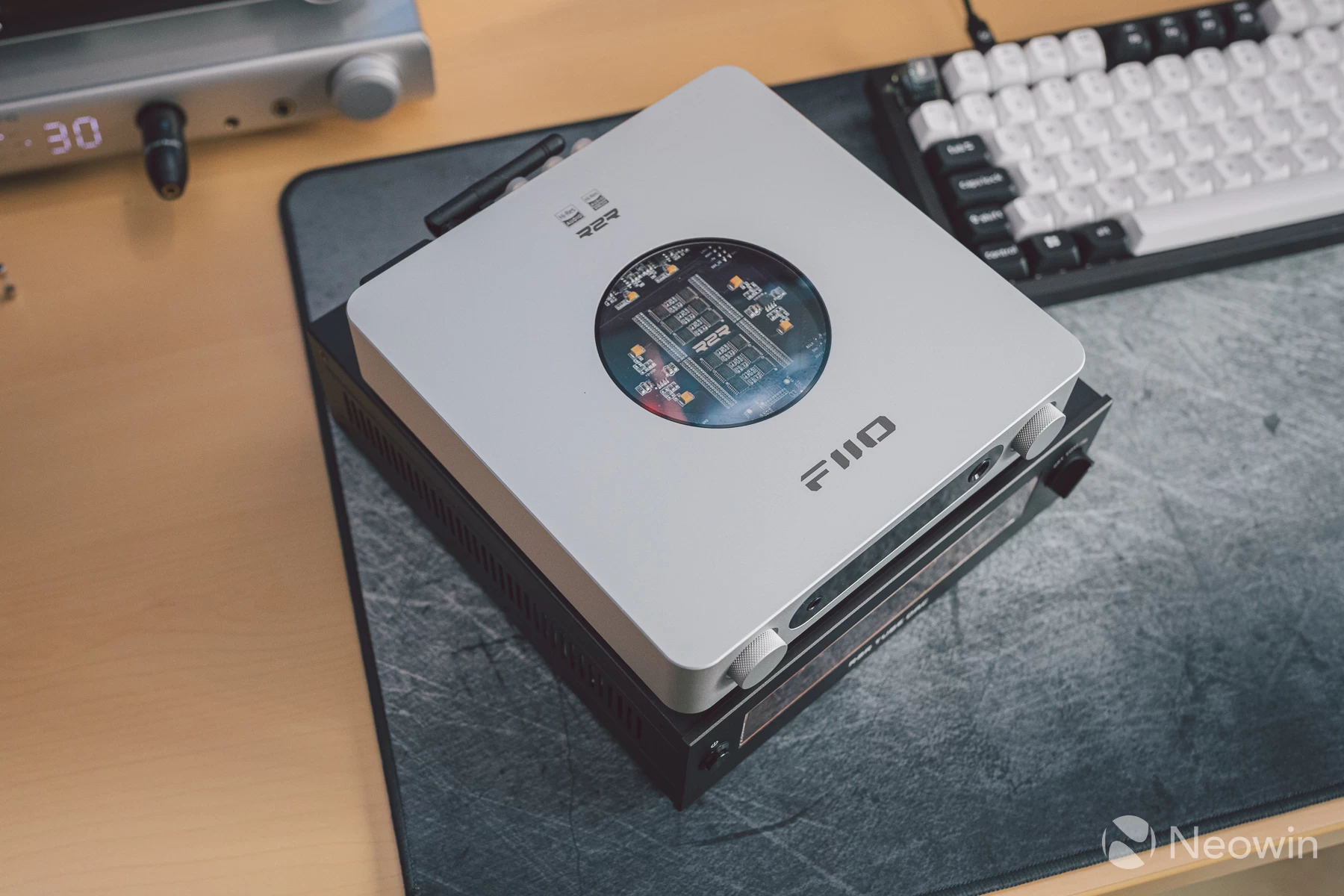
I then wanted to test whether the K13 could produce soundstage and stereo imaging that rivalled the WARMER by using a linear power supply instead of the internal switch mode one, so I ordered the FiiO PL50 and spent a couple of days listening between both DACs.
What I discovered was that the K13-R2R was now producing both soundstage and a stereo image that almost matched the WARMER R2R, whilst still having greater sub-bass extension. The WARMER is still wider staging still, with a greater level instrument placement and air between them, but the gap was definitely smaller now between the two.
Whilst the K13-R2R costs nearly £280 here in the UK, the PL50 linear power supply is an additional £118. That puts the price of the combo quite a bit above the WARMER R2R to only get close to the WARMER "s harmonic charm. Some may well prefer that given that there are a number of issues with it which I will detail shortly.
For me, the WARMER R2R is the winner, not only for its audio characteristics, but also for its overall visual appeal. Like Chung, my soul is still living in the old school analogue days, so seeing those mechanical needles bob about to electrical signals from the music is hugely nostalgic. Charm like this is worth a compromise if some other areas are not perfect, I feel.
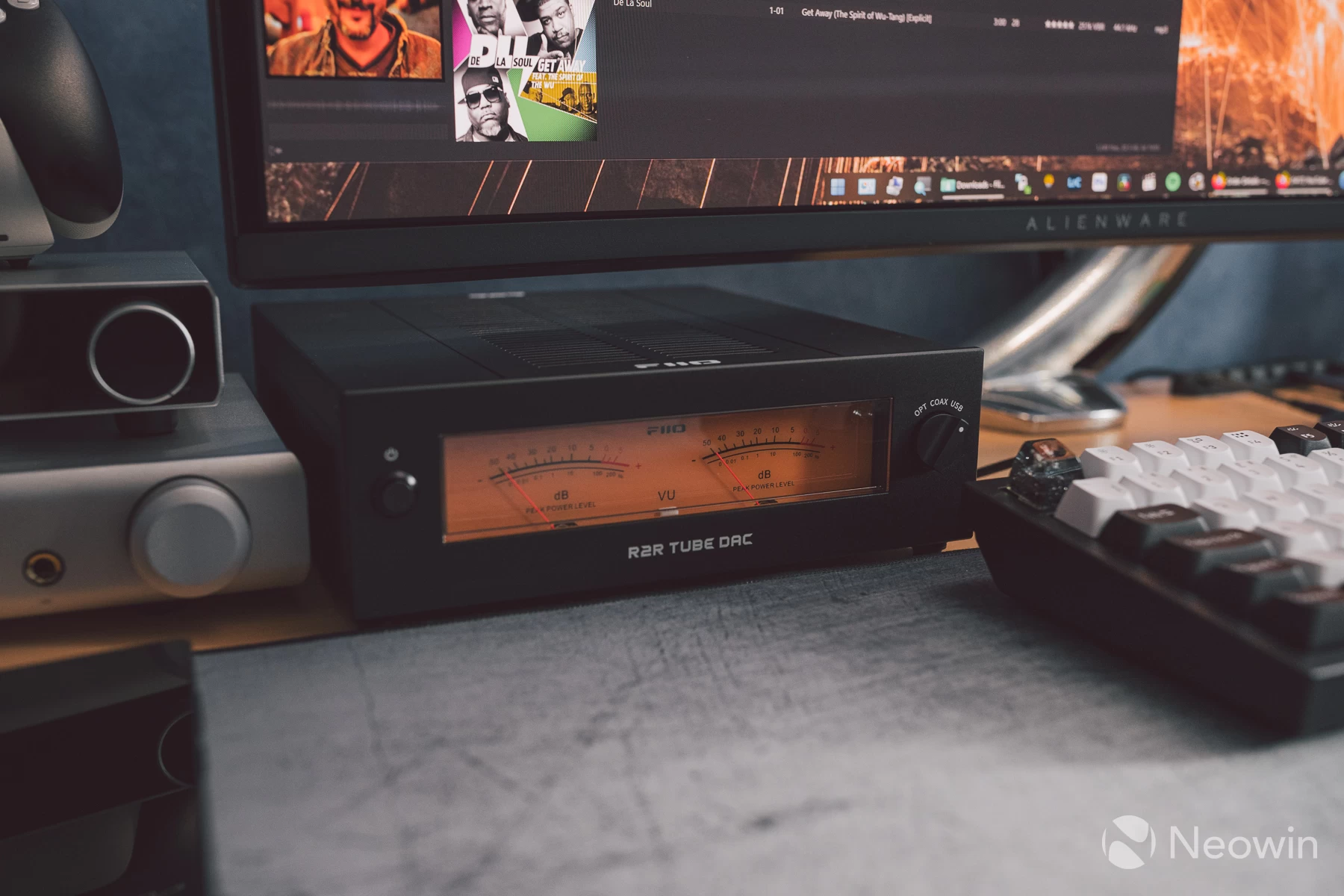
I also played some games to observe the same traits, the wide soundstage and layered stereo image makes discerning exact positions of sounds within games easy, as well as providing a more immersive experience. This isn"t a DAC just for music, and Battlefield 6 saw an especially nice cinematic experience improvement over the stock K13-R2R.
Tube rolling
Tube rolling is the term given to swapping out the tubes to refine or change the sound signature. Tubes can also vary massively in quality (longevity) and harmonics, with the cheapest often being the most noise-prone due to the infamous tube hum, as well as not being very closely matched if buying single tubes leading to things like imbalance.
Initially, I was not interested in tube rolling, and whilst the sub-bass extension did not hit quite as low on attack as the K13-R2R did, it has improved over the course of a couple of weeks of daily use, or my ears have become accustomed to it. Still, the bass on the K13 is better, so I did what needed to be done and ordered...
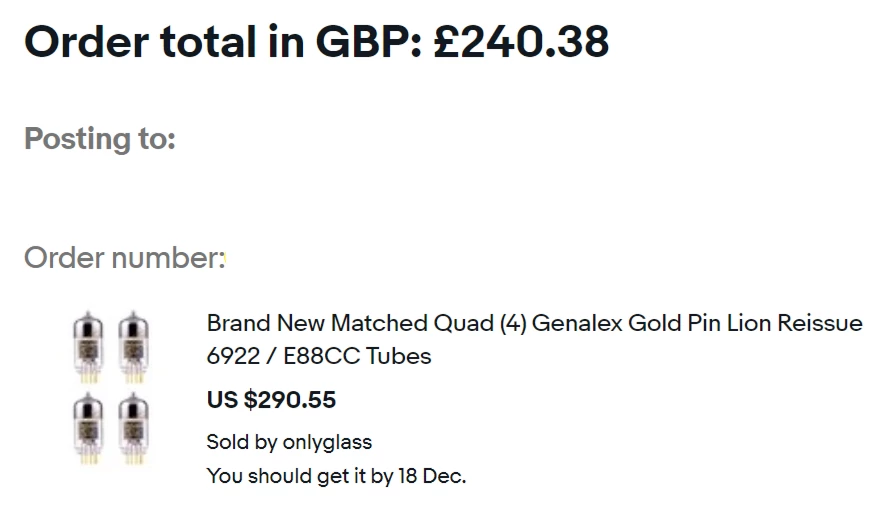
... After seeing many comments asking if I was going to try out third party tubes. So based on recommendations from within the community, I ordered a matched quad set of Gold Lion tubes.
Delivery will not happen for a couple more weeks at minimum, so I will update this section with my findings as soon as they do and I have had a chance to sample them, it will certainly be interesting to see what (if any) differences can be heard with tubs in an R2R DAC at the buffer stage.
UPDATE: 2025.12.18
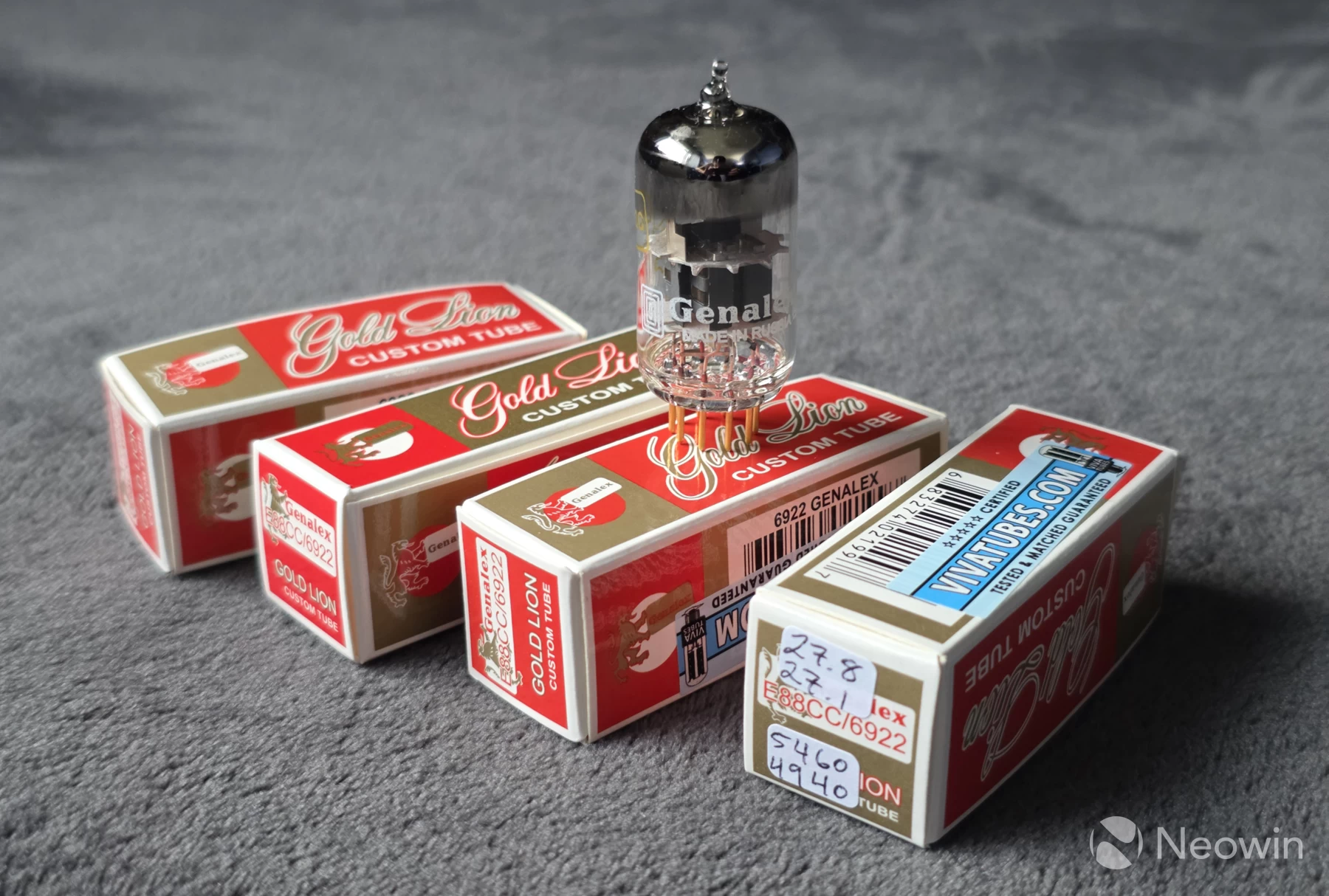
The Gold Lion E88CC matched quad tubes are now installed and have had nearly 20 hours of listening time. Right out of the box the sub-bass extension was greater in slam and depth than the stock JJ Electronics tubes that now have over 500 hours of listen time on them, so have opened up further themselves with improved sub-bass.
Vacuum tube burn-in is a real thing, an old and well-understood technology going back at least 100 years! Many manufacturers back in the day would refuse to supply such tubes to customers unless factory burn-in of up to 100 hours was conducted.
After around 10-20 hours, these Russian made tubes have relaxed in the mid-range frequencies to levels matching the matured stock tubes, just now with the extended sub-bass detail. This was exactly what members of reddit and head-fi were alluding to when these tubes were recommended.
Not a cheap way to get extra sonic definition for sure, and there may be cheaper tubes that do similar things, but at least I"ve tried some of the better tubes out there for dynamic range and quality.
For those interested in knowing more, I have a WARMER R2R tube rolling video on my personal YouTube.
Observations & Quirks
As with all things in life, nothing is truly perfect, what matters more is that the imperfections aren"t outright deal-breakers, with the WARMER R2R I guess the best way to describe these is as quirks, but again, as with everything, different people will feel differently about these. Here are my thoughts:
1) The display lamp cannot be turned off or dimmed. This means in dim lighting when watching something, or just working away, the orange glow could be a distraction. I have become accustomed to it and don"t really notice it any more after some weeks of working in the dark most nights.
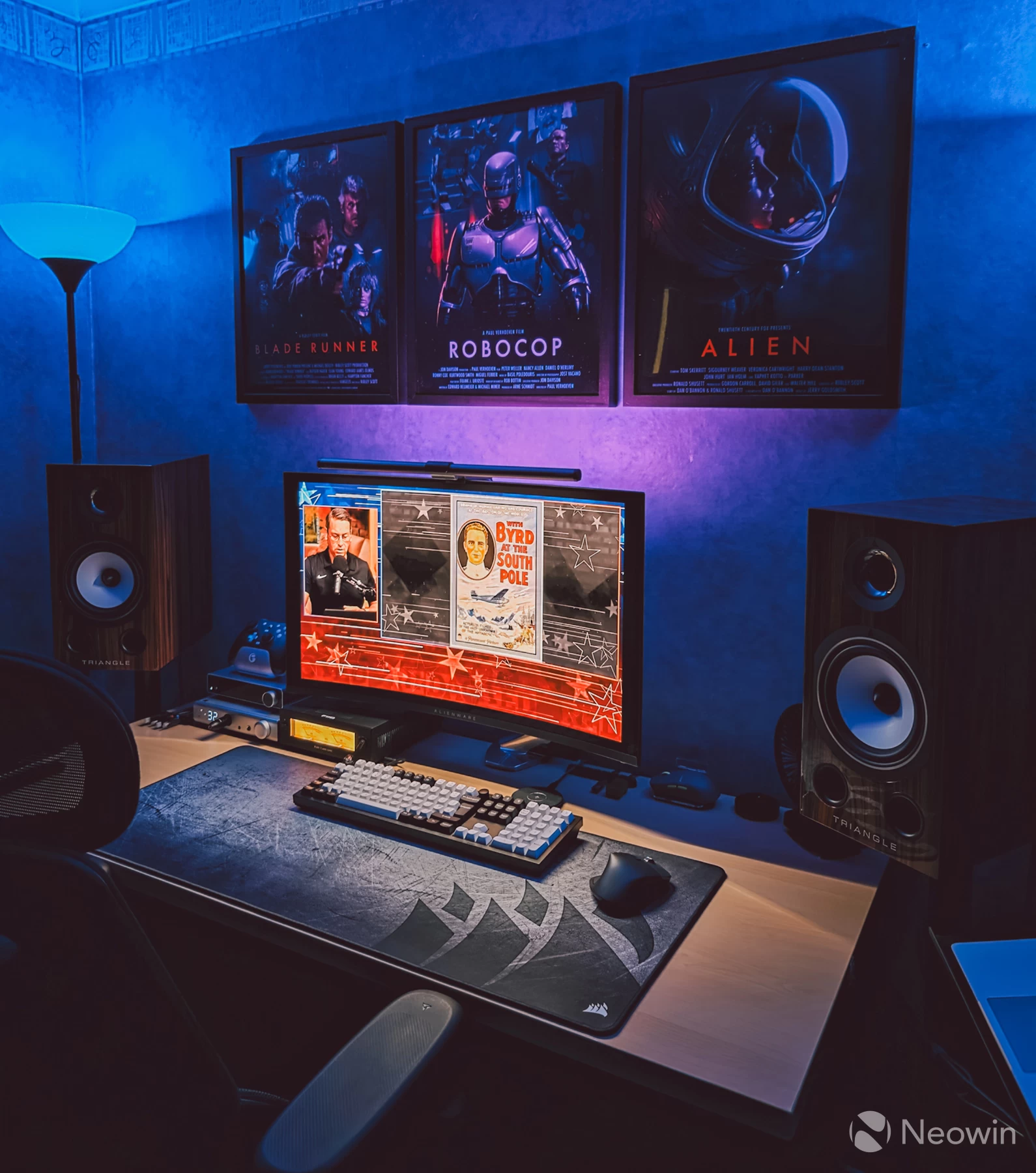
Here is what it looks like in a desktop setting with lighting under control:
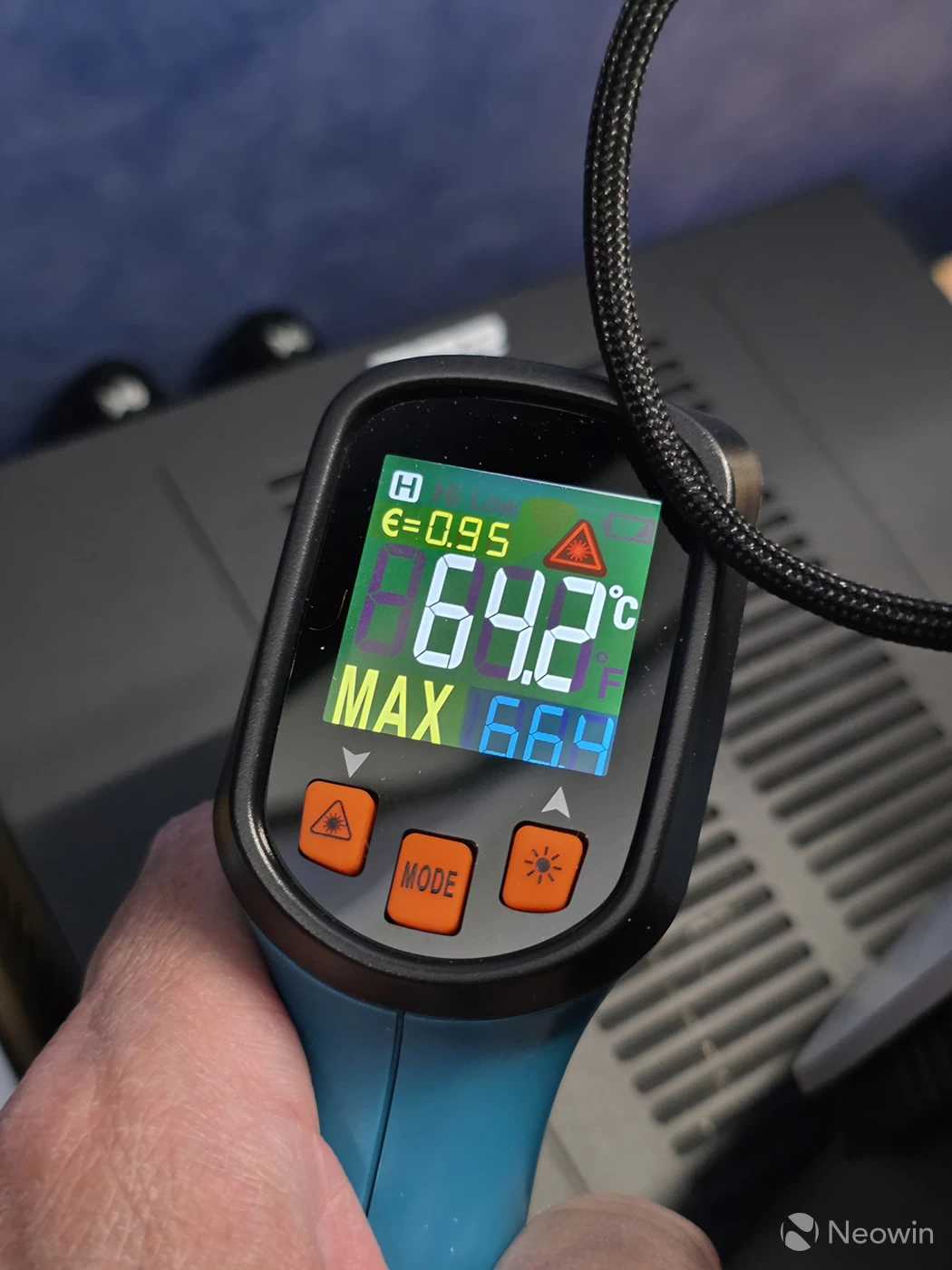
2) It runs hot, hotter than most would be expecting since this is just a DAC, and it is not just the tubes causing the heat, but instead the tall heatsink towers and capacitors. Using an IR thermometer I registered up to 66.4 degrees over areas of the chassis:
Of course this also means stacking things above or below the WARMER R2R is a no-go, and in fact when you first unbox the DAC there are multiple bright warning sheets advising not to stack because it gets hot during operation.
3) No 12V trigger jack. As this is a DAC only, most people will be pairing it into a chain of other separates such as a pre-amp, headphone amp and/or power amp for speakers. This means when the other devices are powered down using 12V trigger, the WARMER R2R has to be manually turned off.
4) Too many screws to remove the housing to swap the tubes. 14 screws is a bit much, or am I being crazy!
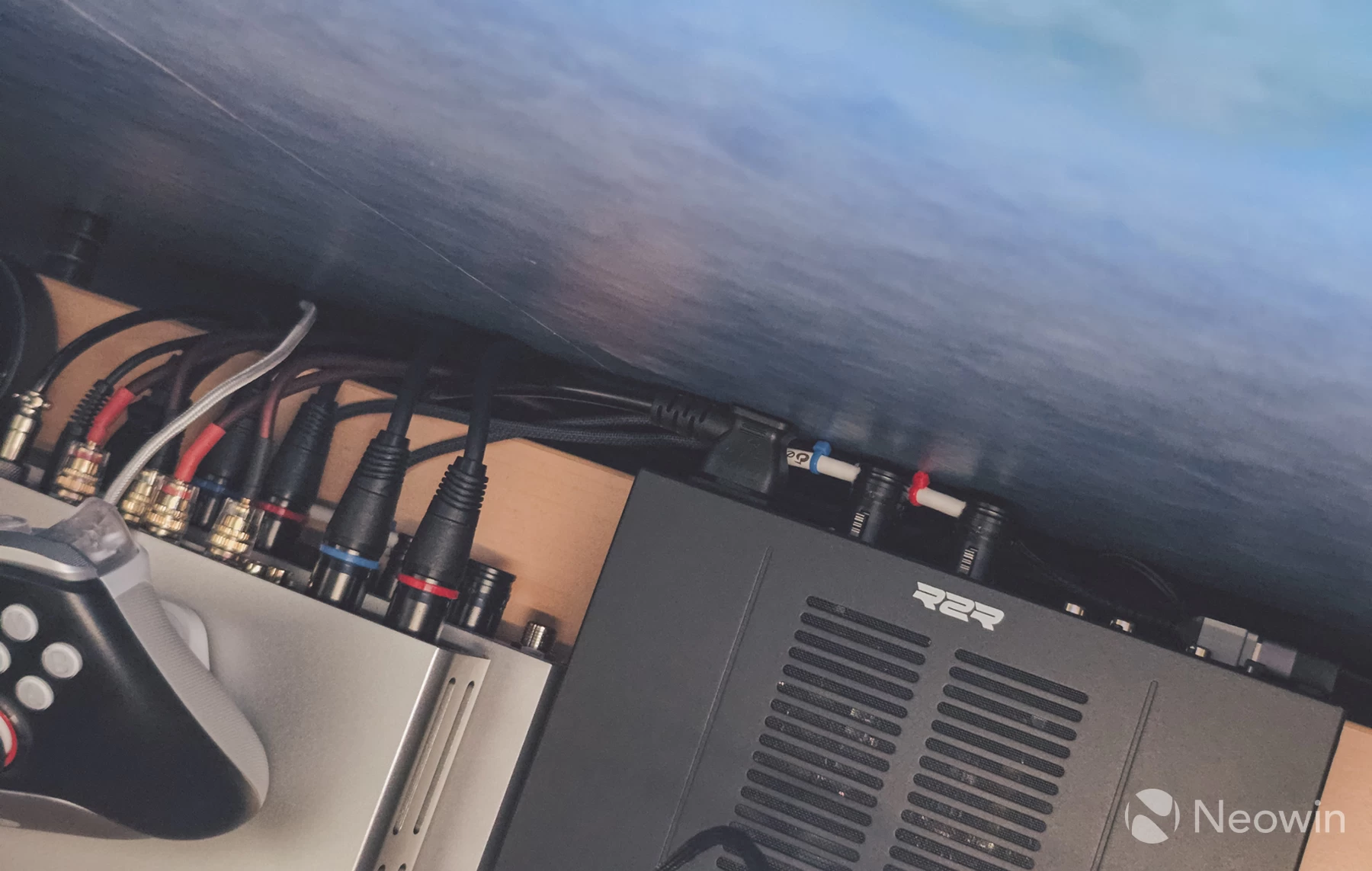
5) It is quite a deep unit, even on my 68cm deep desk I needed to buy a right-angled USB-C adapter, a right angled IEC power adapter and right angled XLR cables to be able to gain 2 extra inches of desk space:
Size does matter after all it seems 😅
6) Only one set of balanced outputs. This means that if connecting to a pre-amplifier for volume control, then you will need other means to then connect to a power amplifier if the pre-amplifier does not have dual XLR in and out. I ended up buying the Topping A90 Discrete to account for this. Connecting to active speakers is no issue whether RCA or XLR as these speaker types are self-amplified and volume controlled.
Conclusion
FiiO"s Tube buffered R2R DAC has proven to be an excellent exploration into what"s possible when measurements are sidelined and a focus on musicality and pure listening pleasure is brought into the forefront.
To my ears, the WARMER R2R sounds fantastic, it is by far the widest soundstage DAC I have heard yet, but that width isn"t artifical sounding in any way, instead, it is articulated in a way to feel authentic. This sound signature follows Chung"s goal, to deliver an analogue old school sound in a modern R2R DAC, and this is possible thanks to the use of quad tubes to add harmonic distortion to the output.
Think of it like a secret ingredient in a recipe that gives the final flavour, although this is no secret. Pair it to a relatively transparent amplifier and you have yourself a sufficiently excellent sounding stereo system that will provide oodles of enjoyment whatever you are playing through it.

The display backlight may not be able to be dimmed or turned off, but as you can see, it"s not hugely bright like some digital displays can be these days, and the amber glow actually works pretty well in low light, just like old car dashboard clusters at night.
The WARMER R2R has now become a part of my main setup and I will be using it as a reference point for all audio reviews going forwards. That is how impressed I am with it, and I suspect it will only get better once the upgraded tubes are installed, though upgrade tubes do come at a price premium.
The big question now is which brand will follow suit and release a similar DAC but with more features.