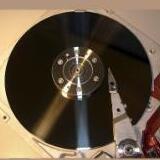
So I installed an SSD in my MacBook Pro


Recommended Posts

I bought this 17" MacBook Pro in 2009 and it has served me great in that time not a single problem with any part of it. But I felt recently it was feeling a little sluggish. Especially when compared to my desktop hackintosh.

So I had a few SSD's laying around. None of them were big enough for all my data (Music, Images etc) but big enough for the operating system and my applications. So I bought one of these: http://compare.ebay.co.uk/like/280857760565?var=lv&ltyp=AllFixedPriceItemTypes&var=sbar&cbt=y

Basically it is an optical drive shell that lets you put a 2.5" hard drive in your laptop where the optical drive was. I never use my optical drive anyway and I do have a USB optical drive for my desktop so if I really needed one I could just use that.

So anyway the reason I'm making this thread is to share just how amazingly fast my laptop feels now. I reinstalled Lion on to the SSD (fresh install) and everything is just so fast. It boots in 1/6th the time. Apps open with not even a single bounce on the dock. On my old Hard Disk chrome would bounce 3-4 times before it opened now it opens instantly after clicking its icon.

I'm really impressed. Also if any of you are considering doing the same thing I have a few tips. You know the OS X Alias system? Where by you right click a file or folder and select "Create Alias" these aliases are not just dumb shortcuts like on Windows. These aliases are recognized by the operating system as symbolic links. What this means is for example I can go to my iTunes folder on my Hard Disk right click it, create an alias then move that to where the iTunes folder should be on my SSD. Then when I open iTunes it thinks its accessing my music from my SSD but instead it's using that alias and retrieving it from my hard disk.

By using this Alias feature I've been able to keep all my data (Video, Music, Pictures, Virtual Machine Disks etc) on my Hard Disk but seamlessly use them as if they were on my SSD without losing the fast boot times the SSD provides or the instant launching of all my Applications.

So have any of you guys done this kind of upgrade yourselves?

I know we're in the Mac section of Neowin and I don't own one, but I have to give you two thumbs up on the upgrade. From the day I installed my first SSD on my desktop PC I knew I couldn't use a computer without one.

It's one of the best upgrades you can make considering even pre-built systems come with at least 4GB of RAM and dual-core CPUs.

  • Like 2

Wow, thanks for the hot tip with the Alias feature.

I upgraded my 2011 model to a Vertex 3, and just laugh when I see other people opening up Photoshop or Avid. :rofl:

Its a great upgrade, although you naturally sacrifice space.

It's not really a problem for me though, I like to keep all the important stuff centrally organised on my NAS. :)

You know the OS X Alias system? Where by you right click a file or folder and select "Create Alias" these aliases are not just dumb shortcuts like on Windows. These aliases are recognized by the operating system as symbolic links.

Welcome to 2006 ;)

53rb5k.png

Enjoy your SSD, ive done the same thing on My PC and totally love it. I really don't know why i never got an SSD sooner!

POST screen to ready PC in around 12 seconds, still amazes me 8 months later.

Welcome to 2006 ;)

Enjoy your SSD, ive done the same thing on My PC and totally love it. I really don't know why i never got an SSD sooner!

POST screen to ready PC in around 12 seconds, still amazes me 8 months later.

Actually OS X has had this feature since Jaguar in 2002. I've been using it since Panther when I got my first OS X machine but I thought I'd mention it in this post because it was so relevant :)

I take it you've enabled TRIM support in Lion?

Yup!

Actually OS X has had this feature since Jaguar in 2002. I've been using it since Panther when I got my first OS X machine but I thought I'd mention it in this post because it was so relevant :)

Oh indeed i agree, its almost like it was created for people with SSD's. I can see more people using it in the future now SSD's are really taking off.

Windows does appear to be able to do it with folders outside the Documents folder, just with the command line so OSX has actually implemented it much better if you can do it anywhere with a click.

Oh indeed i agree, its almost like it was created for people with SSD's. I can see more people using it in the future now SSD's are really taking off.

Windows does appear to be able to do it with folders outside the Documents folder, just with the command line so OSX has actually implemented it much better if you can do it anywhere with a click.

Yes it can be done with the command line in Windows. However you can install this application: http://schinagl.priv.at/nt/hardlinkshellext/linkshellextension.html#download

To do it by right clicking folders / files the same way it can be done on OS X. I use this application on my Windows install to run certain steam games on my SSD even though my steam folder and the majority of my games are on a 2TB Hard Drive.

  • Like 1

Enabling TRIM on OS X actually hurts performance:

http://recoverymonke...d-without-trim/

Those tests were performed with Snow Leopard. I'm running Lion. I don't know if that affects anything but Lion has Trim built in and Snow Leopard didn't so the hacks for it back then were more intrusive than the little kernel modification that is done on Lion to enable it.

I've not noticed any speed differences after I enabled it.

  • 3 weeks later...

Is there any guide to follow after installing an SSD in a mbp? I know that when you install it in a PC you have to make several changes so it doesn't affect performance and drive life.

There shouldn't be any changes you have to make if you are using Windows 7. It automatically disables disk defragmenting, and that's really the only thing you have to worry about. I personally disable the paging file since it doesn't affect anything and it's a waste of space on a SSD, but that's just me.

Vice: you do know that instead of alias use the home folder location under users > right click on user and advance settings.

I've done this for 3 MacBook pros I own. 2007/2008/2010

Works great. I always felt the alias wasn't the real way to do it. For me it's changing each registry value to your data drive which is annoying. They need a true "user location" during windows setup so then your boot drive strictly the ssd. And data drive user and application folder. l

Vice: you do know that instead of alias use the home folder location under users > right click on user and advance settings.

I've done this for 3 MacBook pros I own. 2007/2008/2010

Works great. I always felt the alias wasn't the real way to do it. For me it's changing each registry value to your data drive which is annoying. They need a true "user location" during windows setup so then your boot drive strictly the ssd. And data drive user and application folder. l

I don't want everything running from my old home directory on my hard disk. Only my music, pictures and stuff.

I much prefer the Alias way otherwise I would have done it the way you said as I'm aware of it.

Oh I'm glad your away of it! Only think I wanna let you know is that the home directory is only the users. Which is music movies data etc.

Applications will always look for your HD with Mac system files on it.

But now we both know. I never knew aliases would work in the way you wanted.

I bought this 17" MacBook Pro in 2009 and it has served me great in that time not a single problem with any part of it. But I felt recently it was feeling a little sluggish. Especially when compared to my desktop hackintosh.

So I had a few SSD's laying around. None of them were big enough for all my data (Music, Images etc) but big enough for the operating system and my applications. So I bought one of these: http://compare.ebay....&var=sbar&cbt=y

Basically it is an optical drive shell that lets you put a 2.5" hard drive in your laptop where the optical drive was. I never use my optical drive anyway and I do have a USB optical drive for my desktop so if I really needed one I could just use that.

So anyway the reason I'm making this thread is to share just how amazingly fast my laptop feels now. I reinstalled Lion on to the SSD (fresh install) and everything is just so fast. It boots in 1/6th the time. Apps open with not even a single bounce on the dock. On my old Hard Disk chrome would bounce 3-4 times before it opened now it opens instantly after clicking its icon.

I'm really impressed. Also if any of you are considering doing the same thing I have a few tips. You know the OS X Alias system? Where by you right click a file or folder and select "Create Alias" these aliases are not just dumb shortcuts like on Windows. These aliases are recognized by the operating system as symbolic links. What this means is for example I can go to my iTunes folder on my Hard Disk right click it, create an alias then move that to where the iTunes folder should be on my SSD. Then when I open iTunes it thinks its accessing my music from my SSD but instead it's using that alias and retrieving it from my hard disk.

By using this Alias feature I've been able to keep all my data (Video, Music, Pictures, Virtual Machine Disks etc) on my Hard Disk but seamlessly use them as if they were on my SSD without losing the fast boot times the SSD provides or the instant launching of all my Applications.

So have any of you guys done this kind of upgrade yourselves?

Yes, this is the setup I'm using. I've had some flakiness with my optical drive bay adapter and the HDD that is currently connected to it. I think I need to pop my MBP open and reconnect everything...or it could just be that my HDD is going bad. I don't know. Occasionally the HDD will just disappear from the system until i do a reboot. It doesn't happen but maybe once a week or so, but when I had my user accounts on the HDD it caused all kinds of issues when it flaked out on me so I had to move those to my SSD drive.

In all honesty, I wasn't very pleased with my performance while my user accounts were on the HDD. So now my setup is to have them all on the SSD and I have moved my major media off my user home folder and onto the HDD. I've also forwarded my iOS backups to the HDD using a symlink.

My Mid 2012 15" MBP arrived today and after using a SSD in my old Mid 2010 15" I decided to try something a little different. Since the SATA port for the optical drive is more reliable in the newer models, with a OWC Data Doubler I've managed to setup a Stripe RAID with two Corsair Force GT 120GBs (one in optical drive bay and one in standard hard drive bay).

It was a lot easier than I thought and it's unbelievably quick. I too set up my actual user account on my SSD on my previous MBP and just stored media files on the HDD.

I'm currently searching for a decent USB 3.0 External Drive for storage with my current setup (any suggestions?)

Also, does anyone have any particularly good benchmarking tools for SSDs they use?

This topic is now closed to further replies.
  • Recently Browsing   0 members

    • No registered users viewing this page.
  • Posts

    • Stellarium 26.2 by Razvan Serea Stellarium is a free open source planetarium for your computer. It shows a realistic sky in 3D, just like what you see with the naked eye, binoculars or a telescope. It is being used in planetarium projectors. Just set your coordinates and go. Stellarium key features: Realistic simulation of the sky, sunrise and sunset Default catalogue of over 600,000 stars Downloadable additional catalogues for up to 210 million stars Catalog data for all New General Catalogue (NGC) objects Images of almost all Messier objects and the Milky Way Artistic illustrations for all 88 modern constellations More than a dozen different cultures with their constellations Solar and lunar eclipse simulation Photorealistic landscapes (more are available on the website) Scripting support with ECMAScript (a few demo scripts are included) Extendable with plug-ins: 8 plug-ins installed by default, including: artificial satellites plug-in (updated from an on-line TLE database) ocular simulation plug-in (shows how objects look like in a given ocular) Solar System editor plug-in (imports comet and asteroid data from the MPC) telescope control plug-in (Meade LX200 and Celestron NexStar compatible) The major changes of this version: Added new sky culture Added new plugin: Planes Many improvements in plugins Many improvements in Core and GUI Many updates in sky cultures. [full release notes] Download: Stellarium 26.2 (64-bit) | 456.0 MB (Open Source) View: Stellarium Home Page | Other Operating Systems | Screenshot Get alerted to all of our Software updates on Twitter at @NeowinSoftware
    • NASA: This asteroid may not kill us but it probably won't be far off either by Sayan Sen Image by Zelch Csaba via Pexels New observations by NASA's James Webb Space Telescope have eliminated the last remaining impact threat posed by asteroid 2024 YR4, ruling out the possibility that the near-Earth object could strike the Moon in December 2032. NASA said observations collected by Webb on February 18 and 26, 2026, enabled scientists to refine the asteroid's orbit enough to "rule out a chance of lunar impact on Dec. 22, 2032." Instead, asteroid 2024 YR4 is now expected to pass the Moon at a distance of about 13,200 miles (21,200 km). The agency stressed that the update "reflects improved precision in our understanding of where the asteroid is expected to be in 2032 rather than a shift in its orbital path." The announcement closes a remarkable chapter in planetary defence that began in late 2024, when the approximately 60-metre-wide asteroid briefly became the most closely watched near-Earth object in the world. Discovered on December 27, 2024, by the ATLAS telescope in Chile, 2024 YR4 initially appeared to have a small chance of colliding with Earth on December 22, 2032. As astronomers gathered more observations, the impact probability briefly climbed to around 3%—the highest ever recorded for an asteroid of its size—before steadily falling as its orbit became better understood. By early 2025, international observations had ruled out any significant risk to Earth. However, astronomers were left with another possibility: a roughly 4% chance that the asteroid could instead strike the Moon. "The probability that asteroid 2024 YR4 will strike the Moon on 22 December 2032 is now approximately 4%," the European Space Agency (ESA) had said last year, noting that "there is a 96% chance that the asteroid will not impact the Moon." ESA said such an impact, while unlikely, would have presented an extraordinary scientific opportunity. "It is a very rare event for an asteroid this large to impact the Moon – and it is rarer still that we know about it in advance. The impact would likely be visible from Earth, and so scientists will be very excited by the prospect of observing and analysing it," said Richard Moissl, Head of ESA's Planetary Defence Office. "It would certainly leave a new crater on the surface. However, we wouldn't be able to accurately predict in advance how much material would be thrown into space, or whether any would reach Earth," he added. The asteroid also exposed an important blind spot in planetary defence. Because 2024 YR4 approached Earth from the direction of the Sun, it remained hidden from ground-based telescopes until after its closest approach. "We looked into how Neomir would have performed in this situation, and the simulations surprised even us," Moissl said. "Neomir would have detected asteroid 2024 YR4 about a month earlier than ground-based telescopes did. This would have given astronomers more time to study the asteroid's trajectory and allowed them to much sooner rule out any chance of Earth impact in 2032." He added, "As an infrared telescope, like Webb, Neomir would have also immediately given us a much better estimate for the asteroid's size, which is very important for assessing the significance of the hazard." The latest NASA observations underscore the value of space-based infrared telescopes in tracking faint asteroids. According to NASA, Webb made "among the faintest ever observations of an asteroid," extending the object's observational record by nearly eight months at a time when it had become too faint for other telescopes. That additional data allowed scientists to eliminate the remaining uncertainty surrounding its 2032 flyby. Although asteroid 2024 YR4 is now confirmed to pose no threat to either Earth or the Moon, scientists say its discovery remains one of the most significant real-world tests of the international planetary defence system, demonstrating how continued observations can rapidly transform an object once considered hazardous into one whose future path is known with high confidence. Source: NASA, ESA This article was generated with some help from AI and reviewed by an editor. Under Section 107 of the Copyright Act 1976, this material is used for the purpose of news reporting. Fair use is a use permitted by copyright statute that might otherwise be infringing.
    • Yup. Google is just scraping the entire internet for their own ad profits without sharing revenue with the sources. It's obviously stealing, but since these sites depend upon Google's search scraps to survive... As for me, I just stopped using Google for anything except Reddit searches. If Reddit's own search wasn't complete crapola, I'd never use Google search again.
  • Recent Achievements

    • Conversation Starter
      Admir earned a badge
      Conversation Starter
    • First Post
      The_Focal_Point earned a badge
      First Post
    • Apprentice
      daryld went up a rank
      Apprentice
    • Contributor
      Carltonbar went up a rank
      Contributor
    • One Month Later
      The_Focal_Point earned a badge
      One Month Later
  • Popular Contributors

    1. 1
      +primortal
      418
    2. 2
      +Edouard
      170
    3. 3
      PsYcHoKiLLa
      130
    4. 4
      Xenon
      69
    5. 5
      neufuse
      69
  • Tell a friend

    Love Neowin? Tell a friend!