Patriot SSD 64GB Review


Recommended Posts

Patriot Memory SSD SATA Warp

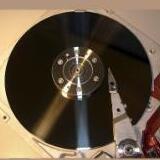
With the world quickly moving to more efficient devices and higher performance, I felt it was time to try out Solid State Drives (SSD). The world seems to be in a slow transition to Solid State Drives (sometimes known as Solid State Disks; however it?s not actually a disk in the sense we normally perceive a disk). I was looking for a simple, yet effective solution. At this time most drives are still in the $200+ range for a 64GB. I happened to pick up two Patriot Memory SSD Solid State Disks for $179 each, after a $50 rebate on each drive from Newegg.com. The drives are both version 2 drives, which correct some issues that existed in the original Patriot Memory SSD drives. The drives are available in 32/64/and 128 GB models.

The drives I purchased where model number PE64GS25SSDR which are listed as SATA I / II drives. The drive is around the standard 2.5? hard drive size. Their dimensions are listed as 3.9? wide by 2.8? deep and only 0.4? high. The drive only weighs about 3 ounces. A nice feature of the SSD drive is it is certified to be used in RAID arrays, some SSD drive manufactures do not suggest you use their drives in a RAID array due to its writing patterns, however, this drive claims it supports RAID0, 1 and 0+1. The drive is RoHS compliant also. One of the real nice features of SSD drives are the fact they are very resistant to external shock, such as dropping a laptop or using it in a car over a bumpy road. The max shock for this drive is listed at 1500G for 0.5ms. The max vibration resistance is 20G at 10 to 2000 Hz. The Mean time before failure (MTBF) is also listed at 1,500,000 hours or about 171 years.

index.php?act=attach&type=post&id=206028

p><p><a class=post-47883-1223780423_thumb.pngow to format a drive with 512 byte allocation units in vista<[/b]png' alt='b]png'> (This is just one test out of many averaged together)

How to format a drive with 512 byte allocation units in vista

I know it sounds like a duh, just format it answer. The problem is though, if you run setup for windows vista and click format there, it defaults to 4KB with a 1024 block sector offset. SSD drives are created with a physical 512 byte unit. To get the best performance out of them, you should format the drive to match the allocation unit of the drive. For the patriot SSD drives, it is of course 512 bytes. If you need to create, partition your drive and format it in vista setup, before you go into the actual setup you can go into command prompt and do this manuall. When you are on the Windows Setup screen that has the button to go into the main installation wizard, at the bottom there is a system tools / recovery link, most people never notice this link. If you click it, it takes you to system tools, such as memory diagnostics, and command prompt. Launch command prompt. Use the command DISKPART to create your primary partition. You can do that by running DISKPART, then LIST DISK to get a list of drives in your system, type SELECT DISK #, replace number with the drive you want to create a partition on, then type CREATE PARTITION PRIMARY, this will make the partition the whole size of the drive, or HELP CREATE PARTITION PRIMARY for more options you can use. After this you need to assign a drive letter, after selecting the disk, do a list partition to get the partition number then SELECT PARTITION #, after that type ASSIGN LETTER=C to set it to the C: drive for windows. Now we have a partition manually set up, format it! Exit out of diskpart by typing exit. After this type FORMAT C: /FS:NTFS /V:VolumeLableHere /A:512 this will format the c: drive in NTFS with the specified volume label and the 512byte allocation unit size. Now you can exit out of command prompt, you should reboot the computer, as reboot and shutdown are the two options in recovery mode in Vista setup, then proceed to setup the system like normal, be sure not to format or create new partitions in the setup screen for selecting a hard drive to install to! This will erase your 512byte allocation unit you just setup ower Usage Comparision<disk and click next. This should help improve the speed of the drive and use it to its max potential.

Power Usage Comparision

I used a small device called a ?Kill-A-Watt? to compare the power usage of the system running in RAID0 mode with two 7200K RPM hard drives versus the same system running with 2 Patriot memory drives in RAID0. To max out the power usage, I did a full disk wipe (DoD standard) for one hour 4 times each setup then figured out the power consumption averaged. The RAID0 7.2K RPM system used ~49 watts more energy in the time then the Patriot Memory SSD drive setup!. The total power consumption of the system running with SSD was 112 Watts, while when running with standard hard drives in RAID it was almost 167 watts. This was with the drives working at max capacity. There is defiantly a power advantage to SSD, as the drives consume as little as one watt of power per drive on max load. The Patriot memory drive however does not havether drive Information<t as already low power. You cannot shut off the drives completely unless a full system power down occurs.

Other drive Information

Some other things that the drives do not support, Power Management, Acoustic Management (of course), NCQ (Native Command Queuing), they are not firmware upgradable, they do not support HPA?s (Host protected areas) and do not have a write cache. Write cache would be nice because when the drives are under high load, the system does see performance drops. This is something that can be mitigated in standard hard drives with larger write caches onboard. Write caches are usually RAM and much faster than the flash memory or rotational media. In my opinion, SSD makers need to add at least 8MB of roblems Noticed<memory to the device to remove some of the bottle necks that are caused by read and writes while using the system.

Problems Noticed

As I just mentioned in the other information section, there are problems you notice with SSD drives. One of the largest ones is when you are writing to the drives, it can cause system locks for a second or two if the system simultaneously tries to read. This is something that is mitigated by write caches on rotational media, but on current generation SSD drives there is usually no high speed write cache to save money. I have noticed that when installing applications, the time it takes grew about 35% on average. Windows Vista x64 which took about 30 minutes to go from install to first launch desktop on a rotational media RAID0 setup, now took 43 minutes. However, after the installation things did run faster eat and Sound generated vs. standard drives< is significantly larger then x86 versions of vista which install in about 19 minutes)

Heat and Sound generated vs. standard drives

These drives seem to generate virtually no heat. My standard rotational media drives generate a good amount of heat during heavy usage; I have noticed almost no increase in heat from the SSD drives. They after 5 hours of usage, feel cool to the touch.

Sound wise, it feels odd not hearing your computer doing things. It sometimes feels like the system is stopped because of the lack of noise from the SSD. There is no noise at all from the Patriot Media v2 SSD he big issue with some, defragmentation< who love silent systems. If you want rid of noise, I would highly recommend these drives.

The big issue with some, defragmentation

People like to tell you ?do not defragment a SSD drive, in fact disable automatic defrag?, I think this is incorrect. Even with the higher access times, having to read random locations on the media still slows down the drive?s performance. I ran tests on a new vista install and saw that a fragmented SSD drive showed similar slowdowns as you would get on a standard hard drive. The decrease in performance of course is not as great as a standard hard drive, but it still slows down. Upon defragmenting the drives, there was a large improvement in performance. One test I did was to backup 39 GB of information using Acronis TrueImage 11 Home edition. The SSD drive fragmented severely took 28 minutes to back up with maximum compression. The same drive defragmented (using Disonclusion<ssional) only took 19 minutes to backup completely. Both backups where done to external media that can write at about 30MB/ps.

Conclusion

If I was to pick between Standard rotational media and SSD drives from Patriot Media, I?d have a hard choice, the speed is great with SSD, but the lack of write cache causing random slowdowns in the system go get annoying fast. All other factors included I would say the SSD is the way of the future, and hopefully Patriot memory and other SSD creators can improve and fix some of the current issues. I would rate the Patriot Media 64GB SSD v2 an 8.5 out of a possible 10.

Link to comment
https://www.neowin.net/forum/topic/680212-patriot-ssd-64gb-review/
Share on other sites

If anyone wonders why I tested two 80GB Hard drives, instead of something newer and larger, I was trying to keep the drives as similar as possible and 80GB was the closest I had to 64GB laying around

Very nice review! :)

Just out of curiosity for people who own or know about SSD's, are their models out there with the 'Cache memory' which neufuse advises his drives have? Or are they all the same? As in, no/low high speed cache?

Nice review, I'm impressed :) As for fragmentation, I think we need the OS and SSD to work together to eliminate it and add other features. I heard that there was a problem where access would slow down around boundaries of banks of memory on the SSD. As far as I can see, this could be eliminated by running a staggered RAID 0 array where one RAID SSD had a starting point of the centerpoint between the start and the next boundary.

? Sequential Reading ? 157.0 MB/ps

? Sequential Writing ? 68.20 MB/ps

? Random 512KB Reading ? 137.90 MB/ps

? Random 512KB Writing ? 35.90 MB/ps

? Random 4KB Reading - 14.71 MB/ps

? Random 4KB Writing ? 1.81 MB/ps

? Average Access time 0.2 ms (barely one fifth of a millisecond!)

??Forth Test ? Two SSD?s in RAID0t ? Two SSD?s in RAID0

This was the same test as the hard drives in RAID0 test. This test was also run with an Intel MATRIX RAID controller with a 128KB strip in RAID0. The volume was formatted with 512 byte allocation units as per the drive?s storage specifications.

? Sequential Reading ? 244.9 MB/ps

? Sequential Writing ? 140.1 MB/ps

? Random 512KB Reading ? 225.5 MB/ps

? Random 512KB Writing ? 76.23 MB/ps

? Random 4KB Reading - 16.26 MB/ps

? Random 4KB Writing ? 2.262 MB/ps

? Average Access time - 0.2 ms

? Burst Rate 134.7 MB/ps

Absolute ownage. I need to get my hands on one of these SSDs ASAP. Surely beats using an 30GB iPod Video (Black/5G) as an external HDD.

I would rate the Patriot Media 64GB SSD v2 an 8.5 out of a possible 10.

I'd rate it a 9/10. The tests was amazingly good; I rate your experiment a 10/10. Great job.

Absolute ownage. I need to get my hands on one of these SSDs ASAP. Surely beats using an 30GB iPod Video (Black/5G) as an external HDD.

I'd rate it a 9/10. The tests was amazingly good; I rate your experiment a 10/10. Great job.

While 9/10 would be a nice score, the slow down issue would do my head in badly to be honest.. :/

While 9/10 would be a nice score, the slow down issue would do my head in badly to be honest.. :/

Point taken, but that would just require a routinely scheduled defragmentation which I do once every two weeks. It wouldn't be a huge problem. Defragmentation is necessary for all HDD, including SSD.

Point taken, but that would just require a routinely scheduled defragmentation which I do once every two weeks. It wouldn't be a huge problem. Defragmentation is necessary for all HDD, including SSD.
Problems Noticed

As I just mentioned in the other information section, there are problems you notice with SSD drives. One of the largest ones is when you are writing to the drives, it can cause system locks for a second or two if the system simultaneously tries to read. This is something that is mitigated by write caches on rotational media, but on current generation SSD drives there is usually no high speed write cache to save money. I have noticed that when installing applications, the time it takes grew about 35% on average. Windows Vista x64 which took about 30 minutes to go from install to first launch desktop on a rotational media RAID0 setup, now took 43 minutes. However, after the installation things did run faster in terms of launch times. (This is Vista x64, which is significantly larger then x86 versions of vista which install in about 19 minutes)

I was more on about this point which I've bolded. I don't know very much about SSD's or if it's just a problem with the low-end SSD's compared to the high-end expensive ones.

I was more on about this point which I've bolded. I don't know very much about SSD's or if it's just a problem with the low-end SSD's compared to the high-end expensive ones.

Just to point one thing out, I only noticed pauses as long as a second or two when installing software, windows unrelated to the installation would just pause or go to "Not Responding" when interacting with them.. during normal usage this isn't as noticable

Just to point one thing out, I only noticed pauses as long as a second or two when installing software, windows unrelated to the installation would just pause or go to "Not Responding" when interacting with them.. during normal usage this isn't as noticable

Umm, I think I would need to personally use them to make my mind up to be honest. Though, the whole idea of SSD is brilliant, I don't know if I should wait another year or 2 so the prices can come down. Imagine 4 of these in RAID-0? Or 8 of them doing RAID-0+1 or RAID-5? LoL

Umm, I think I would need to personally use them to make my mind up to be honest. Though, the whole idea of SSD is brilliant, I don't know if I should wait another year or 2 so the prices can come down. Imagine 4 of these in RAID-0? Or 8 of them doing RAID-0+1 or RAID-5? LoL

I actually have my hands on 8 of them right now, and we've been testing them in RAID 1+0, and well, let's just say, it puts our SAN to shame... *LOL* we were getting read speeds as fast as 500 MB/ps but this is on a high end RAID controller with 512MB cache and battery backup, in those tests... thought the people here would be more interested in desktop tests :)

Which I think I should of added to my review.. the fact you can buy dedicated RAID controllers with dedicated RAM for write caching... even with one drive you can still take advantage of this! You can get them as cheap as $99 for one with 128MB of write cache RAM, no batter backup though... good ones will cost you $$$ though

The cheap Intel MATRIX RAID controllers don't have dedicated write cache memory... they are designed for home use only, we solved our speed problem by using a dedicated $99 RAID controller card

Edited by neufuse
I actually have my hands on 8 of them right now, and we've been testing them in RAID 1+0, and well, let's just say, it puts our SAN to shame... *LOL* we were getting read speeds as fast as 500 MB/ps but this is on a high end RAID controller with 512MB cache and battery backup, in those tests... thought the people here would be more interested in desktop tests :)

Which I think I should of added to my review.. the fact you can buy dedicated RAID controllers with dedicated RAM for write caching... even with one drive you can still take advantage of this! You can get them as cheap as $99 for one with 128MB of write cache RAM, no batter backup though... good ones will cost you $$$ though

The cheap Intel MATRIX RAID controllers don't have dedicated write cache memory... they are designed for home use only, we solved our speed problem by using a dedicated $99 RAID controller card

Would be nice to see some real world examples of the speed, like Application installation and so on! :)

Would be nice to see some real world examples of the speed, like Application installation and so on! :)

I wish I had some more time to do some home use examples, but at work we are testing it with SQLIO (the Microsoft SQL Server I/O Simulator) and it gives a relatively good improvement on our SQL Server performance in the test environment... but this is in the 8 SSD drive RAID 1+0 array, our standard SQL Server array is 14 drives in 1+0 with hot spares of course... so 8 SSD disks are keeping up and out performing 12 RAID 1+0 drives (2 hot spares) but this is of course with a high performance RAID controller... I wish I had Office Bench or some other benchmarking software around to do some real software tests!

Nice review, I'm impressed :) As for fragmentation, I think we need the OS and SSD to work together to eliminate it and add other features.

Apparently the main problem with fragmentation and SSDs is free space fragmentation that causes slower writes. According to teh Google, Diskeeper and Apacer are currently collaborating to optimize SSD performance. It's not entirely clear how the Hyperfast optimization software works (probably proprietary info) but the numbers in the whitepaper seem to indicate that the performance difference is significant. :huh:

http://downloads.diskeeper.com/pdf/HyperFast.pdf

Apparently the main problem with fragmentation and SSDs is free space fragmentation that causes slower writes. According to teh Google, Diskeeper and Apacer are currently collaborating to optimize SSD performance. It's not entirely clear how the Hyperfast optimization software works (probably proprietary info) but the numbers in the whitepaper seem to indicate that the performance difference is significant. :huh:

http://downloads.diskeeper.com/pdf/HyperFast.pdf

That's exactly what I was seeing, fragmented SSD's slow down write speeds, and have some impact on read speeds also... yet most people that haven't tried it will tell you "you should never need to defrag a SSD" I know I've heard that before, even from experts in the field... yet, in pratice, it just doesnt work... the "access time" being so fast was theoretically supose to compensate for fragmentation, but you still have to jump all over to get to it, just in a different way now (no head move and rotational delays)... in the end, defraging the drive in my tests at least showed a significant improvement in read and write speeds

That's exactly what I was seeing, fragmented SSD's slow down write speeds, and have some impact on read speeds also... yet most people that haven't tried it will tell you "you should never need to defrag a SSD" I know I've heard that before, even from experts in the field... yet, in pratice, it just doesnt work... the "access time" being so fast was theoretically supose to compensate for fragmentation, but you still have to jump all over to get to it, just in a different way now (no head move and rotational delays)... in the end, defraging the drive in my tests at least showed a significant improvement in read and write speeds

gotta agree

but you wouldnt need to defrag it as much as as a HDD ,not the current gen of SSDs at least

gotta agree

but you wouldnt need to defrag it as much as as a HDD ,not the current gen of SSDs at least

Yep, I agreee, you dont need to defragment as much, but still a full defrag every month or so would probably help, or have diskeeper do its thing as it sees fit

Good review!

But regarding the defragmentation issue, Technically, any time you need to jump around and try to read/write data in multiple pieces, despite the type of medium used, there's going to be a slowdown. Heck, that's why there're even RAM defragmenters! I just don't think any manufacturer has officially stated that you don't need to defragment SSD drives. They simply suggest users not to defragment these SSD drives because these are MLC-based flash memory devices which have very limited write cycles (as low as 10,000). Therefore, excessive writing processes will kill the drives faster! SLC-based flash drives don't have this downside as they are as durable as normal HDD's (1+ million write cycles).

This topic is now closed to further replies.
  • Recently Browsing   0 members

    • No registered users viewing this page.
  • Posts

    • Hands-on with BOOX Tappy: cute little reading accessory by Taras Buria Page turners are quite popular accessories for e-readers, as they enable a hands-free reading experience, which is particularly useful with large readers featuring 10-inch or larger displays. The BOOX Tappy is a new accessory that was introduced earlier this year, and we took this cute-looking thingy for a spin. The Tappy comes in a small box, with two additional buttons and a user manual. The device is made of glossy green plastic and resembles old appliances from the nuclear age. Material quality is great, and each part feels quite premium. Plastic is high-quality, the switch is nice to flick, and the buttons are not rattly. At the bottom, four rubberized feet prevent slipping when used on a desk. Unfortunately, there are no color options, and the Tappy is only available in green. It looks good, but I wish there were other options as well. There are two removable buttons, an on/off switch, and an LED indicator that displays connection mode, charging status, and more. The buttons resemble those of an old typewriter, with quite a long travel distance and a pleasant clack. In the box, you have four buttons with different icons: heart, coffee, O, and X. You can easily swap buttons by simply pulling them upwards. Tip: buttons come with plastic covers, but they are quite tricky to remove. It is hard to call the Tappy the most ergonomic remote control, but after fiddling with it for a few hours, I managed to find a comfortable hand position. Attaching a lanyard to it can make it more comfortable in use without the fear of dropping it, but unfortunately, the Tappy does not come with one. The Tappy connects via Bluetooth 5.2, and it works in three modes, which you can toggle by pressing and holding both buttons for about five seconds: Reading Mode Multimedia Mode Browsing Mode Next / Previous page Next / Previous Track Up / Down scroll If you pair the Tappy with a BOOX device (I tested it with the BOOX Go 10.5 Gen 2 Lumi), you will get small pop-ups indicating the current mode. Plus, you can customize what each button does when pressed one time, two times, or held for a few seconds. The list of available actions and features you can use is massive, and I like that BOOX lets you map stuff like brightness adjustment, app launching, screenshot-taking, screen rotating, navigation, and more. Note, however, that while you can use the Tappy with other readers, its customization is only available on BOOX devices running firmware version 4.2 and newer. I could not connect the Tappy to my computer (Windows 11 claims a driver error when I try), but it worked with the DuRoBo Krono that I recently reviewed. My Kindle Paperwhite refused to work with the Tappy, though, just like my iPhone. The Tappy uses a non-removable Li-Ion battery, which can be recharged with a Type-C cable. BOOX rates the remote for "weeks of use," and I can say that it indeed has very good battery life. While there are no battery indicators on the remote, you can see the current level in the status bar or in Input settings in the BOOX firmware. After a few days of active use, mine still shows about 95%. Overall, the Tappy left a nice impression. It is well-made, and the integration with BOOX devices is great. I also like that BOOX decided to have some fun with its design and swappable buttons. I cannot say I am a fan of its odd shape, though. Still, I managed to find a way to use it comfortably. And when not in use, it just looks neat sitting on the table doing nothing or serving you as a small clacky fidget. Buy BOOX Tappy - $29.99 on Amazon US As an Amazon Associate, we earn from qualifying purchases.
    • AdGuard Family lifetime deal now only $14.97 by Steven Parker Today's highlighted Neowin Deal comes via our Apps + Software section, where you can get a lifetime subscription and save 91% on a lifetime AdGuard Family Plan. AdGuard is a unique program that has all the necessary features for what they claim to be "the best web experience." The software combines the an advanced ad blocker, a privacy protection module, and a parental control tool—all working in one app. This software deals with annoying ads, hides your data from a multitude of trackers, protects you from malware attacks, and even lets you restrict your kids from accessing inappropriate content. Install AdGuard and see the internet as it was supposed to be: clean and safe. Get rid of annoying banners, pop-ups & video ads once and for all Hide your data from the multitude of trackers & activity analyzers that swarm the web Avoid fraudulent and phishing website and malware attacks Protect your kids online by restricting them from accessing inappropriate & adult content Good to know Family Plan Length of access: lifetime This plan is only available to new users Redemption deadline: redeem your code within 30 days of purchase Max number of devices: 9 Access options: desktop & mobile Software version: AdGuard Family Updates included A lifetime subscription of AdGuard Family Plan normally costs $169.99, but this deal can be yours for just $14.97, that's a saving of $157.02. For full terms, specifications, and license info please click the link below. Get this AdGuard Family lifetime deal for just $14.97 (was $169.99) Although priced in U.S. dollars, this deal is available for digital purchase worldwide. As an online publication, Neowin too relies on ads for operating costs and, if you use an ad blocker, we'd appreciate being whitelisted. In addition, we have an ad-free subscription for $28 a year, which is another way to show support! Support queries If you have queries or need support for any of the Neowin Deals, please use the contact form here. Neowin Deals are managed and sold by StackCommerce who represent Neowin on an affiliate basis. Why we post these deals We post these because we earn commission on each sale so as not to rely solely on advertising, which many of our readers block. It all helps toward paying staff reporters, servers and hosting costs. So for those that keep moaning and complaining, be thankful we're still online for you to even do that. Other ways to support Neowin Whitelist Neowin by not blocking our ads Create a free member account to see fewer ads Make a donation to support our day to day running costs Subscribe to Neowin - for $14 a year, or $28 a year for an ad-free experience Disclosure: Neowin benefits from revenue of each sale made through our branded deals site powered by StackCommerce.
    • Passkeys: Think of them like a broken heart necklace. Imagine one of those heart necklaces that breaks into two matching pieces. One person keeps one half, and the other person keeps the other half. With passkeys, the website has one half, and you have the other half. If the website gets hacked and someone steals its half, that stolen piece is useless by itself. It cannot unlock your account without your matching half. This particular heart necklace is one of a kind, there is only one in existence. Your half of the necklace has to be stored somewhere. It might be stored on your phone, tablet, computer, security key, or a password manager that can sync it between all your devices. A security key is a small physical device that you keep with you, kind of like a house key, car key, or flash drive. I would not usually recommend a security key as the first option for the average person. For most people, it is easier to use their phone, computer, or a password manager that can sync passkeys between their devices. A security key is more like a spare key you keep in a safe place, just in case you lose access to your other devices or your password manager. Some security keys plug into your computer. Some plug into your phone or tablet. Some get tapped against your device. The idea is simple: a security key can hold another passkey for the same website. Think of it like creating a second one-of-a-kind heart necklace for the same account. One necklace could be paired with your password manager, while another necklace could be paired with your security key. That means the website has more than one matching half on file. One half matches the passkey in your password manager. Another half matches the passkey stored on your security key. So, if you lose access to your phone, computer, or password manager, you would still be able to log in using the passkey stored on your security key. Think of it like keeping an extra special necklace piece on a tiny keychain, stored somewhere safe. The website still has the matching half for that security key, but your half is safely stored inside the little key. A passkey does not automatically exist on every device you own. It lives wherever you save it. If your half is stored on one device, then that device is the one that has the matching piece. For example, if you create the passkey on your Windows computer and it is only saved to that computer, your iPhone does not automatically have that same half. If you create it on your iPhone and it only stays on that iPhone, your Android phone does not automatically have it either. That is where password managers come in. A password manager can act like a protected jewelry box for your passkeys. Instead of your half of the necklace being locked to only one device, the password manager can securely sync that half to your other approved devices. For example, Apple Passwords and iCloud Keychain can sync passkeys between your Apple devices. Google Password Manager can sync passkeys with your Google account. But password managers such as 1Password and Bitwarden can sync passkeys between everything, your phones, tablets and computers. Now, you might ask: “What happens if I lose access to the device that has my passkey?” That depends on where your passkey was saved and what recovery options the website gives you. If your passkey was synced through a password manager, you may be able to sign in from another device that has access to that same password manager. For example, if your passkey is saved in iCloud Keychain, Google Password Manager, 1Password, or Bitwarden, another approved device may still have access to it. If your passkey was saved only on one phone, computer, or security key, and you lose that device, then you may not have your half of the necklace anymore. In that case, you would usually need to use the website’s backup login or account recovery options. A lot of websites that support passkeys still let you fall back to your regular password. So if you lose access to your passkey, the site may still let you log in with your password, a code sent to your email, a text message, a recovery code, or some other account recovery process. That is convenient, but it is also important to understand: if the website still allows password login, then your password still matters. Passkeys are safer than passwords, but if your account still has a password as a backup, you should still use a strong, unique password and turn on two-factor authentication if the website offers it. This is why it is a good idea to have more than one safe way back into important accounts. For example, you might keep your passkey in a syncing password manager, add a second trusted device, save recovery codes somewhere safe, or set up a backup security key. A passkey is very secure, but just like a real key, you need a backup plan in case you lose access to it. Now, you might ask: “What stops a hacker from copying my half of the necklace?” That’s the important part: your half is protected. It is not something you type in, and it is not something the website gets to keep. Think of your half as being locked inside a tiny safe on your phone, computer, security key, or password manager. That safe only opens when you approve it with your fingerprint, face, PIN, or device password. When you log in, the website does not need to see your half. It only needs proof that your half matches its half. Your actual half is not handed over to the website. This is different from a password. With a password, you type the secret into the website. If you type it into a fake website, the hacker now has it. With a passkey, you are not typing your secret into the website. Your device is proving you have the matching half without giving the half away. That also helps protect you from fake websites. If someone makes a fake login page that looks like the real site, your device can tell it is not the real match. It will not use your passkey there. Now, could someone use your passkey if they stole your device, got into your password manager, or somehow unlocked the safe that holds your half? Yes, that is why your device password, PIN, fingerprint, face unlock, and password manager security still matter. But a hacker cannot just steal your passkey from the website or trick you into typing it into a fake page like they can with a password. That is why passkeys are safer than passwords. The two matching pieces have to come together, like two lovebirds who were once separated and are finally reunited.
    • Newegg offers insane combo deal on Amazon Prime Day 2026 that beats Steam Machine by Sayan Sen Building a PC is undoubtedly difficult nowadays but with this epic combo deal, Newegg is trying to make it as easy for you as it is possible. If you are making a new one or even upgrading an old system to a new Windows 11 device, this combo bundle is truly unmissable as you get AMD's Ryzen 9800X3D, a compatible X870 motherboard, a 240mm AIO liquid cooler and finally a Samsung 990 PRO SSD all for under $1000 (purchase link under the specs table down below). This should beat out the newly launched Steam Machine from Valve in terms of performance and performance per dollar especially if you are willing to set Linux up on it. Essentially with this combo you will get the AMD Ryzen 7 9800X3D 8-core 3D V cache CPU, Samsung's 990 PRO 2TB NVMe SSD, the MSI MAG X870 TOMAHAWK WIFI ATX Motherboard, and finally the Cooler Master Elite Liquid 240. Thanks to that massive vertically stacked L3 cache, the X3D desktop processors, including the 9800X3D, also come with the benefit of not needing fast memory. Even DDR5-5600 should be plenty for it. The technical specifications of the Ryzen 7 9800X3D are given in the table below: Specification Value Architecture Zen 5 Cores / Threads 8 / 16 Base Clock 4.7 GHz Max Boost Clock Up to 5.2 GHz L1 Cache 640 KB L2 Cache 8 MB L3 Cache 96 MB Total Cache 104 MB CPU Core Process TSMC 4nm FinFET I/O Die Process TSMC 6nm FinFET Socket AM5 Default TDP 120W Max Temperature (Tjmax) 95°C Thermal Solution Not included Memory Type DDR5 Max Capacity 256 GB Memory Speeds 2x1R: DDR5-5600 2x2R: DDR5-5600 4x1R: DDR5-3600 4x2R: DDR5-3600 PCIe Version PCIe 5.0 PCIe Lanes (Total/Usable) 28 / 24 USB 3.2 Gen 2 (10Gbps) 4 USB 2.0 1 Graphics Cores 2 CU RDNA 2 Frequency 2200 MHz DisplayPort over USB-C Yes Overclocking Unlocked Up next we have the tech specs for the MSI MAG X870 TOMAHAWK WIFI Motherboard: Specification Value Chipset AMD X870 CPU Support AMD Ryzen 9000 / 8000 / 7000 Series Desktop Processors Socket AM5 Memory Slots 4 × DDR5 UDIMM Maximum Memory Capacity 256GB Memory Support DDR5 8400–5600 MT/s (OC), DDR5 5600–4800 MT/s (JEDEC) Integrated Graphics Outputs 1 × HDMI 2.1 FRL (up to 8K 60Hz) 2 × USB4 Type-C with DisplayPort 1.4 HBR3 (up to 4K 60Hz) Expansion Slots PCI_E1: PCIe 5.0 x16 (CPU) PCI_E2: PCIe 3.0 x1 (Chipset) PCI_E3: PCIe 4.0 x4 (Chipset) Audio Realtek ALC4080 Codec 7.1-Channel USB High Performance Audio Supports up to 32-bit/384kHz playback on front panel S/PDIF output M.2 Slots 4 × M.2 M2_1: PCIe 5.0 x4 (CPU, 22110/2280) M2_2: PCIe 5.0 x4 (CPU, 2280/2260) M2_3: PCIe 4.0 x2 (Chipset, 2280/2260) M2_4: PCIe 4.0 x4 (Chipset, 2280/2260) SATA Ports 4 × SATA 6Gb/s RAID Support RAID 0, 1, 5, 10 for M.2 NVMe storage devices Rear USB Ports 4 × USB 2.0 3 × USB 5Gbps Type-A 2 × USB 10Gbps Type-A 1 × USB 10Gbps Type-C 2 × USB4 40Gbps Type-C Front USB Headers 4 × USB 2.0 4 × USB 5Gbps Type-A 1 × USB 20Gbps Type-C LAN Realtek 8126-CG 5G LAN Wireless Wi-Fi 7 (M.2 Key-E module pre-installed) Supports 2.4GHz / 5GHz / 6GHz bands Up to 5.8Gbps Supports 802.11 a/b/g/n/ac/ax/be Bluetooth Bluetooth 5.4, MLO, 4KQAM Internal Power Connectors 1 × 24-pin ATX Power 2 × CPU Power Connectors 1 × PCIe 8-pin Power Connector Fan Headers 1 × CPU Fan 1 × Combo Fan (Pump/System) 6 × System Fan RGB Headers 3 × Addressable V2 RGB (JARGB_V2) 1 × RGB LED (JRGB) Other Internal Headers 1 × EZ Conn-header 2 × Front Panel Headers 1 × Chassis Intrusion 1 × Front Audio 1 × TPM 2.0 Header Debug Features 4 × EZ Debug LEDs 1 × EZ Digit Debug LED Rear I/O Ports Clear CMOS Button Flash BIOS Button HDMI 2 × USB 40Gbps Type-C 1 × USB 10Gbps Type-C 4 × USB 10Gbps Type-A 3 × USB 5Gbps Type-A 4 × USB 2.0 5G LAN Port Wi-Fi/Bluetooth Antenna Connectors Audio Connectors Form Factor ATX The Samsung 990 PRO is a PCIe Gen4 NVMe SSD and still one of the fastest drives available today for under $500. Speaking of fast, sequential reads and writes are rated at 7450 MB/s and 6900 MB/s, respectively. The random throughputs for reads and writes are 1400K IOPS and 1550K IOPS, respectively. The 990 PRO is based on Samsung's 7th Gen V-NAND flash, and it too is TLC. It packs 2 gigs of LPDDR4 DRAM cache, which helps the random performance. The endurance rating for this is 1200 TBW (terabytes written), which should be sufficient for most users. The Samsung 990 PRO is compatible with the PlayStation 5, but if you are going to use the 990 PRO on a PC, check out the Samsung Magician app that lets you track your drive's health, update its firmware, customize various settings, and more. The tech specs are given below: Specification Value Interface PCIe Gen 4.0 x4, NVMe 2.0 Form Factor M.2 2280 Controller Samsung In-house Controller NAND Flash 3D TLC DRAM Cache 2GB LPDDR4 Sequential Read (Max) 7,450 MB/s Sequential Write (Max) 6,900 MB/s Random Read (4K) Up to 1,400,000 IOPS Random Write (4K) Up to 1,550,000 IOPS TBW (Endurance) 1,200 TBW MTBF 1,500,000 hours Operating Temperature 0°C to 70°C Storage Temperature -40°C to 85°C Shock Resistance 1,500G / 0.5ms Heatsink No Get the combo deal at this link: AMD Ryzen 7 9800X3D, Samsung 990 PRO 2TB, MSI MAG X870 TOMAHAWK WIFI motherboard, Cooler Master Elite Liquid 240: $784.99 + $25 off with promo code FTTF77: $759.99 (Sold and Shipped by Newegg US) Good to know This Newegg deal is U.S. specific, and not available in other regions unless specified. We only use first-party seller links (at the time of article publishing); ensure that you purchase from a first-party seller link only. Check out Today's Deals on Amazon | or our recent tech deals. Become a Prime member (for Students or SNAP) via Neowin Get Prime Access - Prime for half price (for qualifying Medicaid, EBT, SNAP) Subscribe to Prime Video, Audible Plus, Music Unlimited or Kindle Unlimited via Neowin As an Amazon Associate, we earn from qualifying purchases.
  • Recent Achievements

    • One Month Later
      timbobit earned a badge
      One Month Later
    • One Month Later
      nates earned a badge
      One Month Later
    • Week One Done
      Almohandis earned a badge
      Week One Done
    • Rookie
      dorf went up a rank
      Rookie
    • First Post
      mike_rumble earned a badge
      First Post
  • Popular Contributors

    1. 1
      +primortal
      469
    2. 2
      +Edouard
      165
    3. 3
      PsYcHoKiLLa
      104
    4. 4
      Michael Scrip
      87
    5. 5
      Steven P.
      70
  • Tell a friend

    Love Neowin? Tell a friend!