If you are not quite happy with how fast your PC boots up or how quick and snappy things feel, then MSI may have just the right thing for you. The company"s SPATIUM M560 NVMe SSD is currently on sale for a price of just $70 for the 1TB model making it an amazing deal (purchase link under the specs table down below).
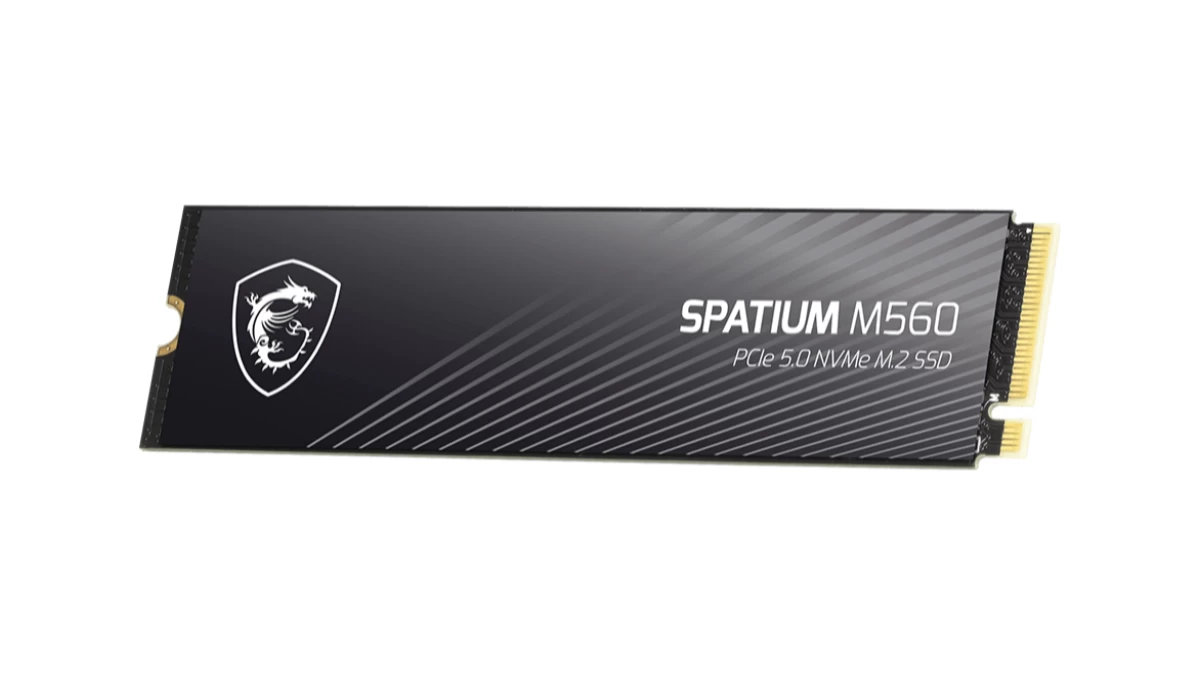
The drive is based on 218-layer 3D TLC NAND and that means it has quite good endurance, even being a 1TB model. As it is a PCIe Gen5 NVMe SSD it promises very fast delivery speeds, but it does get quite hot and thus, adding a decent heatspreader is compulsory or else it will throttle under sustained loads which is common for PCIe 5.0 drives.
The one minor drawback of the model is the lack of DRAM cache on it, however, it makes use of HMB (host memory buffer) technology that can access system memory for metadata caching purposes which can improve random access times.
The technical specifications of the MSI SPATIUM M560 1TB are given below:
| Specification | Value |
|---|---|
| Controller | Phison PS5031-E31T |
| NAND Flash | 218-layer Kioxia BiCS8 |
| Sequential Read | Up to 10,200 MB/s |
| Sequential Write | Up to 8,400 MB/s |
| Random Read (4 KB) | Up to 1,300,000 IOPS |
| Random Write (4 KB) | Up to 1,400,000 IOPS |
| Operating Temperature | 0 °C – 70 °C |
| Storage Temperature | –40 °C – 85 °C |
| Endurance (TBW) | 600 TBW |
| MTBF | Up to 1,500,000 hours |
Get it at the link below (comes with a five-year warranty):
-
MSI SPATIUM M560 PCIe 5.0 NVMe M.2 1TB Portable SSD, Black: $69.99 (Sold and Shipped by Amazon US)
If you want a 2TB option, check this Corsair MP700 Elite for $170.
Get Prime (SNAP), Prime Video, Audible Plus or Kindle / Music Unlimited. Free for 30 days.
As an Amazon Associate, we earn from qualifying purchases.