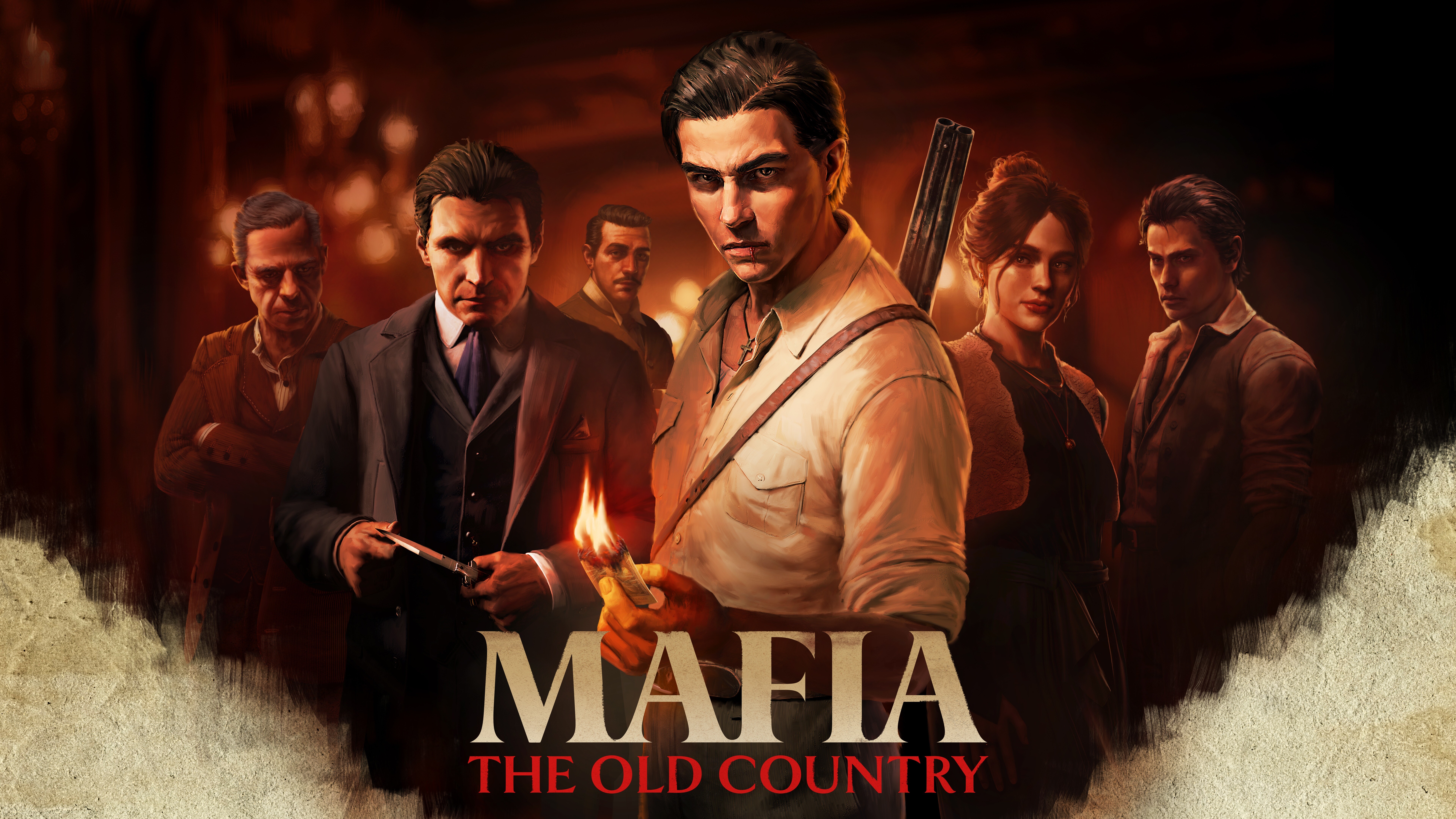
Last week AMD reached out to Neowin asking if we would like to take a look at the company"s FidelityFX Super Resolution 4 (FSR4) upscaling tech in Mafia: The Old Country. The CPU and GPU maker released it back in February 2025 and is the answer to Nvidia"s DLSS and Intel"s XeSS AI image upscalers.
We toggled FSR 4 in the in-game graphics menu after downloading and installing the Adrenalin driver version 25.8.1; this driver is essential for enabling the AMD upscaler. Frame Generation was also kept enabled, as this was the default setting with FSR.
Speaking of settings, we kept everything at default after letting the game auto-detect the best graphics settings, except the anti-aliasing/upscaling option. We tested it on AMD"s provided RX 9070 XT.
Here"s the rest of the test rig (Thanks, Steven Parker, for lending me the rig and also for the help in conducting this test!):
-
Cooler Master MasterBox NR200P MAX
-
ASRock Z790 PG-ITX/TB4
-
Intel Core i7-14700K with Thermal Grizzly Carbonaut Pad
-
Kingston Fury Renegade SSD
To check the visual differences between Unreal Temportal Super Resolution (TSR) and FSR 4, we used the Palio horse race through San Celeste. The tail of the horses gave us the chance to take a good look at the two upscaling technologies. The bushy appearance, combined with the motion, presents somewhat of a rendering challenge for upscalers.
Please note that all of the videos below were slowed down to 0.25x.
The horse"s tail was certainly very revealing. On TSR, we noted a grainy, slightly smudgy appearance for the tail as it flapped while the horse ran. The individual hair strands were also not as distinctly rendered on TSR upscaling.
With FSR 4 Quality on, the image is a lot clearer with visual artifacts like the graininess being far less common, or at least not as pronounced. This is a big and noticeable improvement on AMD"s ML-based upscaling.
Up next we focused on a section of the race where there are a lot of flying objects like confetti and smoke. In this scene, we also checked the degree of issues in the case of distant object rendering for the two upscalers.
Neither TSR nor FSR presented significant differences in how the confetti was rendered. In terms of the rendering of distant fine objects like the cross-like structure on top of the church building ahead, or the decorative metallic grill on the building to the right, both TSR and FSR performed relatively poorly.
It is noteworthy however that these objects are not exactly at the center of our vision and hence gamers are likely going to miss them unless they are really specifically looking for things like these. Still, it is worth pointing out as this is an objective analysis.
We also tested that same section of the race again on the final lap of the race as the visual effects are slightly different. This time there is much more smoke blown out with a comparable amount of confetti flying around.
This was done to see if a similar but more intense scenario would present contrasts but again we did not notice any glaring differences.
Overall, it appears that users will be better off using FSR Quality mode on more occasions. There is a caveat though, and that is performance.
We noticed that FSR Quality put up fewer frames compared to TSR. Although it"s important to note that we tested the game on 4K, so as to capture as much of the visual detail as possible, since the primary motivation behind this review was to check out FSR visual fidelity vs TSR.

Conclusion
One can say that it is an unfair comparison to weigh up two upscalers with different performances; however, it also makes sense to do so given that FSR provides the option to produce better quality images, whereas we can not do that with TSR except for tweaking around with the sharpness via the provided in-game sharpness slider.
Lowering the FSR preset from Quality to Balanced would have likely leveled it up to the TSR performance level at the expense of some of that fidelity, though it would still likely be better than what TSR offered, especially in cases like the horse"s tail.
Also as we were at a high resolution like 4K, that means non-AI/ML-based upscalers like TSR are not outright heavily disadvantaged. Thus, if we were to scale it up from an even lower resolution, TSR would have likely done an even worse job as there would be less visual data to work with.
Overall FSR 4 is the winner and in our book its implementation in Mafia: The Old Country is a solid 8 out 10, however, TSR is also a good alternative for those without a 9000 series card, especially at higher resolutions.
If you want to check out the full race (not slowed down) from start to finish, you can do so below:
Please note, our score is not about the game Mafia: The Old Country, it is for the FSR 4 feature in the game, and we also fully understand that image quality is subjective.