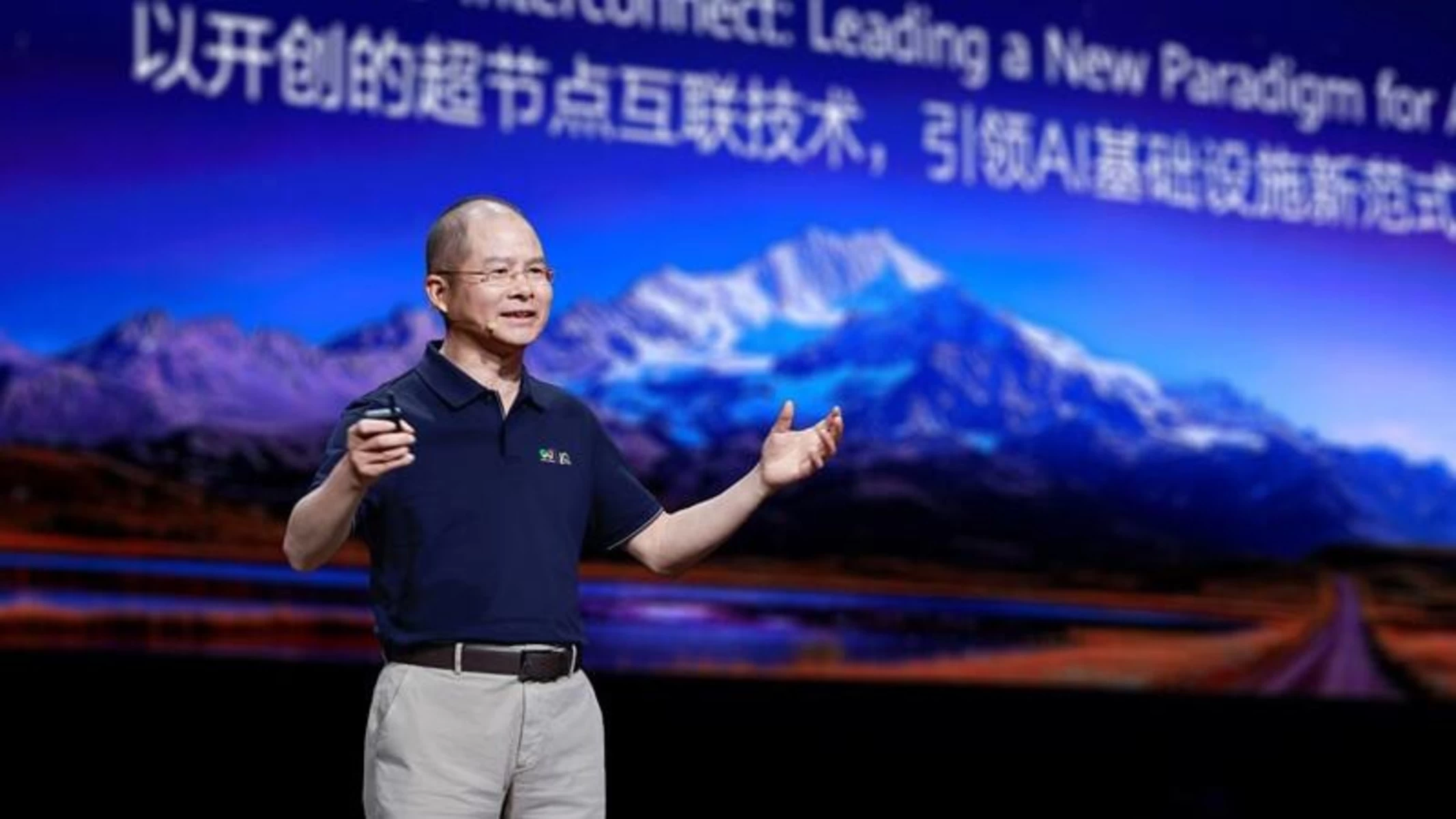
Over the past few years, Huawei has maintained a low-profile presence in the chip market. The Chinese tech giant, once heavily reliant on TSMC’s 7nm process, now claims to have developed more advanced semiconductors. With Nvidia’s recent withdrawal from China, the stage appears set for Huawei to take the spotlight.
According to Reuters, Huawei has announced plans to roll out its Ascend AI chips and Kunpeng server processors in the Chinese market. Eric Xu, Huawei’s current rotating chairman, stated that the company has developed its own high-bandwidth memory, a field long dominated by SK Hynix and Samsung Electronics.
The Chinese telecommunications giant has also revealed two new computing systems, touting them as the world’s most powerful AI chip clusters. Huawei’s Atlas 950 SuperCluster features over 500,000 Ascend NPUs, and the Atlas 960 SuperCluster launches with over a million Ascend chips.
Huawei claims that its Atlas 950 SuperCluster, which launches as soon as next year, delivers 1.3 times the computing power of Elon Musk’s Colossus supercomputer. The company also plans to introduce three new generations of its Ascend chips by 2028, aiming to double computing capacity with each annual release.
It remains uncertain how Huawei’s AI clusters powered by in-house Ascend chips will stack up against those built with Nvidia hardware. Nevertheless, the company’s rotating chairman asserts that the Atlas 950 supernode, equipped with 8,192 Ascend processors, can deliver 6.7 times the computing power of Nvidia’s NVL144 system.
In July, Huawei also introduced the CloudMatrix 384 system as an alternative to Nvidia’s high-end GB200 NVL72. Powered by 384 Ascend 910C GPUs, the system is said to deliver around 300 petaflops of computing performance, exceeding the 180-petaflop capacity of Nvidia’s GB200 NVL72.
China’s Cyberspace Administration (CAC) has recently ordered local tech firms to stop buying AI chips from Nvidia over allegations of backdoor and Kill Switch embedding. It appears that Huawei’s moment to shine in the Chinese chip market has finally arrived.













0 Comments
Load the comments and join the conversation!
Read the comments, ask the editors questions, show respect and join the conversation.