This article is based on a preview build of Corsair Cove. This is not a full review, so please note that certain aspects may still change before release.
The Golden Age of Piracy is coming to an end, but it looks like there’s still time for a revival. This is the setting of Limbic Entertainment’s latest city building entry, Corsair Cove. City building fans may remember this as the developer that delivered Tropico 6. It is now leaving behind modern island building and going all the way back to when pirates roamed and looted the seas to scurry back to their safe havens.
It’s one of those island havens that I’ve had the opportunity to build and improve in the last week or so thanks to the Corsair Cove preview opportunity provided by publisher Hooded Horse. It was a pretty limited gameplay slice, but it gave me a good grasp of the start of the adventure and a glimpse at just how expansive it can be.
With building an unbeatable lawless sanctuary as my end goal, as I dived into this city builder, I was met with a game that offered a shaky economy to balance, complex production chains to manage, and a quite bossy population.
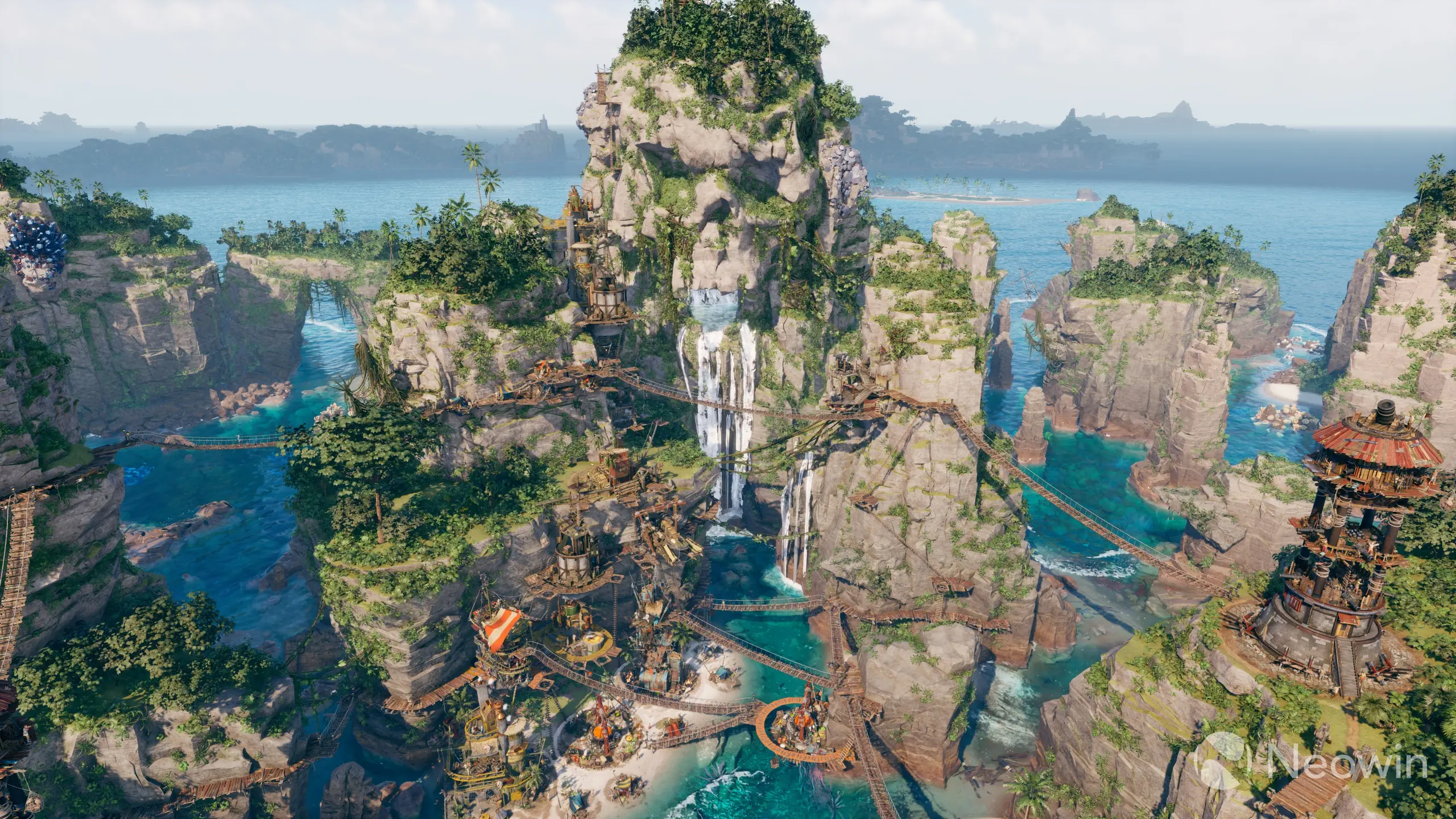
After a short introduction and a run-in with the pirate hunters of the Crown, the naval authorities of this era, Corsair Cove dropped me onto the scenic island that would become my pirate crew’s home base from then on. It’s a gorgeous setting, with its cliffs and narrow passageways making for a highly defensible location against any attacks. Best of all, there are plenty of organic resources scattered around this small, deserted island. The bad news is most of these resources are high up on the cliff faces or even growing on top of them.
While nobody in their right minds would think about building a city here, being pirates that have lived almost their whole lives on ships, the crew has no qualms about climbing these 90-degree-angled cliffs with nothing but wood planks tied with rope. This is where Corsair Cove sets itself apart from many other city-building titles. Instead of building on wide-open spaces, my structures are going up vertically on the walls. What’s even more impressive is that there aren’t any restrictions on how I place the building on cliffs. I could jam together housing tents, taverns, plank manufacturing plants, and massive fishing operations on a single wall, all roped together as tiny and flexible walkways give pirates the room to move between them.
As every building needs a connection to a main piracy hub so that the building and item transportation crews can get to it, how the game sets up its pathing needed to be top-notch, both to make it make sense and for aesthetic reasons. I am glad to say that Limbic has nailed this feature.
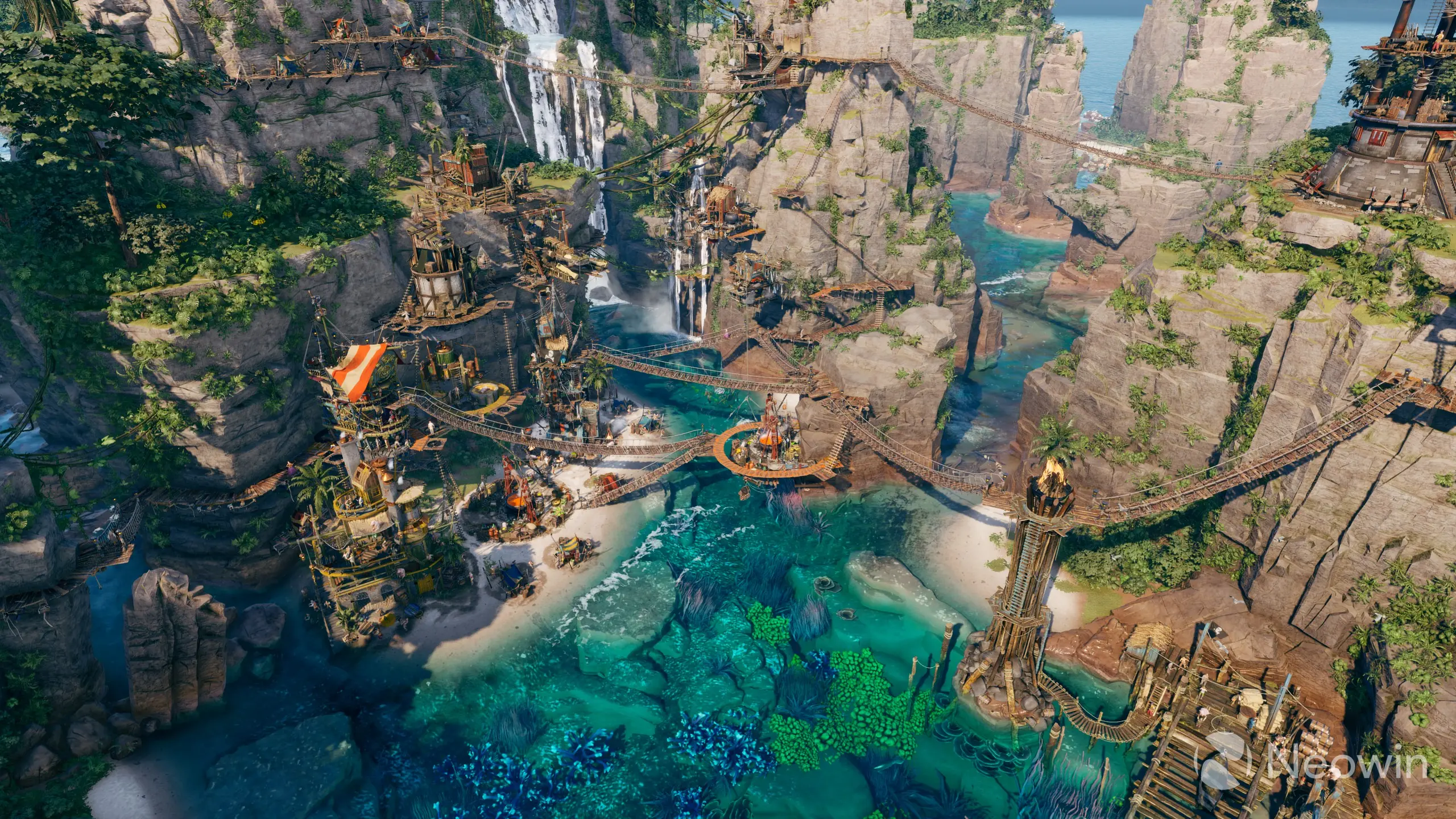
Like I said before, in the beginning, it’s all rope bridges and ladders that allow for crews to travel across buildings to deliver their wares or get their daily rations. I could snake these around entire cliffs or make them go up and over the rock faces without any annoying blockers. If I thought I could make an interesting traversal plan for a cool-looking corner of the hideout, I was able to do it without a worry. Buildings can be connected from the bottom, like the usual affair, or from their roof for more daring entrances. Before long, I was leaning into the grid-less chaotic building system and enjoying the hell out of it. Later on, even better traversal mechanics can be unlocked, adding high-end rope technologies like ziplines or elevators, giving pirate citizens shorter travel times between their jobs. Even games that have wide open flat spaces don’t let me have this much freedom.
Of course, building a vast vertical city on this island is just one part of the game. What’s tied directly to that is the logistics system, where I had to make sure the production chains I set up don’t require the haulers and consumers to travel too far to get their jobs done. If I’m trying to make planks, it’s better to put the logging station and the plank maker close by, perhaps with a storage building hanging next to both of them. Later on, products of both will be needed for other, more advanced, creations that pirates or ships may want.
The buildings themselves are gorgeously detailed, reminding me of classic Settlers games. You can see the pirates talking, milling about, or even dancing with pigs inside these structures when zooming in. The rope and wood-heavy aesthetic fits charmingly well with the very natural landscapes that these buildings occupy, and it helps that all the footpaths that I put down attached perfectly at specific points without breaking up the consistency.
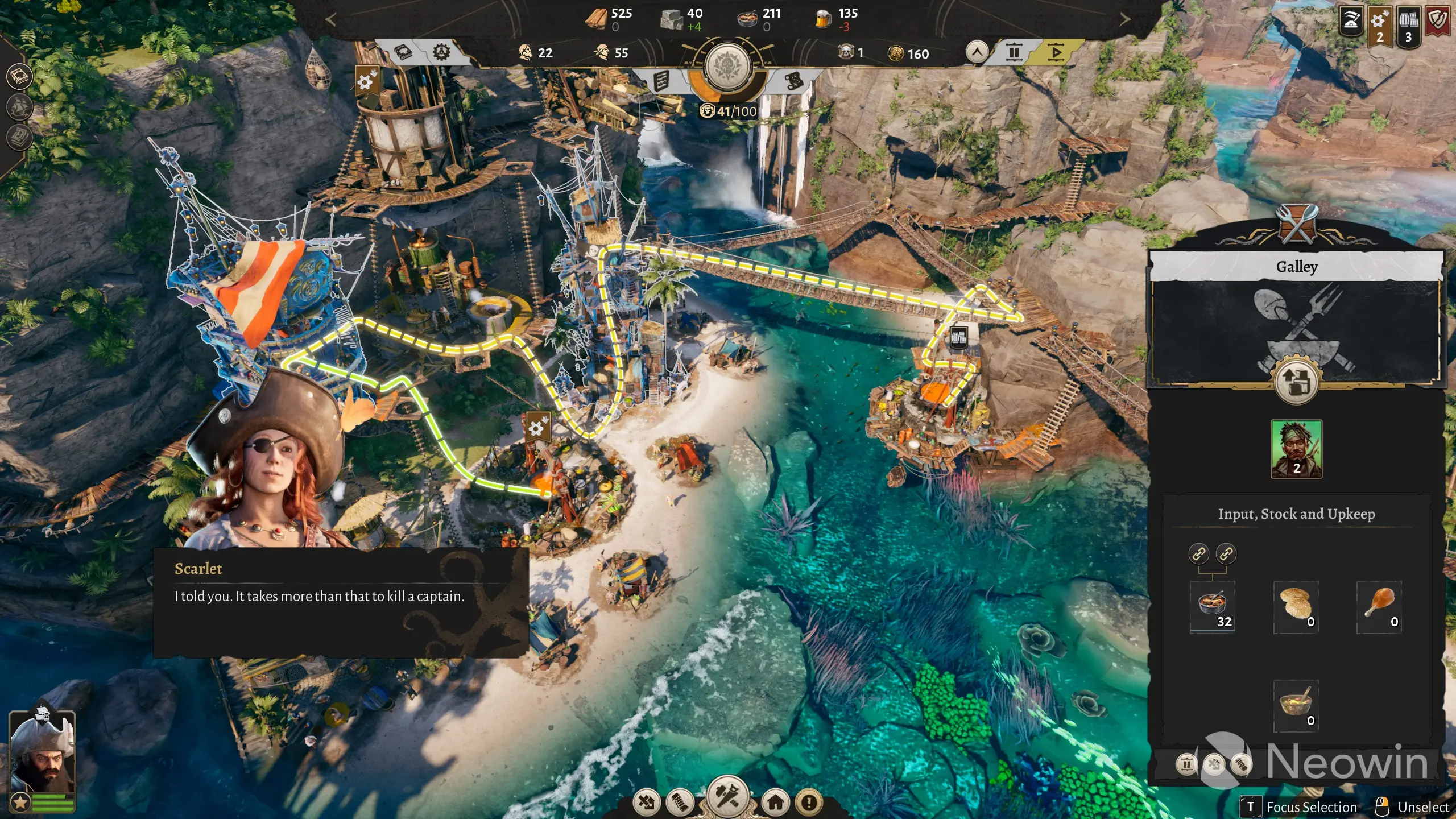
For the most part, the UI is helpful at keeping things clean and manageable when adding new parts to the city. Colored lines appear that clearly show if the nearby connections will cause issues with distance. Even if it's a bad placement, the game lets you just go with the flow without build restrictions. It’s up to the player to fix those unoptimized pathways by coming up with creative designs. On my island, I put bridges in between the cliffs to join up multiple sections, elevators to quickly transport items between the ground buildings and the high points, and long-range ziplines for keeping my quickly expanding production lines happy.
If the growing needs of the residing pirates aren’t met, they are quick to initiate mutinies. It isn’t an immediate game-over scenario though. When I found myself in this situation, I was able to ask the pirates for some extra time by bribing them with the coin I was saving up. I was happy to find that the game doesn’t hold back on leaning into its themes. Random events that pop up during gameplay ask for tough decisions. For instance, these can mean gaining a whole bunch of new workers at the risk of losing the support I had been building with my crew, all because I invited in an adrift crew that is suspected of carrying sickness. It’s a tough balance at times.
There wasn’t too much time to settle down and be cozy on my island, as before long, the production lines I was building were about to get tested. This consisted of an enemy ship discovering the island and sailing into its safe waters for a raiding run. If my logistics don’t keep the defensive towers I built stocked up with the right materials, this can mean a major loss of buildings and materials in a short period of time, severely hurting island morale. These random events and threats were enough to make me think of new directions to take my city building ideas.
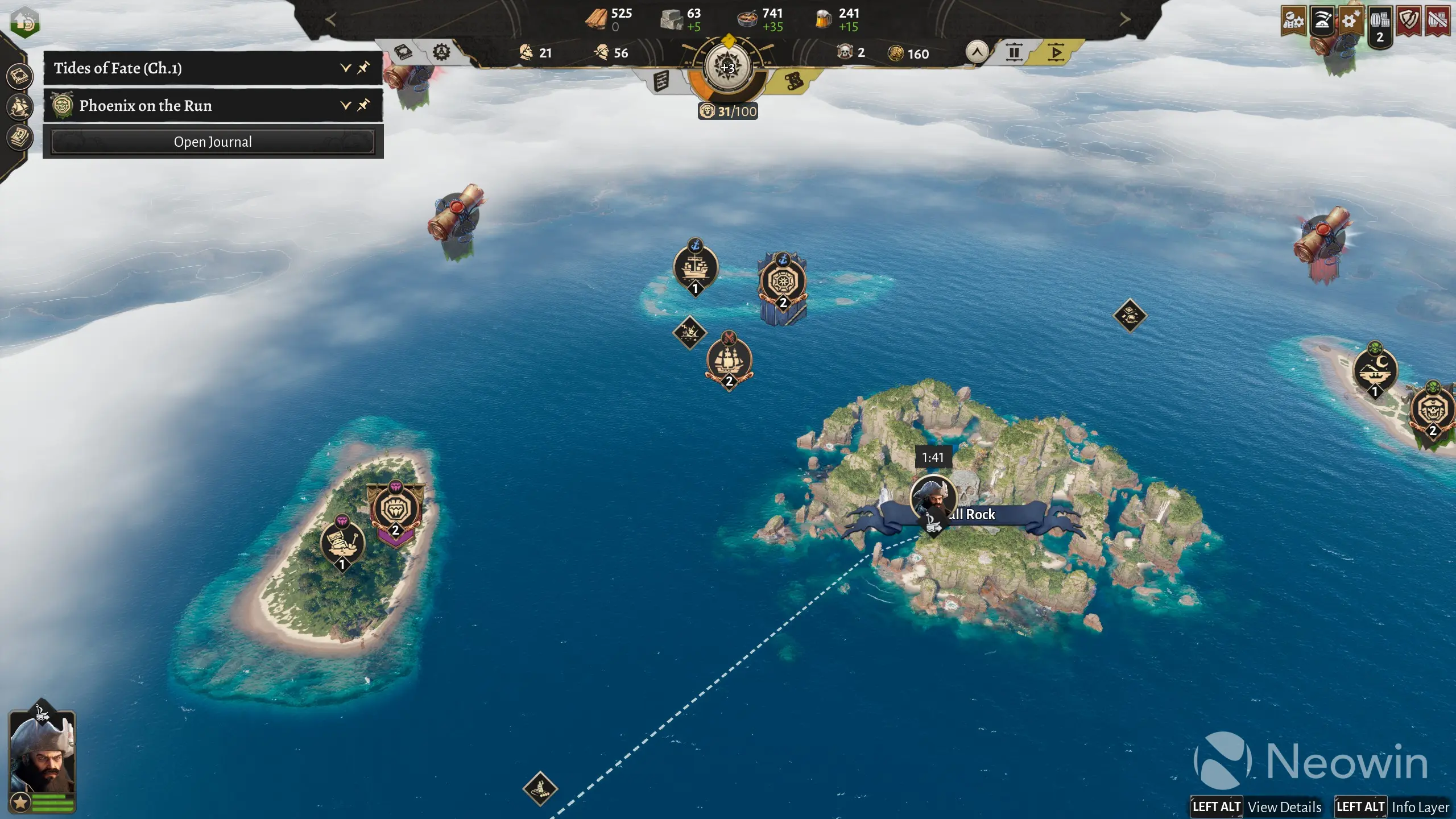
The island has a lot of resources, but it’s still not enough for the outlaws to be self-sustaining. To recruit more pirate residents, get exotic materials, or simply gather more treasure, plundering needs to happen. The ships that leave the safe haven need their own captains and crews, which can be changed to offer different perks for when fights go down in the high seas or other islands. Outside of the pirate’s own cove, a giant map expands to show multiple other inhabited and uninhabited islands. While the preview restricted this area quite heavily, this area already had questlines to follow, ships to shakedown for loot, and pirate hunters to sink.
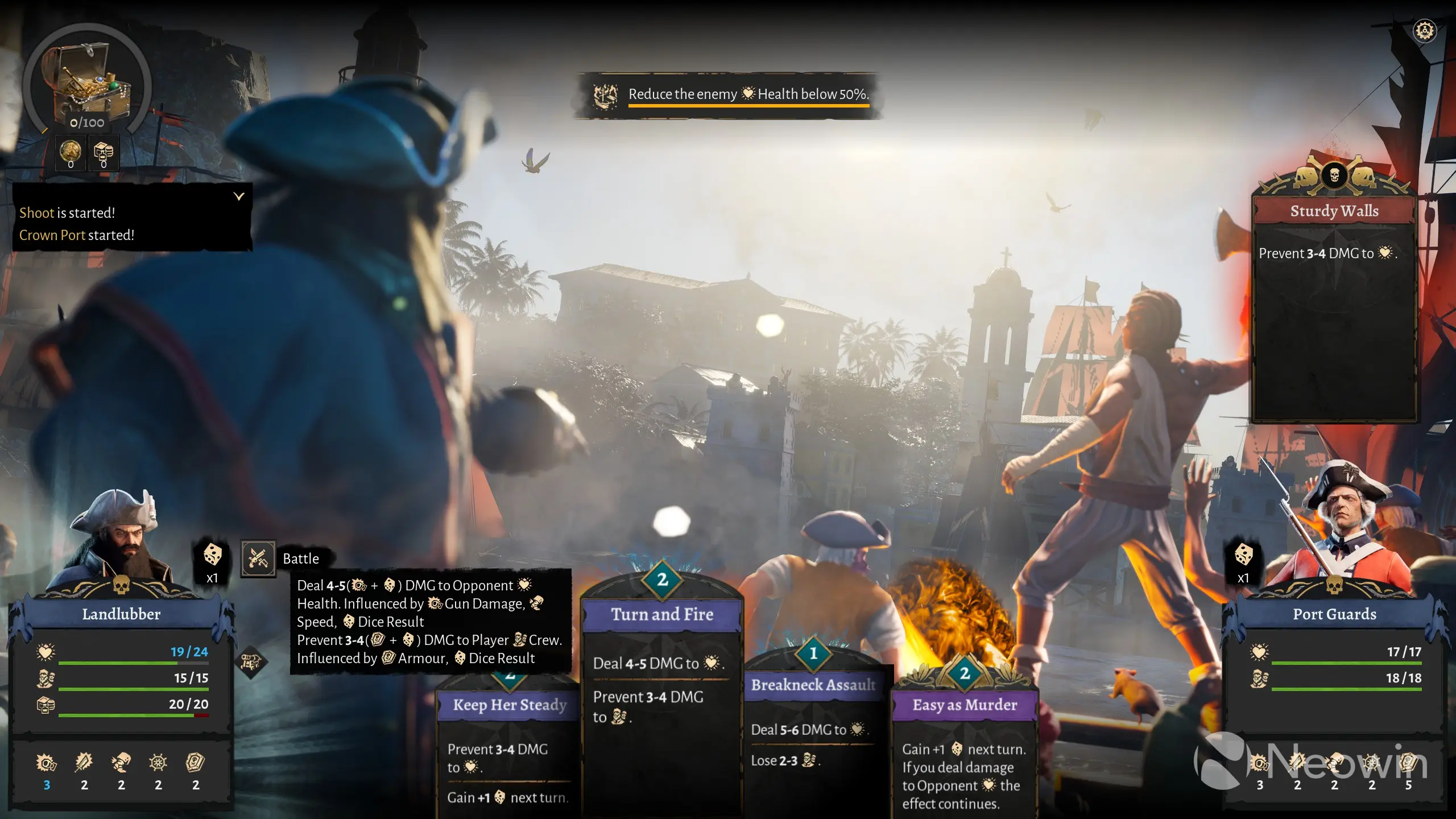
When combat is introduced into a city building game, I am always a little worried about the presentation. This time though, I was pleasantly surprised by the implementation. Instead of live-action ship battles, what pops up when a sea mission kicks off is a turn-based card game with dice-roll mechanics. Depending on the build of the ship and its crew, these variables can shift.
Once a battle kicks off, it shows what the enemy camp is about to do, which can be an attack, a defense, or a charge up to power up the next turn. These are essentially what my own ship has at its disposal too, as long as it doesn’t run out of its own health or healthy crew members. By choosing the cards strategically, I was able to focus on keeping my crew alive while dealing consistent damage to enemies as the turns went by. However, there’s also the option to sacrifice some of my health and crew to plunder the enemy as a battle goes on, which increases the loot I would receive at the end of the matchup, if I came out as a winner, that is. Another interesting shakeup here is that these card and dice matches don’t have to be actual battles. There are also negotiations and sneaking-focused missions across the seas, which change how the cards work for that occasion. I found that it’s better to have a ship captain that doesn’t focus on solely combat in these scenarios.
As I expanded my piracy operations and island productions, the preview opened up its Deeds and Compass systems. This is a level-up system that has me chasing various achievements across four separate piracy tracks, ranging from amassing vast amounts of wealth to building a reputation for being bloodthirsty buccaneers. Hitting these objectives offers four directions to go towards in the technology tree, slowly unlocking new methods to optimize the pirate city as well as fresh ships. The game doesn’t lock down any directions though. From what I could gather, it’s possible to unlock everything in a single playthrough, though it will require a vast amount of wealth and patience.
This build’s map restrictions stopped me from exploring all its nooks and crannies. If the rest of the game is anything like this, I will probably be spending many nights making my cliff cities and perfecting their logistics systems to keep my pirates happy.
After this small taster of the full Corsair Cove experience, I have already become a big fan of this pirate venture. The developer tells me that the launch version will have a full campaign, multiple base island options, a massive map to explore, dozens more buildings and ships, and so much more.
The studio is planning to have a full release sometime in 2026 across PC stores like Steam, Epic Games Store, and Microsoft Store. The game will also land on PC Game Pass on day one of release. If you’d like to try out Corsair Cove ahead of its release, an official demo is also slated to land on May 28, 2026.








3 Comments
Load the comments and join the conversation!
Read the comments, ask the editors questions, show respect and join the conversation.