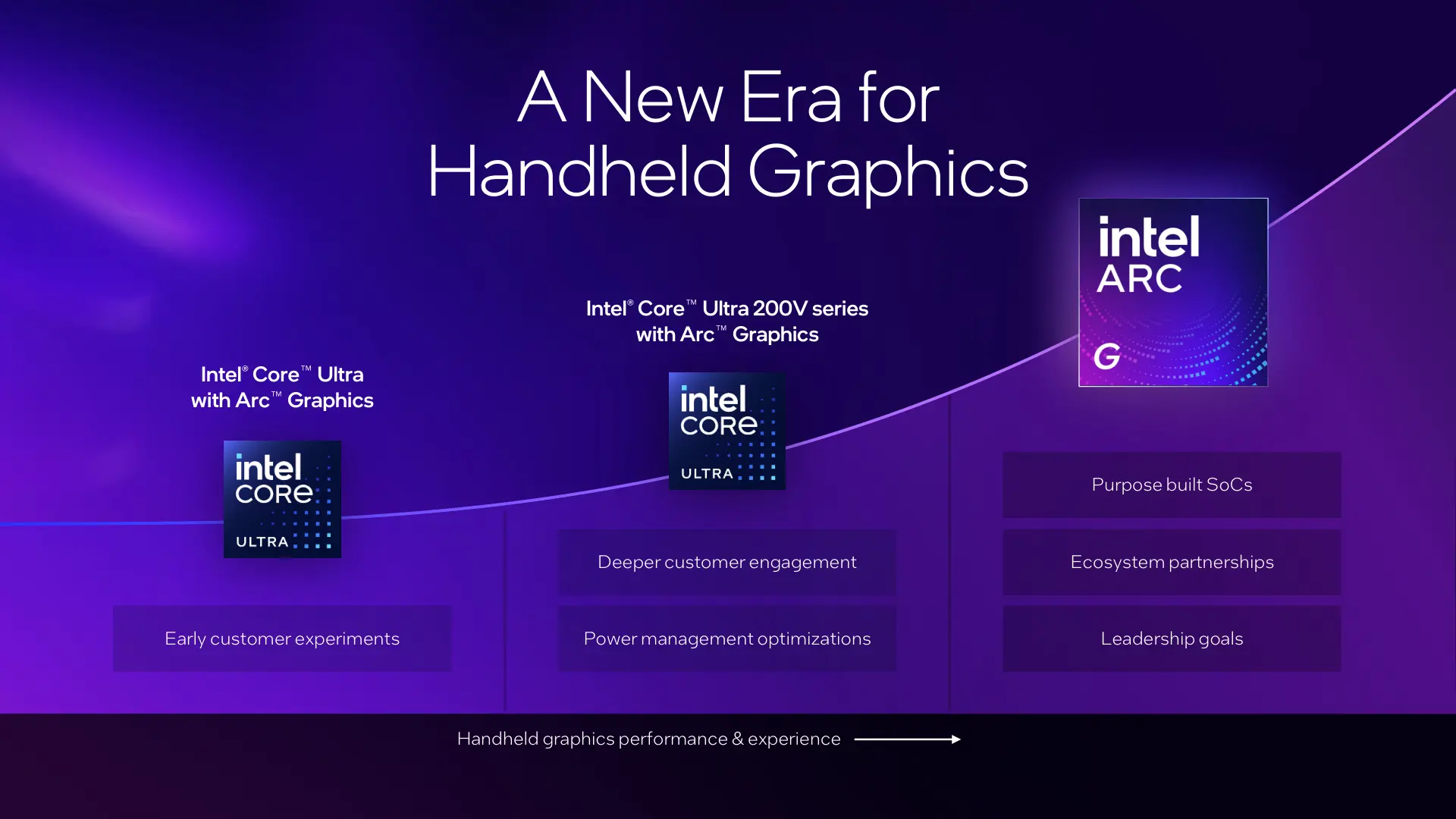
Intel has announced its new Arc G-Series processors in order to meet the demands of the growing handheld gaming PC market. The new chips are designed specifically for portable gaming systems and aim to deliver high-performance gaming alongside improved power efficiency and battery life
The lineup launches with two models, the Intel Arc G3 and Arc G3 Extreme, and are built on Intel’s Core Ultra Series 3 architecture codenamed Panther Lake, with the graphics core running on the Xe3 design. The main difference between the two SKUs is the presence of a more powerful iGP on the Extreme in the form of the Arc B390 with 12 Xe3 GPU cores, whereas the non-Extreme variant has B370 with 10 Xe3 cores. Compute-wise both of them pack the same number of cores with 14 each, wherein two of them are P-cores, eight are E-cores and four are LP E-cores.
The integrated Arc B-series graphics are well fed on these thanks to LPDDR5X-8533 MT/s memory which aids the already present 12 MB of L3 (Smart Cache LLC). The G3 Extreme and G3 come with configurable TDP between 8 to 35 watts and 30 watts respectively.
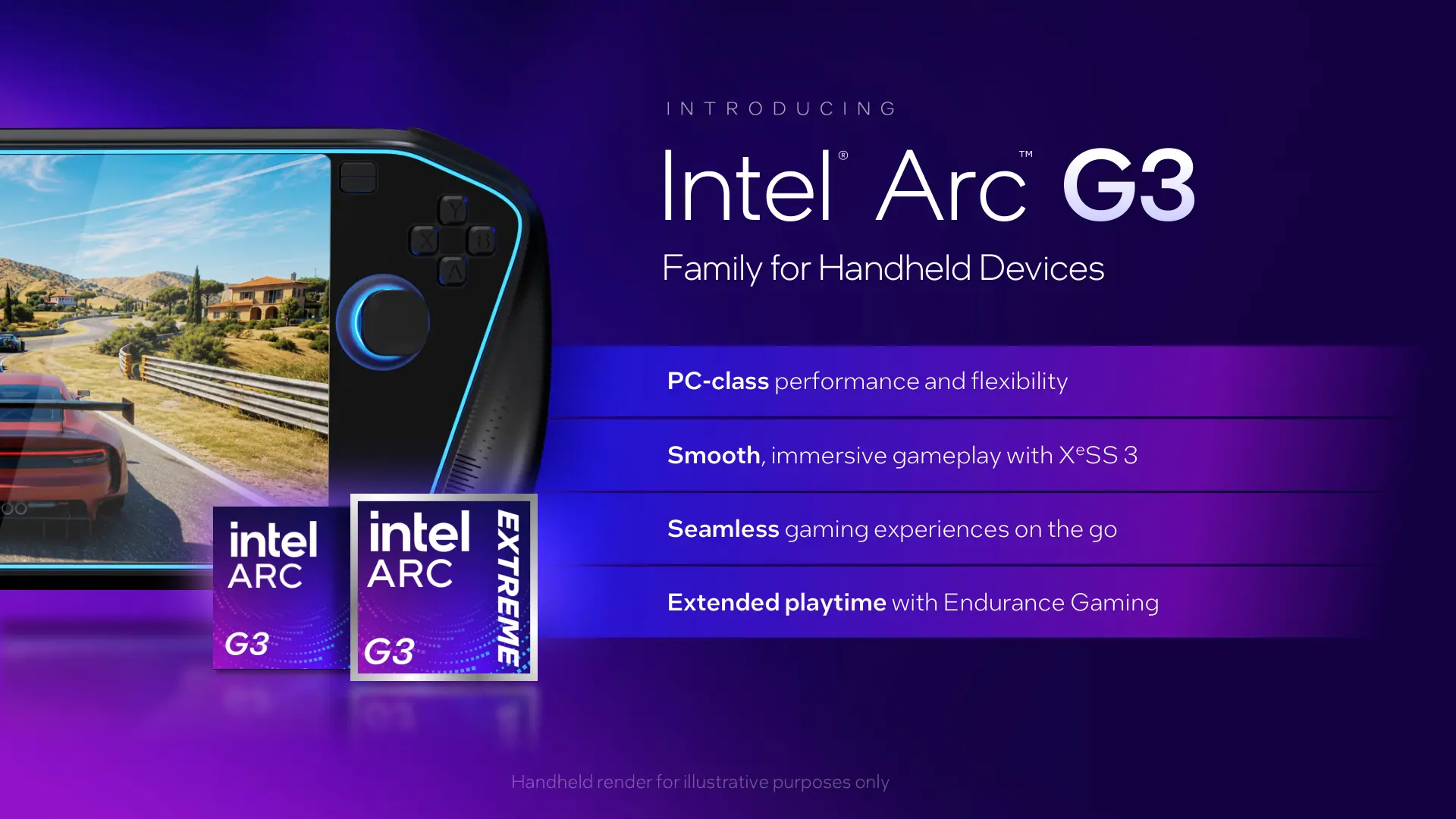
According to Intel, the processors have been optimized for handheld devices through tailored core configurations, power management, and gaming-focused software enhancements. They support various graphics gaming technologies such as real-time ray tracing and XeSS 3, the company’s AI upscaling tech that combines upscaling with multi-frame generation (XeSS-MFG) and low-latency features (XeLL) and super resolution (XeSS-SR) to create smoother gameplay experiences on portable systems.
The new G series processors will also support several gaming-oriented features like the recently released “XBOX mode” for a console-style Windows 11 desktop UI and Intel Precompiled Shaders, which are intended to reduce loading times and gameplay stutter by downloading optimized shader files from Intel’s cloud servers. Interestingly they also qualify for Microsoft's Copilot+ PC standard as they pack 46 TOPS NPU.
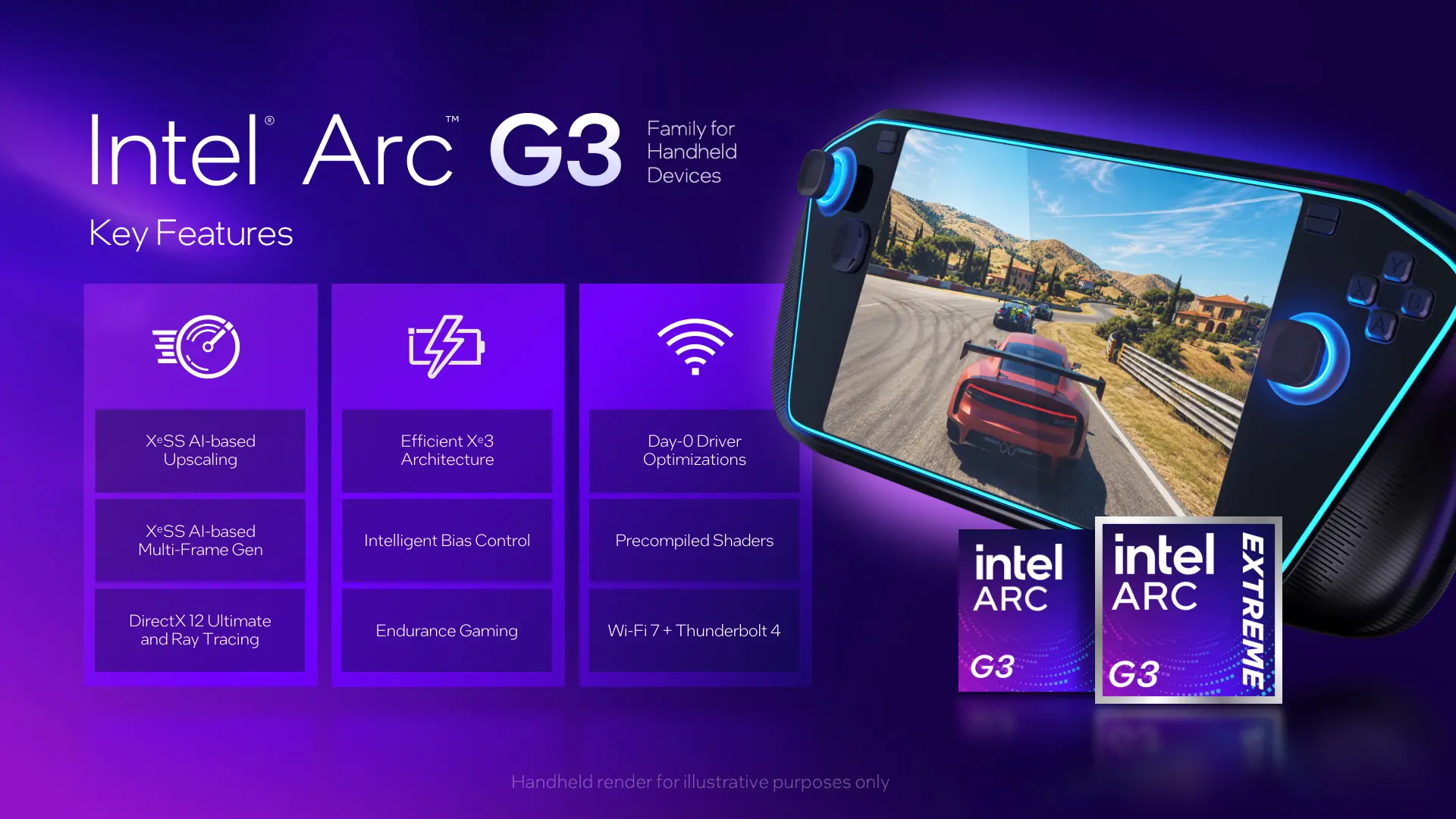
Intel stated that the Arc G-Series processors include support for Wi-Fi 7 (R2), Dual Bluetooth Core 6.0, and dual-port Thunderbolt 4 connectivity. The chips are manufactured using Intel’s 18A process technology similar to other Panther Lake parts.
Several hardware vendor partners of Intel including Acer, MSI, and OneXPlayer are expected to release handheld gaming systems powered by these new processors later this year. Intel said more details may be shared during the ongoing Computex 2026.


















2 Comments
Load the comments and join the conversation!
Read the comments, ask the editors questions, show respect and join the conversation.