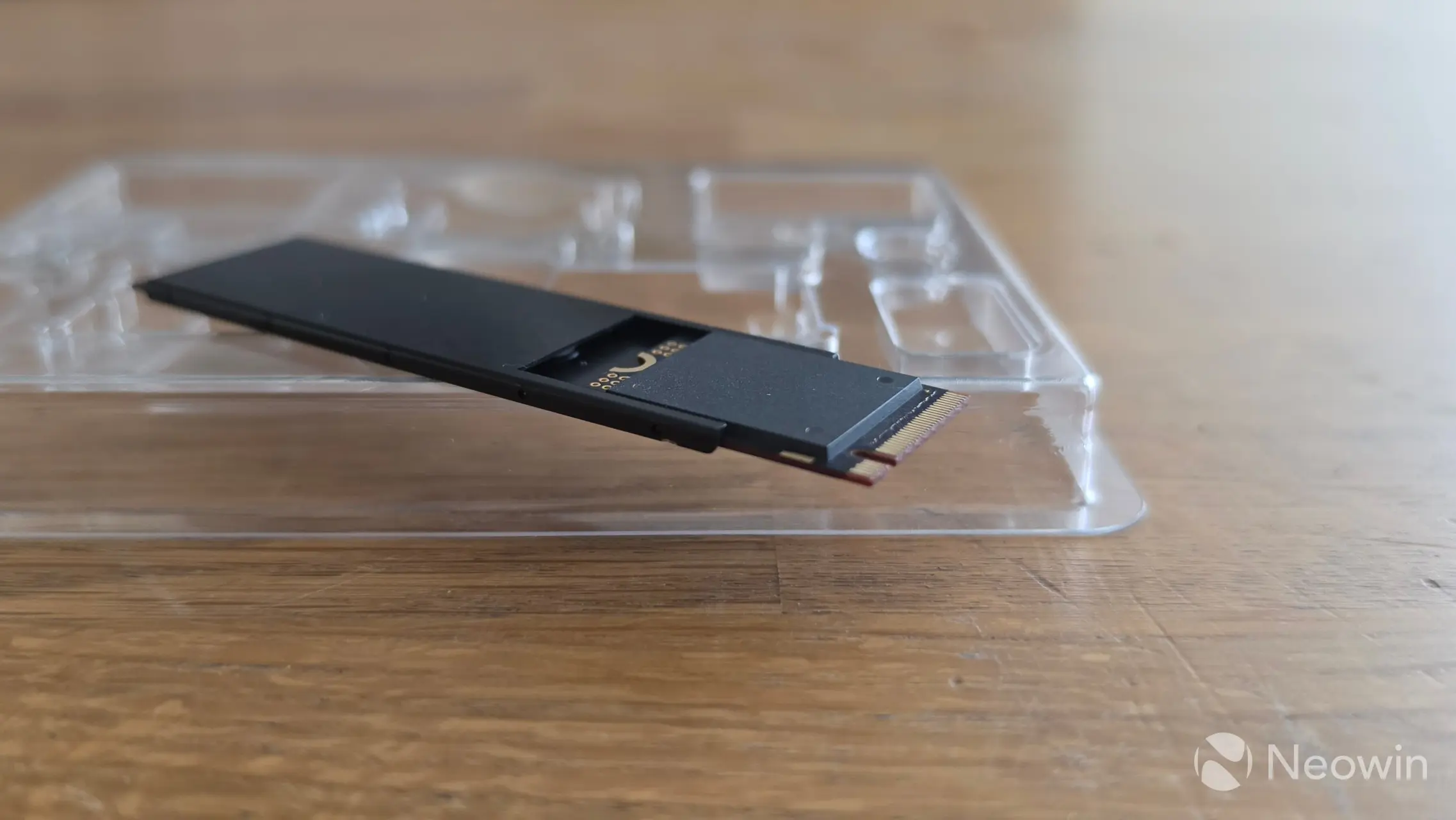
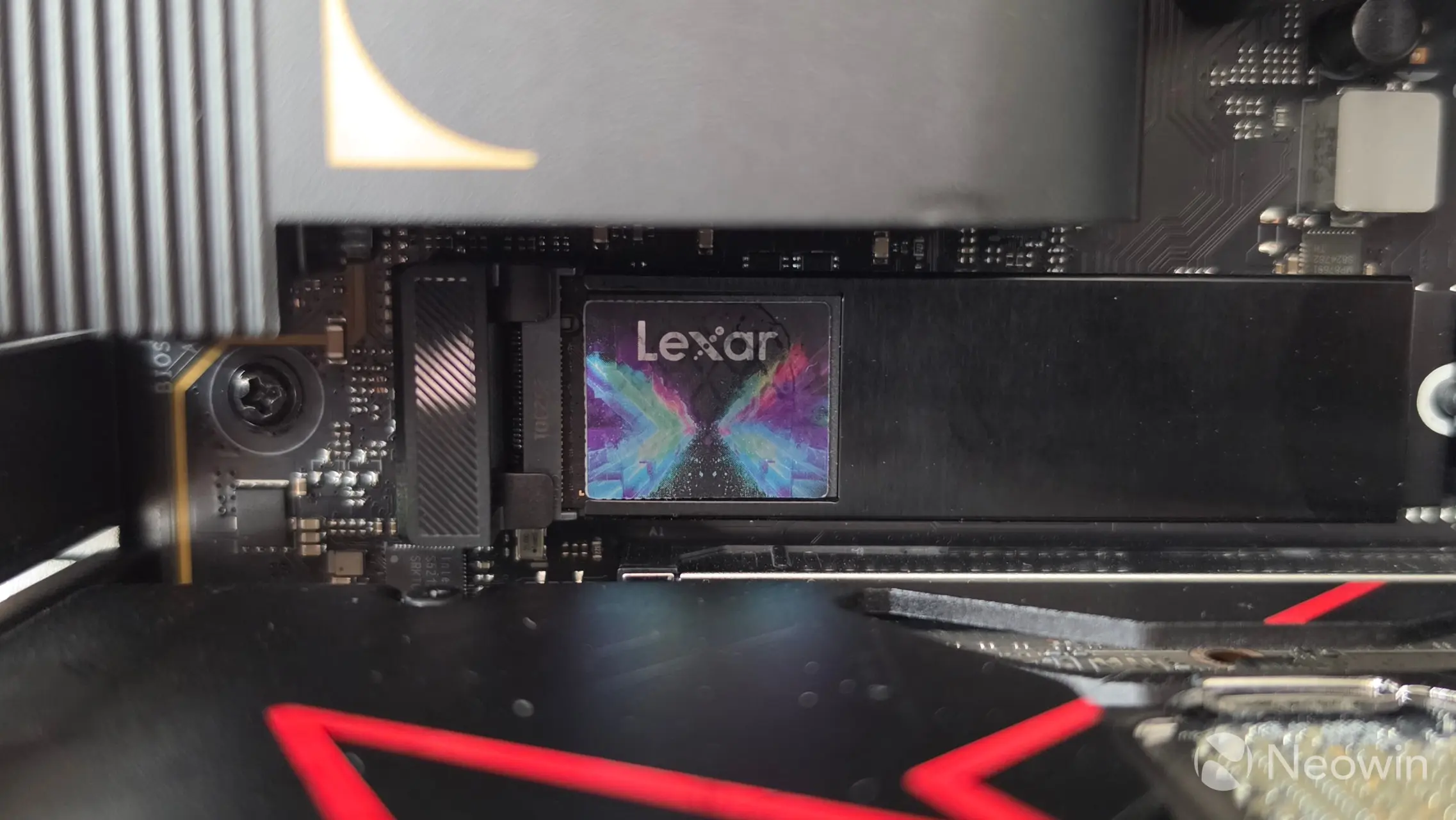
Lexar reached out to us asking if we were interested in taking a look at the Lexar PLAY X SSD. This drive is mostly (but not strictly) intended for handhelds and consoles as a means to expand storage for gaming, but you can use it however you like. In our case we were sent the 2230 1TB variant, so we plopped it into the bracket that's included in the box and installed it in our test PC.
Before we get underway, Lexar provided a free sample without any editorial input or review pre-approval. Below are its specifications:
| Lexar PLAY X | ||
|---|---|---|
|
Interface |
PCIe Gen4x4 with NVMe | |
| Form Factor | M.2 2030, M.2 2230, M.2 2280 | |
| Capacity | 512GB, 1TB, 2TB | |
|
Speed |
|
|
| DRAM Cache | No | |
|
TB written |
512GB: 300TBW, 1TB: 600TBW, 2TB: 1200TBW | |
| Operation temp | 0° to 70°C (32°F to 158°F) | |
| Storage temp | - 40° to 85°C (- 40°F to 185°F) | |
| Durability | Shock Resistance: 1500G, duration 0.5ms, Half Sine Wave Vibration resistenence: 10~2000Hz, 1.5mm, 20G, 1Oct/min, 30min/axis (X, Y, Z) |
|
| MTBF | 1,500,000 Hours | |
| Dimensions | 80 x 22 x 2.45 mm / 3.15”x0.87”x0.10” | |
| Weight | 9.5g / 0.02lbs | |
| Part nr | LNMPLYX001T-RNNNG | |
| Warranty | 5 years | |
|
Price |
£119.99, €119.99, / £218.99, €249.99 | |
First a few notes about the specs. The Lexar PLAY X SSD does not come with a (graphene) heatsink so you will have to ensure you have a thermal pad or something that can be used with this drive, and secondly it says in the specs that it does not have a DRAM Cache, as it makes use of:
HMB and SLC Cache. Host memory buffer (HMB) and single-level cell (SLC) cache technologies enable faster transfers and reduce latency to improve performance, game load times, and the overall user experience.
Basically what this means is that HMB handles finding files, while the Dynamic pseudo-SLC cache handles writing them. The Lexar PLAY X uses TLC NAND flash memory, which stores three bits of data per cell. Writing three bits requires checking multiple voltage levels, which takes time. It's a trade off for the drive size too, as it would be difficult to place DRAM cache onto the 2230 format.
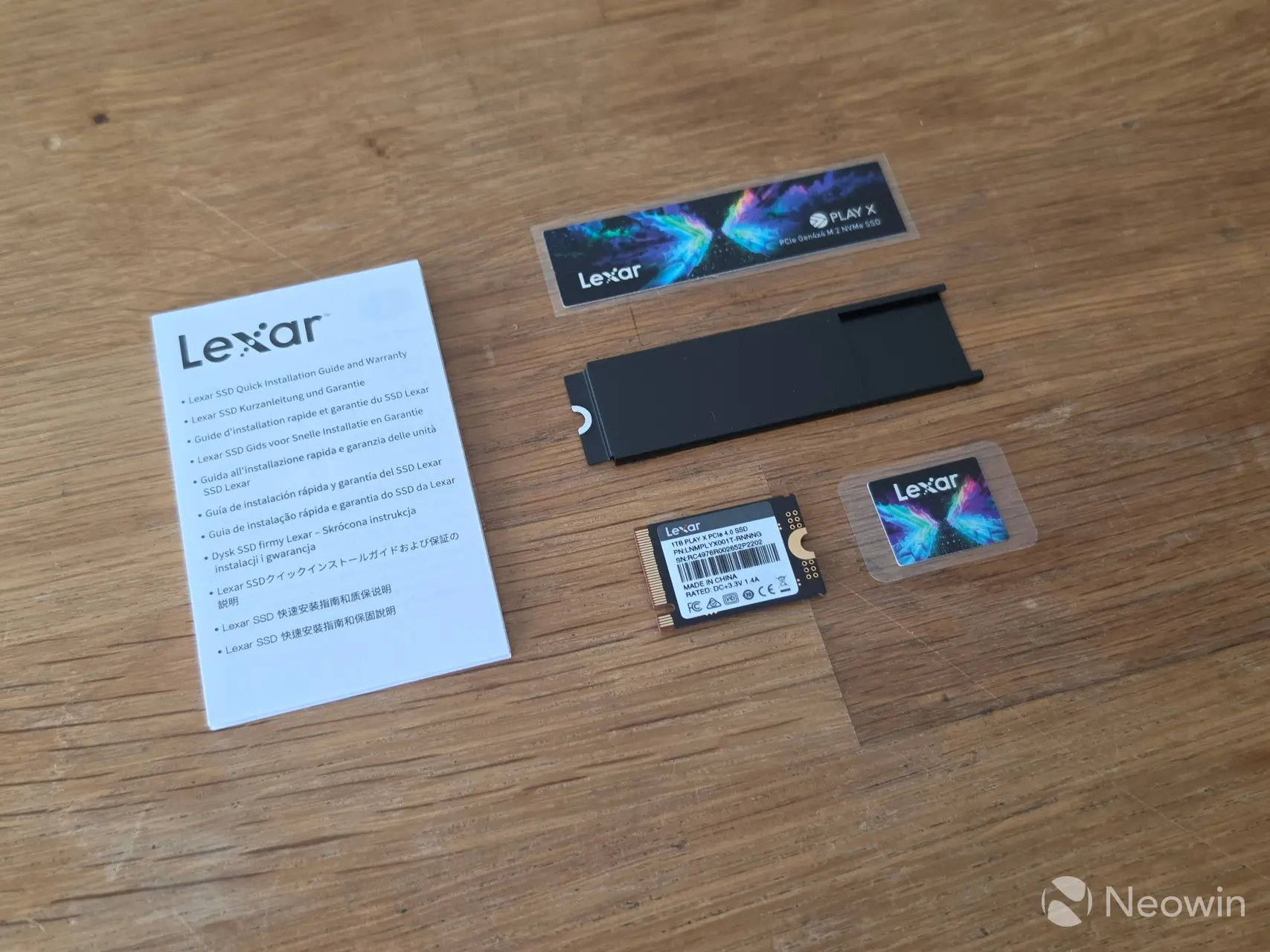
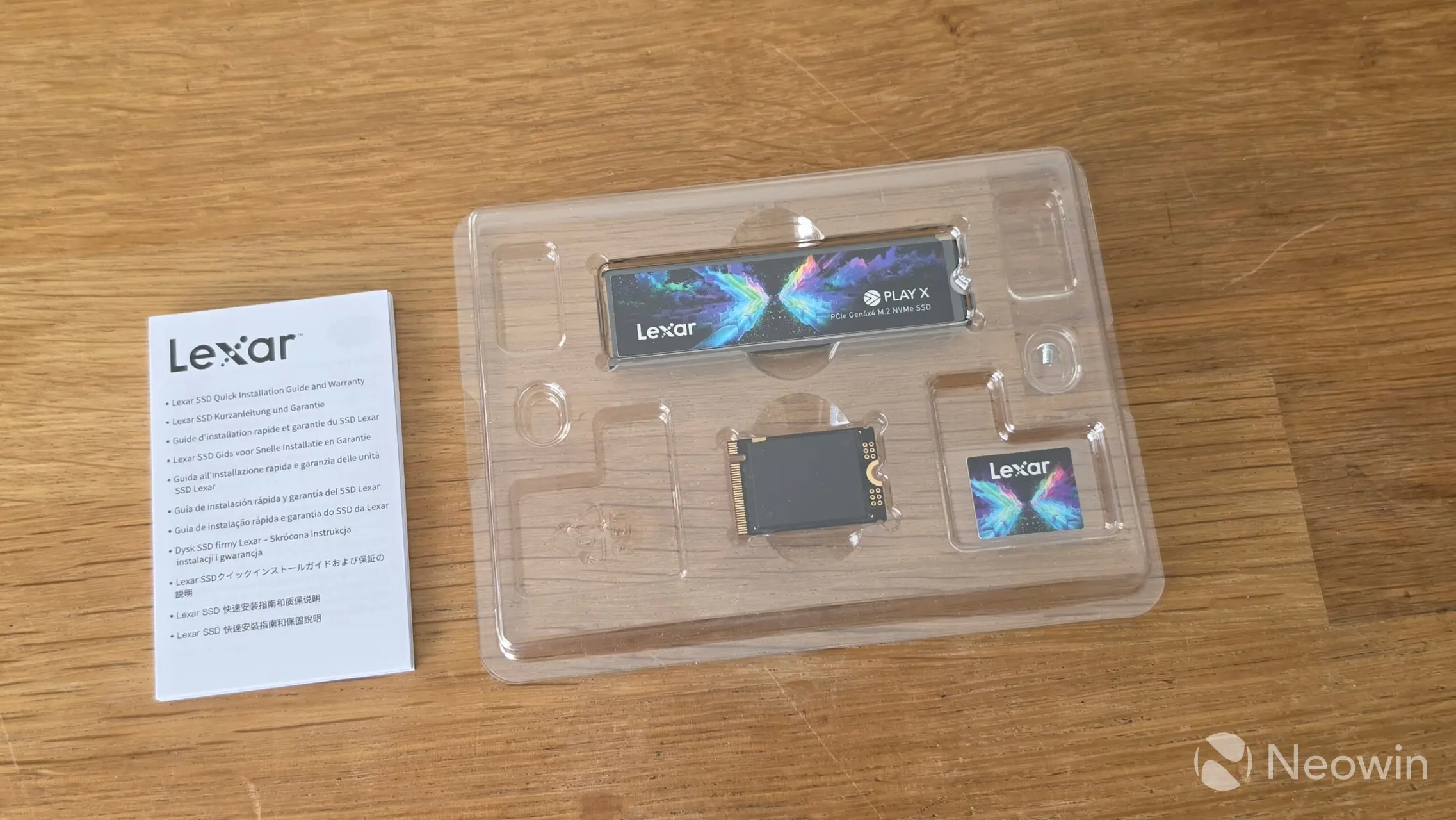
What's in the box
- Lexar PLAY X (1TB)
- 2280 Bracket
- 2230 and 2280 Sticker
- Quick Installation Guide
|
|
|
|
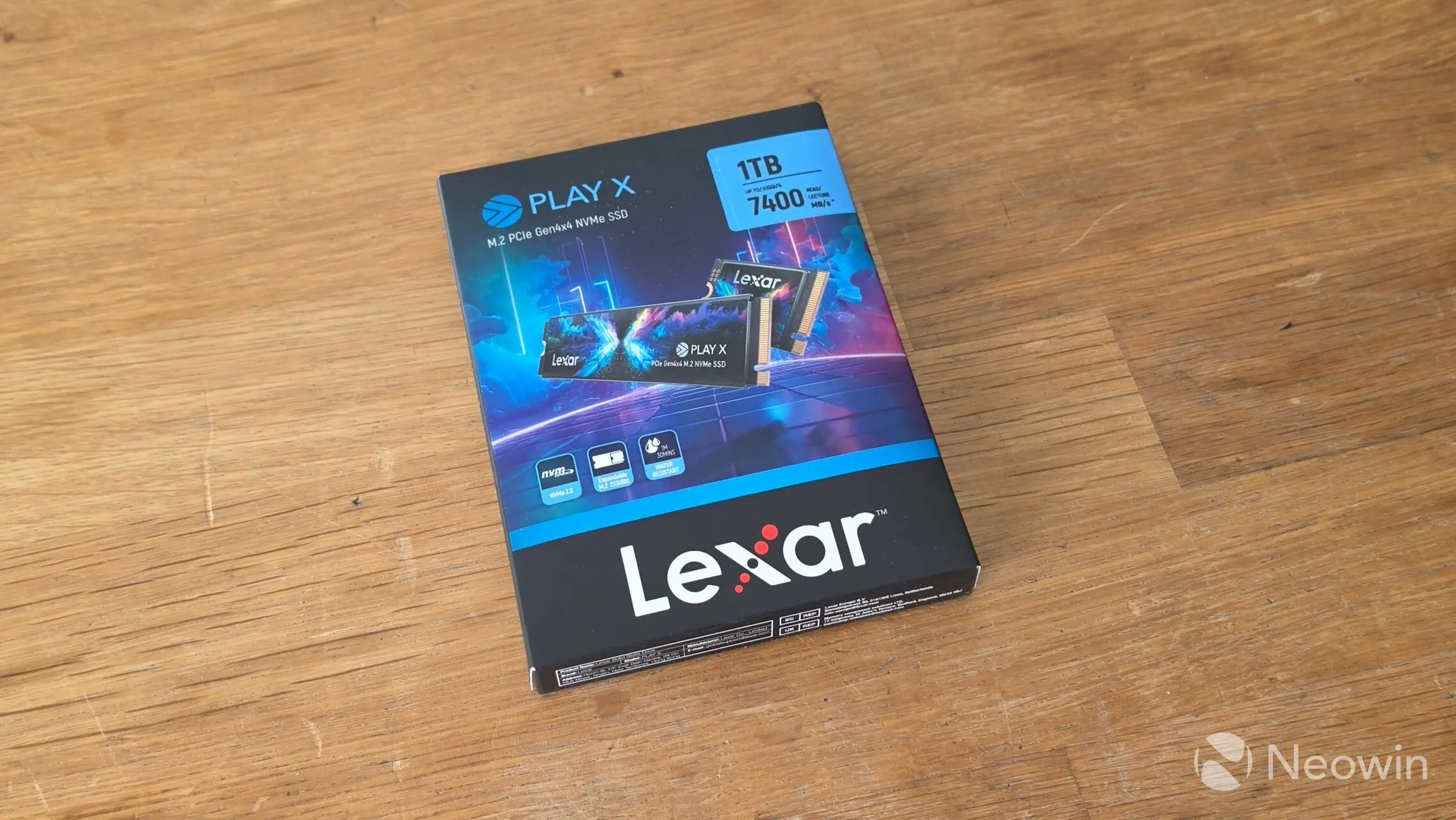
Our test system consists of the following:
- Lian Li O11 Dynamic Mini V2 Flow (Amazon|Newegg)
- ASUS ProArt Z890-CREATOR WiFi (Amazon|Newegg)
- Intel Core Ultra 7 270K Plus (Amazon|Newegg)
- 2x 16GB G.Skill Trident Z5 RGB (7200 MT/s in XMP) (Amazon|Newegg)
- Sabrent Rocket4 Plus 2TB SSD (Amazon)
- Windows 11 Pro 25H2 (Build 26100.8655)
Benchmarks
With that out of the way, we ran some benchmarks comparing (historic) data with a couple of other drives on a system that is up to date with the latest June Patch Tuesday updates.
Aside from the clear difference between the PCIe 4x4 and PCIe 5x4 results, it is also clear that applying correct thermal conditions, in this case the DARK AirFlow I, makes a difference with the outcome of the score as can be seen on the TeamGroup Z540.

(hsf = heatsink & fan, hs = heatsink)
| WD SN850X | Lexar PLAY X | Z540 with DARK AirFlow I |
|---|---|---|
|
|
|
|

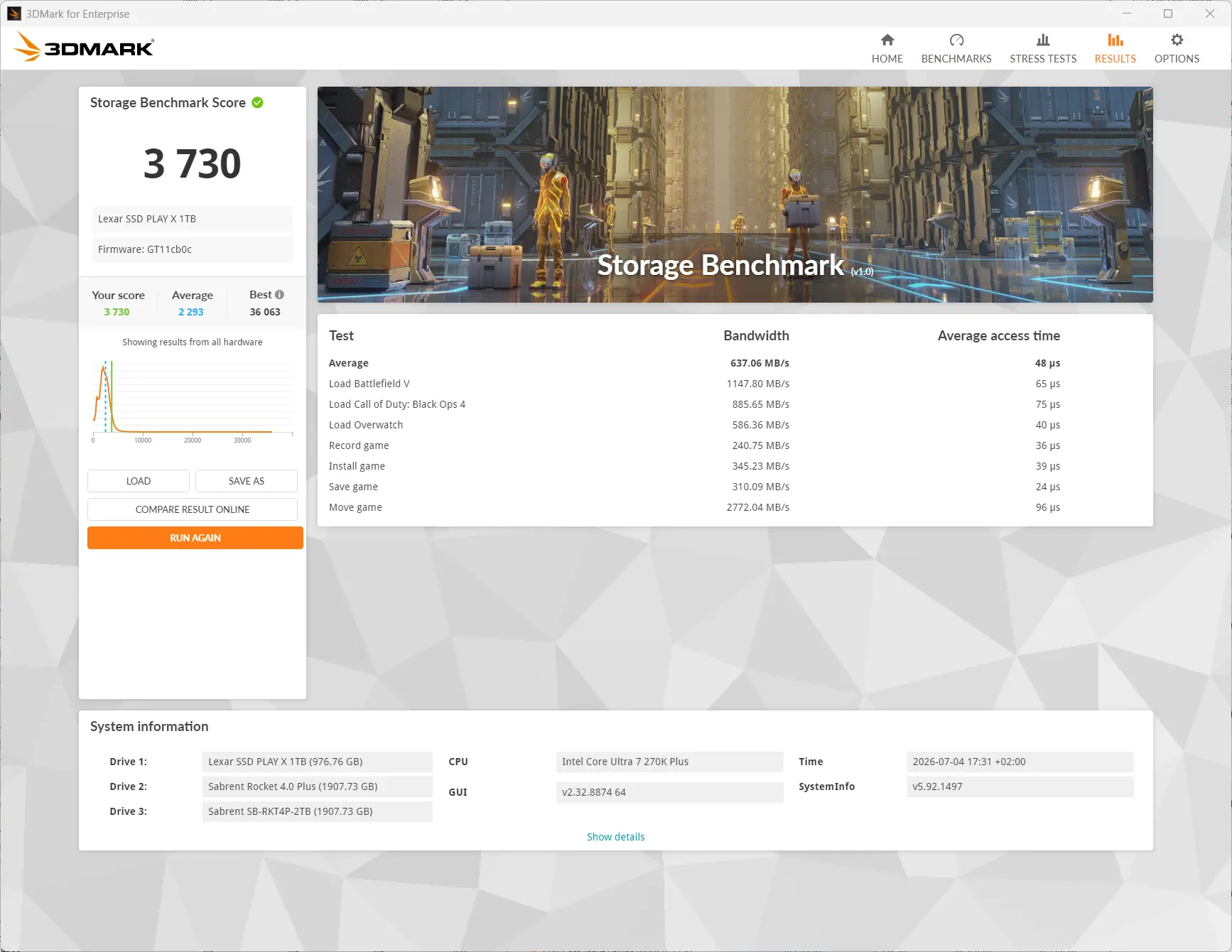

In our 3DMark Storage benchmark test (images above), which measures access times and bandwidth for gaming scenarios, the Lexar PLAY X was the fastest. Even compared to the actively cooled TeamGroup Z540, this one was 23% faster, despite being on PCIe Gen4; and it was doing so while running cool too, as you will see later in our temperature stress test.
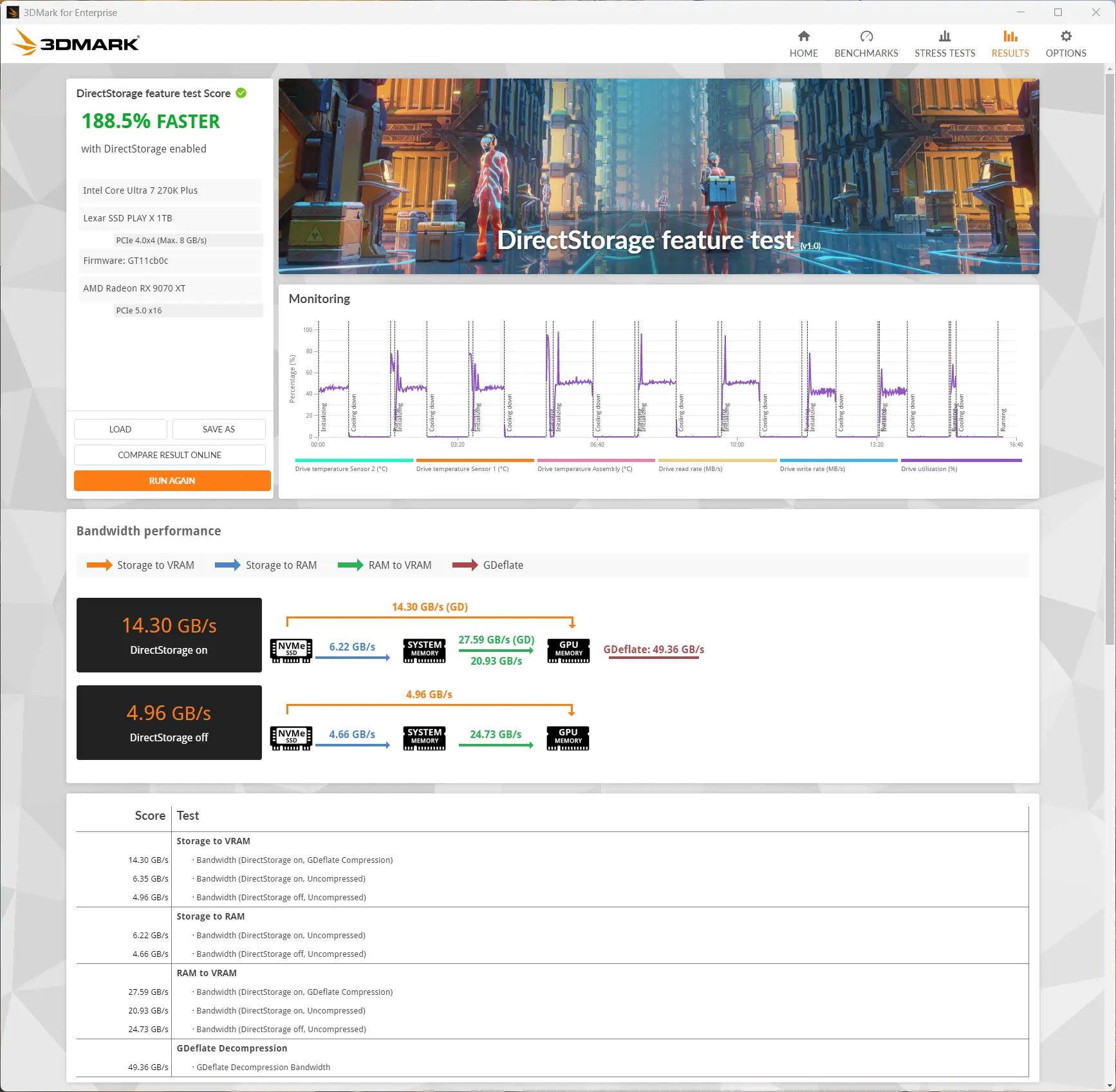
The Lexar PLAY X supports DirectStorage like other NVMe drives, and here, the SSD was a lot better with DirectStorage enabled on our 3DMark DirectStorage feature test. With GDeflate especially, the improvement is tremendous. Overall, the test result says that the Lexar PLAY X was nearly three times faster while running with DirectStorage.

(hsf = heatsink & fan, hs = heatsink)
| Z540 with DARK AirFlow I | Lexar PLAY X | WD SN850X |
|---|---|---|
|
|
|
|

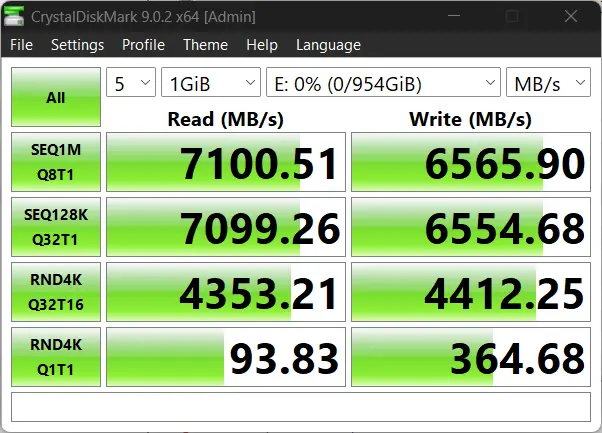

Next we ran the default CrystalDiskMark test (images above) and measured the disk temperature. Even with the motherboard M.2 heatsink applied to the top of it, the drive managed to reach a peak of 70C, which is well within specification. Also, another positive is that it exceeded its advertised sequential write speed of 6,400 MB/s in our testing, which is rare and deserves praise.
| Z540 with DARK AirFlow I | Lexar PLAY X | WD SN850X |
|---|---|---|
|
|
|
|

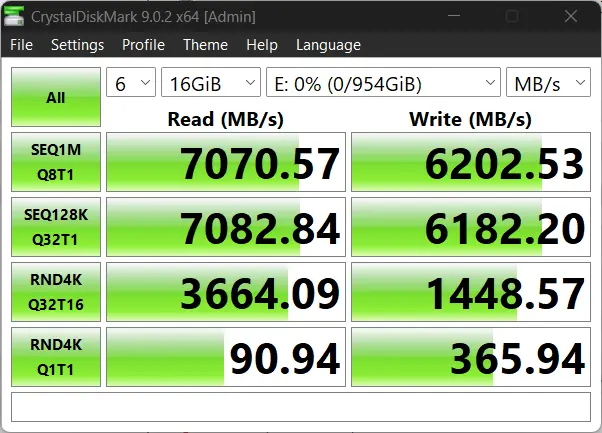

The second test is of six passes at 16GB (images above), meant to stimulate a heavier, longer transfer session, and it reached the same max temp of 70~71C. This indicates that the PLAY X is performing exceptionally well even under heavy loads. It is not as chill as the WD_BLACK SN850X, but 70-71 C is completely safe.
Usage
Although Lexar generally markets anything stamped with "Play" for handhelds and consoles, on the official product page and Amazon listing, the PLAY X is definitely marketed as an all-rounder with the company claiming that it is:
"Engineered for durability and stability – handles hours of gaming or editing stress" and "Fits in desktops, mini PCs, laptops, and game consoles. Plugs directly into M.2 2230 slots or via adapter into 2280 slots."
This is exactly what we did, as our sample was placed into the 2280 bracket and installed in the M.2_1 slot on our ASUS ProArt Z890-CREATOR WiFi.
| CrystalDiskInfo |
|---|
|
|
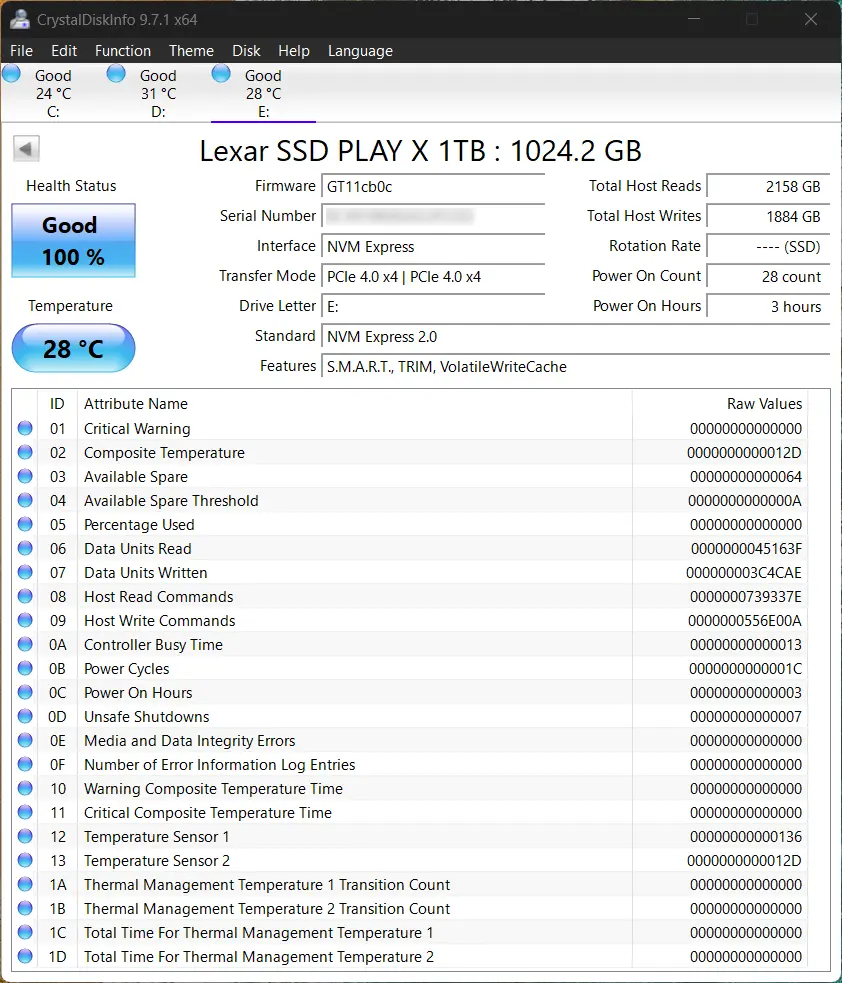
Idle temp as shown above is also pretty decent at 28C.
| Lexar DiskMaster | |
|---|---|
|
|
|
|
|
|
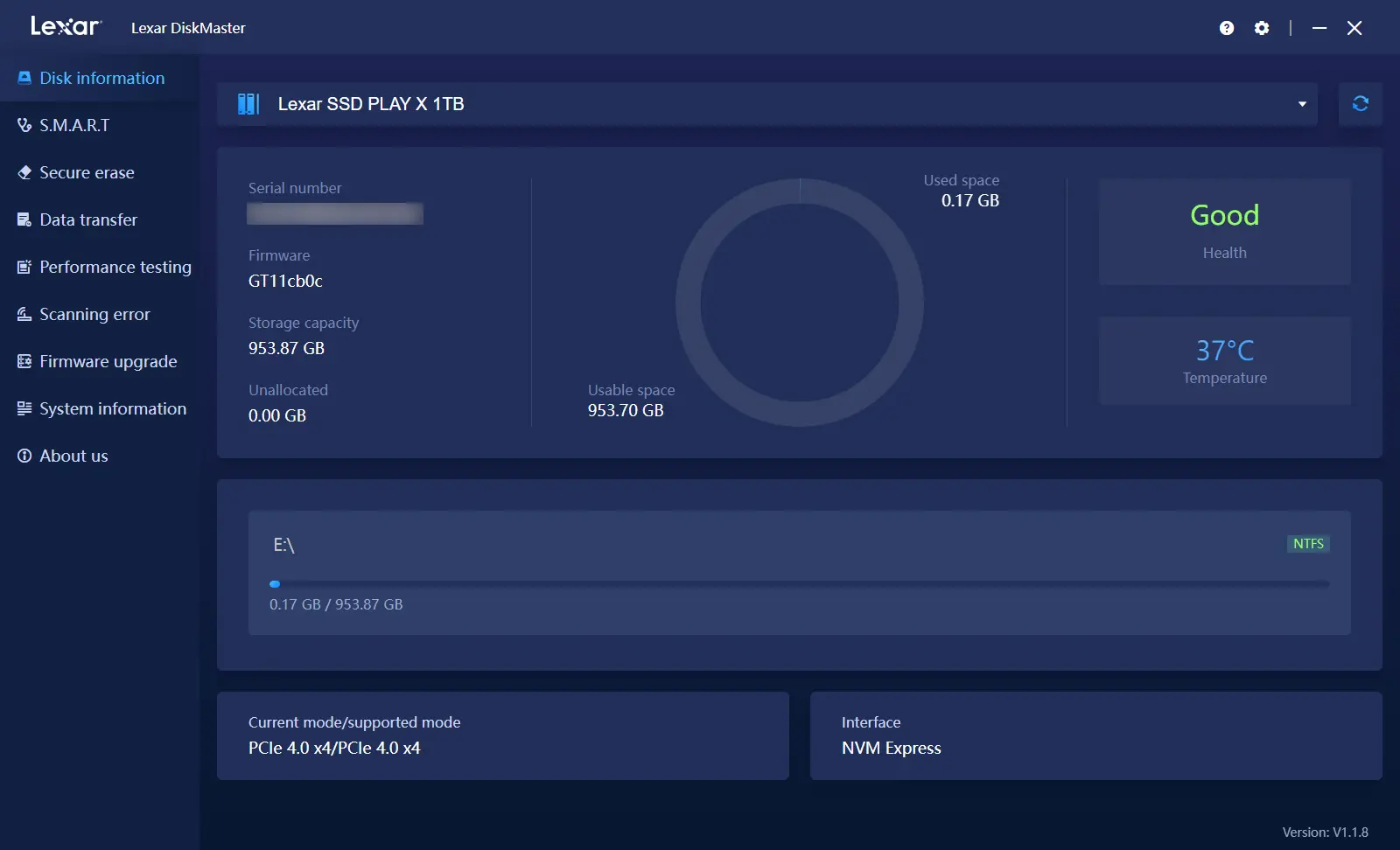
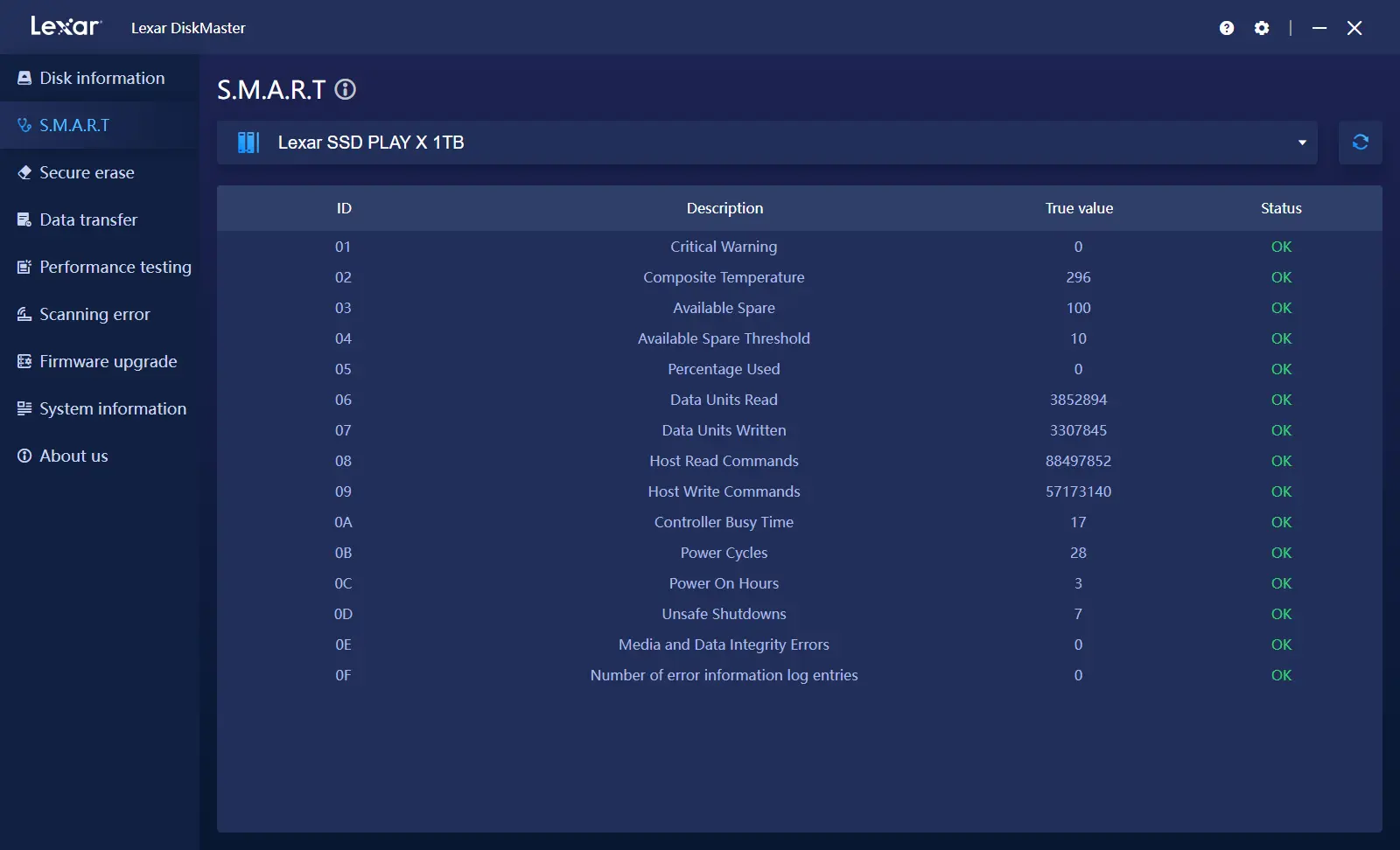
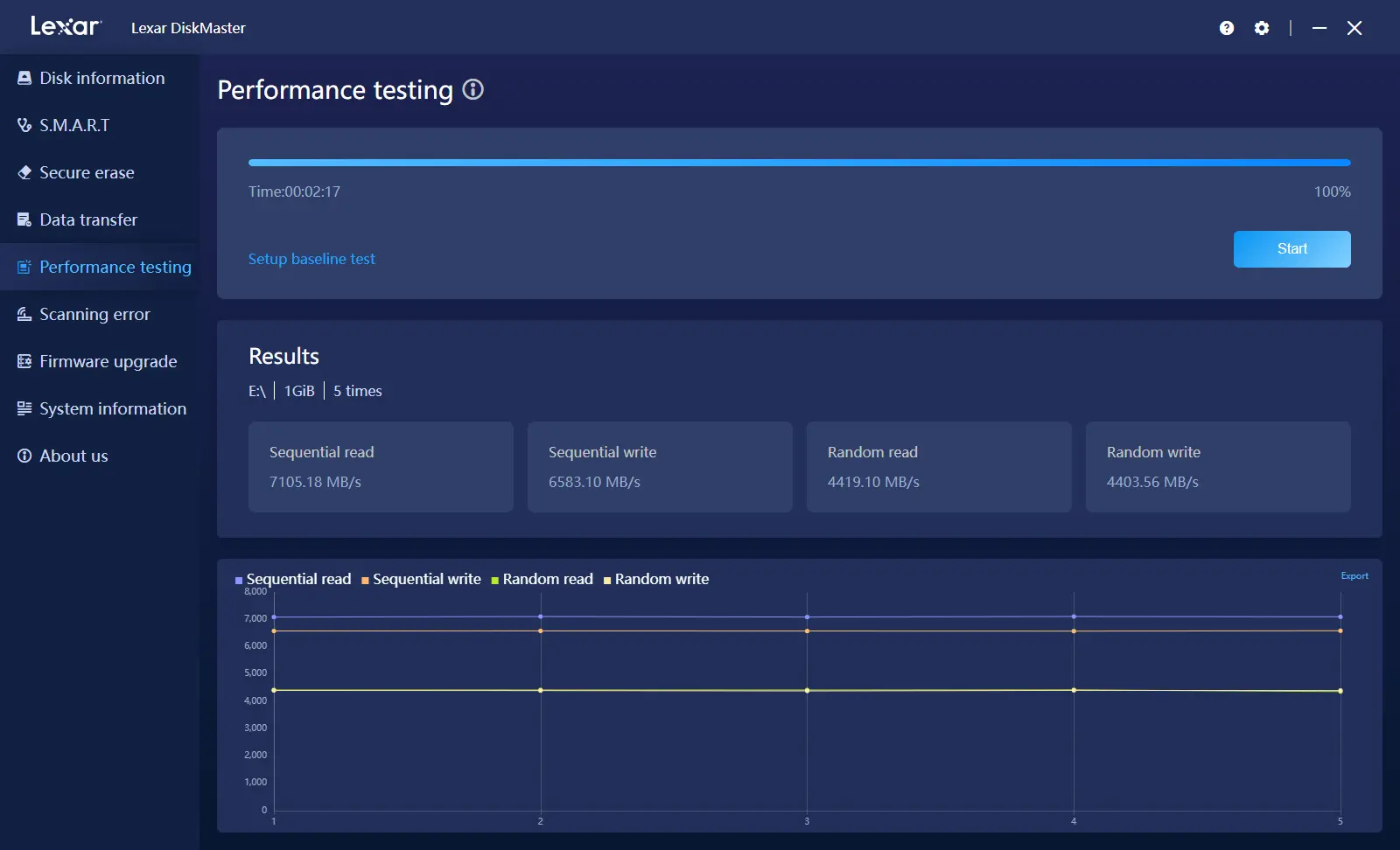
Lexar also provides a disk utility that can read the disk information and benchmark it. S.M.A.R.T info can be viewed above and it loads automatically in the program, I also ran the "Performance testing" which gave a better result than we saw in CrystalDiskMark v9.0.2.
Conclusion
I have to say I came out very impressed with the PLAY X, especially seeing how well it did in the 3DMark gaming test. That was surprising for sure, in a good way of course. Hence, as the name suggests, the PLAY X can be a great drive for gaming rigs.
The drive ran fairly cool as well, although you will want to make sure it's properly cooled, seeing how it was reaching its maximum recommended operating temperature; but there was no noticeable throttling. The 600 TBW rating of the 1TB variant seems pretty good as well for this gaming-orientated storage where writes will be happening more frequently for game saves and what-not, but even so, you should see years of use without any problems and even if you do run into problems, the five year warranty should have you covered.
A bit of a downer for our U.S. readers though, Lexar told me that the PLAY X is not yet available to purchase in the United States, but it can be ordered if you're in the UK. I asked when they plan to release it there and was told:
the PLAY X is not expected to be available in the U.S. in the short term, so there will not be a U.S. purchase link available for now.
In addition, although the initial review documentation and official website suggests there is also a 2 TB variant, Lexar have stated that "The 2TB version has not been launched yet." As you can see from the links below, the 1 TB variant is also selling a bit above the RRP in the UK, and the 512 GB version aligns with Lexar's RRP.
- Lexar PLAY X 1 TB for £241.99 on Amazon UK
- Lexar PLAY X 512 GB for £119.99 on Amazon UK
We hope the 2TB variant becomes available soon, considering how well the drive did in our game data tests. We feel the higher capacity will be popular for sure, though at this time, the lack of it is not hard to understand why, given the shortage and the shift in focus for a lot of companies.
Sayan Sen contributed to this review.
As an Amazon Associate we earn from qualifying purchases.








0 Comments
Load the comments and join the conversation!
Read the comments, ask the editors questions, show respect and join the conversation.