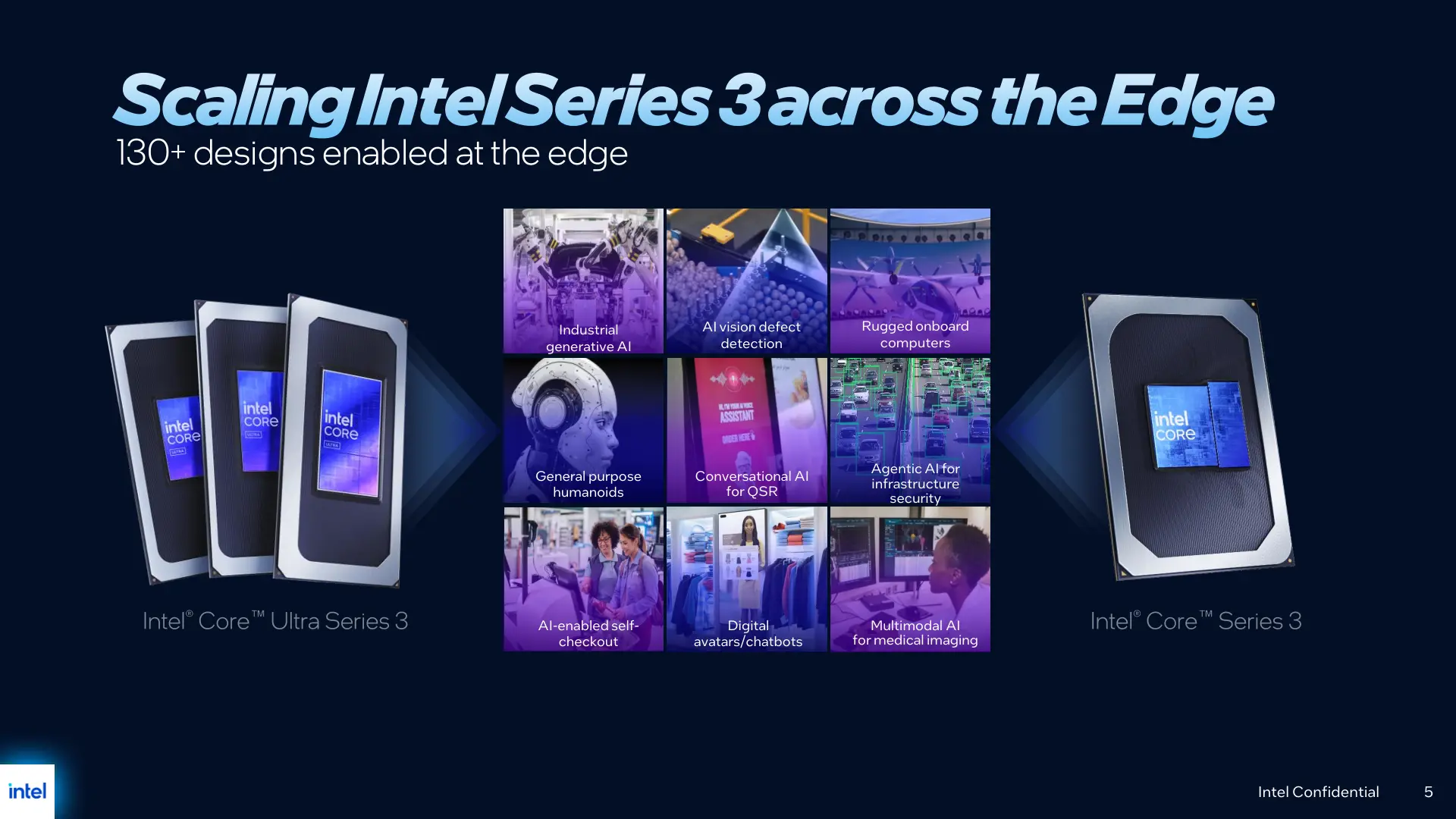
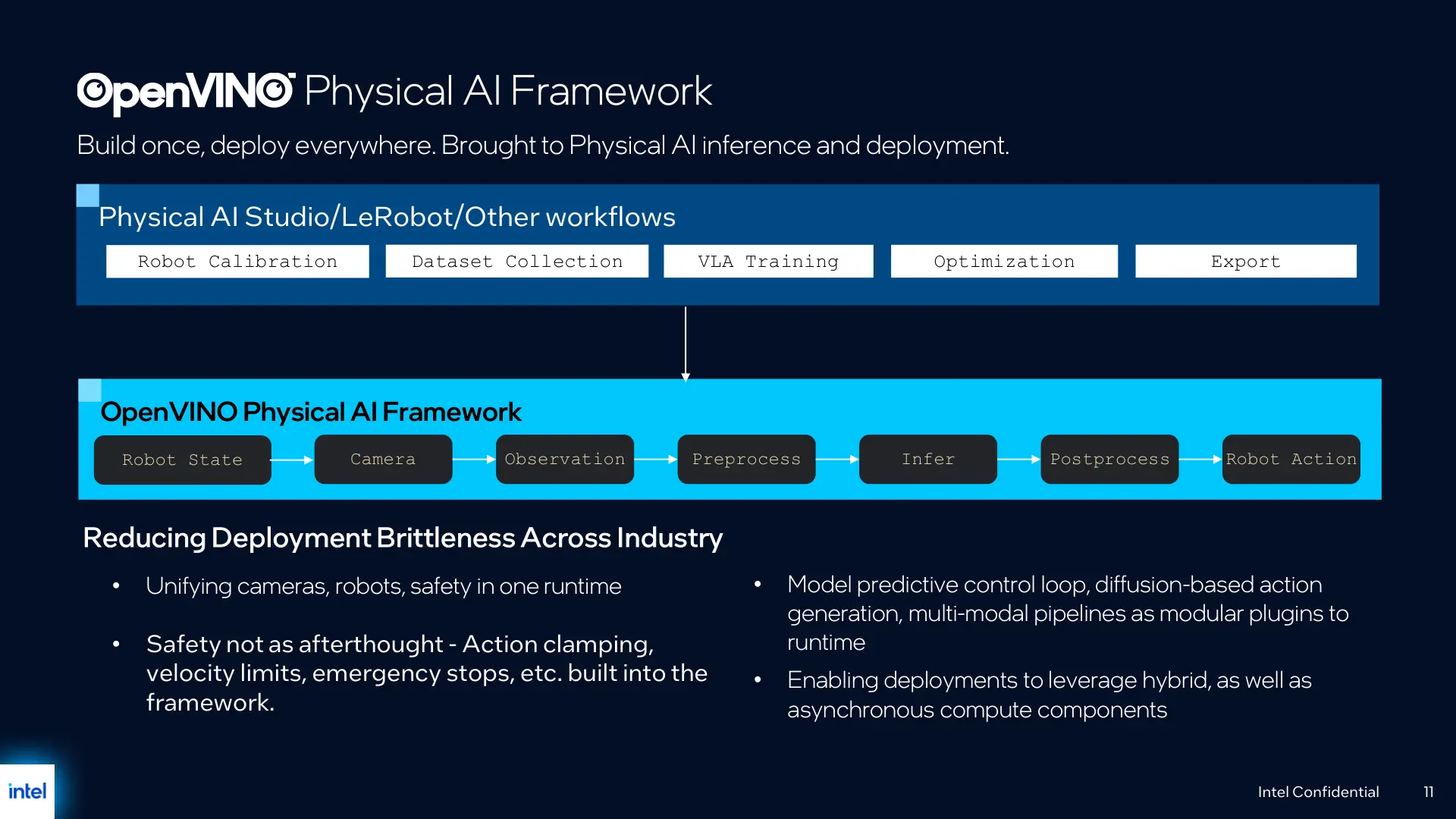
Intel's Core Ultra 300 series, based on the Panther Lake architecture, first debuted back at CES 2026 earlier this year, and later, Panther Lake for mobile for enterprise systems launched in March 2026 as Core Ultra Series 3. Today at Computex 2026, alongside new Xeon lineups for servers, Intel is expanding its robotics AI suite with a new Physical AI OpenVINO framework.
For anyone who may not be familiar, physical AI essentially works by combining AI with physical systems such as robots, autonomous vehicles, drones, and industrial machines such that they can sort of perceive their physical environment, make decisions, and take actions in the real world. This is done using VLA (vision-language-action) models.
Unlike traditional AI that produces only digital outputs, Physical AI connects AI models to sensors and actuators, enabling machines to adapt to changing conditions and operate autonomously. Hence, edge computing is essential because these systems require ultra-low-latency processing, high reliability, and real-time decision-making. By processing sensor data locally rather than sending it to distant cloud servers, edge AI should reduce delays, conserve bandwidth, improve privacy, and allow physical devices to react instantly and safely in dynamic environments like in the physical world.
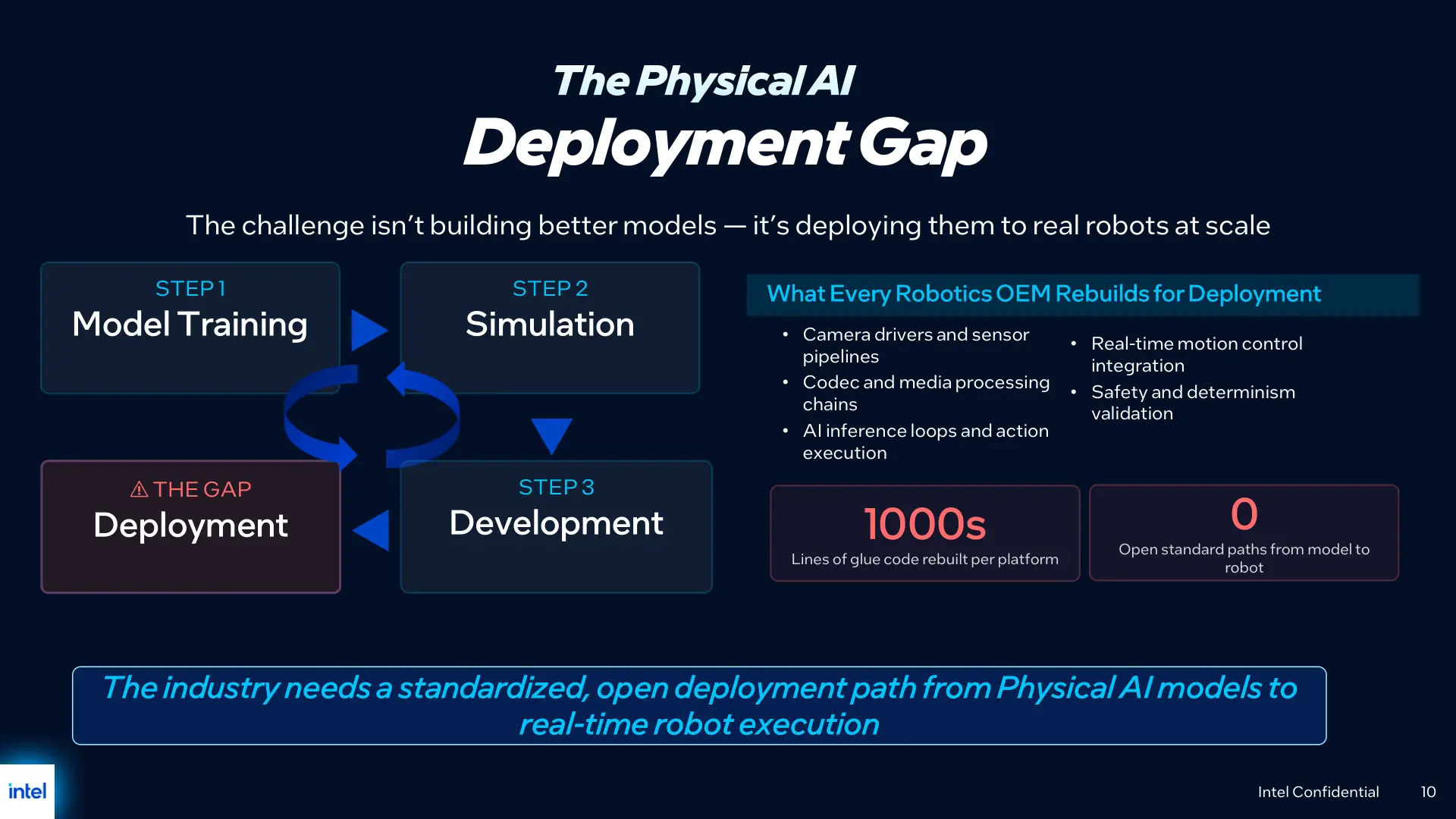
Intel says that it has found the way to fill the gap of the "missing link" which made it difficult to deploy physical AI at scale across the edge. The company notes how up until now, deployment at scale would required highly customized pipelines for each robot to handle sensors, codecs, inferencing loops, and this would limit customers to dual-compute solutions that were more expensive with a high TCO (total cost of ownership) while also being harder to maintain.
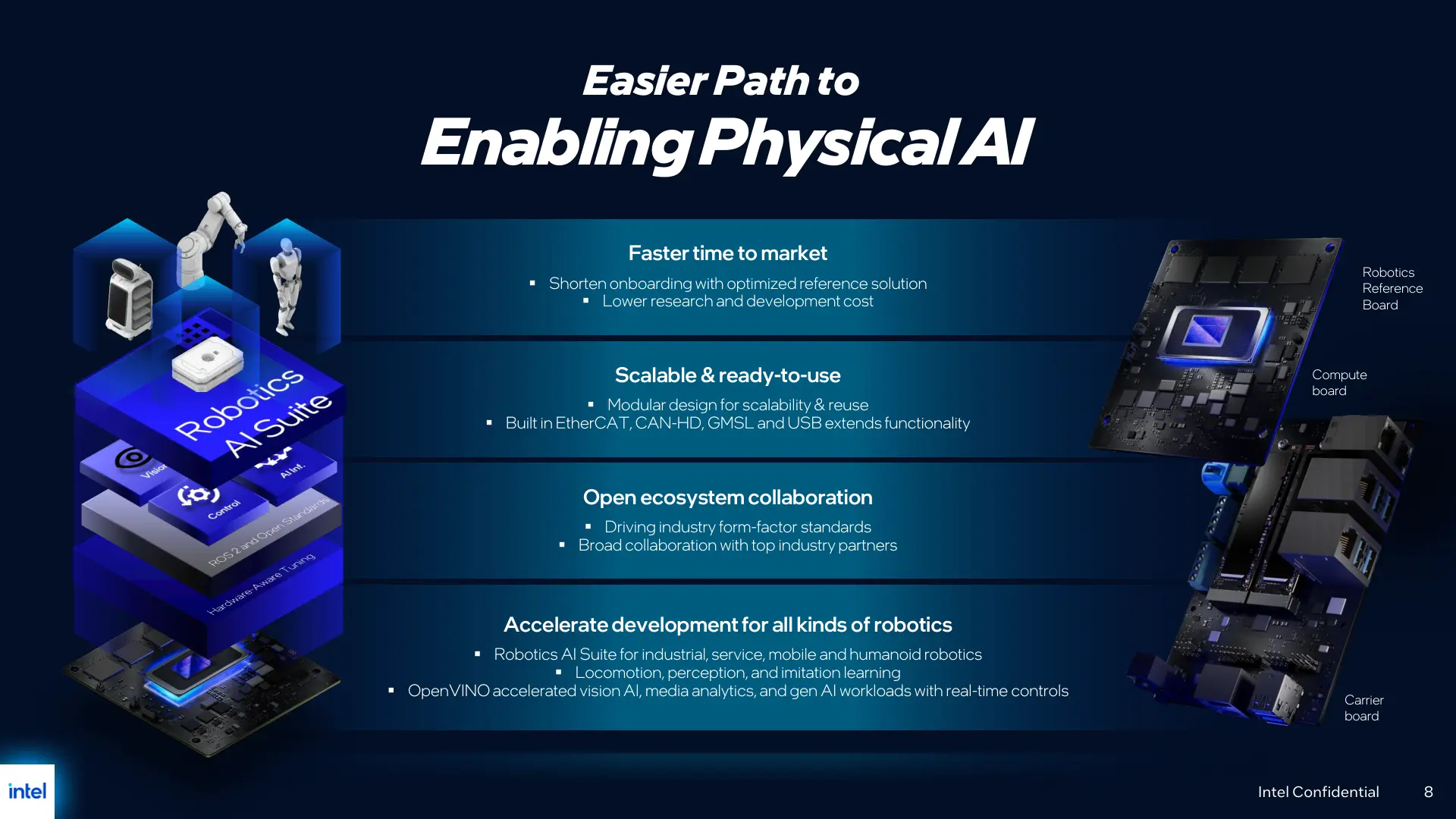
As such, with Core Ultra Series 3 CPUs and the new OpenVINO Physical AI, Intel is offering a unified
hardware‑software stack that should lower the TCO (total cost of ownership) and greatly improve code efficiency.
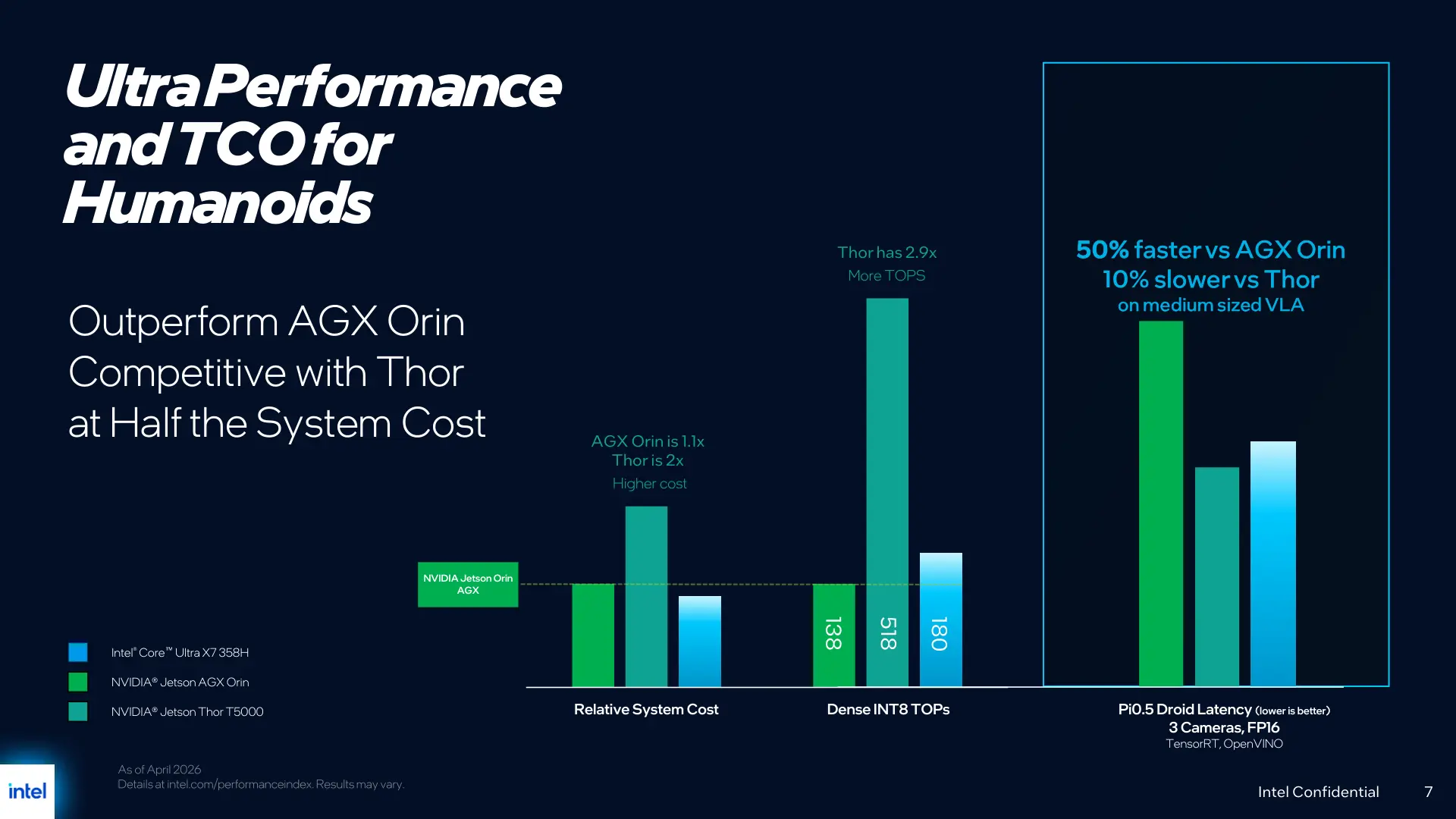
As you can see in the chart above, Team Blue has claimed cost, performance or value advantages against Nvidia's Jetson AGX Orin and Jetson Thor T5000 robotics platforms like in medium-sized VLAs.
















0 Comments
Load the comments and join the conversation!
Read the comments, ask the editors questions, show respect and join the conversation.