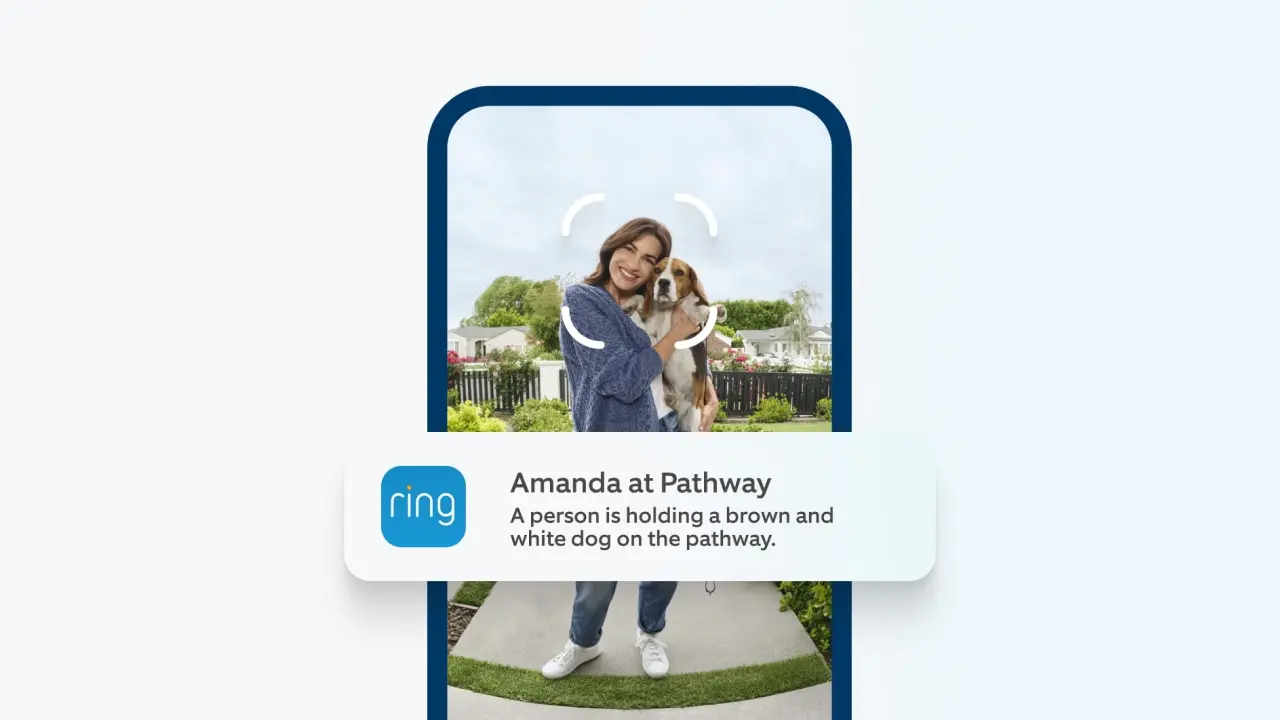
Amazon, the parent company of Ring, has been taken to court by Virginia resident Charles Sigwalt. The lawsuit filed in the Seattle federal court targets the company's "Familiar Faces" feature, citing privacy concerns.
Familiar Faces, if you're not familiar (heh!), is an AI-powered facial recognition feature that identifies specific visitors to send you a personalized alert instead of the generic "Person at Front Door" notification.
Once the system detects a face, the homeowner can assign a name to that profile in the Ring app, allowing the device to recognize frequent guests. The system works best within 9 to 13 feet for higher-resolution 2K and 4K cameras, while things like poor lighting, face masks, or high mounting angles can reduce its accuracy.
Sigwalt's lawsuit claims that millions of other Americans (think, delivery drivers, neighbors, mail carriers, and pedestrians) who pass by a camera "unknowingly had their facial recognition information collected" without their consent.
Ring has already stated that the collected face data remains "encrypted" and that the system automatically deletes unidentified faces after 30 days of no recognition, while labeled profiles get deleted after 180 days of no recognition. Familiar Faces is already blocked in places where biometric privacy laws are strict, including Illinois, Texas, Portland, and Quebec.
While tracking people is a touchy subject, Ring cameras are also capable of capturing animal biometrics. During the 2026 Super Bowl (Super Bowl LX), Ring drew massive criticism for airing an ad with the tagline "Be a hero in your neighborhood" to promote "Search Party," an AI feature. With Search Party, when a user reports a lost pet in the Ring app, the system scans a neighborhood's camera network to track a specific dog.
The doorbell maker is no stranger to lawsuits concerning customer privacy. For example, back in 2019, there was a massive lawsuit where hackers hijacked Ring cameras and used the cameras' two-way speakers to harass families, shout racial slurs, demand Bitcoin ransoms, and even speak directly to young children.
About four years later, Ring was back in court after the Federal Trade Commission (FTC) filed a lawsuit over the company failing to restrict its own employees and contractors from accessing customers' private video feeds, allowing workers to spy on women in their bedrooms and bathrooms.


















0 Comments
Load the comments and join the conversation!
Read the comments, ask the editors questions, show respect and join the conversation.