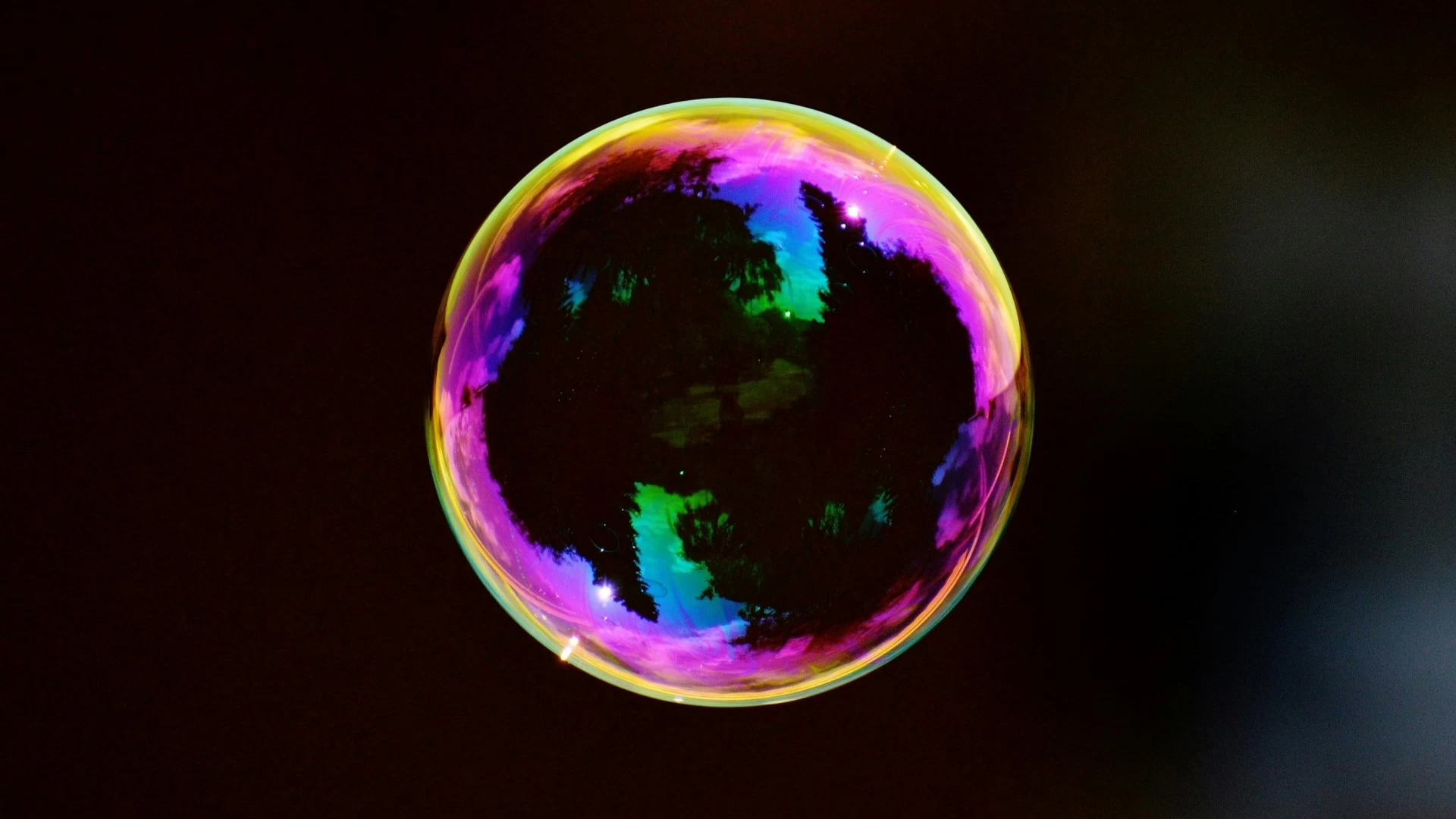
A joint team from POSTECH (Pohang University of Science and Technology) and Jeonbuk National University has shown that mechanical waves can be fully trapped inside a single solid resonator. Many researchers thought this was "theoretically impossible" in compact systems. The work was published on April 3 in Physical Review Letters and focuses on bound states in the continuum, or BIC, where waves stay trapped and do not lose energy, even though, in a continuum, there are paths for them to escape.
Resonance sits at the core of many devices you use, like smartphones, ultrasound scanners, and radios. Resonators boost waves at certain frequencies, but they usually leak energy over time, so they need constant input. Nearly a century ago, John von Neumann and Eugene Wigner suggested that under special conditions, waves could be trapped forever without leaking. These states are called BICs and were long considered impossible in a single-particle setup.
The researchers provide both theory and experiments showing that genuine polarization-protected BICs can live inside compact solid resonators. They built a tunable mechanical system from cylindrical granular crystals, which are small quartz rods. The key control is at the contact boundaries where the cylinders touch. By adjusting those contacts, they could switch in situ between BICs and quasi-BICs in a controlled way.
In a specific alignment, they observed a wave mode that stayed entirely inside a single cylinder with no measurable leakage to nearby parts. They confirmed this using a laser Doppler vibrometer, which measures tiny surface vibrations. The single resonator supported BICs with quality factors above 1,000. The quality (Q) factor of a resonance describes the damping of its oscillation. A high Q value indicates low damping and energy loss at a lower rate.
Since one resonator can host a BIC, linking many of them allows these trapped modes to join up and form bound bands in periodic structures. The team built a finite chain with broken resonator symmetry and saw a quasibound flat band. In a flat band, the group velocity of a wave becomes zero at a specific frequency, so energy stays put rather than spreading. All the cylinders in the chain showed high-Q, dispersionless resonance.
“It’s like tossing a stone into a still pond and seeing the ripples remain motionless, vibrating only in place,” said lead author Dr. Yeongtae Jang. “Even though the system allows wave motion, the energy doesn’t spread—it stays perfectly confined.”
The team calls this chain-level effect a Bound Band in the Continuum, or BBIC. They point to possible uses in energy harvesting, ultra-sensitive sensors, and communications, where low loss and strong confinement help performance. The work remains in the fundamental research stage.
“We have broken a long-standing theoretical boundary,” said Professor Junsuk Rho, who leads the research. “While this is still in the fundamental research phase, the implications are significant—from low-loss energy devices to next-generation sensing and signal technologies.”
In simple terms, the team built a set of quartz cylinders whose touching points act like precise knobs. With the right setting, a wave can vibrate inside one cylinder without leaking. Chain several of them, and the trapped vibration can exist across the whole line without spreading. This shows a clear route to study and use strong wave confinement in compact, solid systems.
Source: POSTECH, American Physical Society
This article was generated with some help from AI and reviewed by an editor. Under Section 107 of the Copyright Act 1976, this material is used for the purpose of news reporting. Fair use is a use permitted by copyright statute that might otherwise be infringing.













3 Comments
Load the comments and join the conversation!
Read the comments, ask the editors questions, show respect and join the conversation.