When it came to image upscaling technology in games, Nvidia had a big head start as it introduced machine learning-powered upscaling called DLSS (Deep Learning Super Sampling) back in 2018 alongside the launch of its RTX 20 series GPUs. And just a year later in 2020, it released version 2.0 of DLSS with more improvements.
Even Intel beat AMD to AI/ML-based upscaling with XeSS that came out in 2020, with additional upgrades landing later in 2024. At the time, Team Red had yet to launch its temporal upscaling and only had a spatial solution.
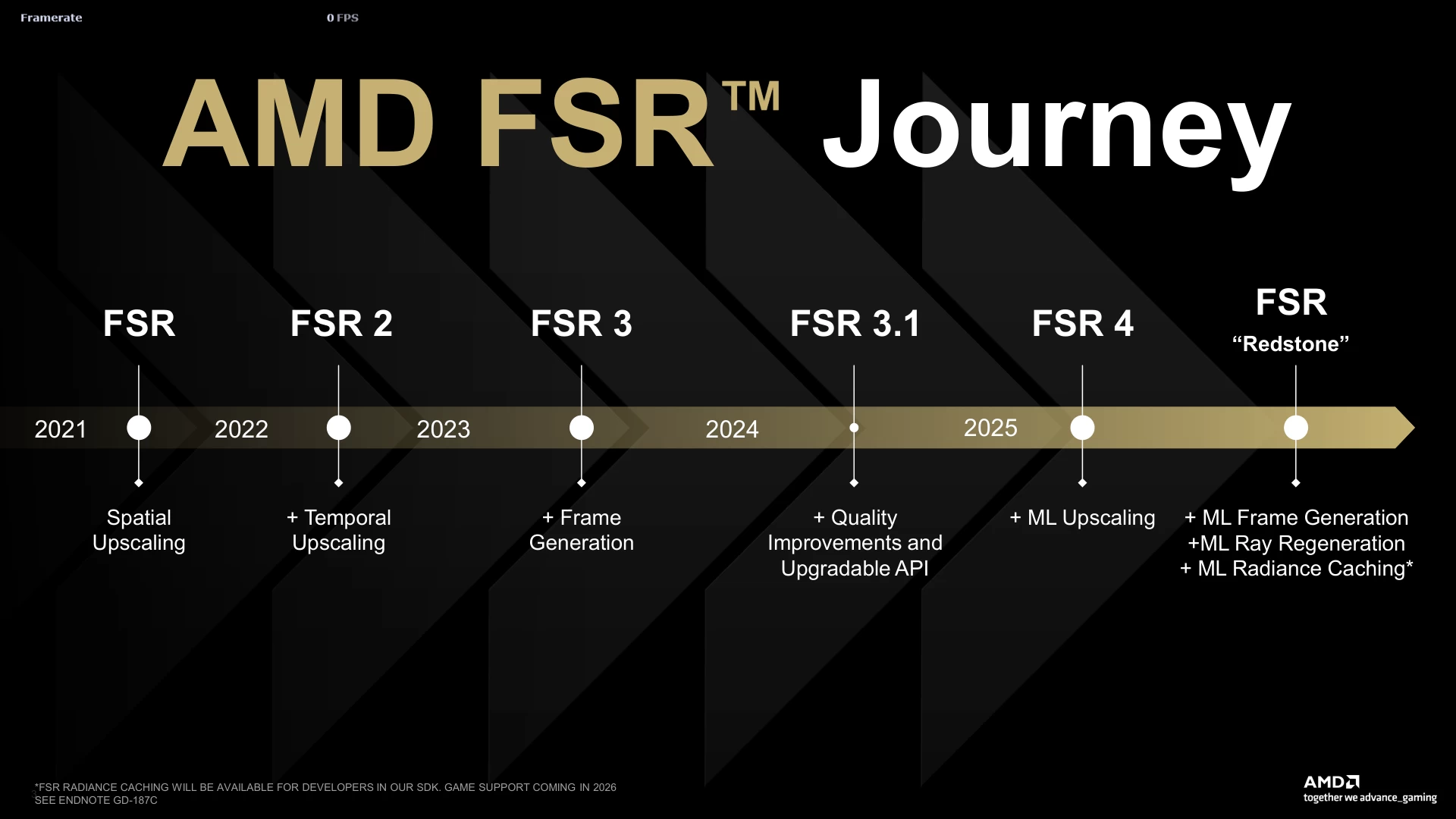
At long last, the Radeon division finally debuted its equivalent solution with FSR 4 earlier this year, and when we reviewed the tech recently in Mafia: The Old Country, we were left quite impressed. We saw a significant upgrade over its previous non-AI-based attempts. Find the review here.
Today, AMD is introducing its next major evolution in FSR technology with the launch of FSR "Redstone" and a corresponding new Windows WHQL driver, version 25.12.1. With it the company promises excellent performance while maintaining visual fidelity. In fact, AMD even goes on to say that users can expect visual quality to exceed that of native resolution (more on this later).
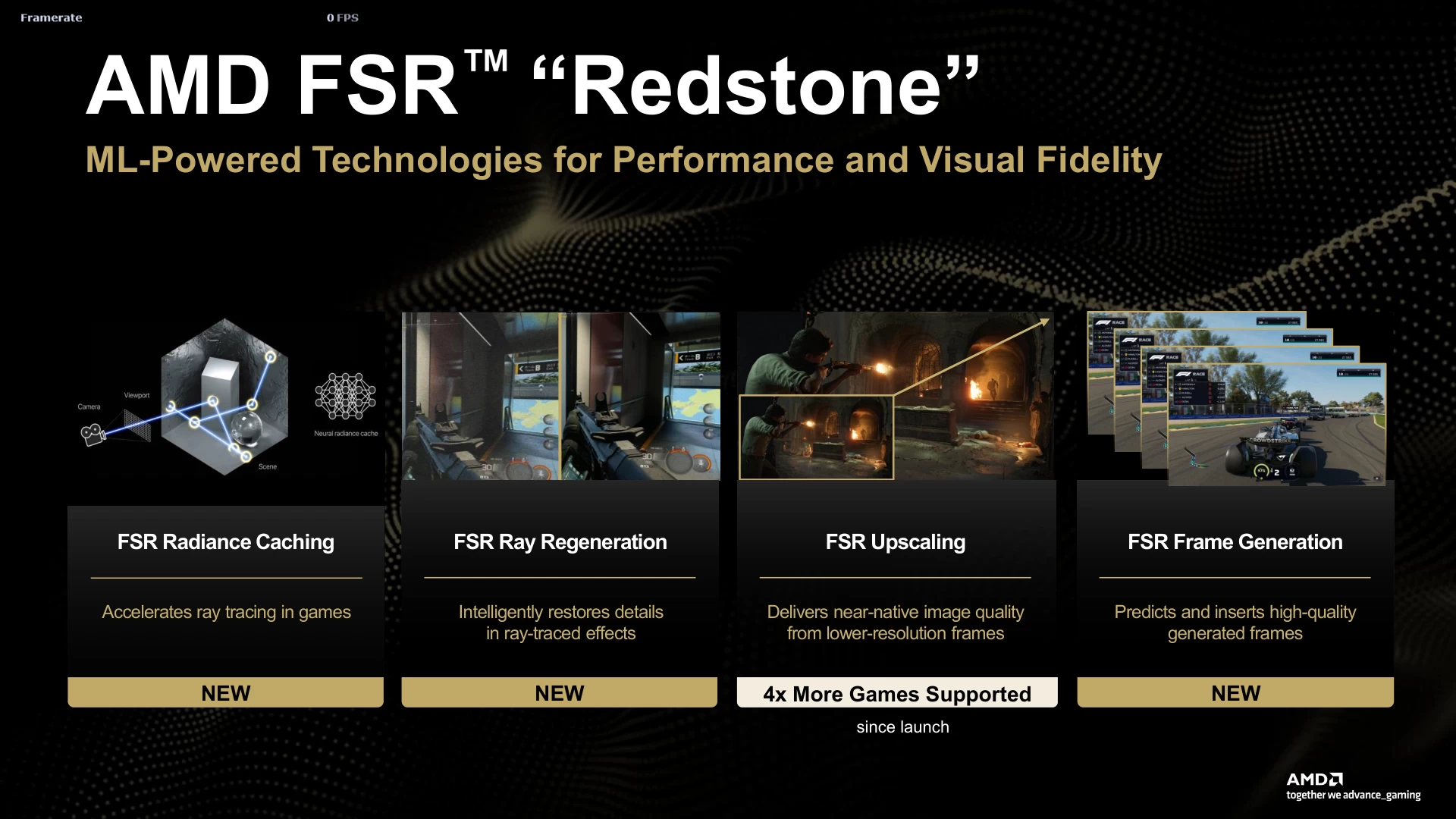
As you can see in the image above, Redstone is essentially the umbrella term for Radeon"s entire suite of AI upscaling, frame generation, and ray regeneration features. Thus AMD no longer refers to its FSR versions separately anymore, and it is simply called "FSR".
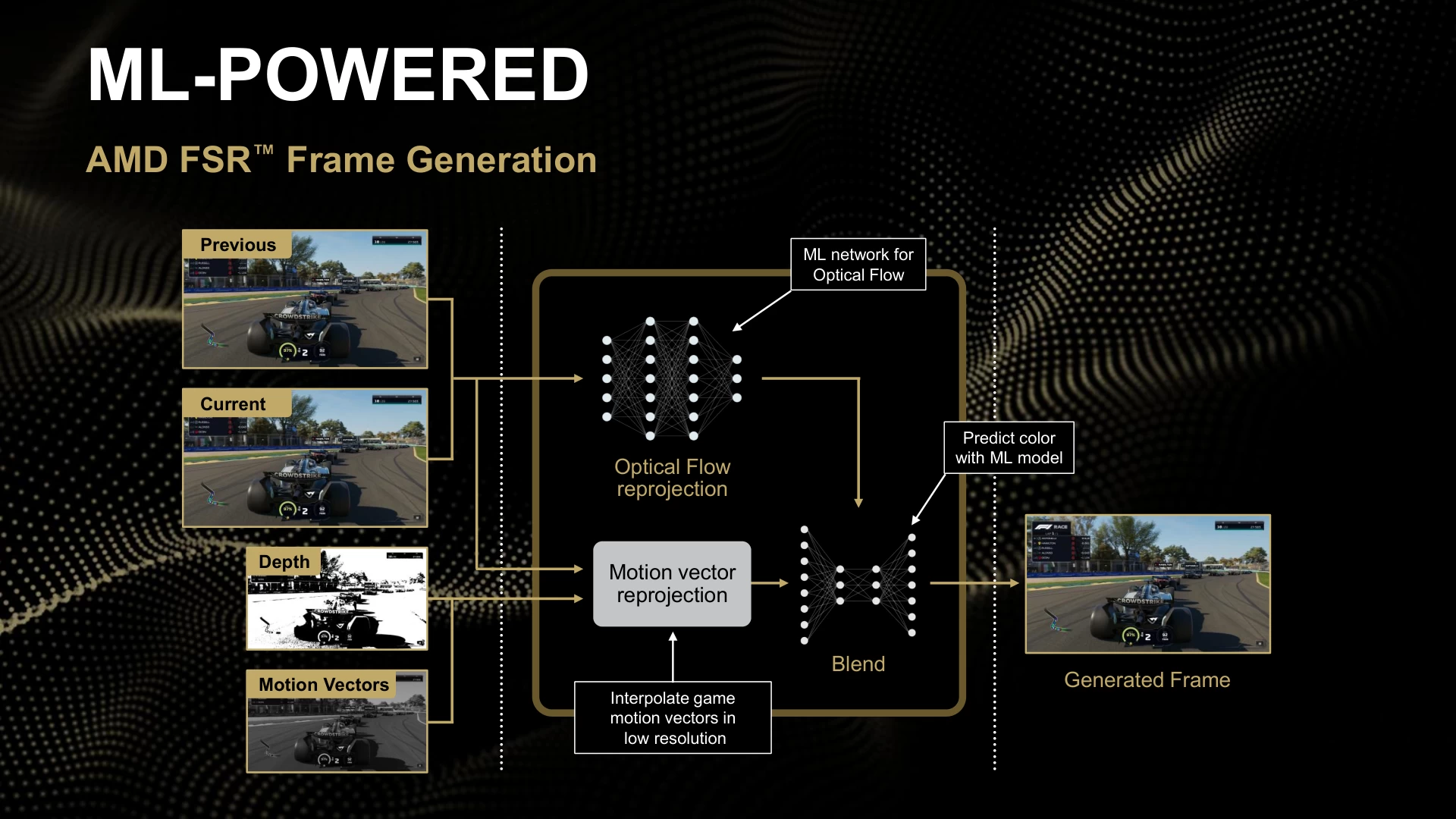
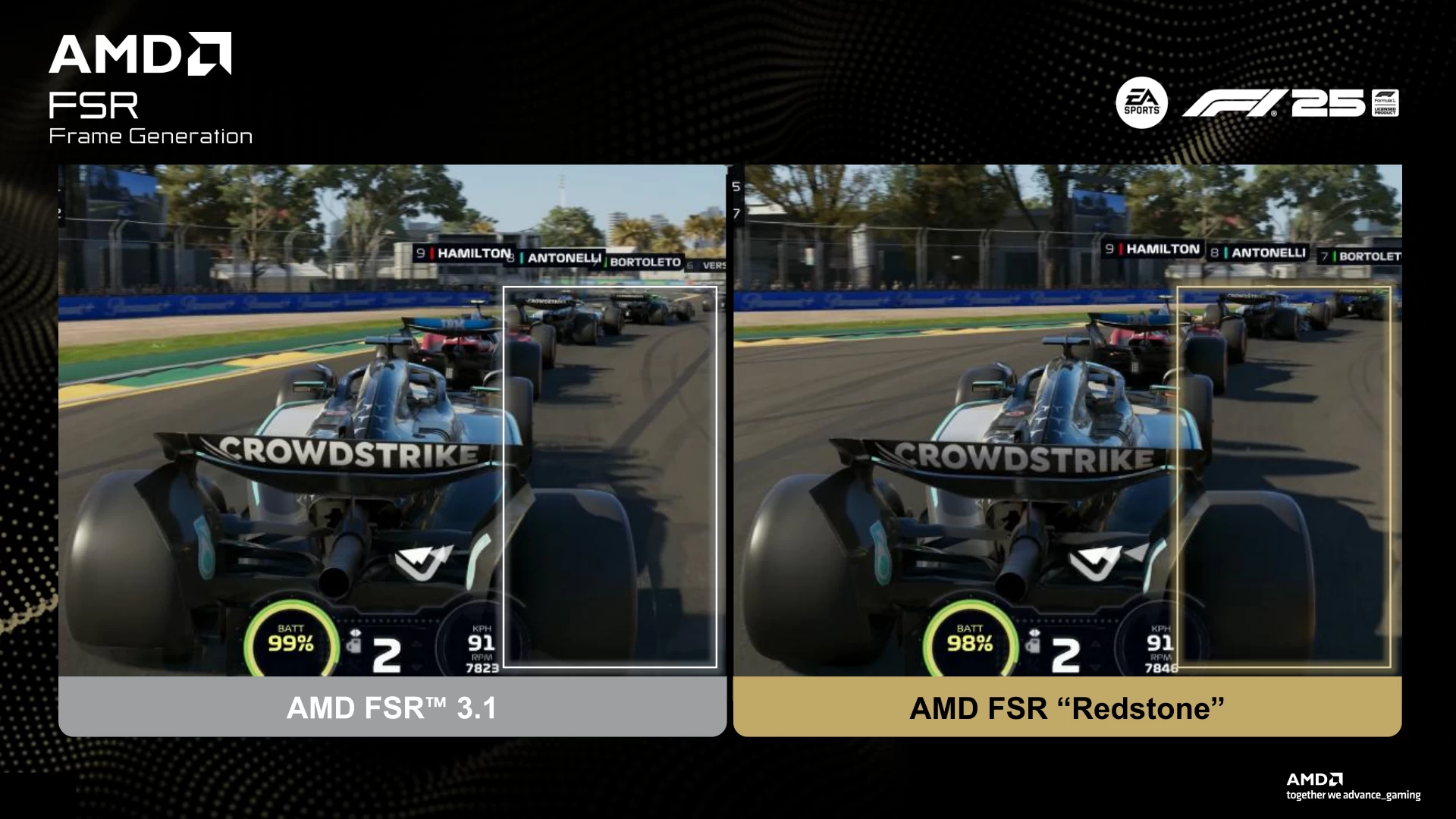
The company"s Frame Generation feature should be a significant improvement over the previous Frame Interpolation, as the latter did not use AI to do the pixel processing bits. The company gives the example of F1 25 as shown in the images above.
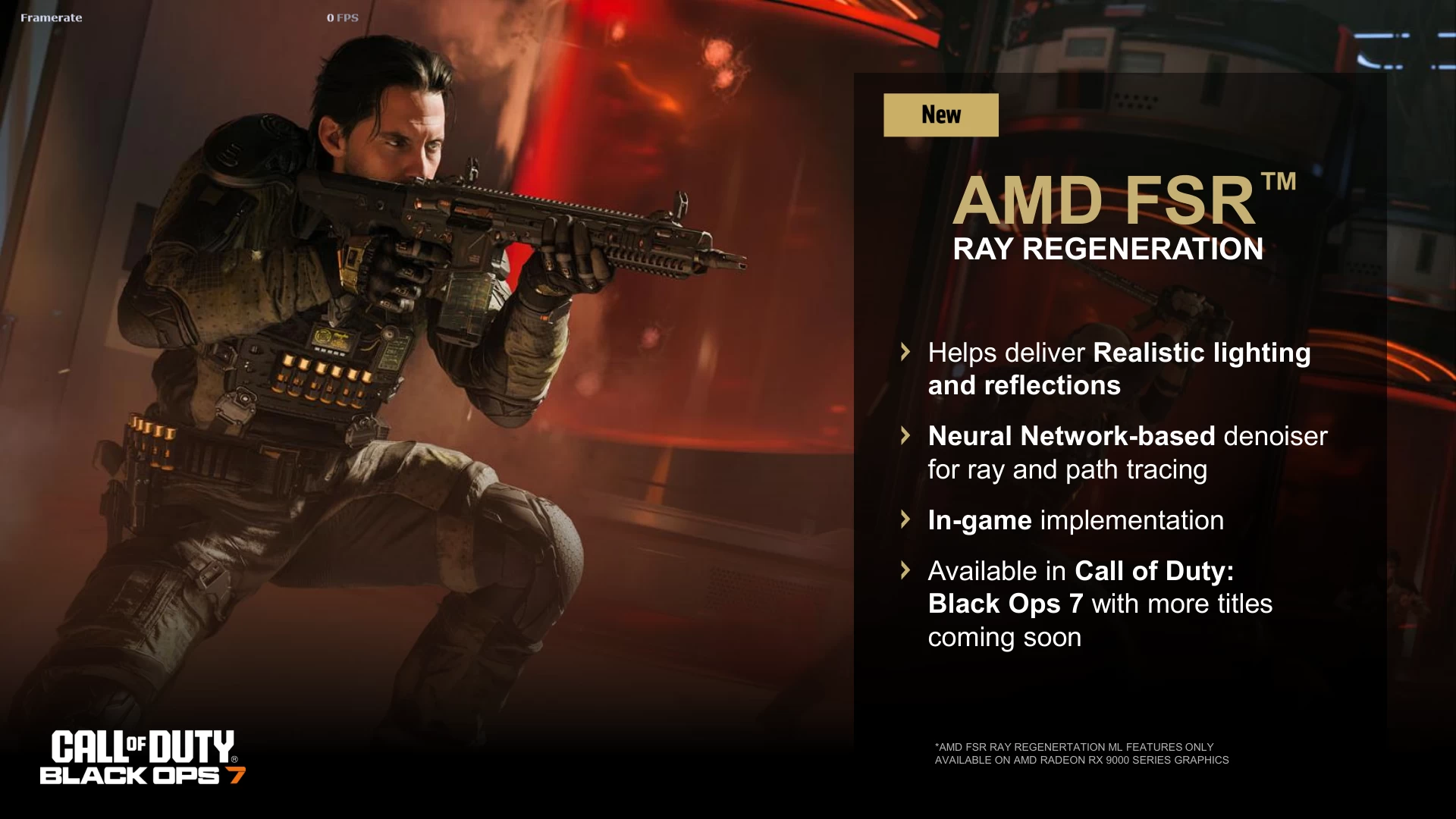
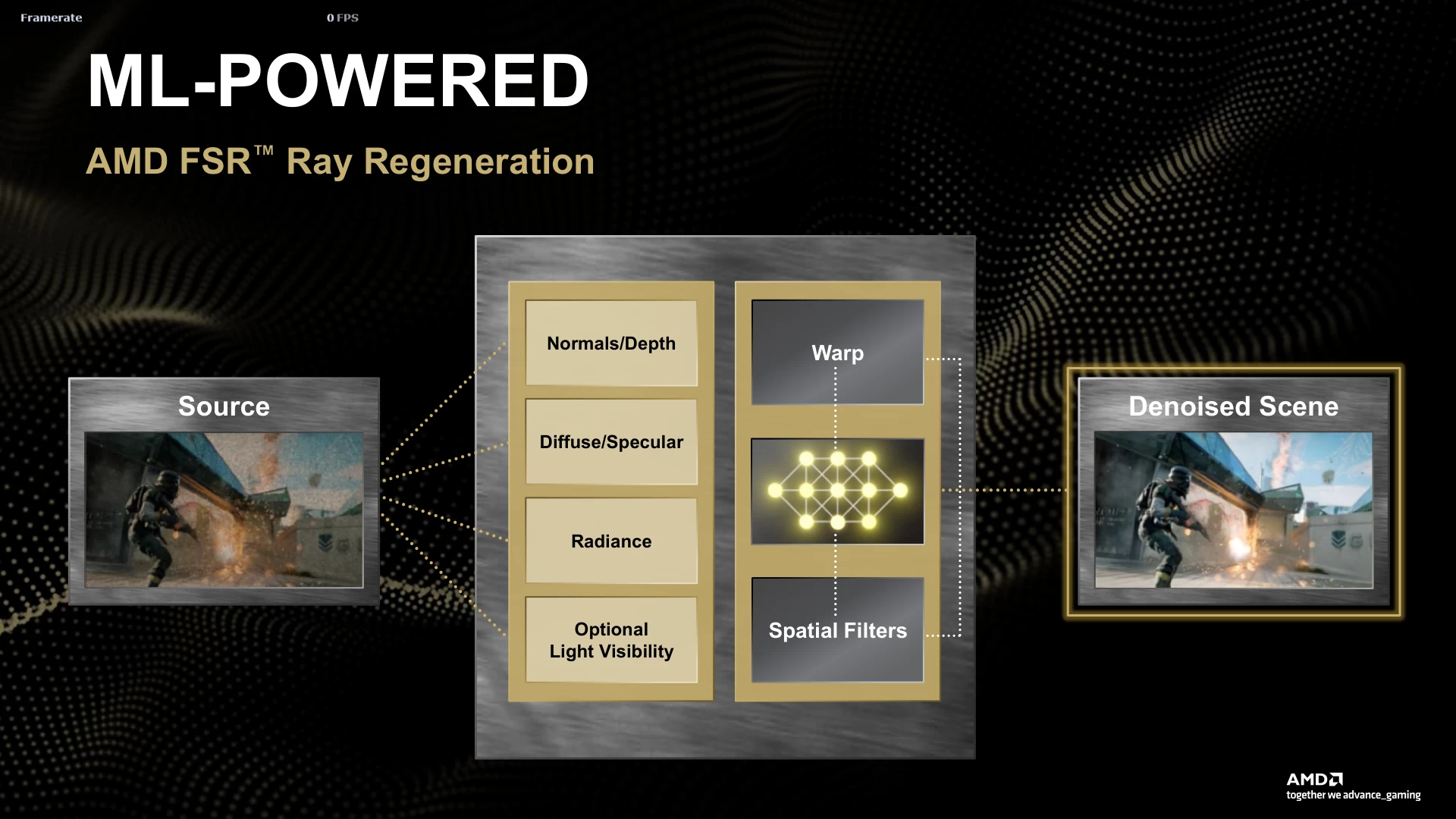
The company"s most recent FSR technology is ray regeneration which is essentially an answer to Nvidia"s DLSS ray reconstruction. It is essentially a denoising technology that is beneficial in restoring lost details while performing ray tracing and path tracing in games.
The company invited us to look at the performance of Ray Reconstruction in the recently released Call of Duty: Black Ops 7 and we were very impressed with what was on offer, so much so that we gave it a 9 out of 10 and could not find any major con.
AMD has also shown an example of what gamers can expect as it highlights how Redstone enables performance levels better than what someone can achieve without these technologies, and that also includes ray tracing.
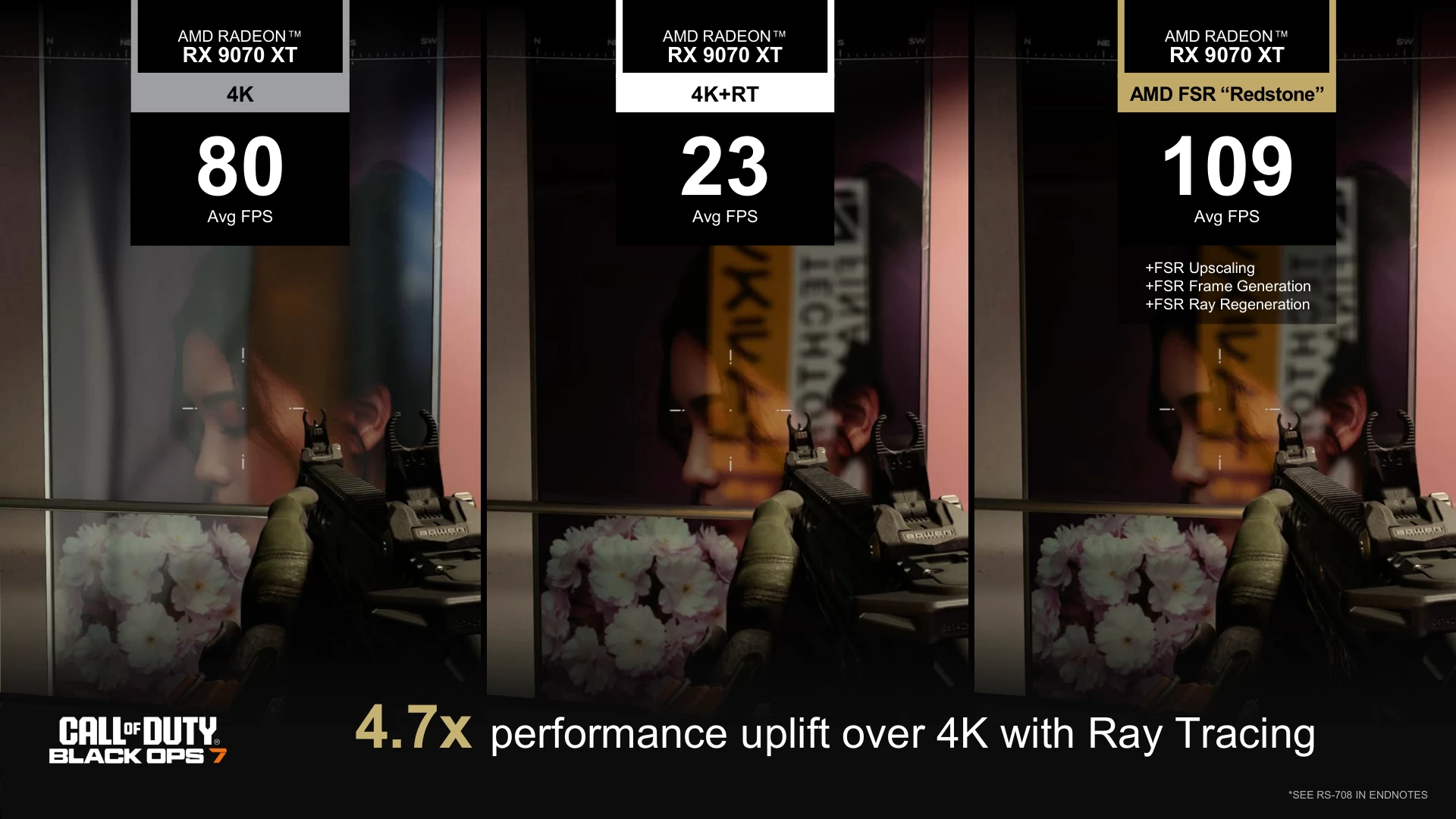
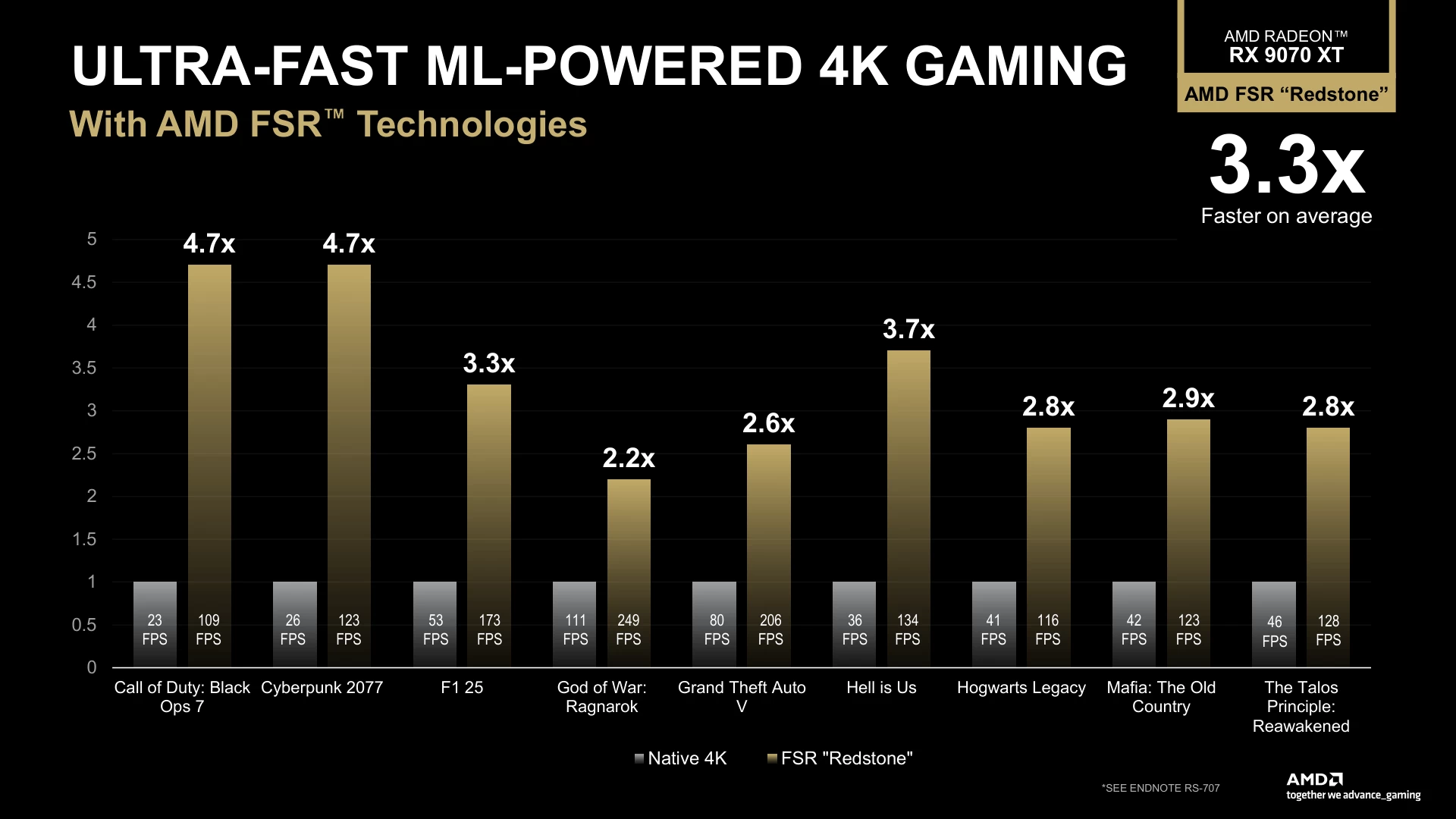
In the chart above, AMD touts huge performance boosts with FSR Redstone compared to native 4K performance. In the best-case scenarios, Team Red says you can get up to 370% gains, while at the opposite end of the spectrum, you can expect twice the performance.
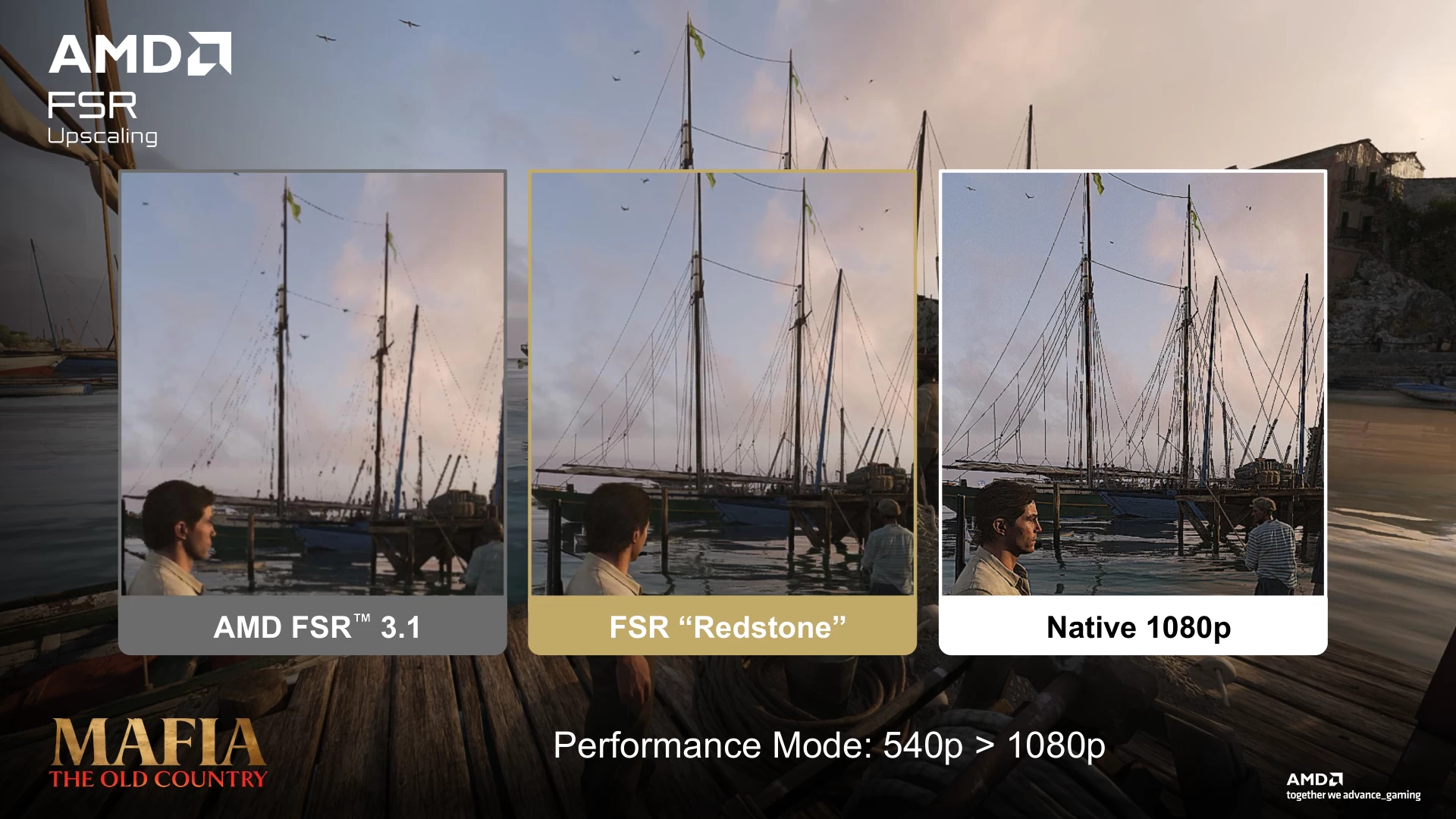
As mentioned above, AMD says that better than native image quality is possible. The company gave the example of a Mafia: The Old Country screenshot wherein the FSR Redstone processed image looks better than native, as the ropes and wires holding the spars of the ship are much better defined. They seem to look like actual ropes and wires rather than a rendered object that appears to detach at certain places. The upgrade over FSR 3.1 is even better.
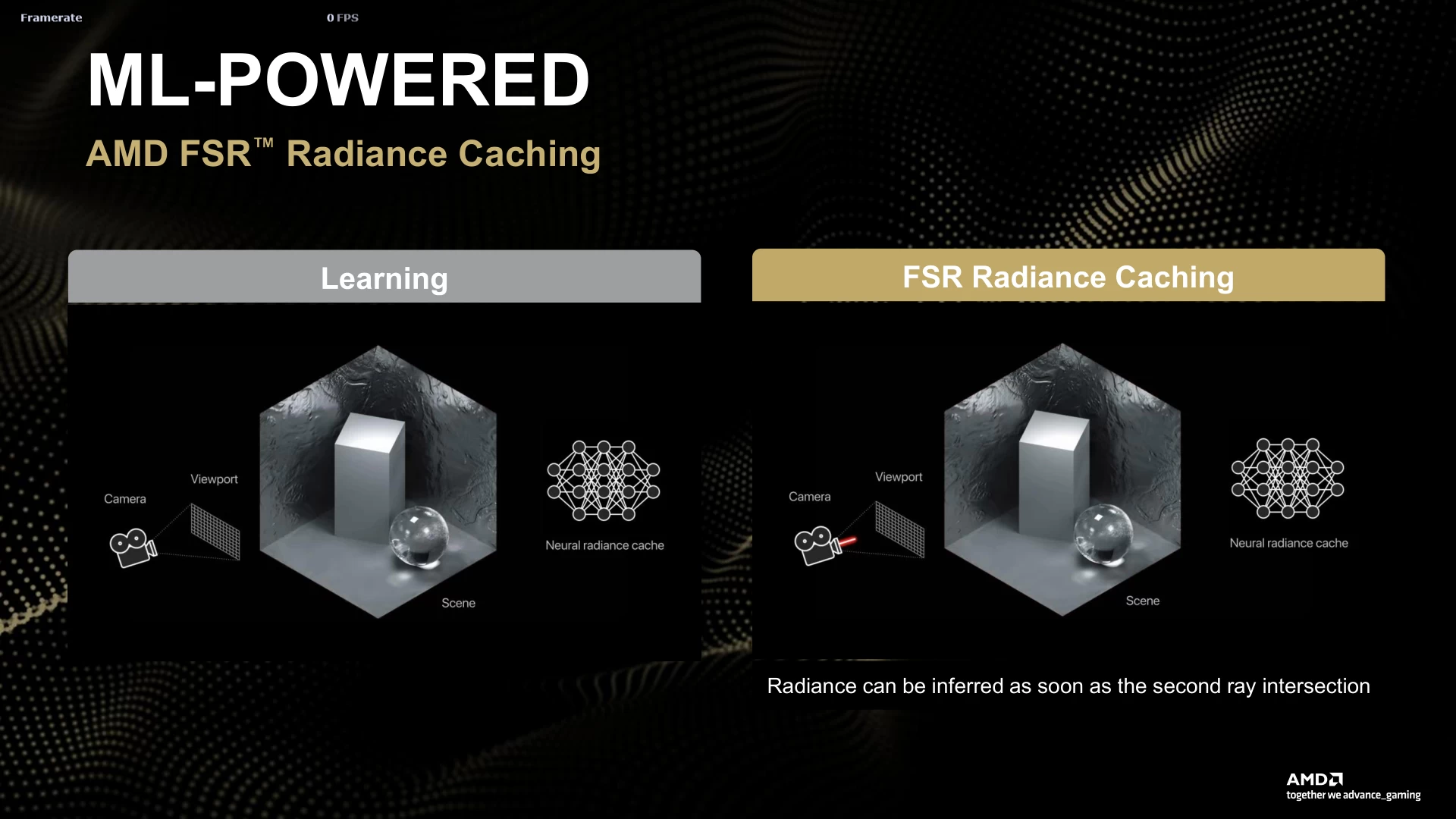
Finally, AMD has presented Radiance Caching, which is a ray tracing acceleration technology that especially helps to accelerate path tracing, although it will work on ray tracing as well. Similar to other caching mechanisms, this is made to accelerate performance by reusing assets, in this case ray-traced lighting effects.
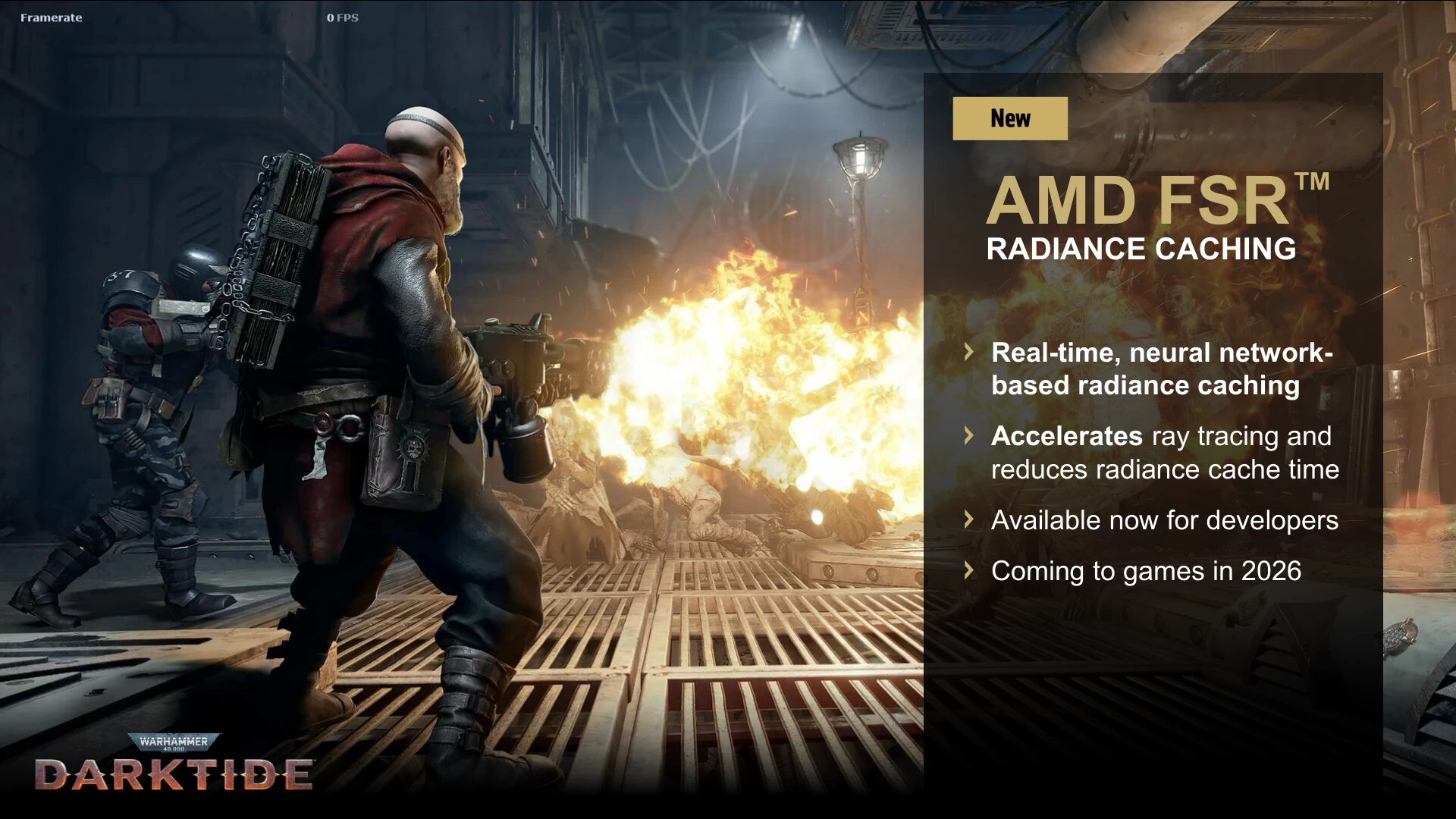
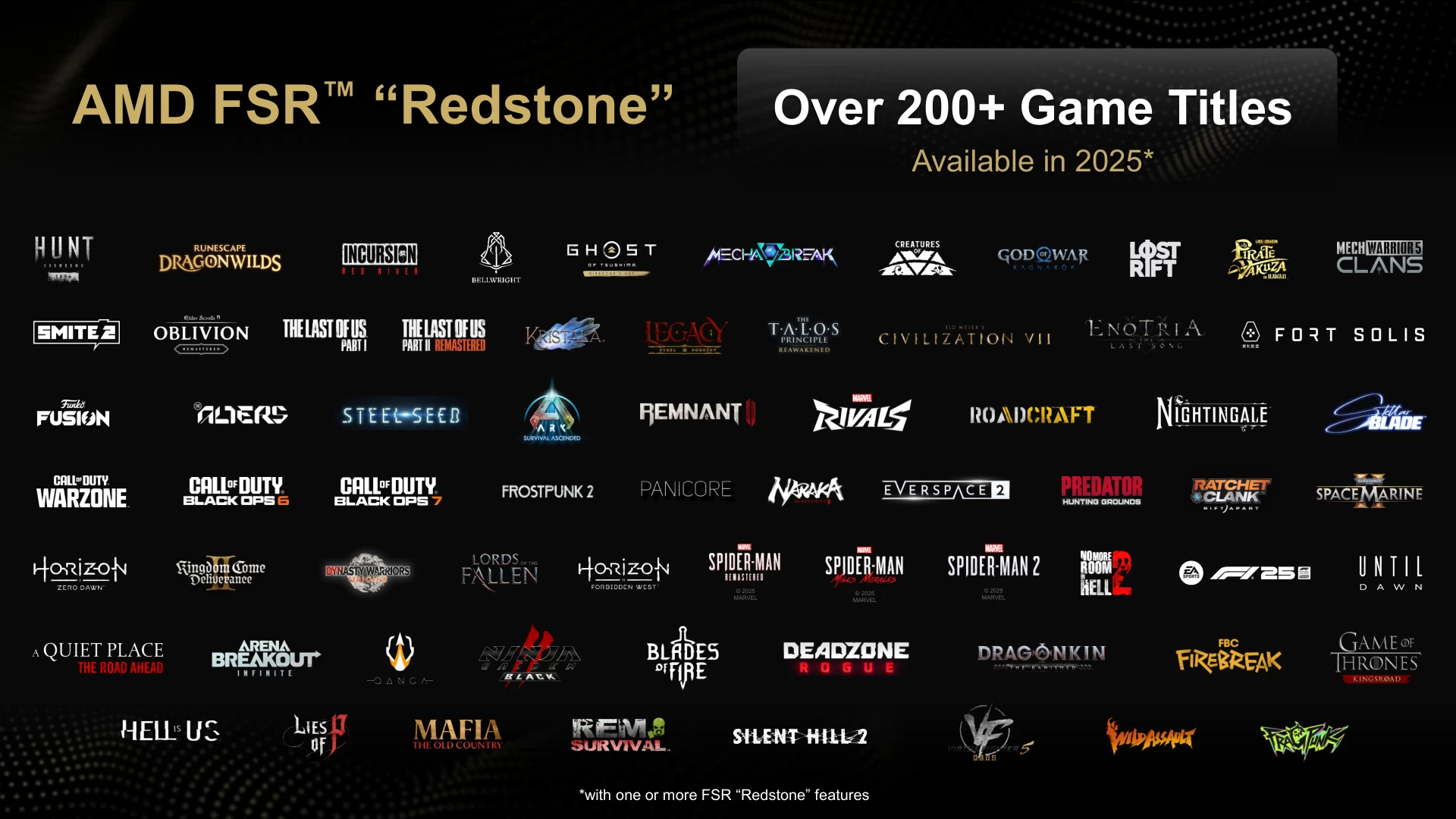
AMD also boasted about the 200+ titles that already have FSR technologies baked in, and we should probably be expecting more next year as games like Warhammer 40,000: Darktide
will start incorporating Radiance Caching.