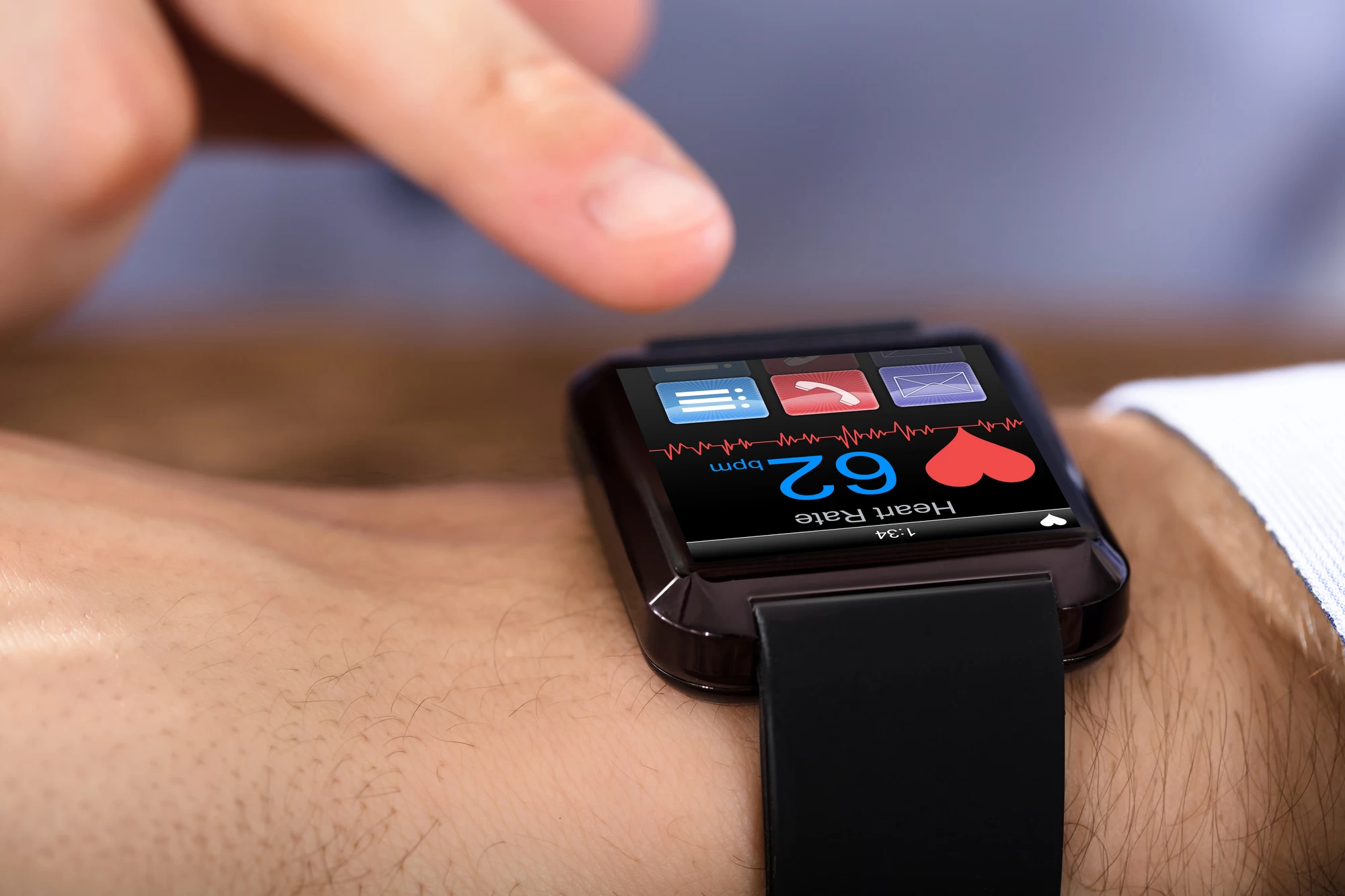
Researchers from the Sapienza University of Rome have developed an anomaly detection system called AI on the Pulse for continuous patient monitoring, specifically patients with neuro-degenerative conditions. The system combines data from wearable sensors and ambient intelligence with an advanced universal time series AI model called UniTS. While the system can use devices such as smartwatches, it’s much more than what these devices typically deliver.
According to the research paper, AI on the Pulse autonomously learns each patient’s unique physiological and behavioral patterns, allowing it to detect subtle deviations that could signal potential health risks. It’s not just theoretical either, it has been successfully deployed for continuous, real-world monitoring in a home-care environment called @HOME.
AI on the Pulse, powered by the UniTS model, outperforms 12 other state-of-the-art anomaly detection methods, with a roughly 22% improvement in F1 score, a metric used to evaluate the accuracy of the model. It also demonstrates robustness on both high-fidelity medical devices such as ECG as well as consumer wearables.
In the study, the researchers tested AI on the Pulse with a real-world dataset called @HOME which contained data from six elderly patients with early-stage neurological conditions. A senior geriatrician reviewed the detected anomalies, and 93.75% were confirmed as true positives, with the remaining 6.25% attributed to sensor issues. The paper says that the medical expert consistently rated the detected anomalies as clinically meaningful.
While these results are definitely good, the study did face challenges with missing data from long-term monitoring, which was addressed using interpolation. The system was able to keep anomalies down to just 32 incidents over three months thanks to its ability to adapt to individual baselines and prevent the misflagging of stable, but abnormal, personal patterns.
The AI on the Pulse system collects a lot of personal data to operate, including heart rate, sleep phases, respiration rate, and room location. Its primary goal is to give real-time, personalized alerts for home-care interventions. It uses large language models to generate human-readable explanations of anomalies for healthcare professionals.
Going forward, the researchers want to do a broader deployment of the technology and even scale it to full clinical use. For anyone out there who would like to play with the code and perhaps get it up and running on their own hardware, the code is available on GitHub.
Image via Depositphotos.com















0 Comments
Load the comments and join the conversation!
Read the comments, ask the editors questions, show respect and join the conversation.