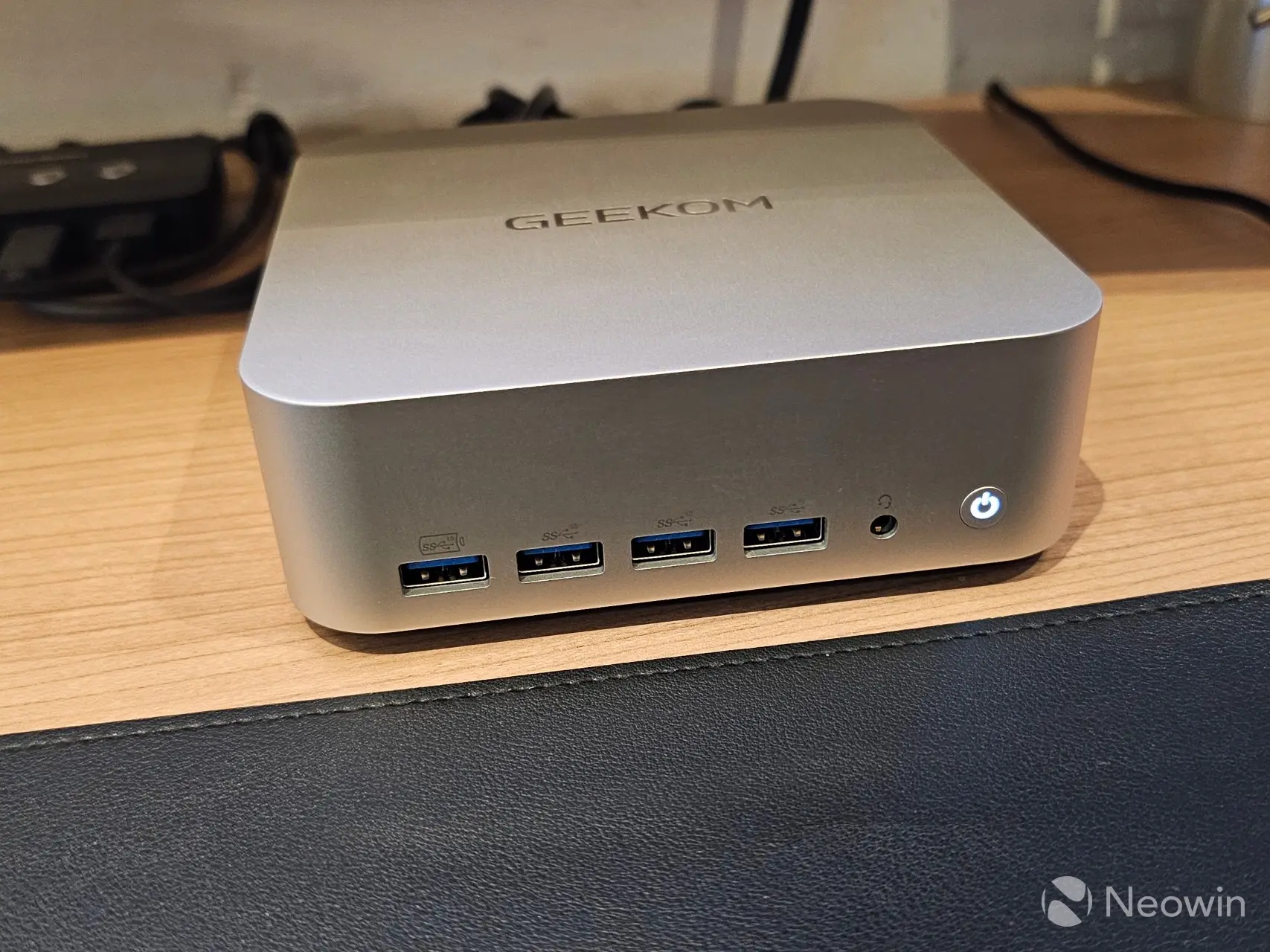
GEEKOM is back with another AMD Mini PC that came out in early December, they are calling it the "2026 Edition" on Amazon, but I was unable to find if there was an earlier version of this Mini PC. Anyway, since they offered it for review, I decided to put it through its paces.
With that out of the way, first a disclaimer: GEEKOM provided this sample without any editorial input or review pre-approval. Now some specifications:
| GEEKOM A7 Max | ||
|---|---|---|
|
Dimensions |
|
|
|
Weight |
677 g / 23.88 ounces | |
|
CPU |
AMD Ryzen 9 7940HS (8C/16T, 16MB L3, 4.0-5.2 GHz, TDP 54W) | |
|
Graphics |
AMD Radeon 780M 12 RDNA 3 Graphics Cores @ 2800MHz 768 shading units / stream processors (12 CUs), 48 texture mapping units, and 32 ROPs |
|
| NPU | Yes (AMD AI Ryzen, 10 TOPS) | |
|
Memory |
1x 16GB Dual-channel DDR5 5600 MT/s ADATA SODIMM | |
|
Storage |
1 x M.2 2280 PCIe Gen 4x4, Wodposit 512 GB |
|
|
Operating System |
Windows 11 Pro 25H2 | |
|
Bluetooth |
Bluetooth 5.2 | |
|
Ethernet |
2x Realtek Gaming 2.5GbE Controller | |
|
Wireless LAN |
MediaTek MT7922 M.2 Wi-Fi 6E LAN card | |
|
|
||
|
Rear I/O ports |
2 x Ethernet RJ45 2.5 Gbit/s |
|
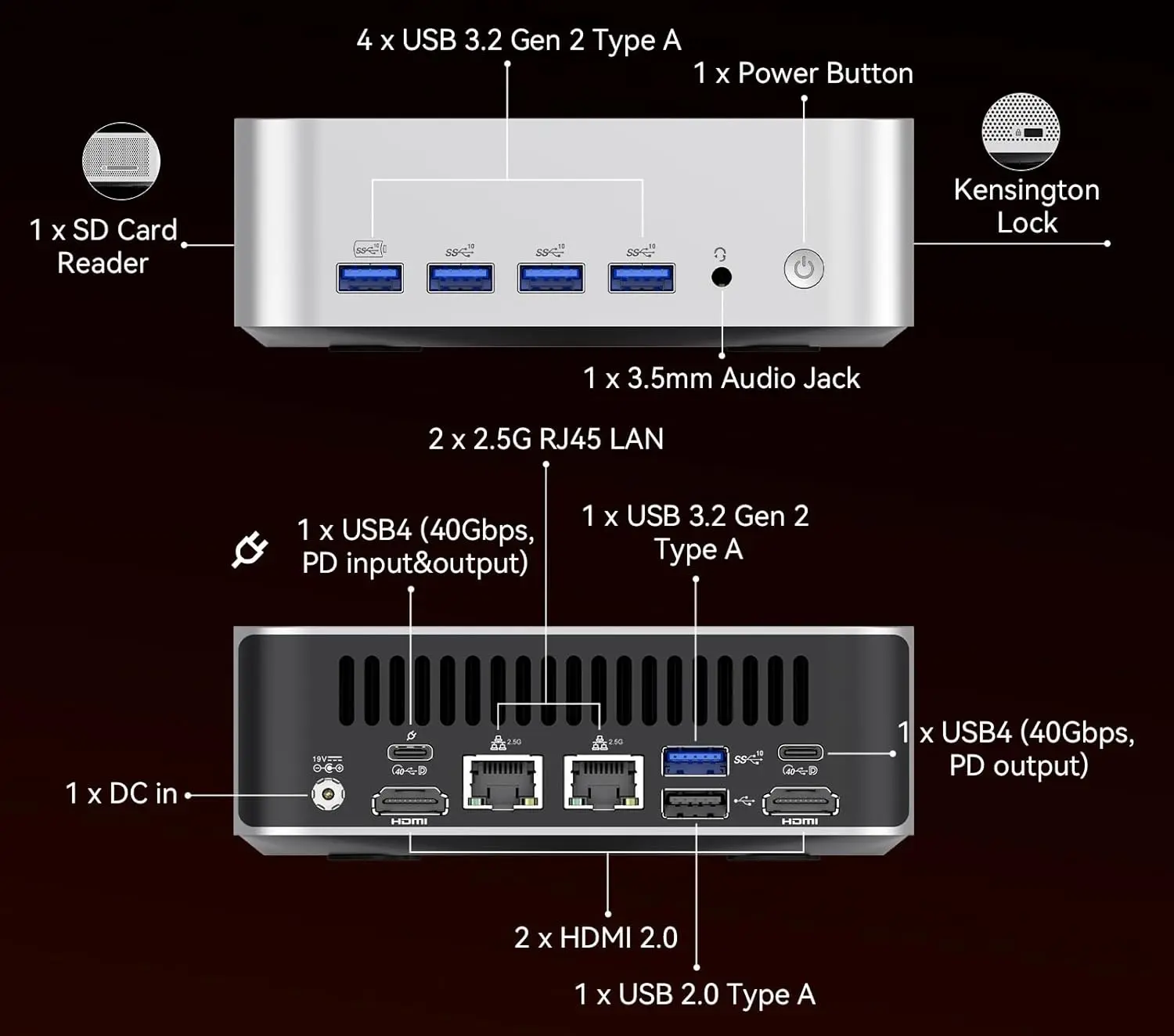
| Front I/O ports | 4 x USB 3.2 Gen 2 Type-A (10 Gbps) 1 x 3.5 mm headphone jack |
|
| (Bio) Security | No | |
| SD Card slot | Yes | |
| Kensington Lock | Yes | |
| Power | 19V/6.32A, (120W External PSU) | |
| Warranty: | 3 years | |
|
MSRP |
$799 (discount price at the end of the review) | |
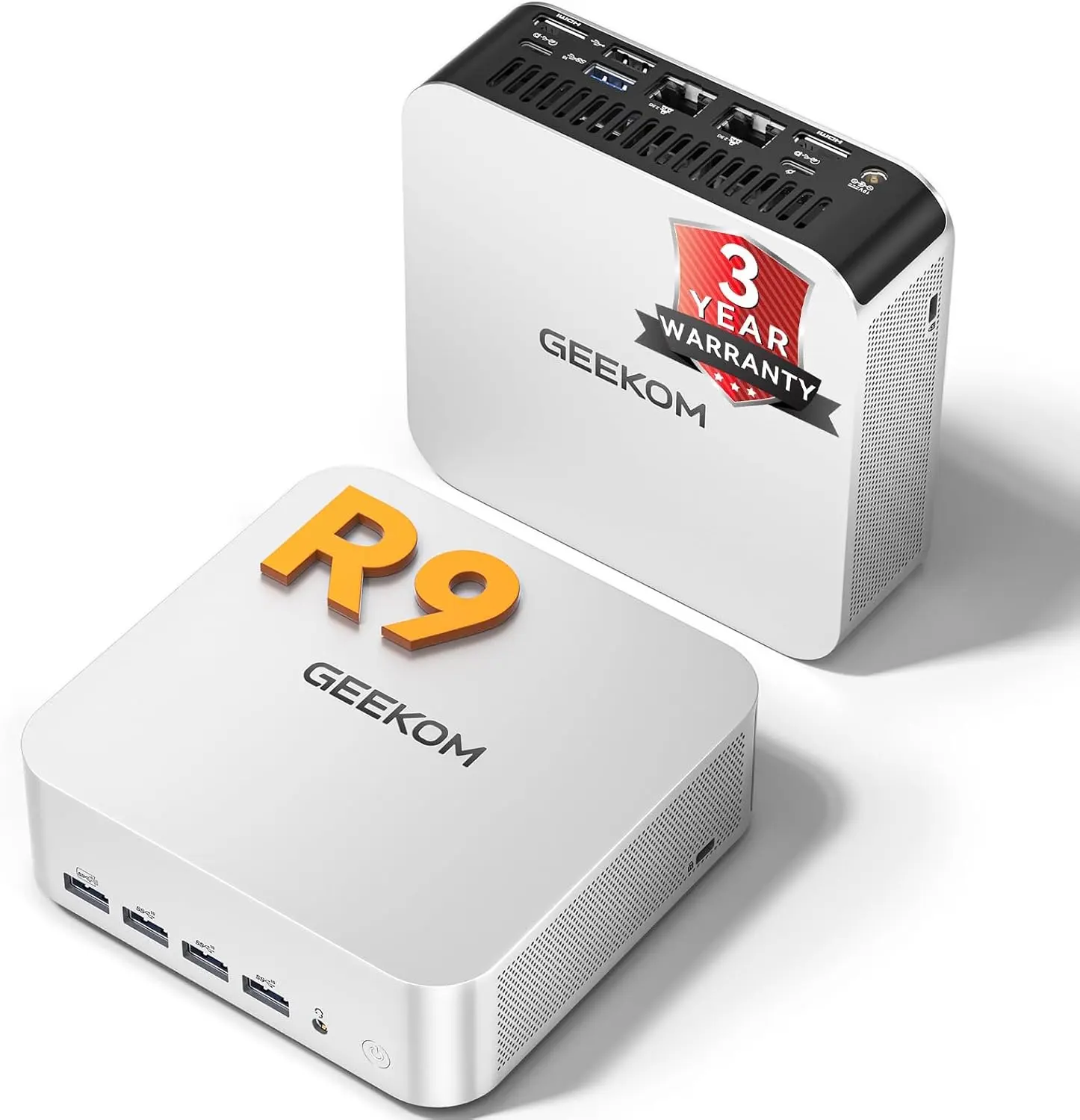
Introduction
The A7 Max is powered by the in Q1 2023-released AMD Ryzen 9 7940HS using the Zen 4 (Phoenix) architecture. Targeted at gaming (up to 1080p) and productivity laptops but widely used in mini-PCs, too, the 7940HS features 8 cores (16 threads thanks to SMT support) running at up to 5.2 GHz, along with the still fairly capable Radeon 780M iGPU. It also includes a dedicated NPU utilizing AMD AI Ryzen at 10 TOPS.
On the graphics front, the 7940HS includes a Radeon 780M integrated GPU with a max GPU frequency of 2900 MHz across 12 cores. It has been said that the iGPU is equivalent to the NVIDIA GeForce GTX 1650 in gaming and synthetic benchmarks. Other highlights include DDR5 memory at 5600 MT/s, WiFi 6E, Bluetooth 5.2, a slot to put in your memory cards, and a Kensington Lock.
AI PC?
No. Although the AMD Ryzen 9 7940HS includes an AMD AI Ryzen NPU, it's only 10 TOPS; therefore, it does not qualify as a Copilot+ PC.
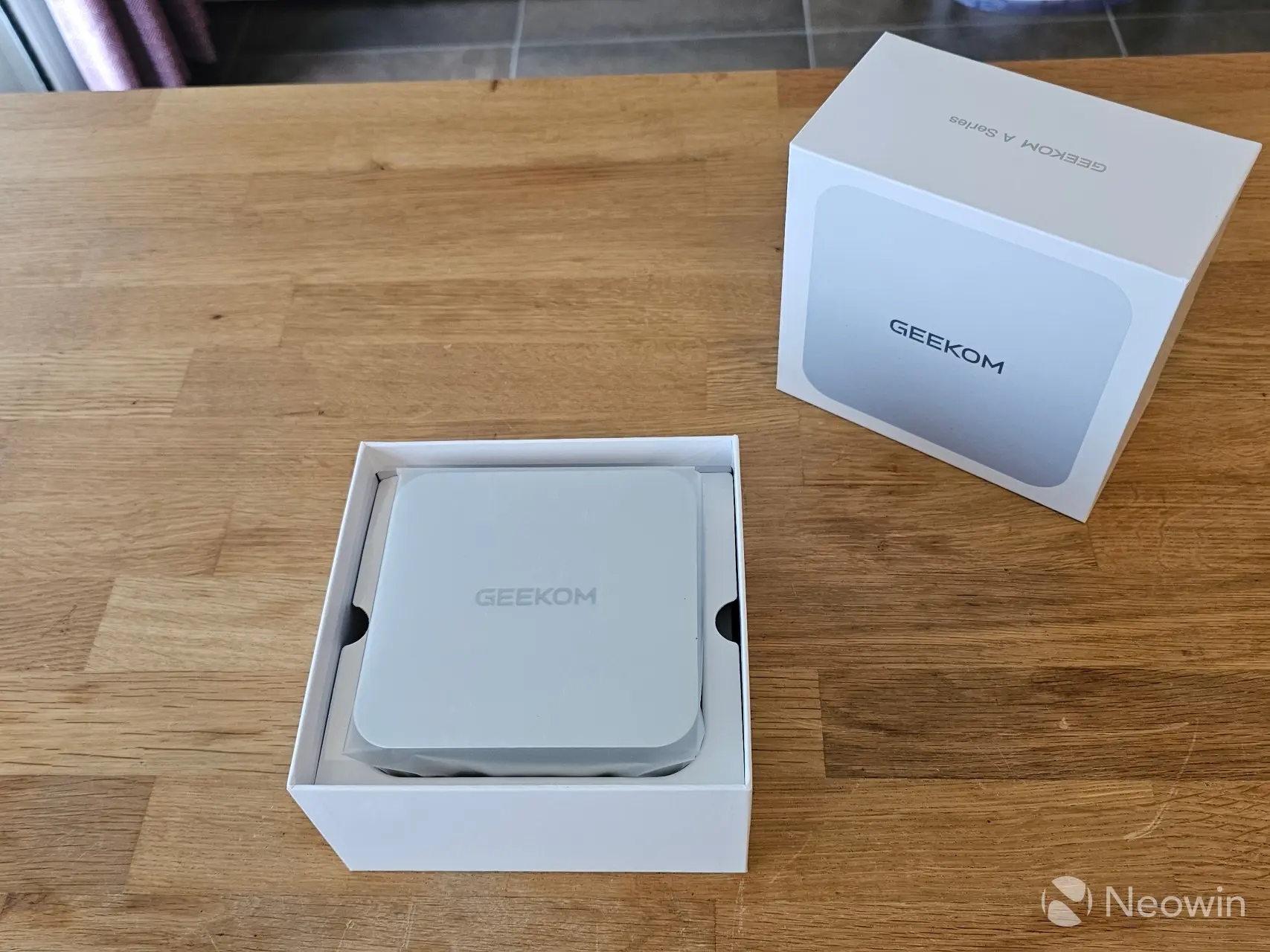
The packaging is a familiar experience. The box lid cover can be lifted off revealing the A7 Max sitting in a cardboard "shelf", below that is a small booklet of documentation. Below the top shelf, there is a cardboard divider, which, when removed, reveals the other components, such as the power brick and lead, HDMI cable, a bag of screws, and the VESA mount plate.
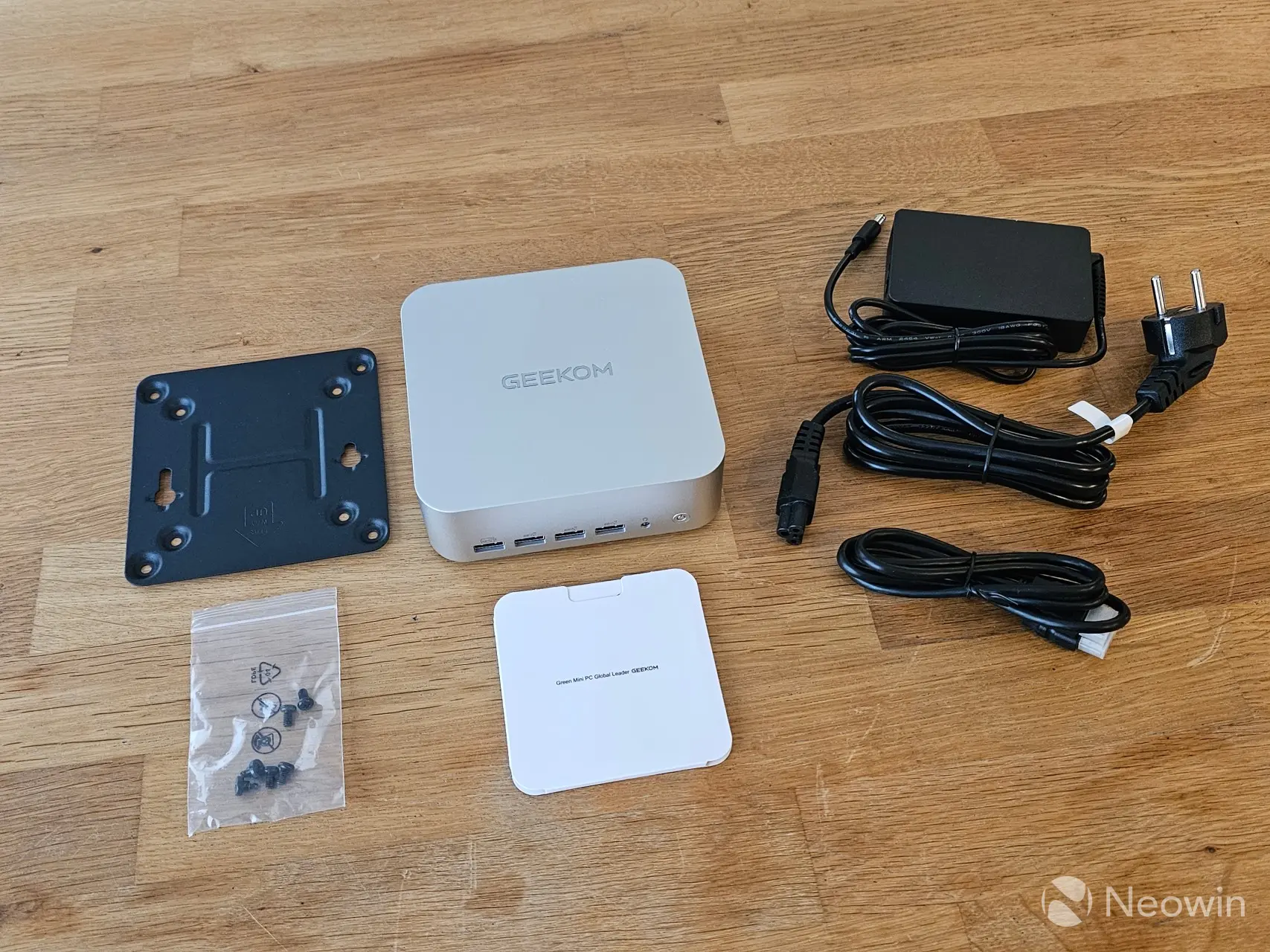
What’s In The Box
- 1 x GEEKOM A7 Max Mini PC
- 1 x HDMI Cable
- 1 x VESA Mount
- 1 x Power Adapter (19V/6.32A)
- 1 x bag of screws
- 1 x User Guide (Online link)
Design
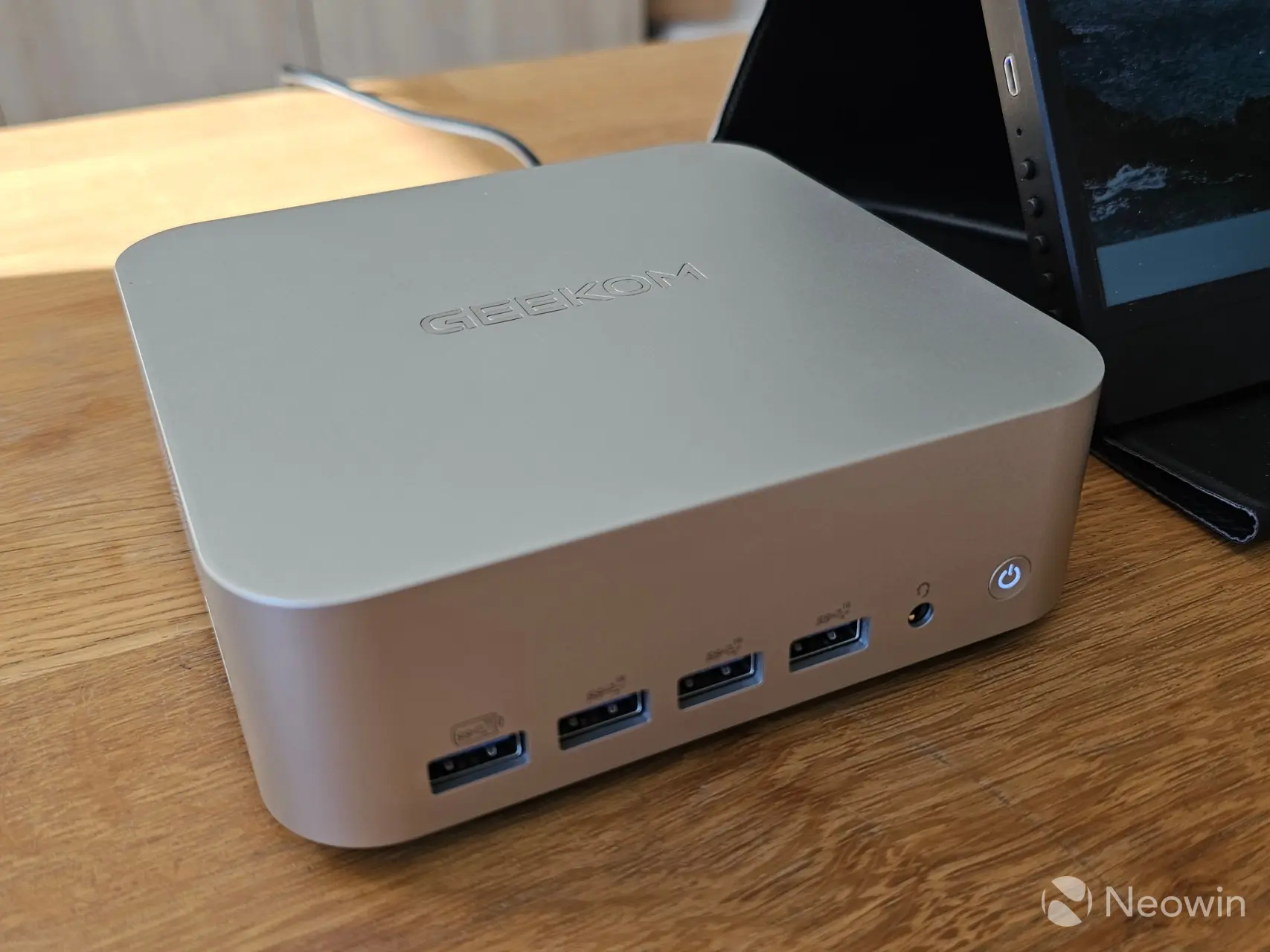
The A7 Max's design is basically the same as others in the A series, right down to the ports (on the rear), because on the front, there are two additional Type A USB ports. It is a similar weight and retains a good heft to it; while not being heavy, it isn't light either. It definitely gives off a premium and balanced feel to it. All the edges and corners, except for the bottom edges of the Mini PC, are rounded, so it is comfortable to hold and move around. It must be noted that GEEKOM did not provide the official weight, so I weighed it myself, and it came to 677 grams; all of that weight is thanks to the all-metal frame and housing.
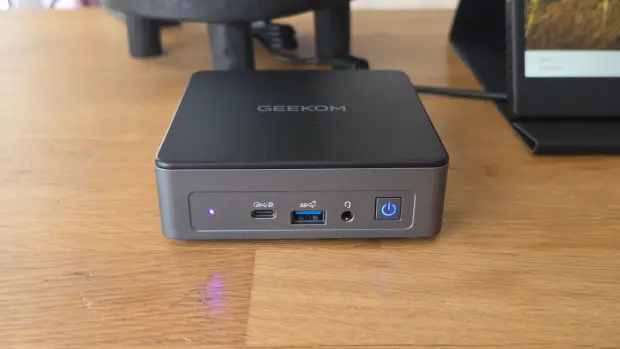
Although the A7 Max also includes two USB 4.0 ports (Type-C), unfortunately, these are still located on the back of the Mini PC. I can only imagine this decision was made to make the front of the A7 Max look more uniform with its ports; however, having the option for Type-C and USB Type-A on the front of the Mini IT11 is what made it great. The Mini PC still includes five USB3 Gen 3.2 ports and one USB 2.0 port, that's two more than other A series Mini PCs I have tested, and these extra ports are located on the front, one of which is an "Always on" port for powering external devices while the Mini PC is powered off.
|
|
|
|
|
|
|
|
|
|
|
|
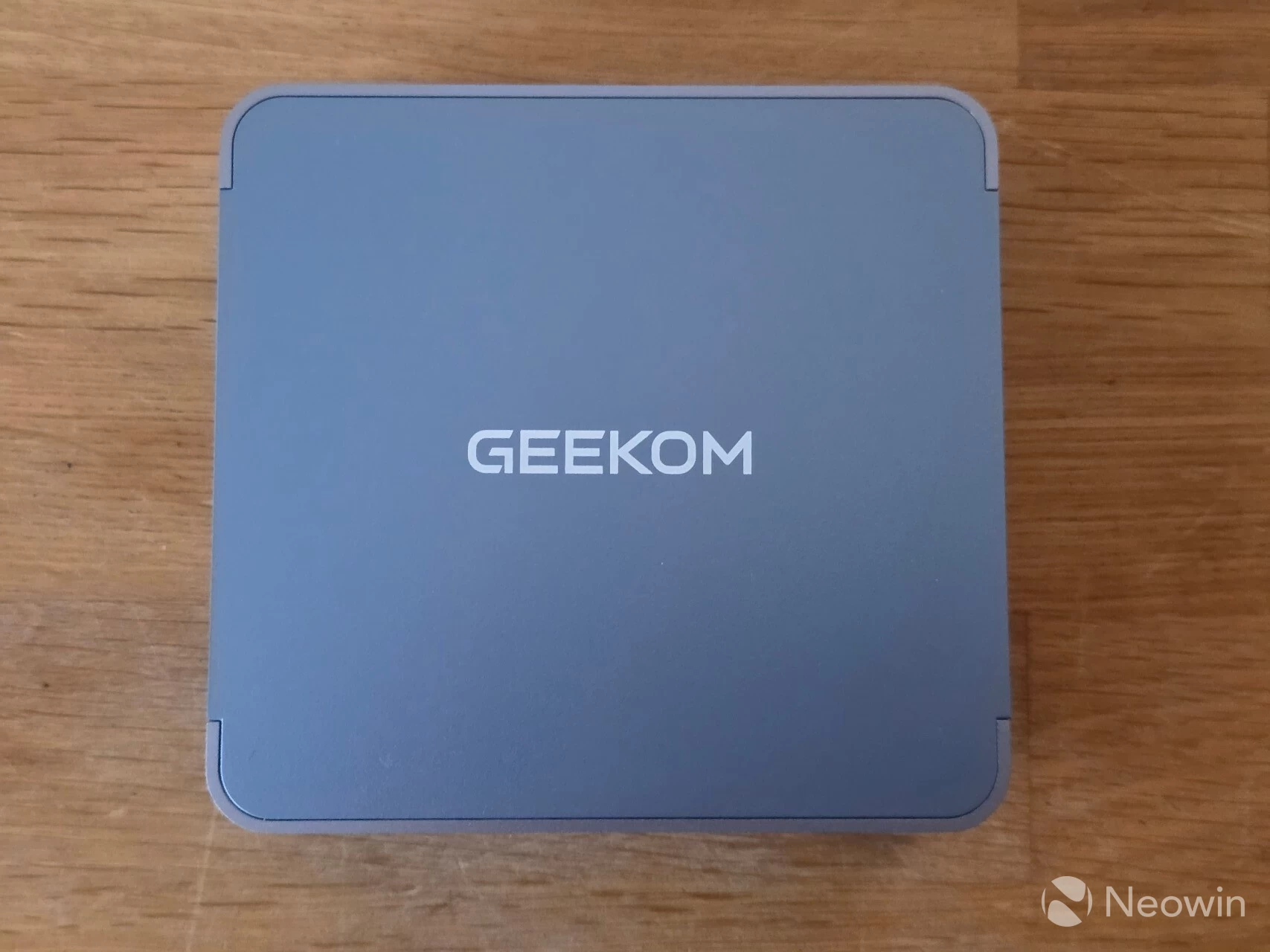
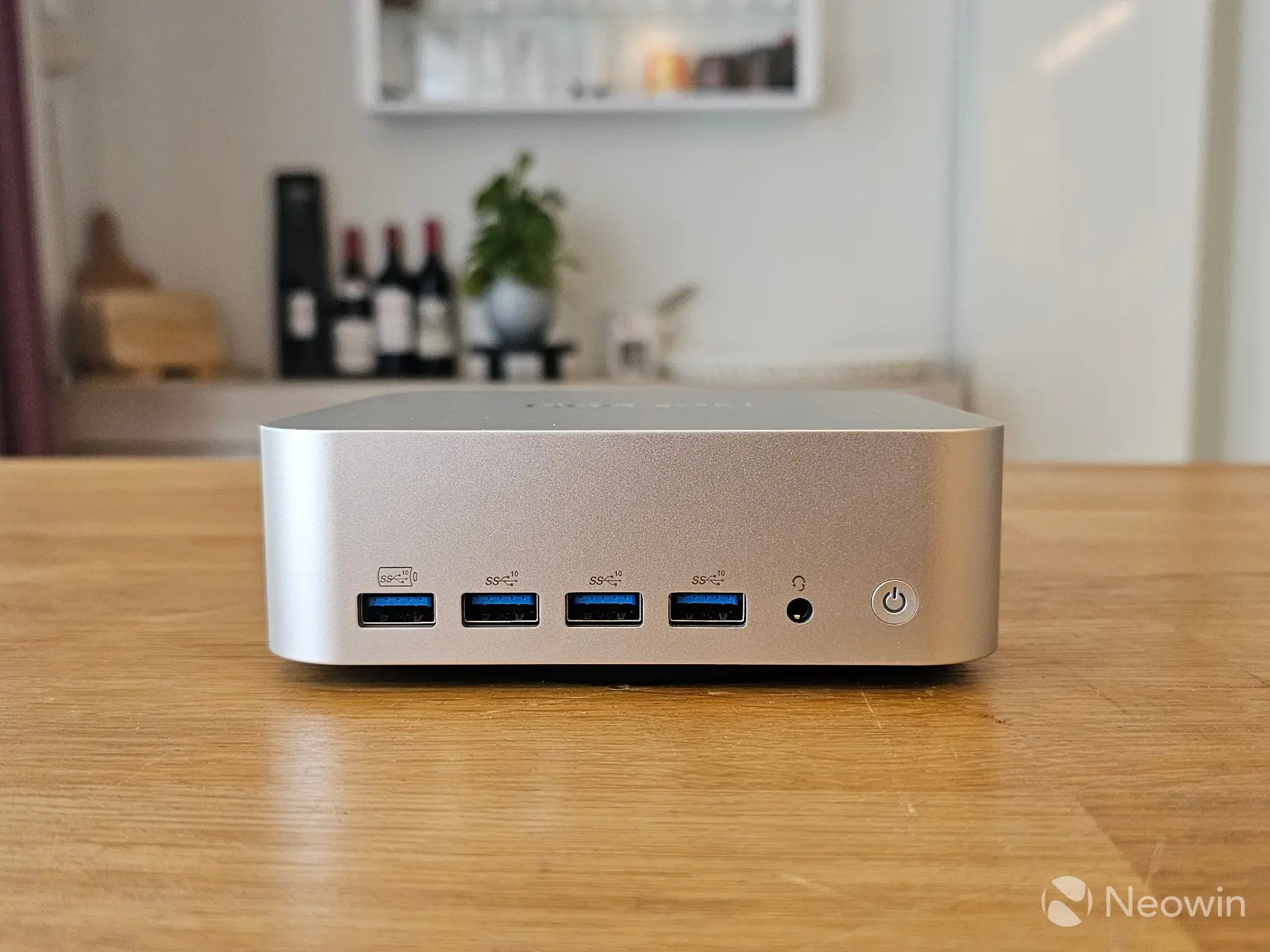
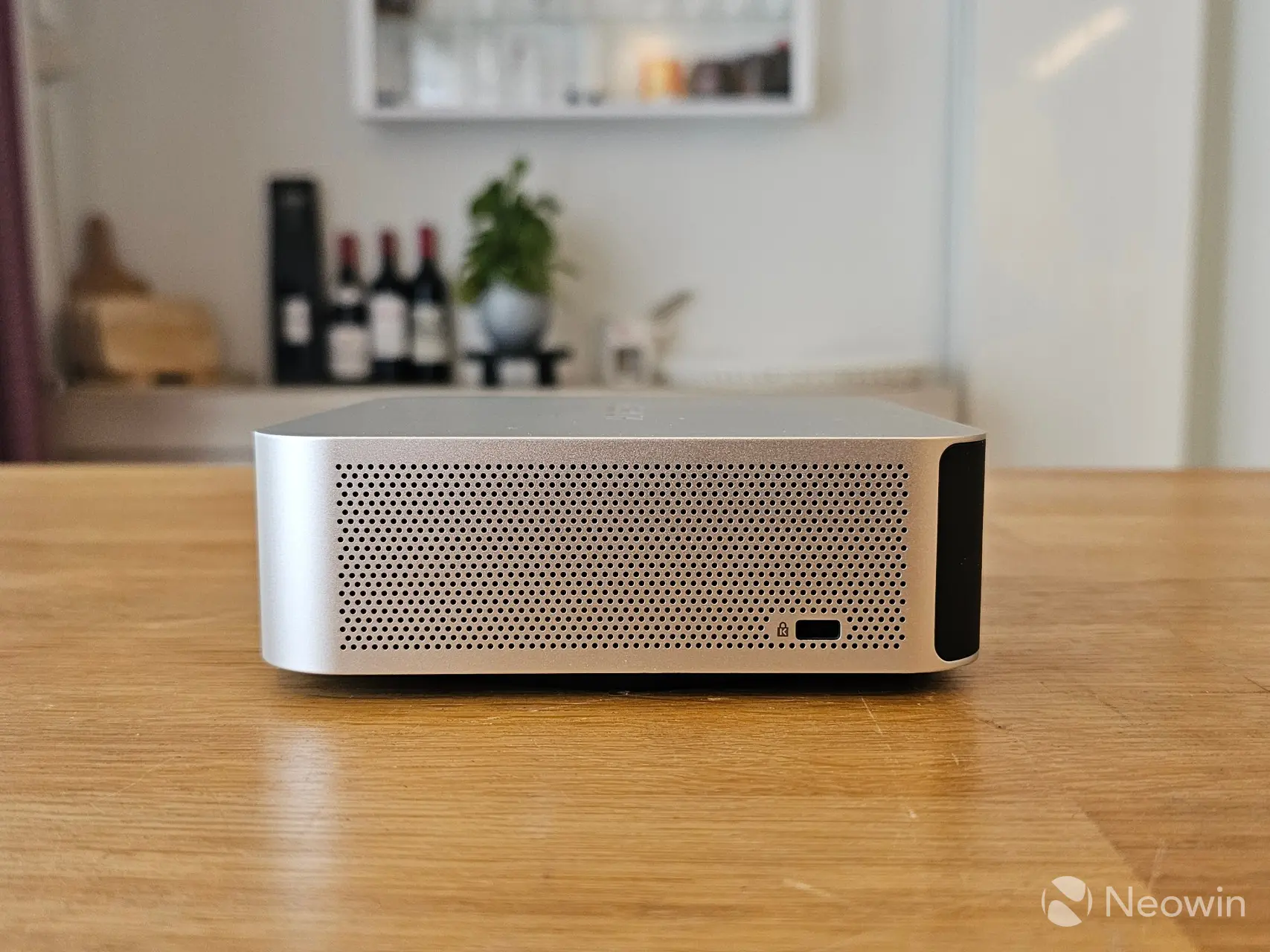
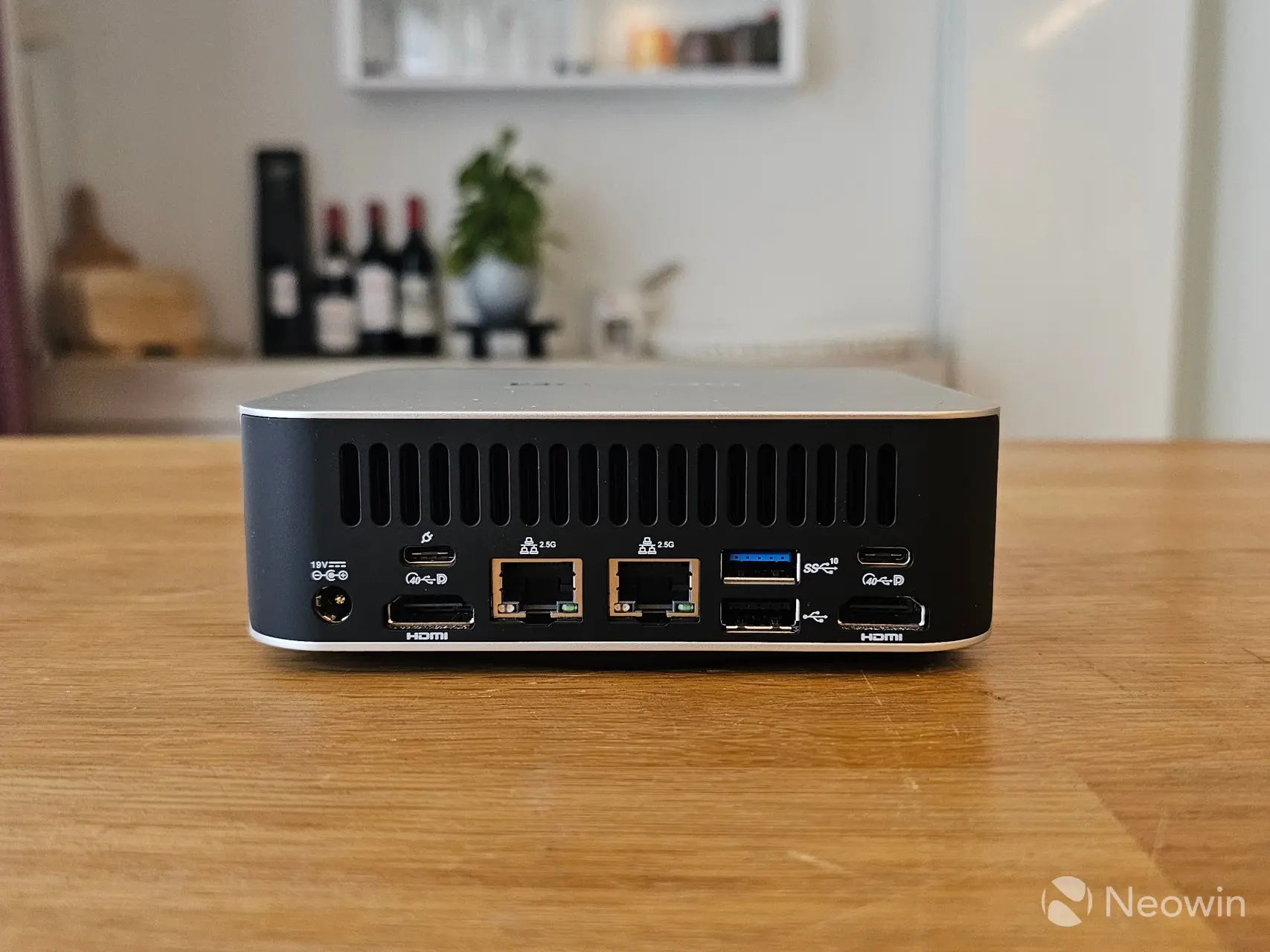
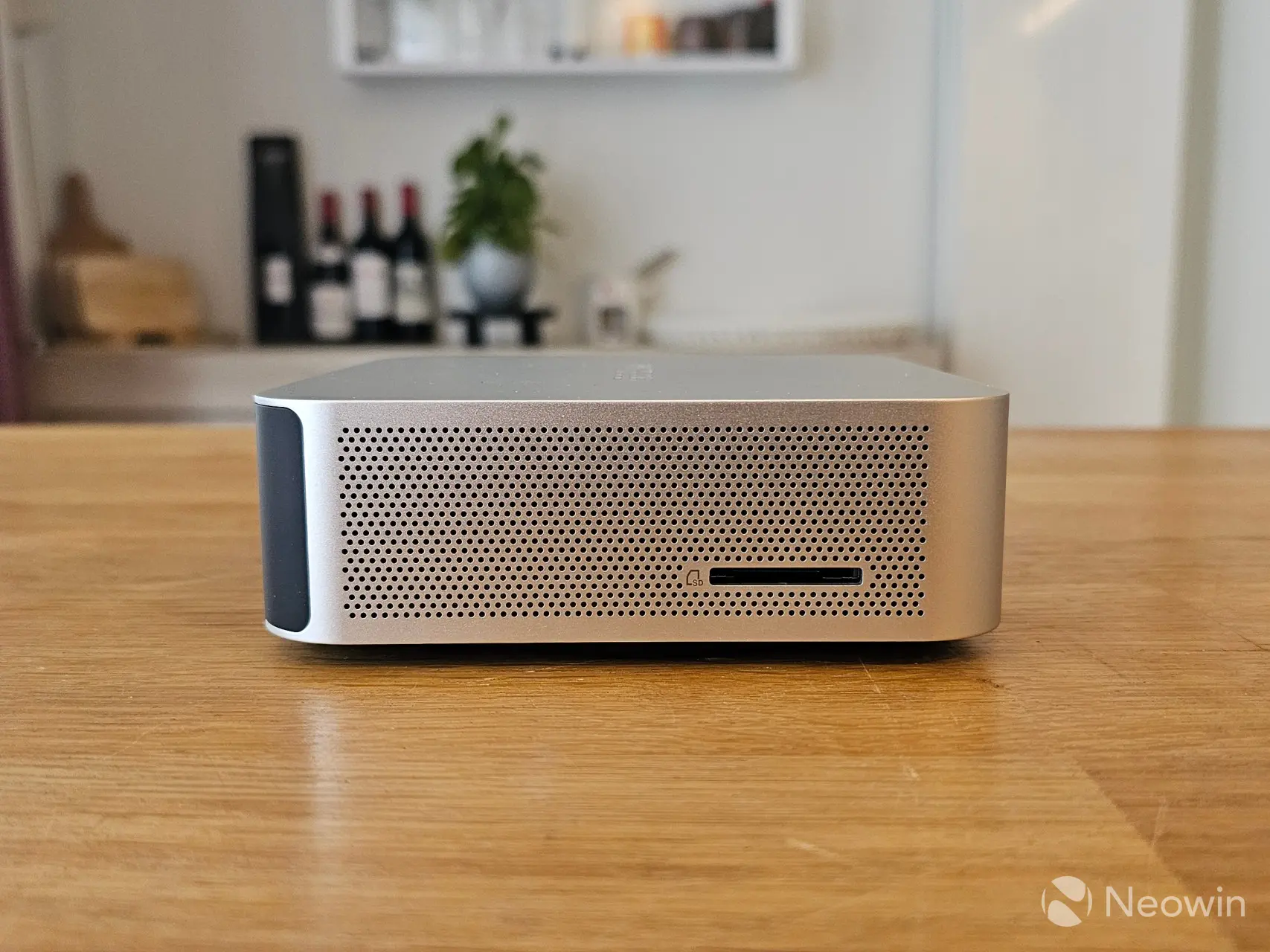
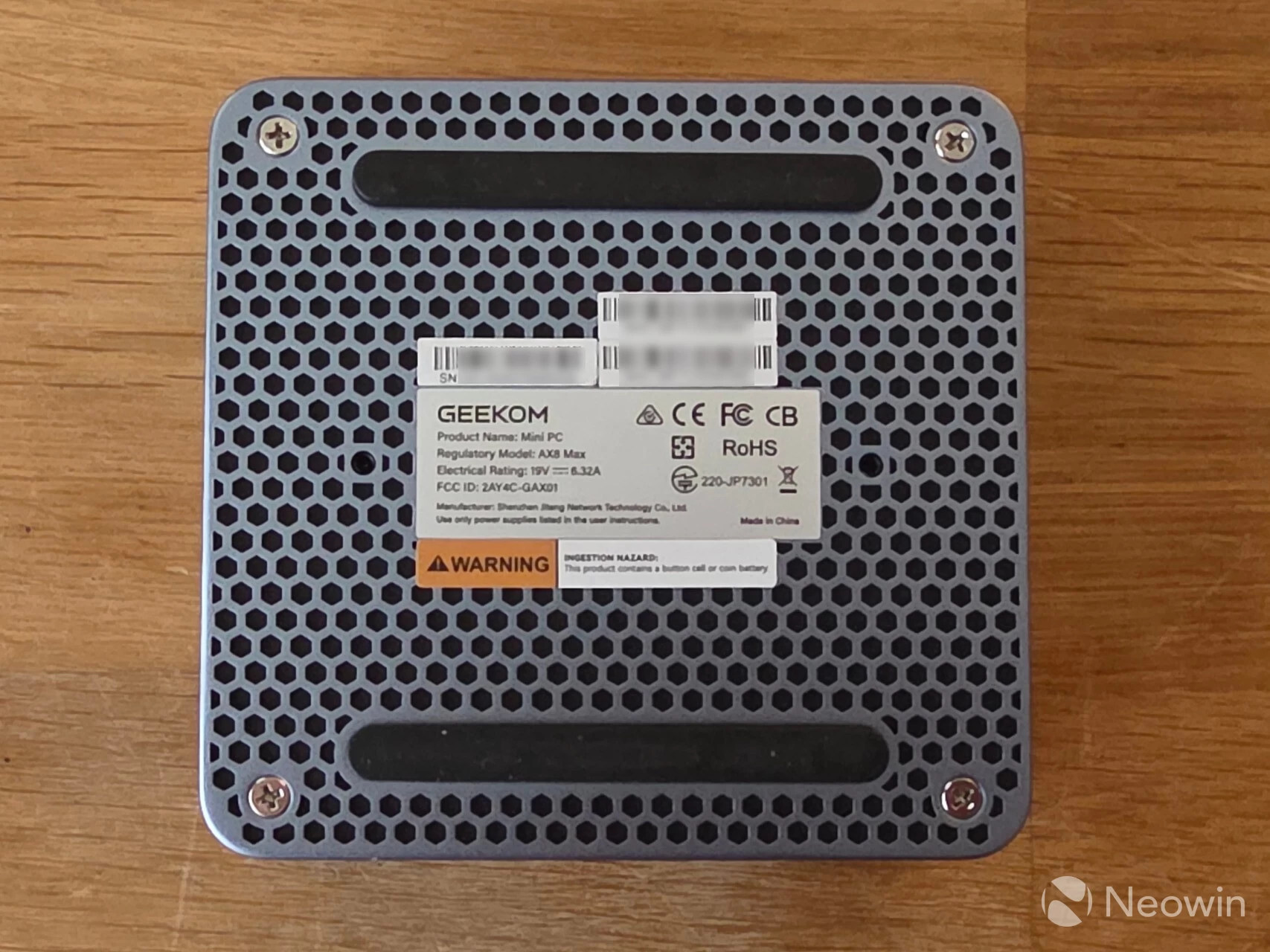
As far as looks go, it has a fully silver grey exterior, and it's not a fingerprint magnet. GEEKOM does not say what materials are used for the exterior other than a "reinforced full-metal chassis" exterior. The product page claims that the A7 Max can withstand over "200kg of pressure without bending," but we wouldn't recommend loading heavy objects on top of it anyway; it supposedly gives protection against accidents and falls. It doesn't feel cheap and isn't flimsy either, and even when the base is removed, it remains sturdy.
Like other Mini PCs I have tested, it's physically possible to directly attach four screens to the A7 Max using the two full HDMI 2.0 ports, along with the two USB 4.0 ports, both of which have Power Delivery to power an external portable monitor.
Regarding connectivity, around the back, there are two 2.5 GbE ports, a single 3.2 Gen 2 port, two HDMI ports, along with two USB 4.0 ports and a barrel port for power. Around the front, there are four USB 3.2 Gen 2 ports, a 3.5mm headphone jack input, and the Power button.
As you can see from the images above, you can affix a Kensington lock on the left side, too.
Teardown
No review I do would ever be complete without some sort of teardown.
|
|
|
|
|
|
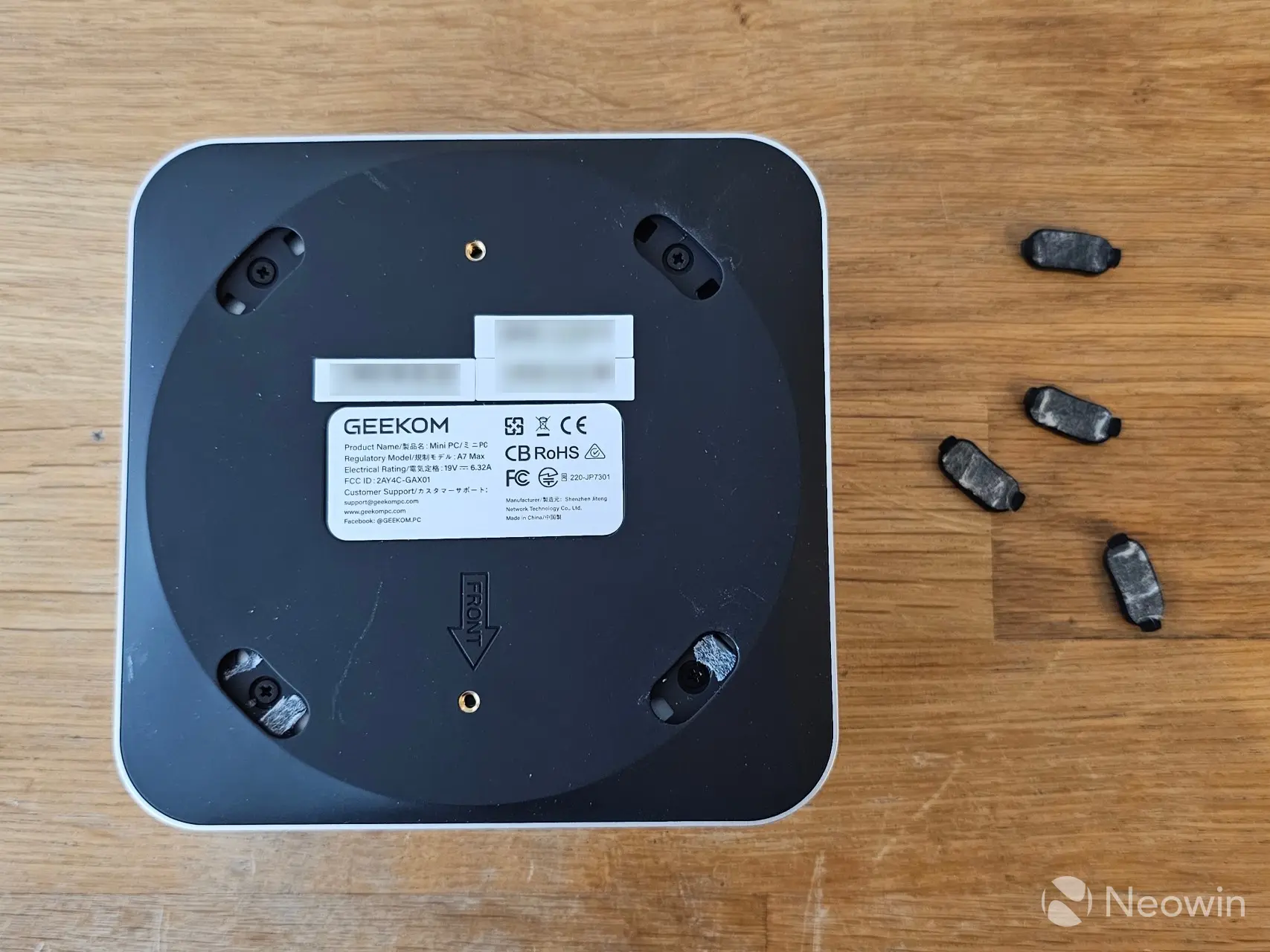
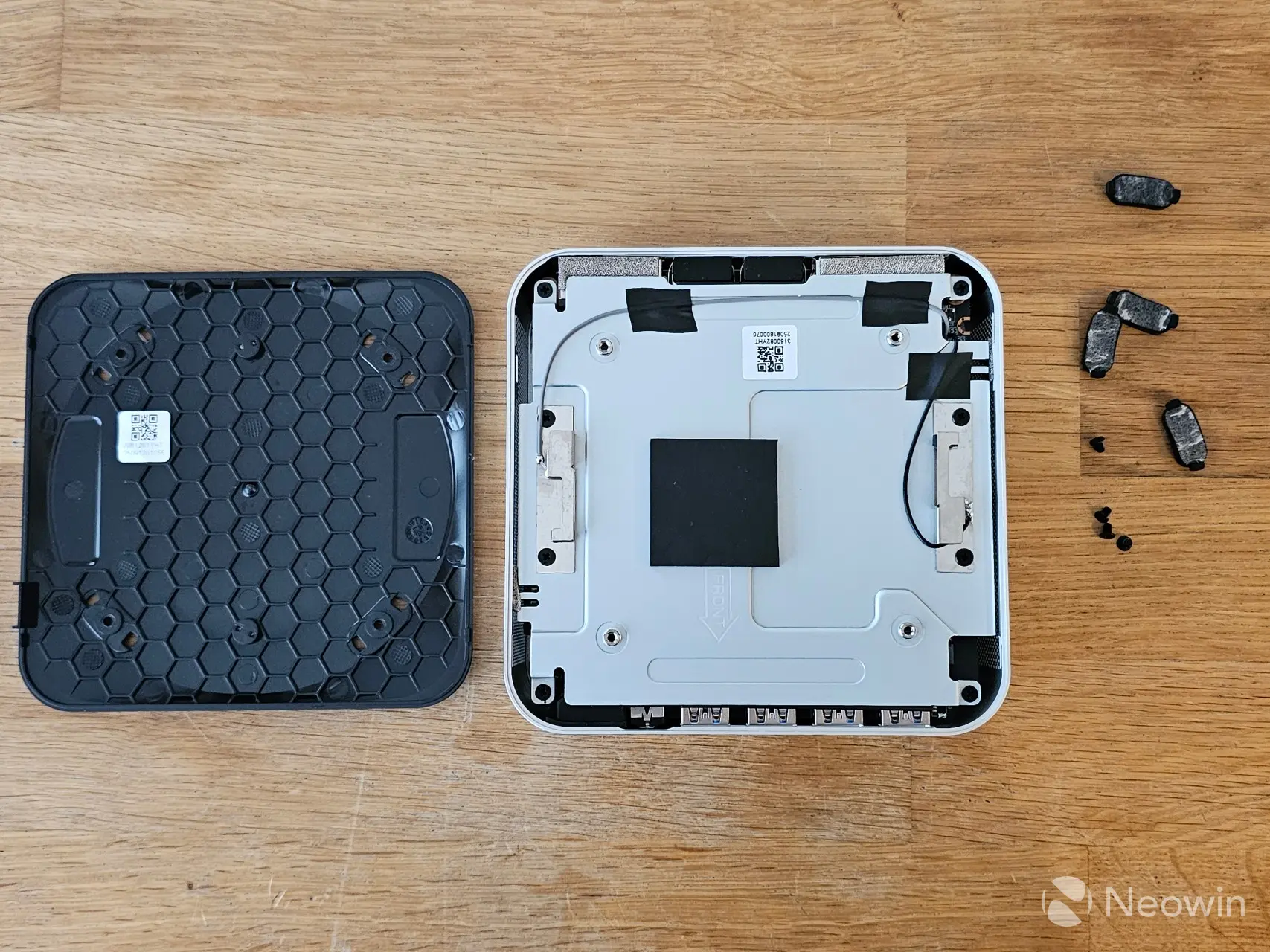
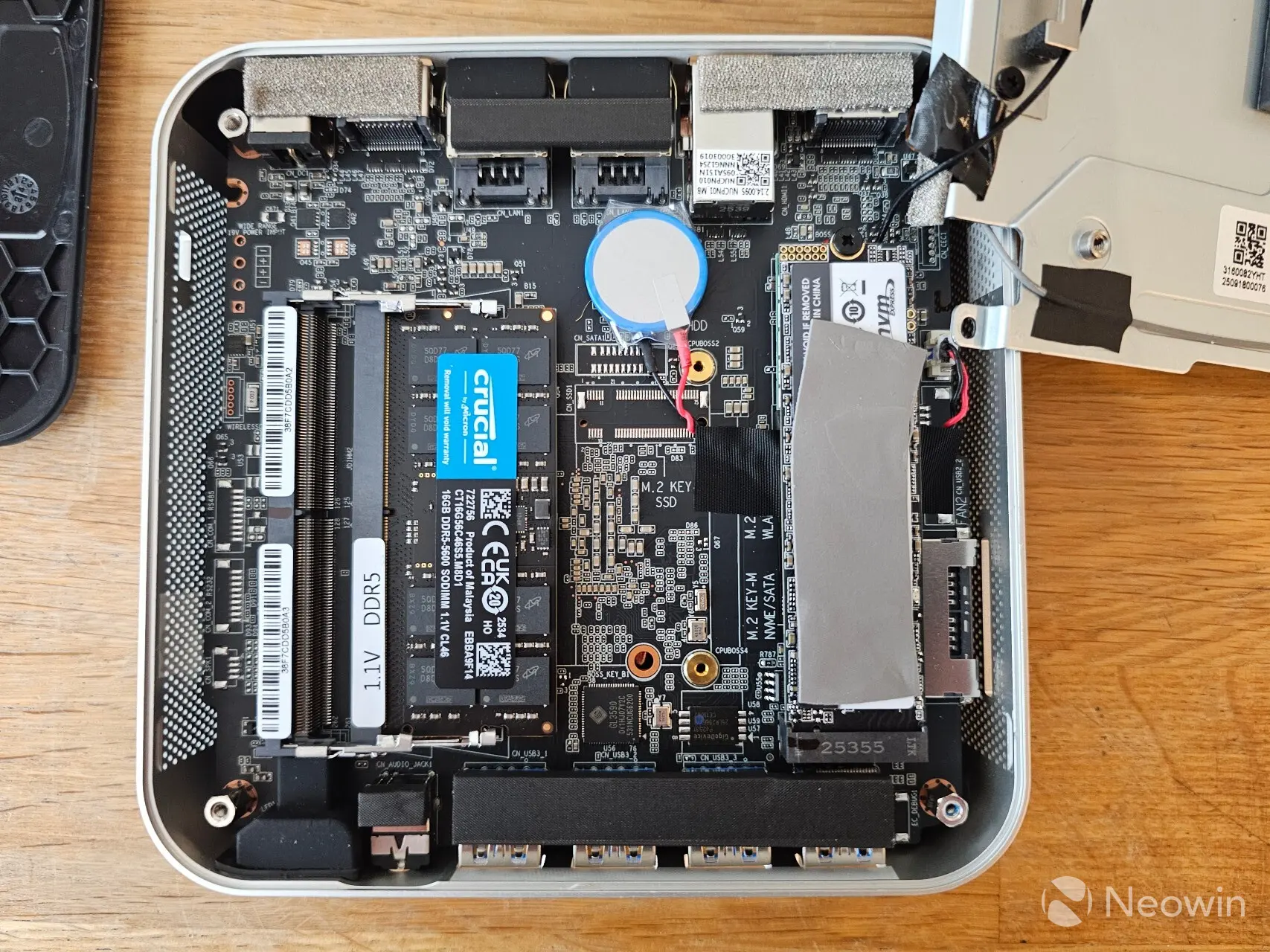
Opening the A7 Max is a bit finicky:
- Remove the four rubber feet (with a flat screwdriver or Stanley knife
- Unscrew the four Phillips screws
- Unscrew four more Philips screws holding the metal plate in place
- Carefully lift the metal plate off, making sure not to disconnect the WiFi antenna cable.
As you can see from the above images, which can be enlarged when clicked on, there is ample room to manage and expand the SODIMMs and 1 TB SSD, so you can swap them out for something else if you want. Although the product imagery suggests that an additional M.2 (B-key) SATA drive can be added, there is no connector present to do so.
Usage
BIOS
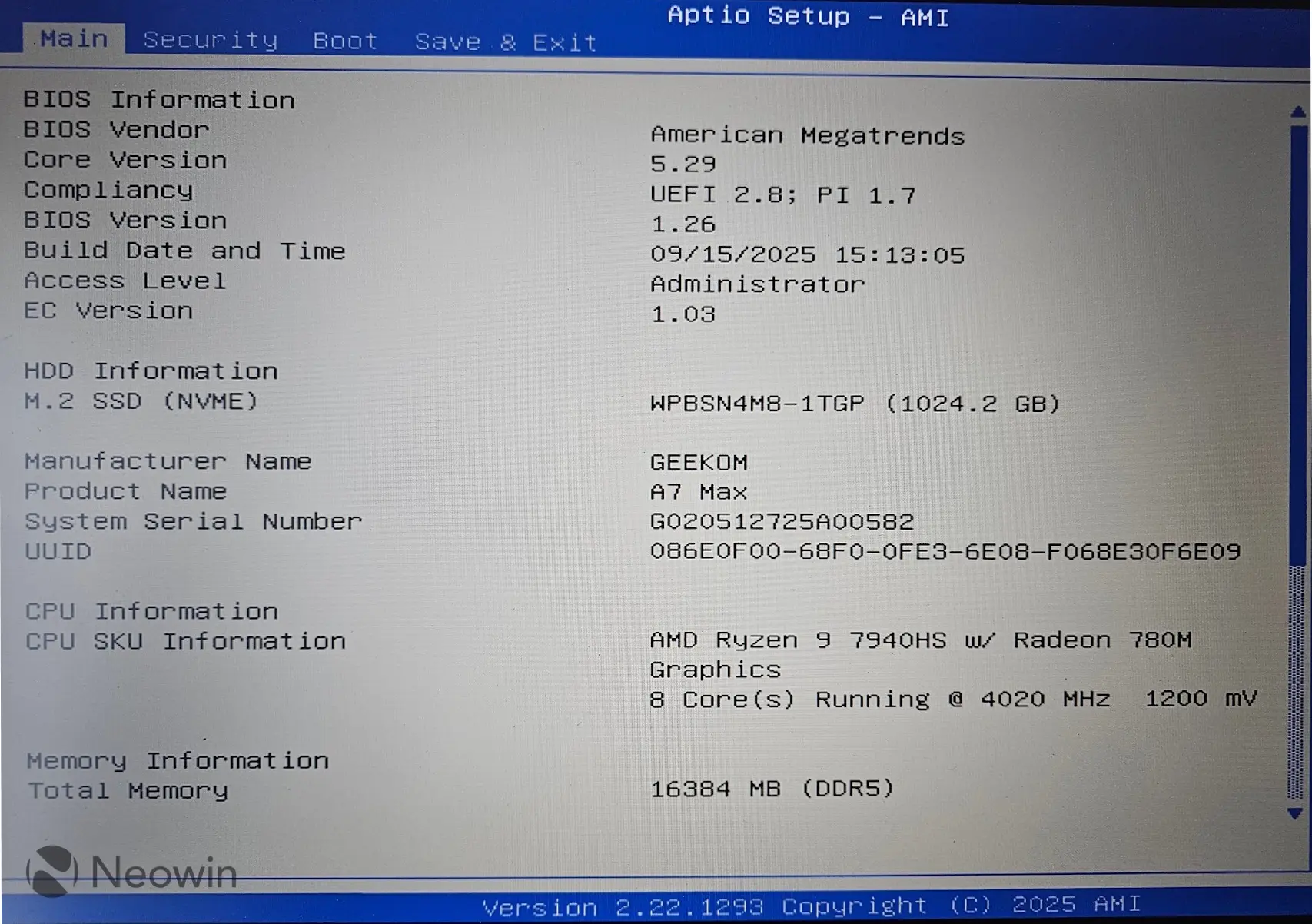
The A7 Max includes an AptiBIOS, which is not completely locked down; however, there is very little in the BIOS to manage (1). There is no Advanced tab, so no tweaking for you! You can only manage the Security and Boot order. The memory reports the correct 5600MT/s speed, and everything else looked in order, though. You can access BIOS by pressing the Delete key.
Setting up the A7 Max
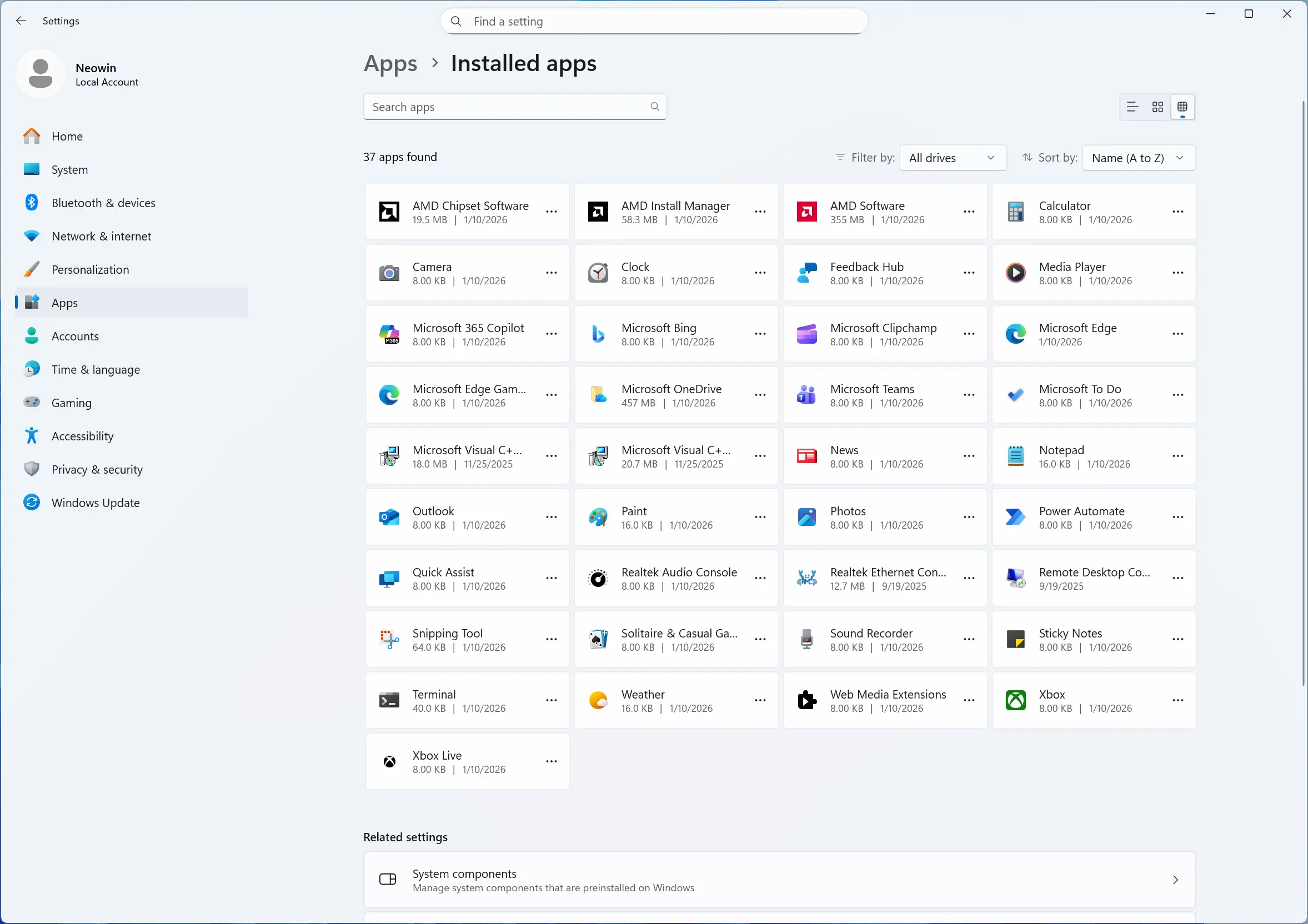
On first boot, you are prompted to complete the setup of Windows 11 Pro, meaning you do not have to fork out for a license, which is nice. After the setup is finished, I am happy to report that it does not come with any bloatware installed. The OOBE also installs several updates to Windows 25H2 26200.7642.
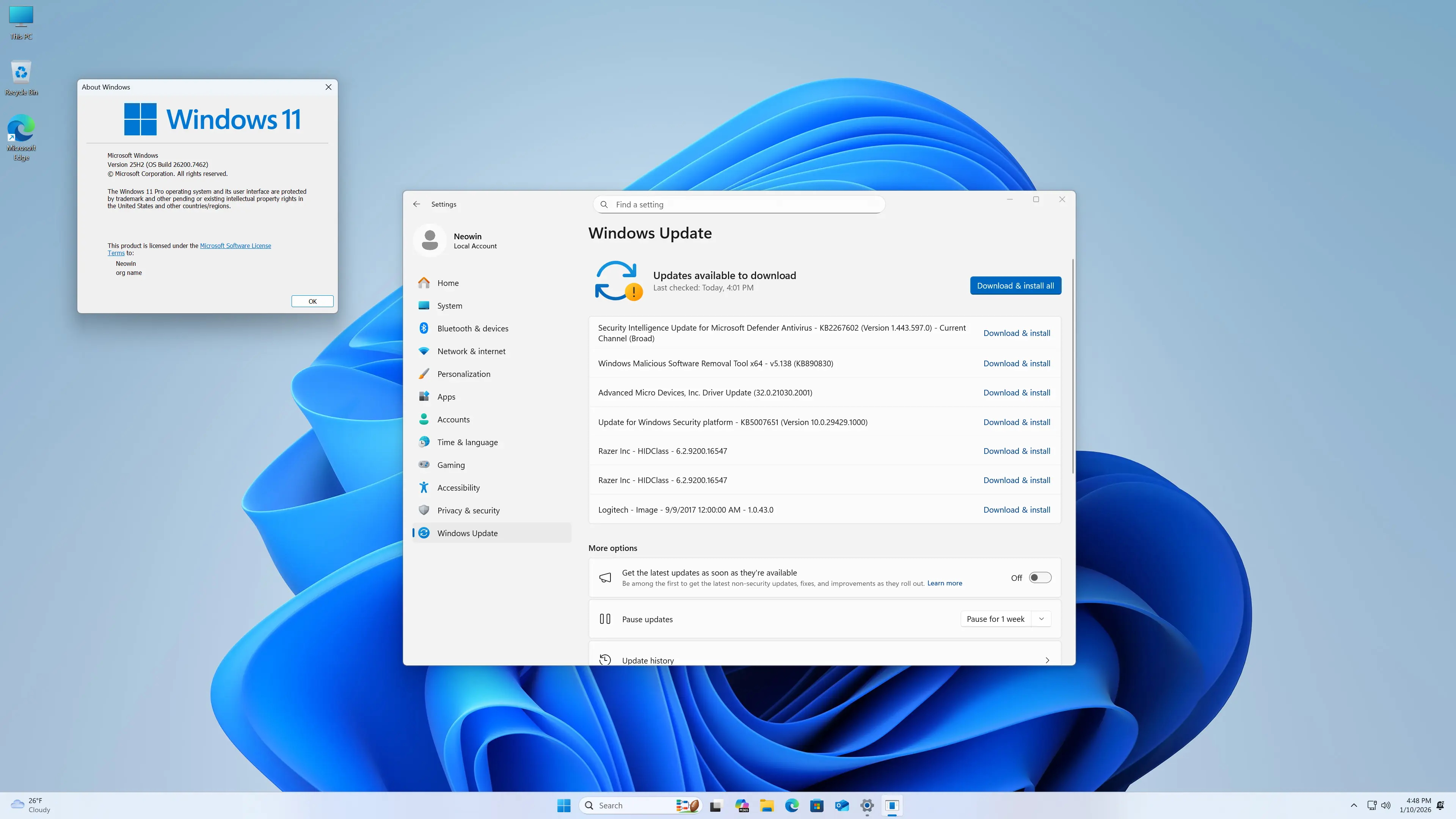
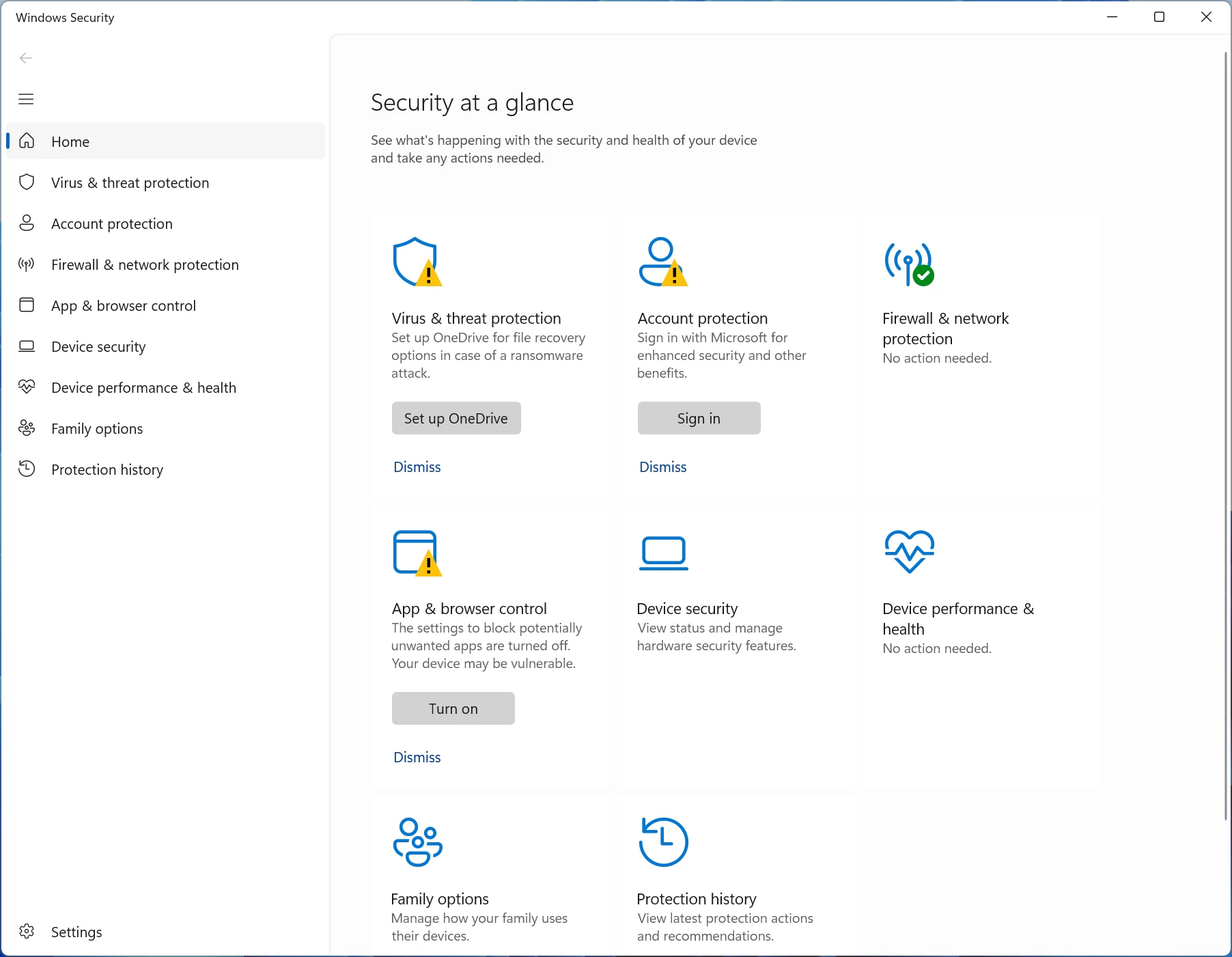
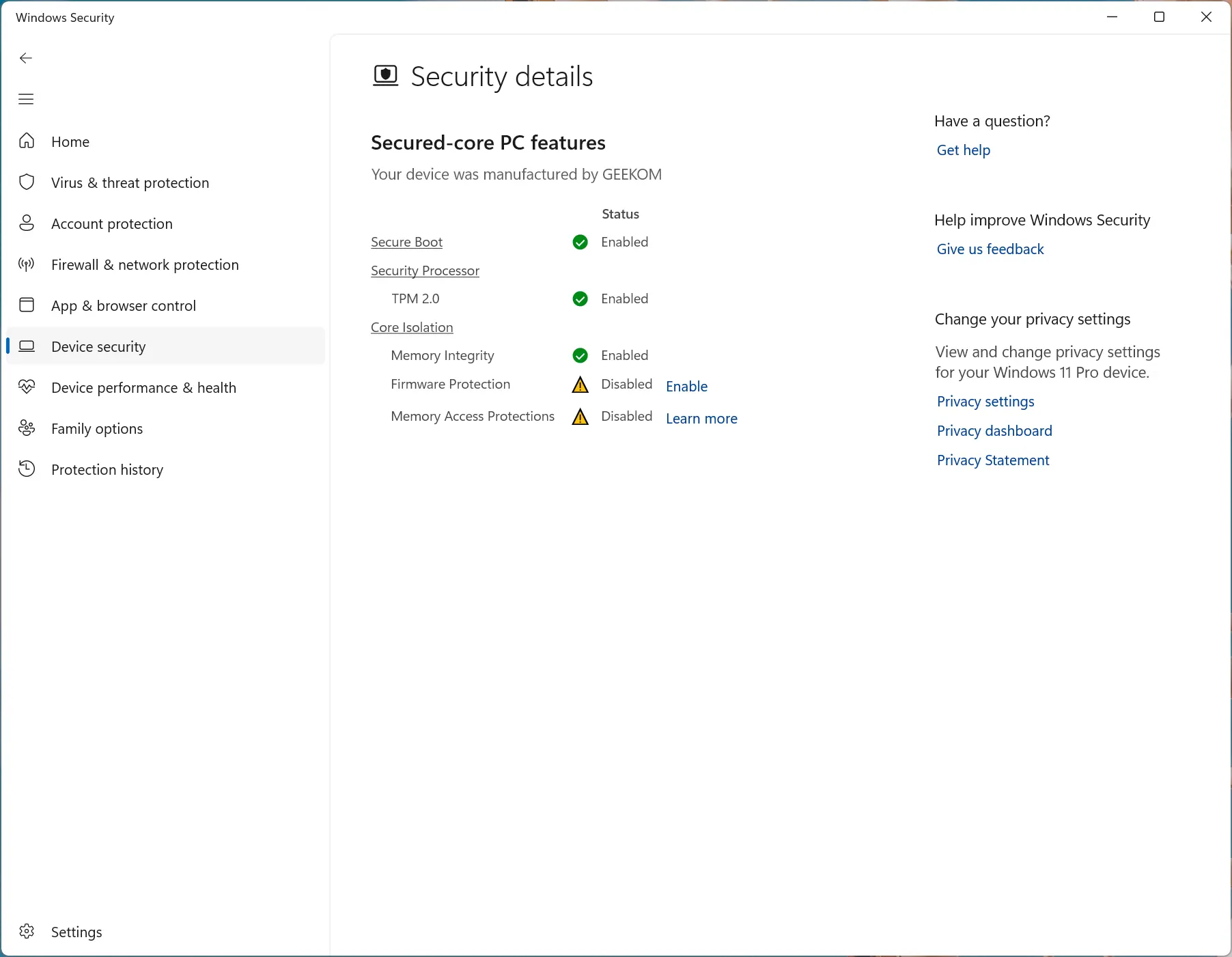
Before starting with benchmarks, I checked Windows Security, which gave several alerts, which ended up being because OneDrive was not setup and because I was not logged in with a Microsoft account (unsure how these two things affect PC security but hey ho,) after dismissing them I checked Device Security > Secured-core PC (which gave an alert that not all features were enabled) and saw that Memory Integrity and Firmware Protection were disabled out of the box. Memory Integrity being disabled appears to be a default setting for GEEKOM Mini PCs. I enabled it anyway and restarted. I tried to enable Firmware Protection, but it wasn't possible. I had the same issue with the MINIX ER937-AI that I reviewed earlier this month, which required a repair package that I was able to apply last week to get it enabled.
After informing my contact of the issue, I was told that the Ryzen 9 7000 series does not support Firmware Protection, so there will be no updated BIOS to fix the message in the Windows Security. In addition, the A8, A8 Max, AE8 Max, and A7 Max all appear to be affected by the Firmware Protection bug, so you will need to apply the relevant BIOS update and DRTM Driver to fix the issue.
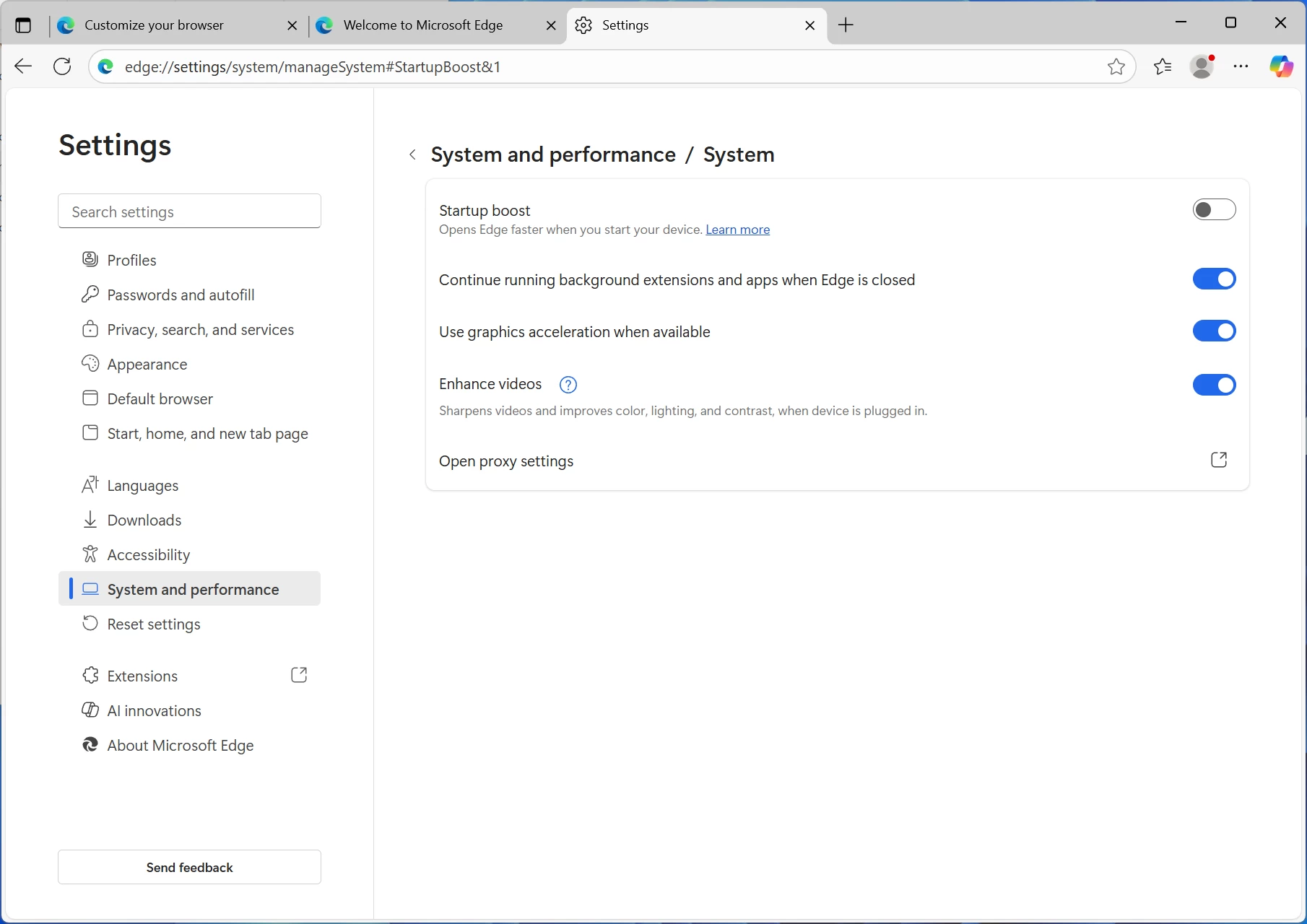
I also disabled Copilot and Edge browser Startup boost so that Edge wasn't running in the background during benchmark tests, and I disabled OneDrive from startup programs via Task Manager.
Benchmarks
With that out of the way, and because people like that sort of thing, I ran some benchmarks and compared them with a couple of other GEEKOM Mini PCs, one with a Ryzen 9 8945HS, and the other with a Ryzen 7 8745HS. The A7 Max is running Windows 11 Professional 25H2 build with the latest updates, and the latest AMD Graphics and Chipset drivers (25.12.1 and 7.06.02.123).
Gallery: GEEKOM A7 Max Benchmarks
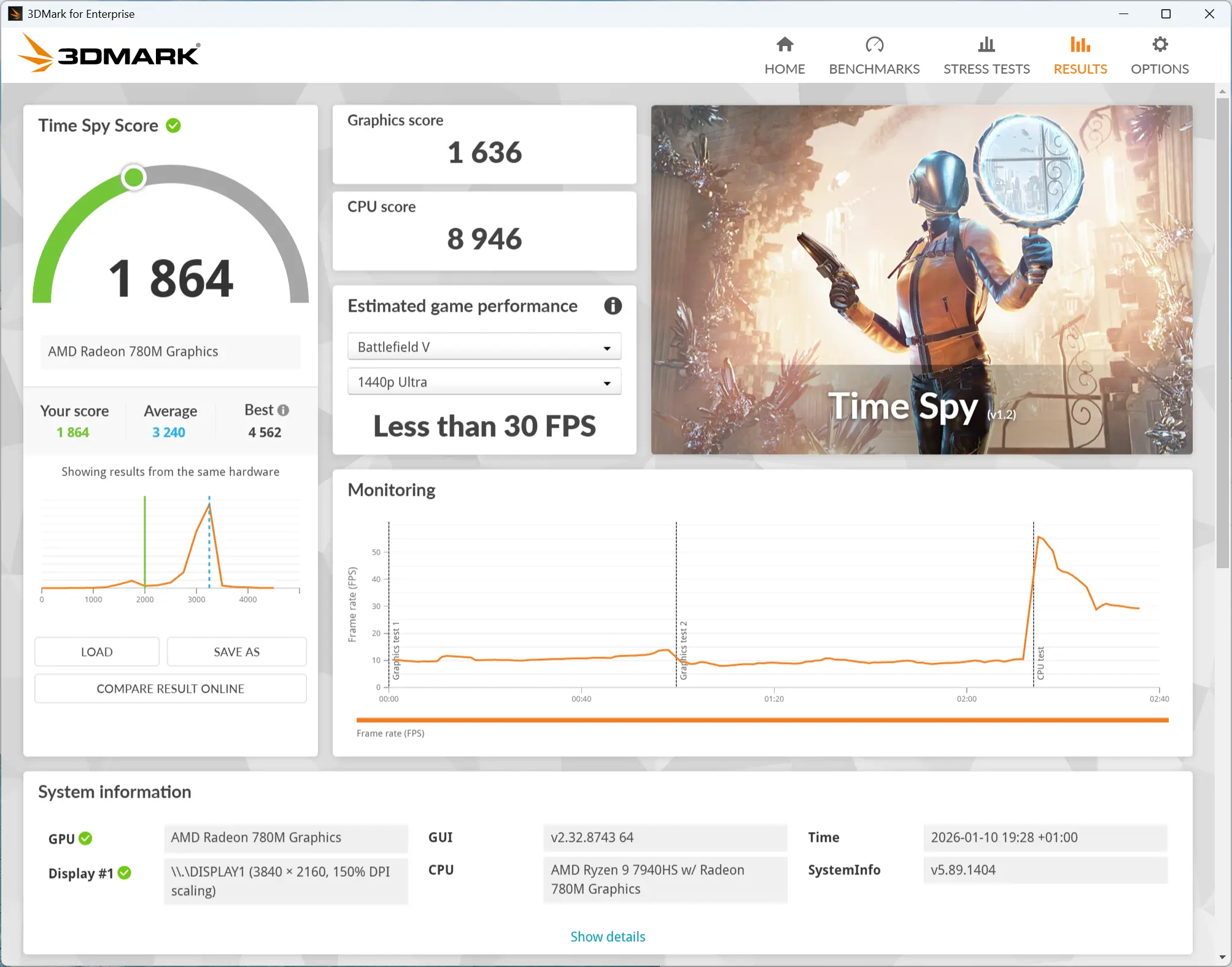
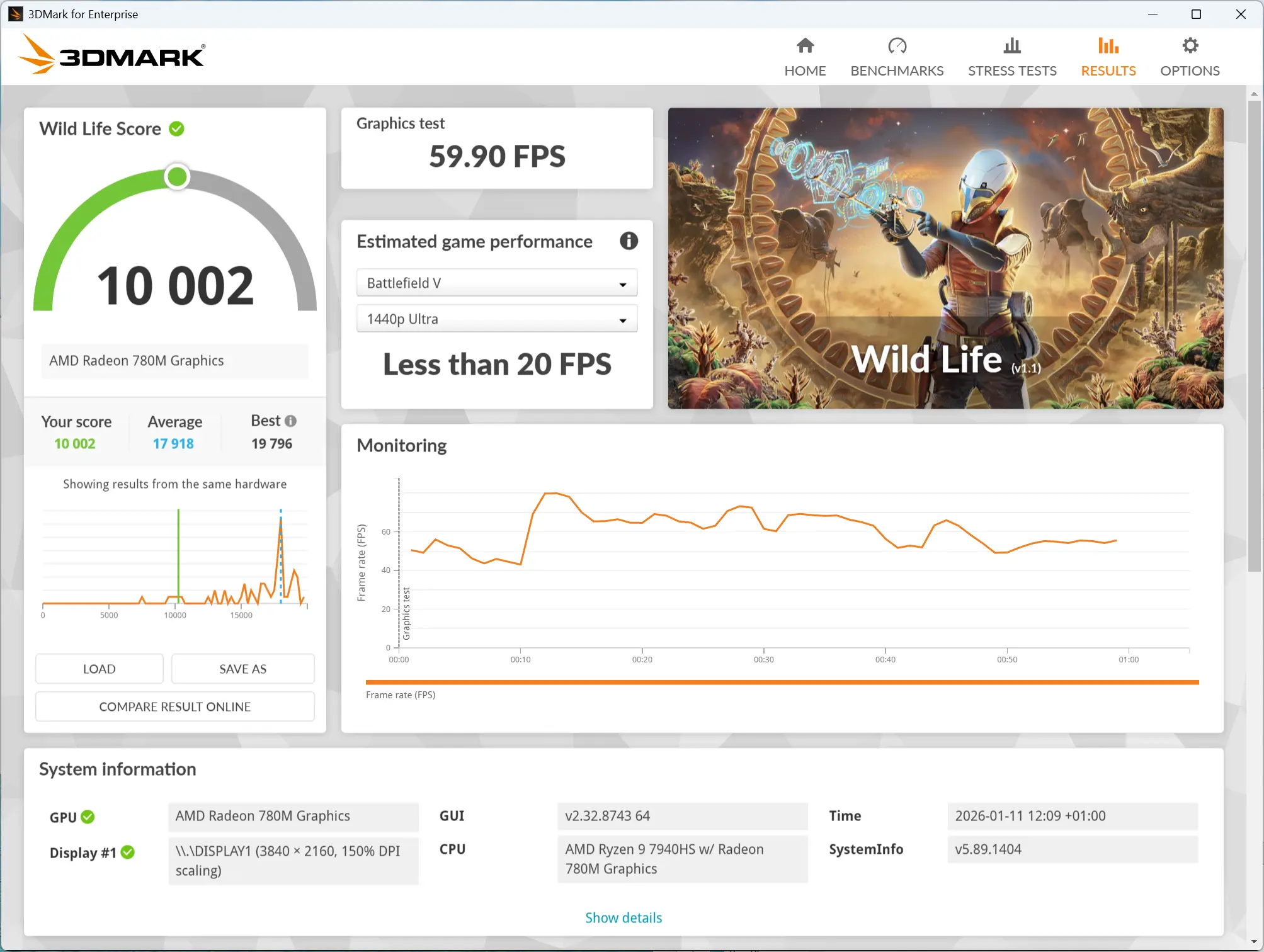
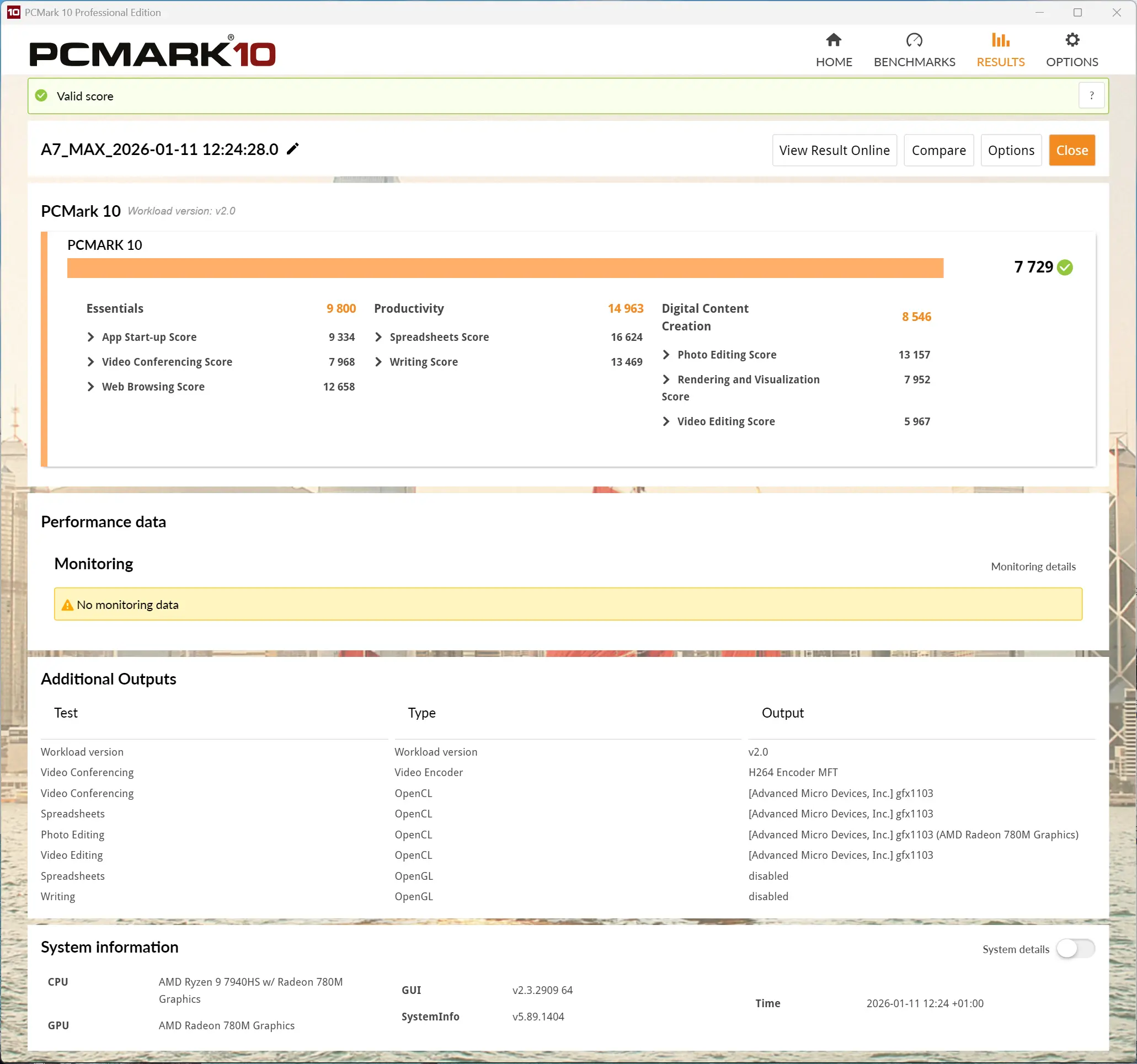
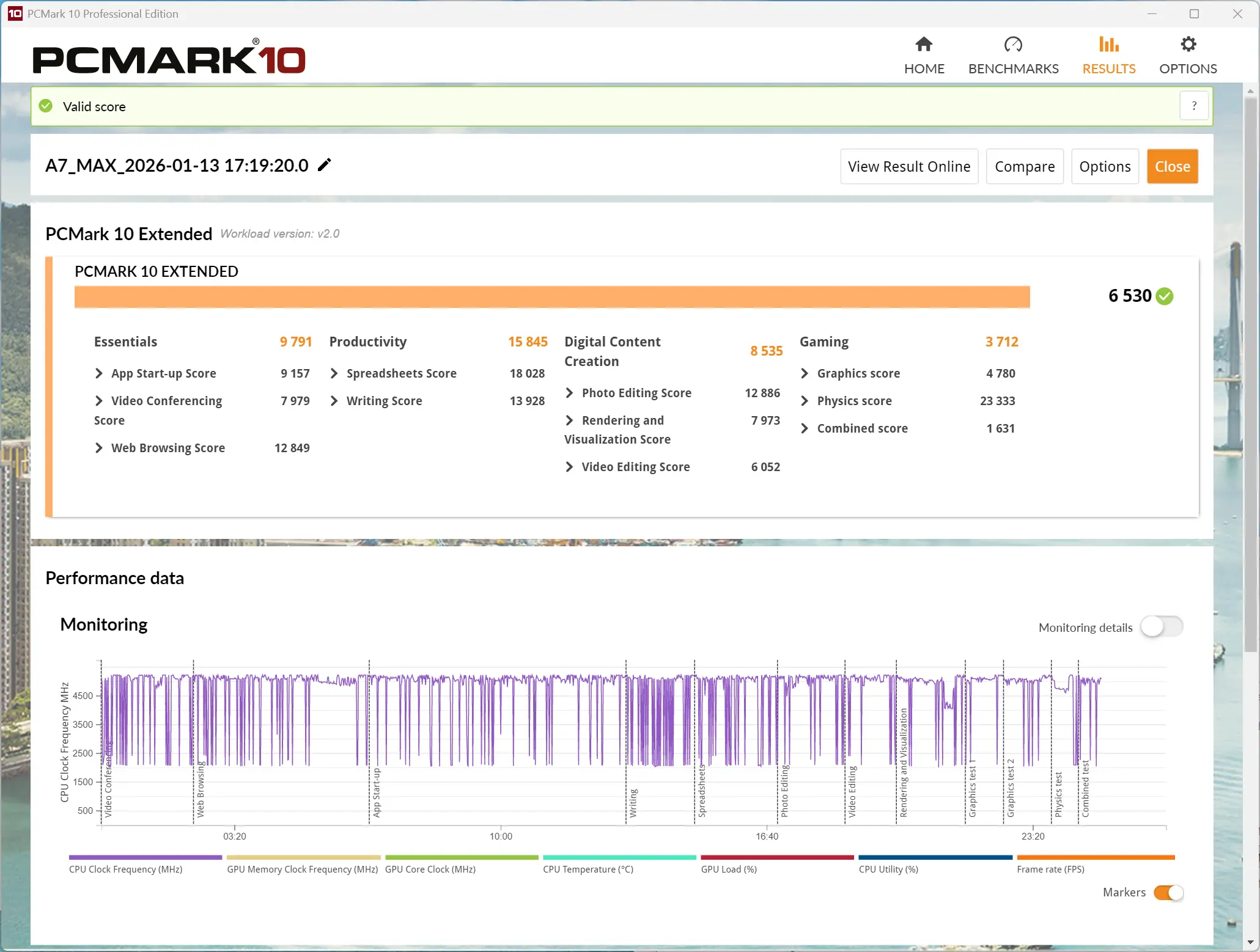
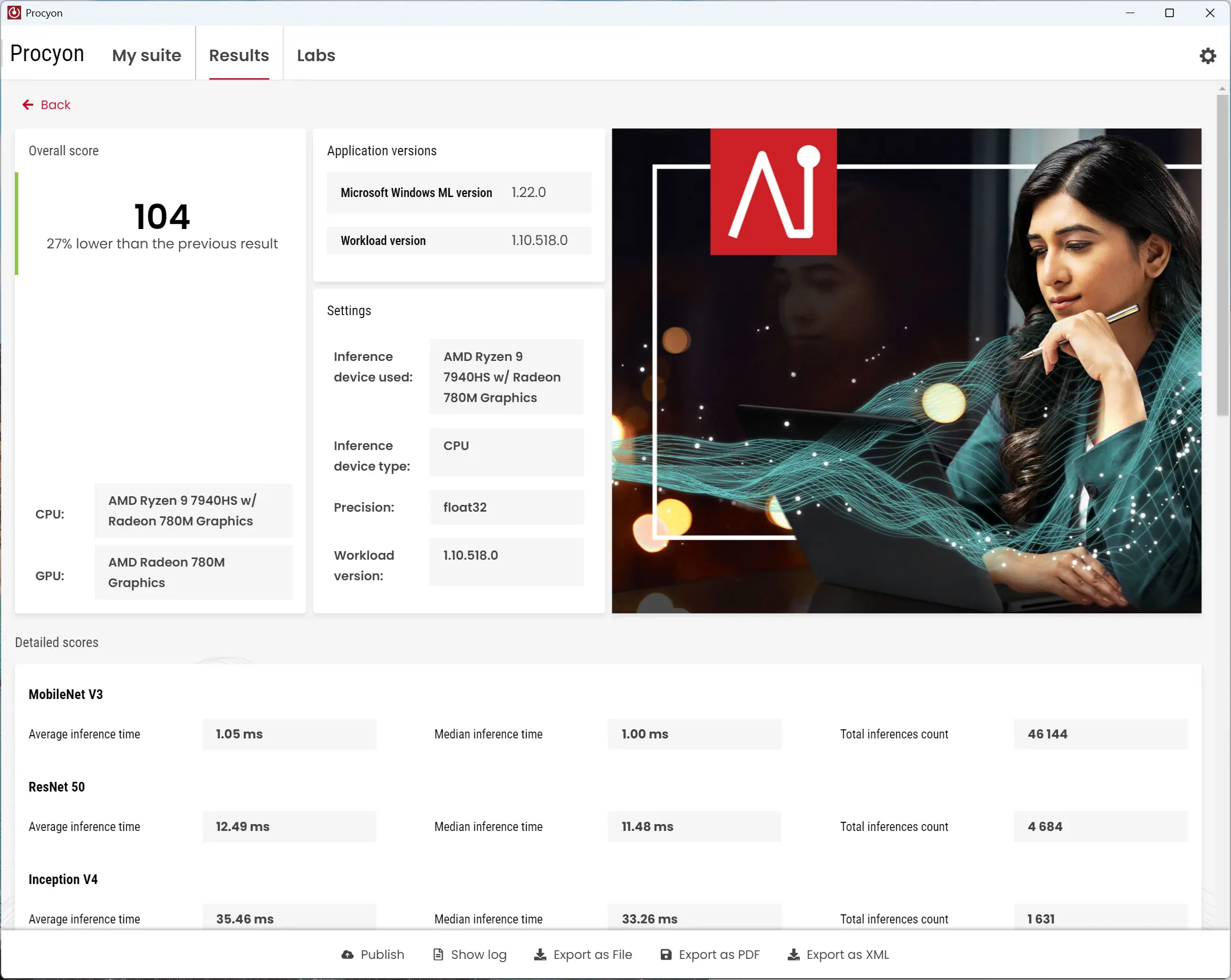
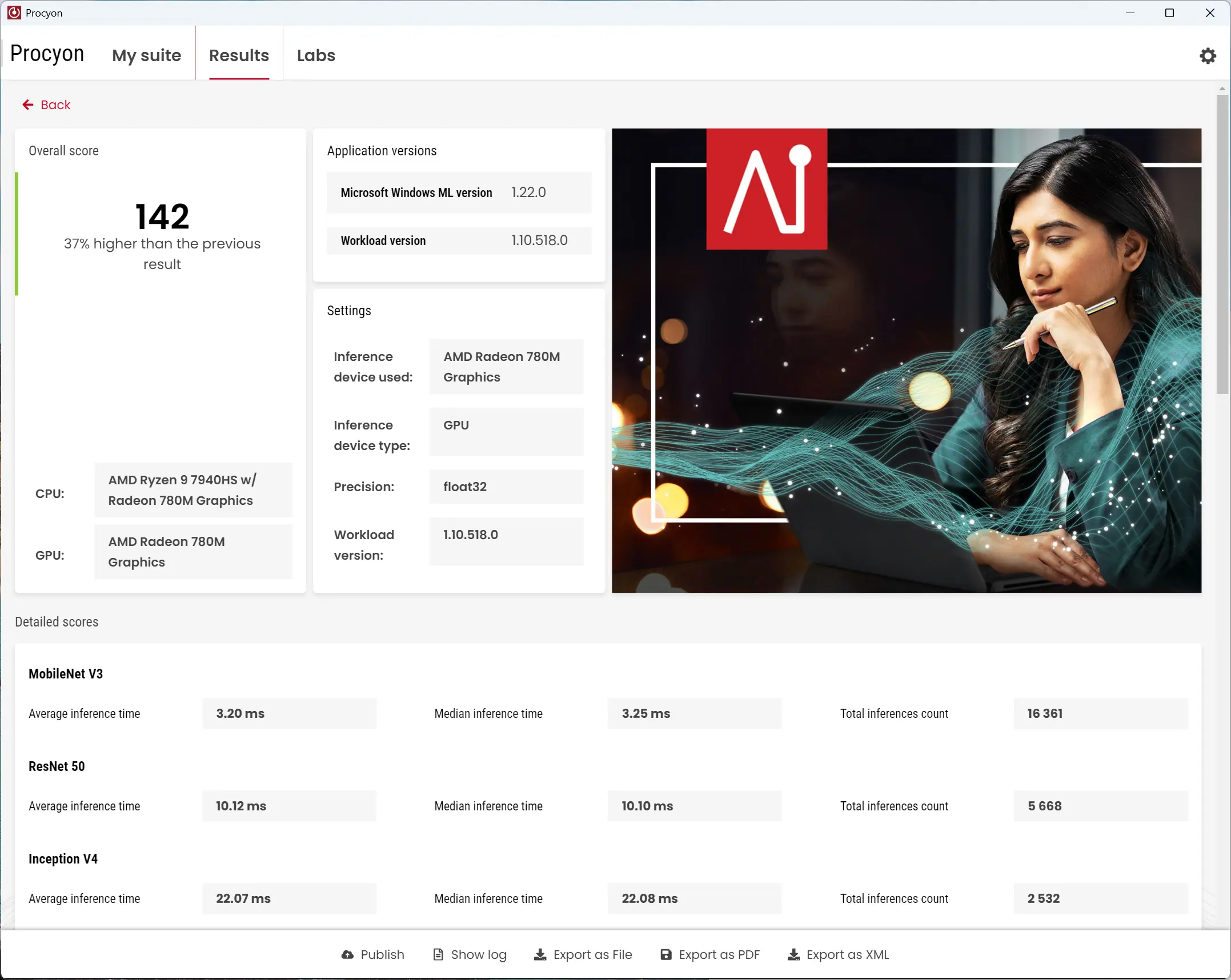
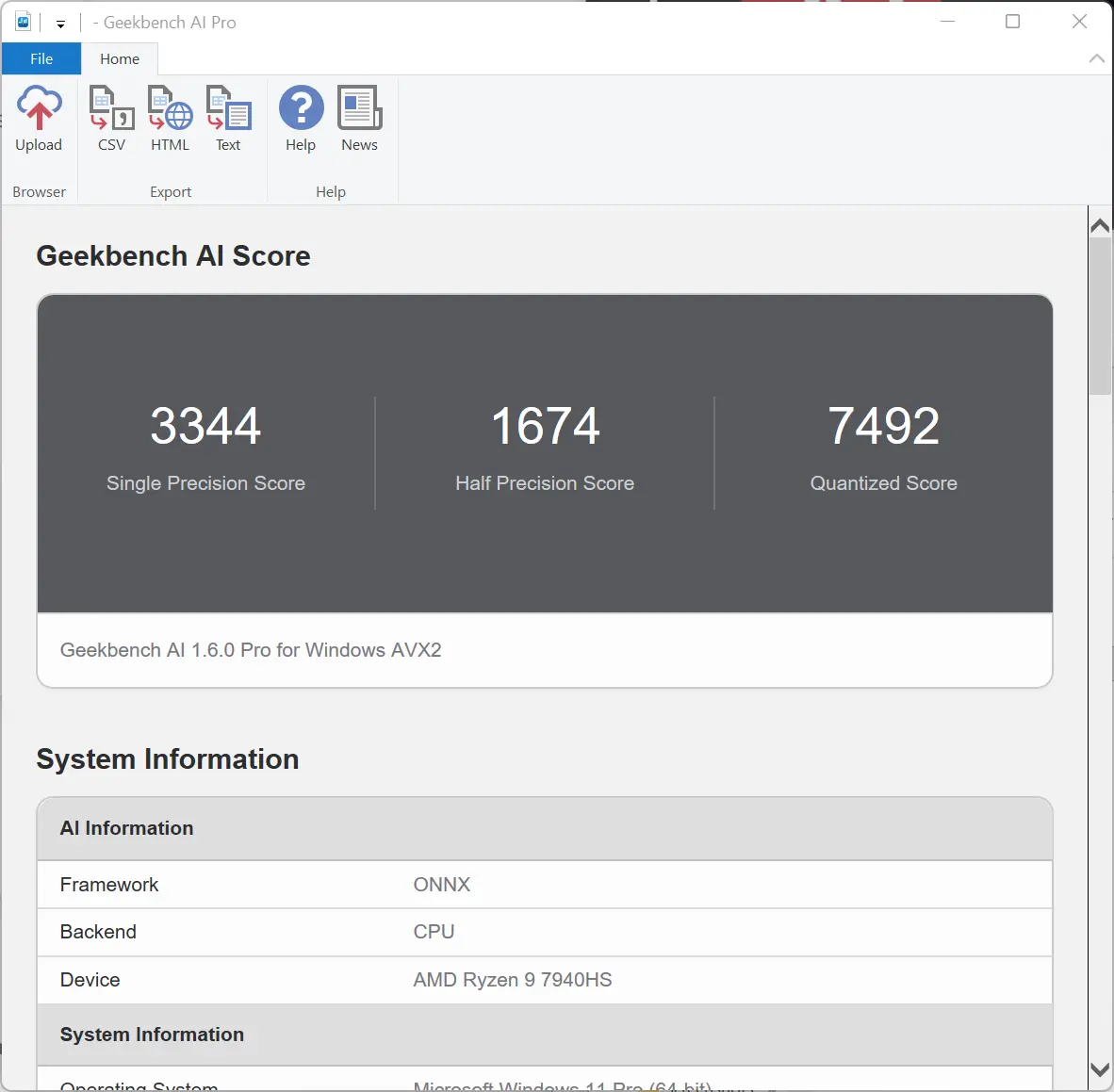
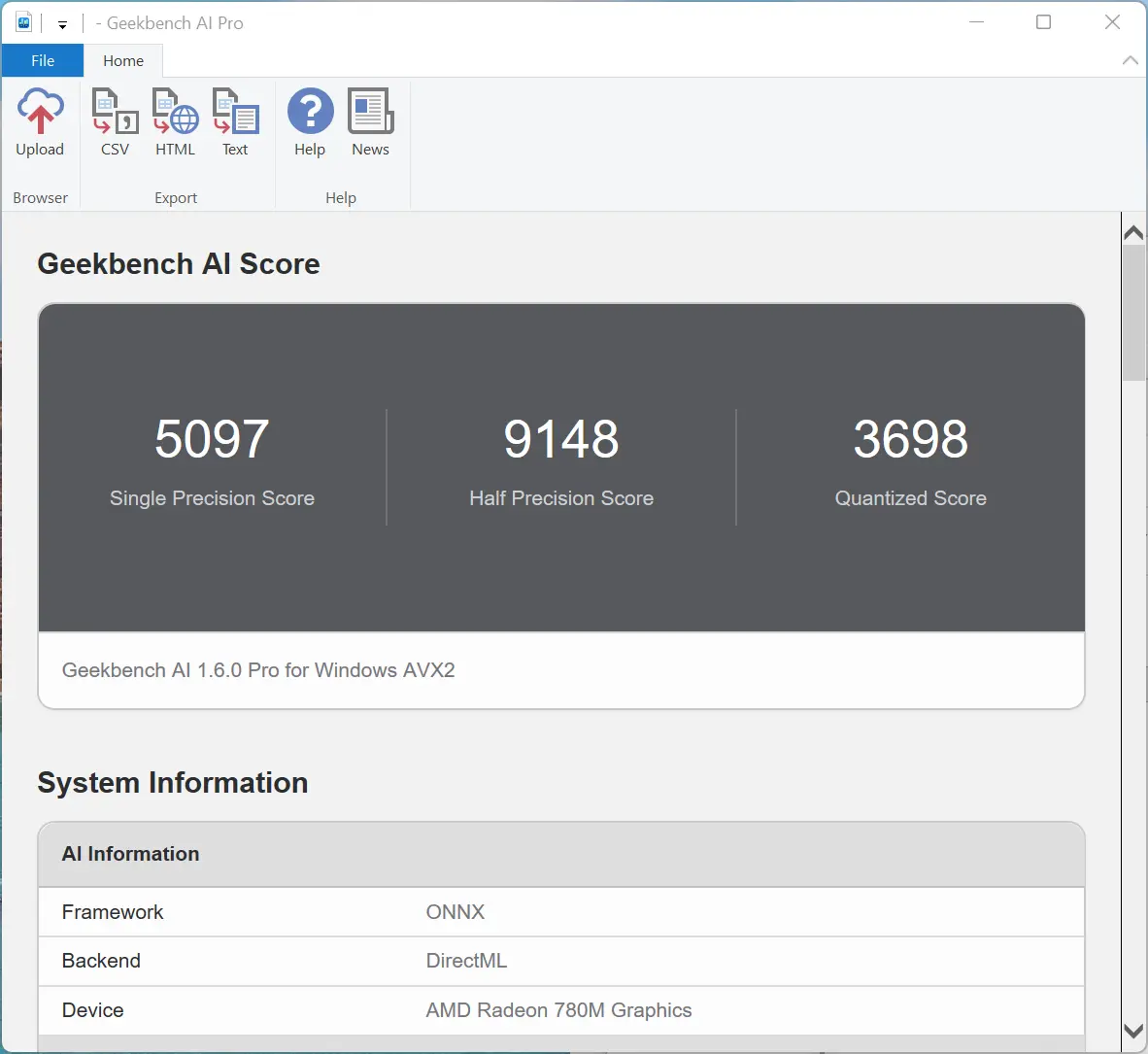
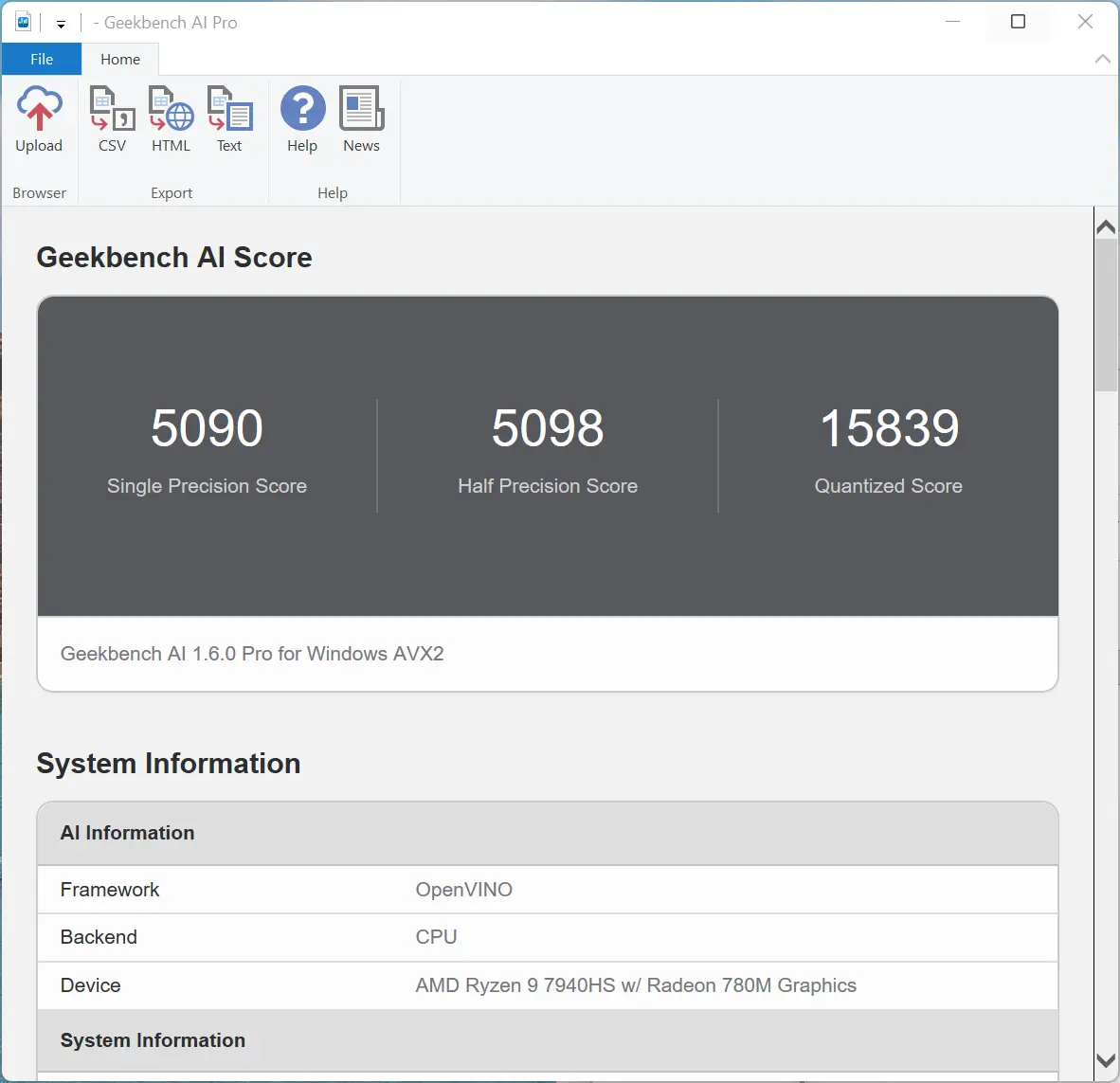
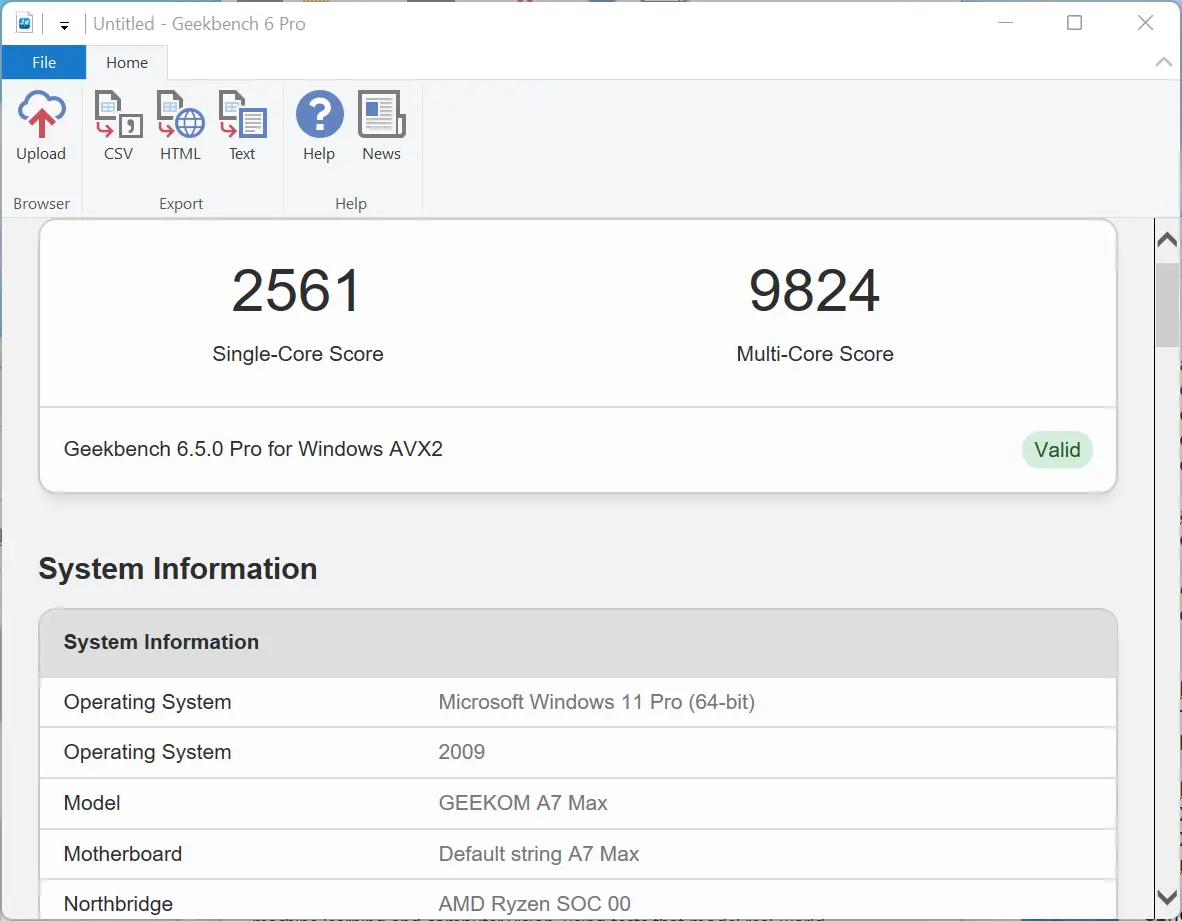
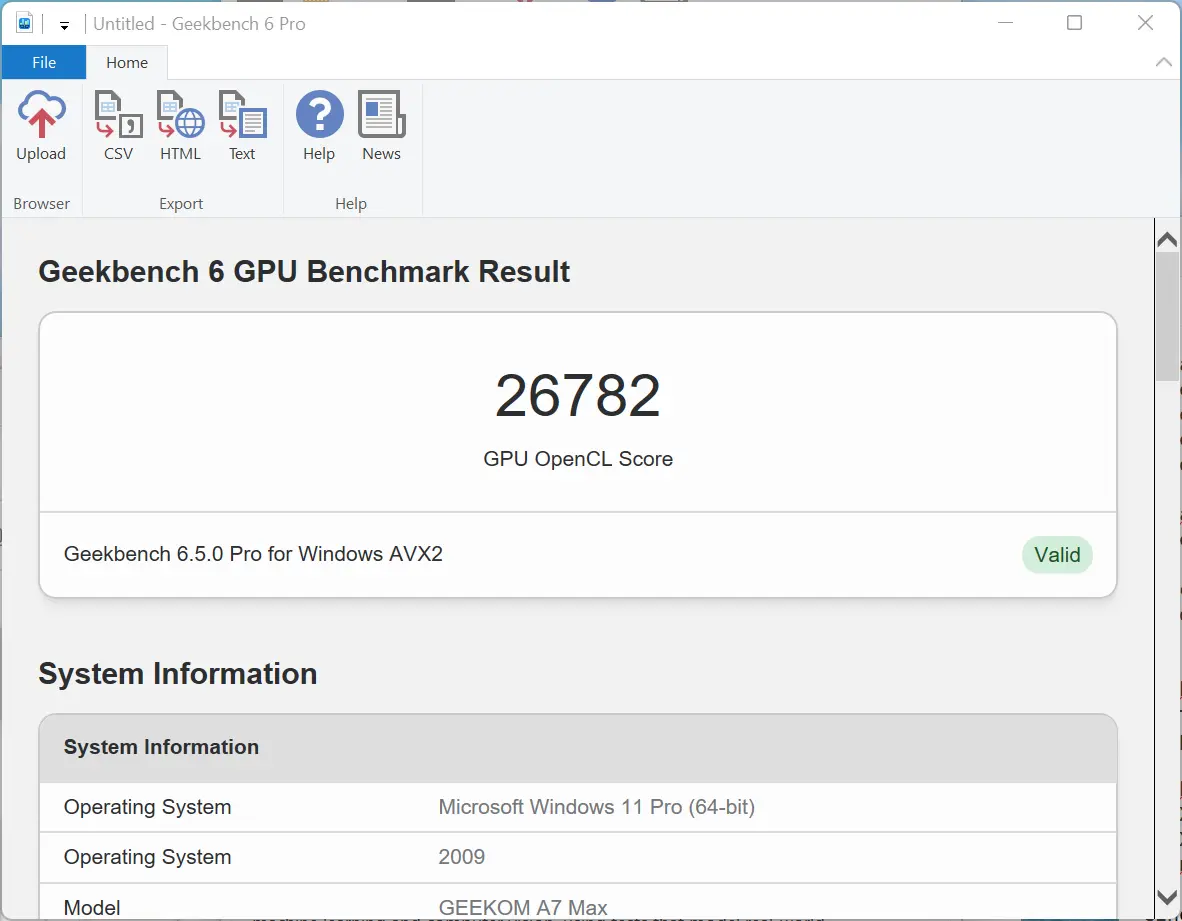
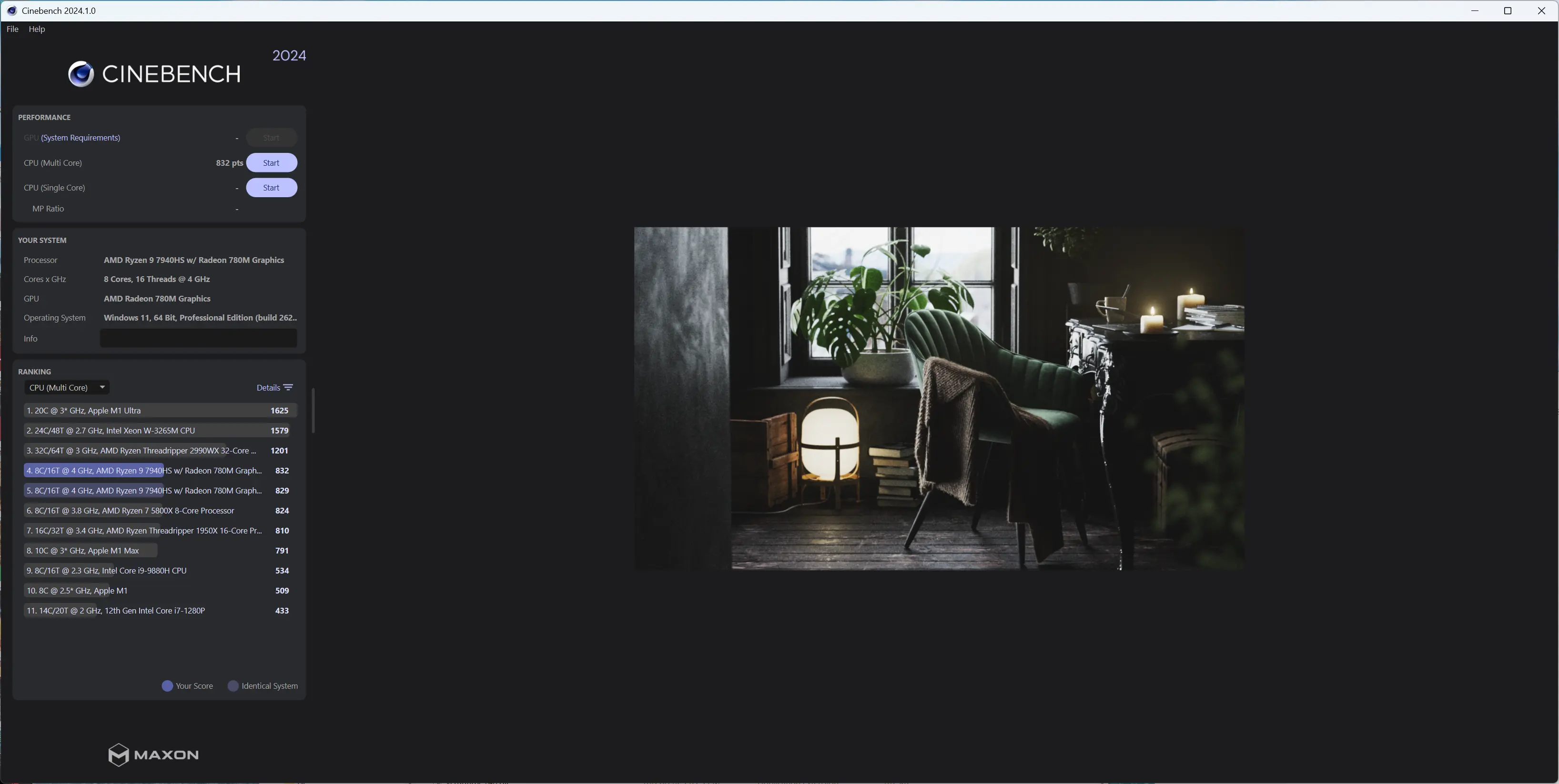
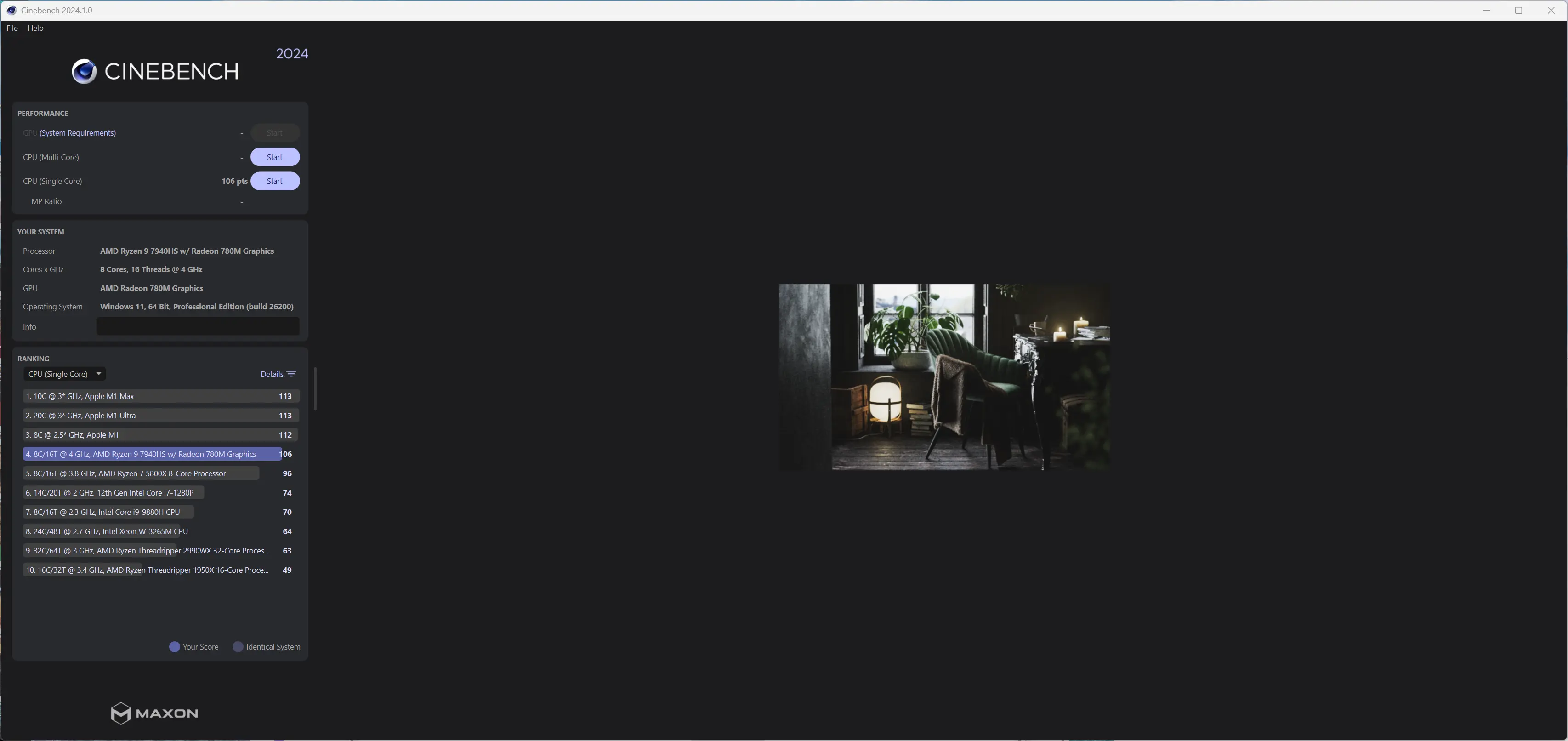
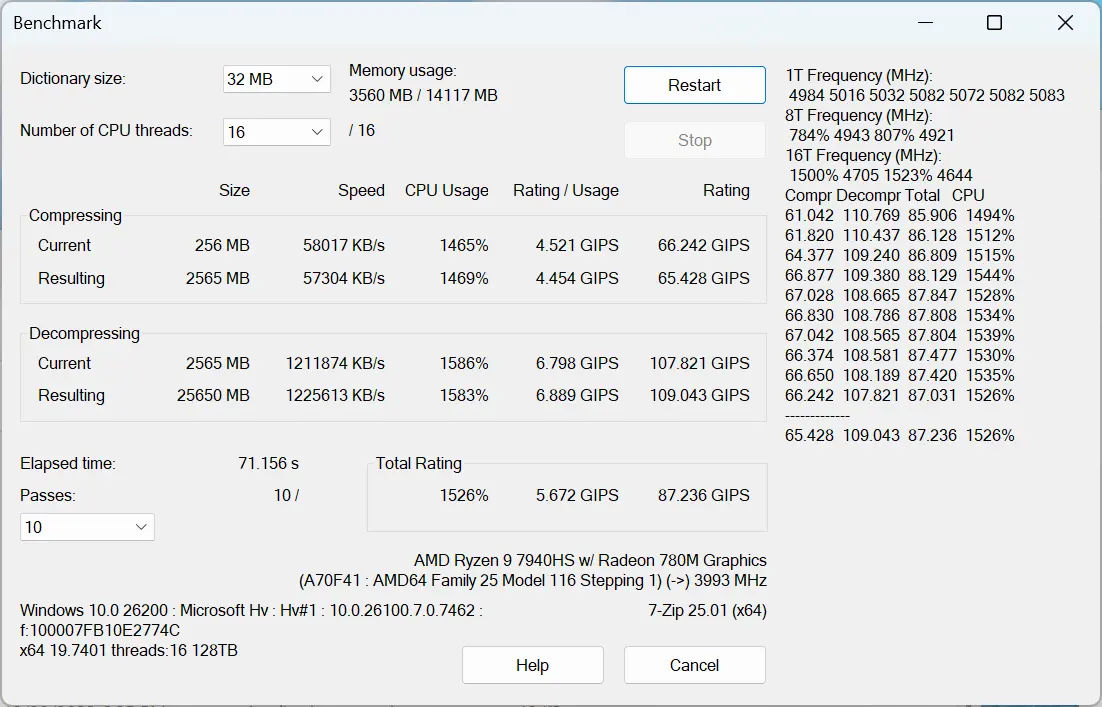
For the benchmarks, I used Cinebench 2024, 7-Zip, AS SSD, and CrystalDiskMark. 3DMark, PCMark 10, Procyon (Windows ML for CPU and GPU, and AMD Ryzen AI for NPU) was provided to Neowin by UL Solutions; Primate Labs Inc. provided us with commercial versions of Geekbench 6, and Geekbench AI.
3DMark Time Spy tests gaming capability with DX12 graphics performance. PCMark tests are a mix of CPU and real-world productivity tests, such as using an office suite, web browsing, light photo/video editing, and making conference calls. Cinebench stresses the entire CPU as it is a multi-threaded rendering test. Geekbench is a synthetic benchmark that is great for a quick look at the potential performance across a wide range of workloads.
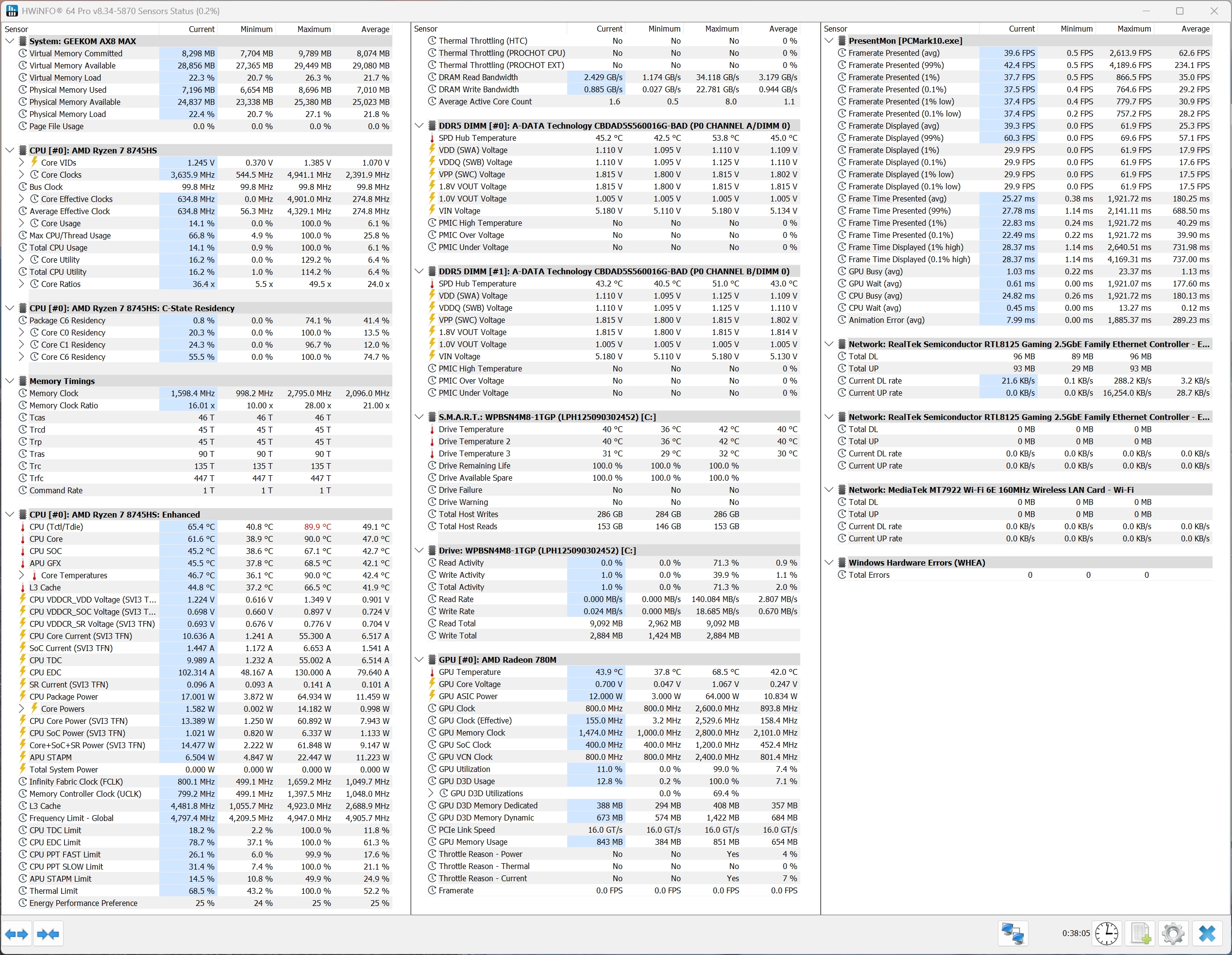
I also used HWiNFO to monitor hardware sensors and temperature readings.
|
GEEKOM A7 Max Ryzen 9 7940HS |
GEEKOM AX8 Max Ryzen 7 8745HS |
Geekom AE8 Ryzen 9 8945HS |
|
|---|---|---|---|
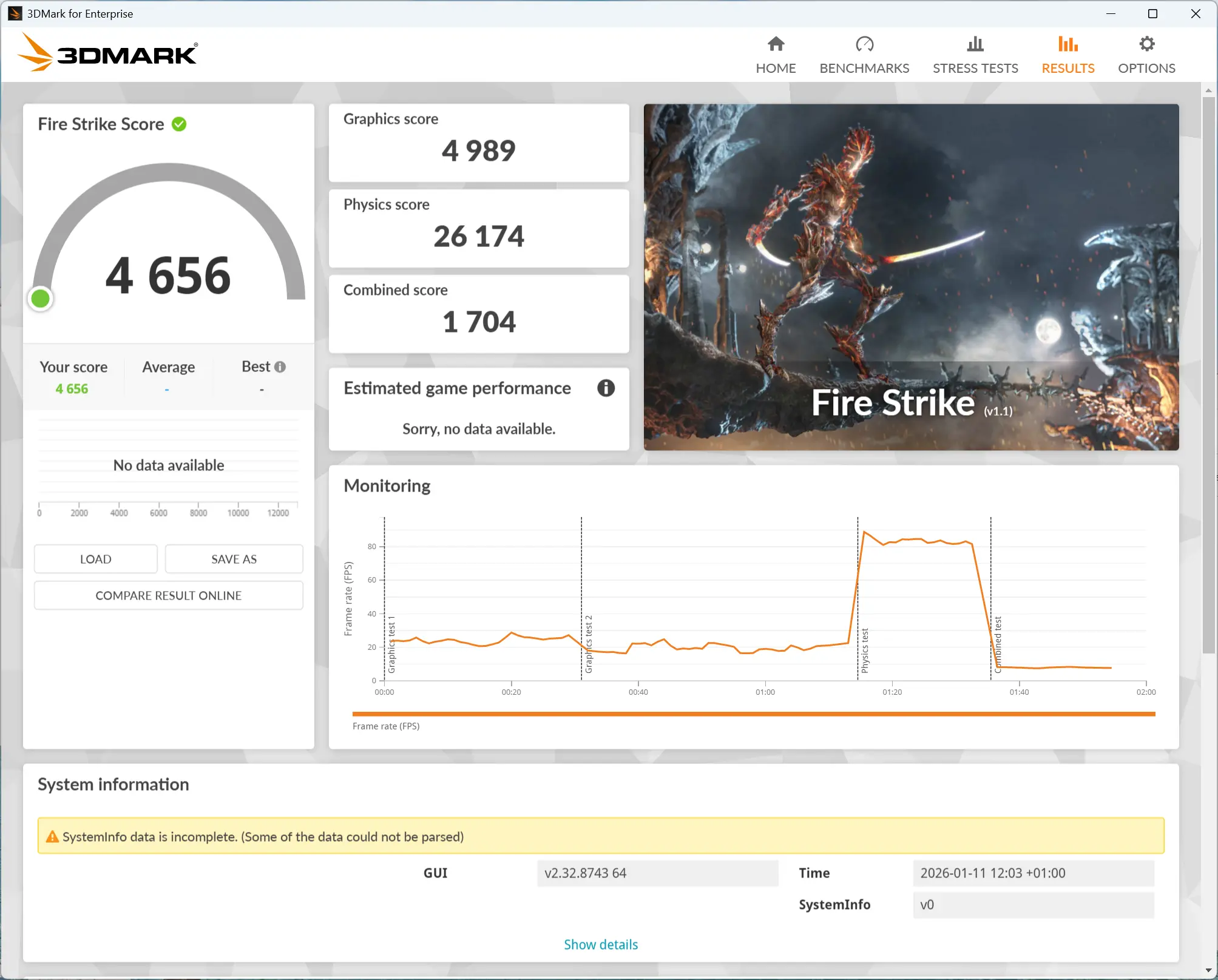
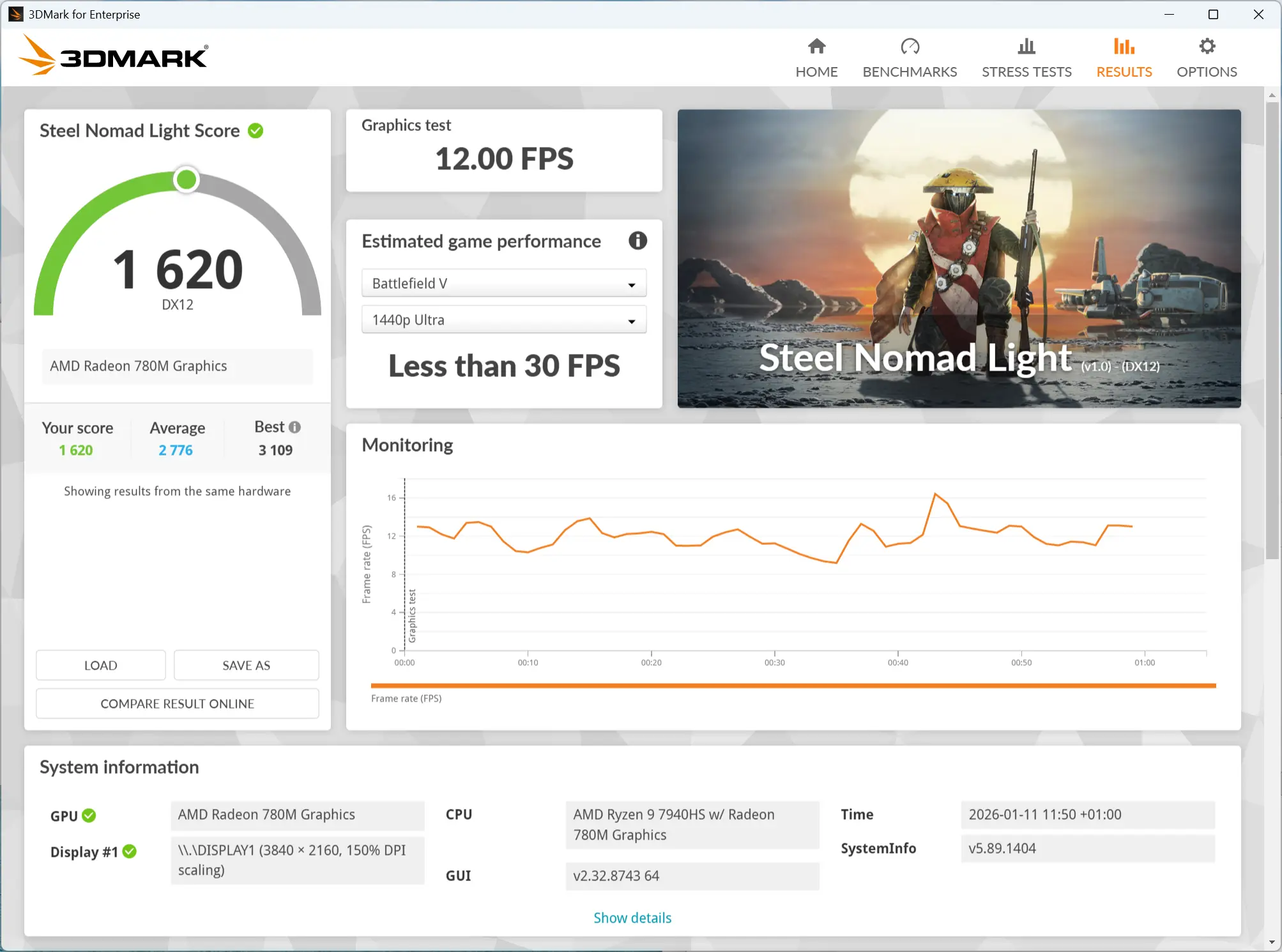
| 3DMark: Time Spy Steel Nomad Light Steel Nomad Fire Strike Wild Life |
1,864 1,620 261 4,656 10,002 |
3,033 2,611 468 7,557 17,208 |
3,343 2,915 499 |
| PCMark 10: Standard Extended test |
7,729 6,530 |
6,985 6,835 |
7,488 7,423 |
|
Procyon: Windows ML CPU |
104 142 - |
165 186 - |
125 219 - |
| Geekbench 6: Single Multicore Compute (OpenCL) |
2,561 9,824 26,782 |
2,587 12,882 29,068 |
2,662 13,468 31,707 |
| Geekbench AI |
Single, Half, Quantized |
Single, Half, Quantized |
Single, Half, Quantized |
| ONNX CPU ONNX DirectML OpenVINO NPU |
3344, 1674, 7492 5097, 9145, 3698 5090, 5098, 15839 |
4457, 1980, 8695 6938, 10587, 5339 6184, 5998, 17357 |
4503, 1978, 8823 7301, 11678, 5499 6394, 6329, 17840 |
| Cinebench 2024: Single Multicore |
106 832 |
103 912 |
107 938 |
| 7-Zip | 87,236 | 104,321 | 102,259 |
Geekbench AI scores are in the following order (left to right): Single Precision, Half Precision, Quantized.
We start off with disappointing results in the gaming tests as the A7 Max falls far behind the AX8 Max, despite both using the same 780M iGP. In almost every 3DMark test, the A7 Max's 780M gives around 60-65% of the performance of the AX8 Max. Sure, the CPU portion of the latter is more powerful, but that is not responsible for such big gaps in 3DMark benchmarks, which are mostly graphically bound.
This poor showing is easy to explain as the A7 Max unit comes with a single stick of memory compared to two SODIMM sticks on the AX8 Max.
However, neither quite measures up to the Intel Arc 140T in the GEEKOM IT15, which is a discrete graphics card. It is noteworthy here that Intel graphics is not quite as efficient as AMD Radeon in terms of driver overhead and other similar optimizations. As such, the real-world performance may be closer than what we see here in 3DMark synthetics.
In CPU tasks outside file compression/decompression (7-Zip), the Ryzen 7940HS on the A7 Max does as well as it is expected to, as the halving of memory bandwidth compared to the AX8 Max does not adversely affect those tasks. Rather unexpectedly, even, it manages to easily outperform the more powerful 8945HS in PCMark 10, which may indicate that this computer could be a decent all-rounder as long as you are not gaming on it.
Real-world gaming
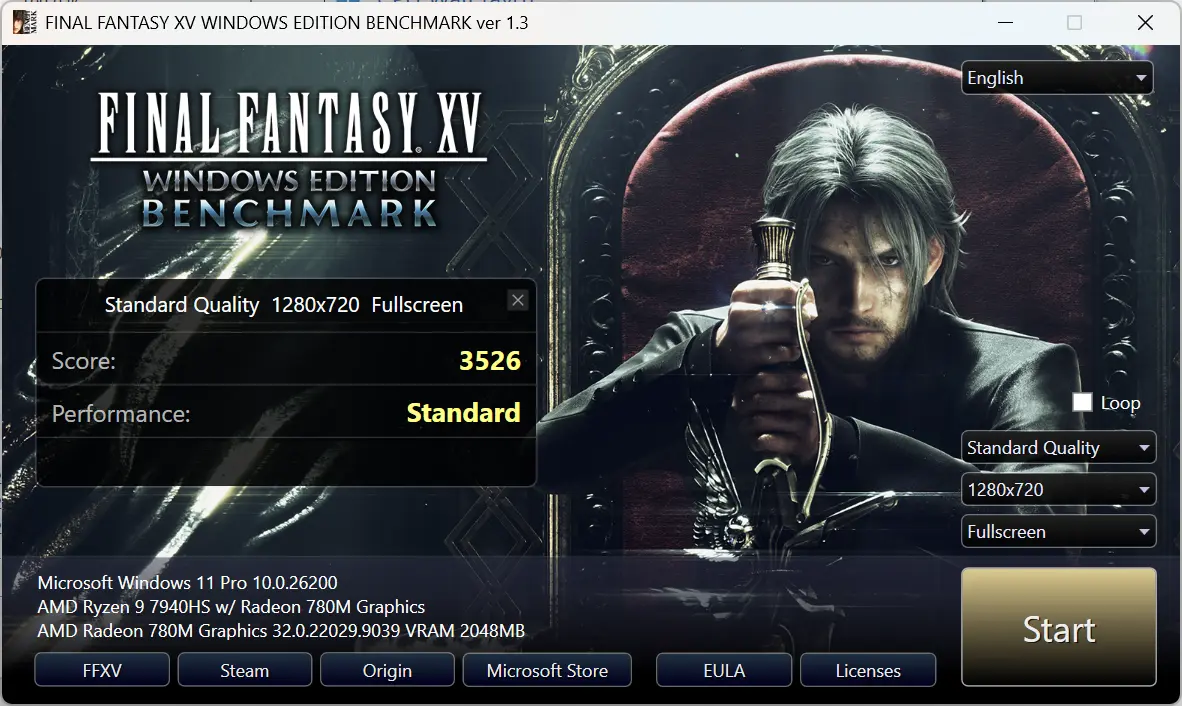
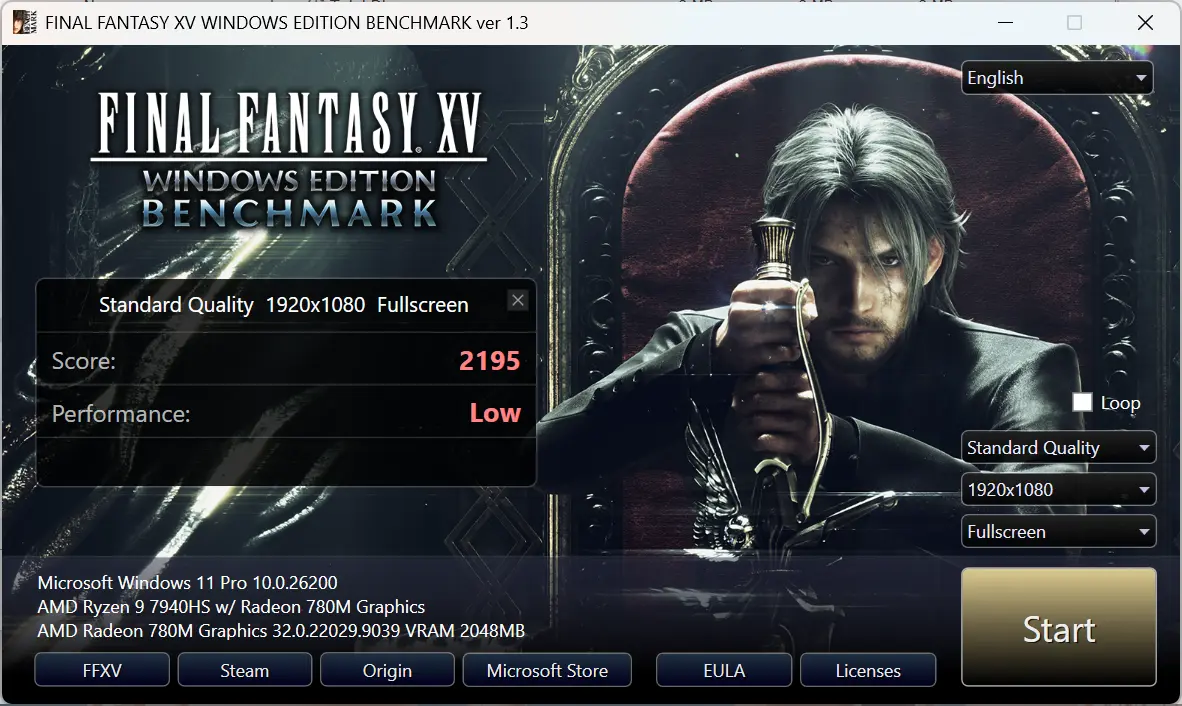
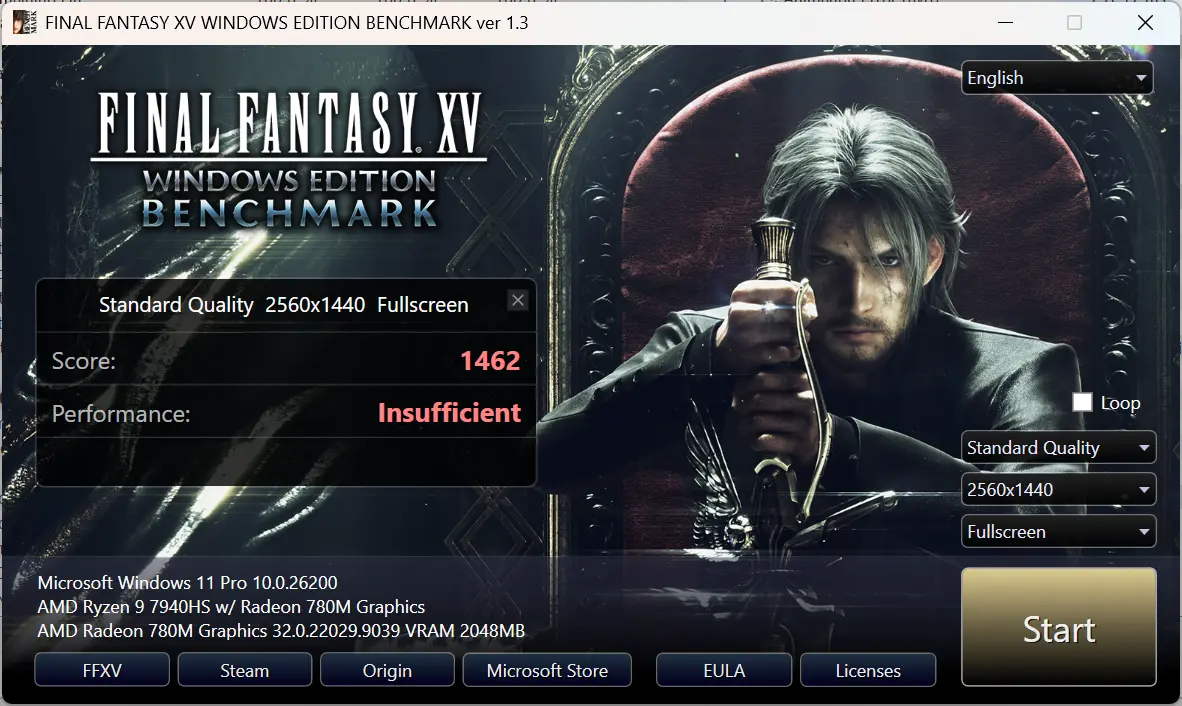
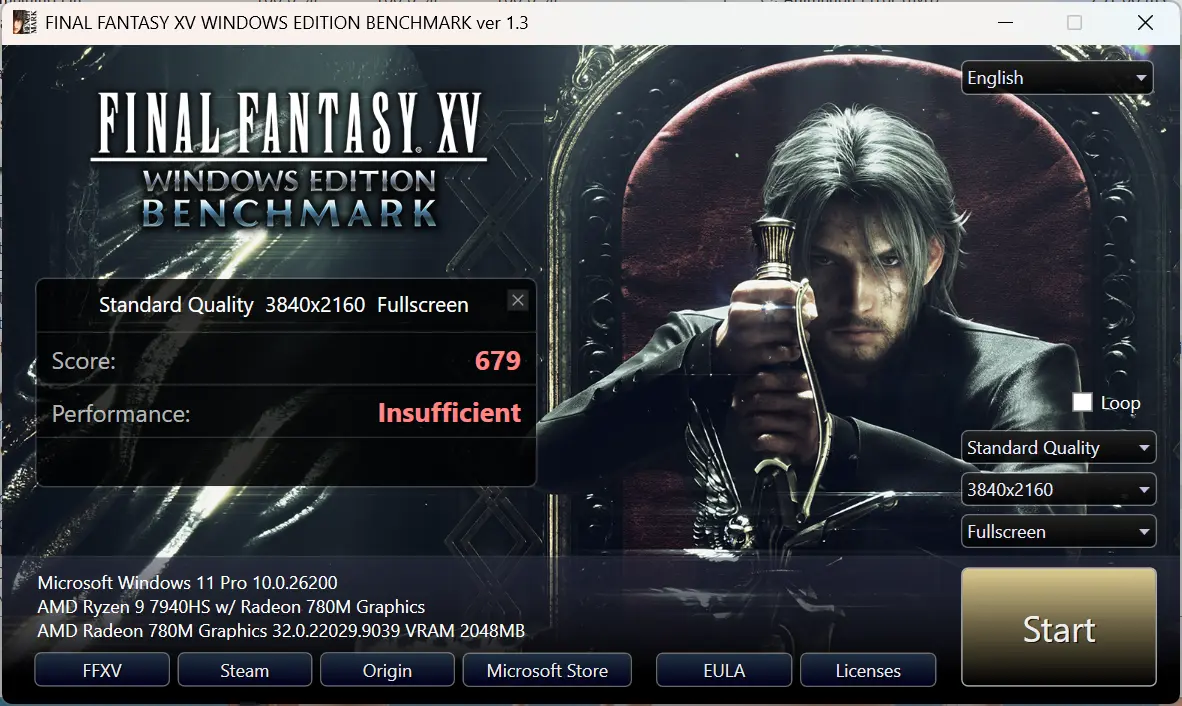
While we already established from the 3DMark tests that this is not quite a capable gaming mini PC, we ran our standard Final Fantasy XV benchmark regardless to get a taste of how well it fares against the others.
Final Fantasy XV
To gauge the capability of the 12CU Radeon 780M integrated graphics processor (iGPU), I ran the standalone Final Fantasy XV Windows Edition Benchmark on different resolutions at the Standard Quality preset to see what kind of gaming performance one can expect from the onboard GPU.
For comparison, an MSI A15 Thin laptop was used that packs a Ryzen 7 7735HS APU with a 12CU Radeon 680M iGP, as well as the 16CU 890M of the Ryzen AI 9 HX 370 inside the Geekom A9 Max.
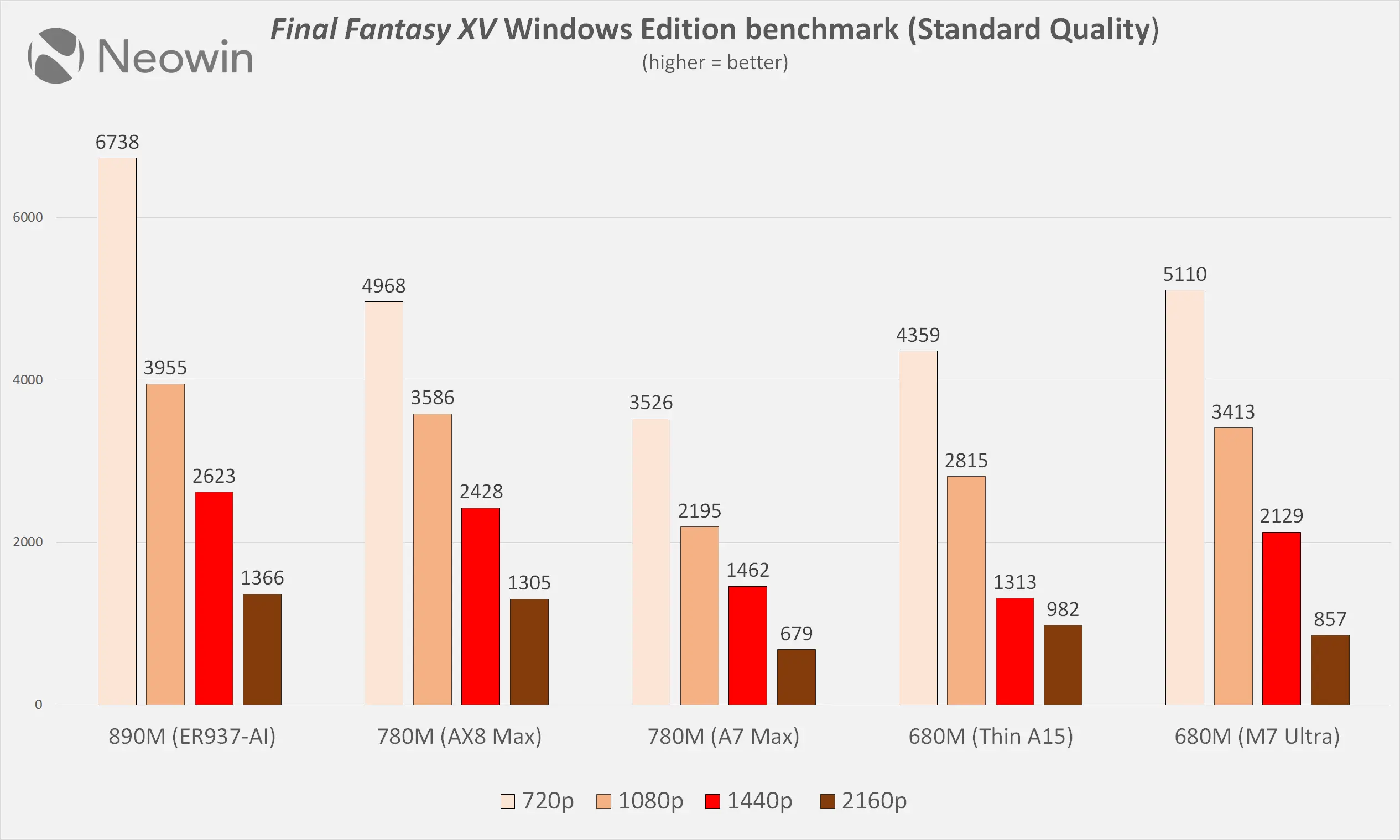
We start off 720p, which was the only resolution on which the 780M on the A7 Max achieved playable 30+ fps performance, but barely. As expected, compared to the AX8 Max, the A7 Max really struggled; in fact, the A7 Max was also slower than the 680M-based devices. The A7 Max is the only system out of the four that packs just one stick of memory.
As we move through the resolution stack all the way up to 2160p (4K), the under-performance trend continues. This is also expected behavior since more pixel crunching, in theory, should always hit the memory subsection harder. Of course, other graphics assets like texels (textures) and decals, among other things, also rely a lot on memory.
Overall, if you are looking at out-of-the-box gaming performance on this unit, it is not at the level of others that come with dual SODIMM sticks. However, it may still be used in light gaming workloads, which counts out most modern AAA titles.
Browser Performance (result is best to worst)
| Browser | Low | High |
|---|---|---|
| Edge | 25.3 | 25.8 |
| Chrome | 25.0 | 25.9 |
| Firefox | 19.8 | 20.2 |
Next up, I tested browsing performance using Speedometer 3.1. Speedometer provides a value and also a range showing the lowest and highest scores after three runs, as indicated in the chart above by the two scores for each browser. There's barely any daylight between Edge and Chrome, however Edge edges out Chrome on the low and Chrome bests Edge on the high, leaving Firefox in the dust by around 5.2 points on the low, and 5.6 behind on the high, respectively, while Edge, with 0.3 on the low and -0.1 on the high, is slightly ahead of Chrome for the winner.
Disk performance
I also tested the SSD's capability using AS SSD and CrystalDiskMark.
| AS SSD | CrystalDiskMark |
|---|---|
|
|
|
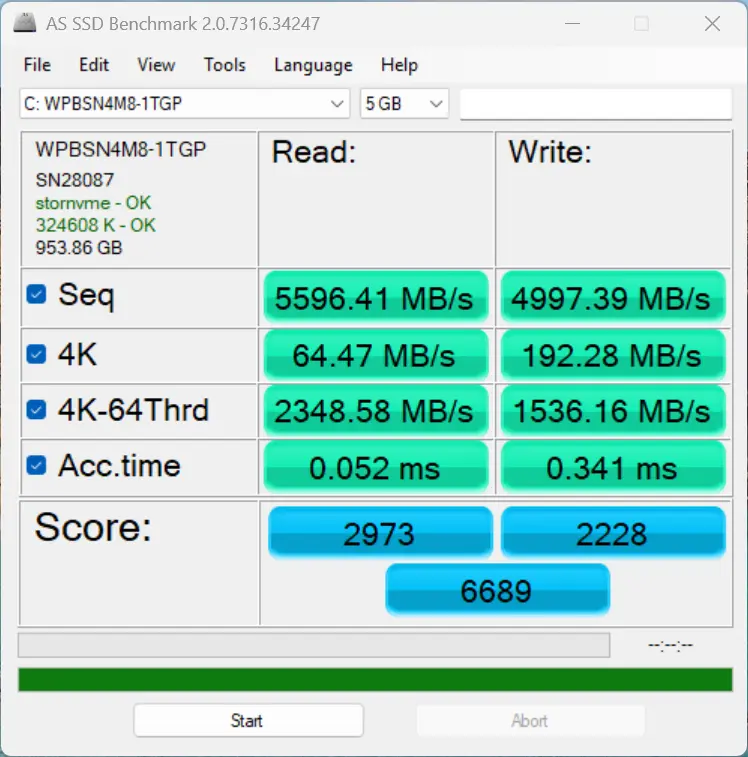
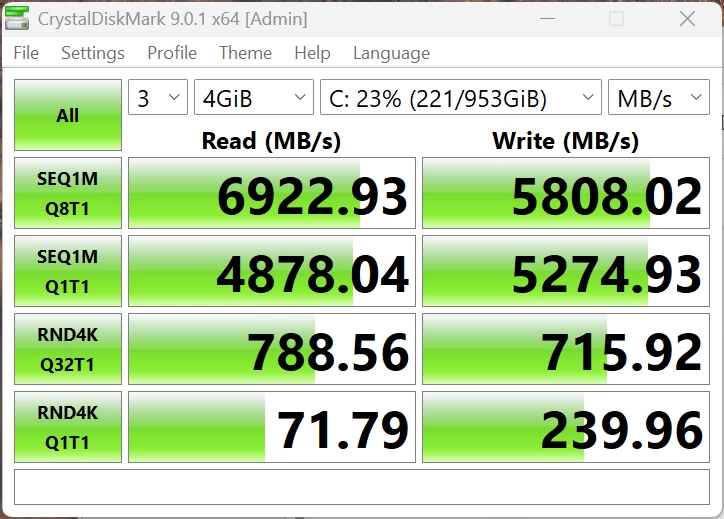
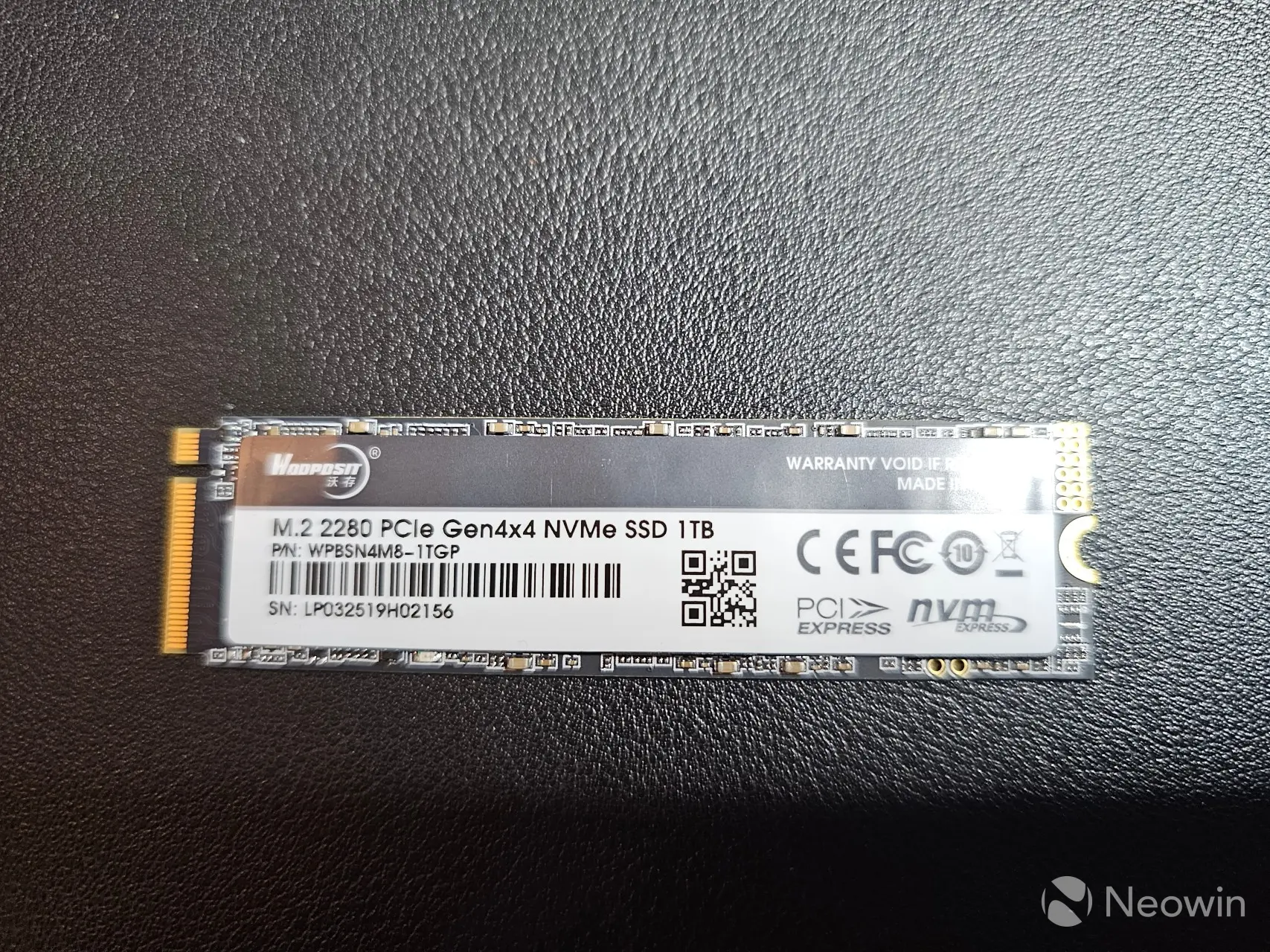
The Wodposit 1TB WPBSN4M8-1TGP is rated for 7000/6000 MB/s read/write, and you can see that it holds true to its word in the CrystalDiskMark. Search for it in other benchmarks, so you can't really go wrong here.
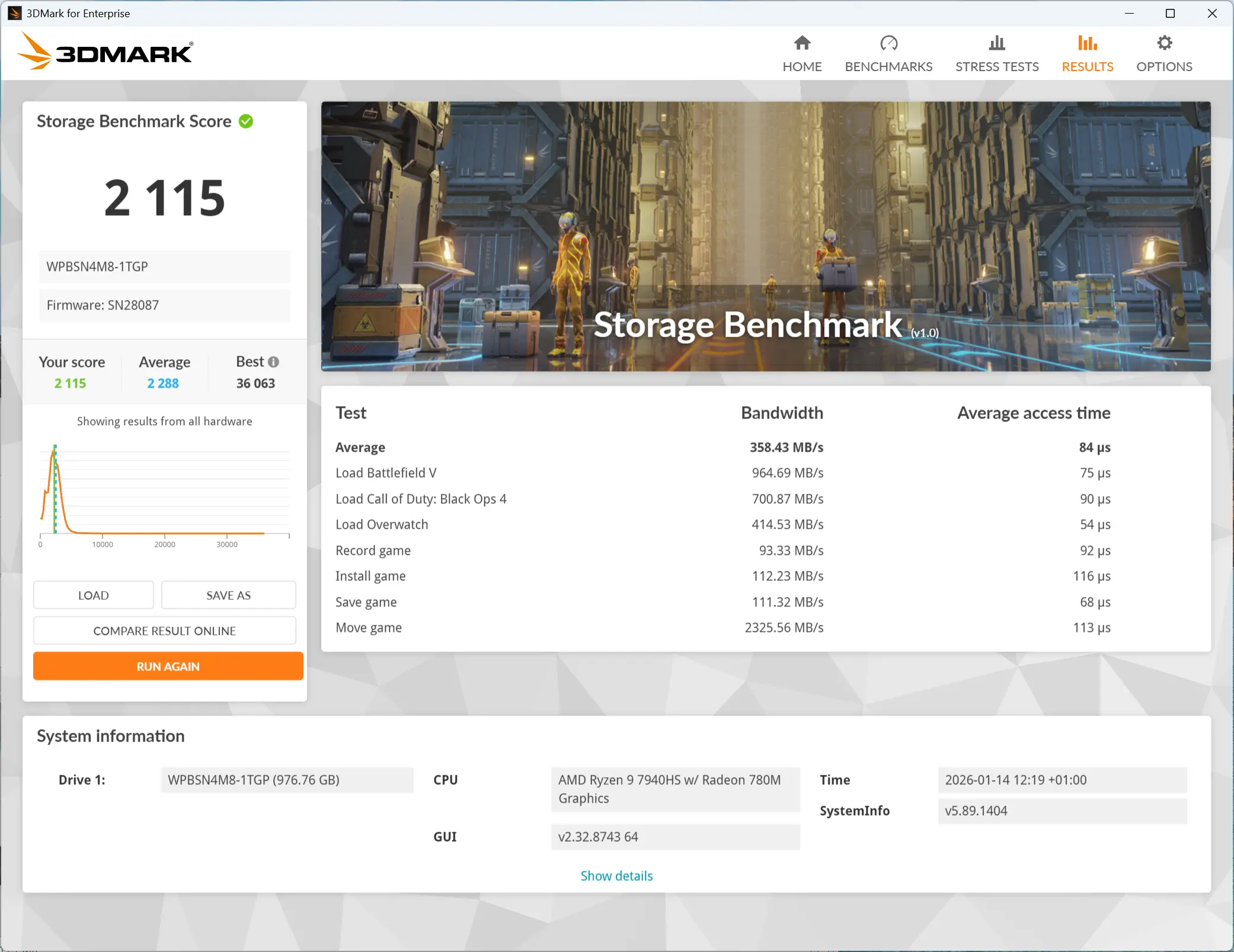
3DMark Storage Benchmark
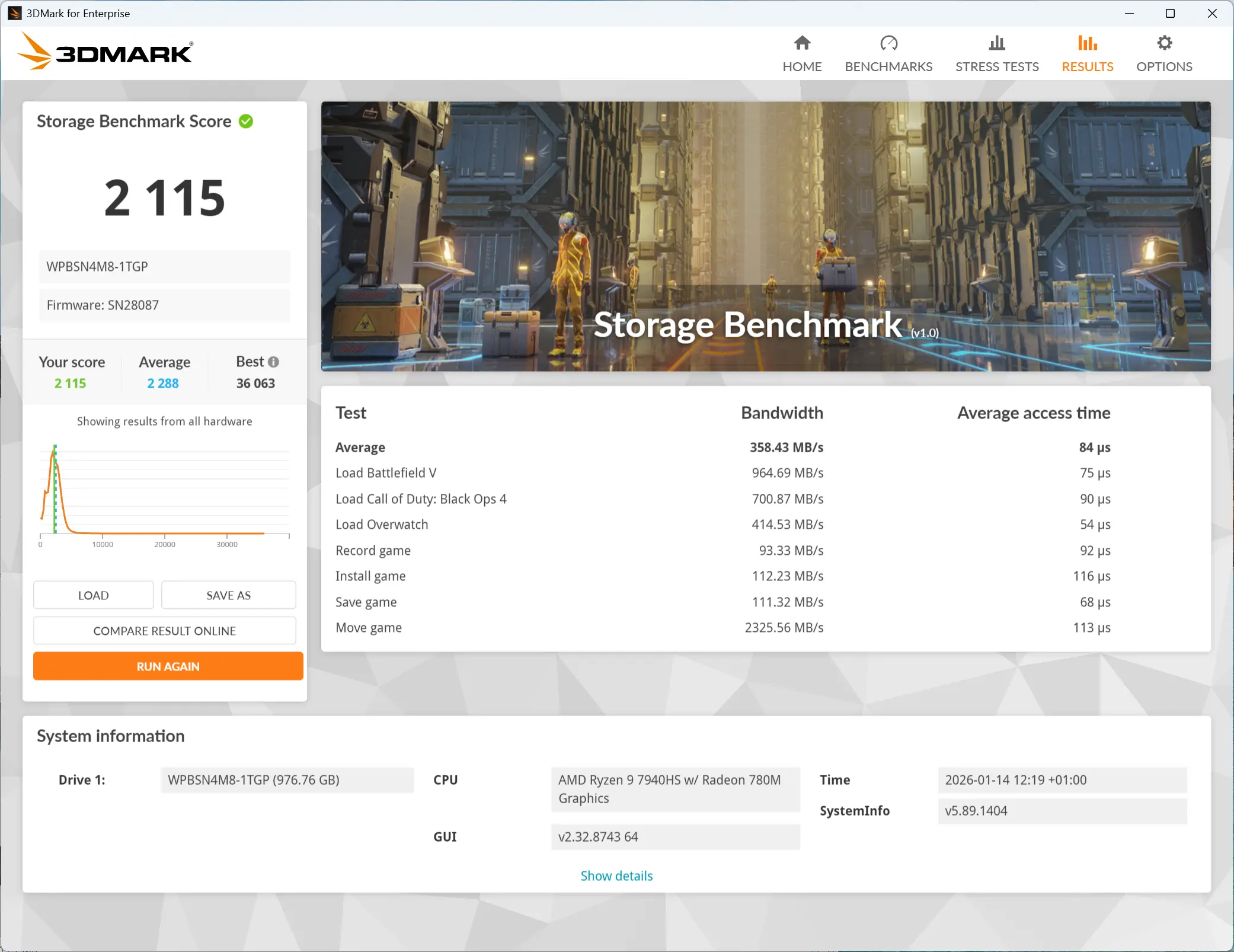
Next, I ran the Storage Benchmark, which is a component test that measures the performance of the Wodposit SSD, particularly for gaming, using real-world gaming-related activities like loading games and recording gameplay. As you can see, this SSD falls just below the average of all those tested, but it is no slouch by any means.
Heat
Despite running all of the above benchmark tests, the A7 Max did not get hot (or even warm) to the touch, and no annoying noises were coming from the single fan that cools the unit. The Highest CPU temperature recorded was during the 7-Zip benchmark test, where the CPU Core reached 90 °C.
Infrared thermal imaging
| Top | Bottom |
|---|---|
|
|
|
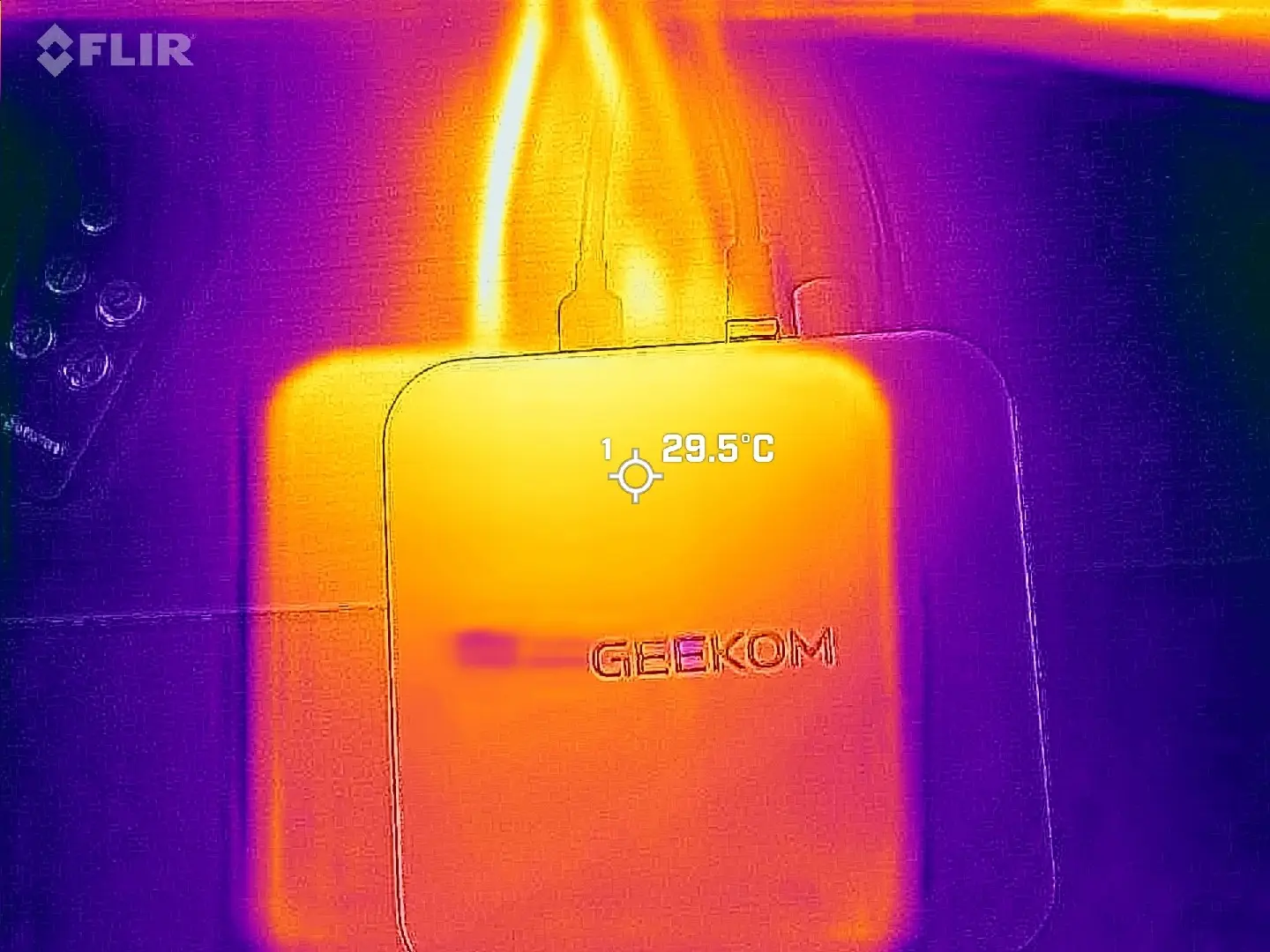
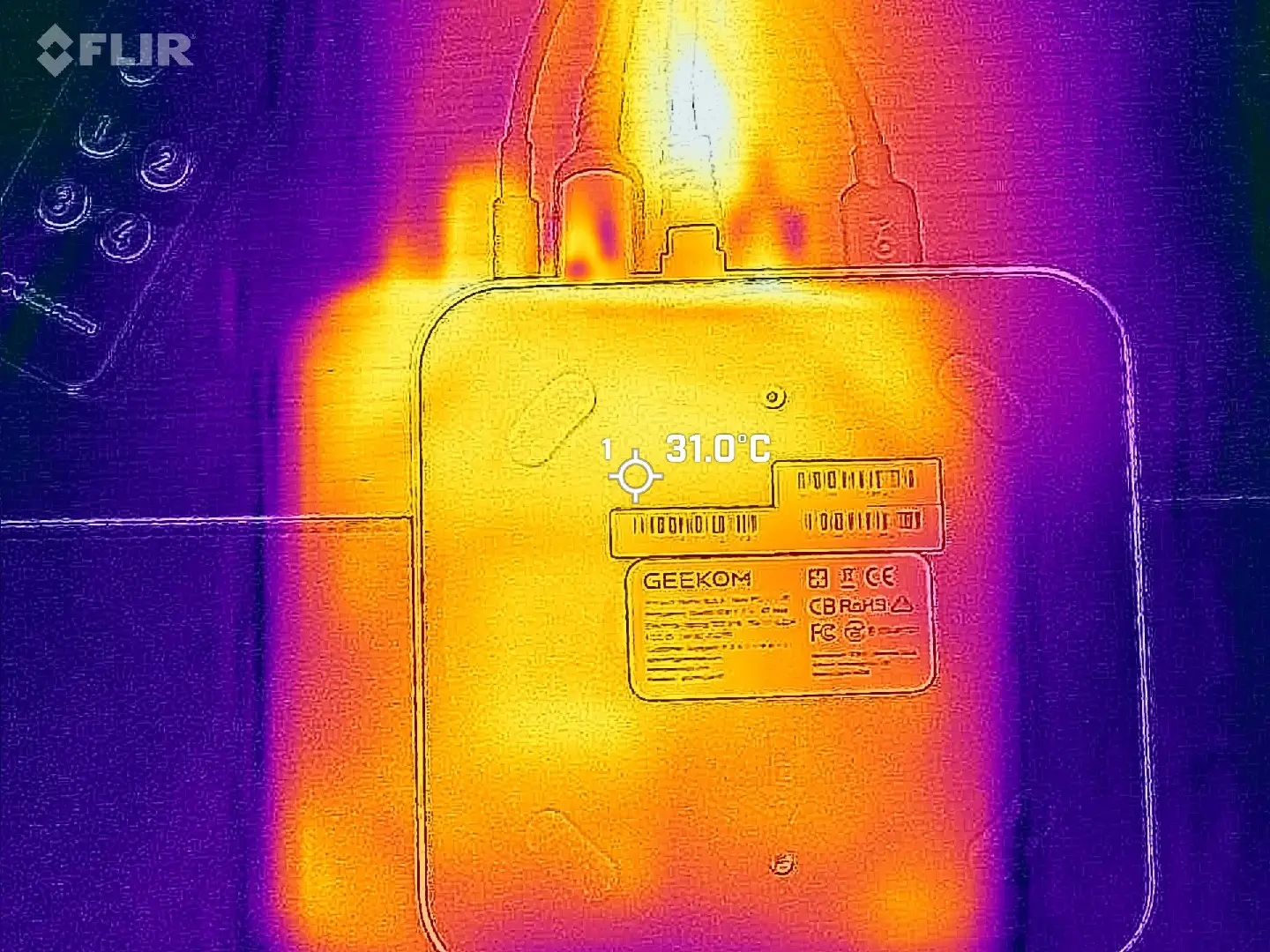
Despite all this, the outer shell never exceeded 31 °C while I was pointing my FLIR ONE Gen 3 thermal camera at a hotspot on the bottom while running a 3DMark Fire Strike test. The bottom of the Mini PC even showed a more uniform temp across the whole plate, while on the top, it was more concentrated towards the back.
Power draw
During my testing, I also kept an eye on the power draw using a Green Blue energy meter.
| in Standby | in Sleep | Windows 25H2 idle |
|---|---|---|
|
|
|
|
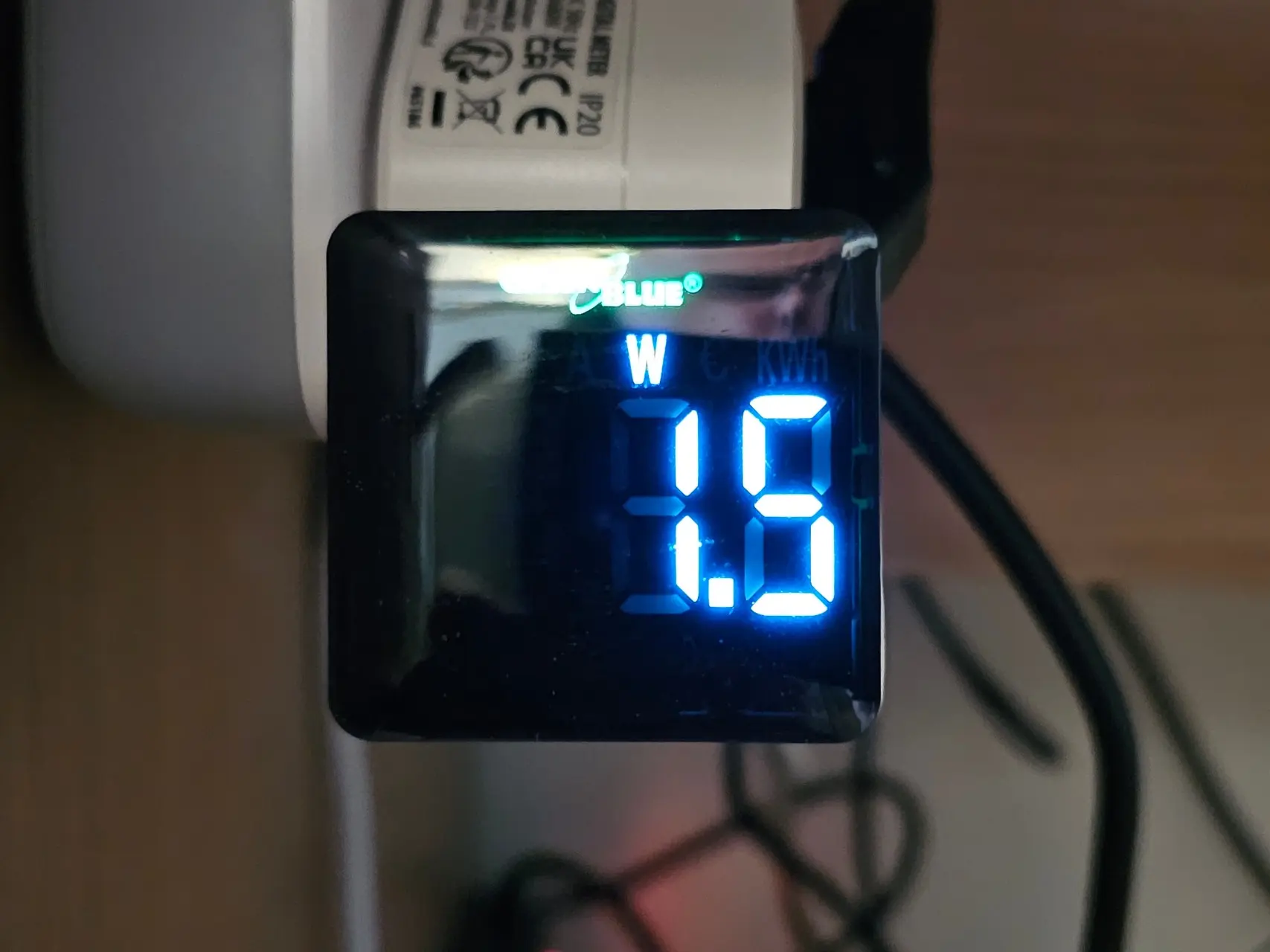
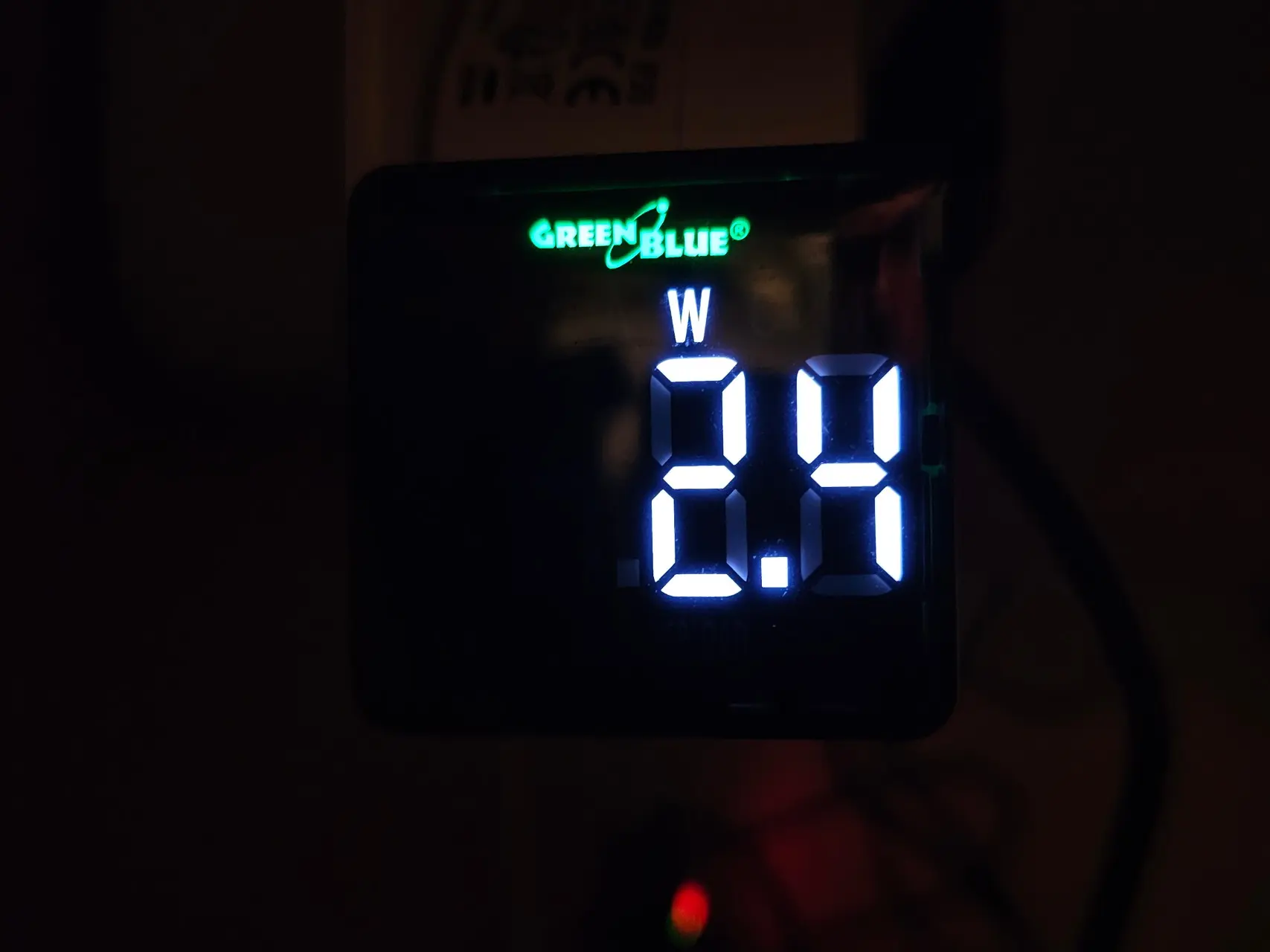
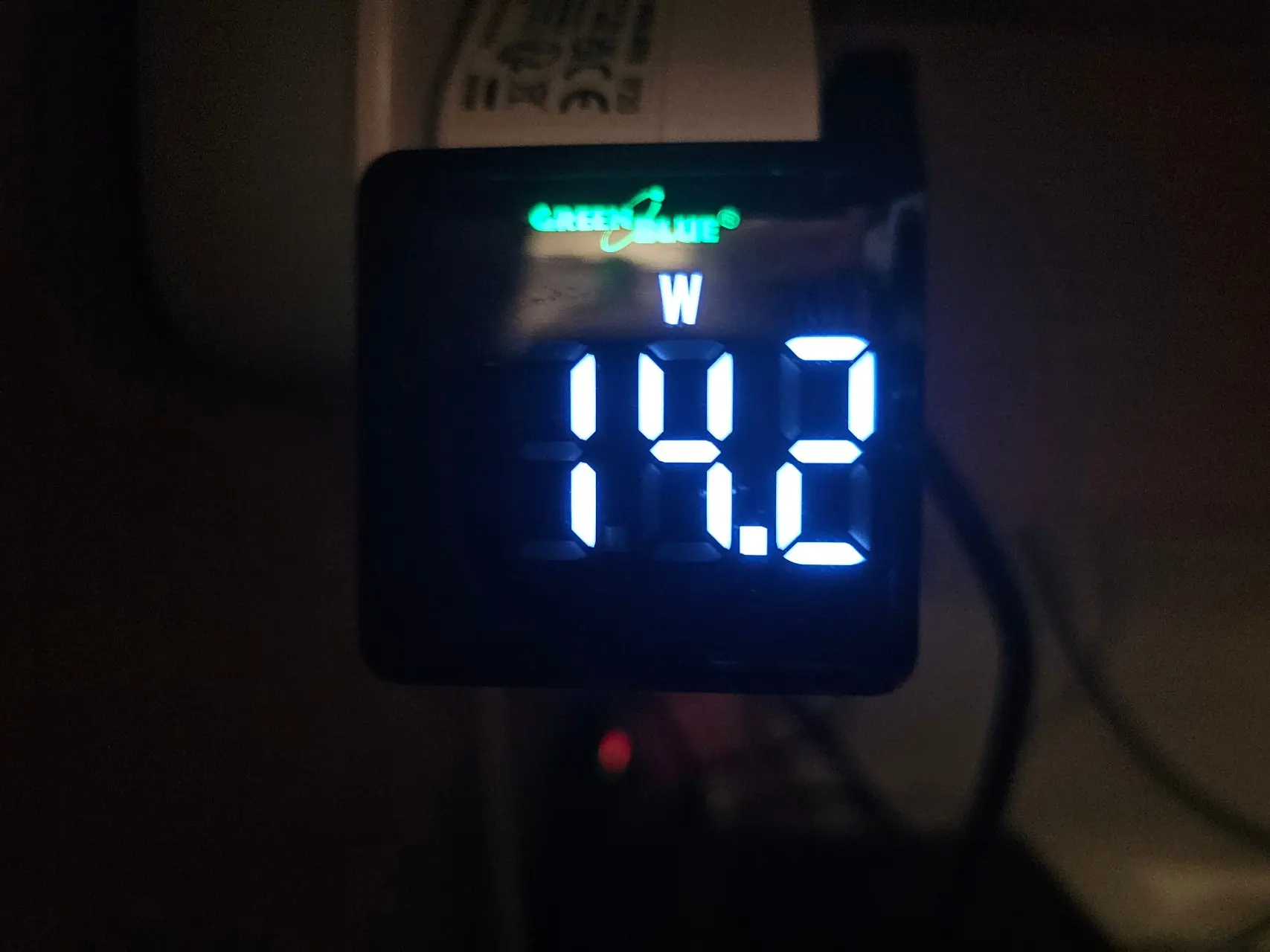
As you can see above, when powered off, it draws between 1.0 and 1.5W in Standby. In Sleep mode, I was seeing around 2-3W. When turned on and idle with no apps opened and just sitting in the Windows desktop, the draw was between 9 and 14W.
| Cinebench 2024 | Windows Update (peak) | 3DMark Fire Strike |
|---|---|---|
|
|
|
|
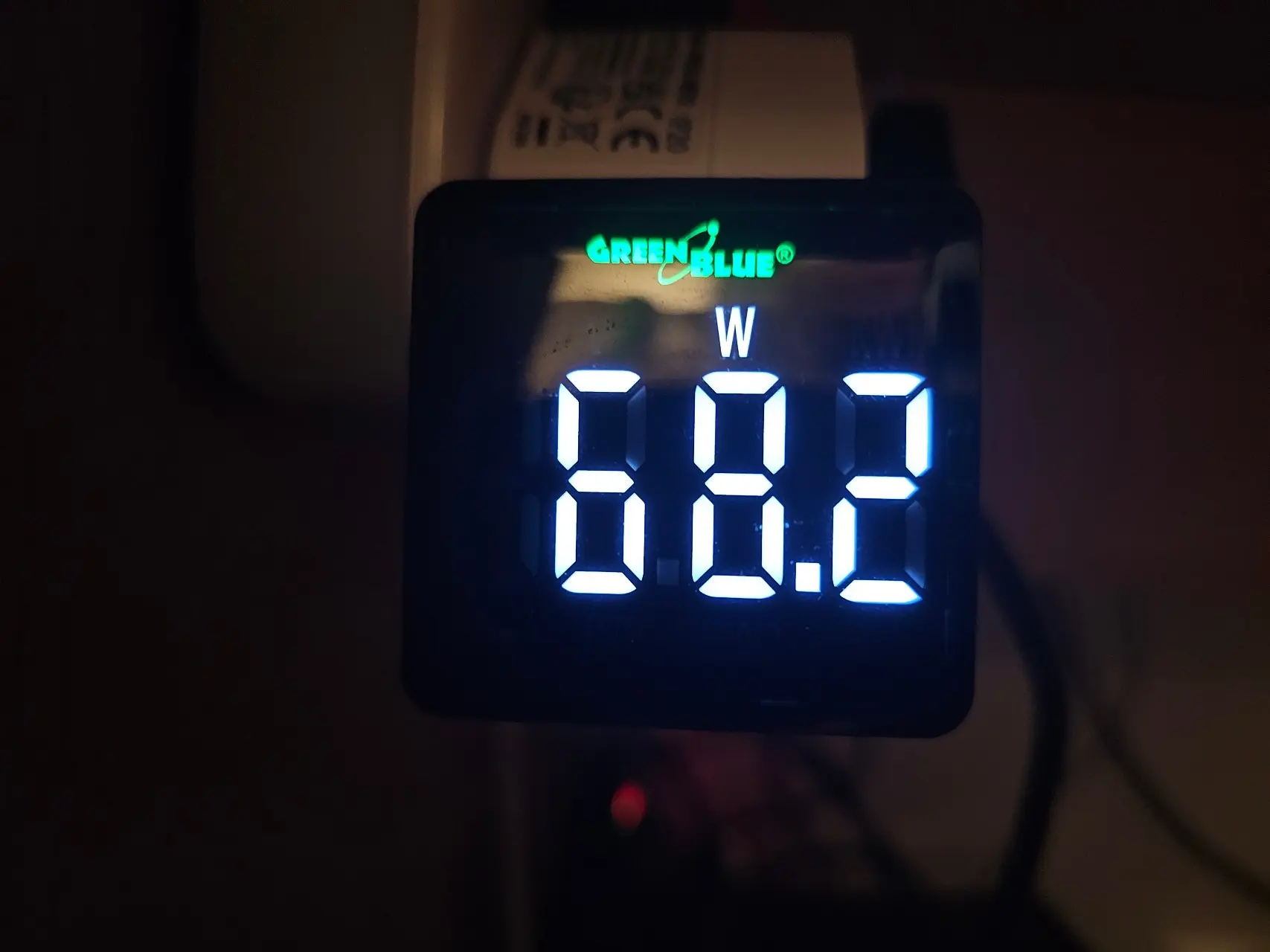
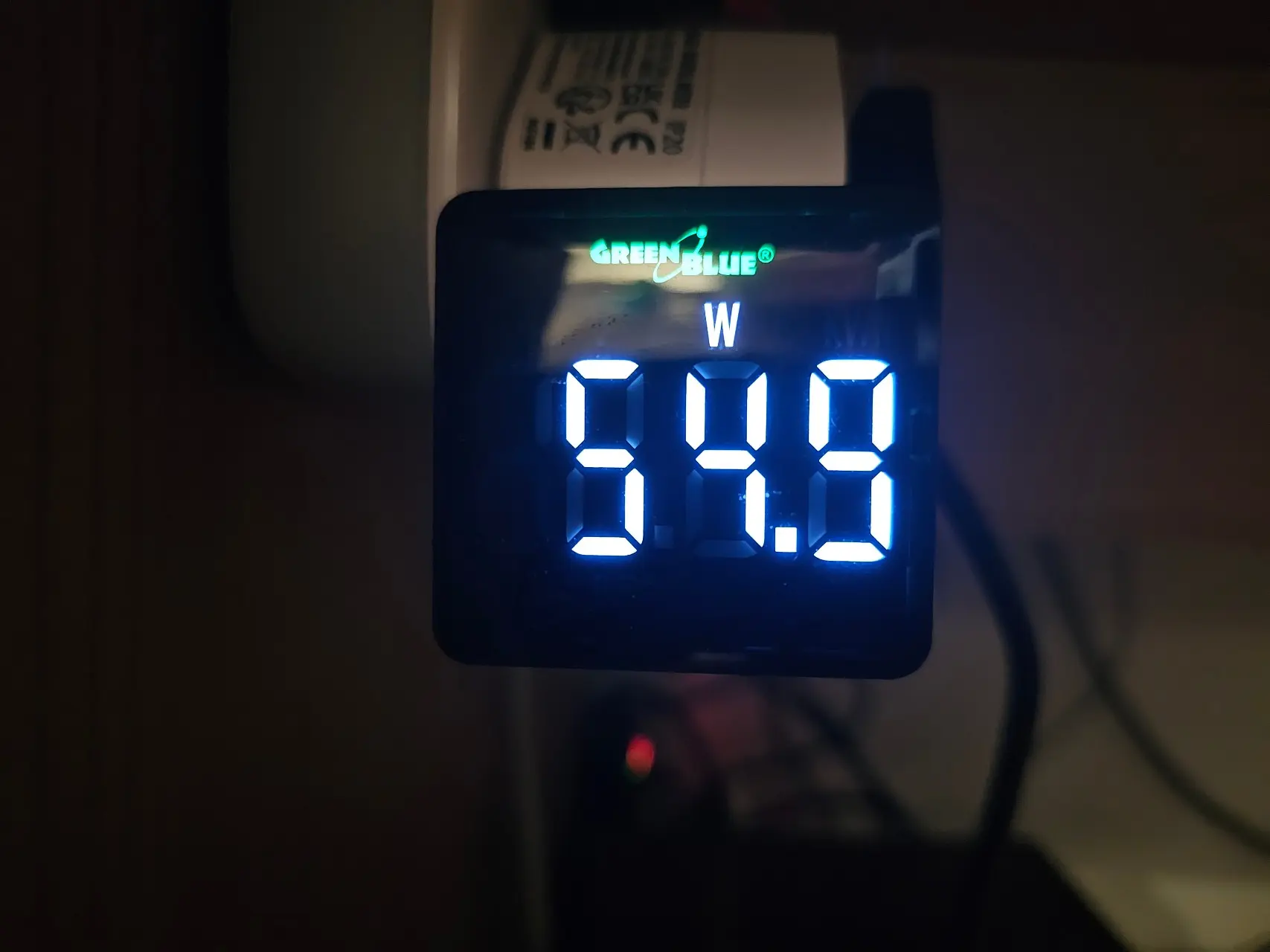
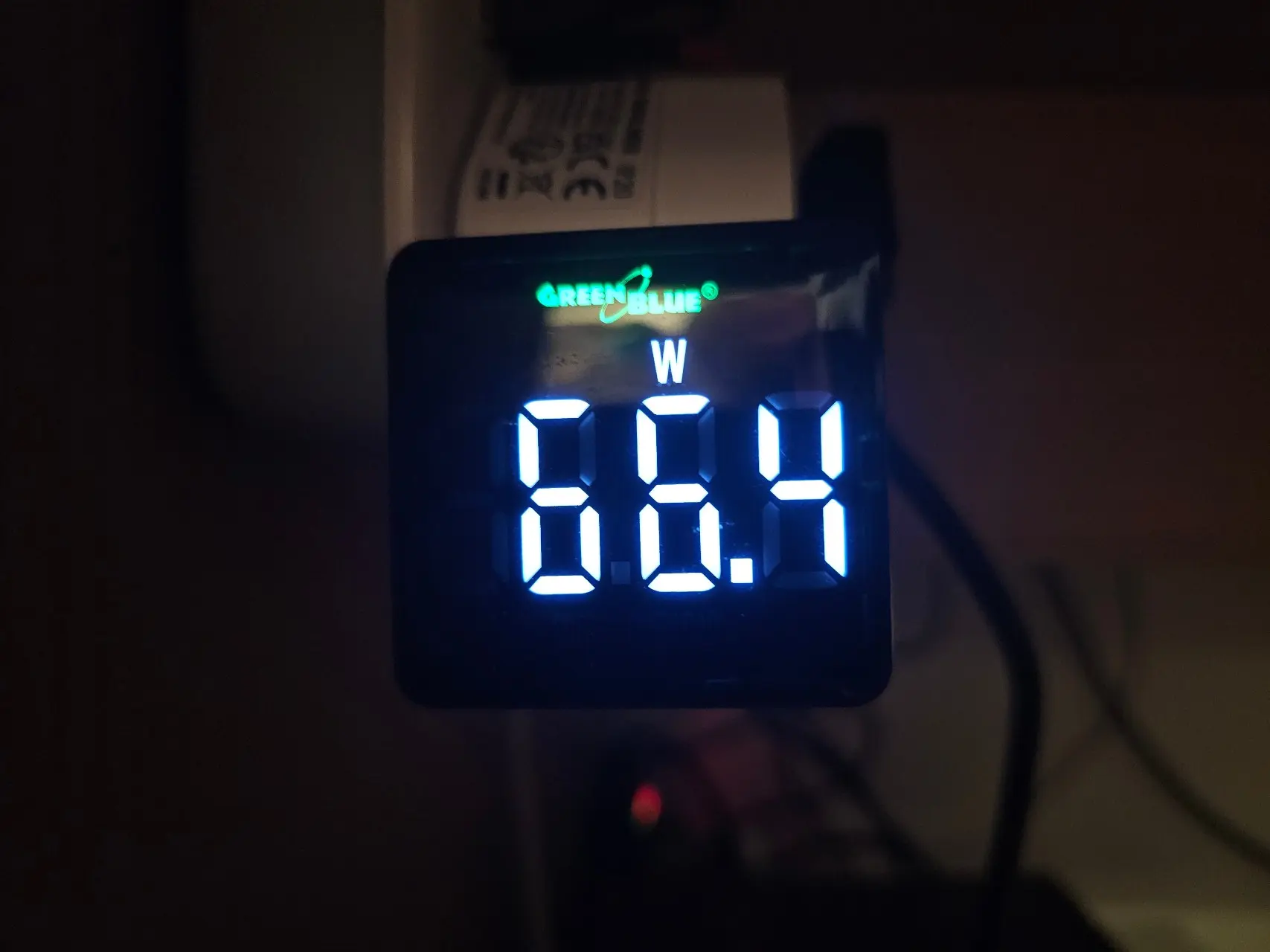
Next, I measured the maximum power draw when running the Cinebench 2024 test, which relies mostly on CPU access. I also measured power usage during the OOBE Windows Update and saw a peak of 54.9W, and finally, a peak of 66.4W was observed when running the 3Dmark Fire Strike benchmark.
Conclusion
I've said it time and time again, I love these Mini PCs. They simply aren't gaming PCs, though, so you will not be able to enjoy graphically intensive games on them. For that, you need a dGPU along the likes of the mobile Nvidia 4060, AMD 7600 (XT), or better. However, it absolutely is suited for light gaming if you can upgrade the memory to populate the other DIMM slot (Radeon 780M is roughly equivalent to GTX 1650), and as an office workstation. Perhaps it's a good solution for a student with limited living space, with the ability to pack this into a backpack for a portable solution. This thing isn't taking up much room; you can even screw it to the back of a screen if it has VESA support with the included mount plate.
In a world that is apparently too stingy for phone manufacturers to include a power lead and charger for their flagship phones, GEEKOM has provided all of the cables and tools necessary to get started straight away, along with a Windows 11 Pro license and a booklet with instructions on how to access the internals.
When it comes to Mini PCs, the market is saturated with crap, so you really have to be on the lookout and study the specs properly. One trick I have seen often is Mini PCs utilizing old tech, sometimes two generations behind. This Mini PC will let you connect to four displays, whereas cheaper solutions will be limited to two screens.
The good
Overall, we have a quick, quiet and rather cool Mini PC that includes a really good Wodposit SSD on PCIe 4.0 X4, both USB 4.0 ports also work to deliver power to an external monitor over just the Type-C USB cable, and it has a premium metal build.
The bad
Okay, it lacks WiFi 7 which should only trouble people that have moved to it or plan to very soon. In addition the benchmarks will tell you more than I can put into words. Yes, we have a memory chip crisis, but this "Max" Mini PC seems to be cut off at the knees thanks to the cost-saving measure of removing one SODIMM, resulting in really nerfing the full potential of this Ryzen 9 mobile CPU and relatively decent Radeon 780M iGPU.
I'll also say again, I still would prefer to see Type-C around the front of Mini PCs, so I will continue to dock a point for that omission. I also think that these brands should do a better job of making user documentation and support more easily accessible from the product page. Although GEEKOM's support pages are extensive, they are buried in a "Download Center" footer link.
Would I recommend?
If discounted below MSRP, and you can afford to buy a second 16GB SODIMM, then yes.
So this brings us back around to why I went with the title I did. My message to GEEKOM this time around is: don't release a MAX Mini PC that clearly doesn't offer MAX potential.
Where to buy
Assuming you've made it this far, at an MSRP of $799, the A7 Max is not cheap, even if we consider that GEEKOM currently has it discounted by $100, bringing the price down to $699 on the official website. However, with the current DDR5 memory pricing shenanigans, maybe we can give a pass for the reason that it only includes 16 GB.
Below, there are even more savings with coupons and discounts in the U.S., U.K., and Germany, bringing the price down a bit more.
-
GEEKOM A7 Max on the official U.S. website for $699 (was $799)
- Get an extra 5% off with code GKA7MAX for $664.05
-
GEEKOM A7 Max on Amazon U.S. for $699 (26% of MSRP)
- Get an extra 8% off with code NEOA7MAX for $643.08
-
GEEKOM A7 Max on official UK website for £699 (was £799)
- Get an extra 10% off with code CMS10 for £629.10
-
GEEKOM A7 Max on Amazon U.K. for £659 (after applying £100 off voucher)
- Get an extra 8% off with code NEOA7MAX for £606.28
-
GEEKOM A7 Max on the official Germany website for €749
- Get an extra 5% off with code GKNEUJ5 for €711.55
-
GEEKOM A7 Max on Amazon DE for €749
- Get an extra 8% off with code NEOA7MAX for €689.08
Our stories may contain affiliate links for products/apps where Neowin is paid an affiliate fee if you complete a purchase via those links.








1 Comment
Load the comments and join the conversation!
Read the comments, ask the editors questions, show respect and join the conversation.