Following my Astra Tablet review last summer and earlier this week my REDMAGIC 11 Air review, I was also offered the chance to check out the REDMAGIC 11 Pro, which came out in November last year. It is a spiritual successor to last year's REDMAGIC 10S Pro that I also reviewed and gave high marks for.
REDMAGIC is an independent company spun off from Nubia (a subsidiary of ZTE), which primarily focuses on gaming devices. After accepting, I then found out that the people who buy this usually do it because they game on their phones. Well, to save you a lot of bother, I do not game on smartphones, but I did do a bunch of benchmarks (including 3DMark), so it's up to you if you want to stick around.
Before we get underway, here is a disclaimer: REDMAGIC provided a sample without any editorial input or pre-approval. Oh, and also an apology: this review is rather image-heavy.
First up, let's dive into the specs:
| Specification | REDMAGIC 11 Pro |
|---|---|
| Model | NX809J |
| Front Display: | AMOLED, 1B colors, 2592Hz PWM, 144Hz, 1800 nits (peak) 6.85 inches, 113.7 cm2 (~90.7% screen-to-body ratio) 1216 x 2688 pixels (~431 ppi density) 20:9 Aspect Ratio Corning Gorilla Glass 7i |
| Dimensions |
|
| Weight: | 230 g (8.11 oz) |
| CPU: | Snapdragon 8 Elite Gen 5 (3 nm) Redcore R4 + Energy Cube 3.0 x Snapdragon Elite Gaming Octa-core (2x4.6 GHz Oryon V3 Phoenix L + 6x3.62 GHz Oryon V3 Phoenix M) |
| GPU: | Adreno 840 (up to 1200 MHz) |
| Storage: |
12+256GB, 16+512GB, 1TB 24GB, LPDDR5X Ultra, UFS4.1 Pro |
| Rear cameras: |
LED flash, HDR, panorama |
| Video features: | 8K@30fps, 4K@30/60fps, 1080p@30/60/120/240fps |
| Front camera: |
HDR |
| Video features: | 1080p@30/60fps |
| Battery and charging | Si/C Li-Ion 7,500 mAh 80W wired, Wireless: 80W, 100% in 68 min |
| SIM | 2x Nano-SIM, eSIM: No |
| Connectivity: |
Wi-Fi 802.11 a/b/g/n/ac/6 or 7, dual-band, Wi-Fi Direct |
| Radio | No |
| NFC | Yes |
| Ports: | USB Type-C 2.0, OTG |
| Bands | 5G SA/NSA, 4G LTE , 3G HSDPA, 2G GSM |
| GPS: | GPS (L1+L5), GLONASS, BDS, GALILEO |
| Durability: | IPX8 water resistant (immersible up to 1.5m for 30 min) |
| Security: | Fingerprint (under display, optical), Face ID, accelerometer, gyro, proximity, compass Emergency SOS via satellite (messages and calls) |
| Features: |
|
| Audio: | Dual 1012 + 1115K Speakers, 4D Sound, Snapdragon Sound, Hi-Res audio |
| Material: | Aluminum Alloy Frame + Gorilla Glass |
| OS: | REDMAGICOS 11.0 (Powered by Android 16) |
| Colors: |
|
| Warranty: | 2 years (global) |
| Software support: | 5 years (EU & UK) 3 years (Rest of the world) |
| MSRP: | $749, $849, $999 / €699, €799, €999 / £629, £709, £879 |

Table of Contents
Introduction
Unlike the REDMAGIC 11 Air (which I think is more like a Samsung "FE" variant), this includes the Qualcomm Snapdragon 8 Elite Gen 5, announced in September 2025. It is paired with a Redcore R4 gaming chip, on which I could find very little info. Aside from the marketing jargon I could find, my contact told me that it is:
a dedicated gaming chip designed to elevate performance and cooling. It powers customizable in-game effects, delivers Qualcomm-driven 2K super-resolution for smoother visuals, and utilizes intelligent power management to extend battery life while keeping the device cool during intense sessions.
However, it also includes Energy Cube 3.0 x Snapdragon Elite Gaming, which is:
REDMAGIC’s proprietary hardware–software optimization engine dynamically allocates CPU, GPU, memory, cooling, and touch resources in real time by game scenario. The result: higher FPS stability and faster responsiveness with lower power draw and less heat.
- Up to 12% lower power consumption
- Up to 40% performance uplift
- Smoother frame rates in complex scenes and steadier performance during
- multitasking
- Lower energy use for longer battery life
For a quick and dirty comparison against another popular flagship, it is still quite a bit cheaper than the equivalent in the Samsung Galaxy S25 series, and it's actually $320 cheaper ($250 cheaper as of writing with a discount) than the Galaxy S25 Ultra, which has the Snapdragon 8 Elite, but with 4GB less memory compared to the 512/16GB REDMAGIC 11 Pro variant that I have. Plus, this aligns more with the S26 Ultra series coming out in February, which will start at around $1,400 without discounts and will include the same Snapdragon 8 Elite Gen 5 SoC.
Aside from the fancy names given to the colors offered on the product page, they are basically Black or Silver with a transparency effect on the back, or in the case of Cyro, non transparent Black. Ours is the Subzero (Transparent Silver) variant. I've put the full bands it supports in a table below.
| Bands | |
|---|---|
| 2G: | GSM 850 / 900 / 1800 / 1900 |
| 3G: | HSDPA 800 / 850 / 900 / 1700(AWS) / 1900 / 2100 |
| 4G: | 1, 2, 3, 4, 5, 7, 8, 12, 17, 18, 19, 20, 26, 28, 34, 38, 39, 40, 41, 42, 66 |
| 5G: | 1, 2, 3, 5, 7, 8, 20, 26, 28, 38, 40, 41, 66, 77, 78 SA/NSA |
As far as internals go, this can rival most flagships on the market today and probably even exceed in some areas, like with the ample-sized battery we've come to expect on REDMAGIC phones.
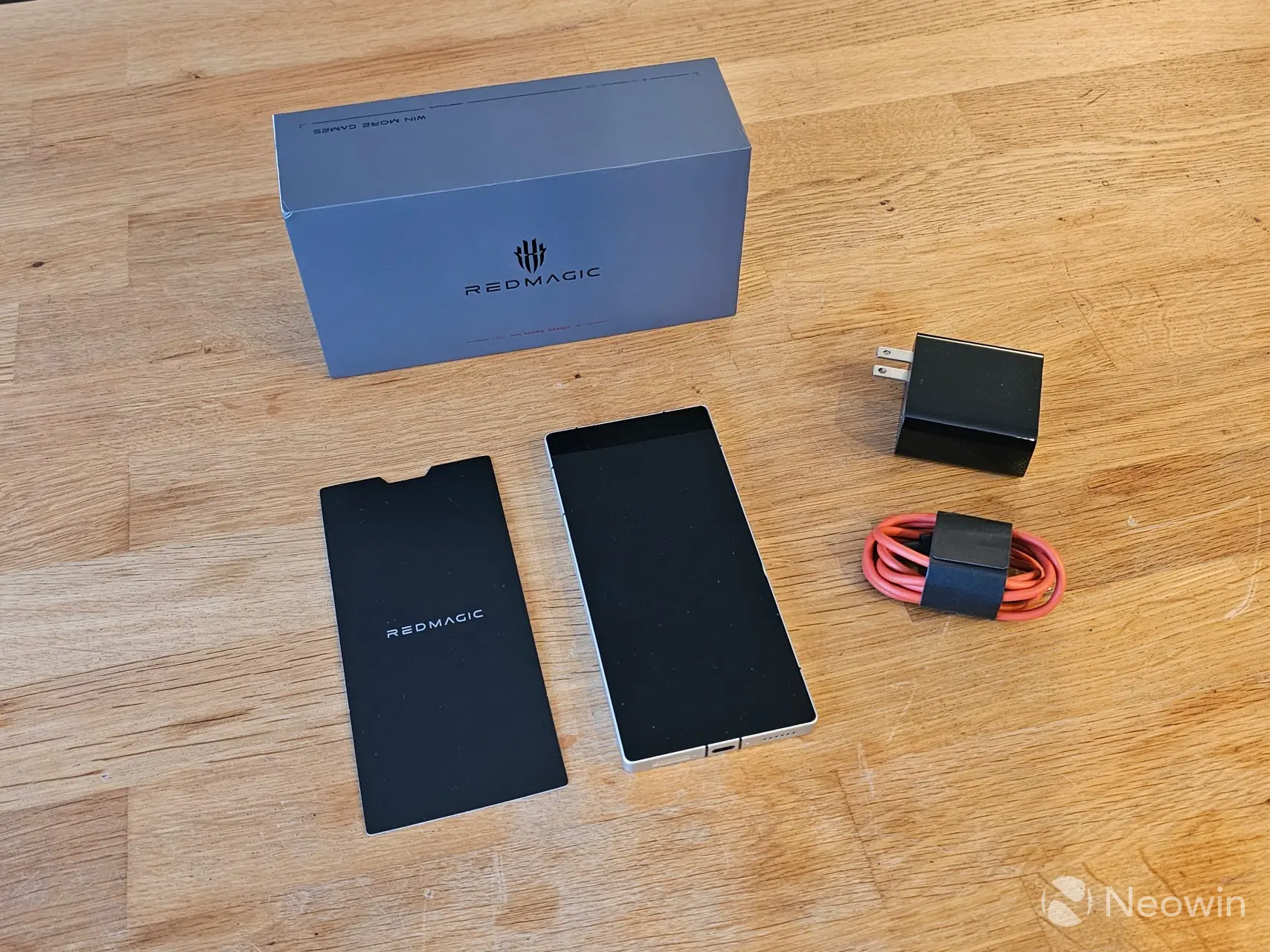
In the box
First a little note, in order to do this review I had to be okay with a recycled unit. This means my photo above is missing a few things from the checklist below, however the most important things did arrive, like the official cable, wall charger and the phone itself!
- REDMAGIC 11 Air Phone x 1
- Clear Phone Case x 1
- Power Adapter (80W) x 1
- Type-C Data Cable x 1
- SIM Tray Ejector x 1
- Warranty Card x 1
- Documentation
REDMAGIC laughs in the face of modern trends, because it is one of the few that still supplies an 80W Fast Charger power adapter in the box. Remember, kids, Samsung makes you pay around forty bucks for their 45W Fast Charger adapter, which adds to the total cost of your brand new Galaxy.
Day 1
Even with its giant 7,500mAh battery, this still manages to be 3g lighter than my S23 Ultra at 230g, but only 12 grams heavier than the S25 Ultra for that extra 2,500mAh of battery. For reference, the 11 Pro is one gram heavier than the 10S Pro, which has 450mAh less battery capacity.
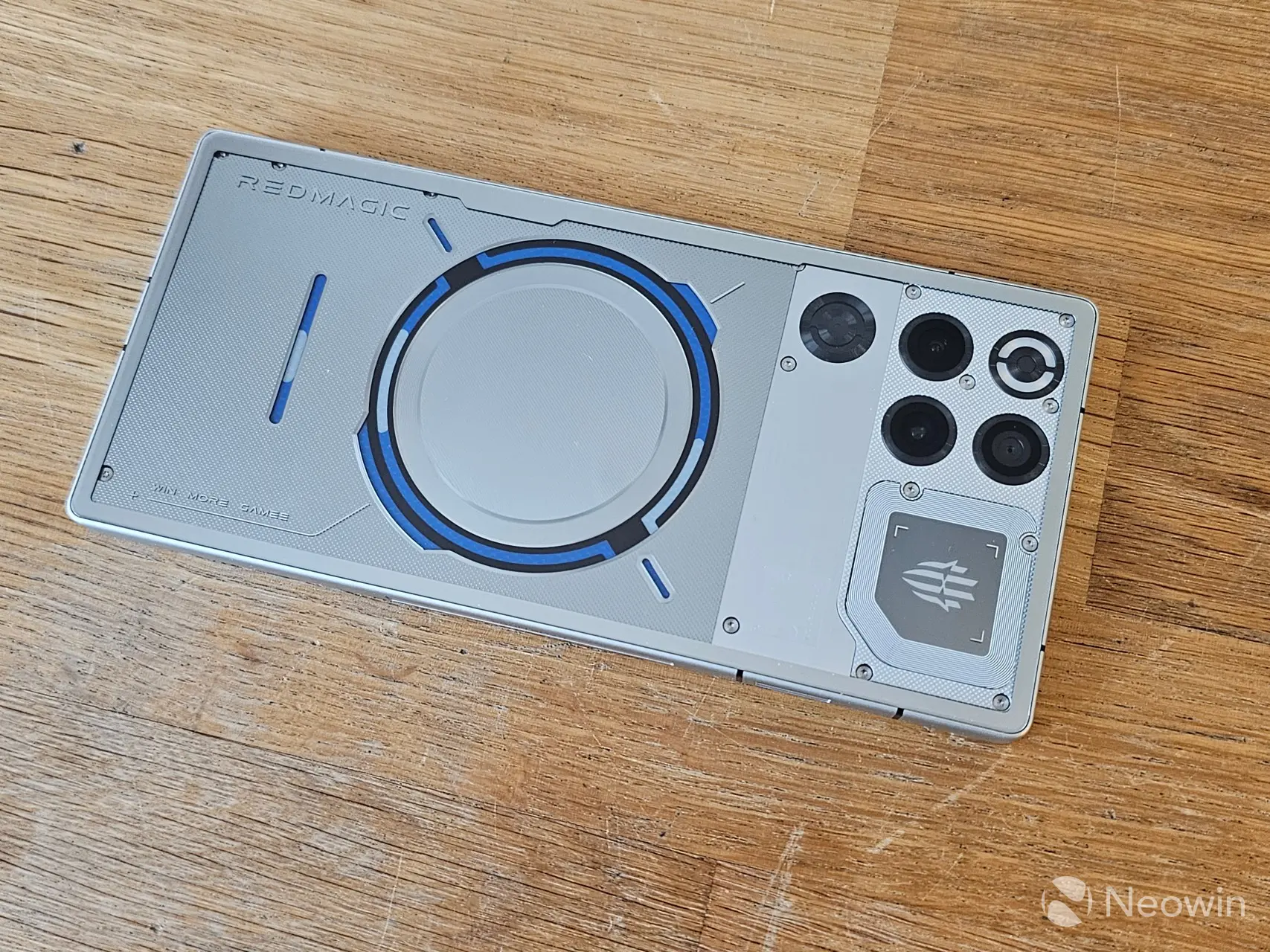
The design reminds me a lot of rectangular candy bar phones from yesteryear while retaining an impressive 90.7% screen-to-body ratio. There's zero camera hump on the back, but for this, camera quality suffers a bit, which I'll get into later. By the way, the glass rear also completely covers the camera array, so there are no circles that can gather dust, or camera lens covers that might be awkward to clean on other phones.
Calling
You may remember from my 10S Pro review that the call volume was too low for me to contemplate a switch to it; I am happy to say that the call volume on the 11 Pro is quite good (not as loud as my Galaxy S23 Ultra), although it's enough to understand the other end of the call perfectly. This also goes for video calls, which utilize the stereo speakers.
Design
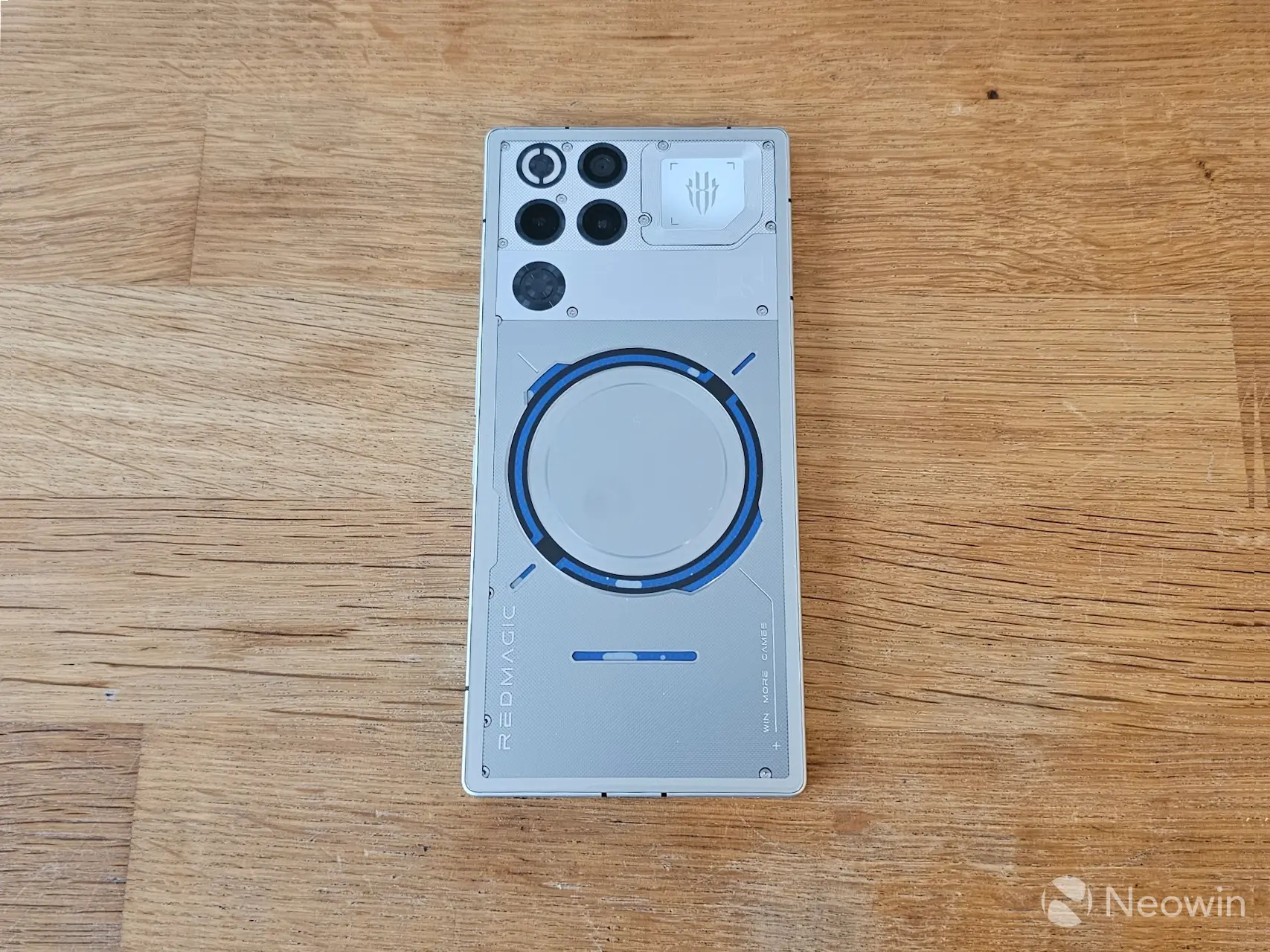
It is a typical candy bar shape with, from the top left, with the white circle, a flashlight LED, and next to that, the 2MP macro camera. On the second row there's a dual camera array consisting of two 50 MP wide, and ultrawide cameras. Below the camera array, there's the cooling fan flanked by RGB lighting, which looks like an additional camera, but isn't.
The large lit circle on the rear could be mistaken for the wireless charging, which is a new (and welcome) feature on REDMAGIC gaming series of phones. However, it is actually showing off the "server grade" liquid cooling, as does the bar below it. Well, don't take my word for it, you can see it in action below.
By the way, this effect is only apparent when the phone is under heavy load, so it enables with gaming and benchmarking. REDMAGIC also says that although you can't see this on the Cyro Matte Black variant, it still includes the same cooling as the transparent series, just without the transparency enabling you to see it in action, or the fancy lighting.
The front is protected with Corning Gorilla Glass 7i, and around the sides is made up of a Aluminum Alloy Frame. The rear is protected by Gorilla Glass 5. The bezel looks really nice with its aluminum silver color.
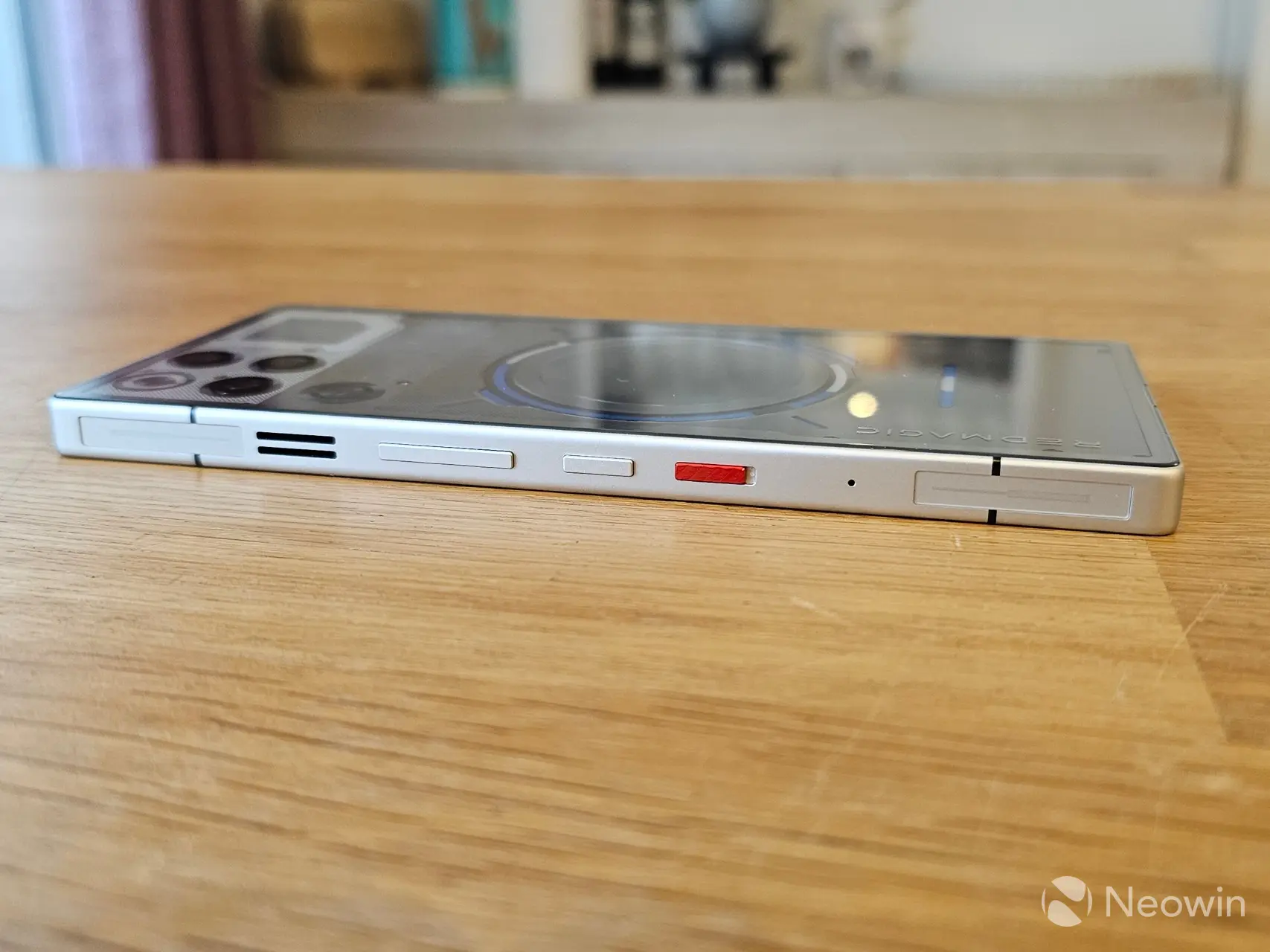
On the right side of the phone, on each corner, you will find the Immersive 520Hz shoulder triggers, which light up, just like on the 10S Pro; then there's the volume rocker and a power key that doubles as an action button to start the Camera when double tapped, and below that there is the Magic Switch, which is textured. By default, it sets the phone in "GameSpace" mode after a long press, but you can link it to a few other handy things, too, like Camera, Flashlight, Voice Recorder, and switch sound modes.. The keys have a good height and are easily detected by feel, and the buttons are completely smooth.
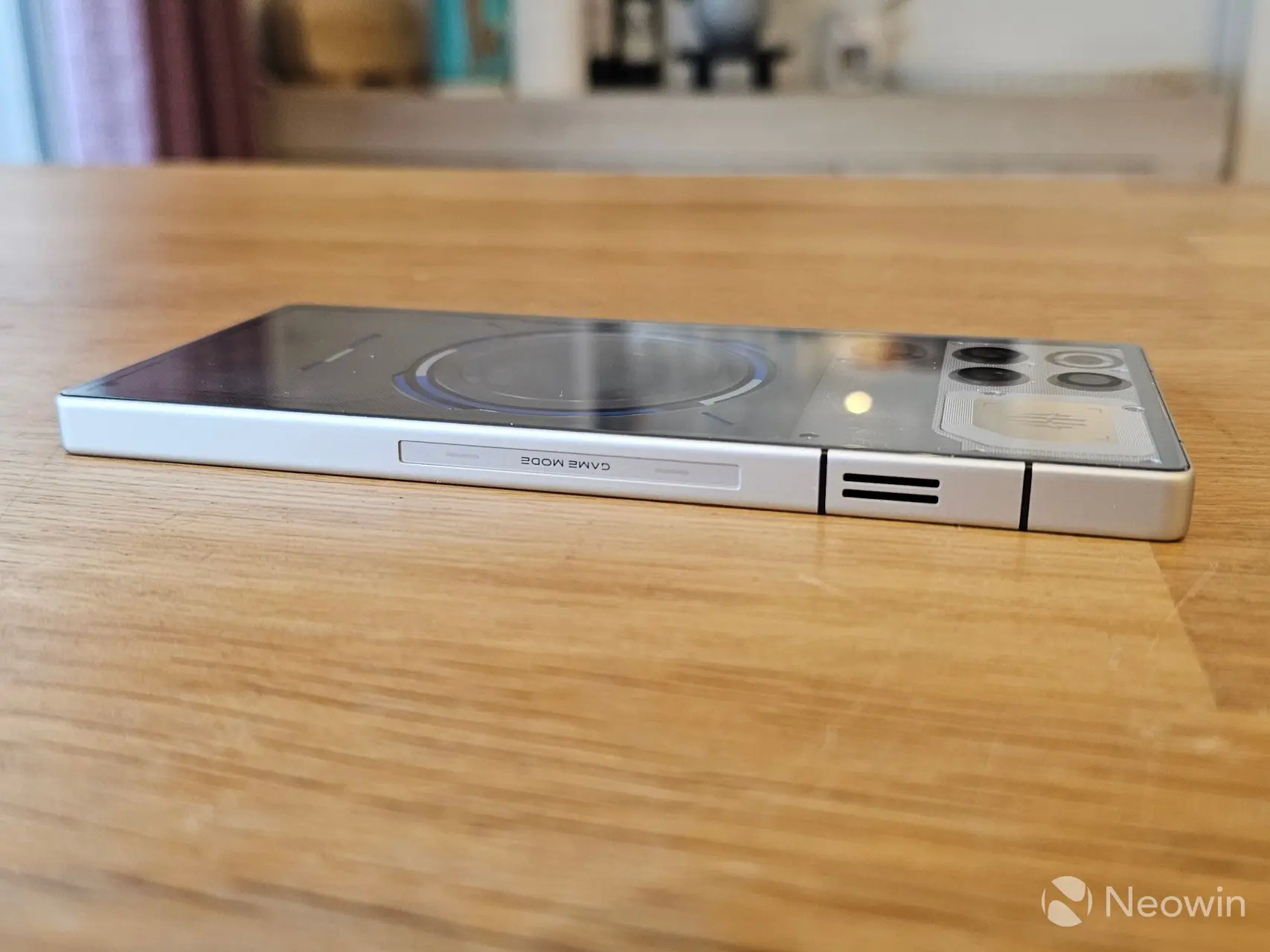
On the left side, there's just a vent and another light strip that lights up when in "Game Mode".
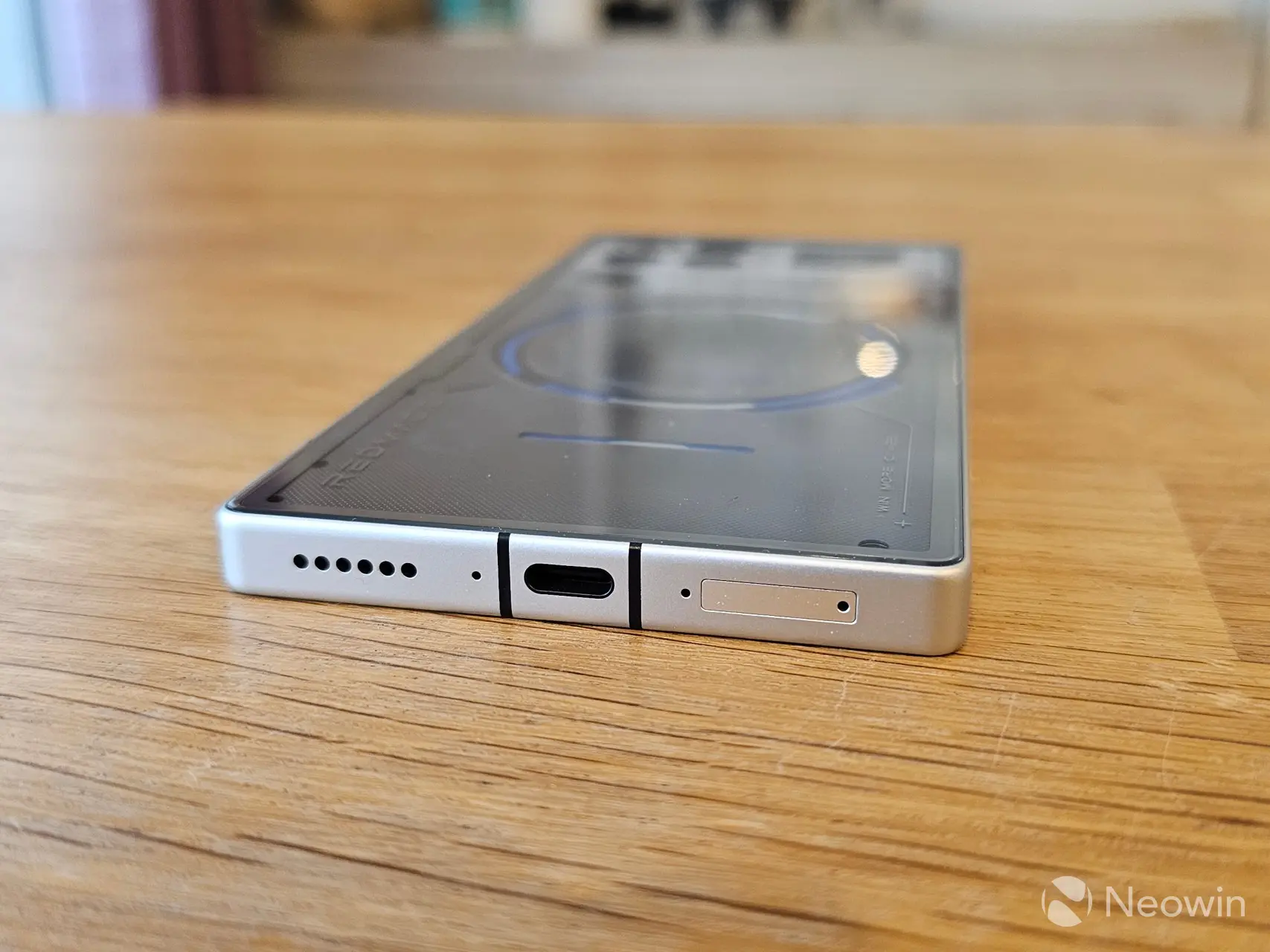
On the bottom, from left to right, there's a speaker grill, a USB Type-C charger port for the included 1 m USB Type-C-to-USB Type-C cable, a mic hole, and the SIM tray.
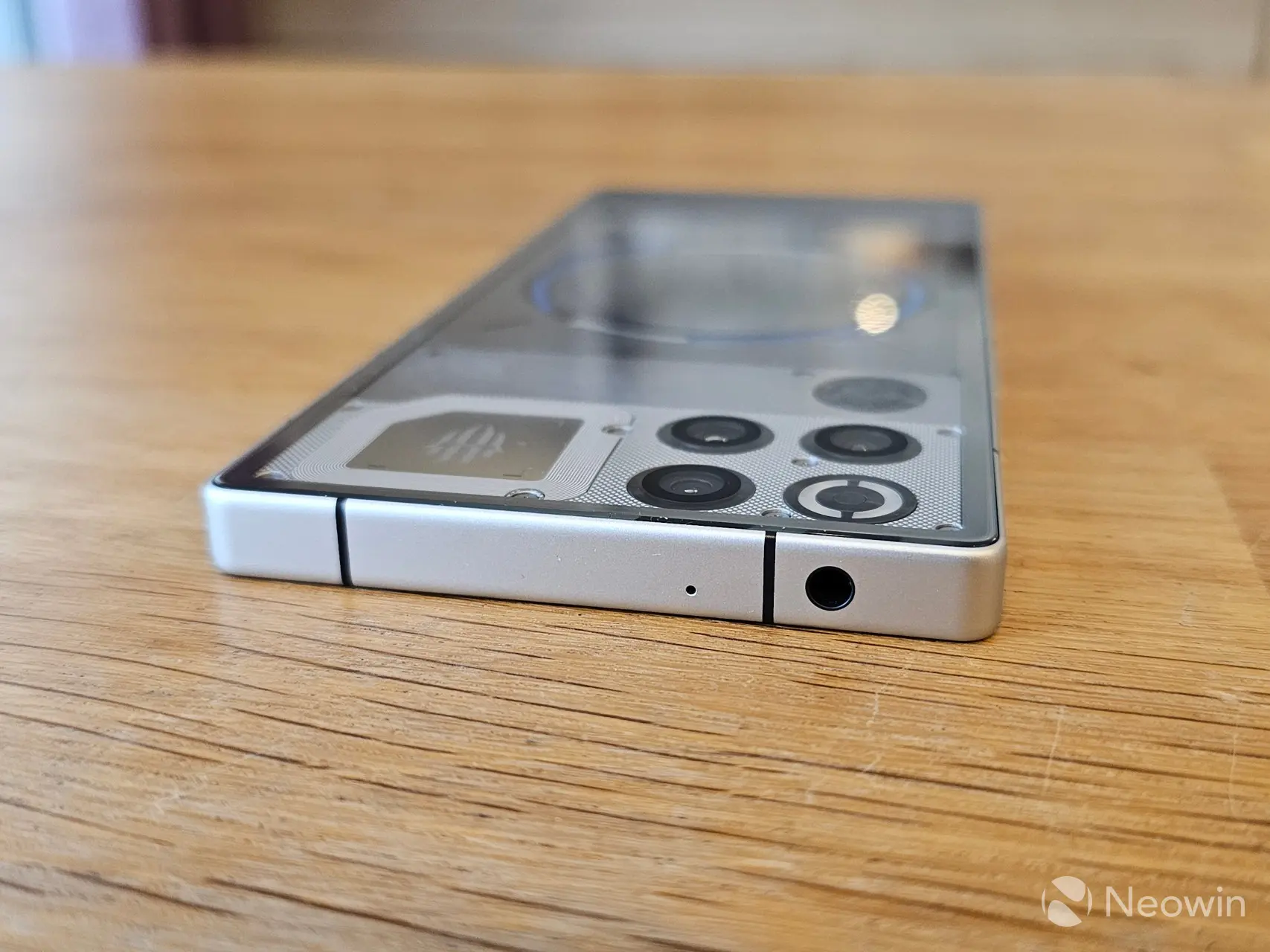
The top of the 11 Pro has what looks like another mic hole and the 3.5mm audio jack port. On the front of the device, there is an under-display 16 MP front-facing camera, which, if you remember, is the same exact one from the REDMAGIC 11 Air.
Although there is no notification LED, the RGB lighting can be configured to flash notifications in different colors and configurations, which is really handy. However, it is not possible to configure it for different apps, like for example a pulsing green light for WhatsApp messages.
Setting up
Software
The 11 Air ships with REDMAGICOS 11, which was updated to 11.0.9, and is based on Android 16, with the December 2025 Security Update, which is the newest at the time of writing. However, in terms of software updates and support, that is all up in the air. The phone itself is covered by a two-year warranty, but there is no information on the official website on how long REDMAGIC provides security and OS updates.
Alongside not having this information anywhere on the website for reference, customers have been receiving mixed responses from REDMAGIC support, with some saying the phone will get 5 years of software updates, while others have been replying by claiming they will receive just three years of software support, in regard to last year's 10 Series. See for yourself.
In any case, I asked my contact for clarification, and was told the following:
Software support: REDMAGIC now provides five years of software support for customers in the European Union and the United Kingdom, including major Android OS updates and regular security patches. In other regions, REDMAGIC offers three years of support.
There's a page for Global ROMs and updates, but the REDMAGIC 11 Pro is not yet listed, which is weird considering it came out last November. Anyway, you can view the (almost) entire process of setting up; some screens could not be screenshot due to security limitations.
OOBE Setup
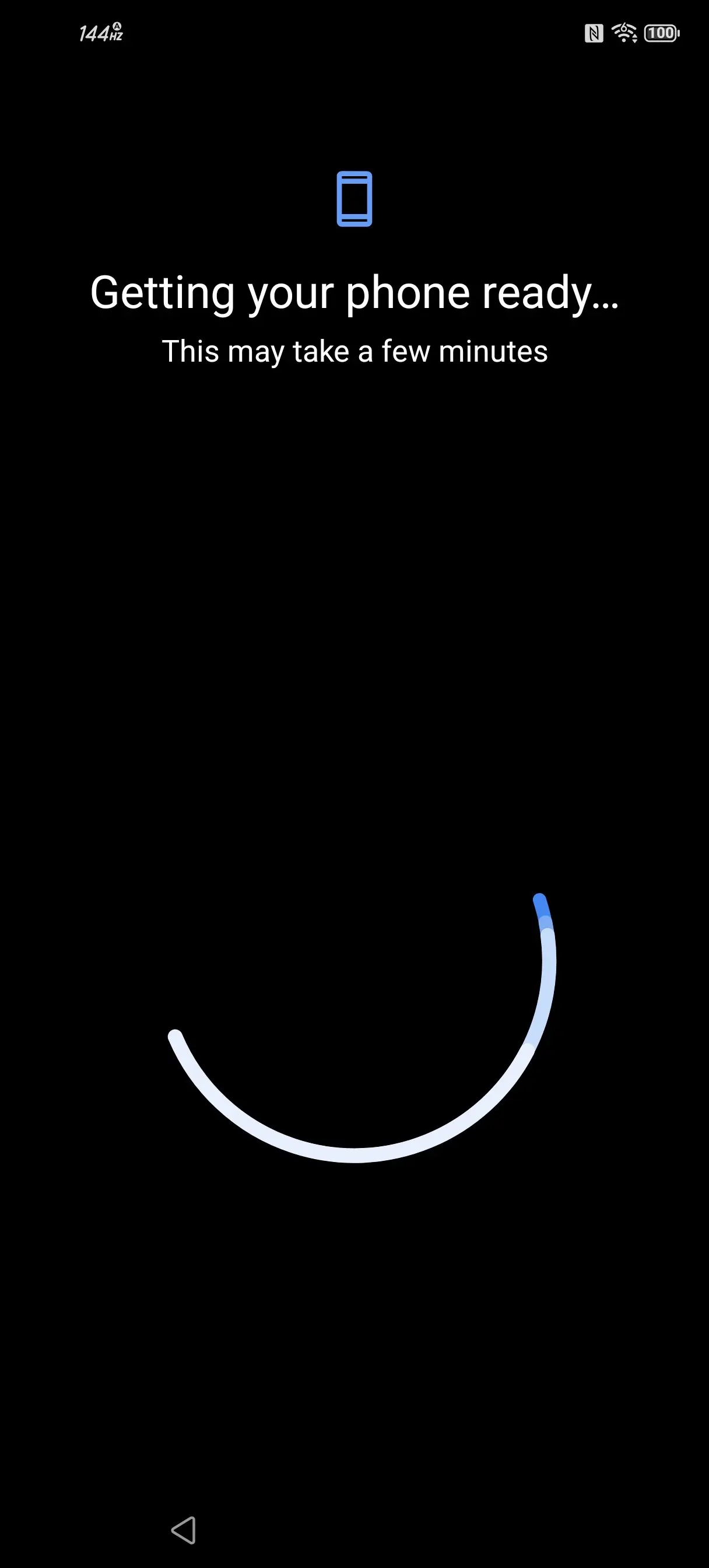
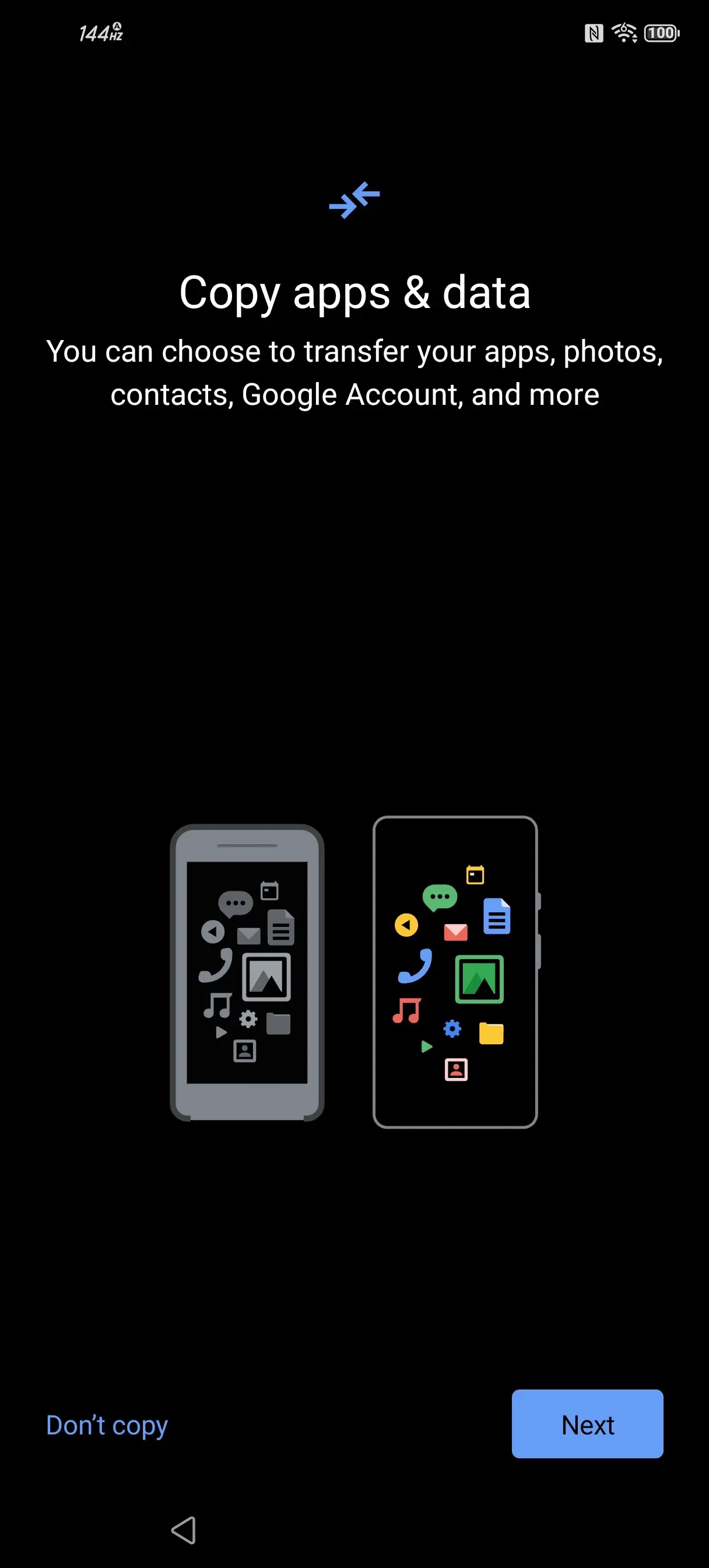
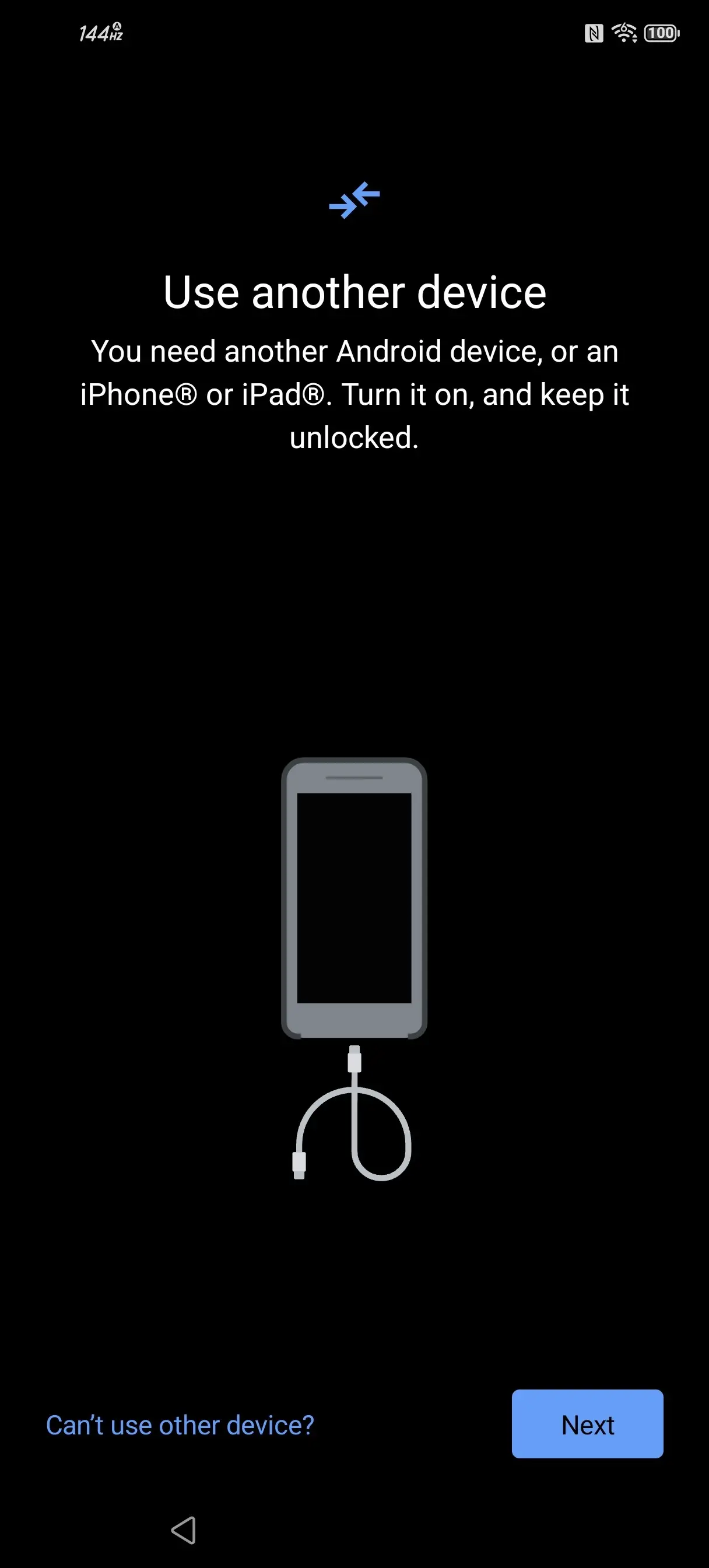
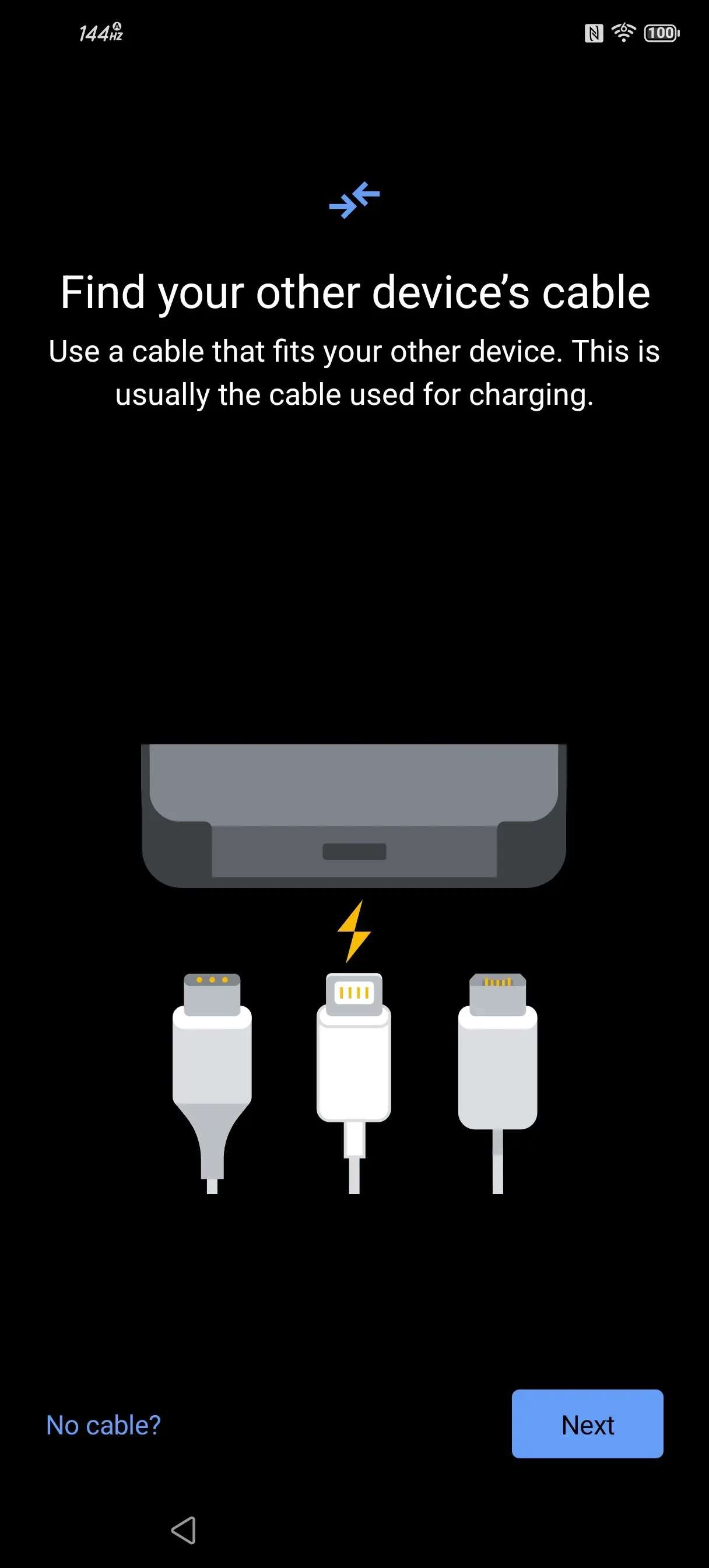
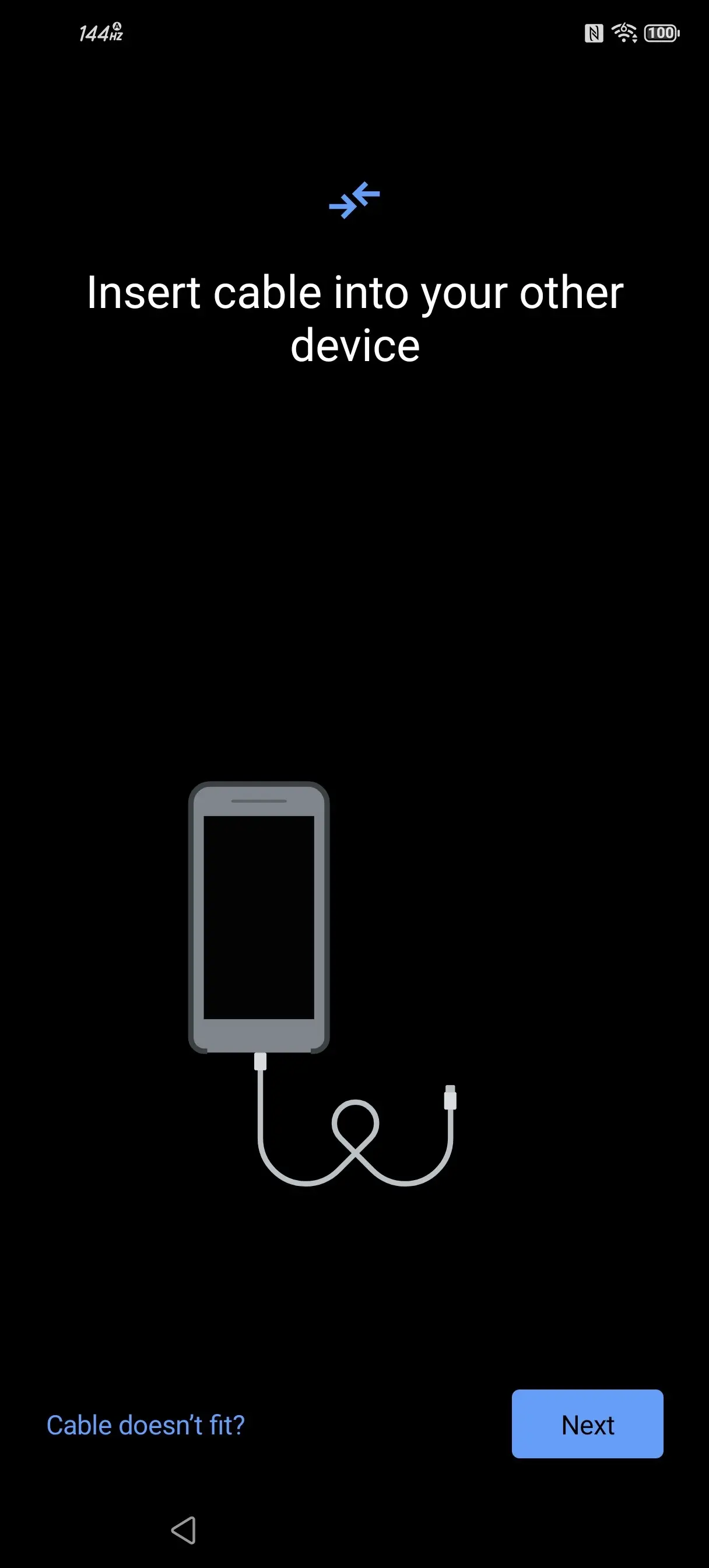
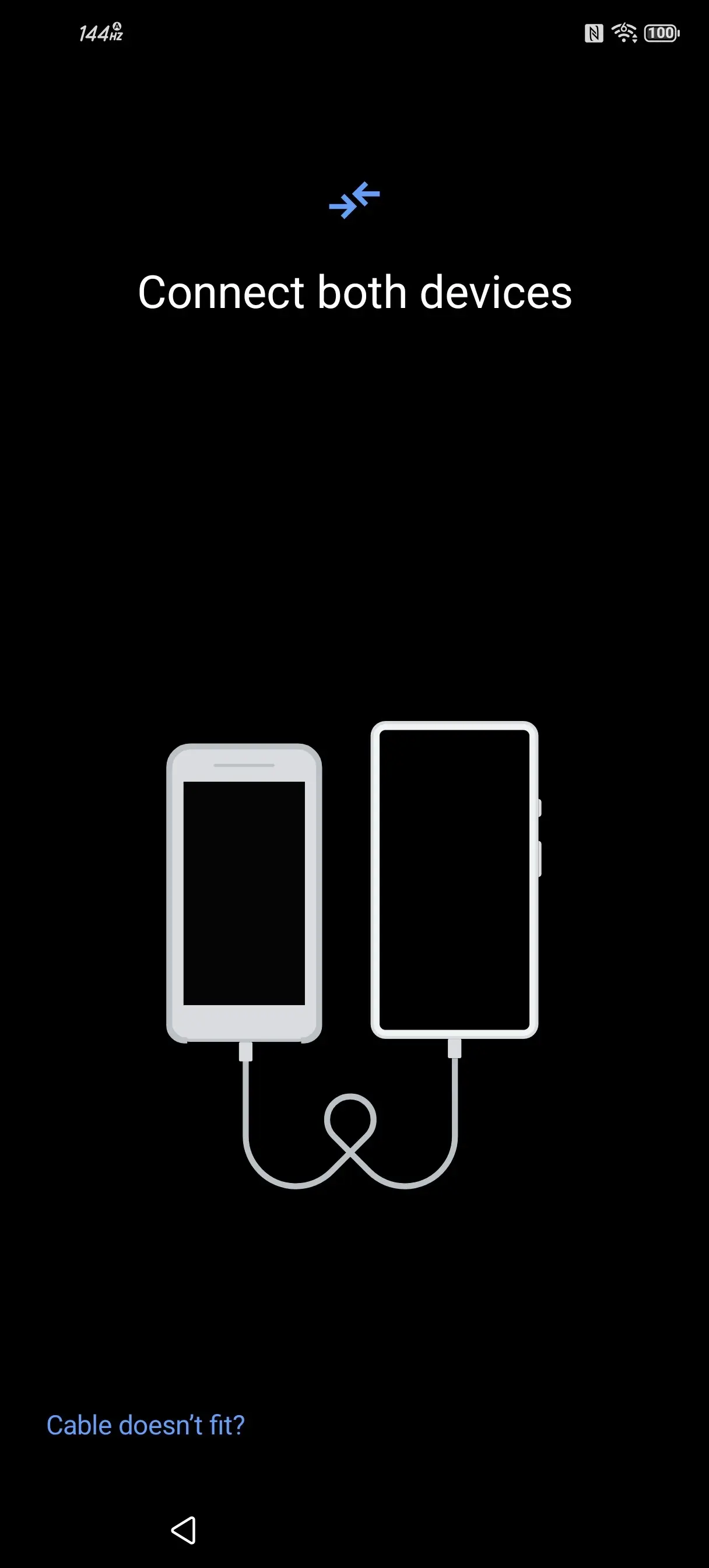
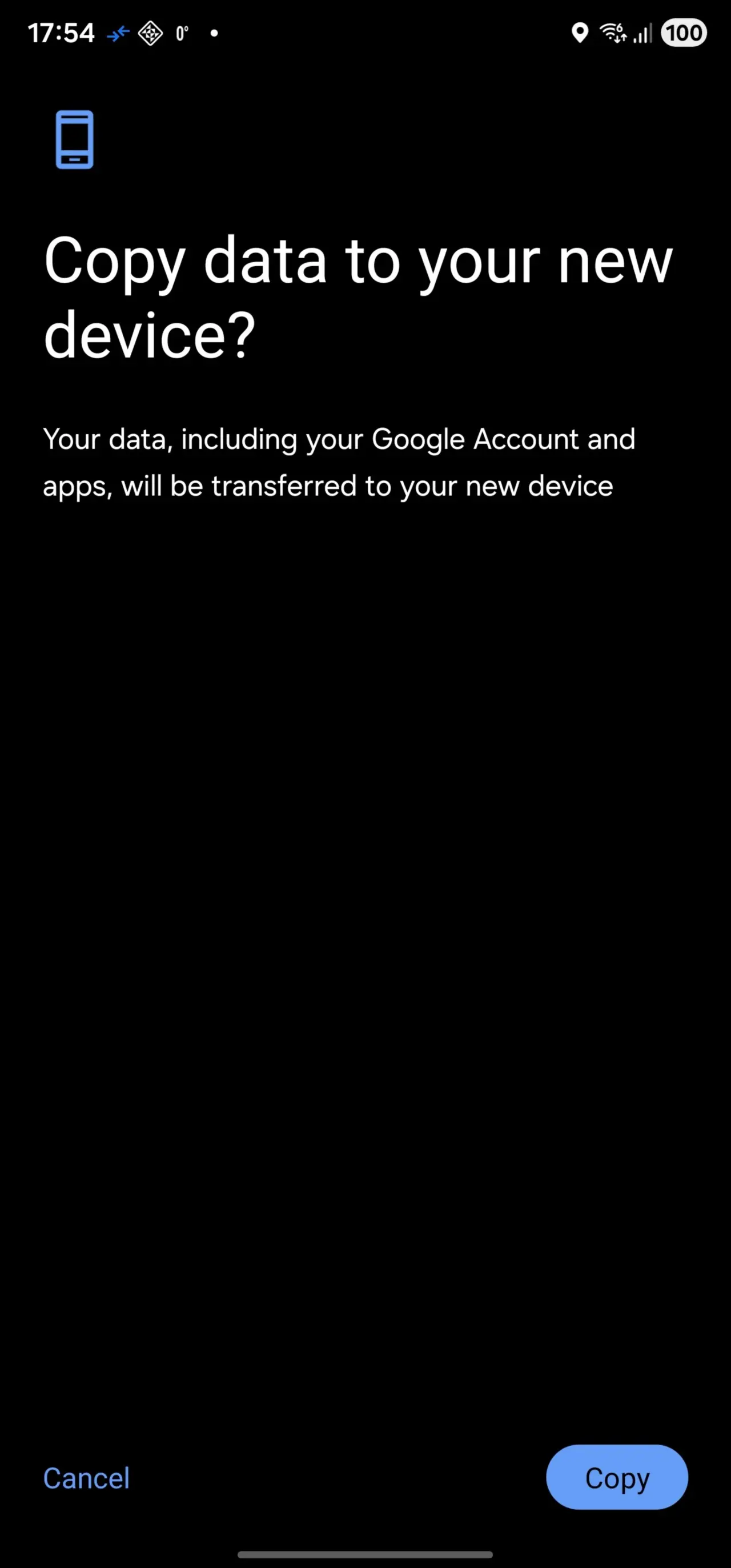

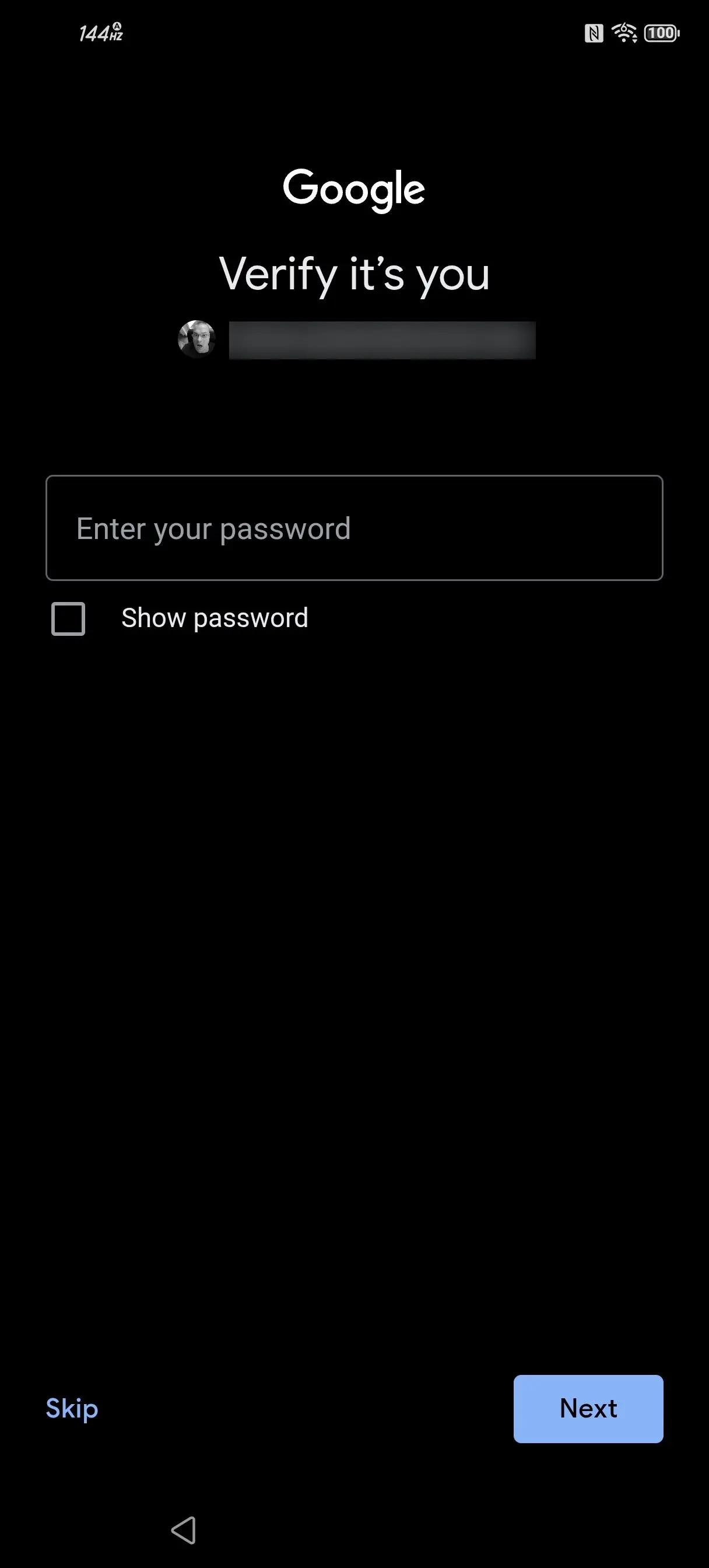
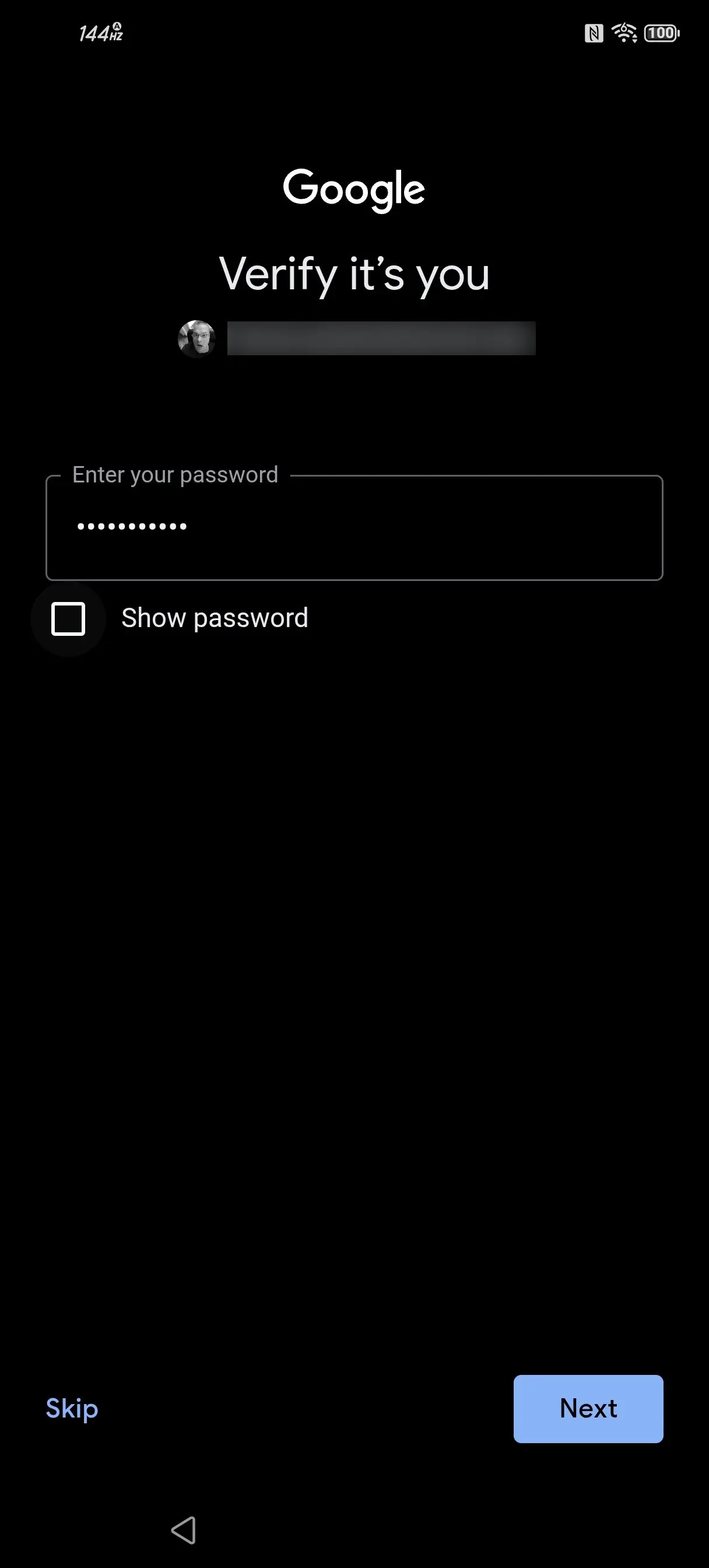
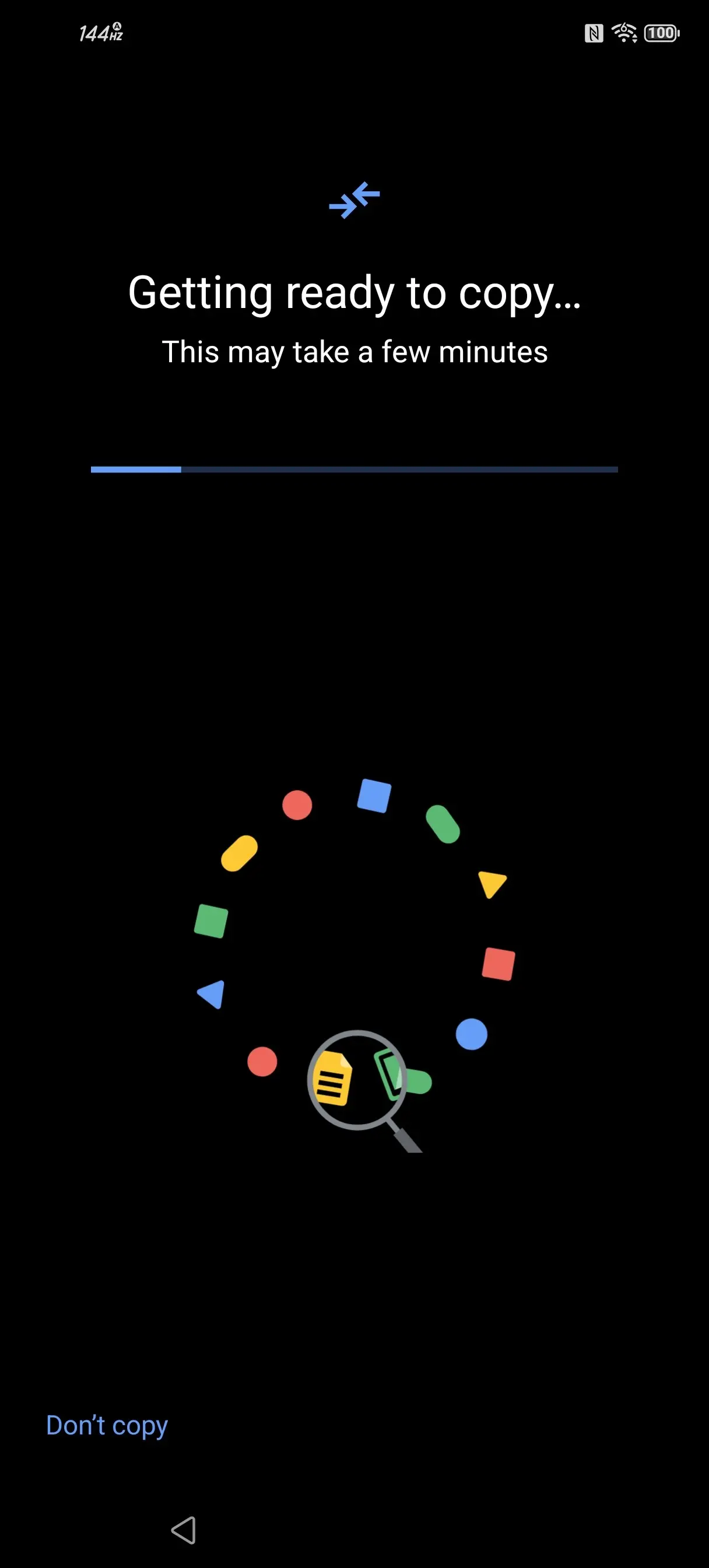
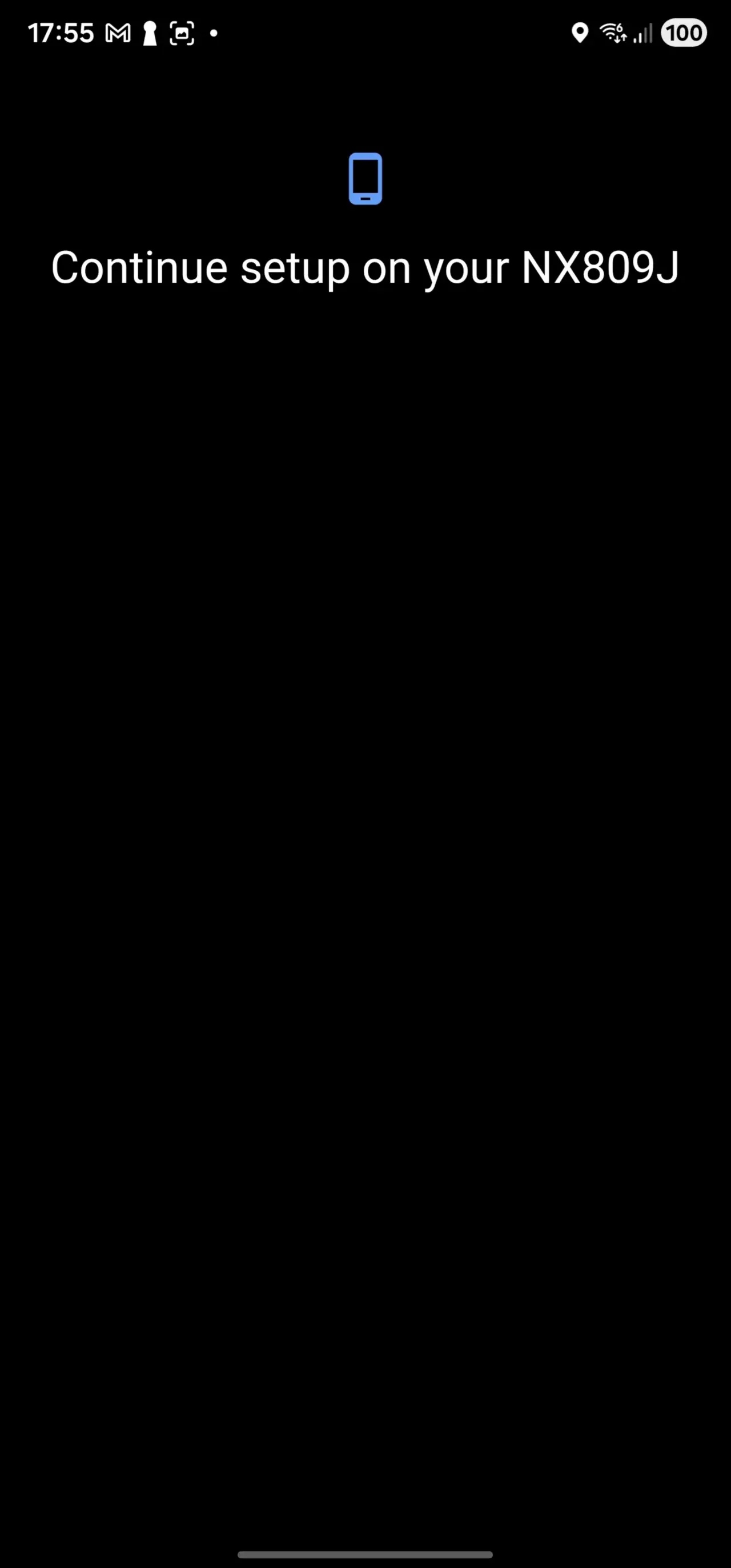
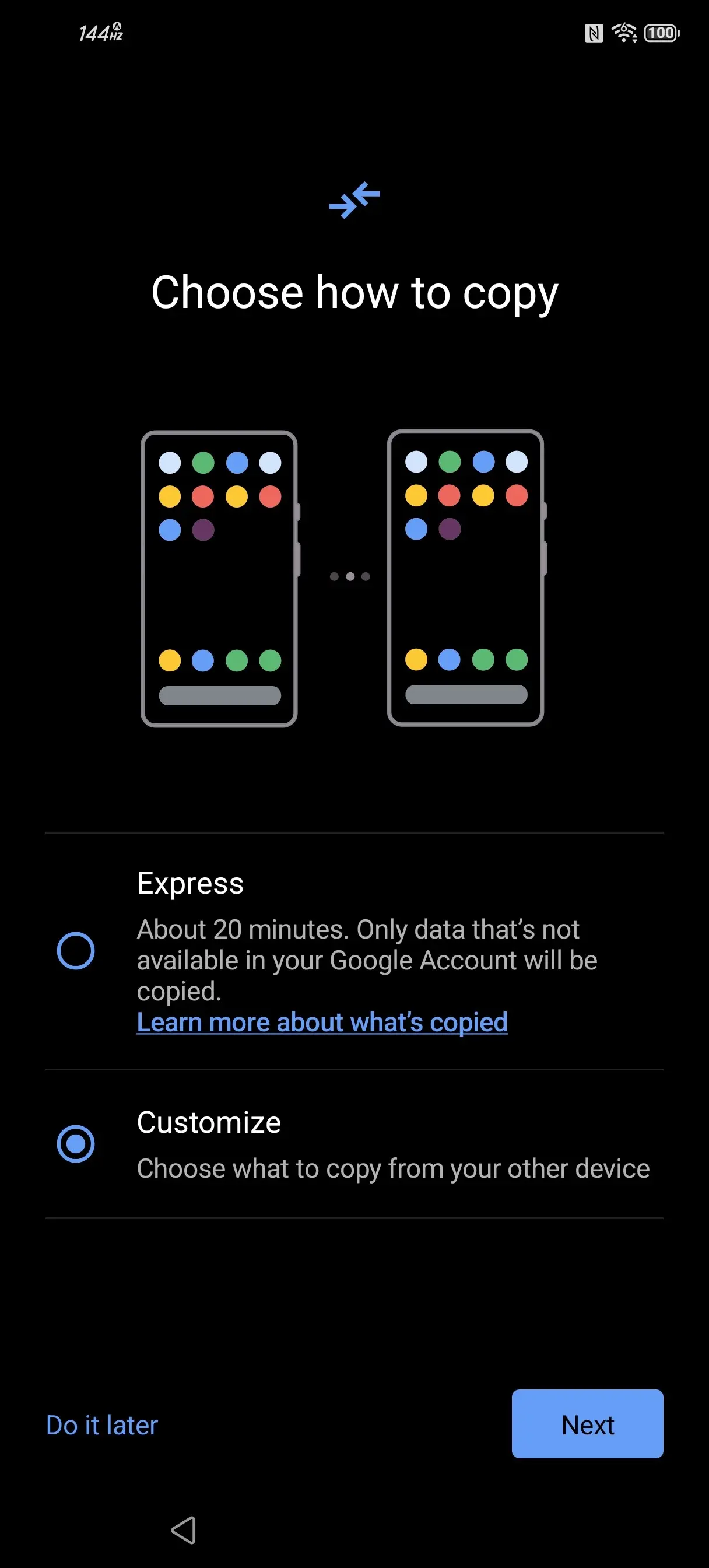
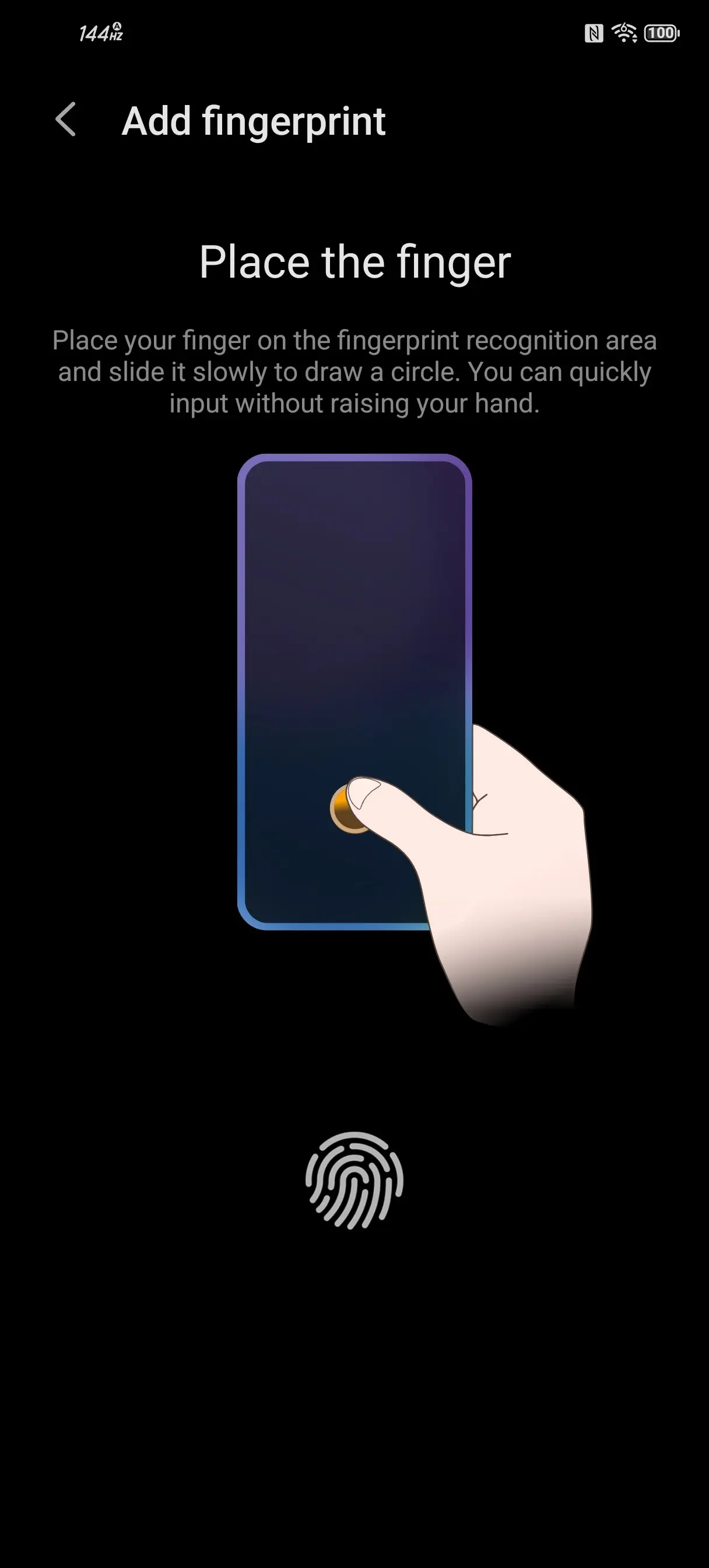
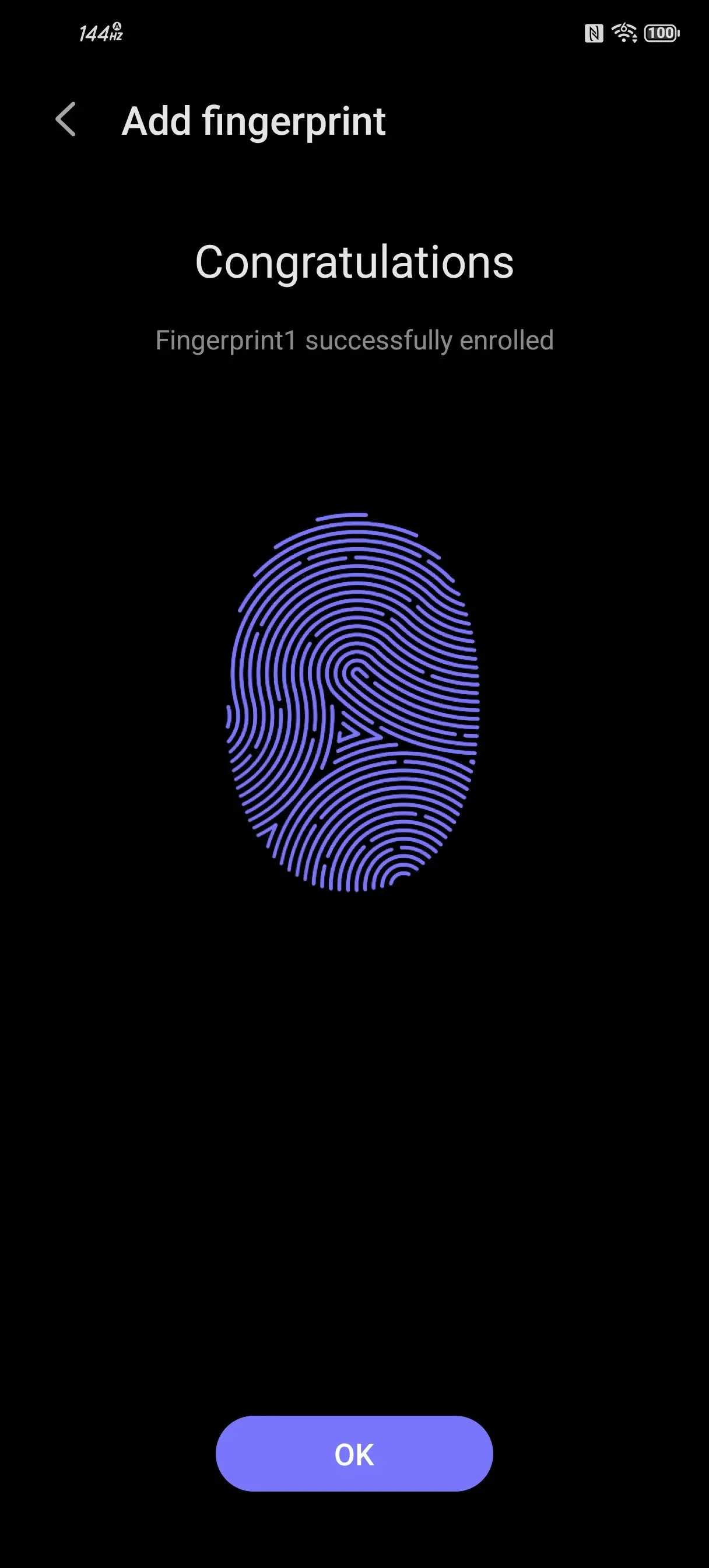
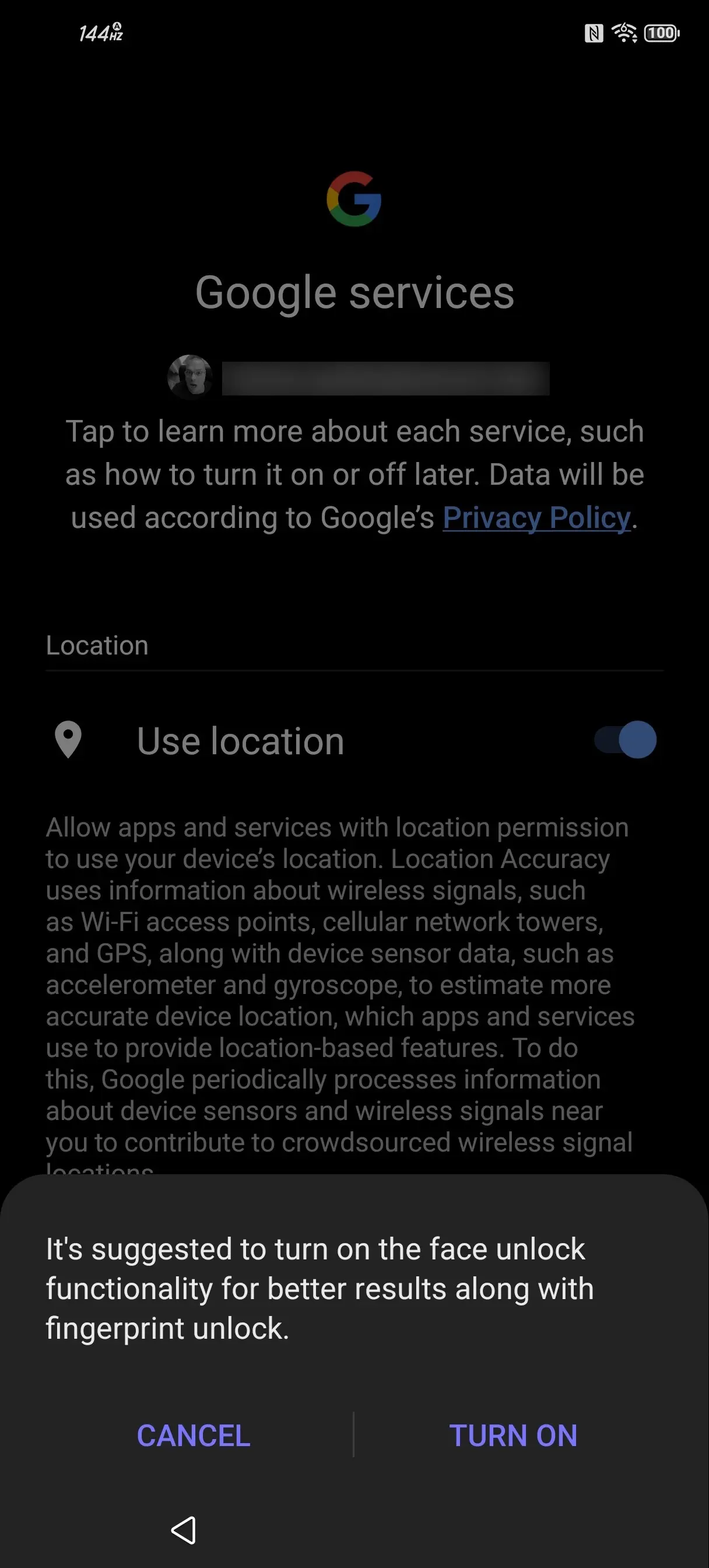
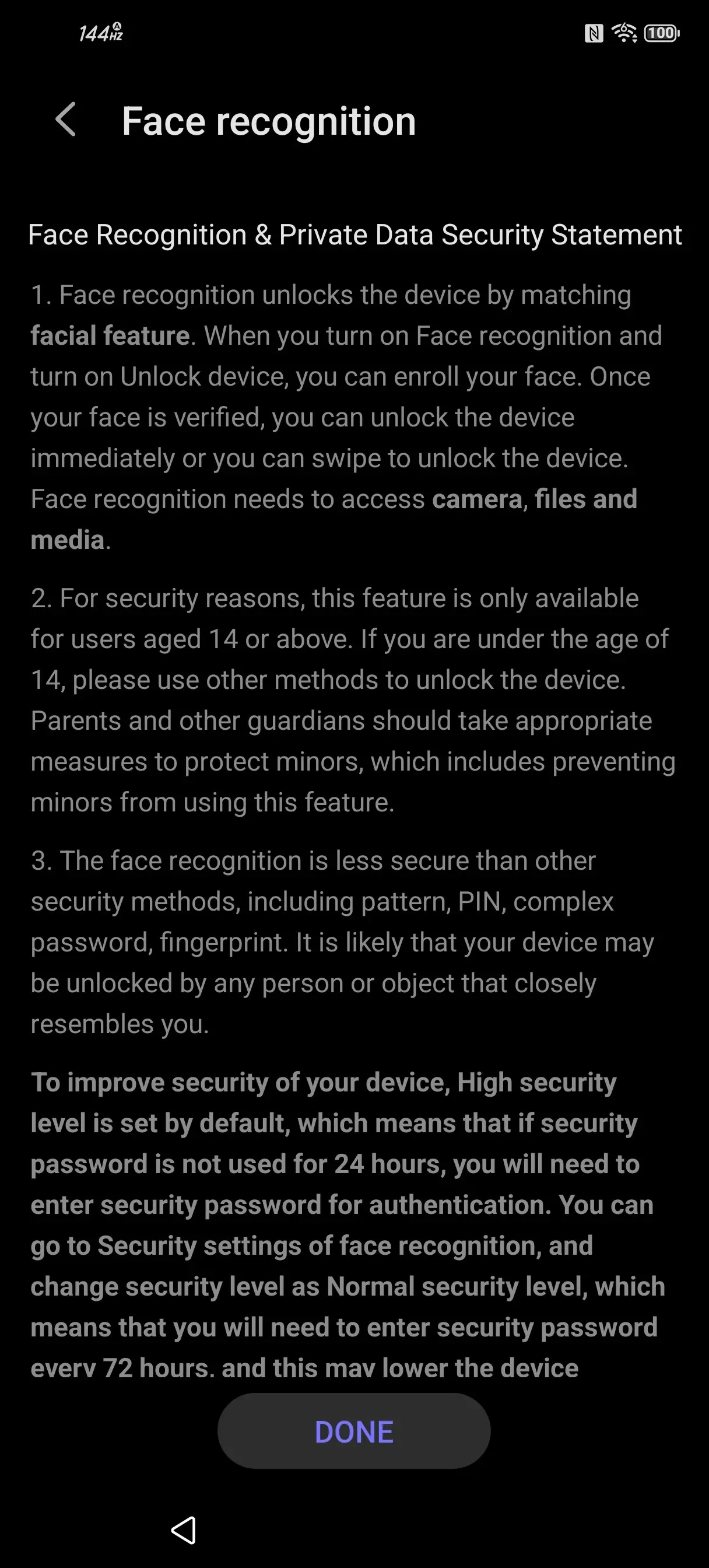

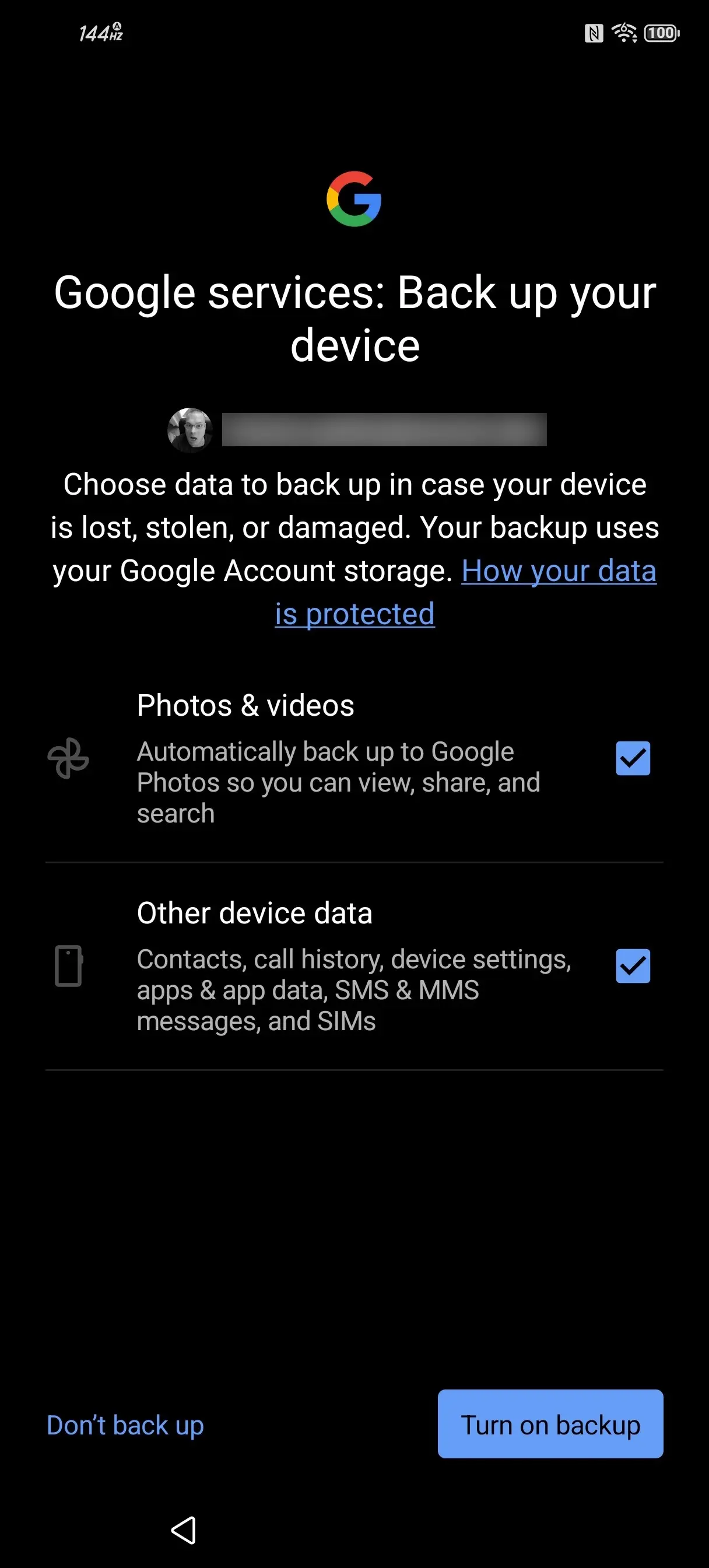
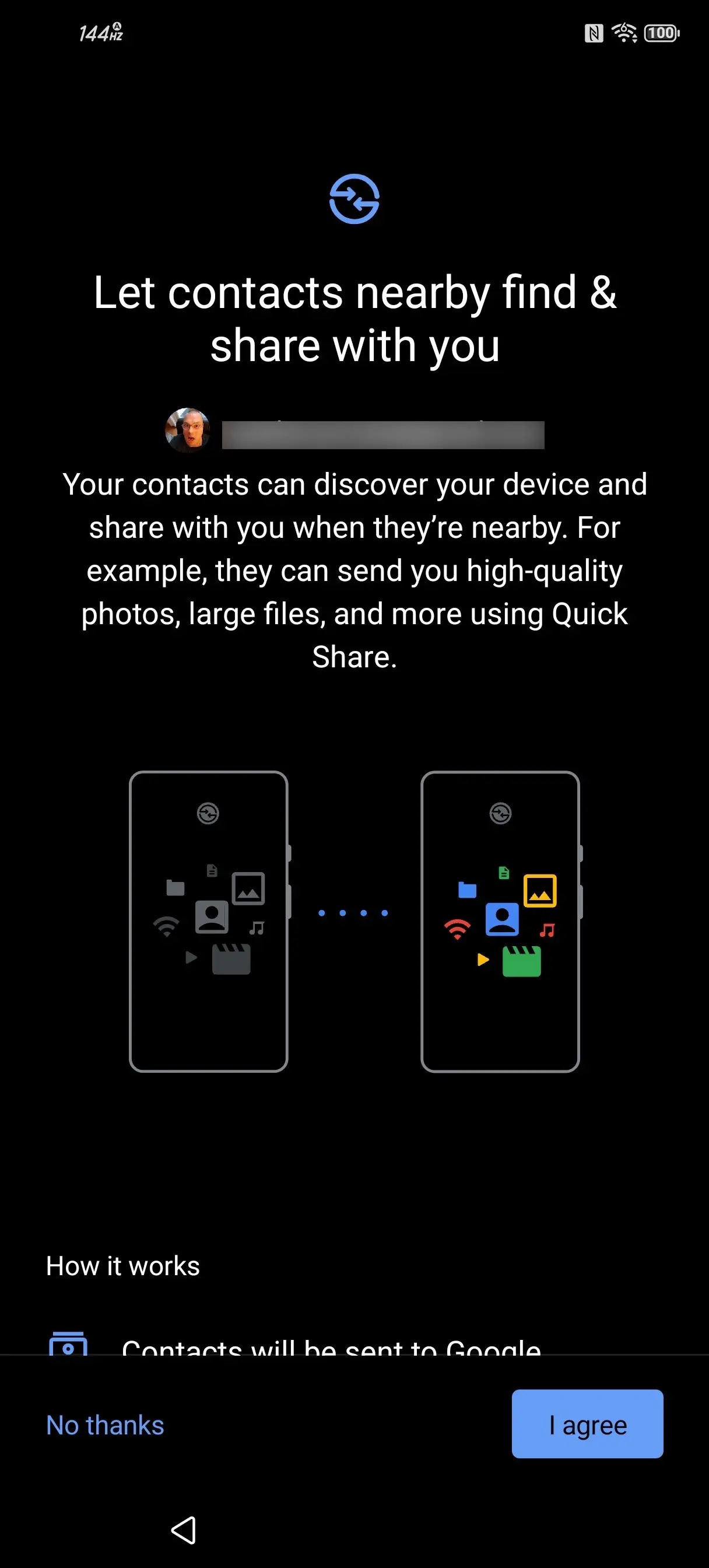
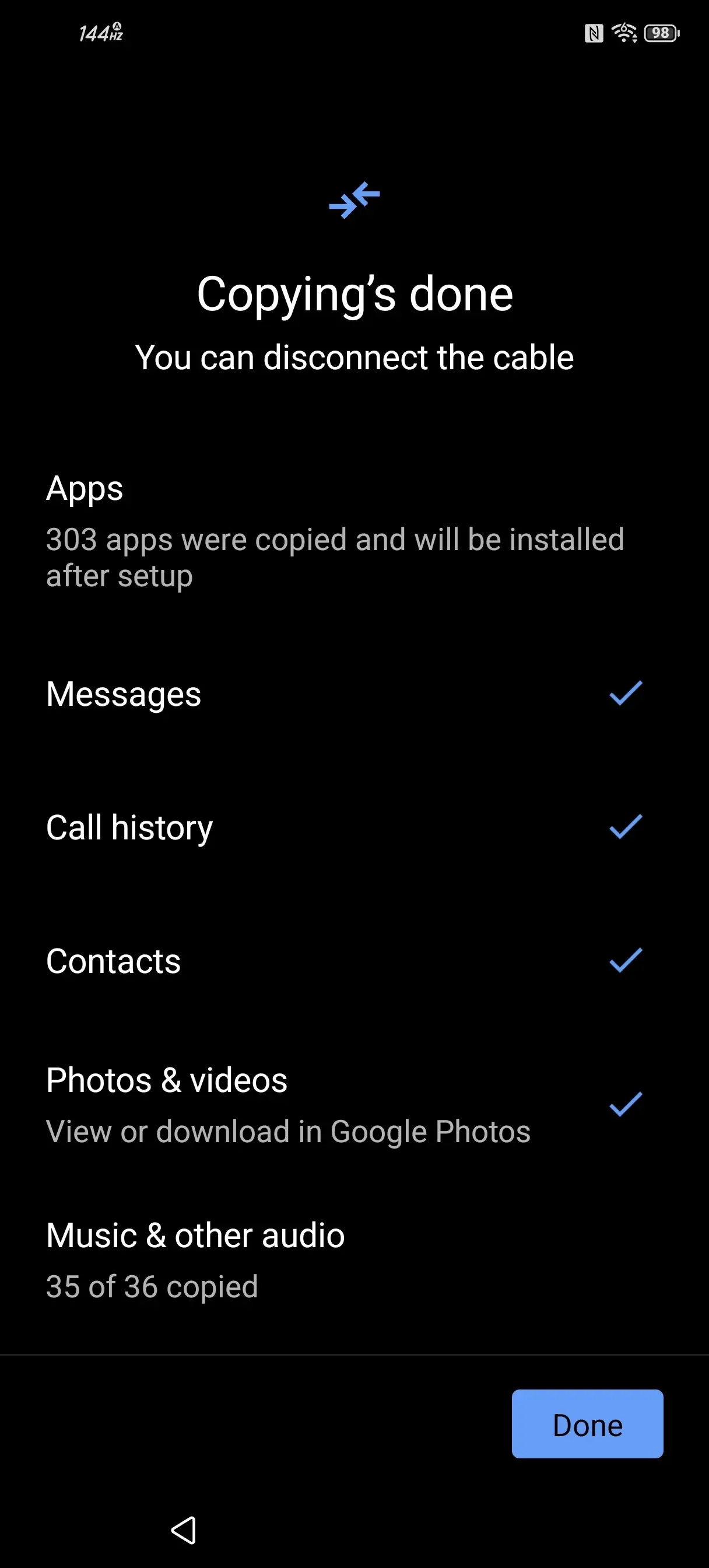
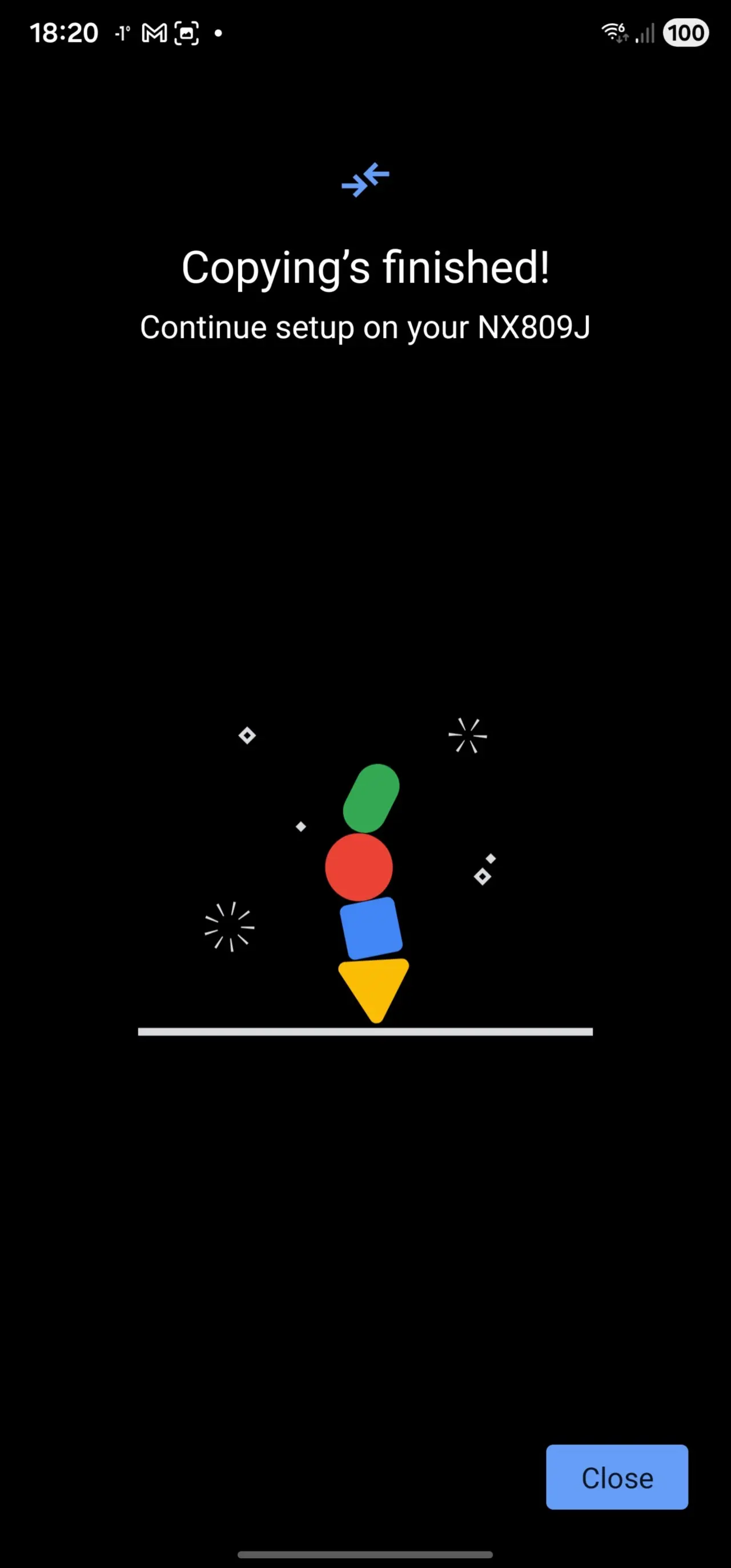
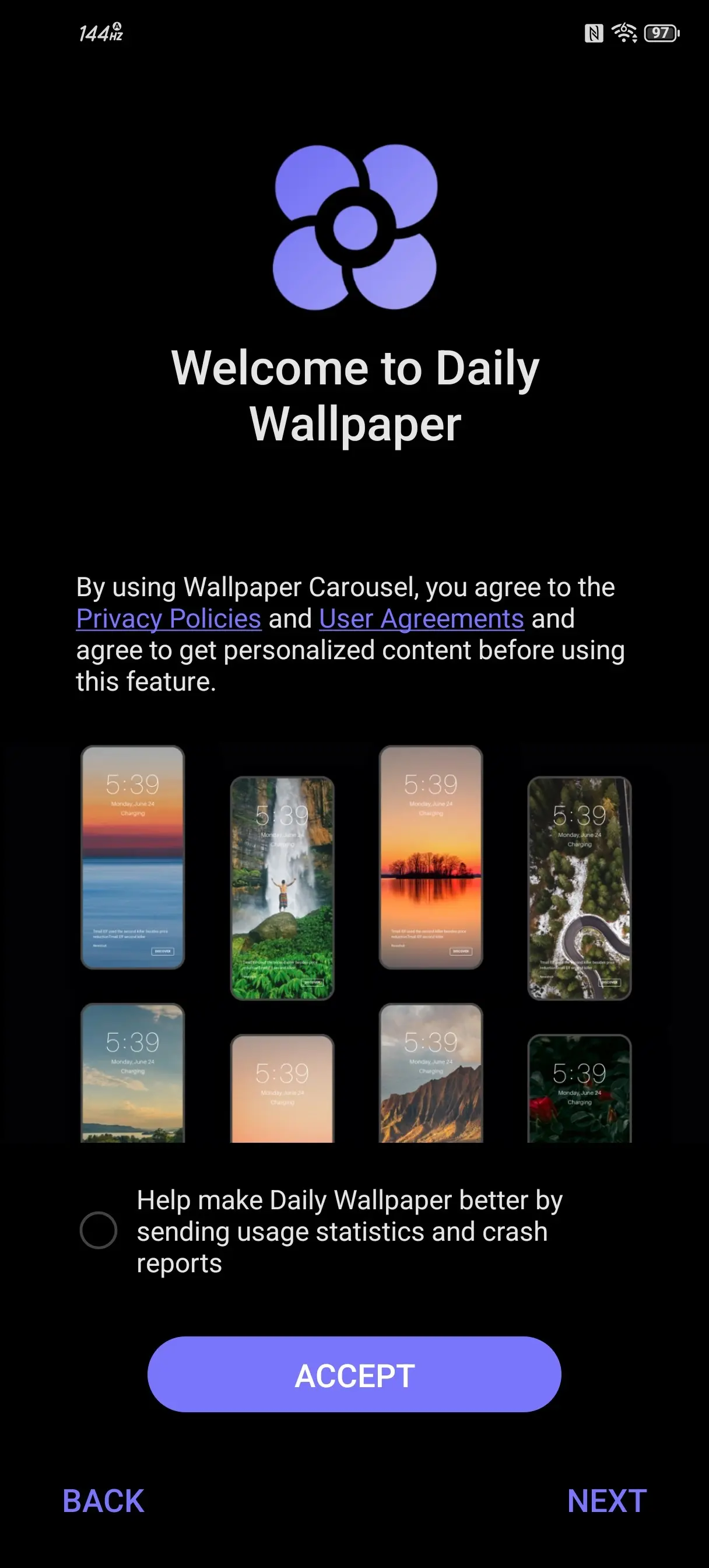
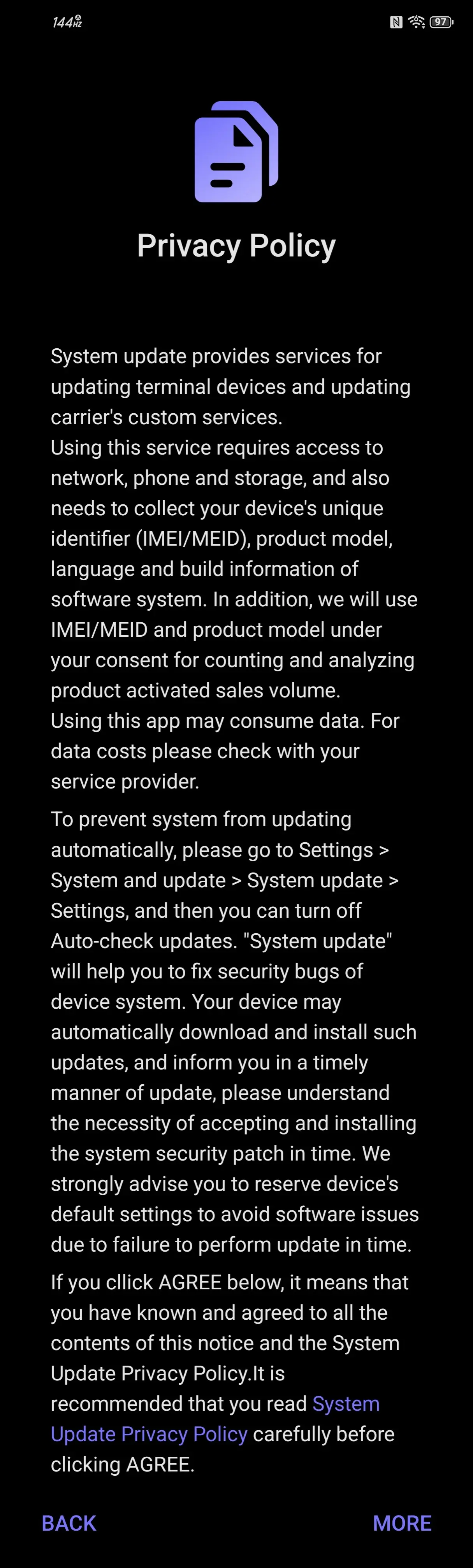
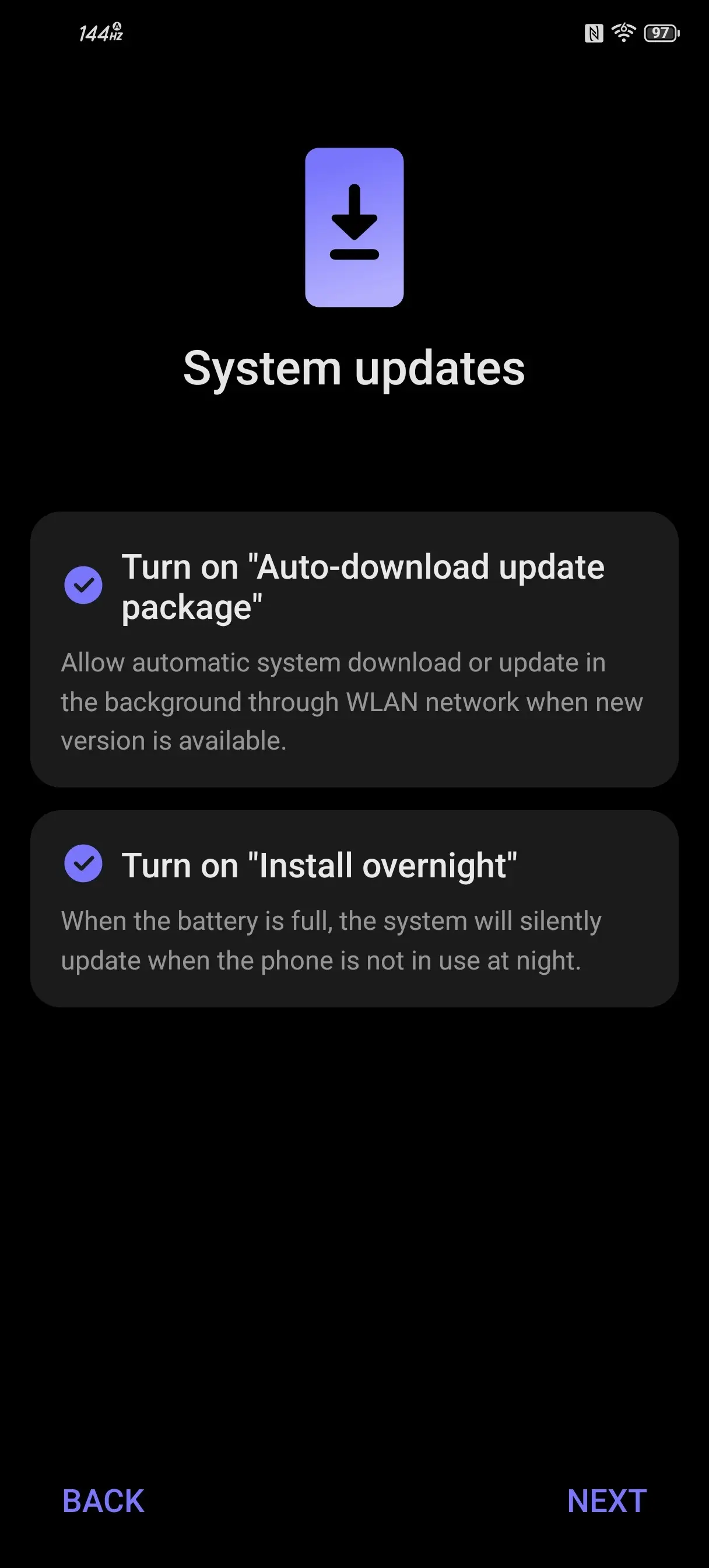
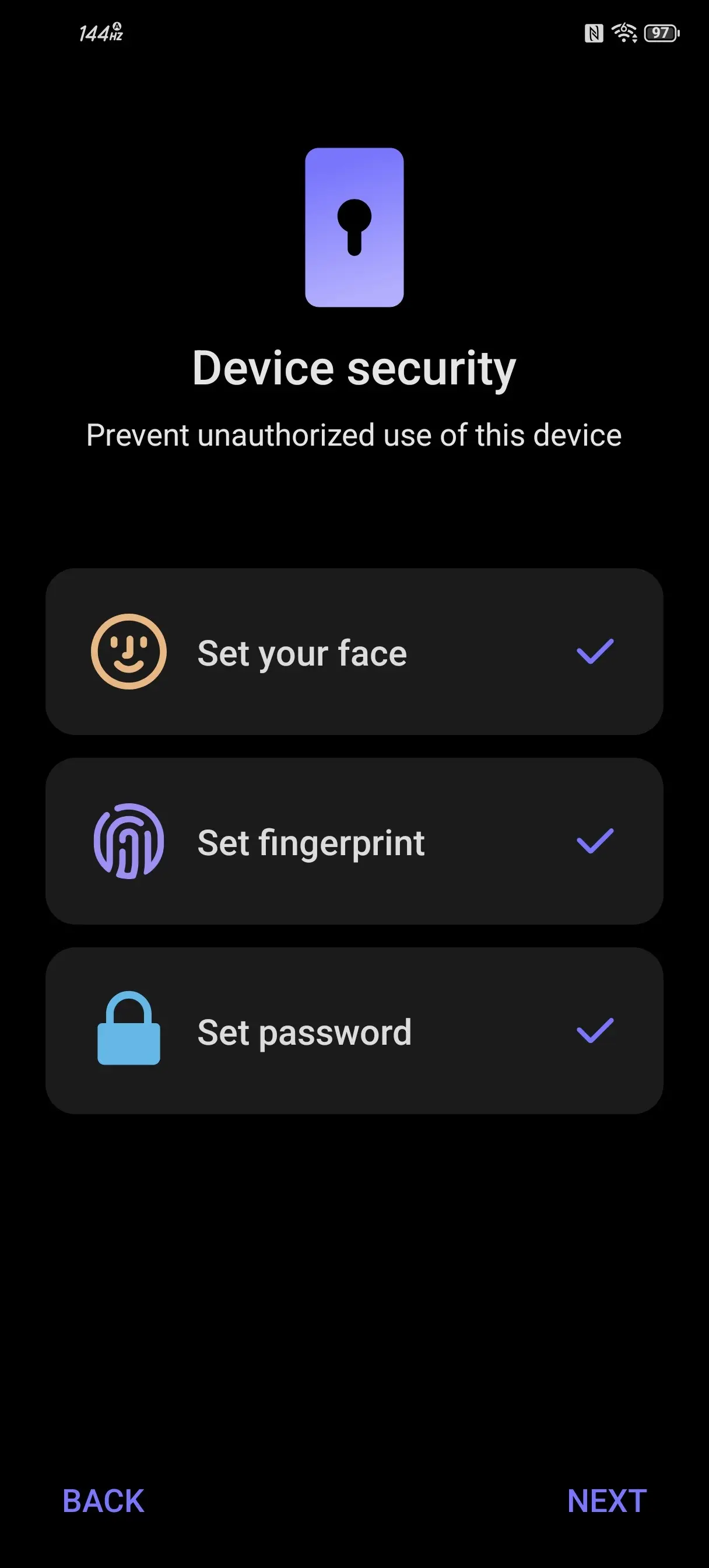
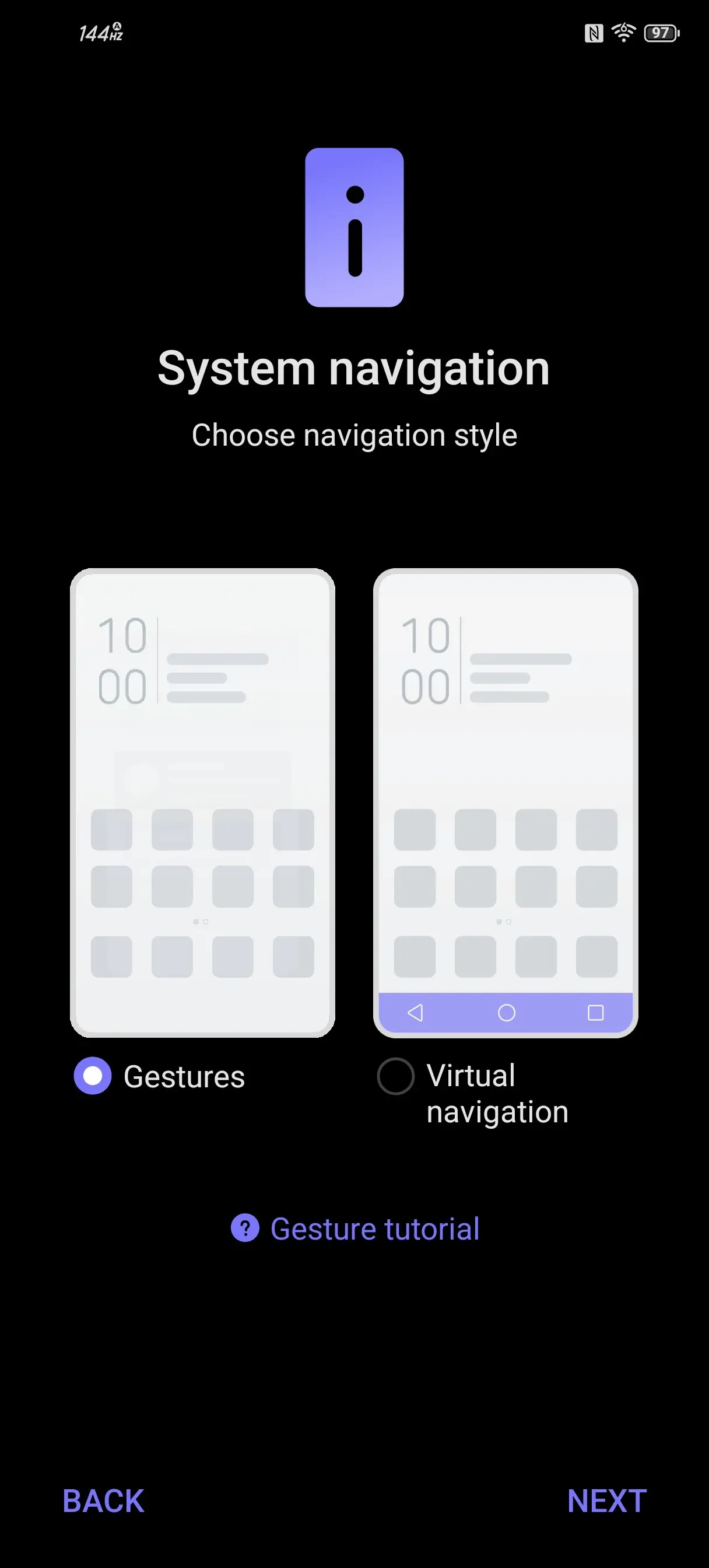
I used the vanilla Android setup rather than cloning my daily this time around, which was a standard stock affair, aside from the last step, which updated REDMAGIC OS to 11.0.8.
Post Setup
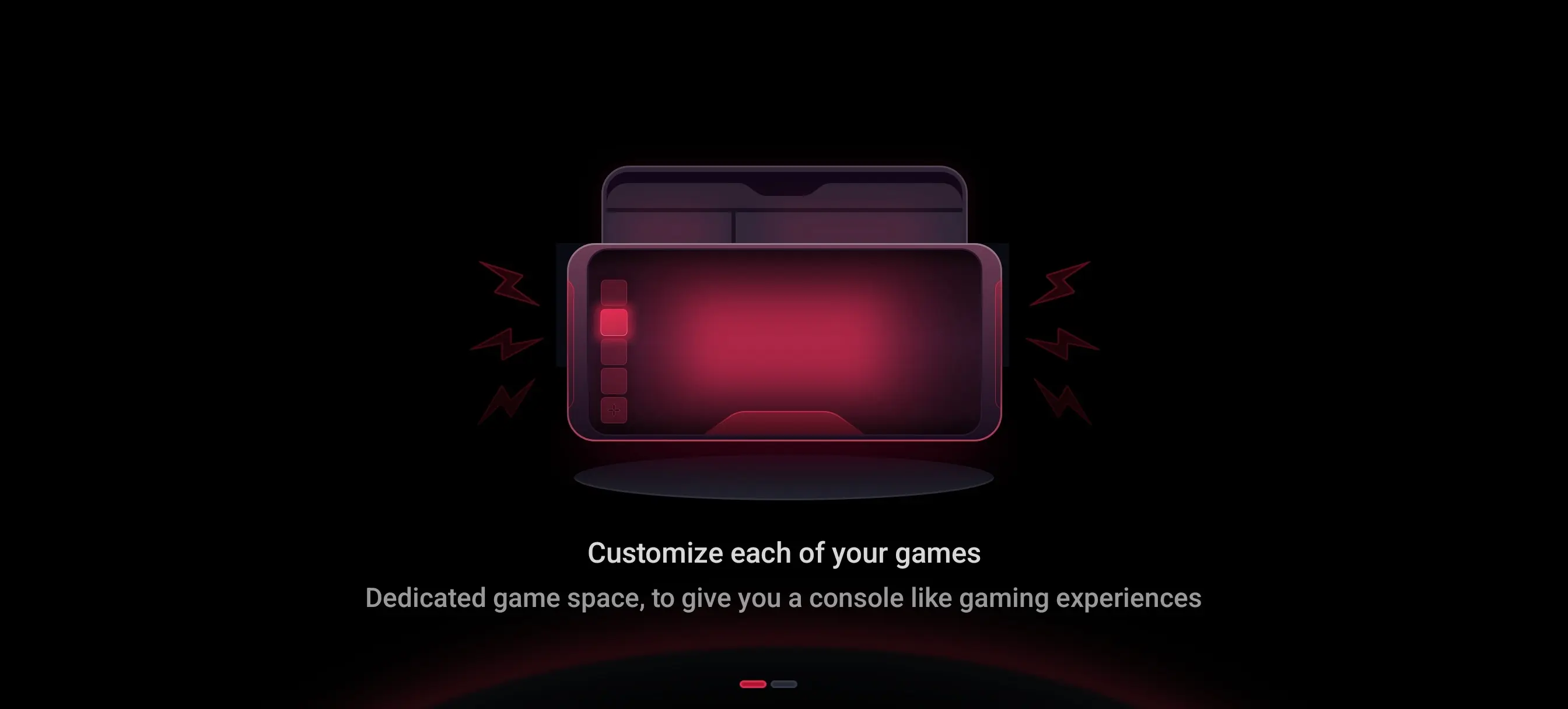
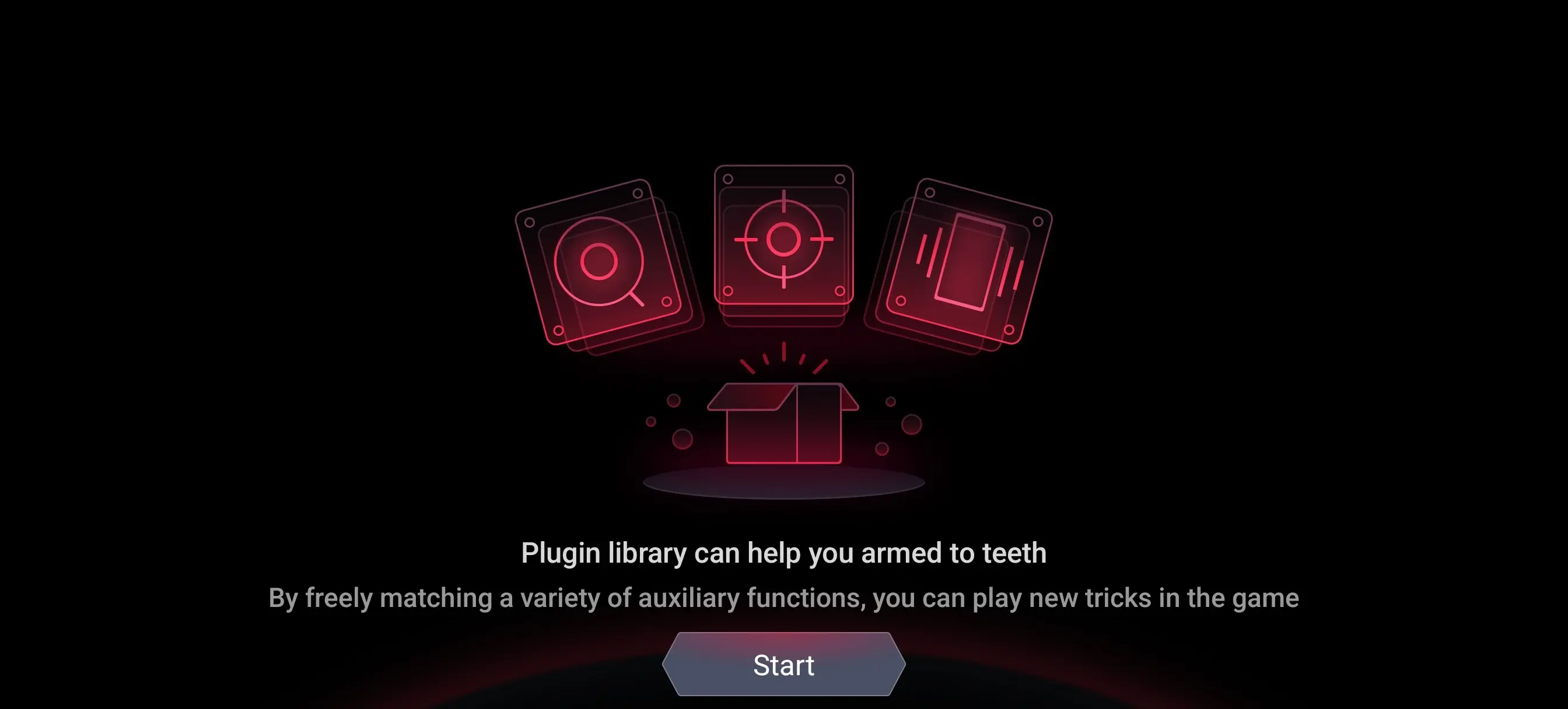
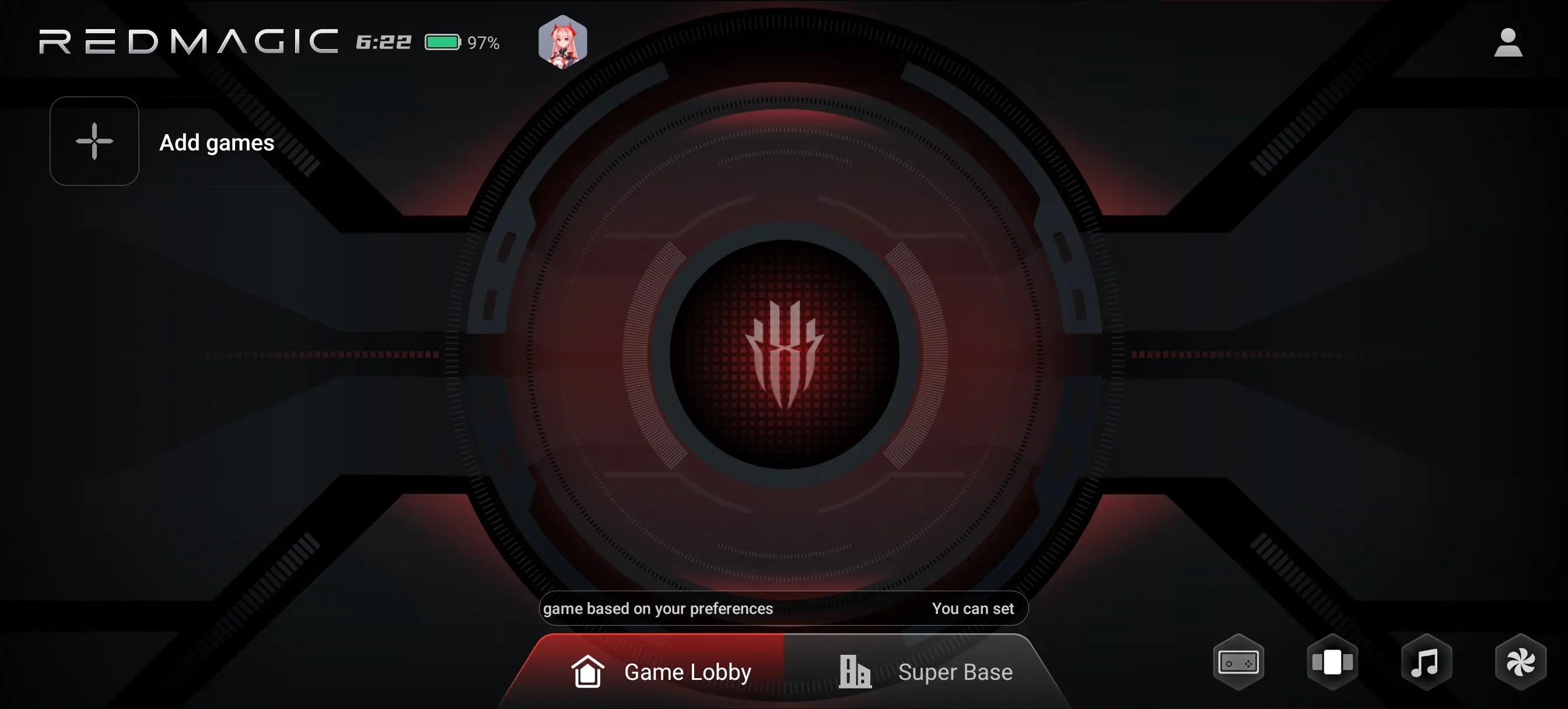
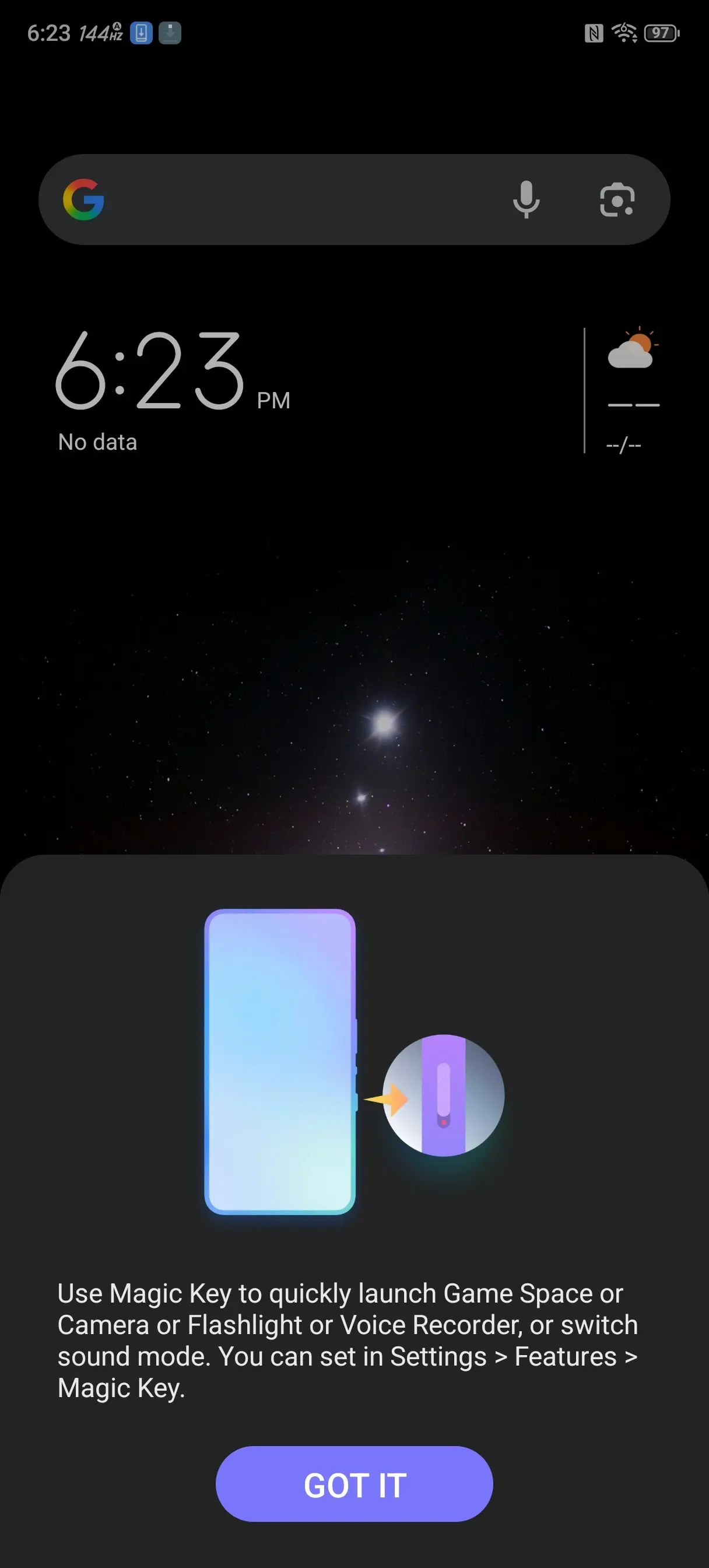
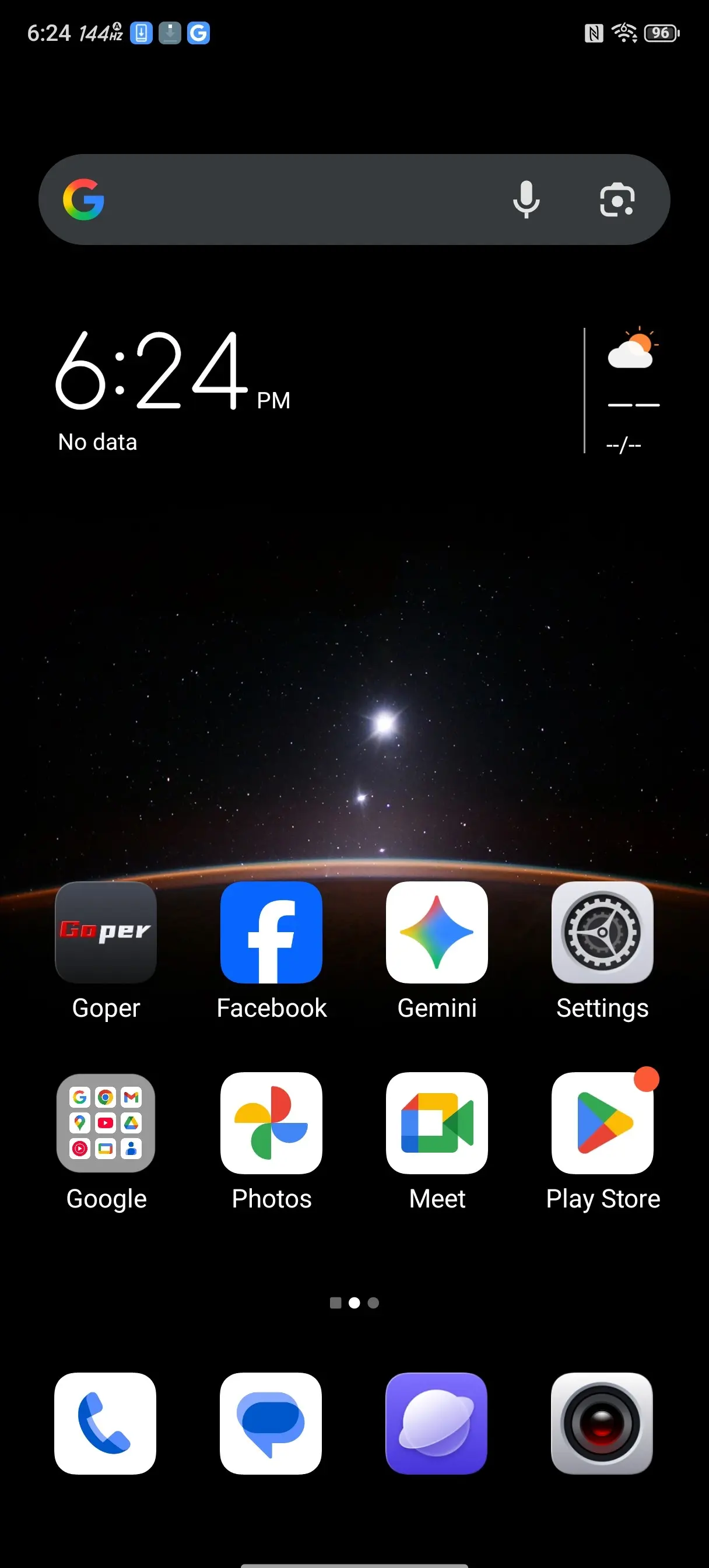
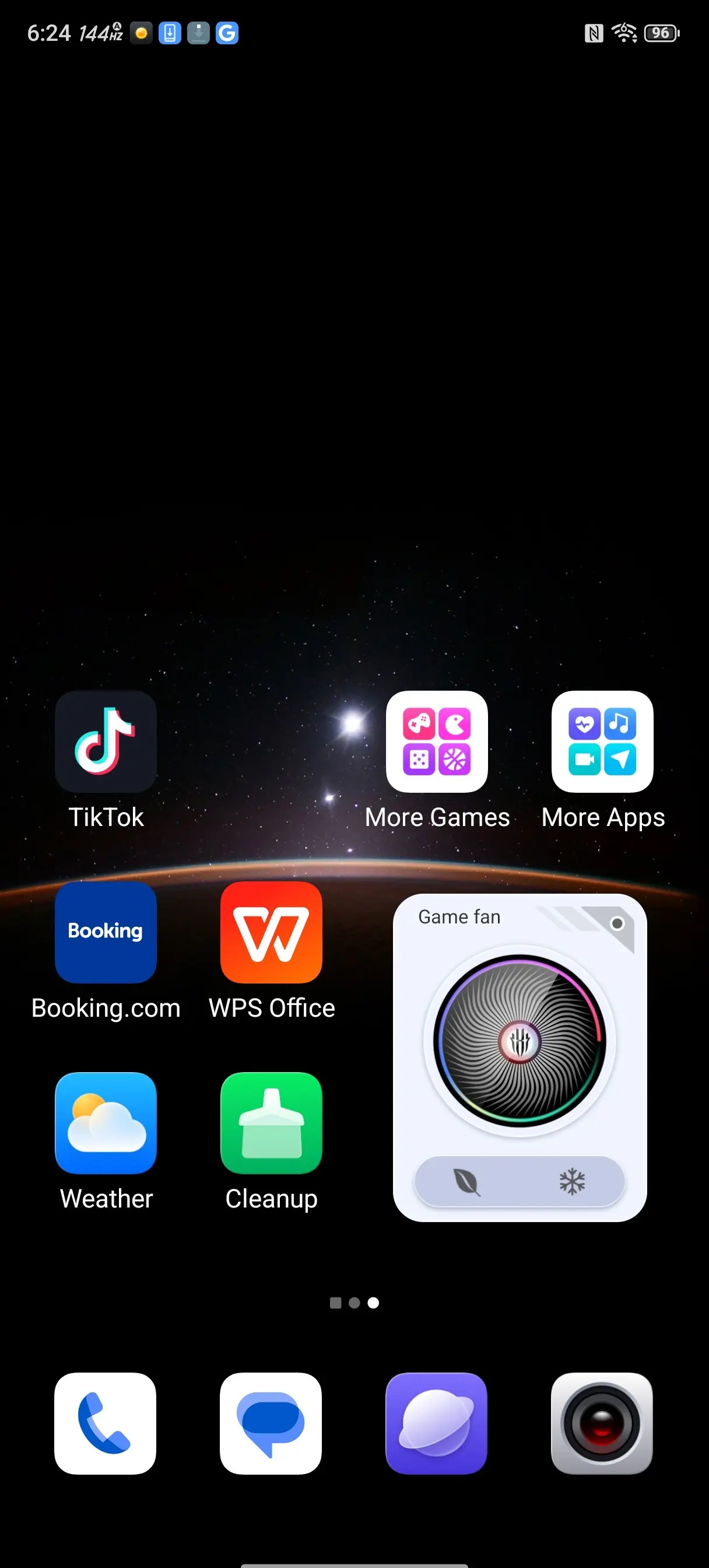
Above, you can see some post setup screens. The experience is mostly stock Android aside from the attention to detail on gaming (something I really do not do on a phone). Right after the Android onboarding, you are presented with a few screens to set up Favorite apps, decide if you want gestures or not, and the phone checks for REDMAGICOS updates again.
Bloat?
Yes, there is a bit of bloat; it is mostly third-party apps, which can easily be removed. There are whole discussions about it on the reddit.com/r/REDMAGIC/ board, mostly people asking "does REDMAGIC ship bloat on their devices?" With people usually answering "Yes." I went into it in a bit more detail in my Astra Gaming Tablet review, so rather than parroting the same thing all over again, you can discover my first impressions about REDMAGIC OS and the bloat, which has not changed much at all between v10 and v11 right here.
tl;dr people: Yeah, there is bloat, but you can remove it all.
Home Screen
The Home screen is just called "System Launcher." It is pretty customizable. You can change just about everything; in fact, the only thing I found that was not possible to change is the ability to remove labels from icons, which was a bit disappointing, given that you can change just about everything else. I was also pleased to see a highly customizable AOD, which Samsung could take note of here.
Home Launcher and Board

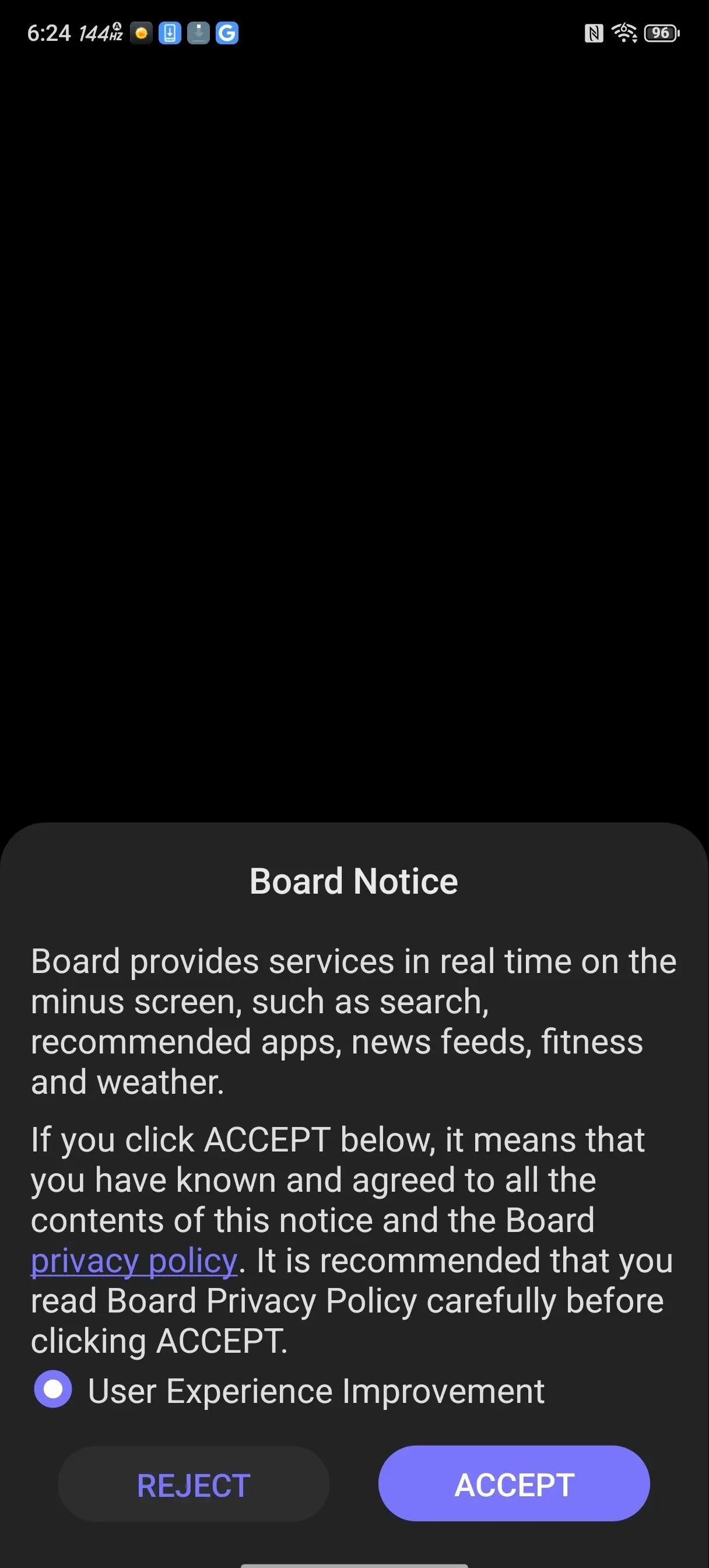

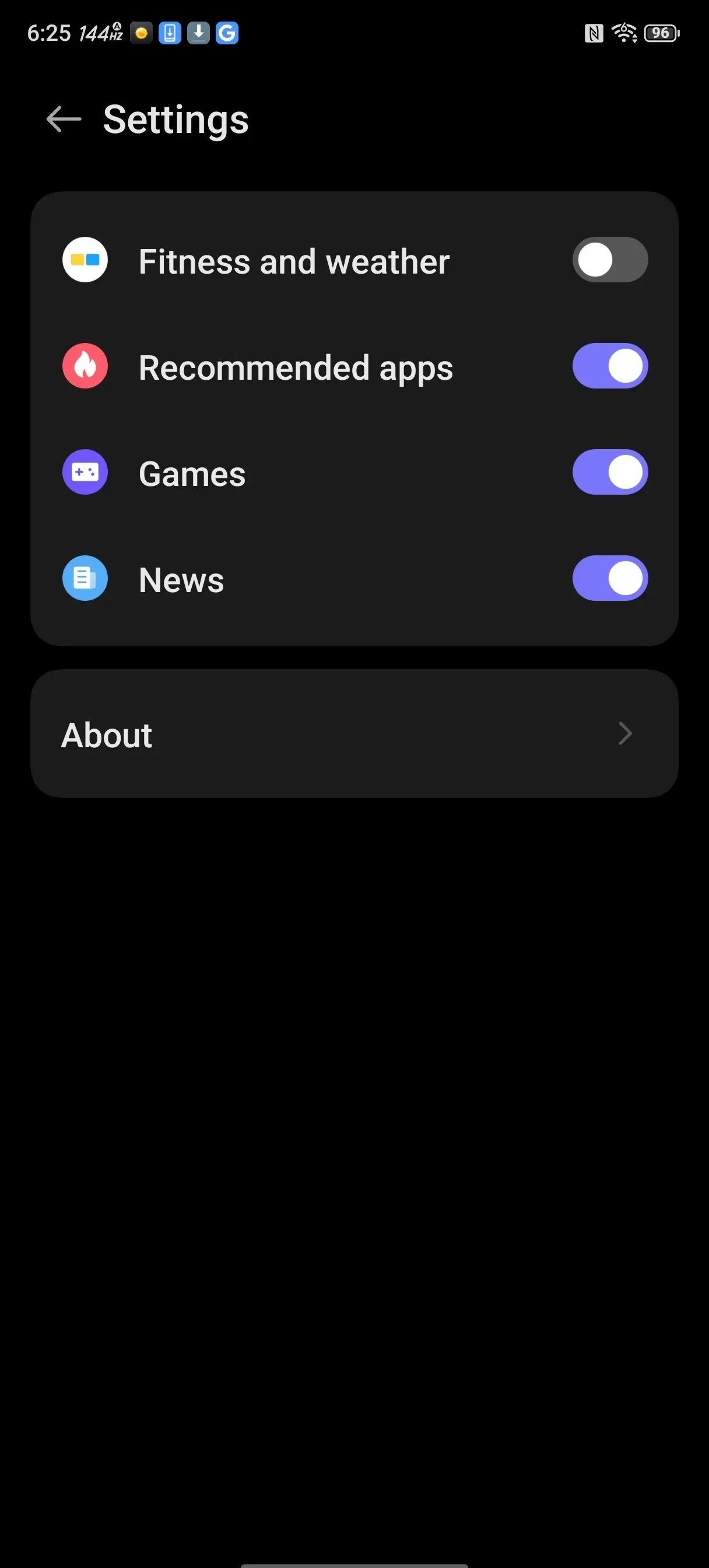
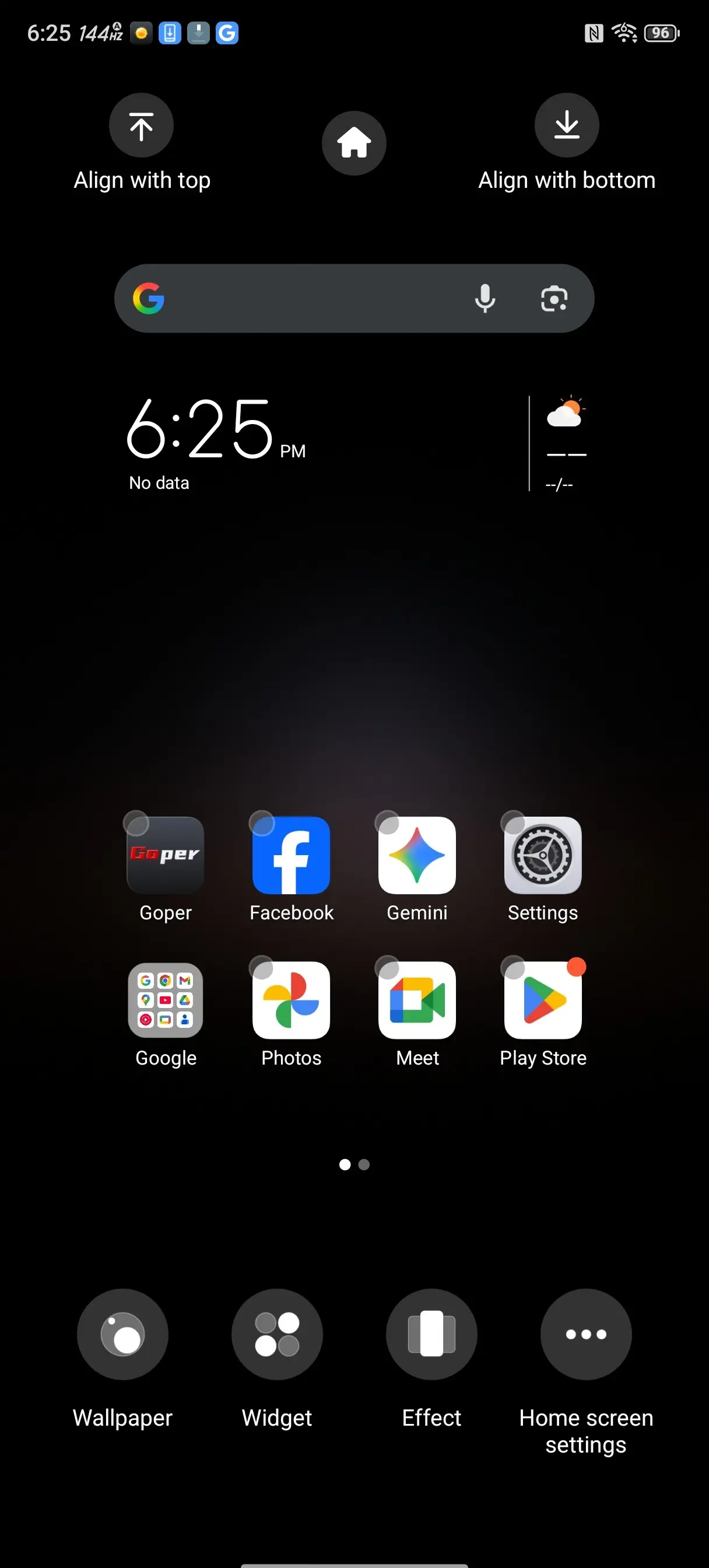
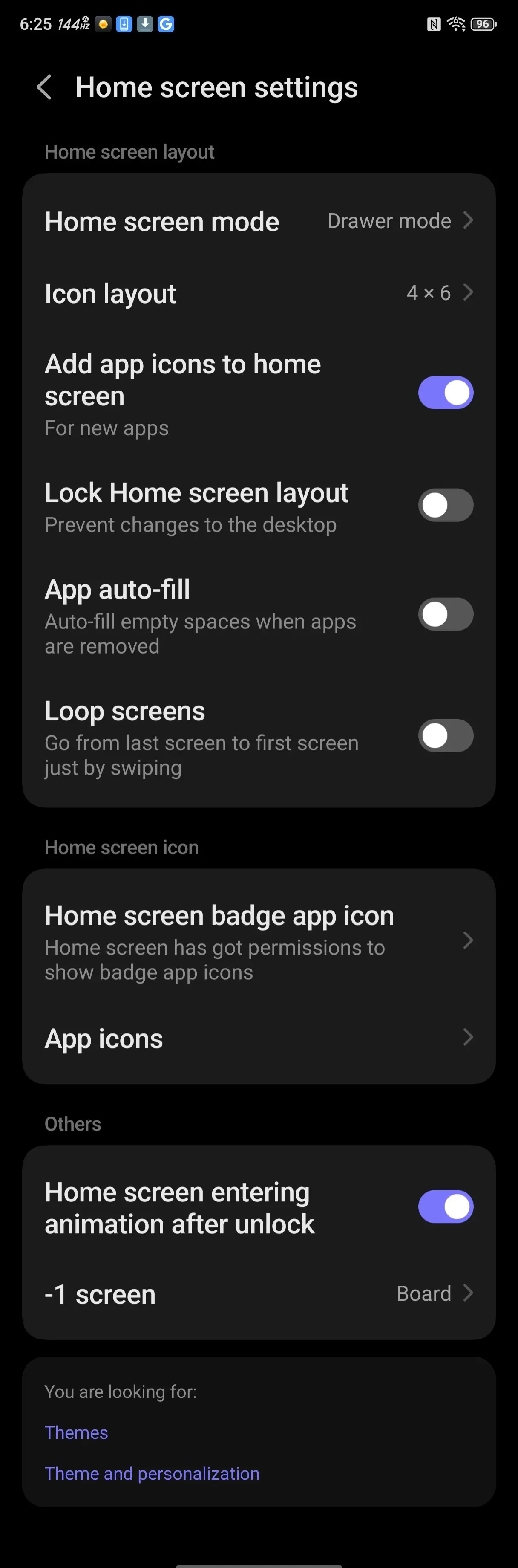
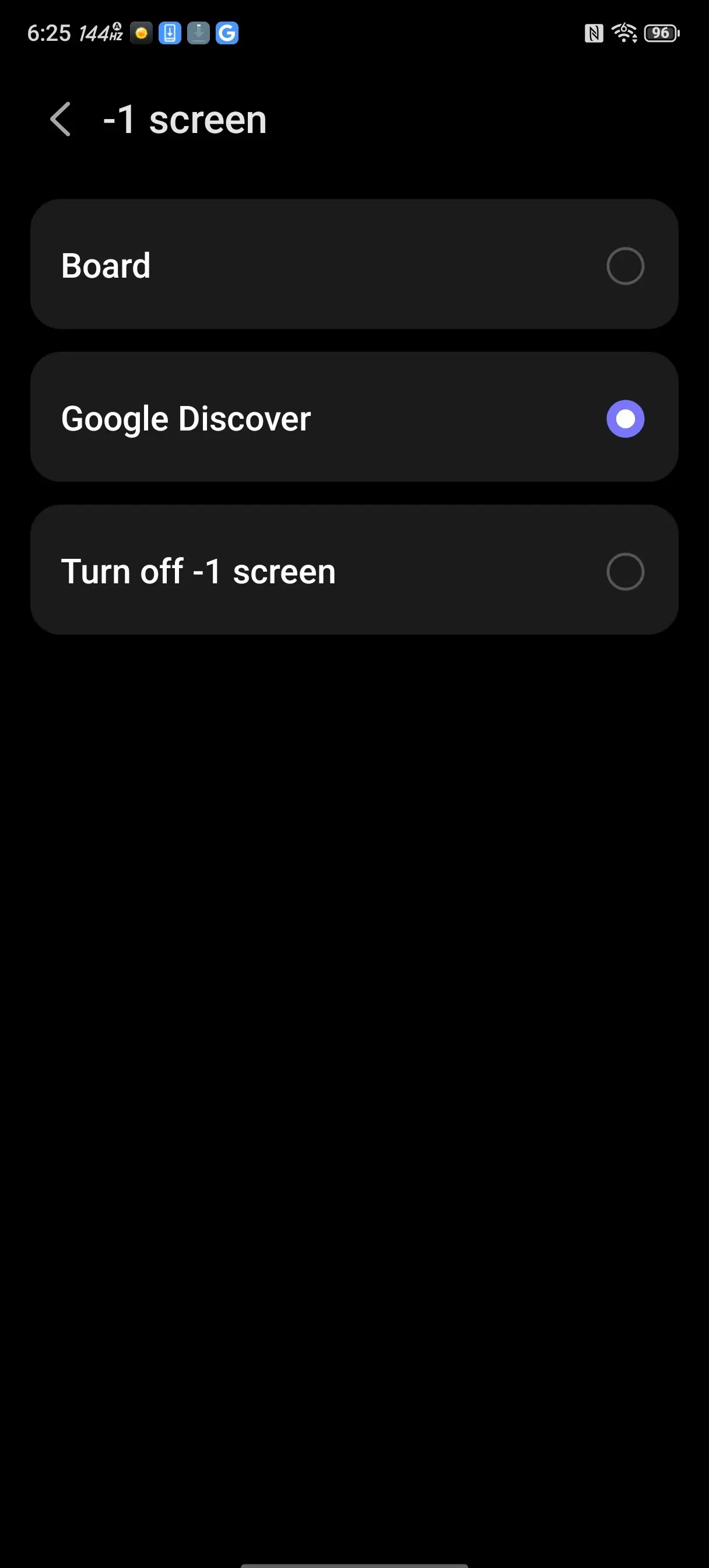
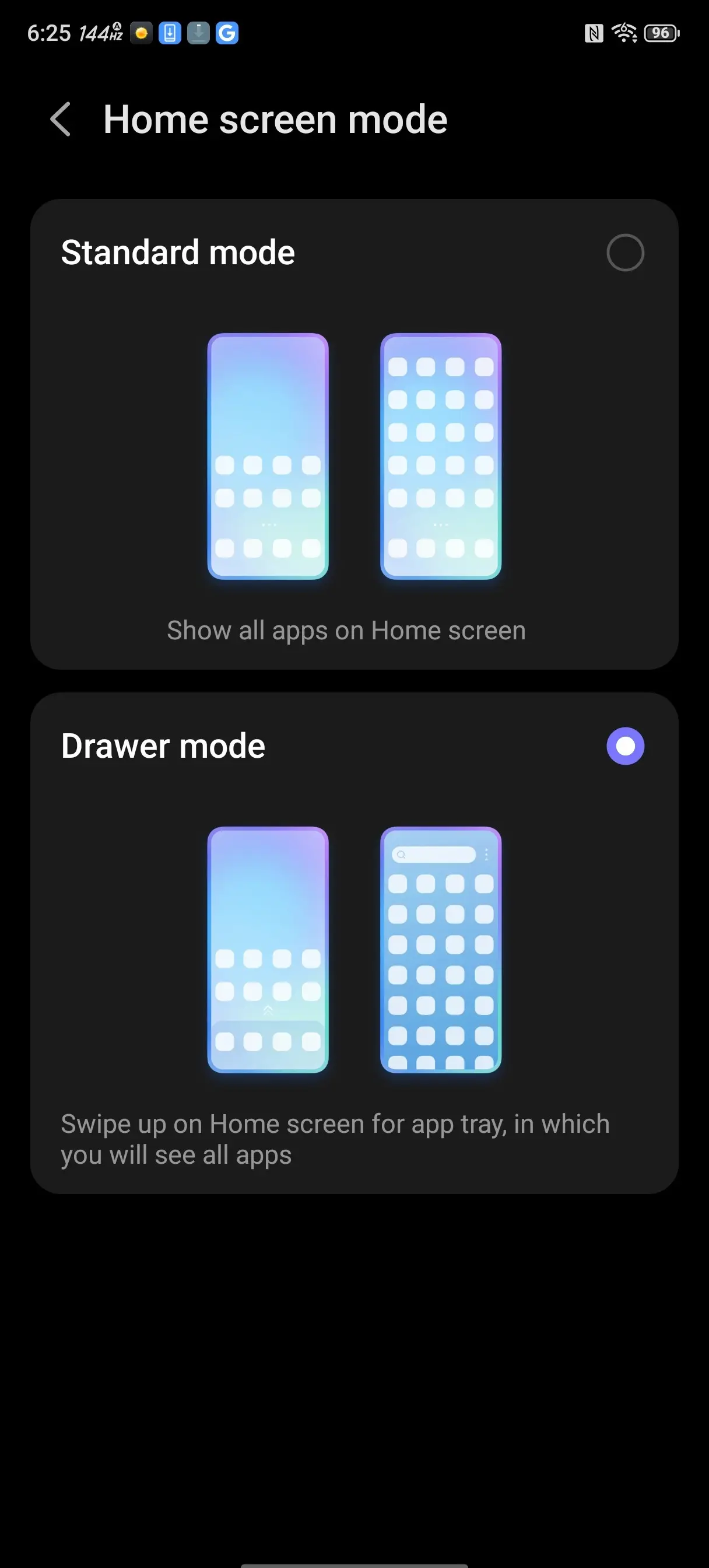
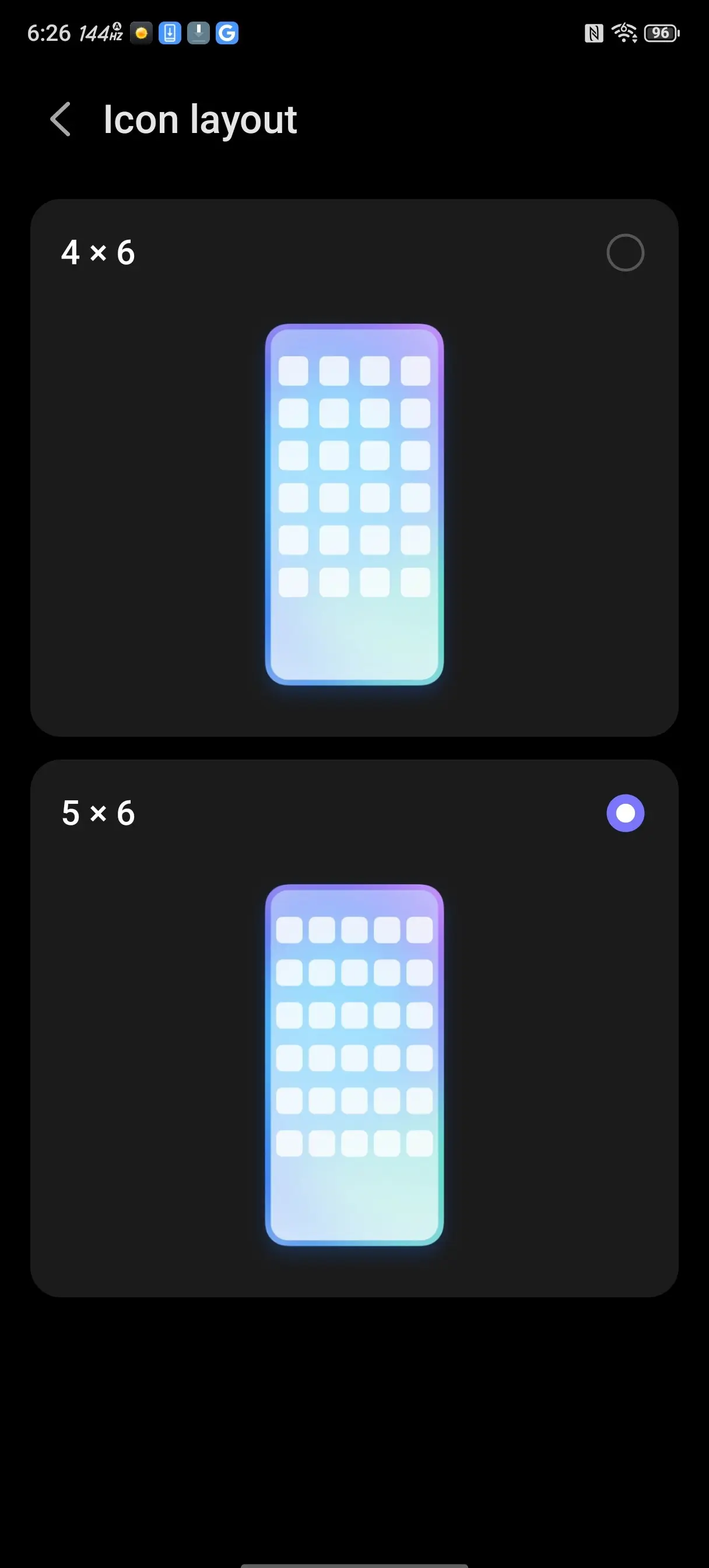
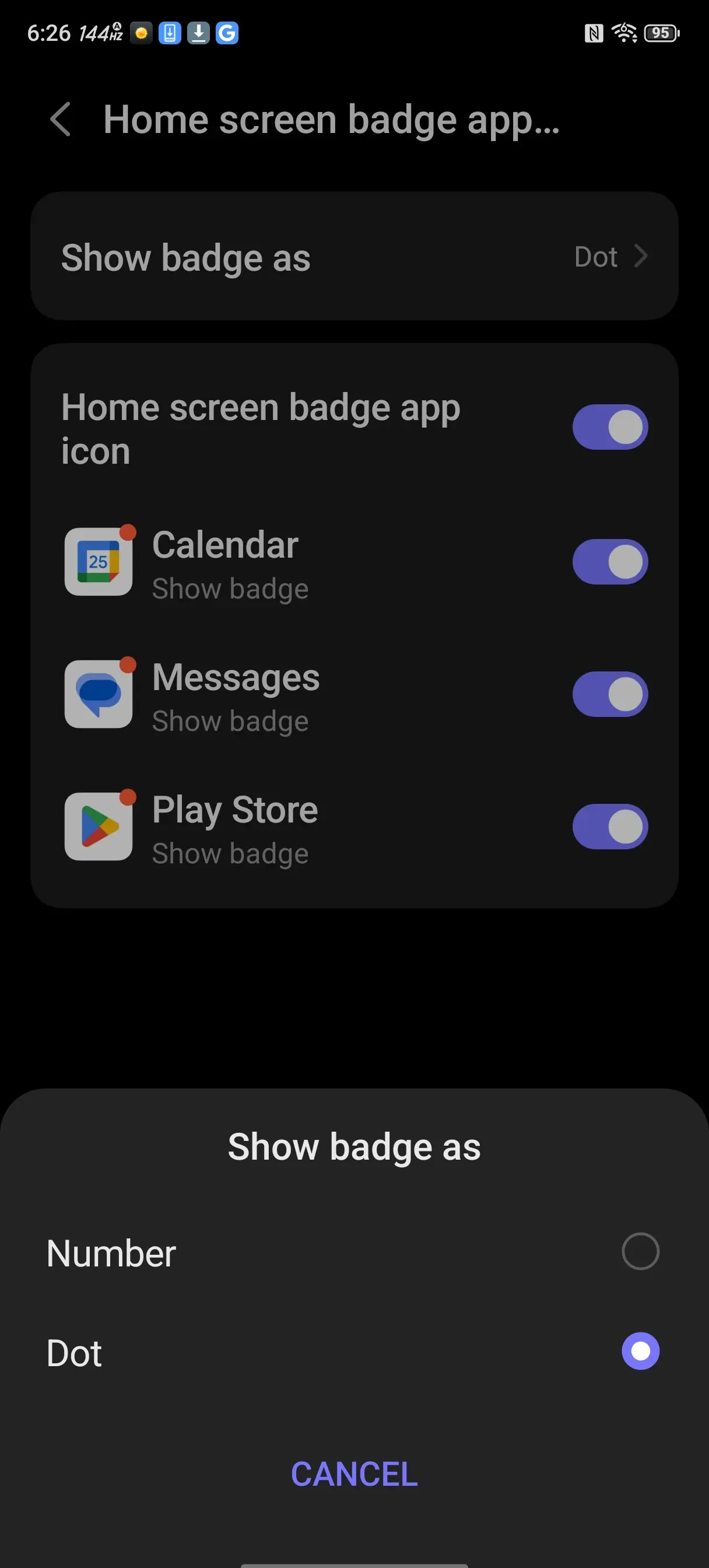
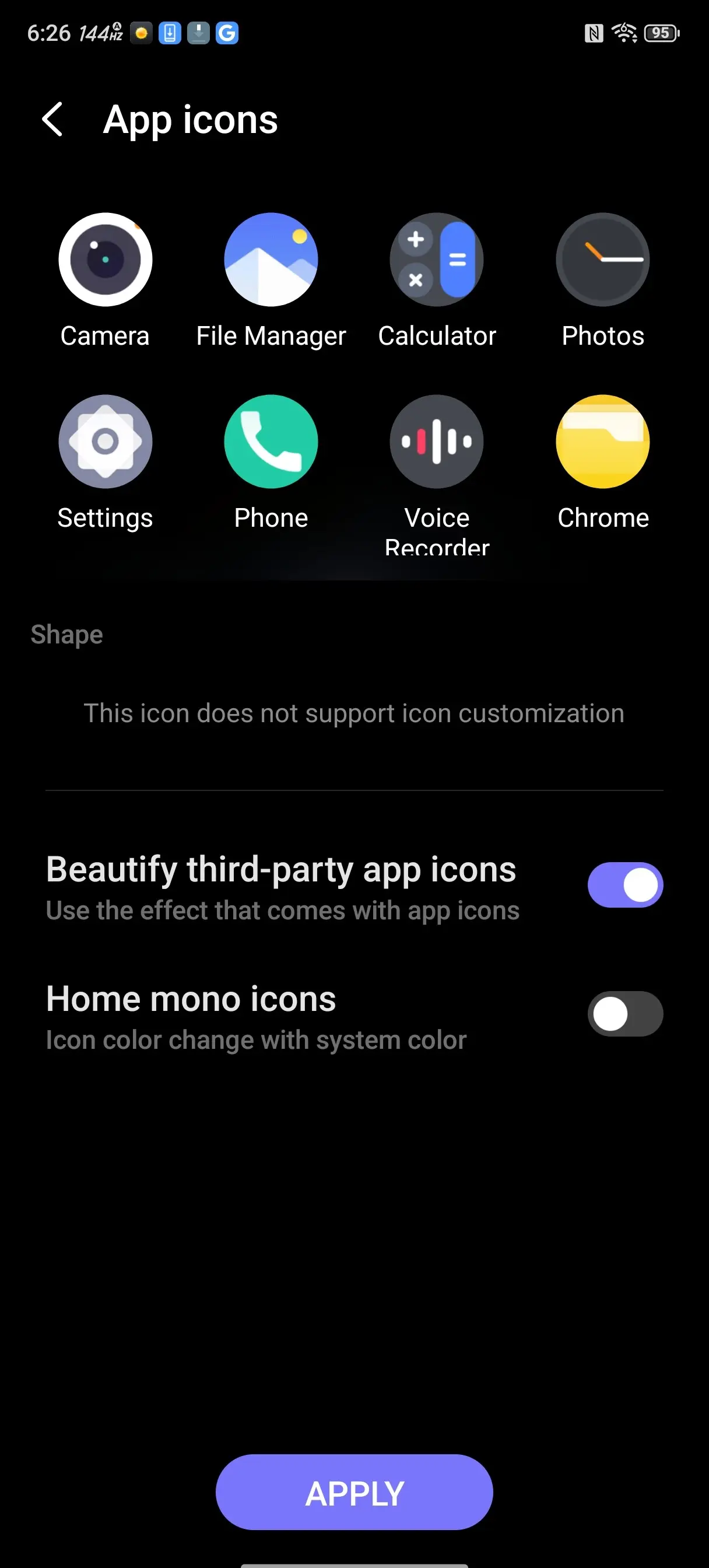
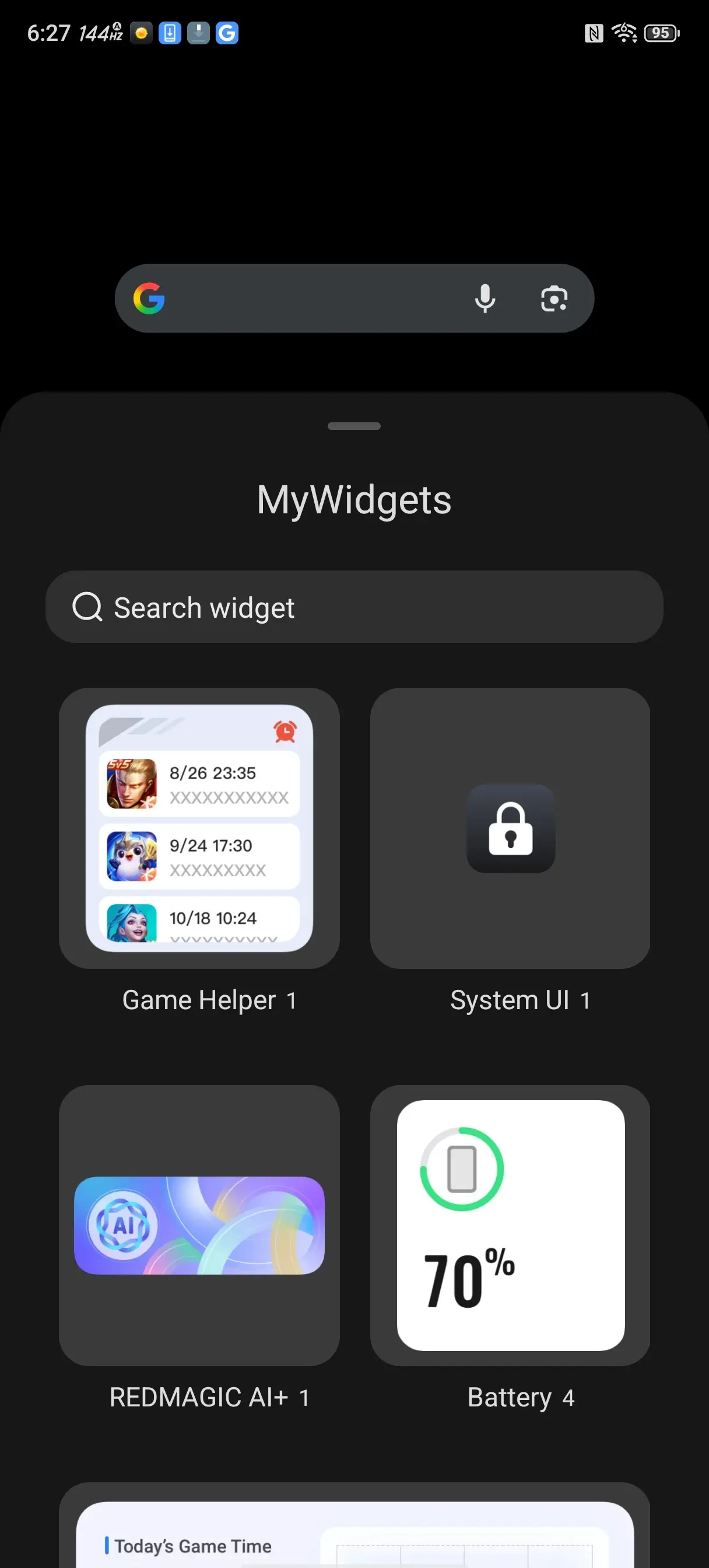
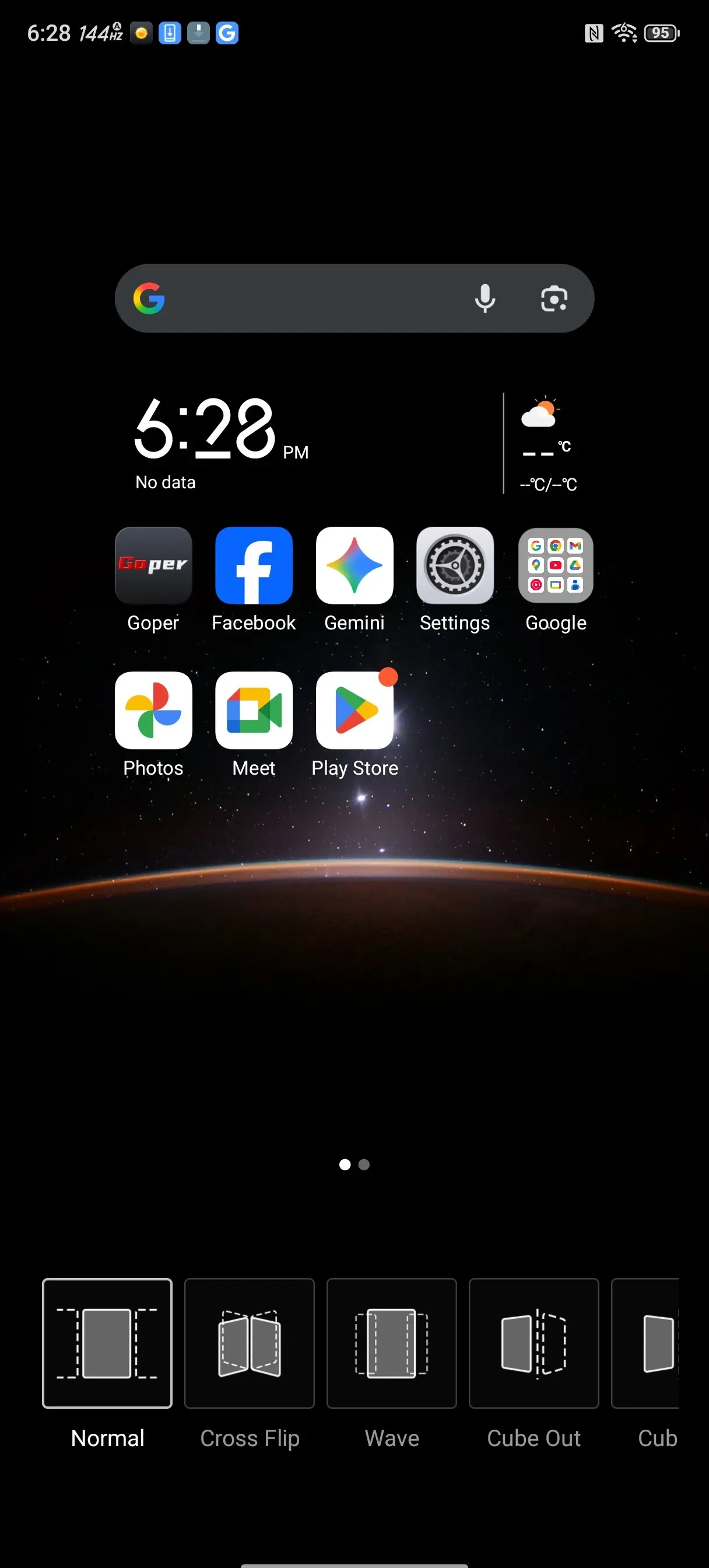
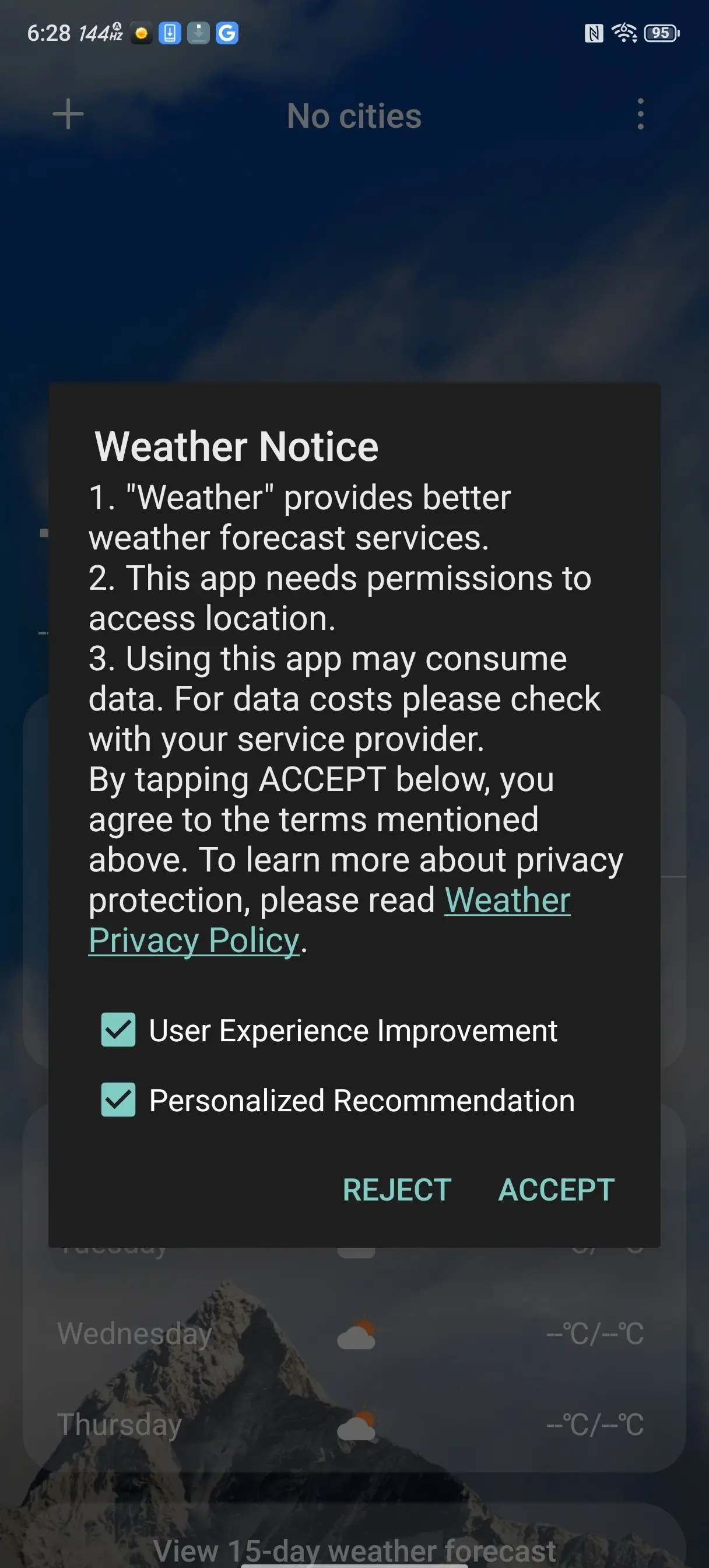
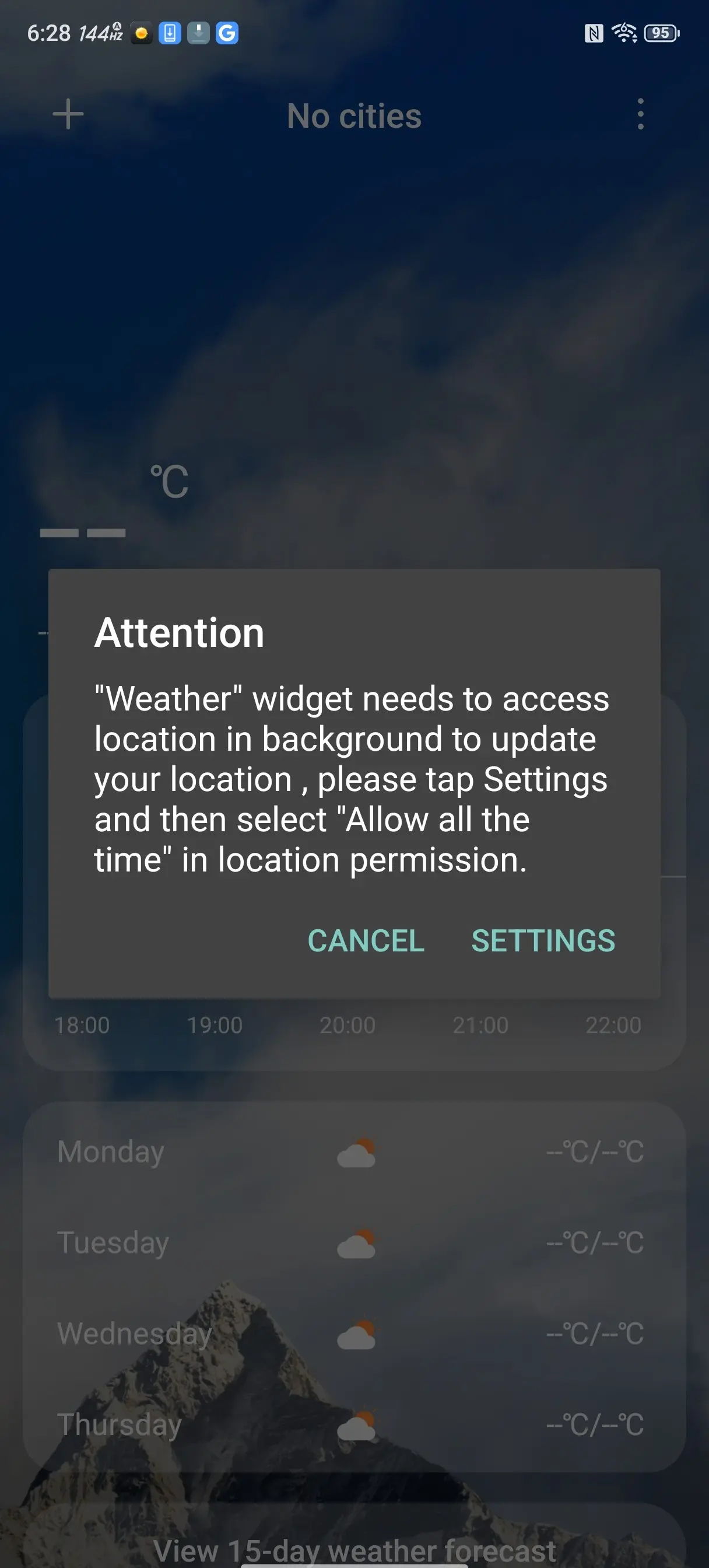
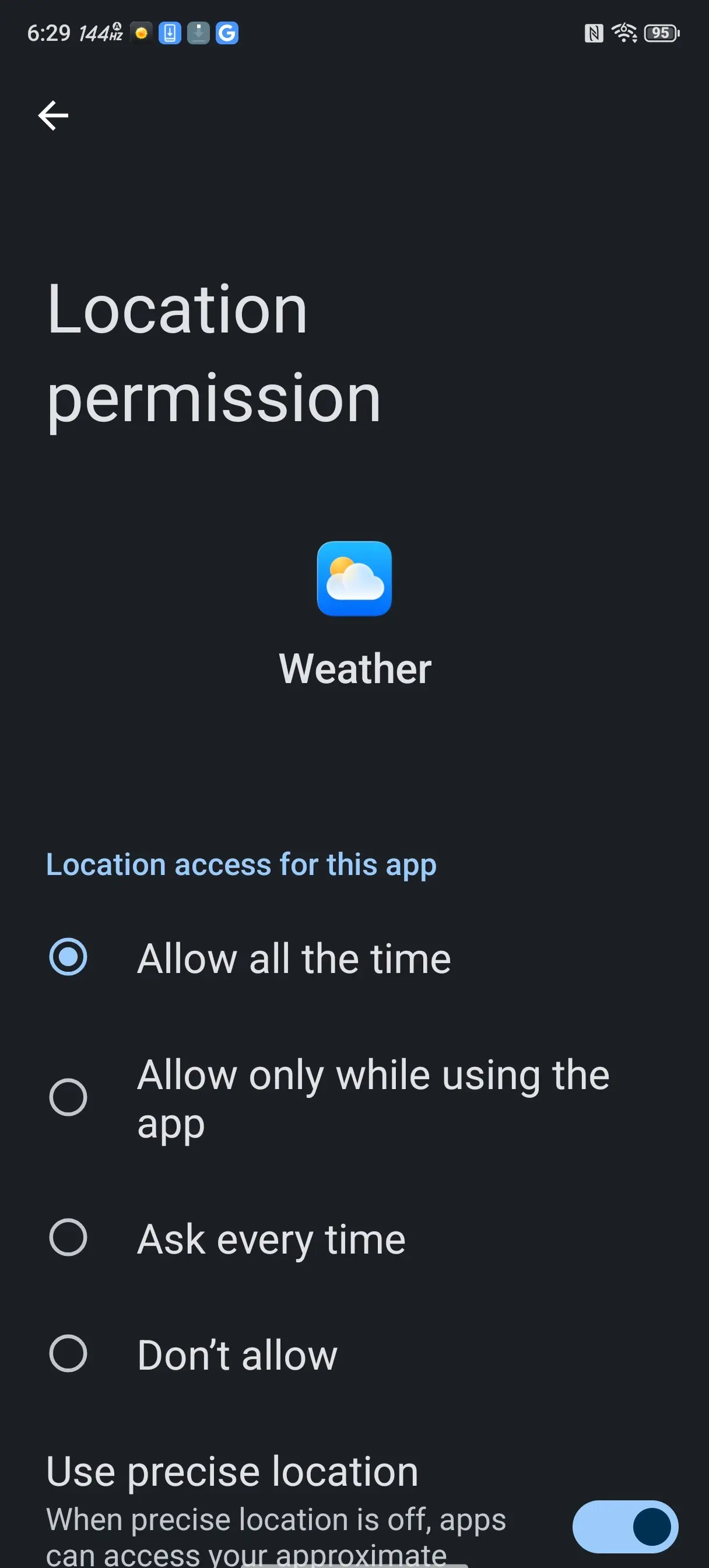
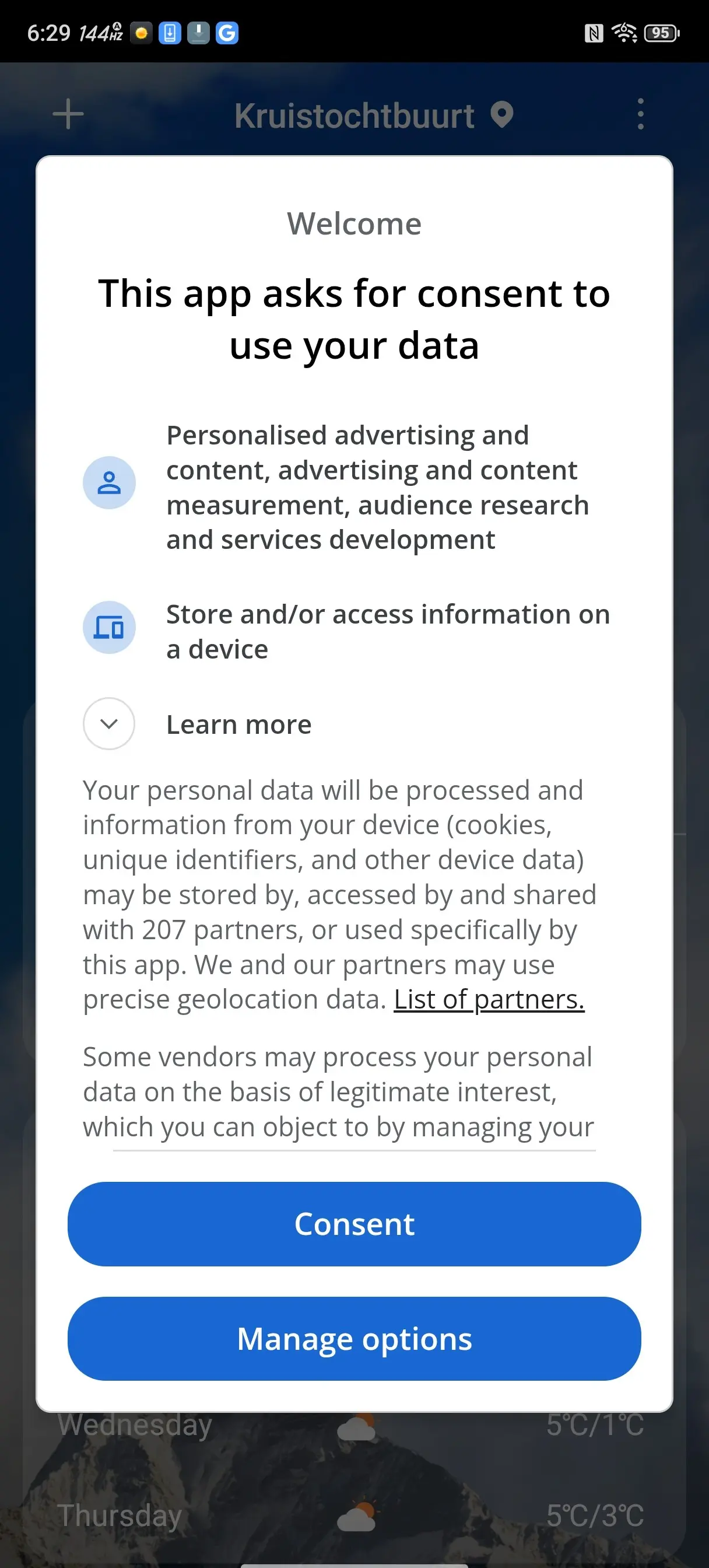
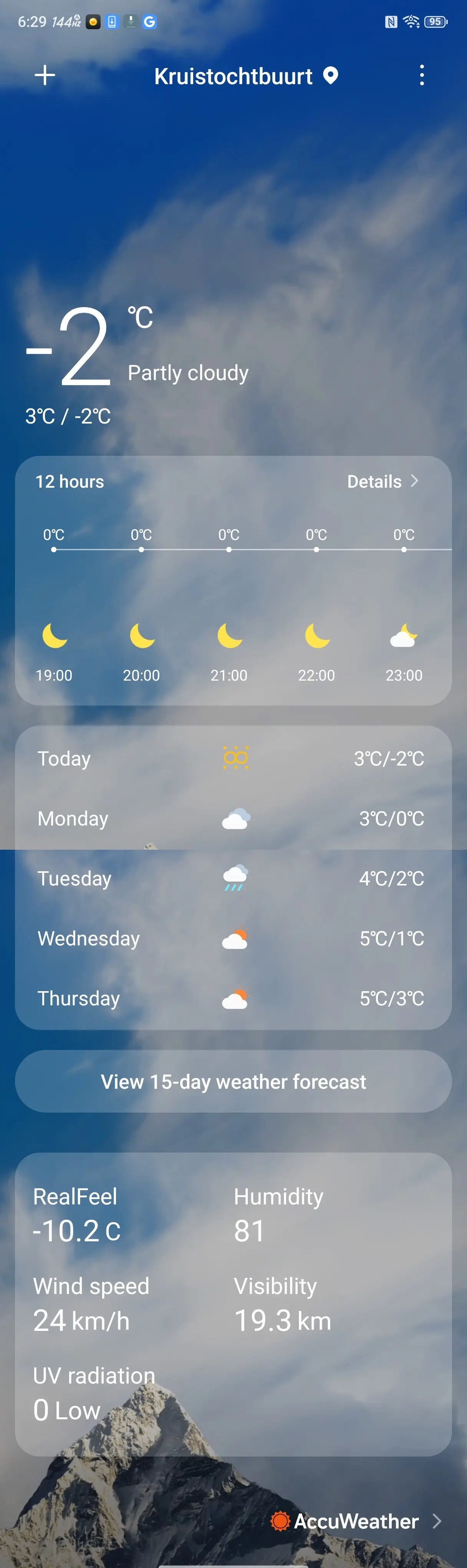
Instead of Google Discover on right-swiping the Home screen, you get "Board" with REDMAGICOS, and I found it pretty useless. You can only disable or enable four categories, and that's it. And that's only after you accept the long Privacy Policy, which could mean it tracks whatever you decide to click on and updates itself that way, since there is no way to customize the feed. Thankfully, you can switch to Google Discover or disable the -1 page completely, yes, -1 is what REDMAGIC calls this page in the Home settings.
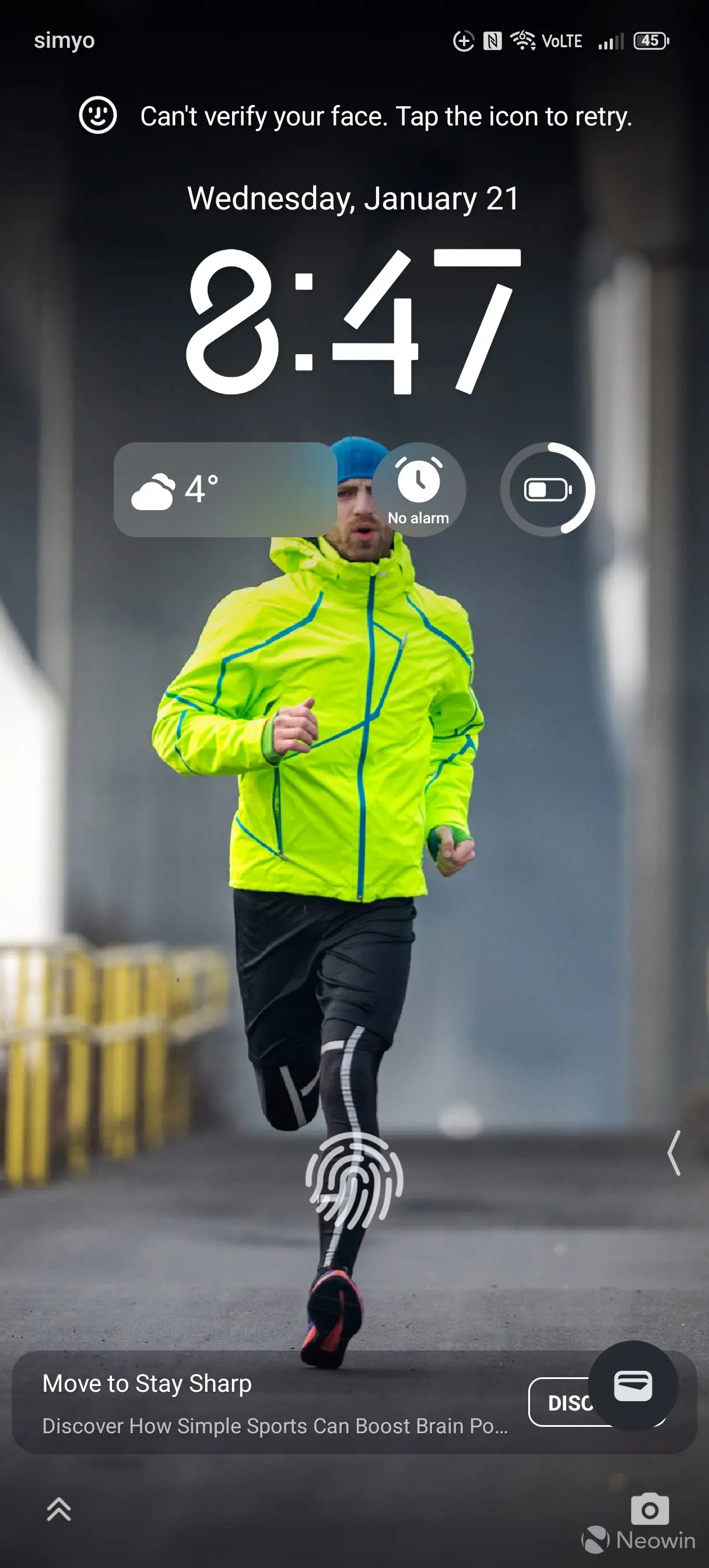
Lockscreen, or how I learned to "Move to stay sharp."
Just like with the REDMAGIC 11 Air, the lockscreen is defaulted to some inspirational wallpapers that change, and made me break out in a sweat just by looking at them. Of course, it can be changed to whatever you want, but I found it amusing that a smartphone geared towards gamers had a default lockscreen that encourages users to go out and exercise.
Display
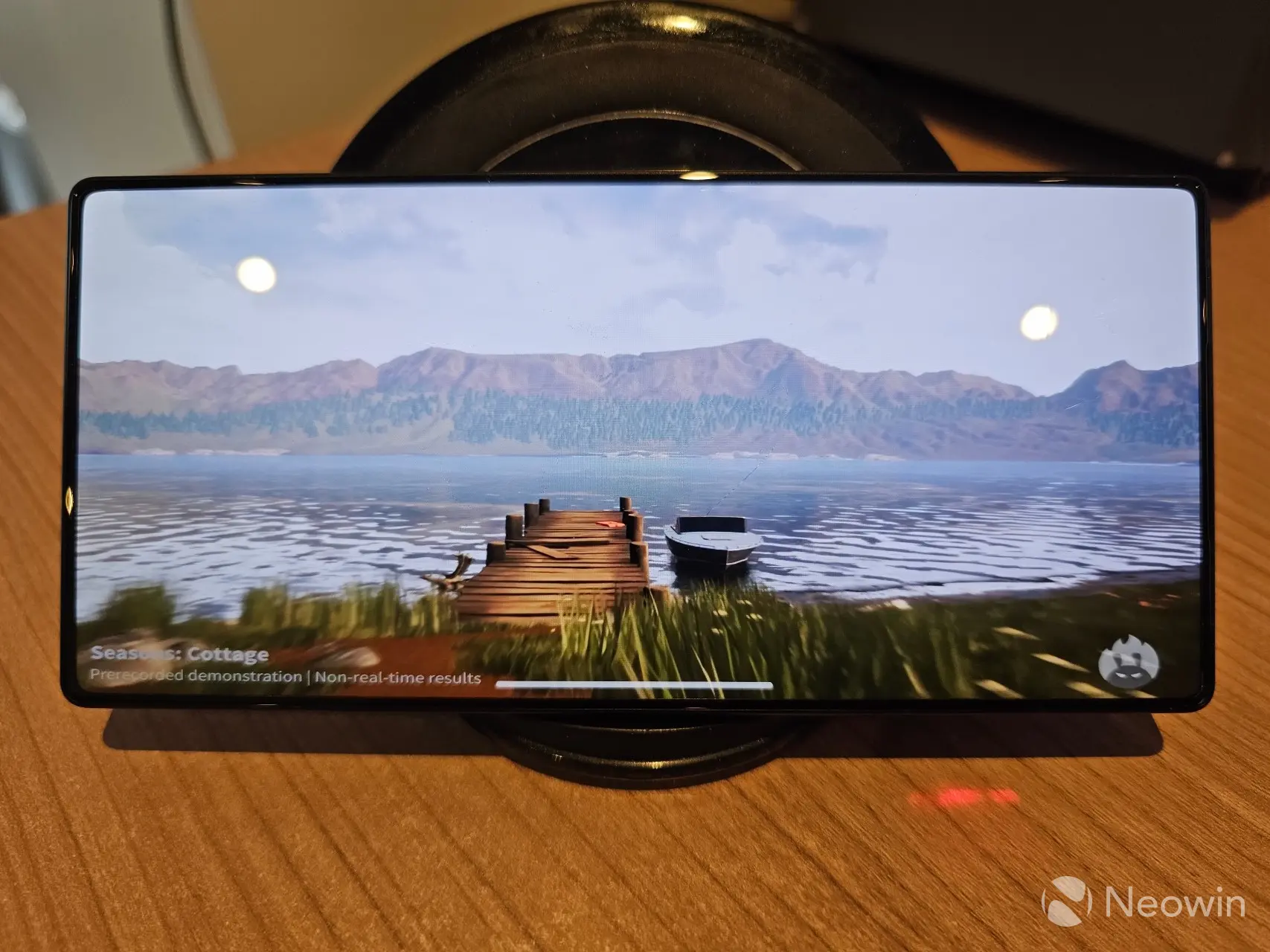
The REDMAGIC 11 Pro has the same 6.85-inch screen as in the REDMAGIC 11 Air, and the phone itself is only 8 mm in thickness. That weight also feels like it is distributed evenly across the phone, and you can place this down completely flat on its rear. The cameras, turbo fan, and LED flash are protected by the glass rear.
The AMOLED display has a 1216 x 2688 screen resolution, with a 431 PPI pixel density, a 20:9 aspect ratio, and Gorilla Glass 7i protection. Nubia claims the display has a 1800-nit peak brightness for HDR content (no Dolby Vision here), which is a bit less than the REDMAGIC 10S Pro we reviewed, with its peak 2000 nits. Nevertheless, I found the screen to be vibrant and bright enough all the time I was using it in Adaptive refresh rate mode, which automatically adjusts the refresh rate between 1-144Hz depending on the app being used.
No camera cutout?
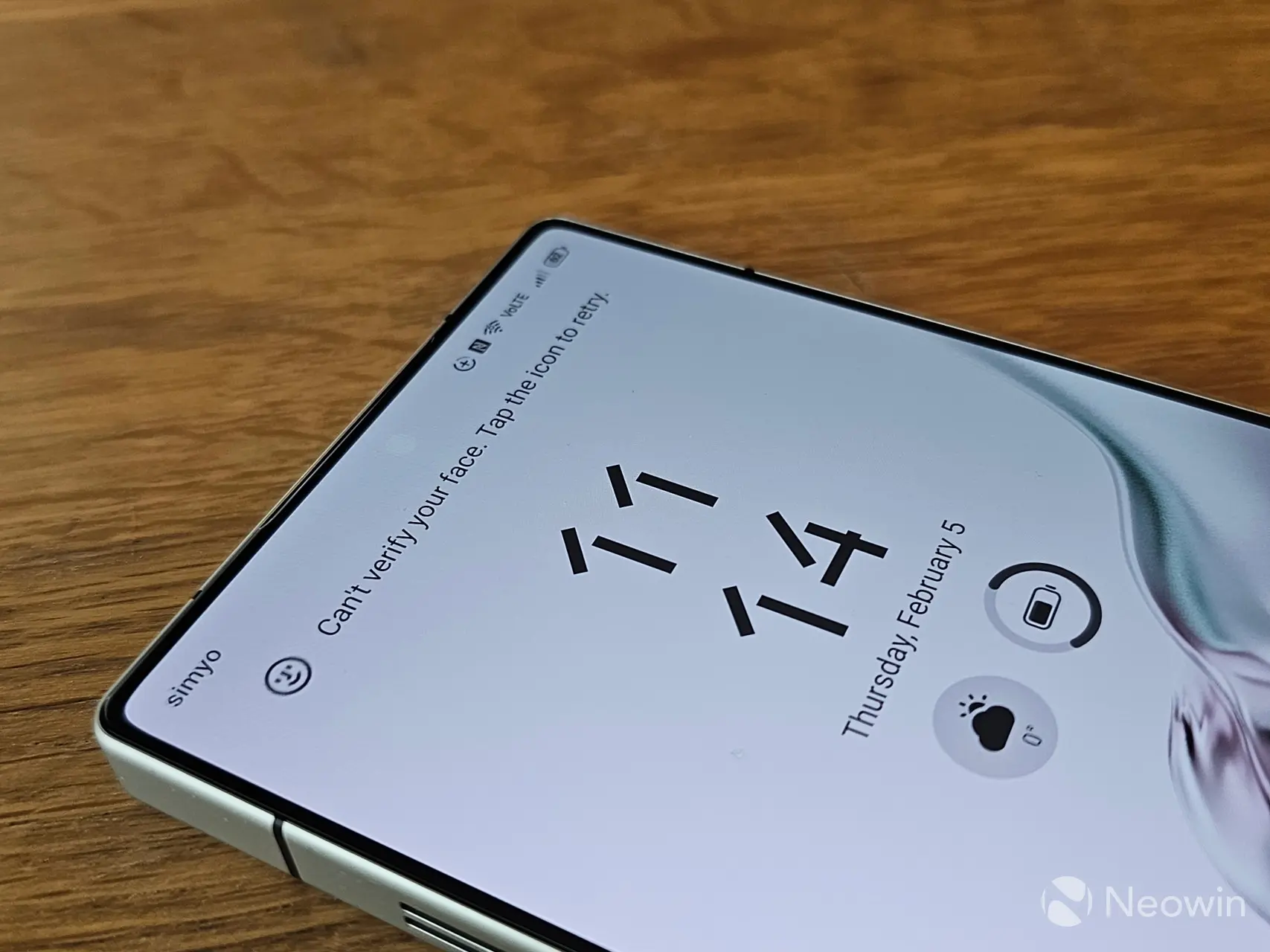
Now, with all the technical jargon out of the way, can I just say how refreshing it is to have a display where there are no black dots or cutouts for the selfie camera? In a word, beautiful. I know that under-display front-facing cameras are becoming more common, but other phone makers, please take note.
RGB lighting
For those who like RGB, the REDMAGIC 11 Pro also has a bunch of lighting effects on each side and the back. Thanks to the front reserving everything to the display, there are no lighting borders or notification LEDs of any kind, and although you can set the lighting to notify you on certain things like calls, when charging, and an Alarm clock, it's definitely noticeable.
By default, the RGB lighting was off, which is a different experience I had with the 10S Pro, where it was enabled by default (admittedly, that was in REDMAGIC OS 10). It was only enabled by itself when charging, but this can be controlled through the "Light Strip Setting" shown below:
|
|
|
|
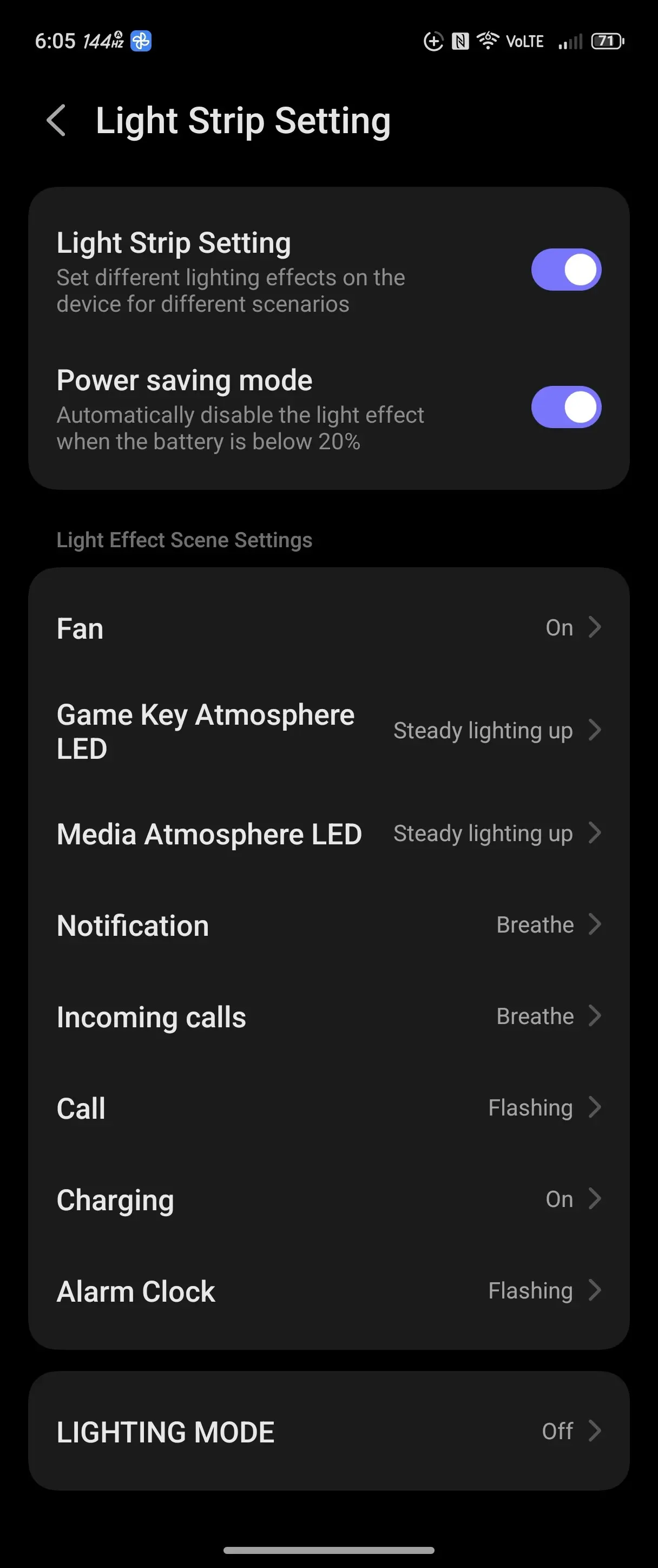
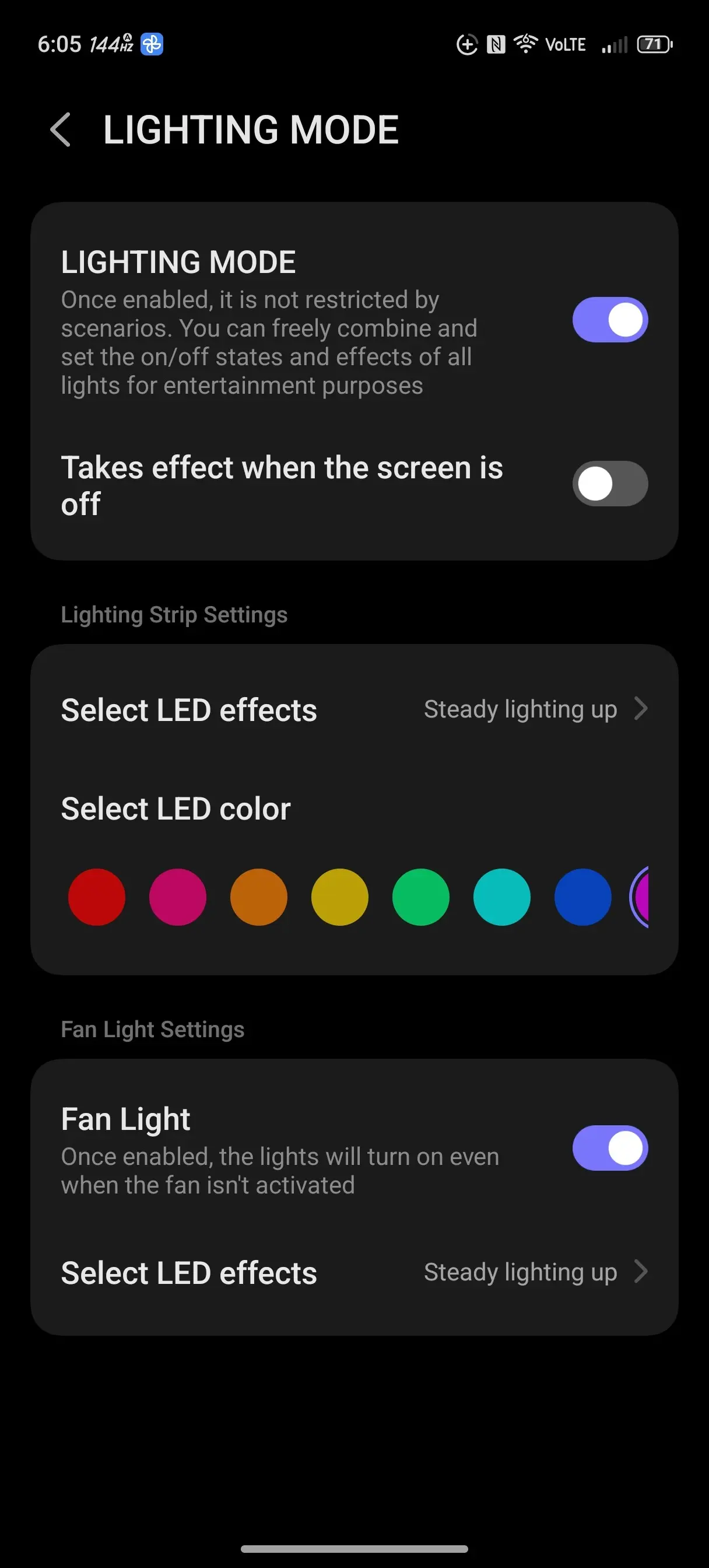
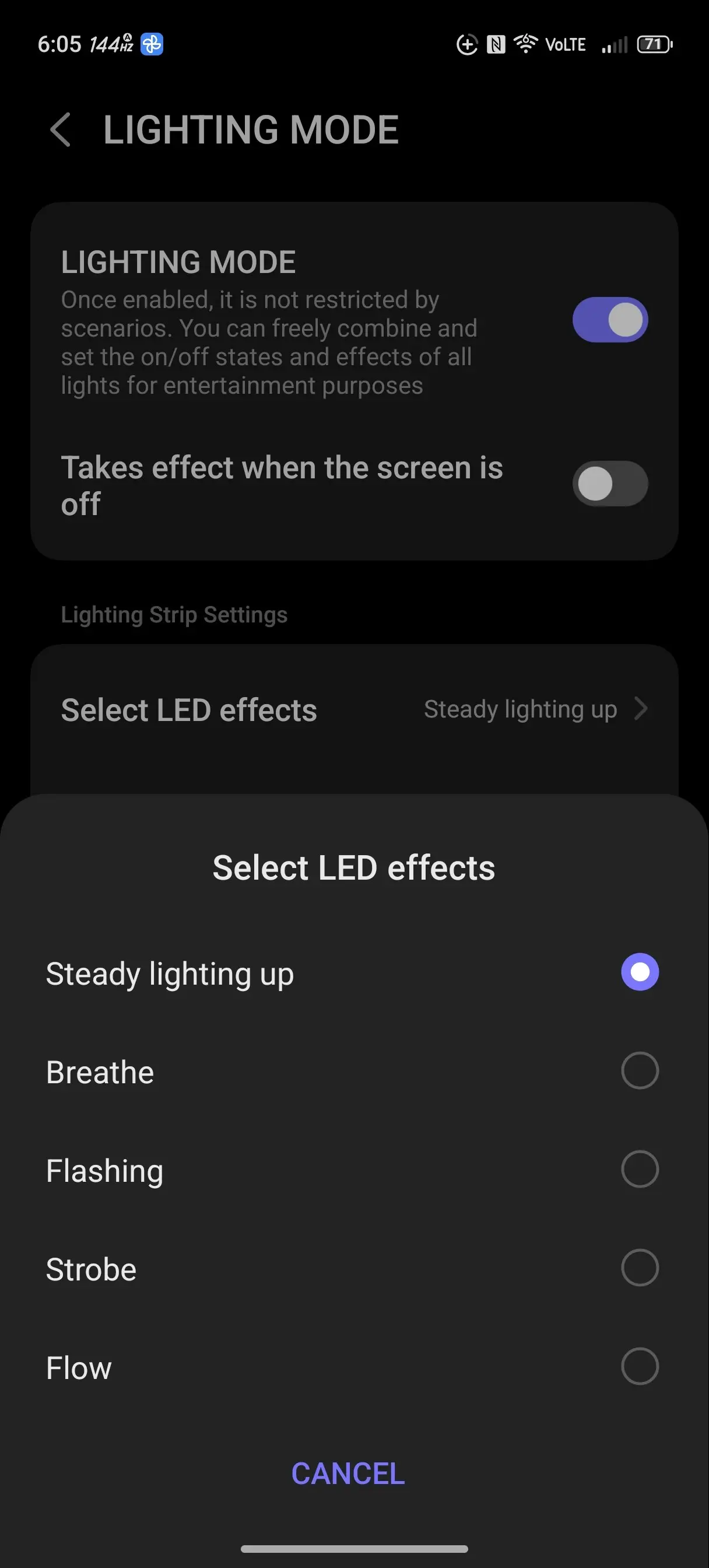
As you can see, you can control pretty much every aspect of it, like setting the lighting to flash green when you have an incoming call, or pulse blue with notifications. Owing to its name, all of the lighting is set to red by default.
Incoming notifications
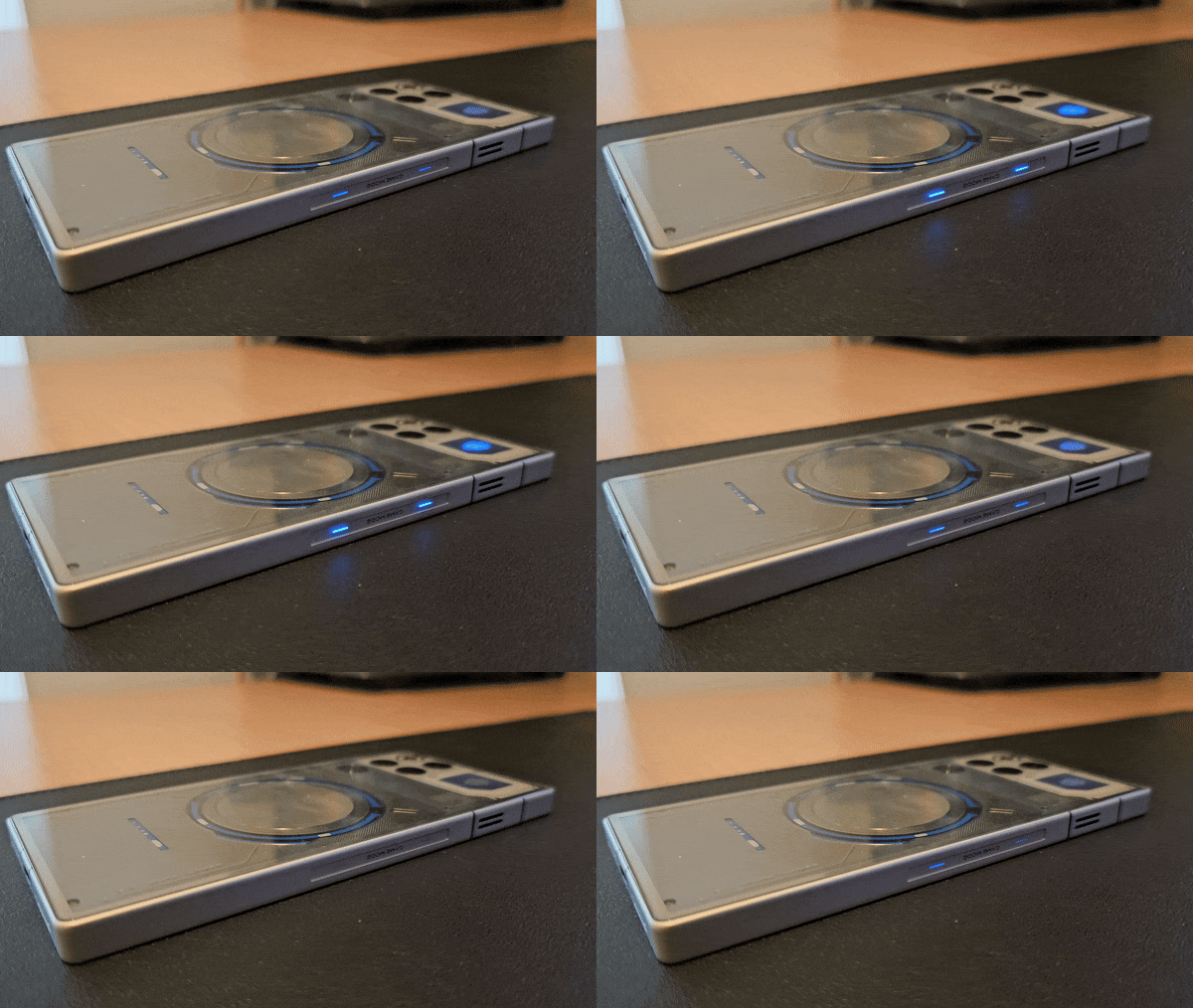
Above you can see how the RGB reacts to an incoming notification, which was WhatsApp. It would be great if the lighting could be set to show different colors for the more important apps like green for WhatsApp, and other colors for a few select apps.
Cameras
Coming back to cameras, and as I have said in previous smartphone reviews I've done, I am no camera buff. I'm a point-and-shoot kind of guy, but it seems to me that smartphone makers prefer to concentrate a lot more on camera quality, sometimes at the expense of other features.
On the rear, the REDMAGIC 11 Pro comprises a dual Ultrawide 50 MP Omnivision camera (OV50E40), along with an 2 MP macro camera. Optical image stabilization (OIS) and PDAF (phase detection auto focus), which is a high-speed automatic focus technology, are also included.
Day samples
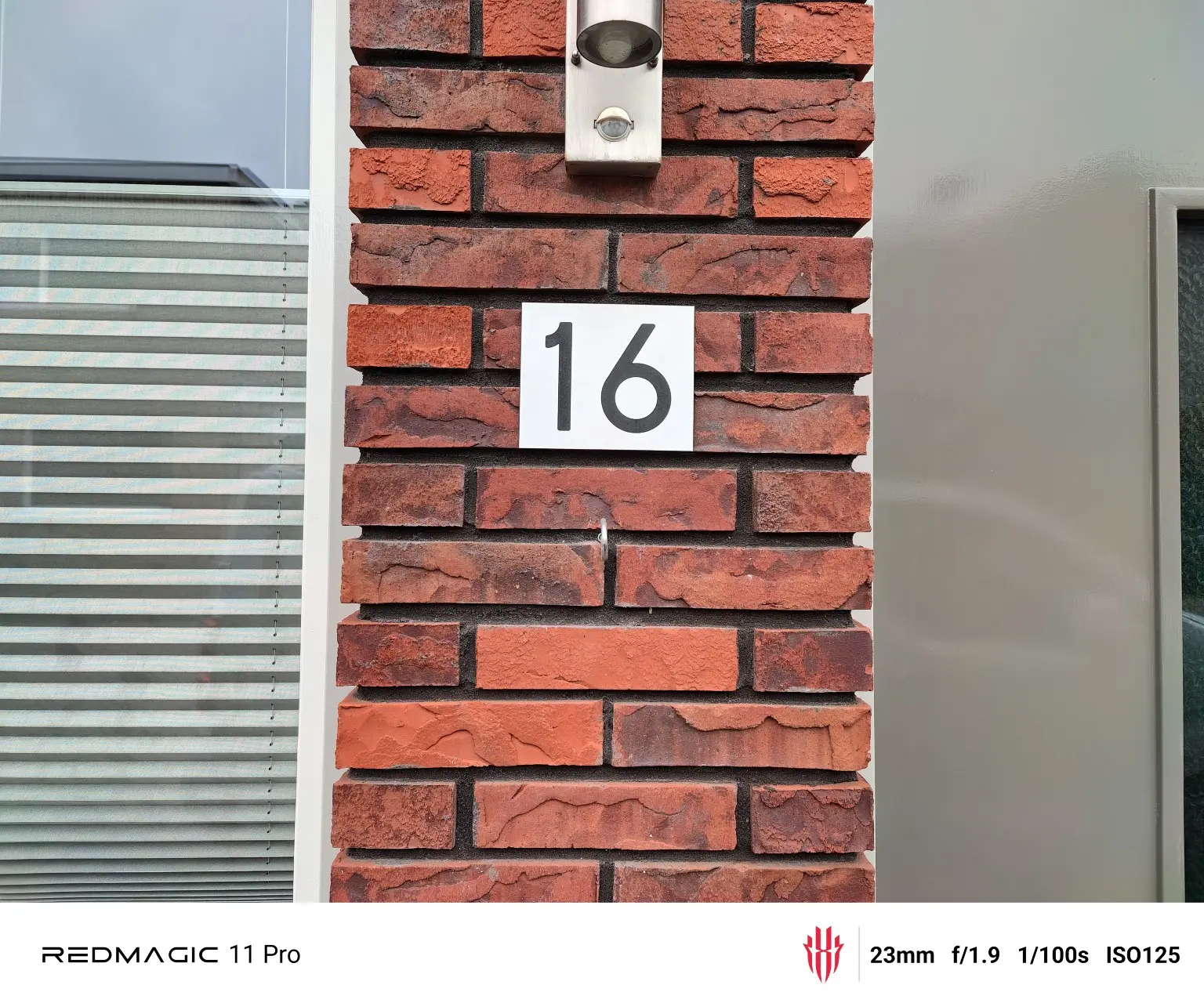
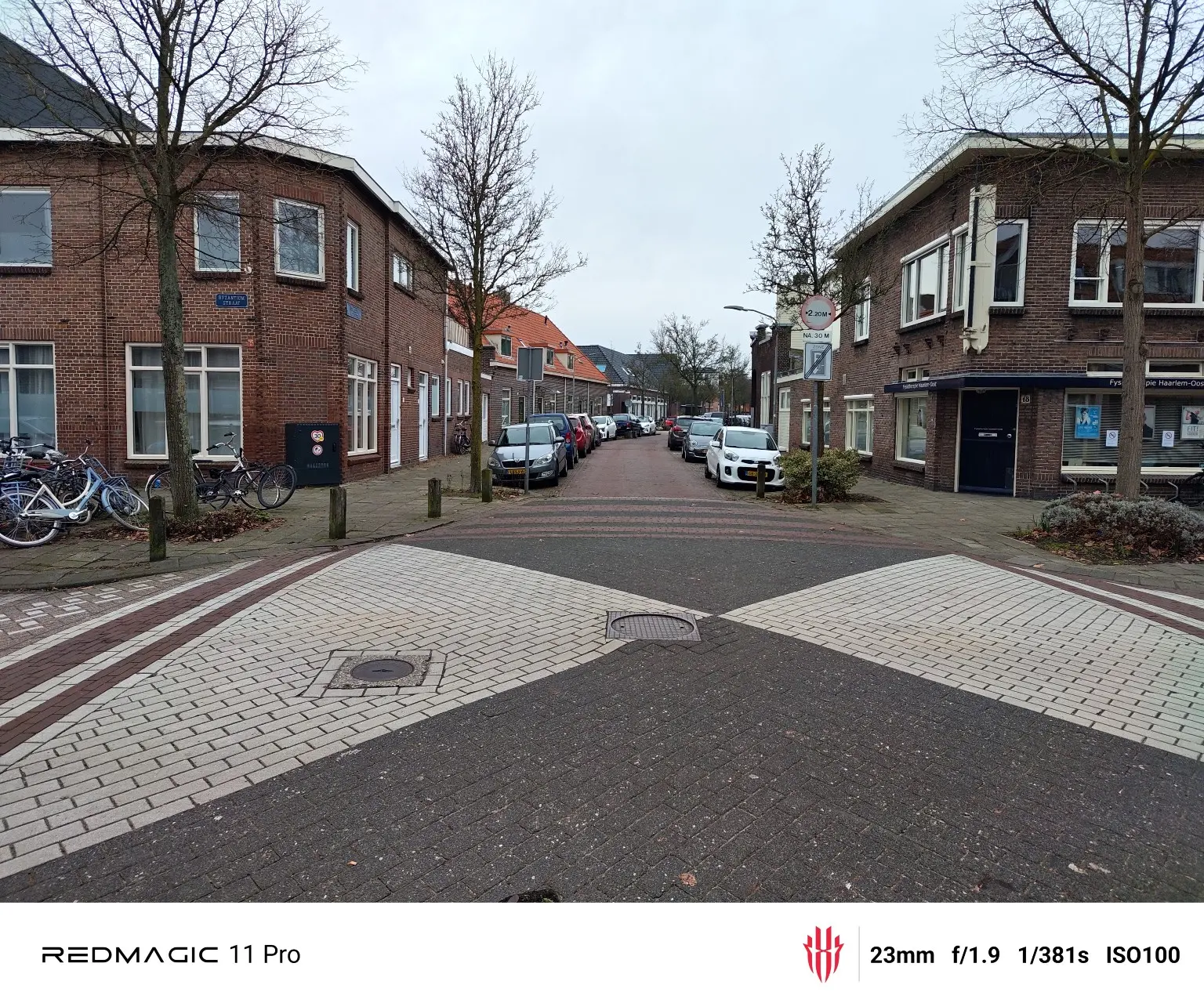
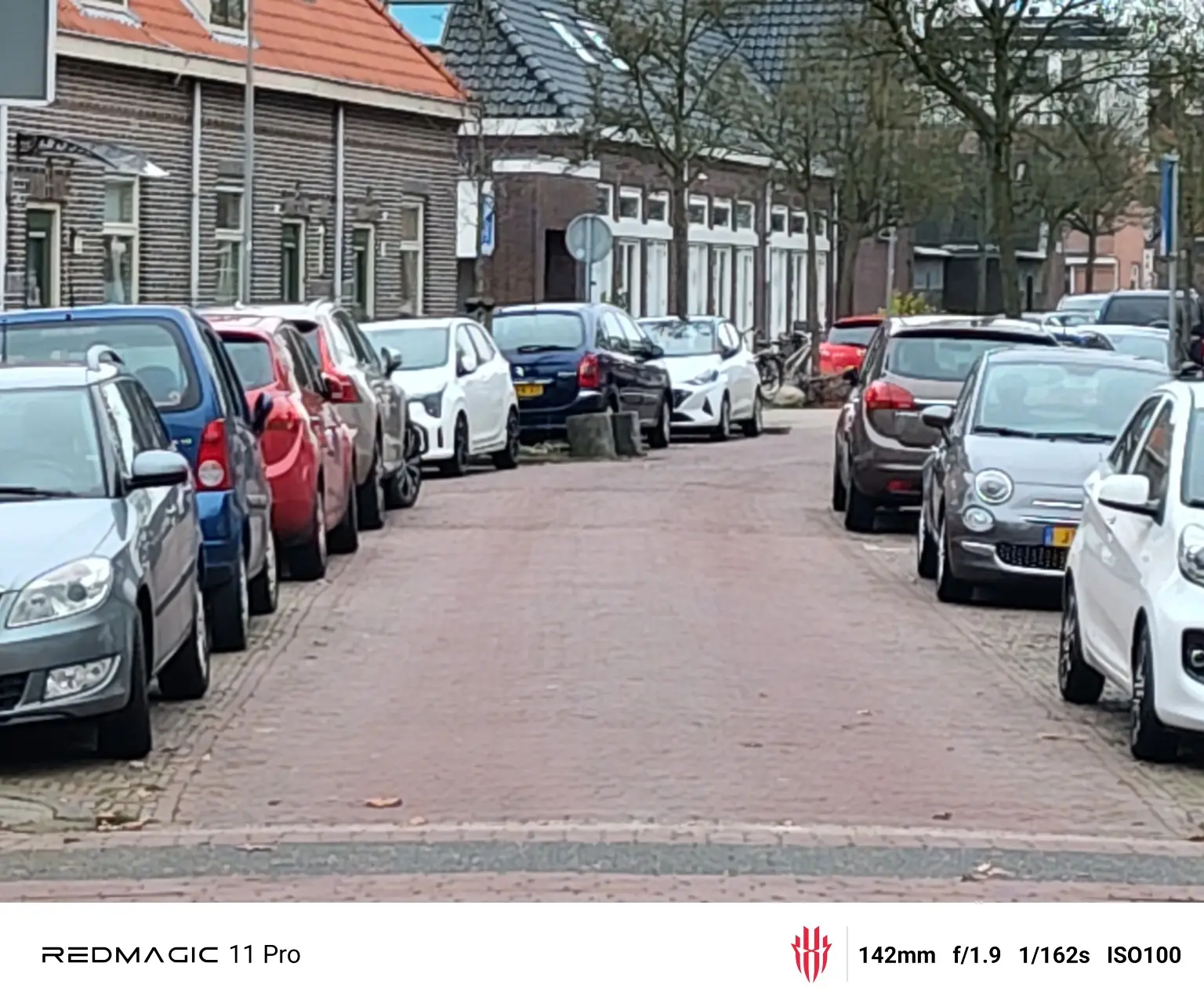
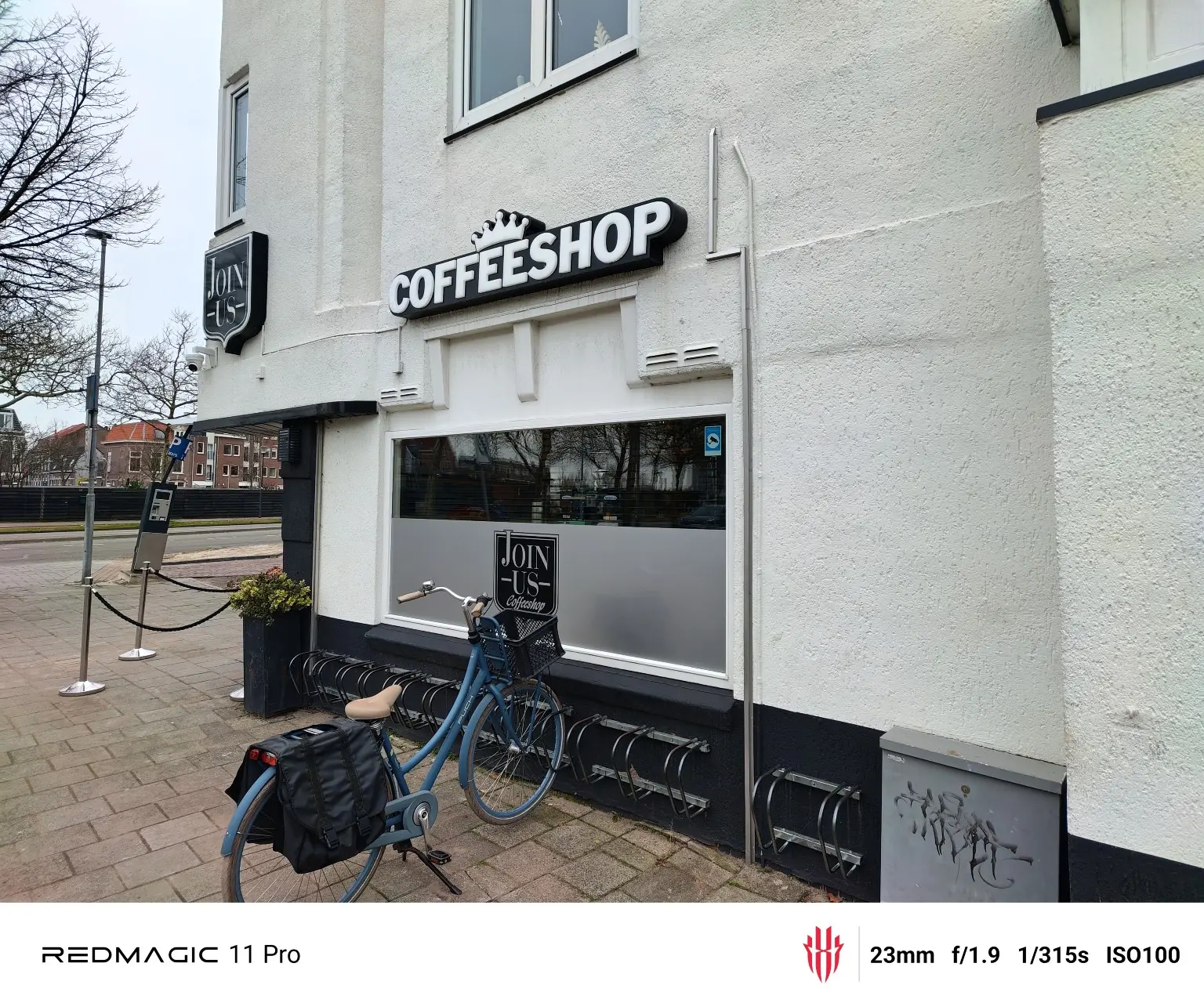
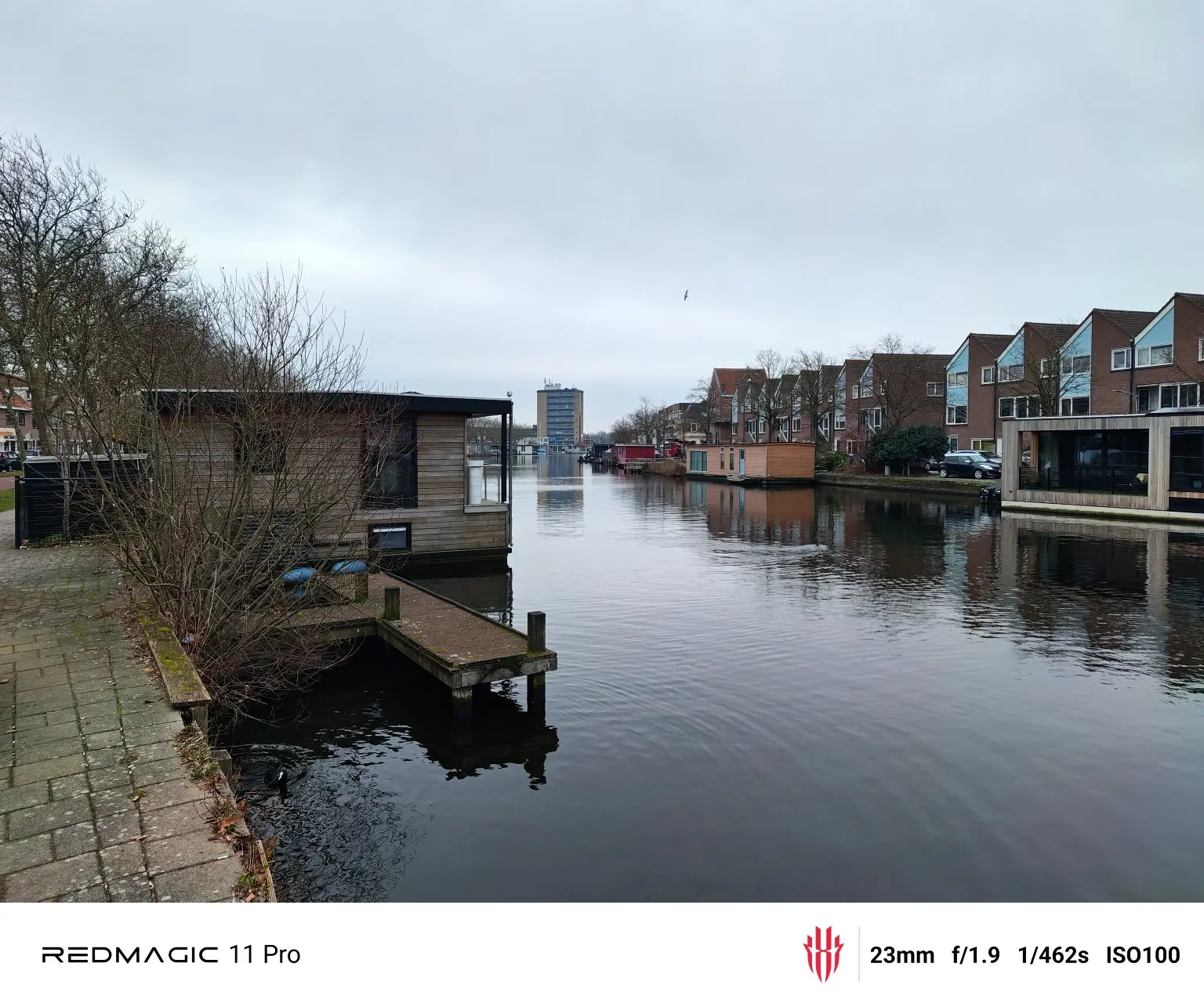
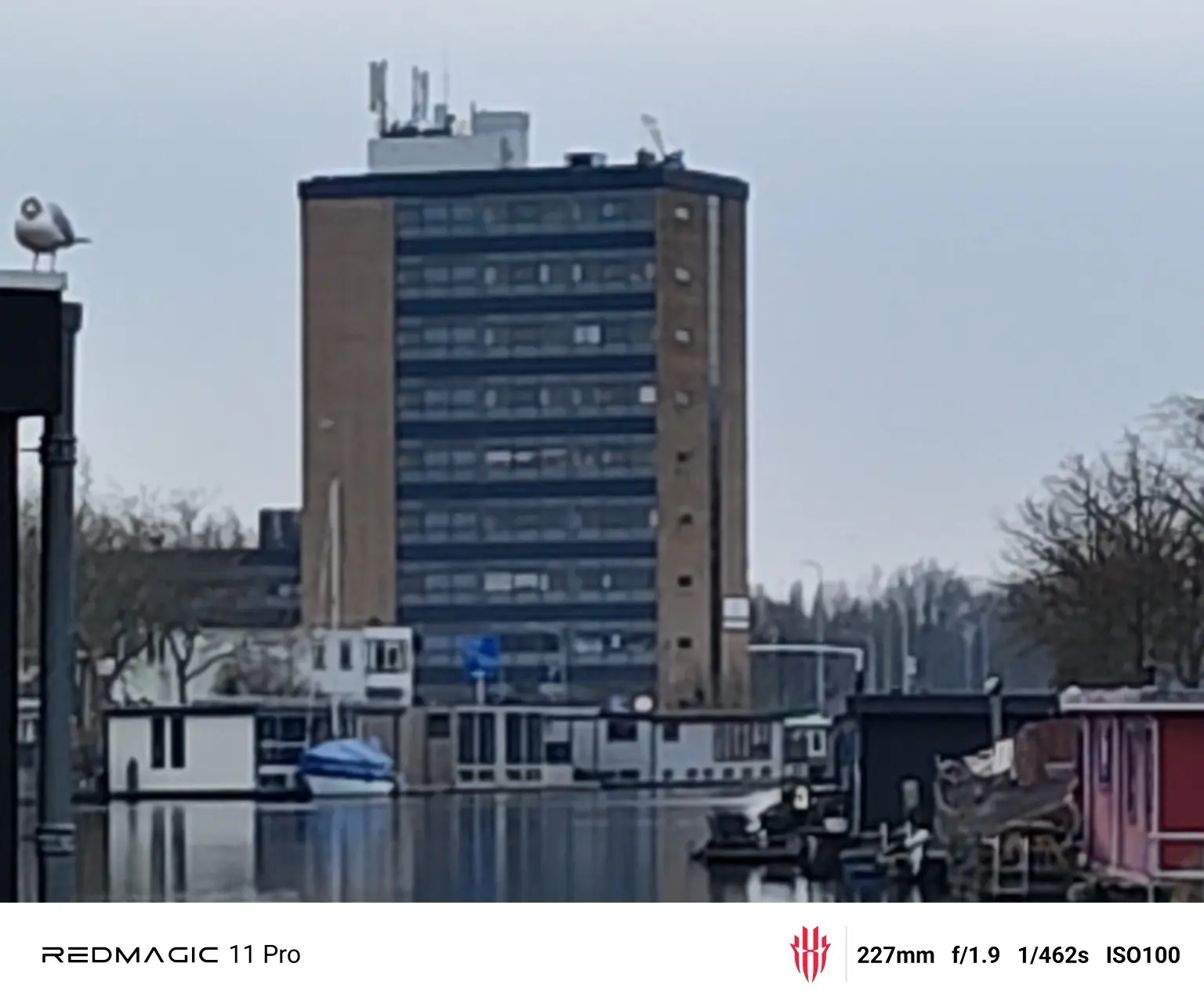

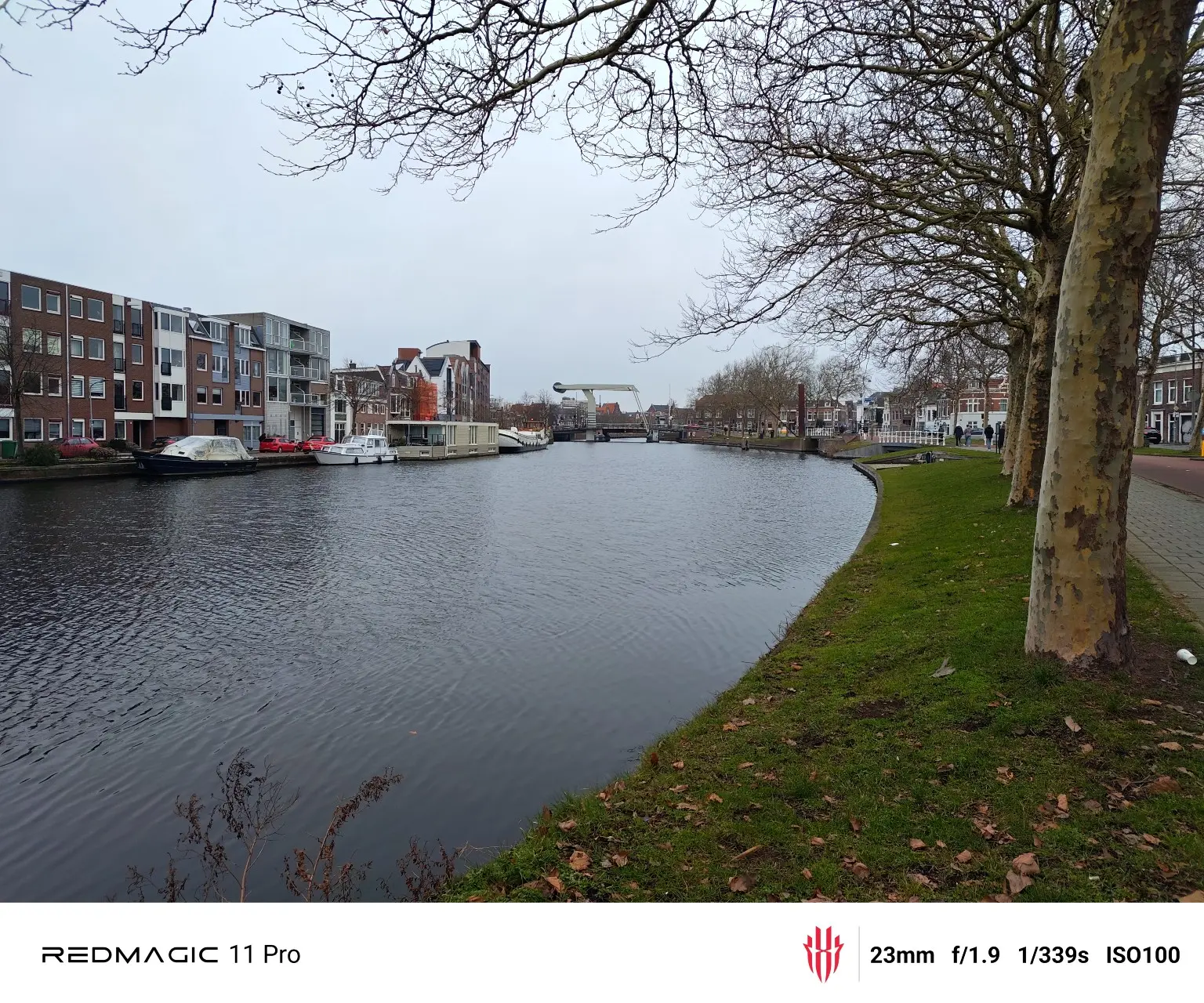
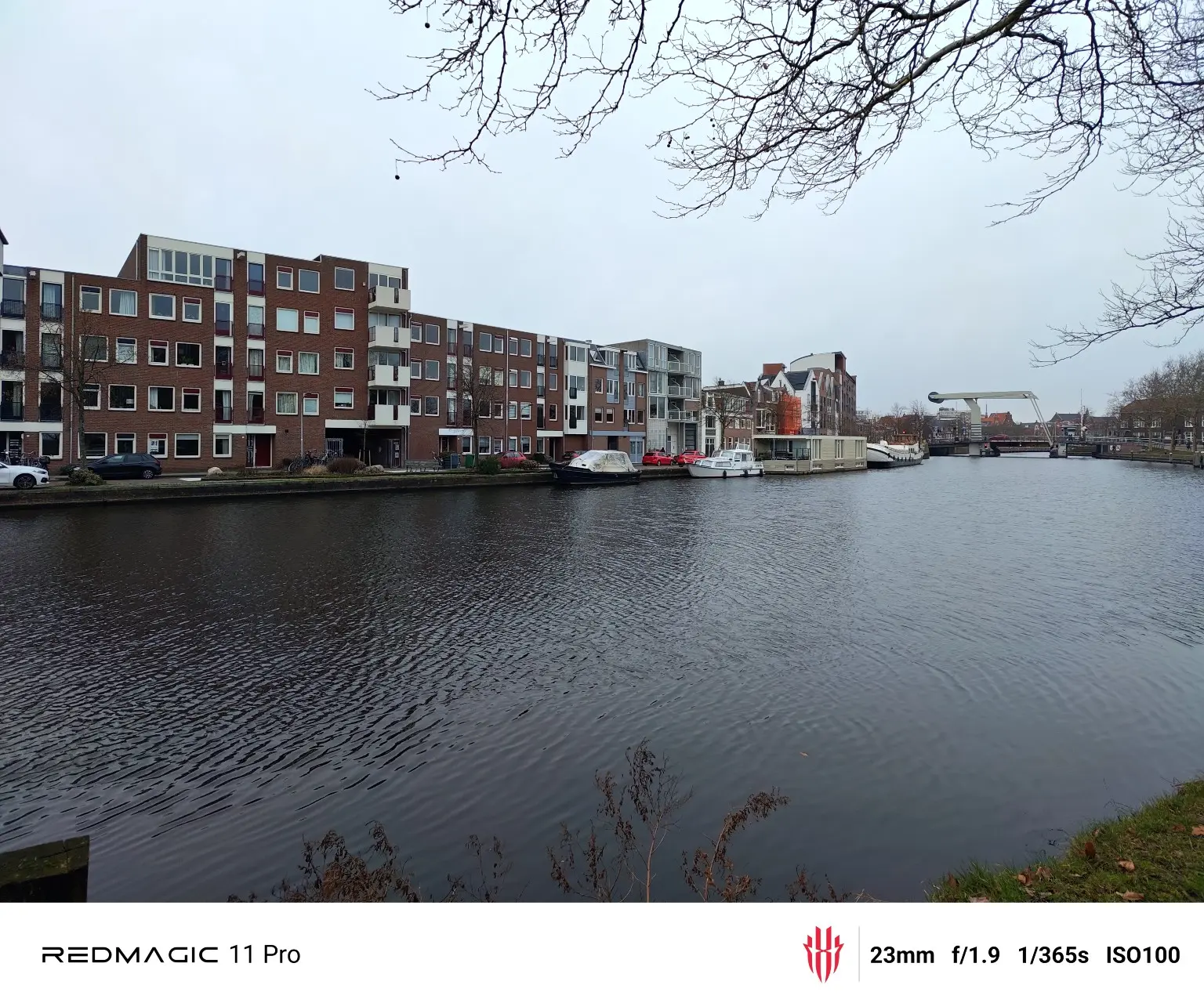
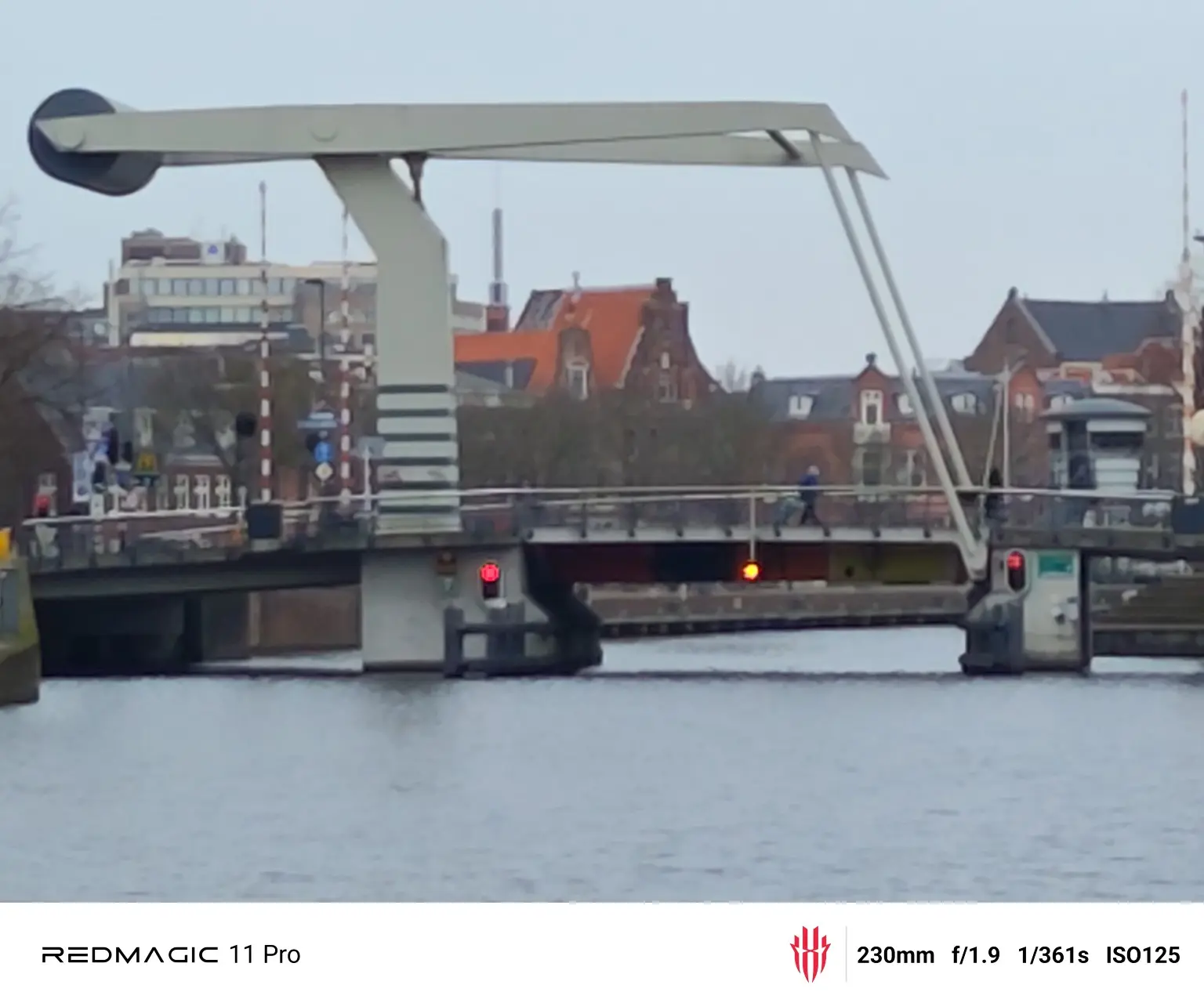
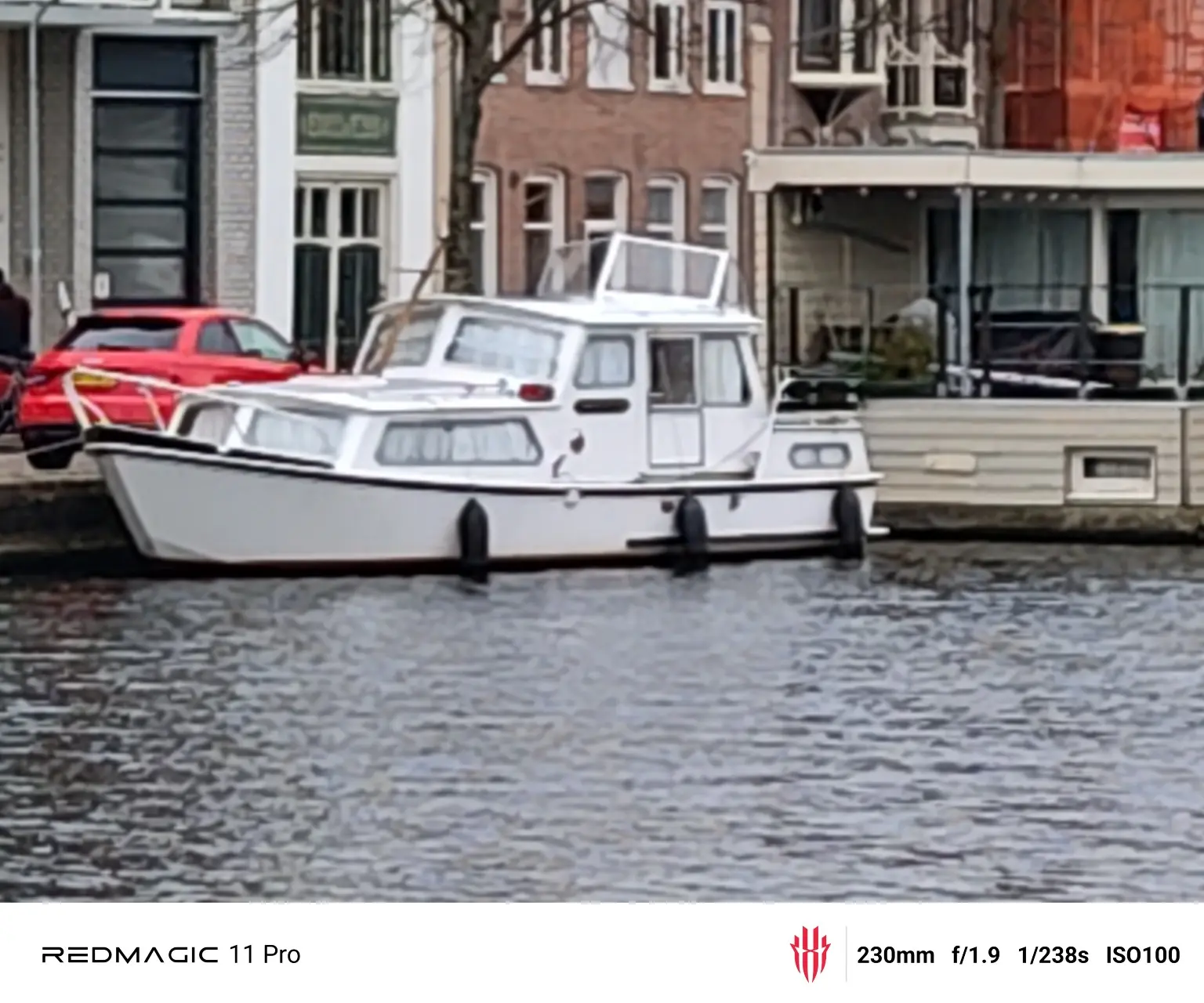
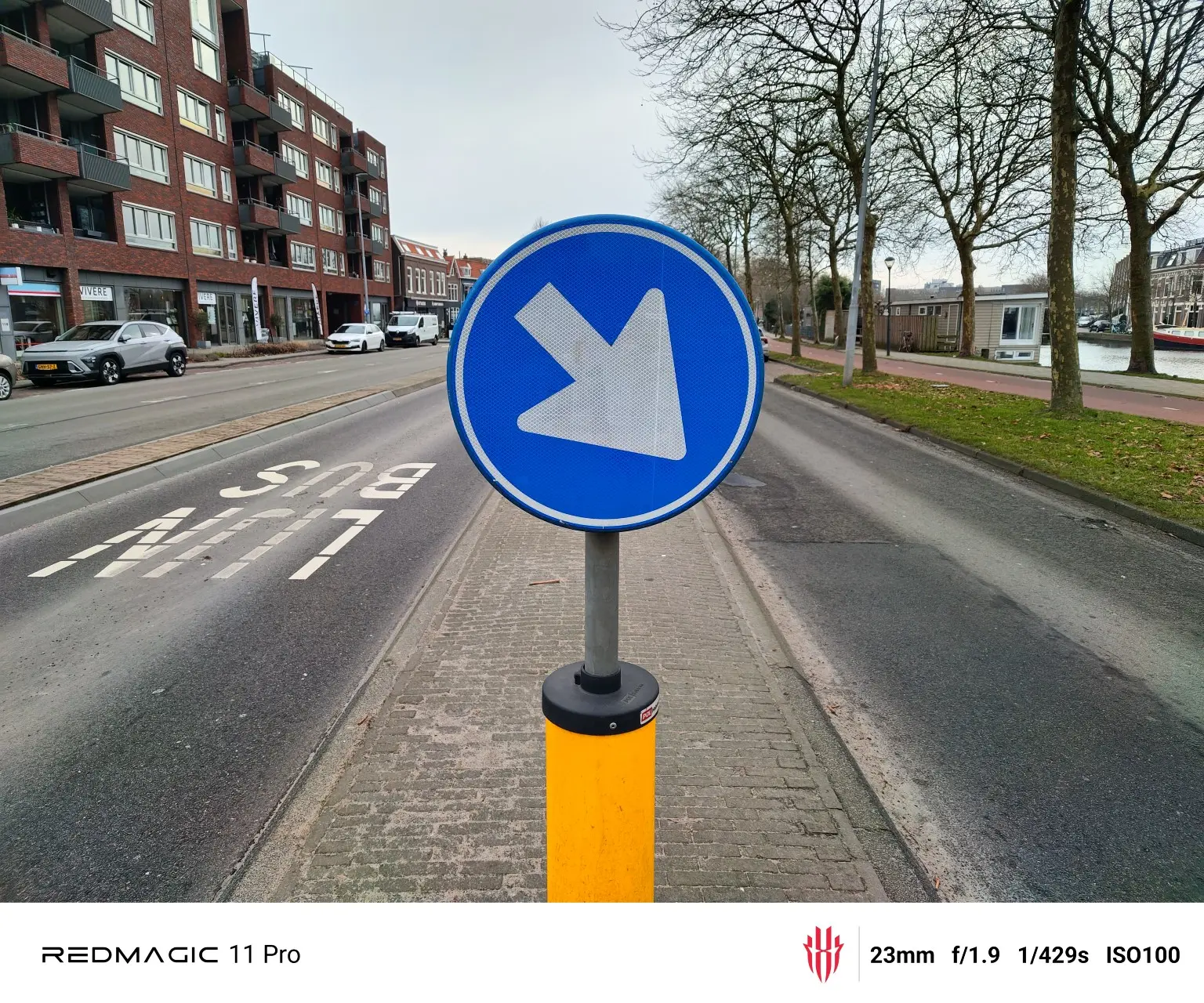
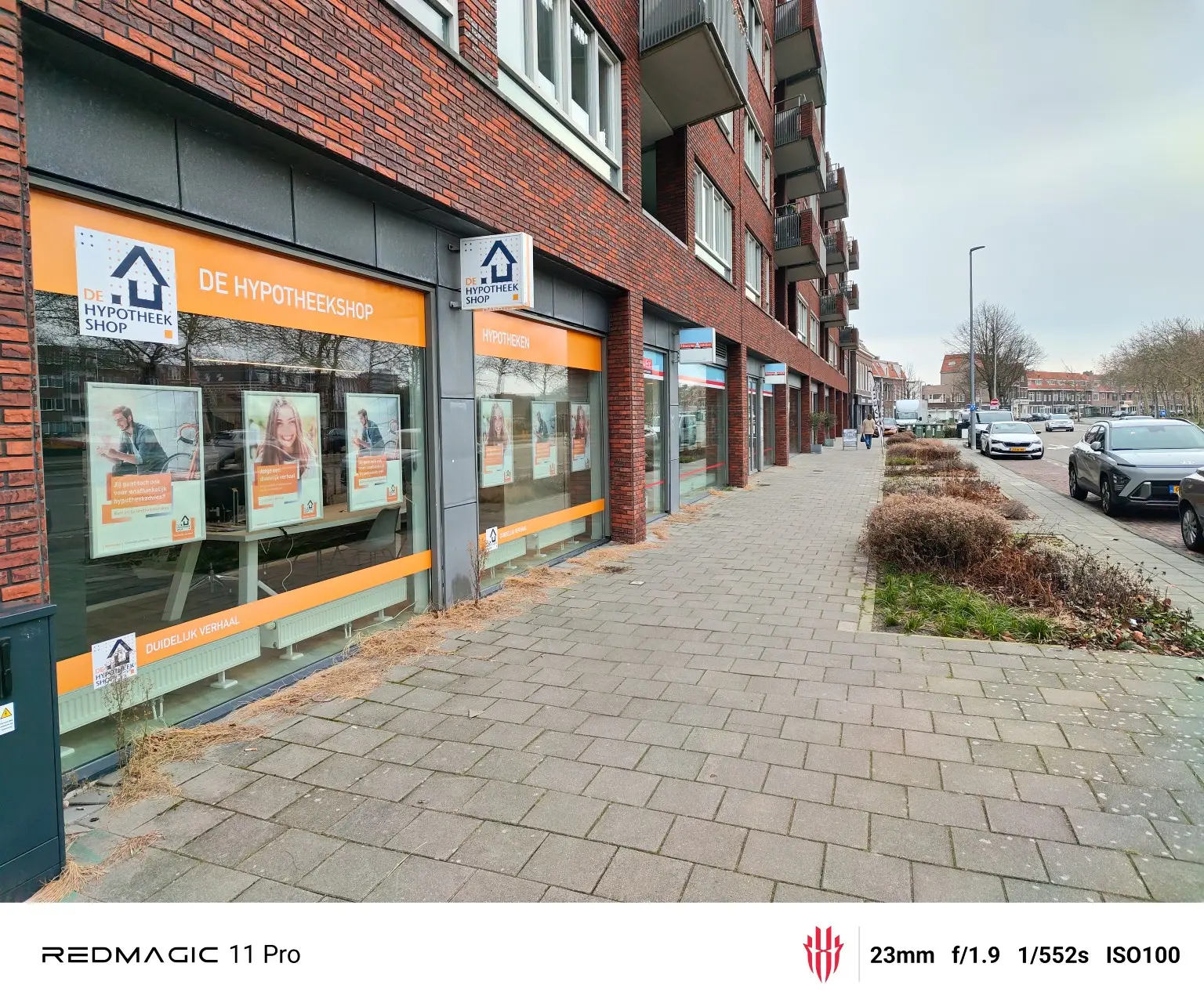
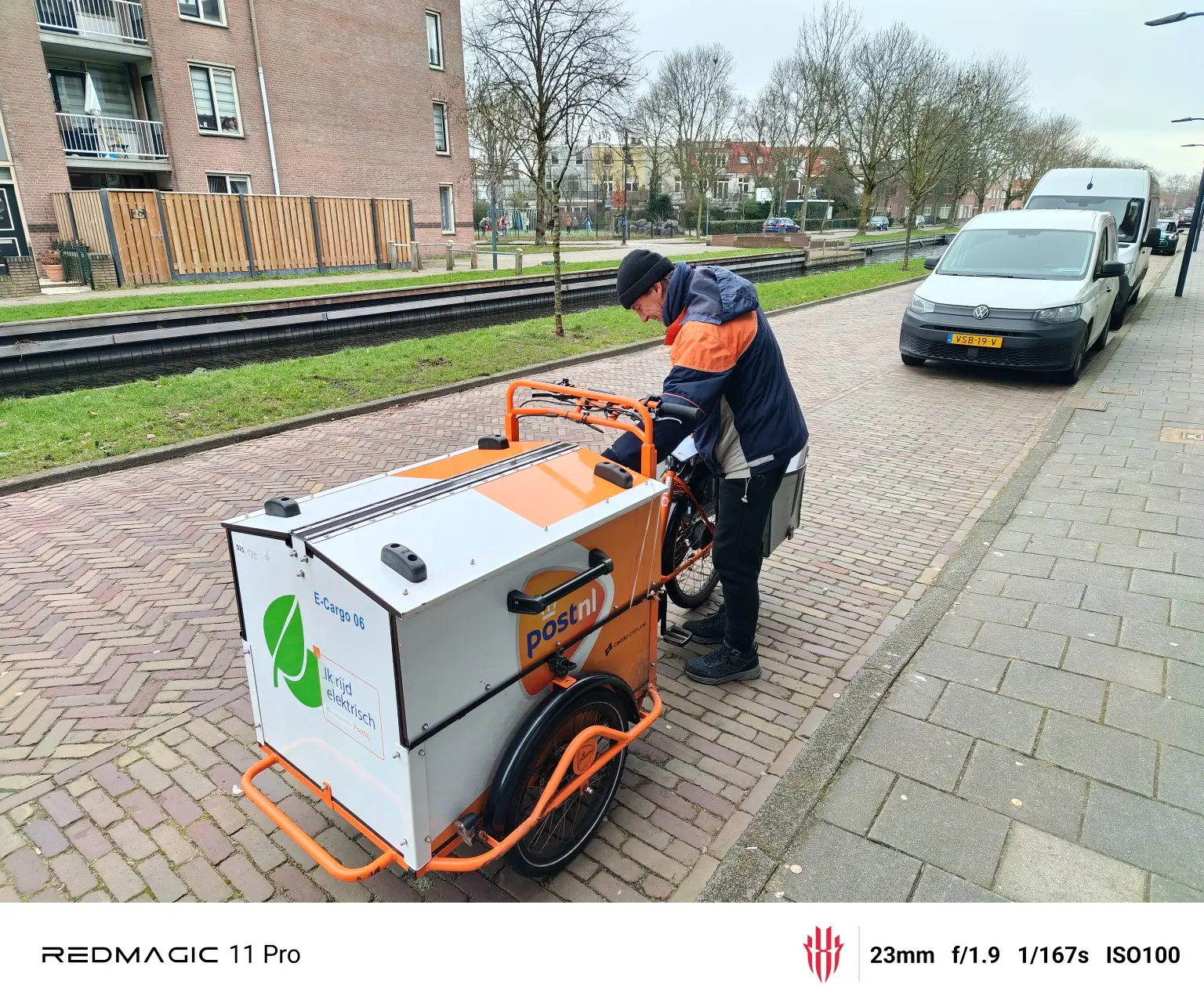
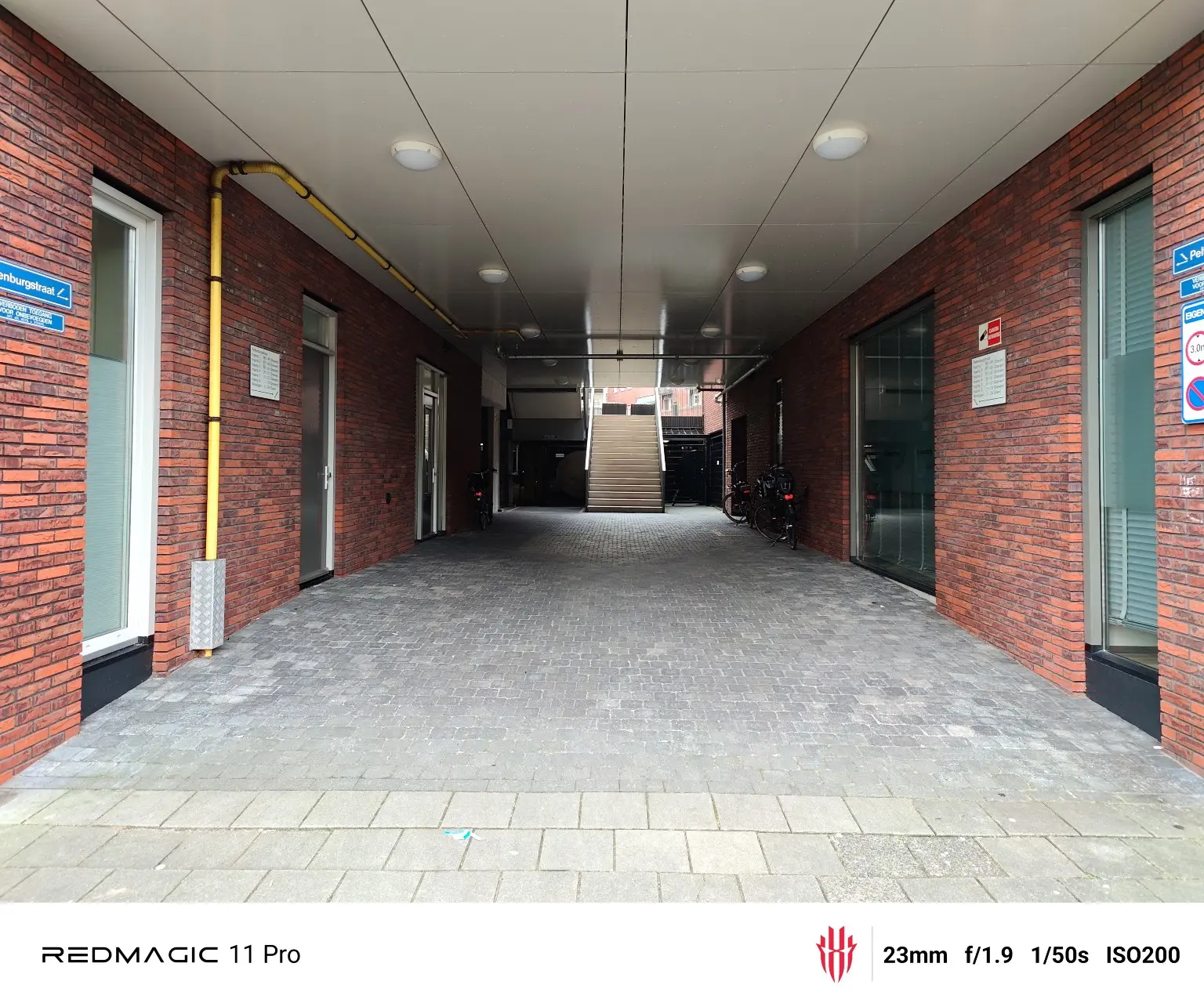
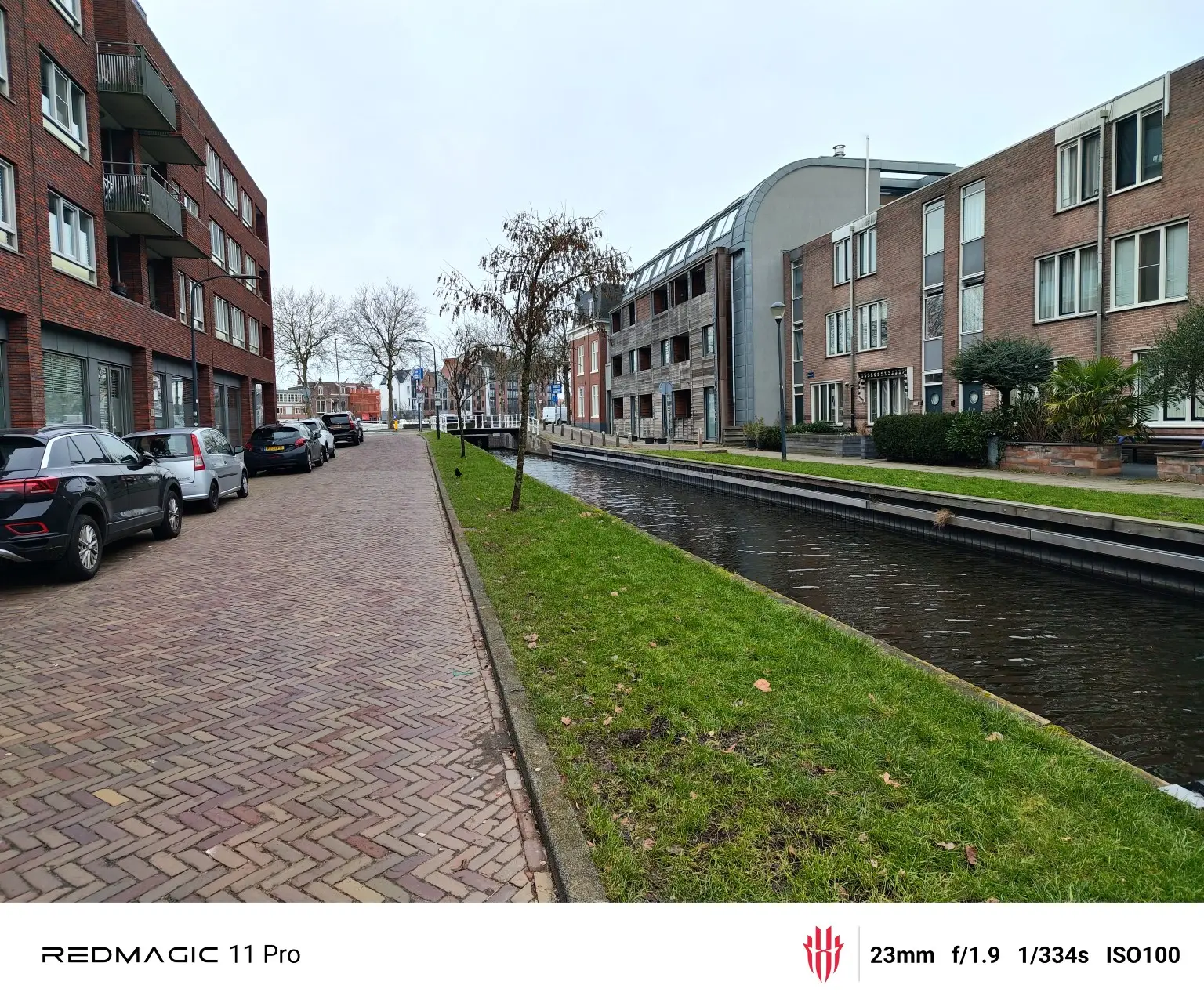
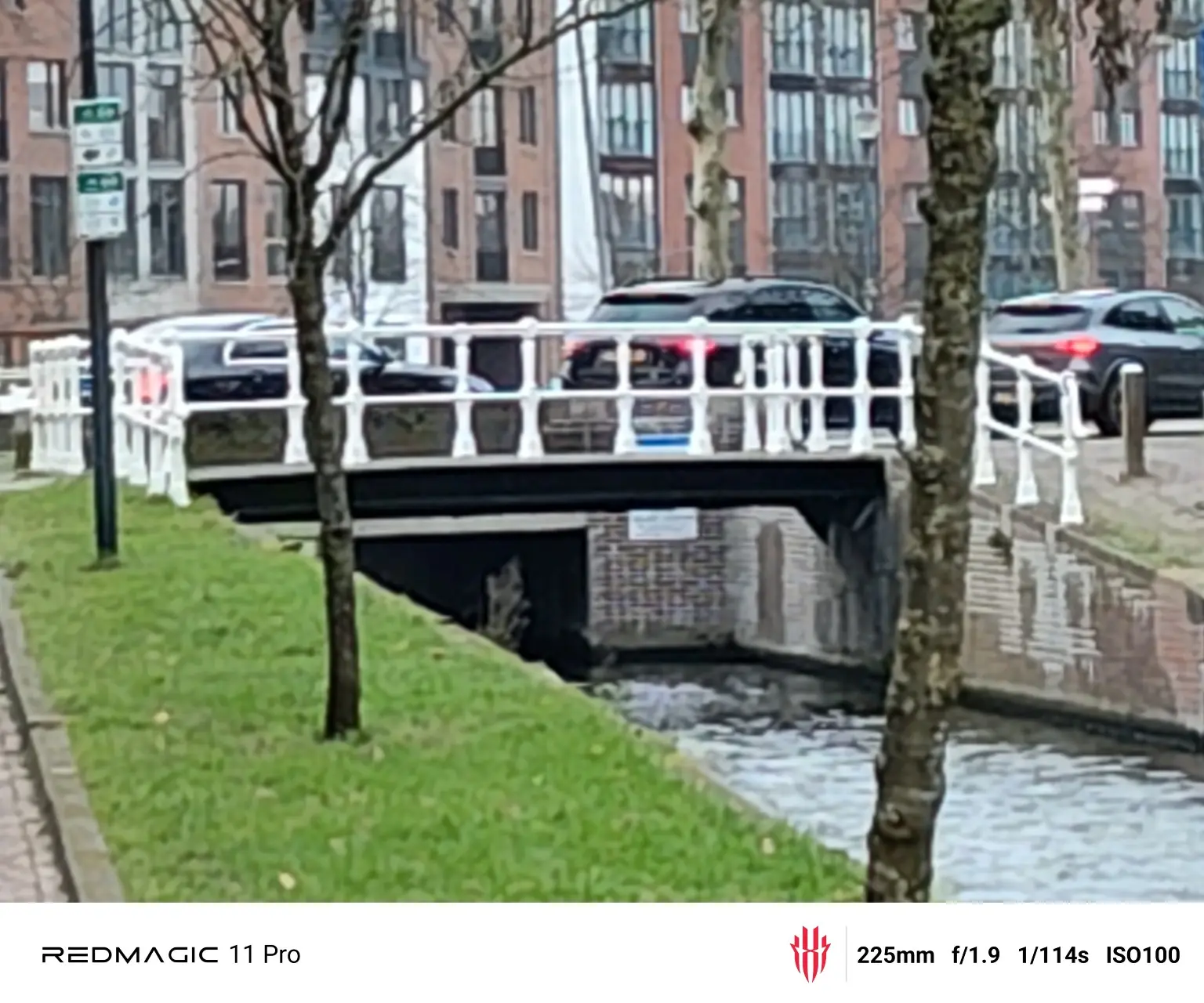
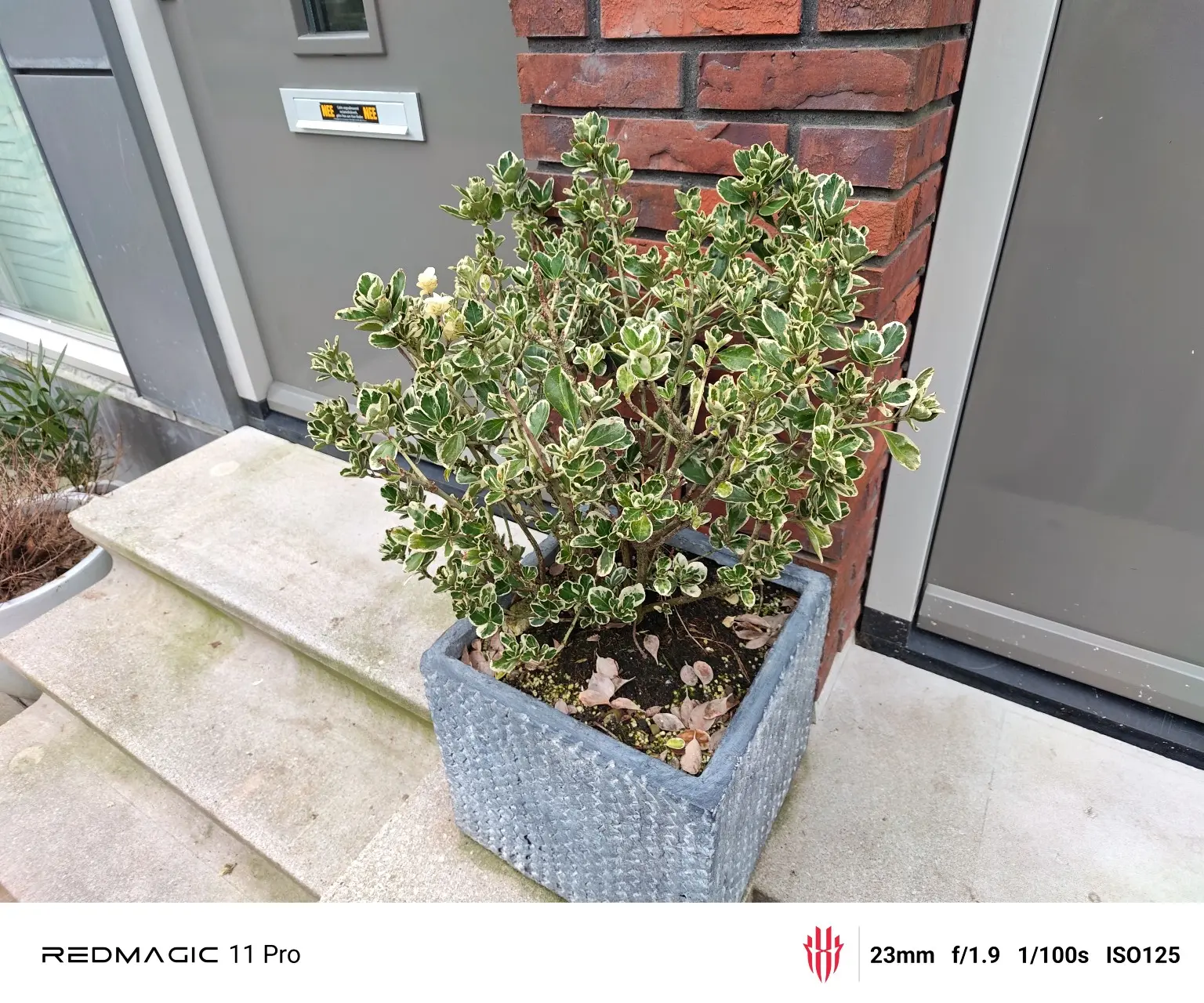
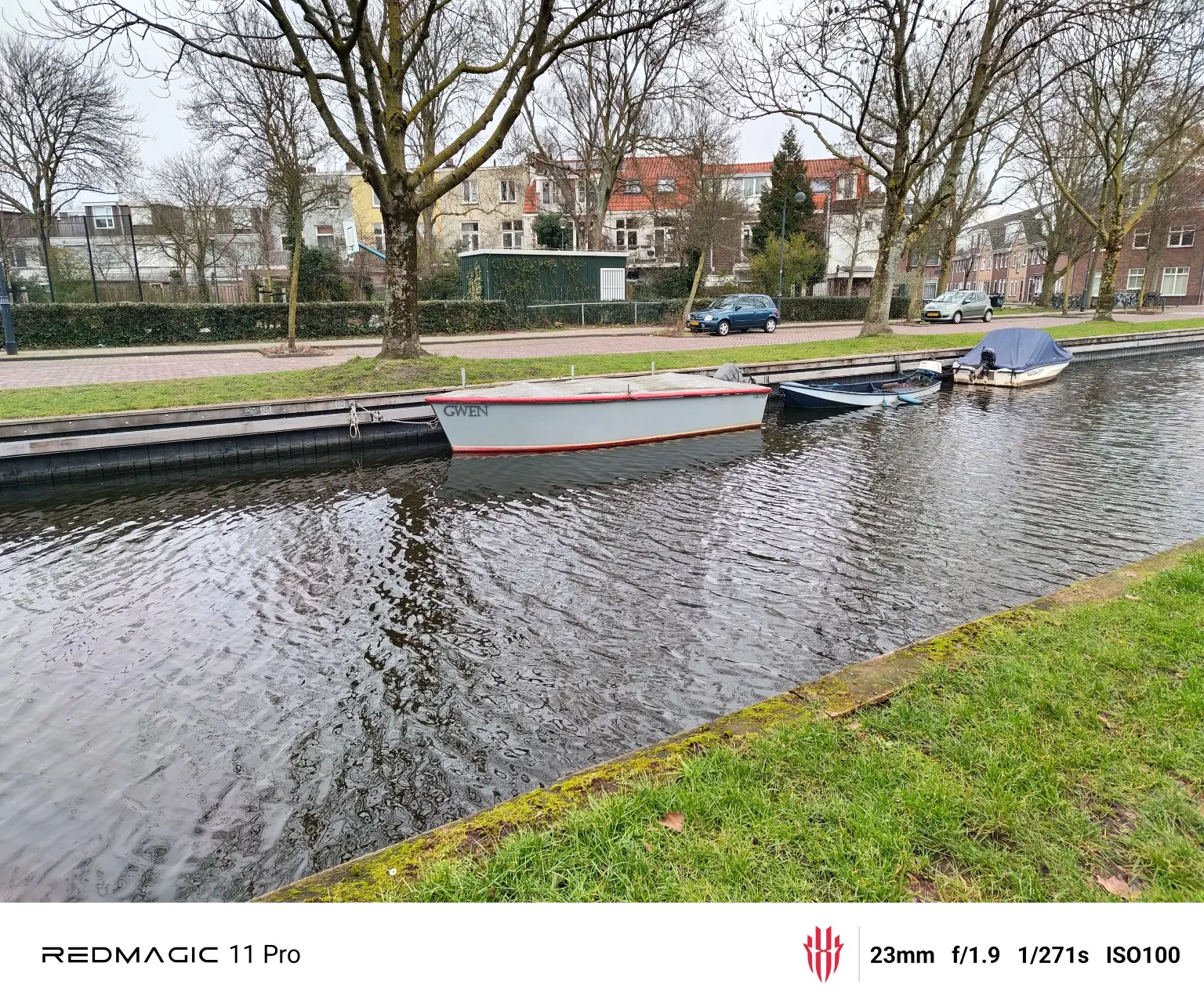
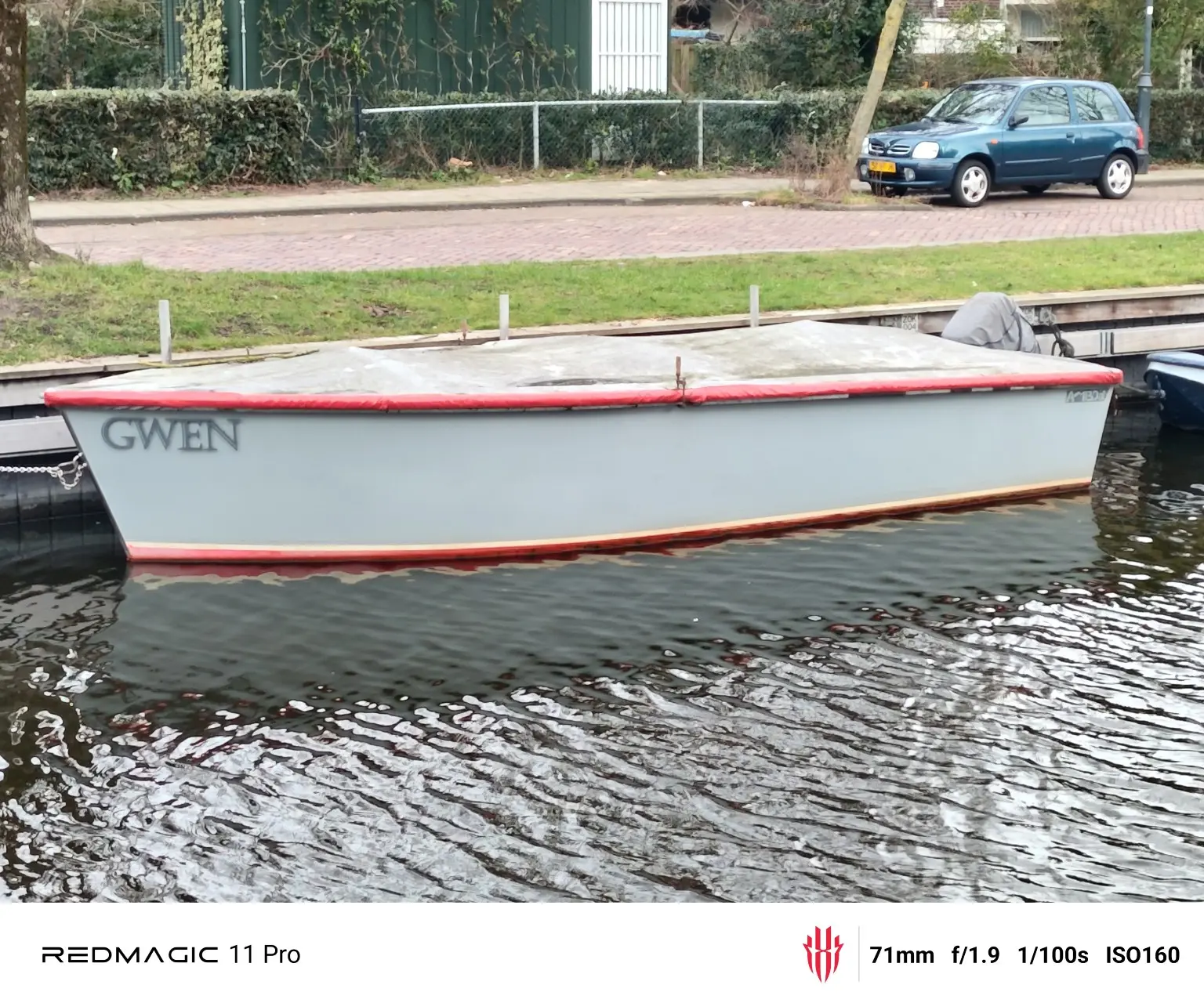
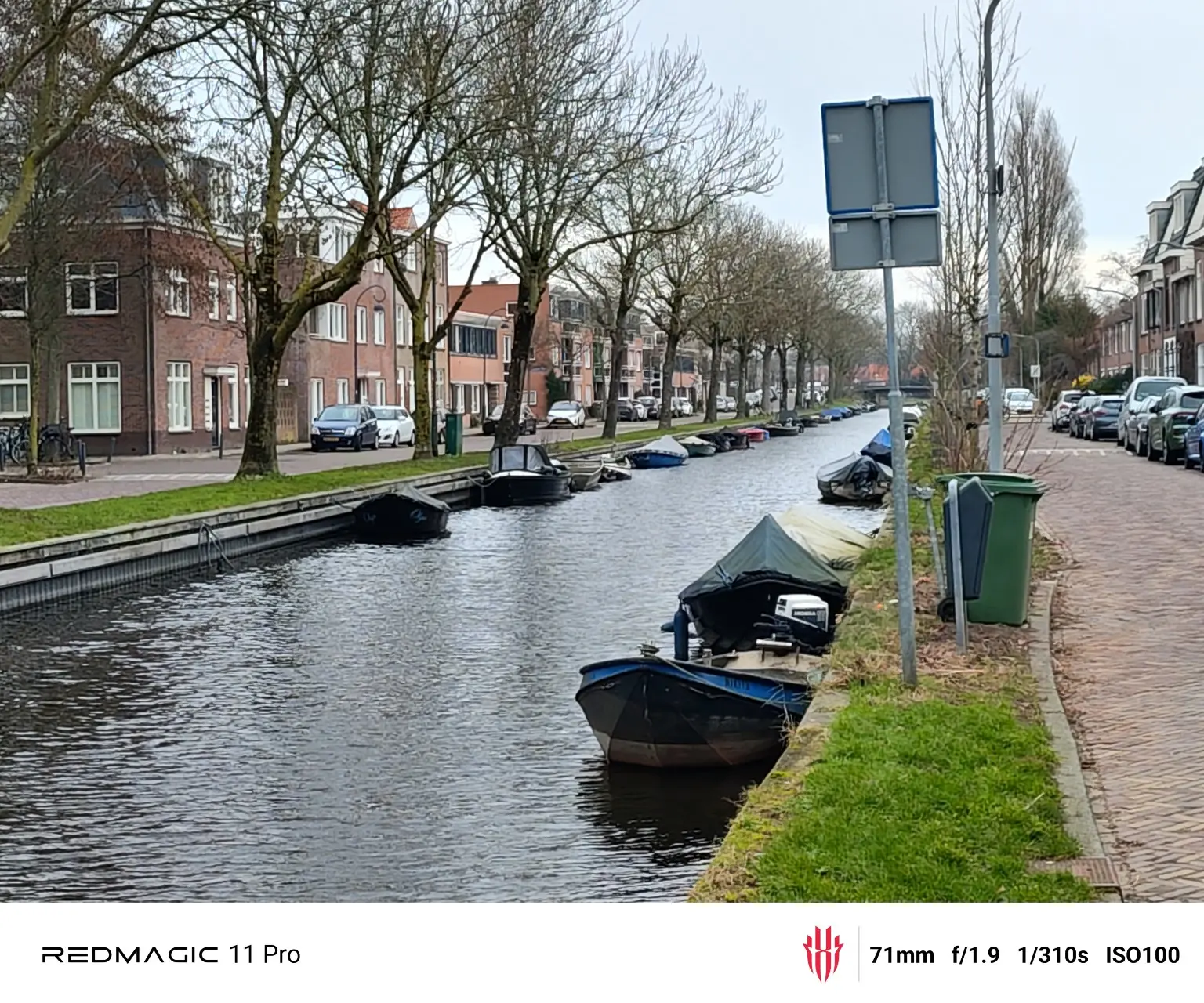
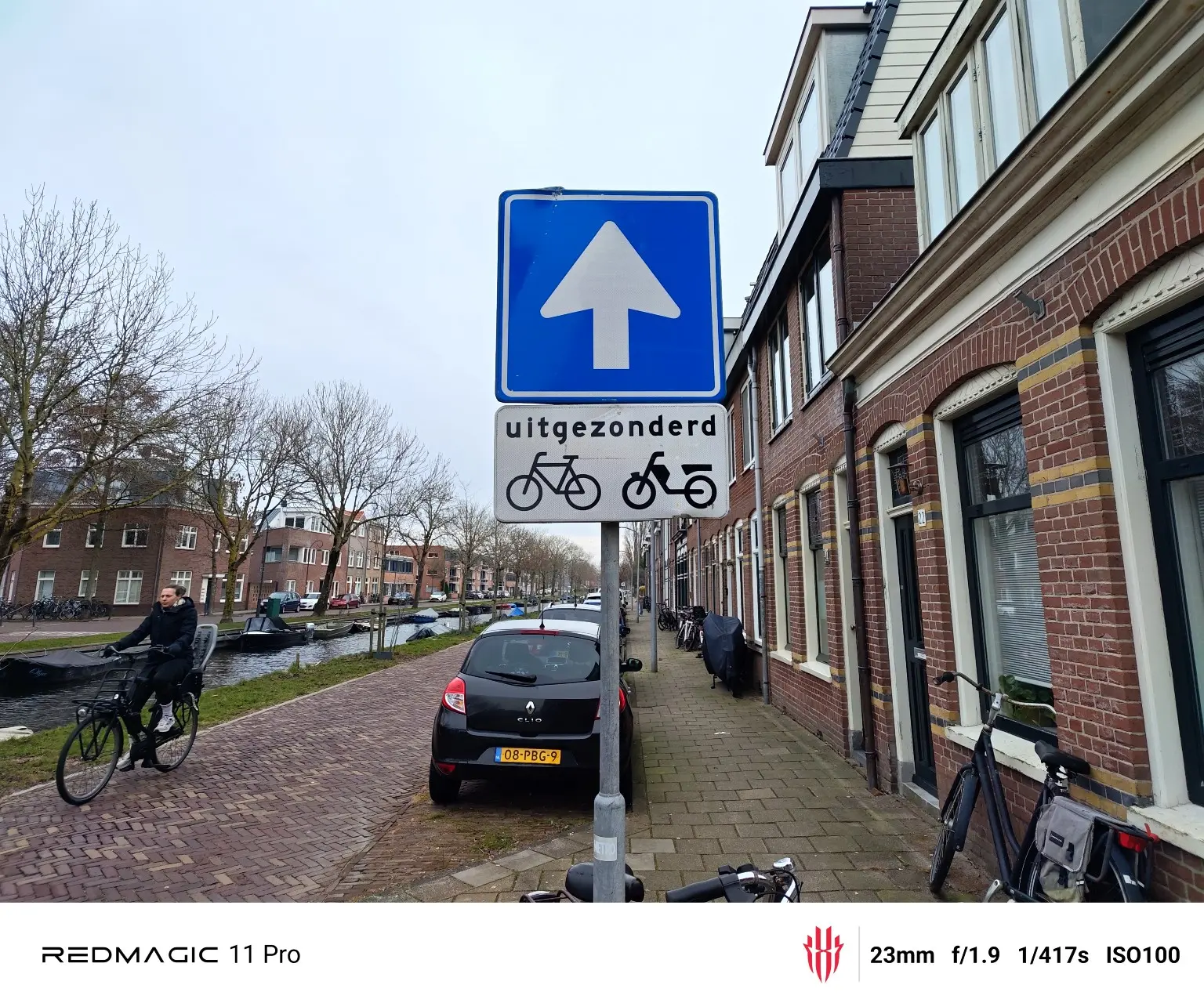
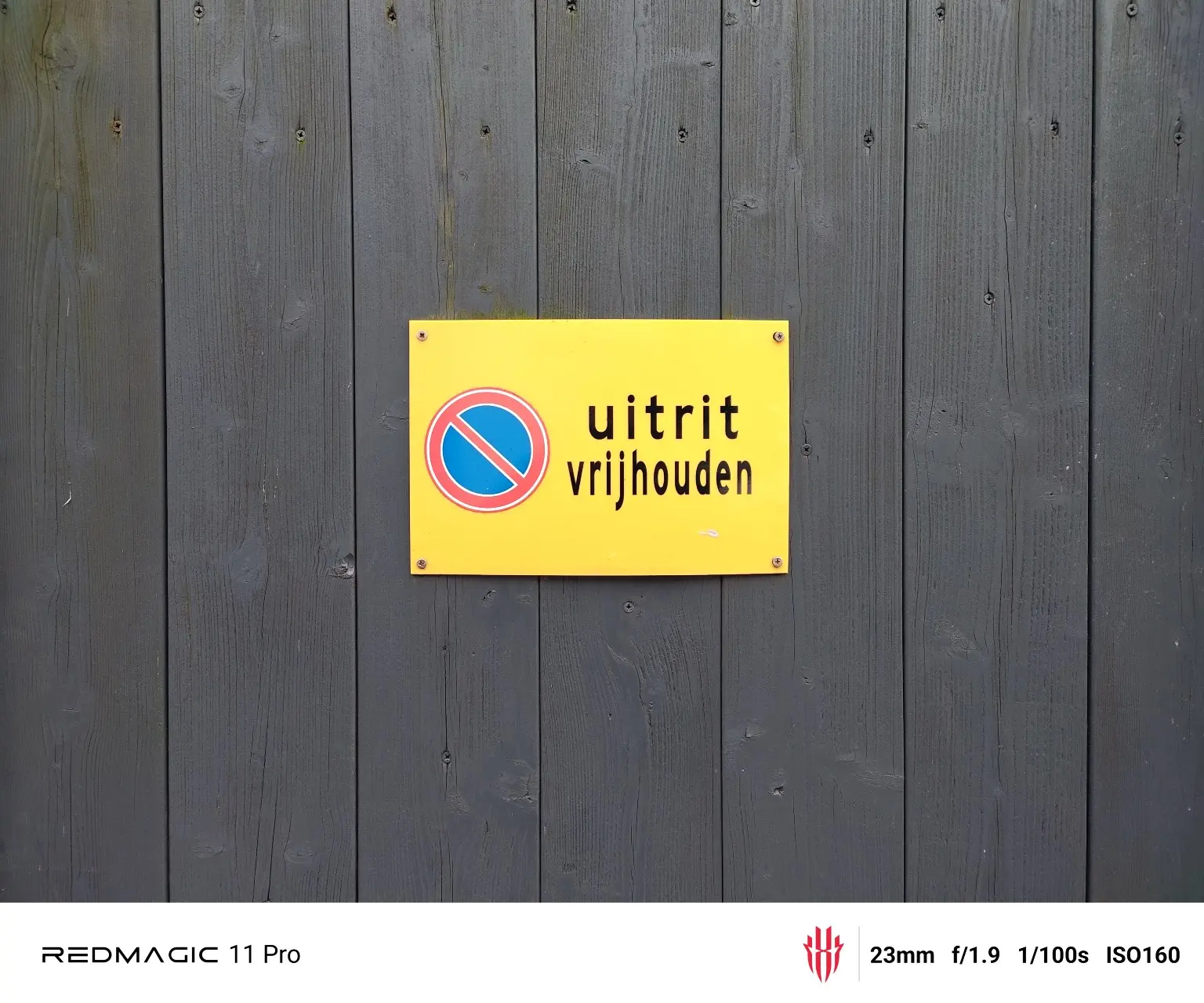
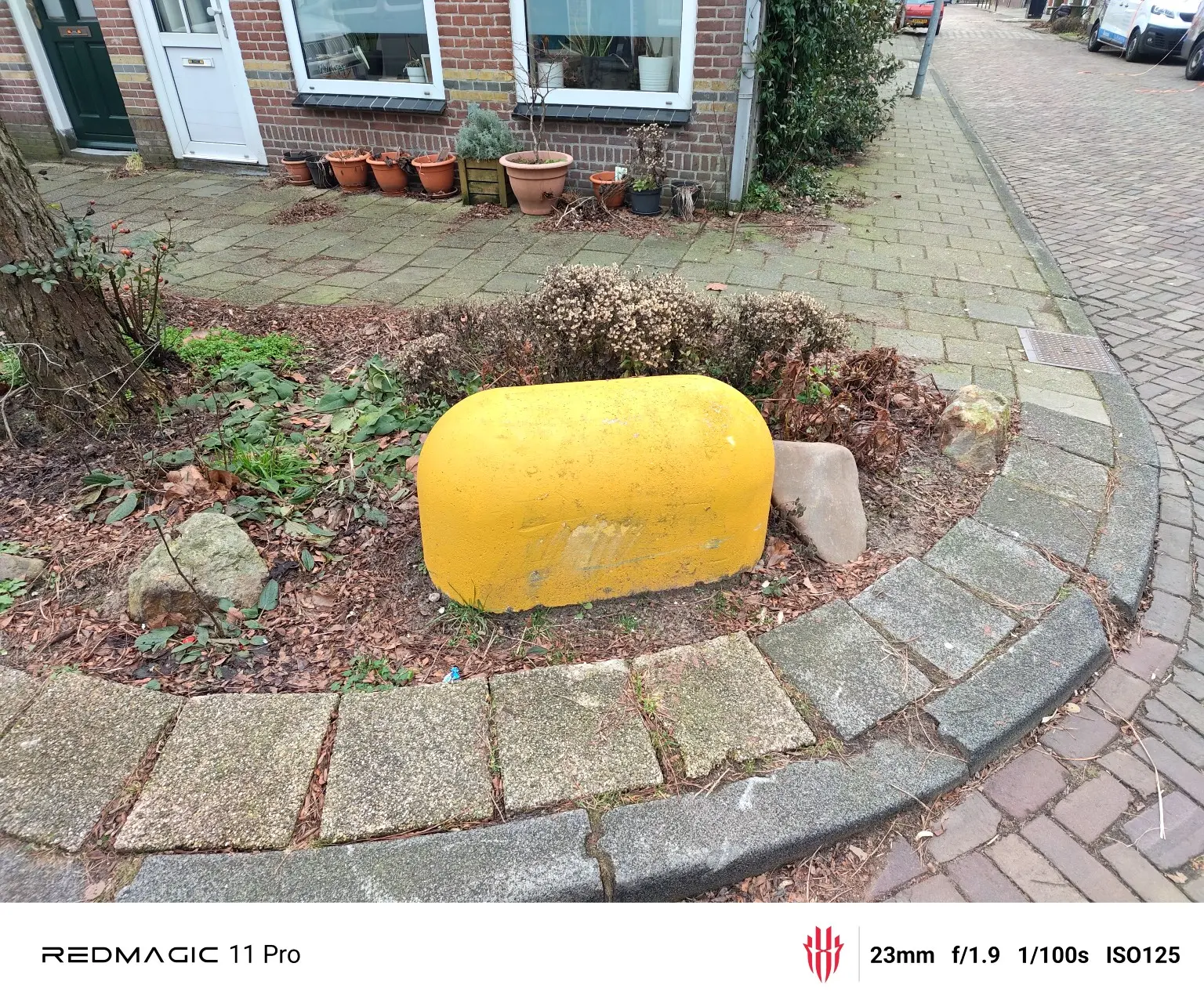
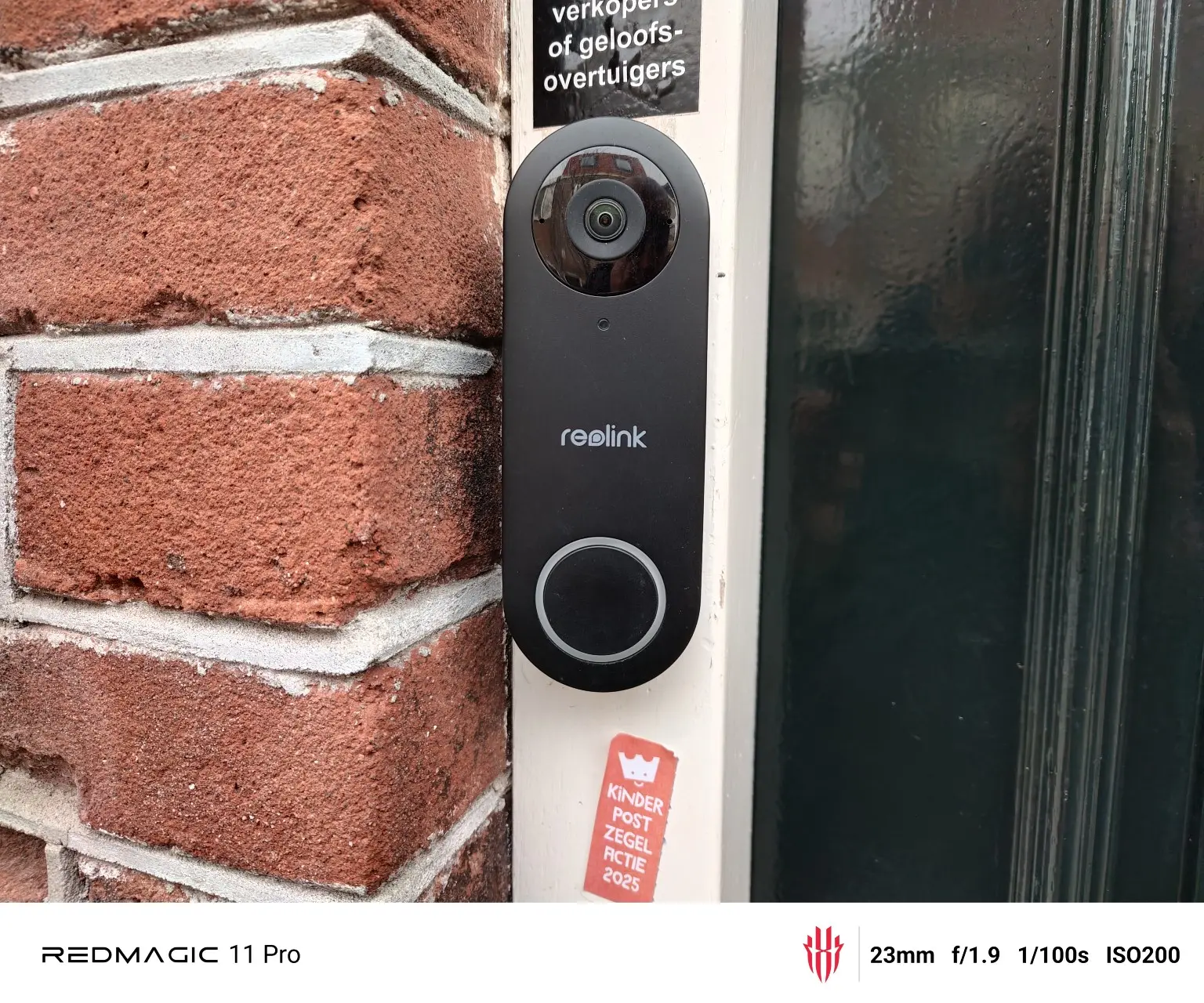
As you can see in the above photos, it was overcast out. I was quite impressed by the quality of daytime photos; the colors are not oversaturated, and the Omnivision camera array appears to be able to make great use of lighting, even when taking photos of scenes that would otherwise come out dark or with a lot of shadow. Annoyingly, the watermark is enabled by default, so prospective buyers, take note, this can be disabled in the camera settings.
However, as we also discovered with the REDMAGIC 11 Air, and 10S Pro, that all starts to break down when you use the zoom function. The REDMAGIC 11 Pro supports up to 10X zoom, and when utilized, even on a clear day, the result is a blurred mess of an image. To get a decent result using Zoom, you have to be happy utilizing no more than 5X digital zoom for a crisper image, such as the example of the boat (named GWEN) that I took, and did not use full zoom on.
As long as you aren't making use of full zoom, the photos come out clear as day, and I was really impressed with the quality of some of the scenery shots.
Night samples
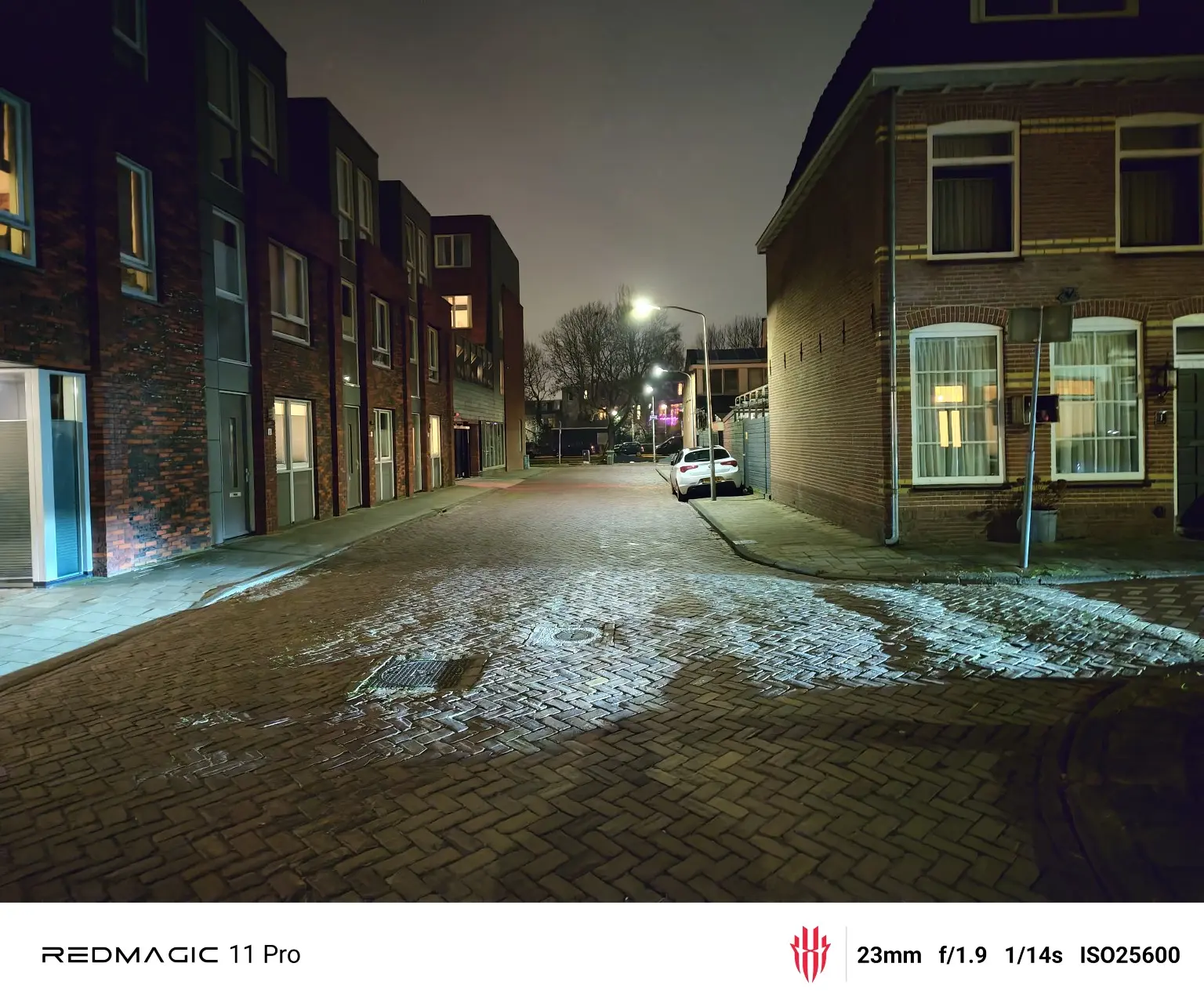

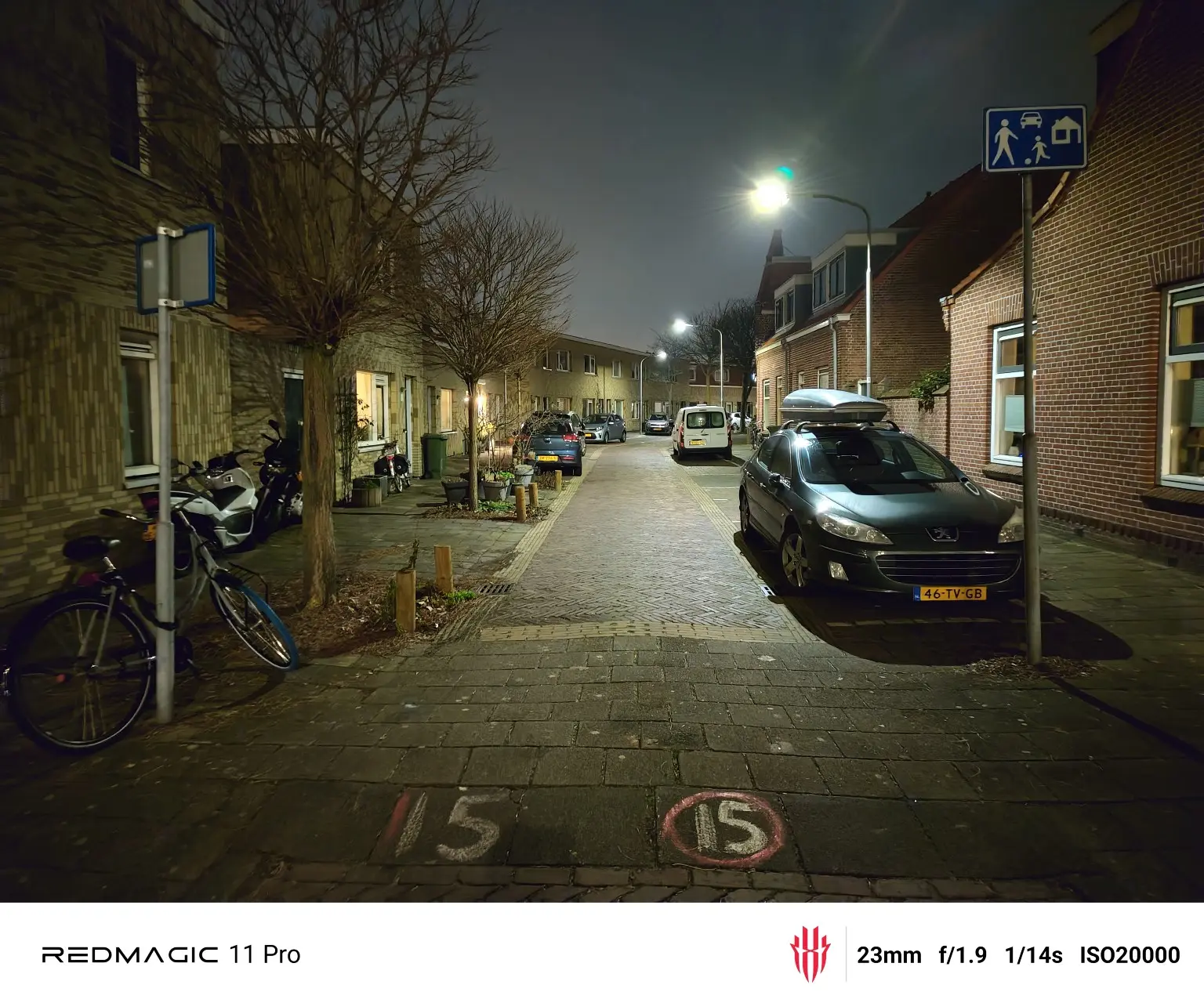
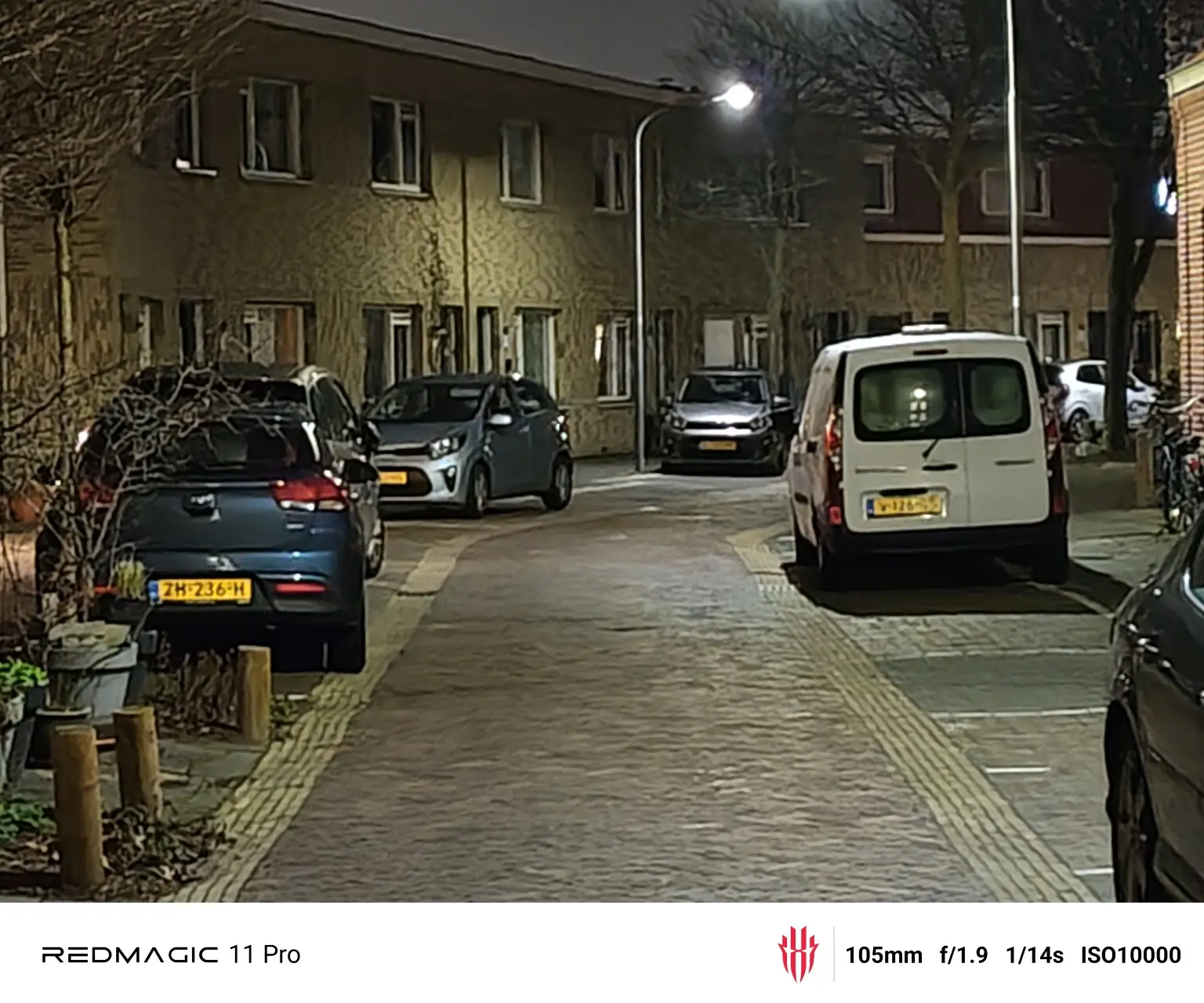
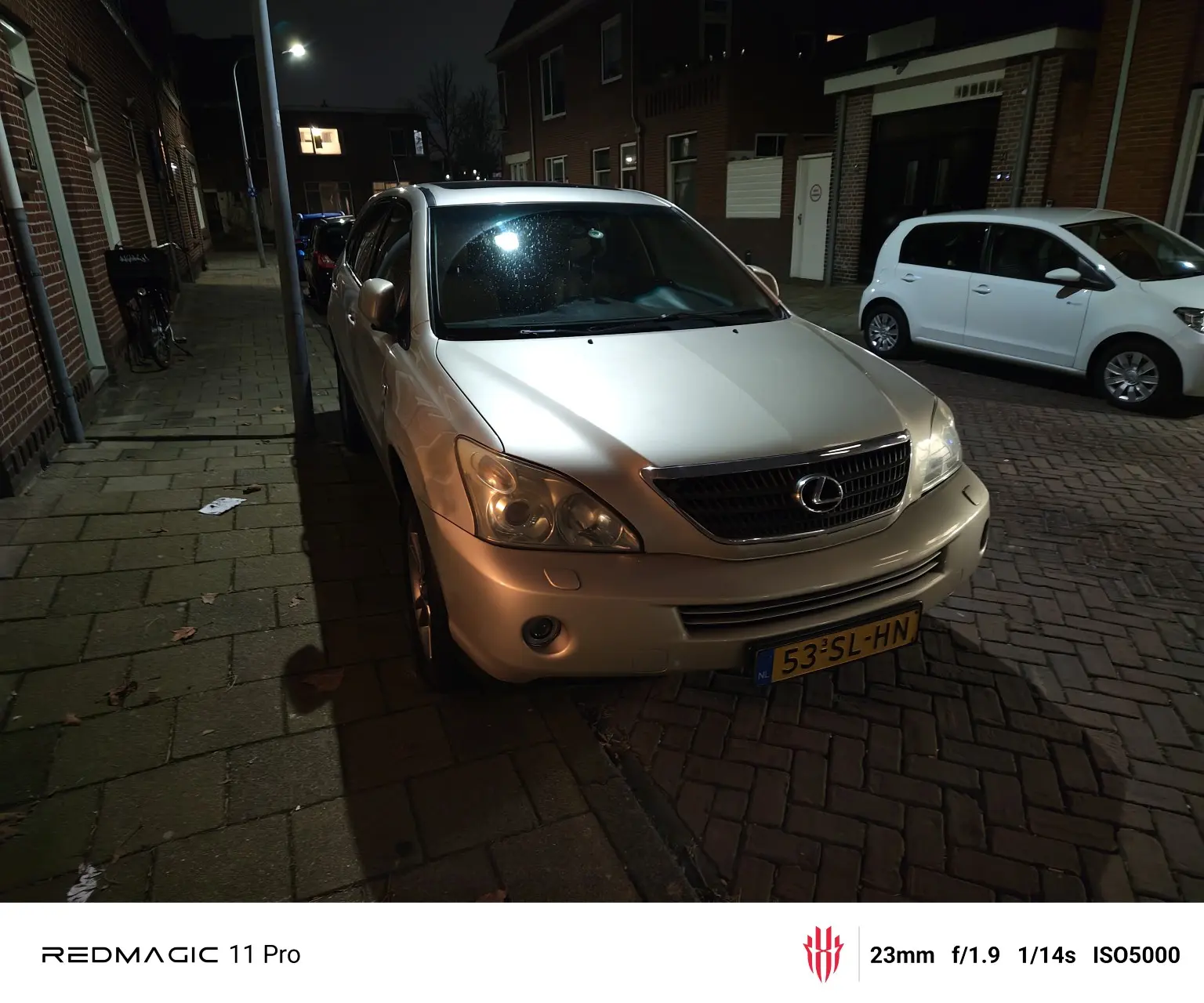
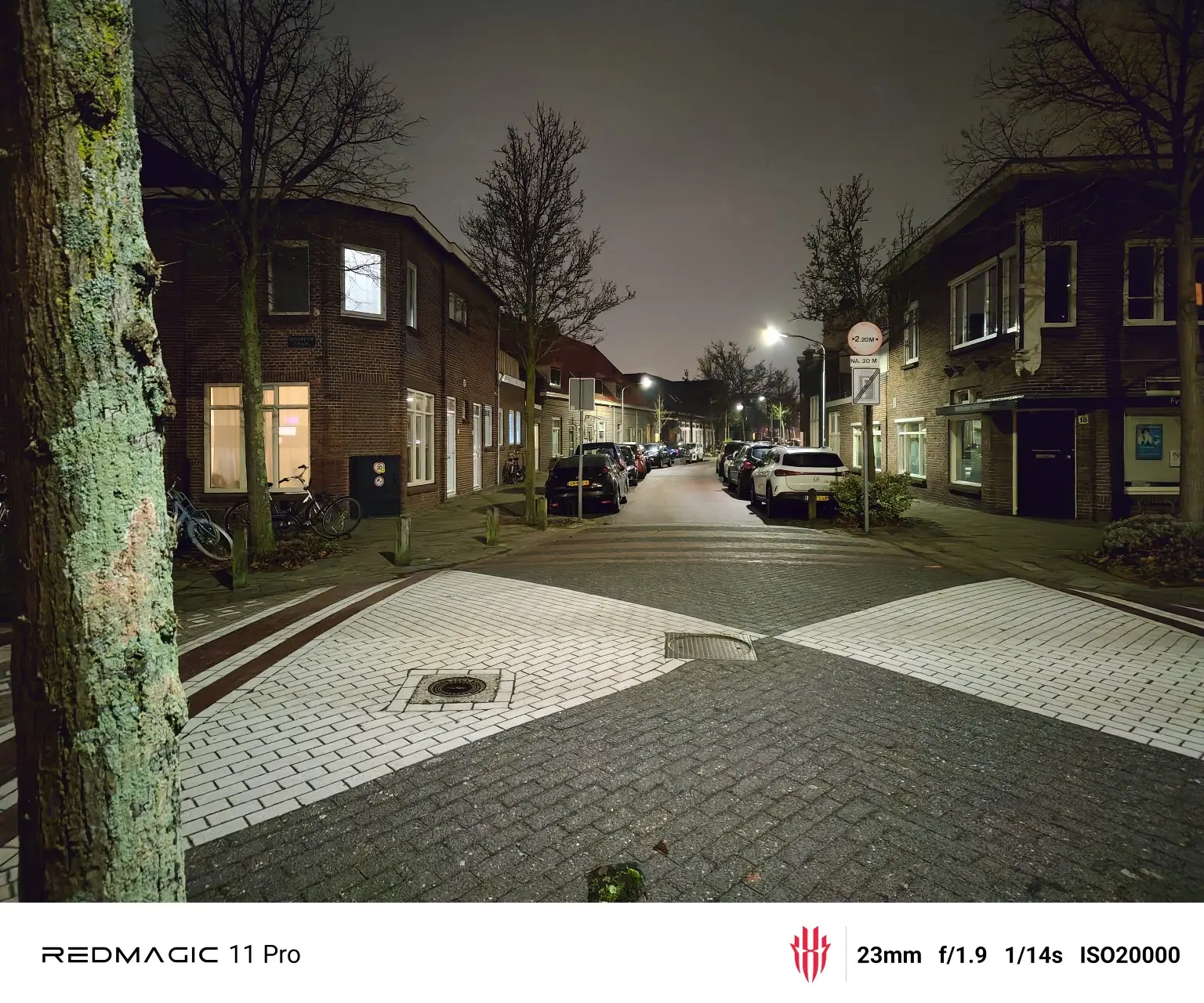
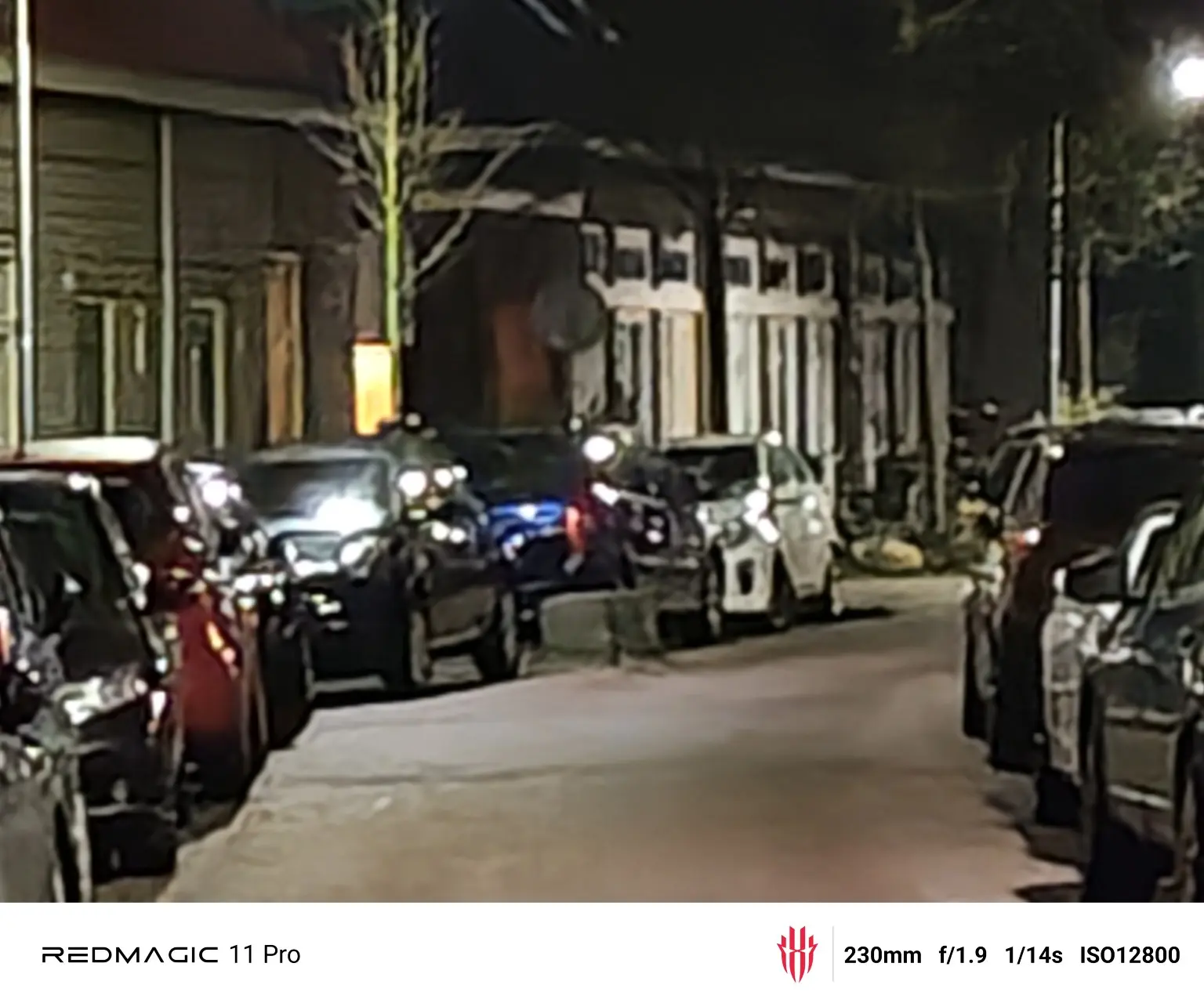
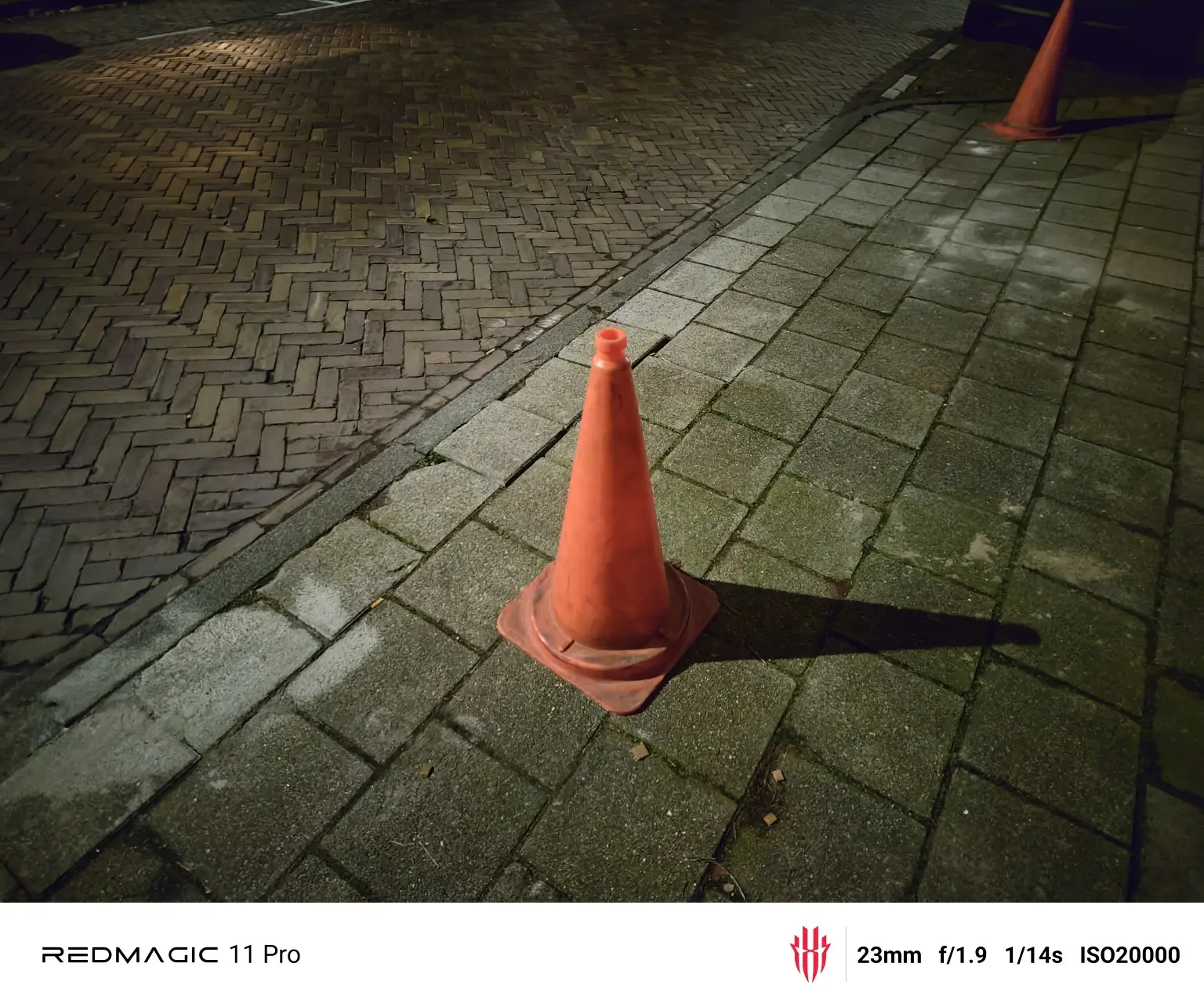
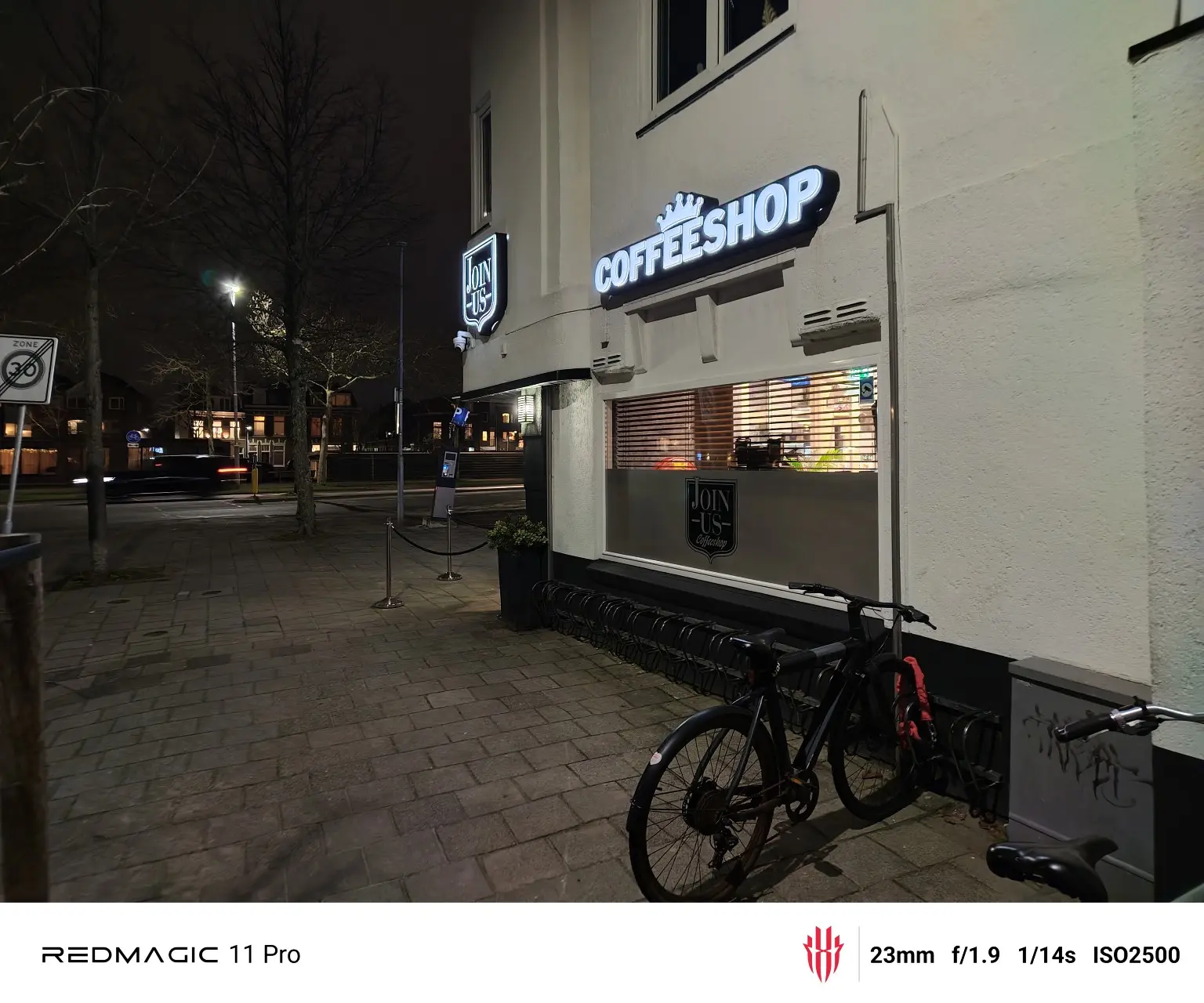
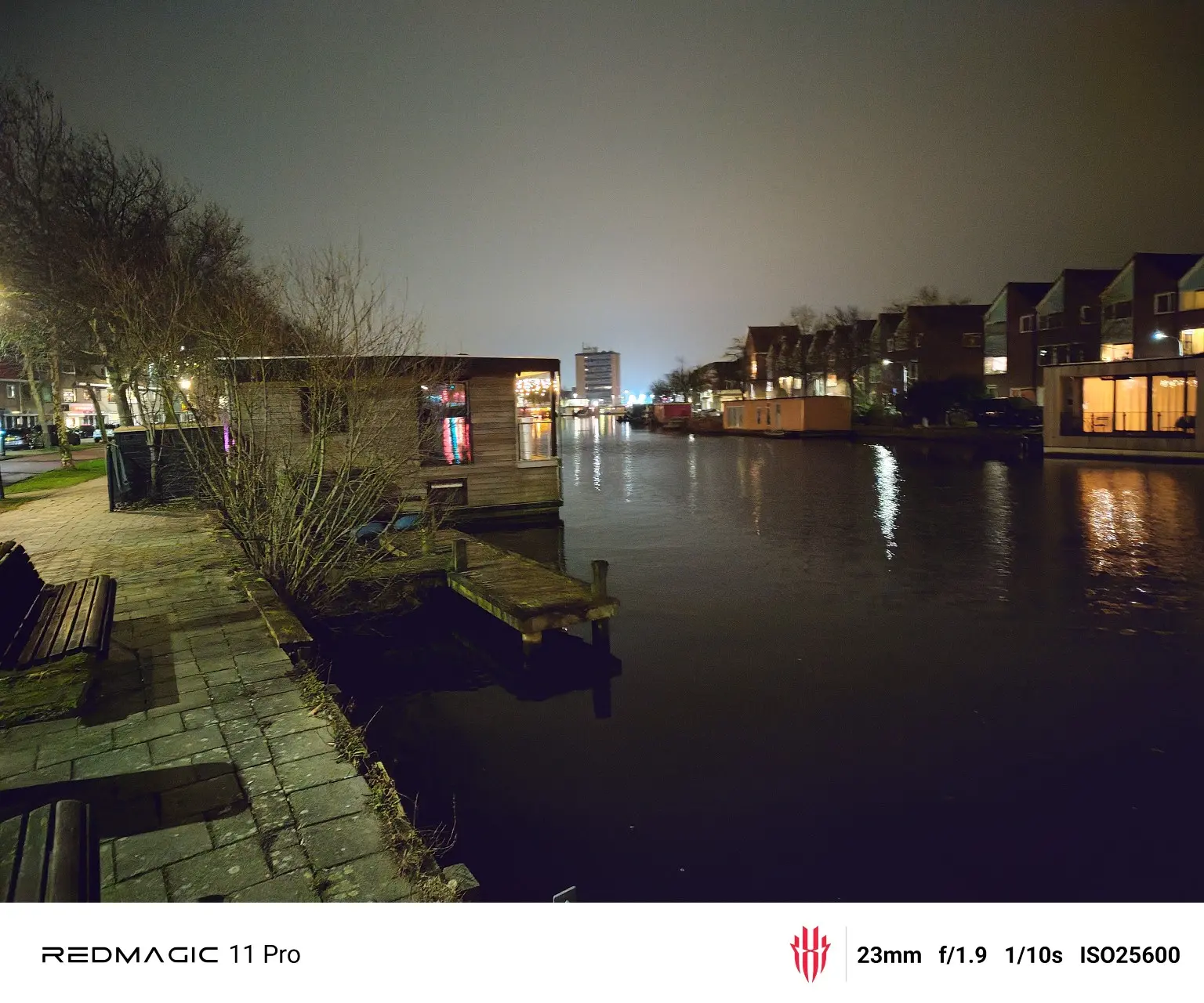
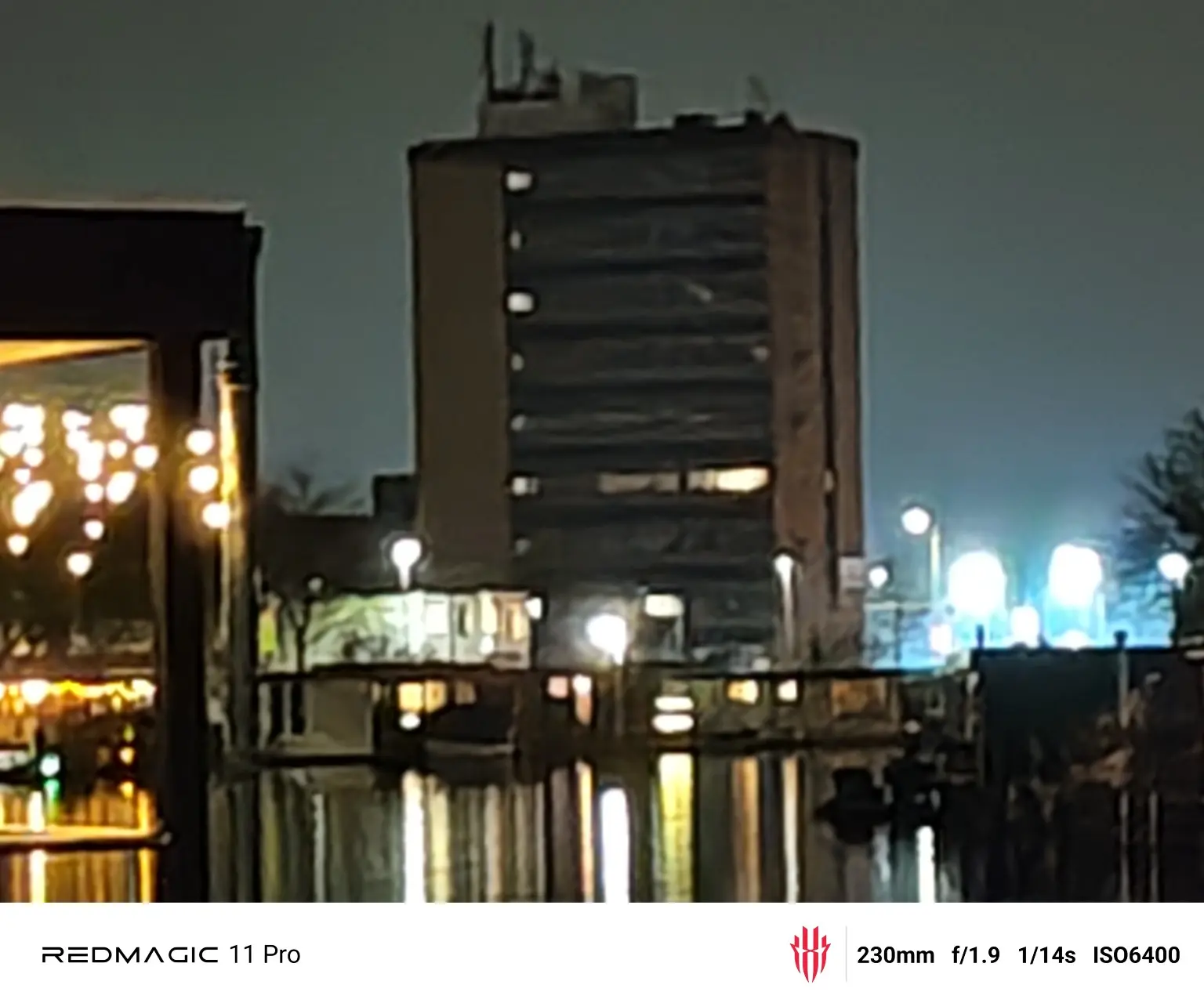
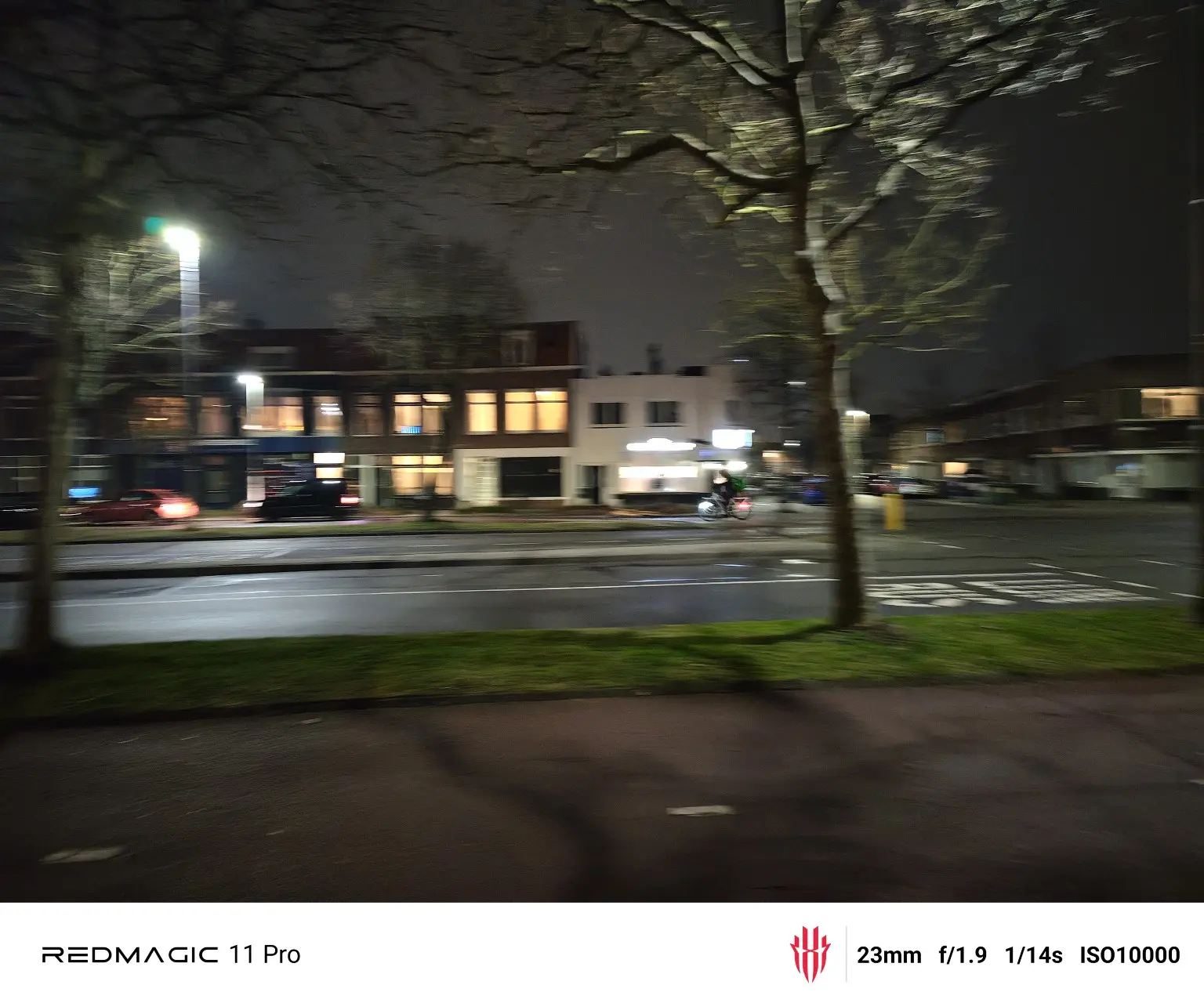
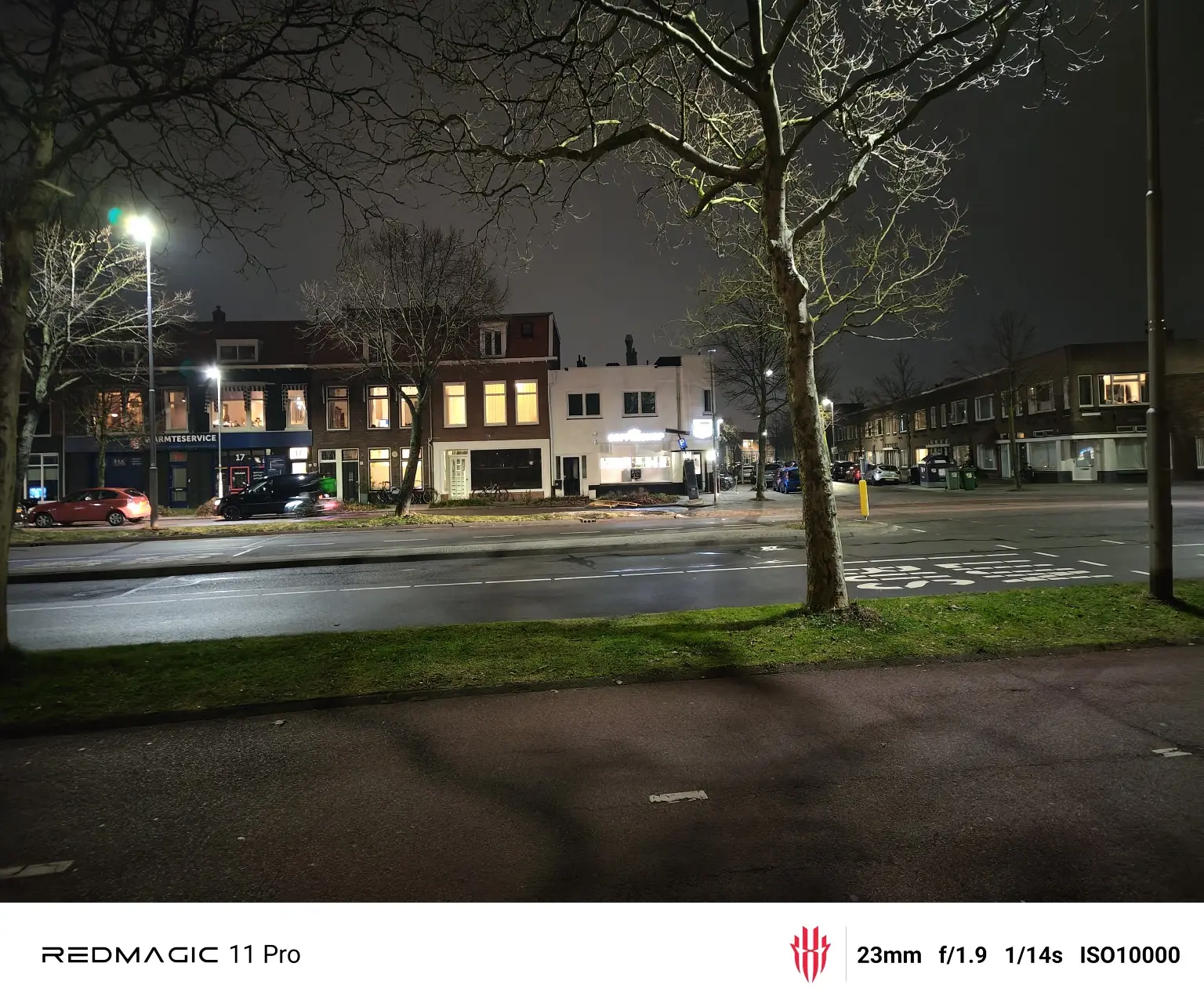
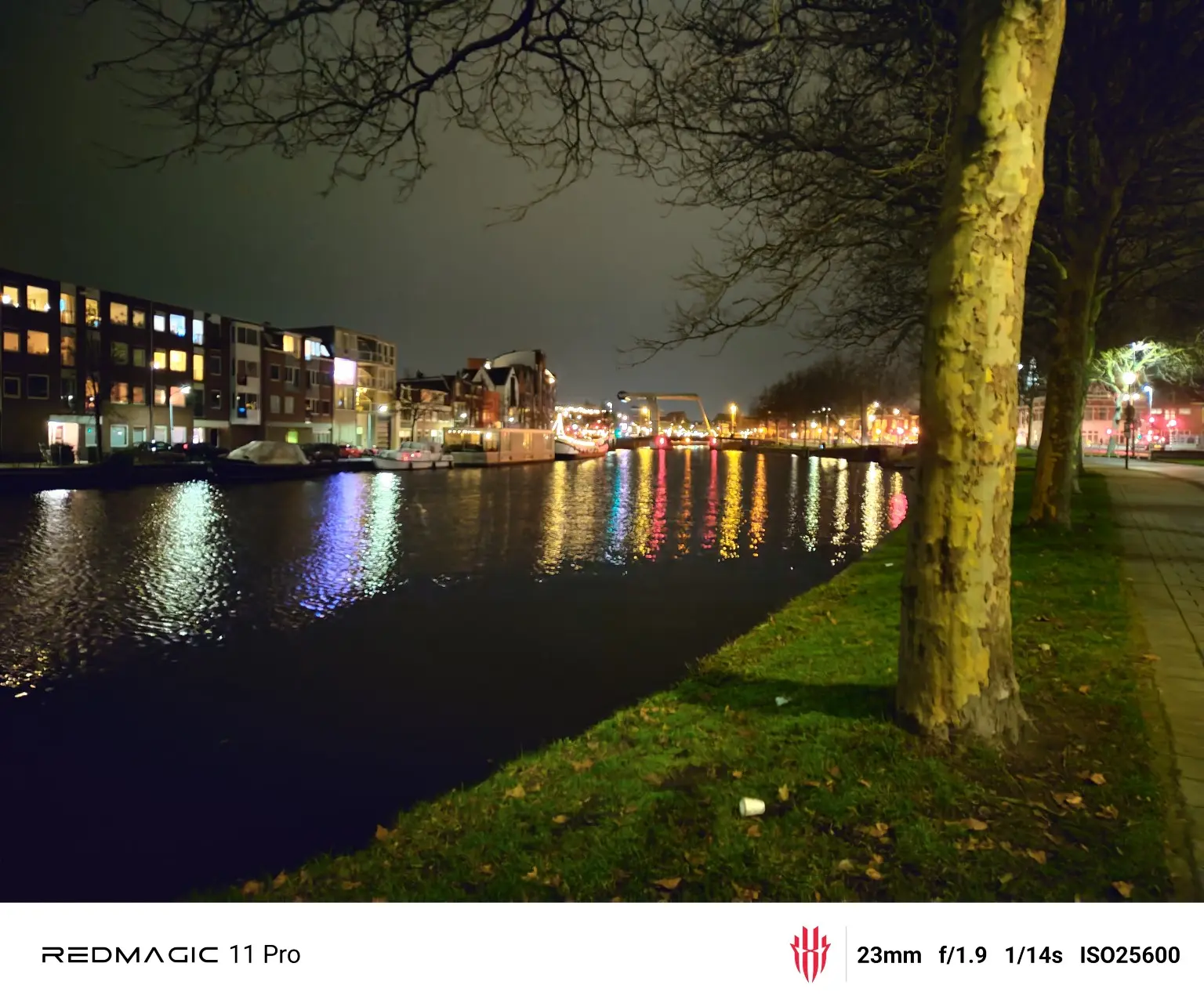

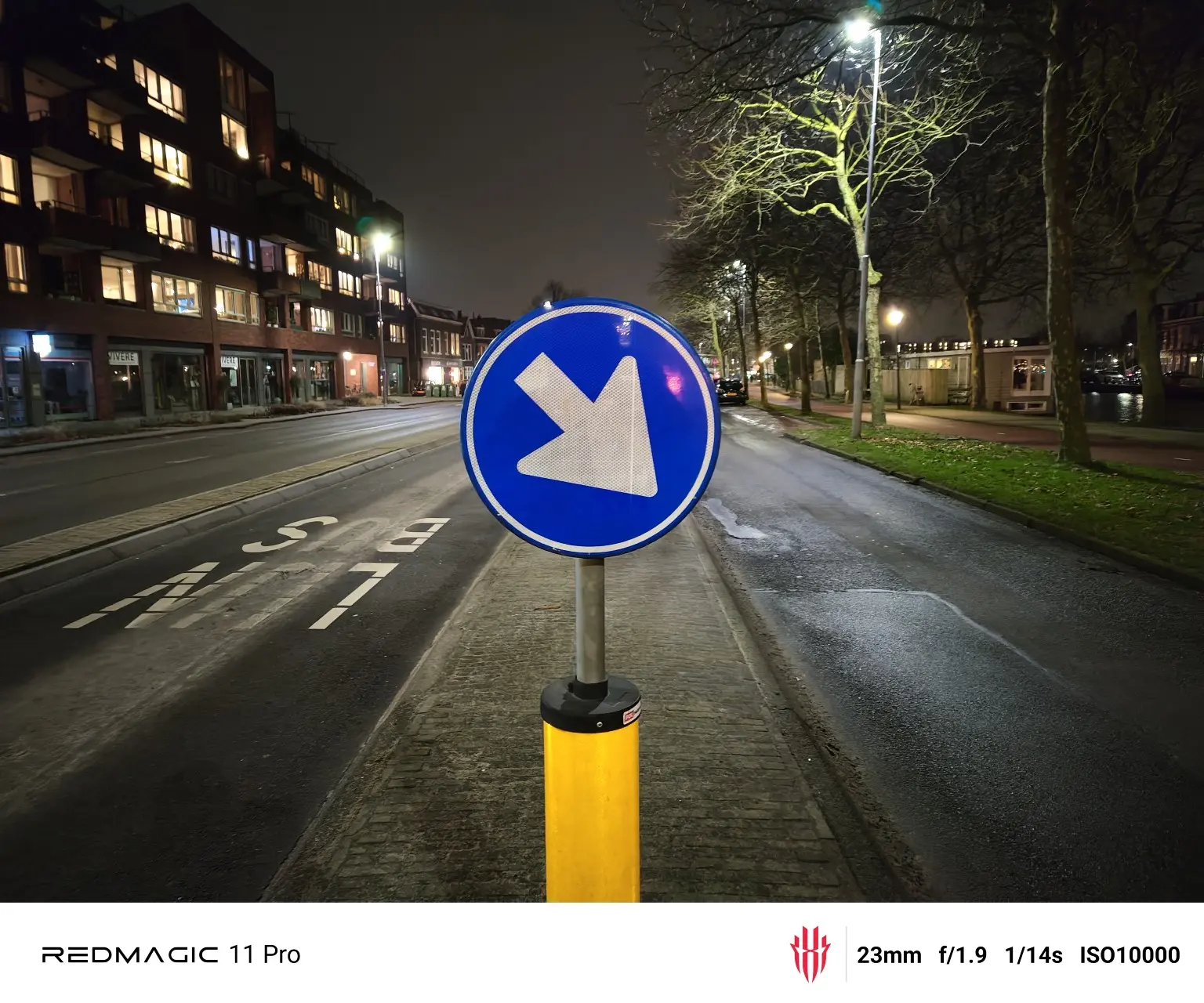
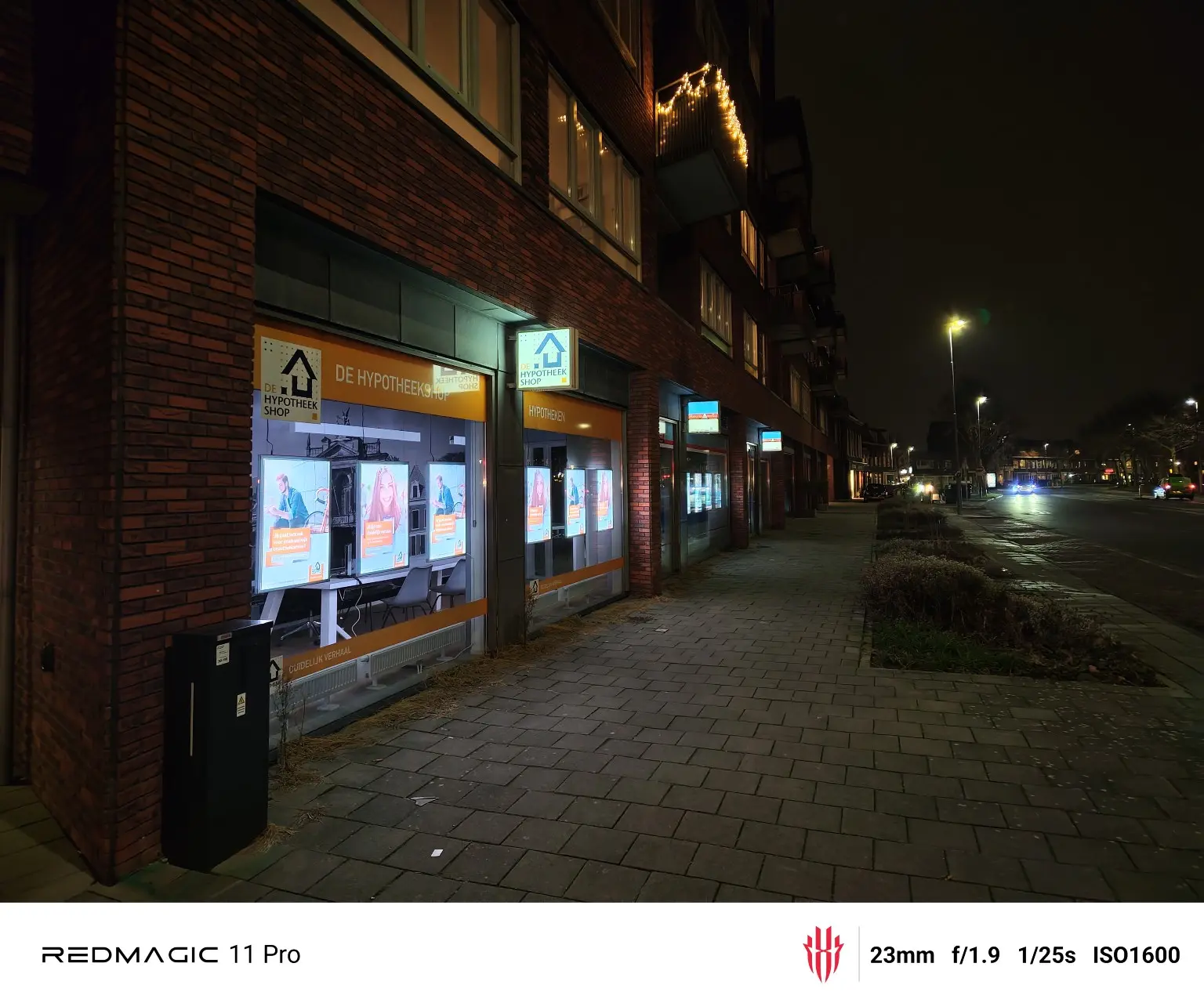
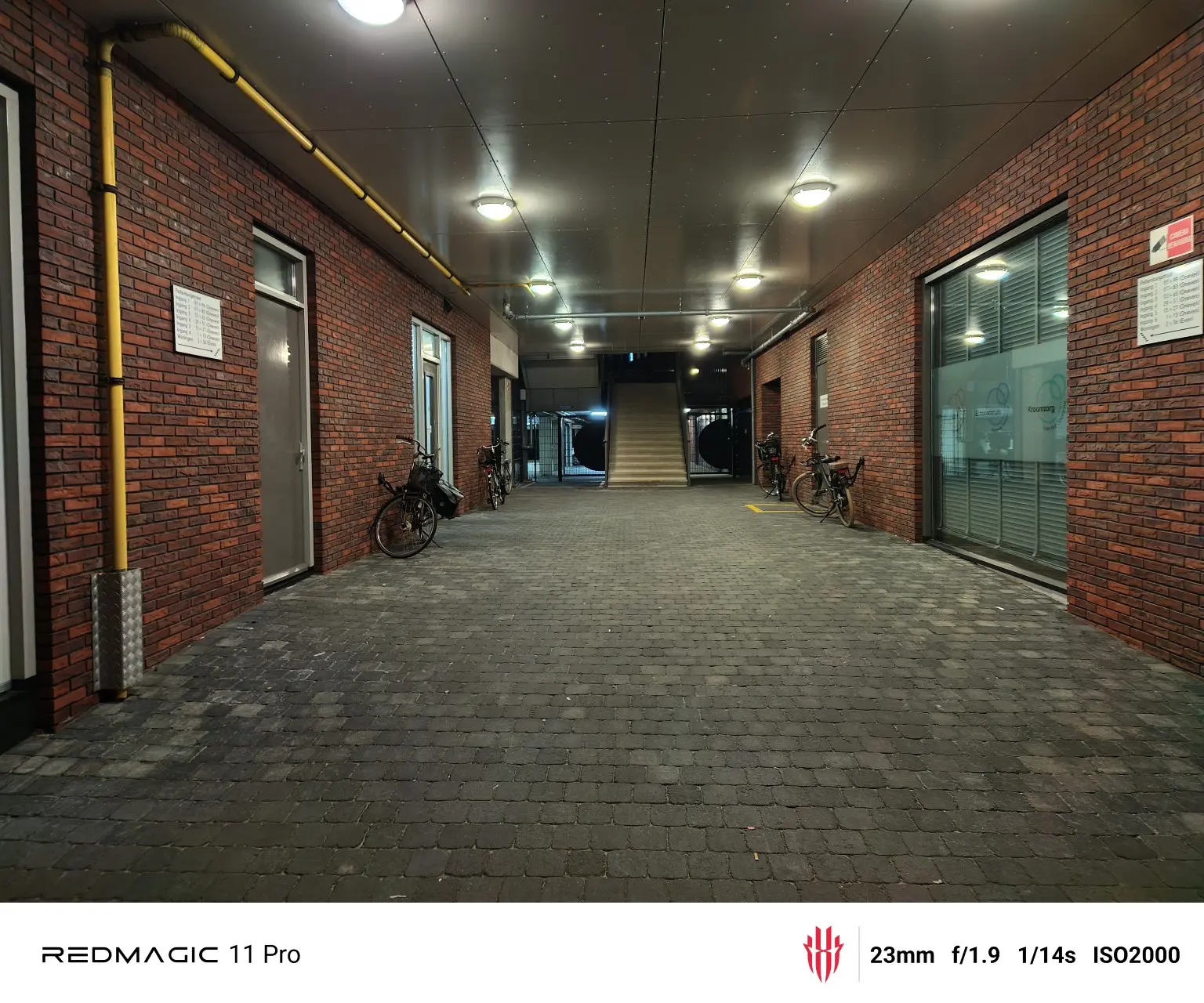
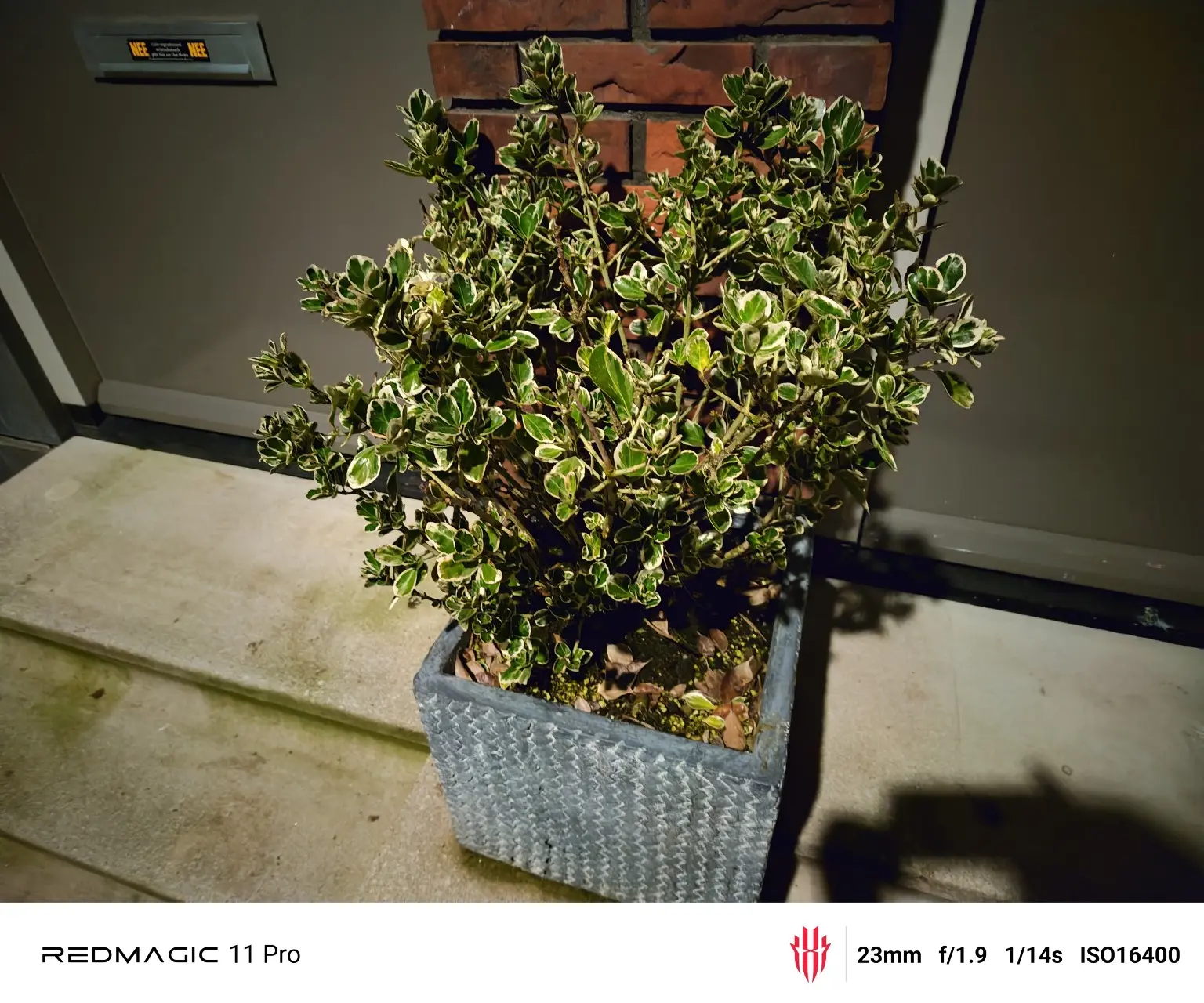
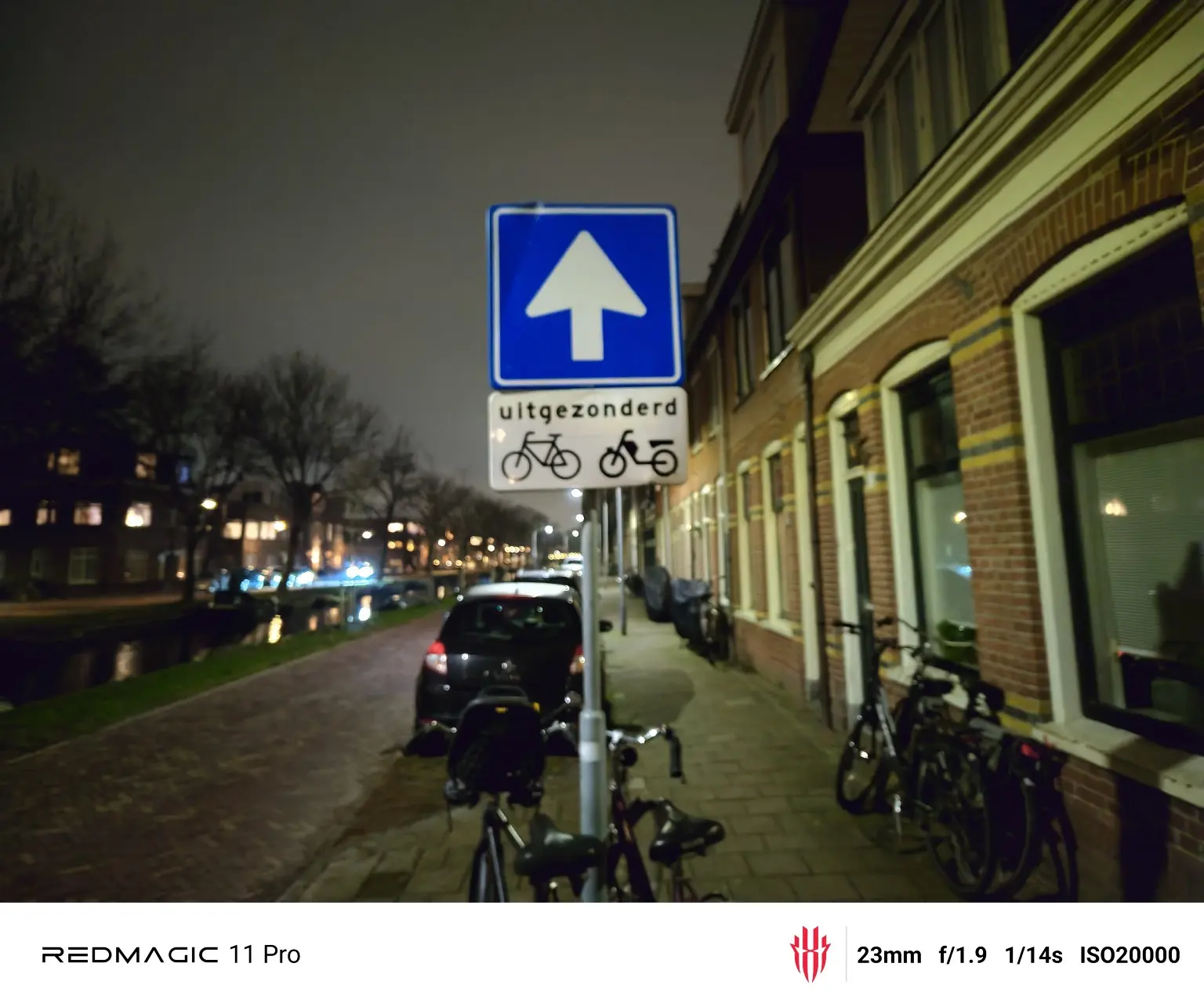
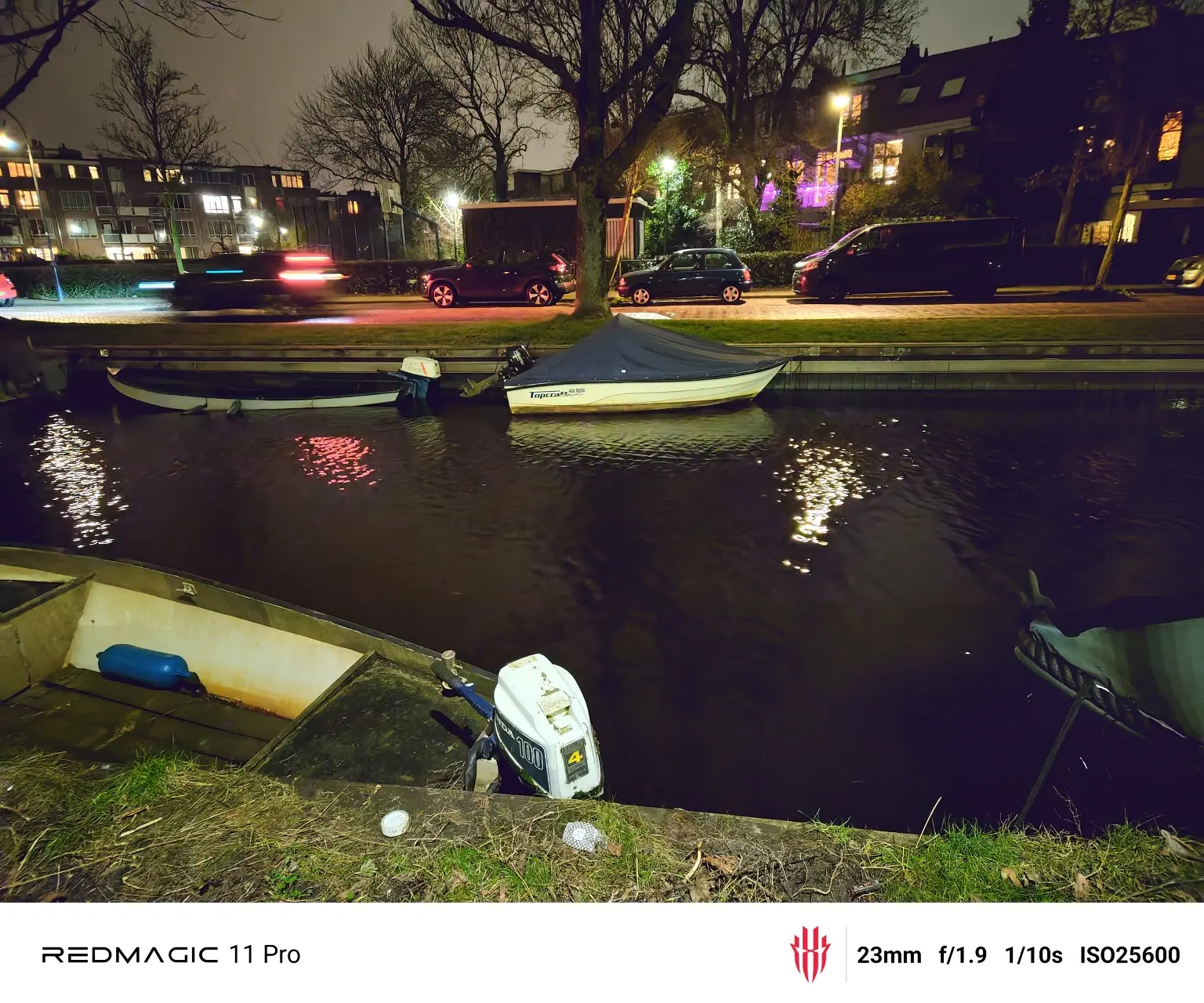

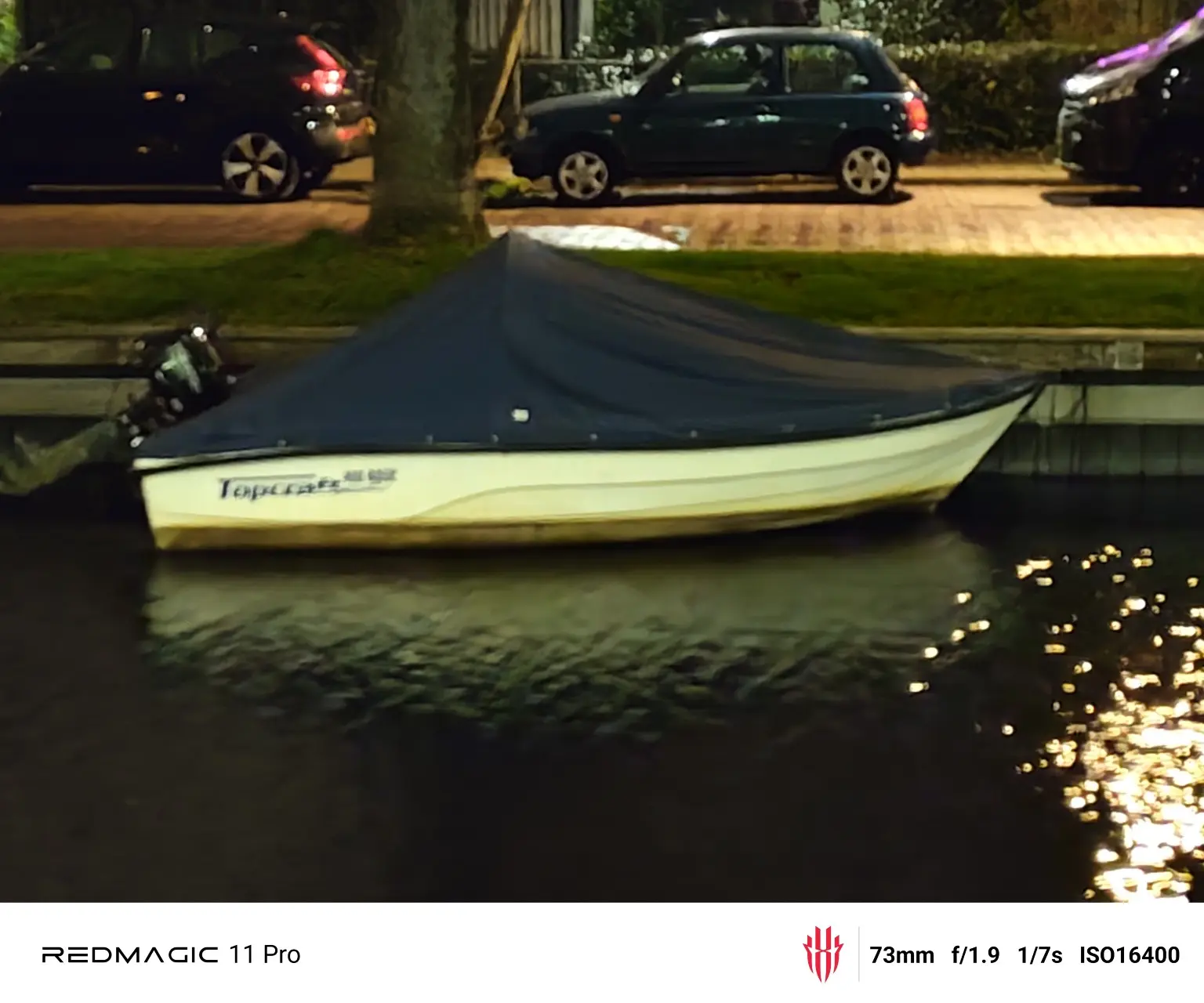
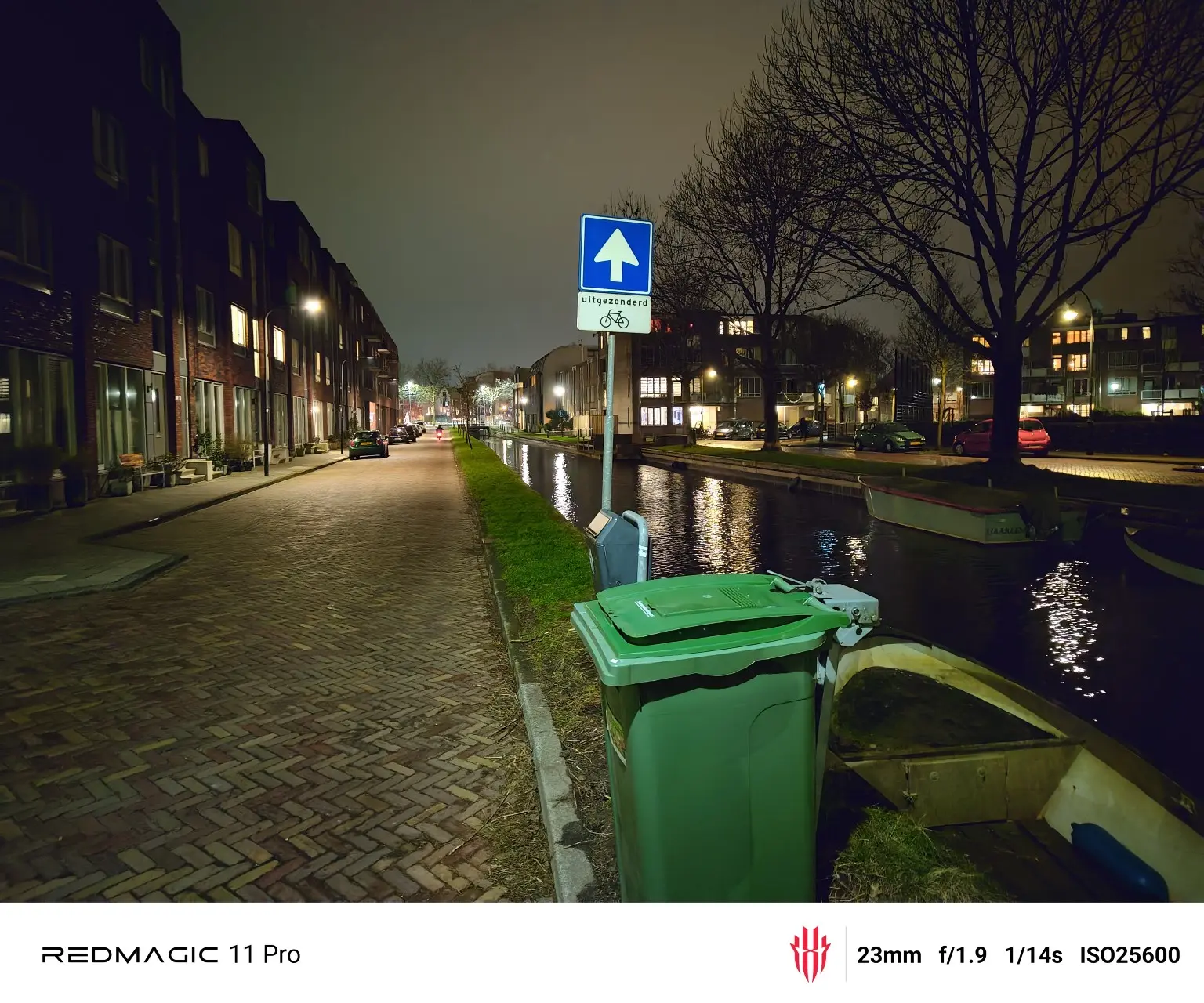
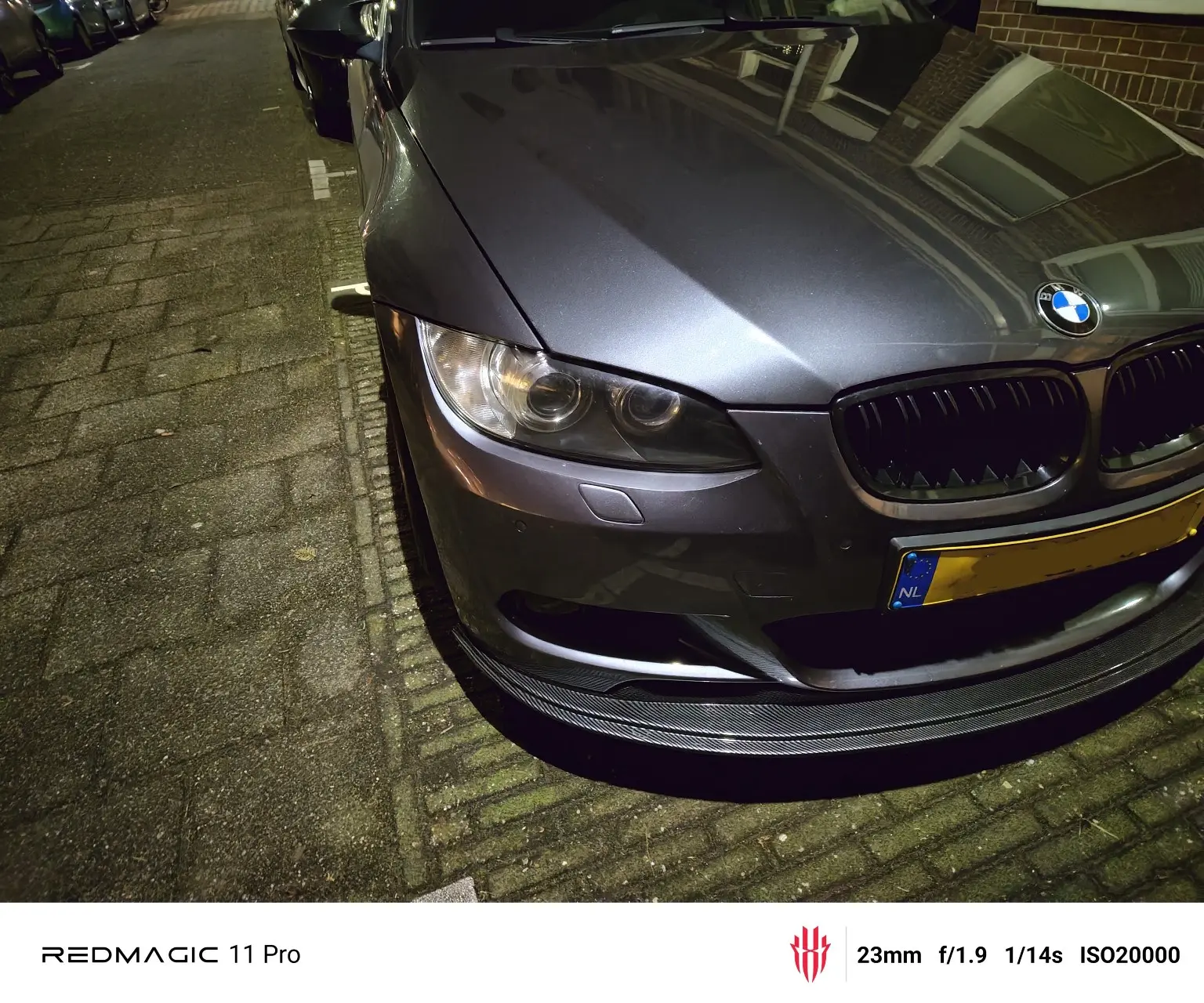
With nighttime image captures, I was impressed at how the sensors could capture dark scenes with enough lighting, but once again, forget full zooming because it just looks ridiculous. A quick search on Reddit tells me that REDMAGIC has never really invested too much time in camera quality in its phones, opting instead for gaming performance, so that's where your decision should lie when choosing this over a more expensive flagship with a 200MP camera and 100X AI-assisted zoom.
In addition, I want to note that most of the nighttime photos required me to "hold still" while capturing up to and around 1-2 secs per shot, except where there was ample lighting, which was as quick as day shots (immediate). So you might have to factor that in as well if you plan to use this to take nighttime action shots.
Benchmarks
To offset my failure at doing some gaming on the REDMAGIC 11 Pro, I have instead opted to include a bunch of benchmarks that really should show just how capable this phone is in the CPU and GPU departments. I used a mixture of AnTuTu, Geekbench 6 for Android, and 3DMark with screenshots of all the results below.
The benchmark chart comparisons were provided by Sayan Sen.
Cooling
Before we dive in, I should note that REDMAGIC claims this about the "AquaCore Cooling System" to deal with heat dissipation:
World’s First Mass-Produced Smartphone with Liquid Cooling Liquid Metal 3.0 + Vapor Chamber 13,116 mm2 + REDMAGIC First Waterproof TurboFan 24,000 RPM
Yes, along with the dedicated fan it also has liquid cooling which can be manually controlled through a widget that is helpfully placed on the Home screen's second page. You can let it decide for itself (default), set it to eco, or cool mode. It also has a cool supercar starting-up sound effect
Benchmarks results
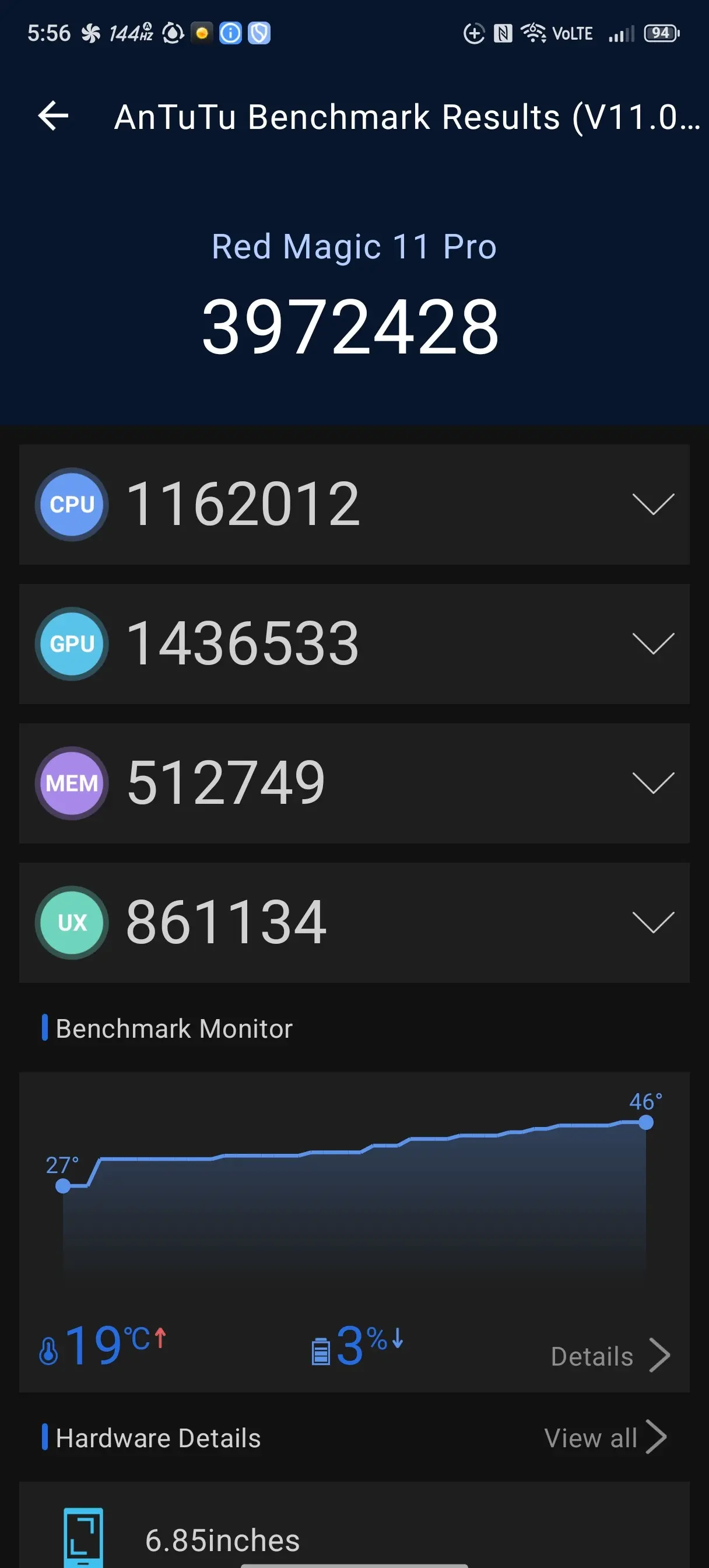
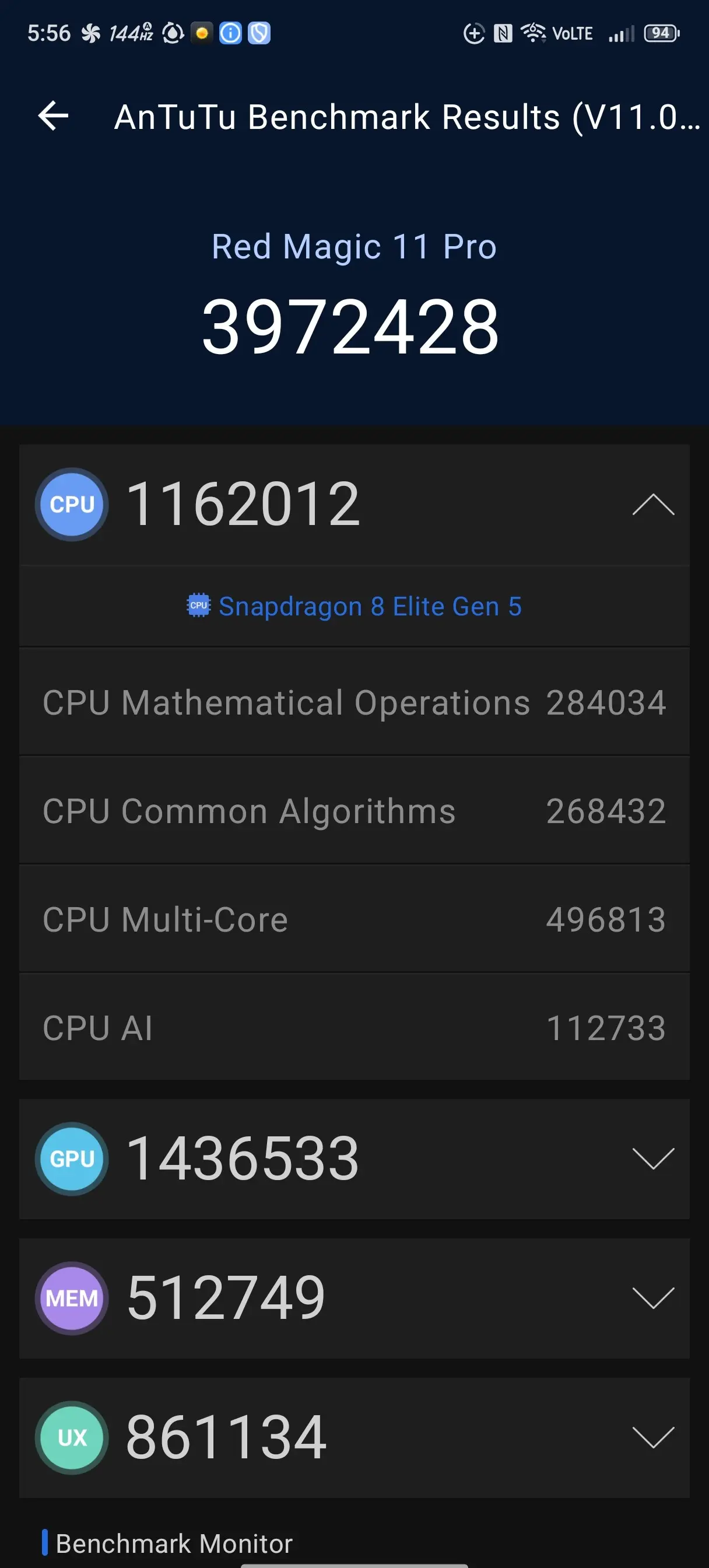
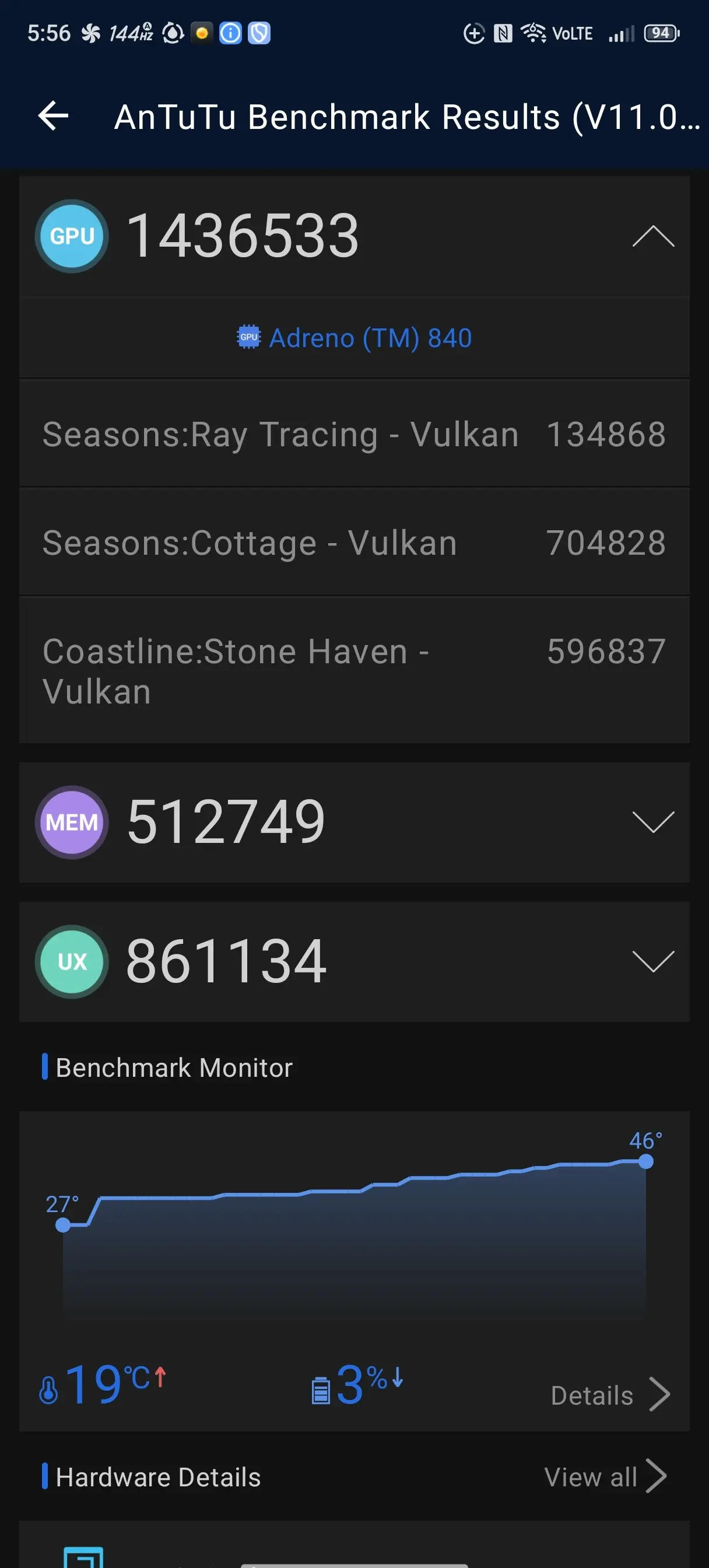
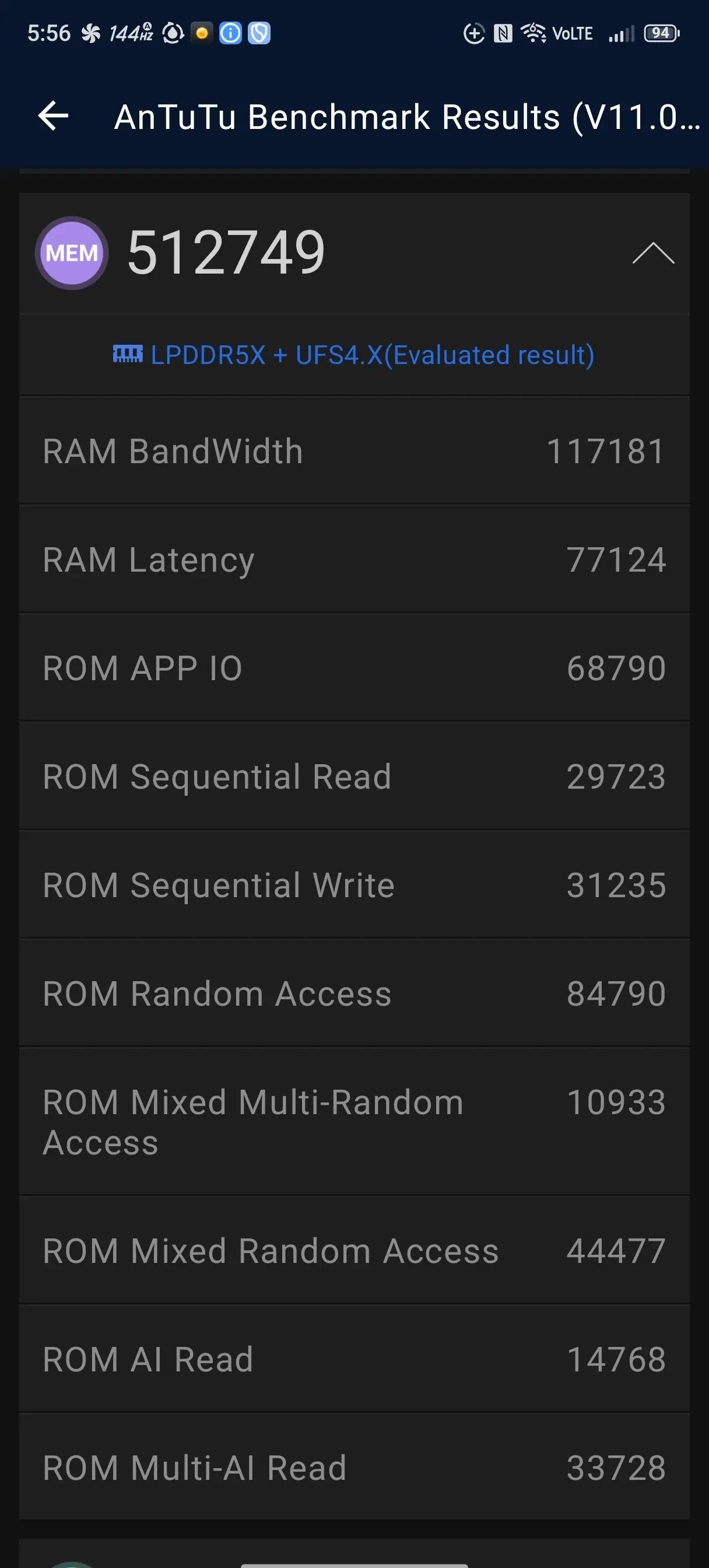
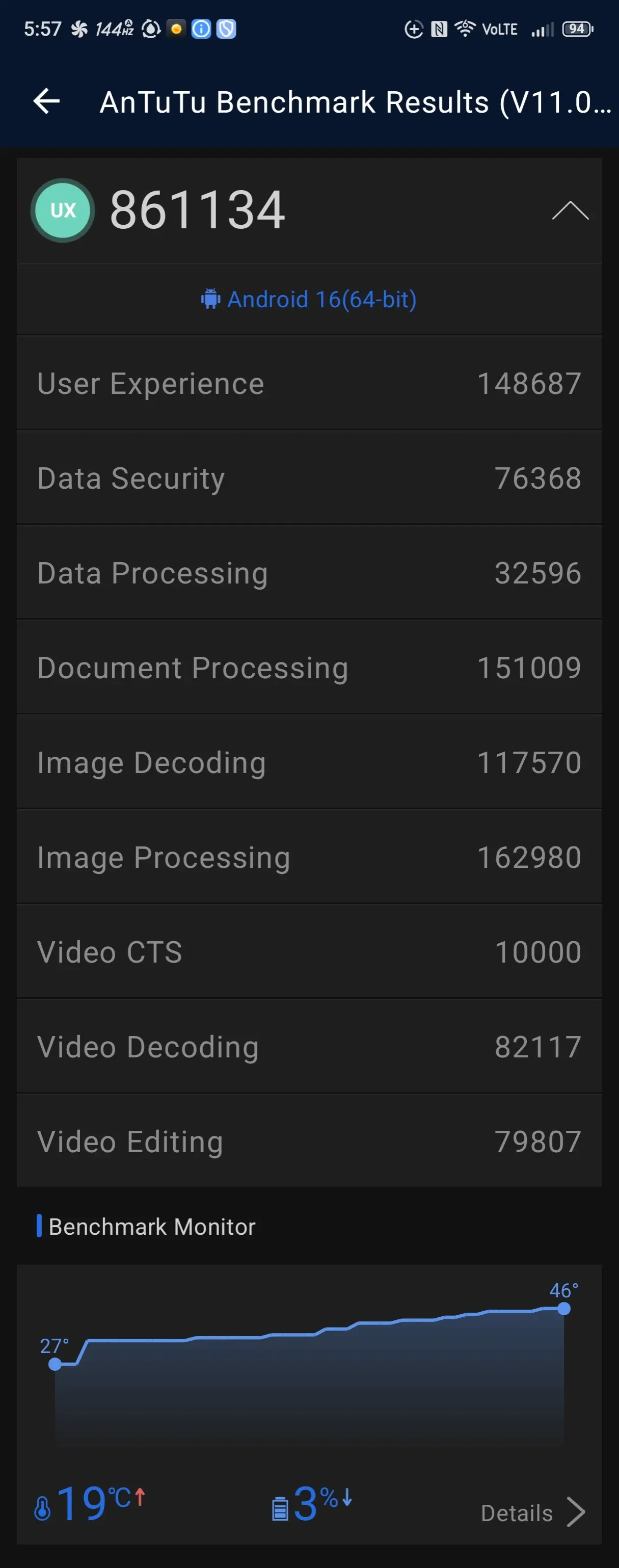







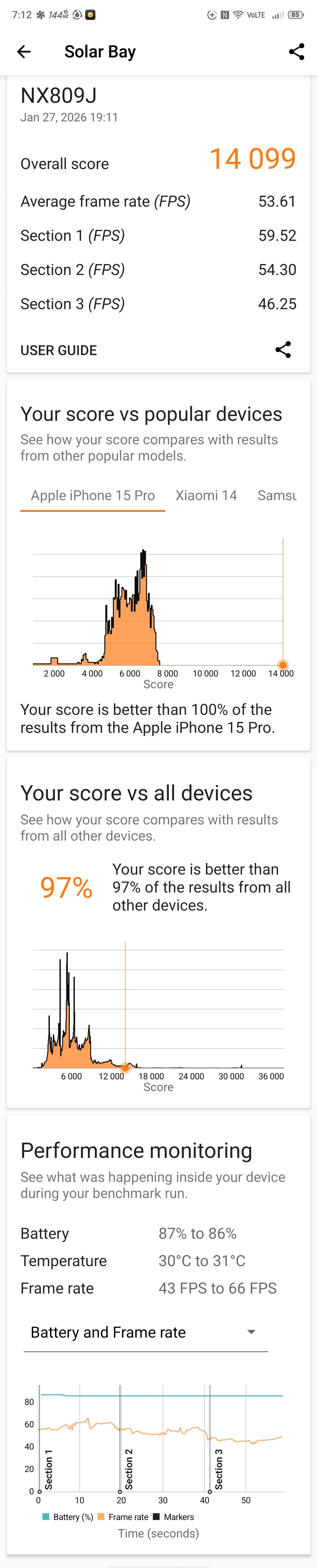
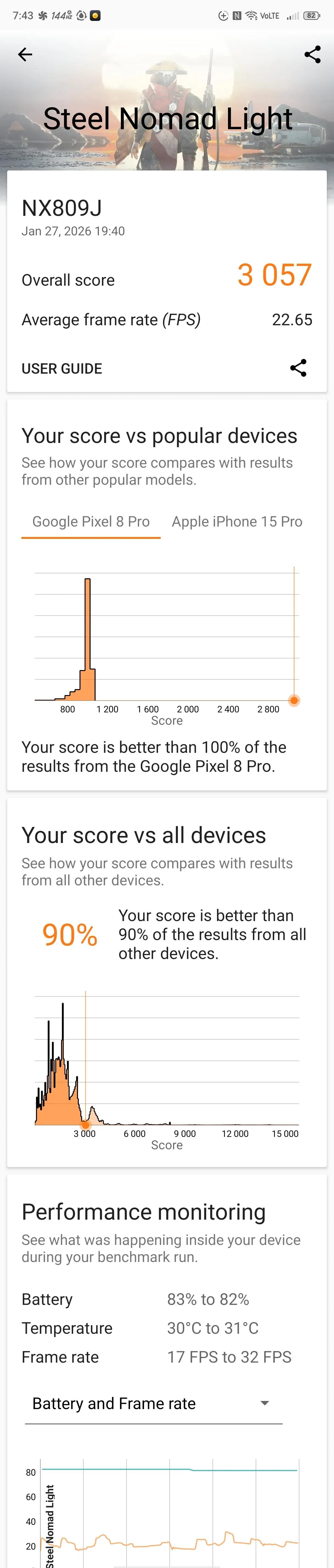
As was to be expected, the REDMAGIC 11 Pro outperforms pretty much any of the latest flagships on the market, thanks to its 4.6GHz CPU clockspeed and up to 1200MHz Adreno 840 GPU) along with its complimentary Redcore R4 chip.
AnTuTu v11
- Overall 3,972,428 CPU: 1,162,012 GPU: 1,436,533 Memory: 512,749 UX: 861,134 (peak 46C)
For some additional context, AnTuTu's Memory score also accounts for the UFS storage speeds on the phone, and the UX score weighs various real-world tasks like image and video editing/processing, document processing, and a bit of data analysis, among others.
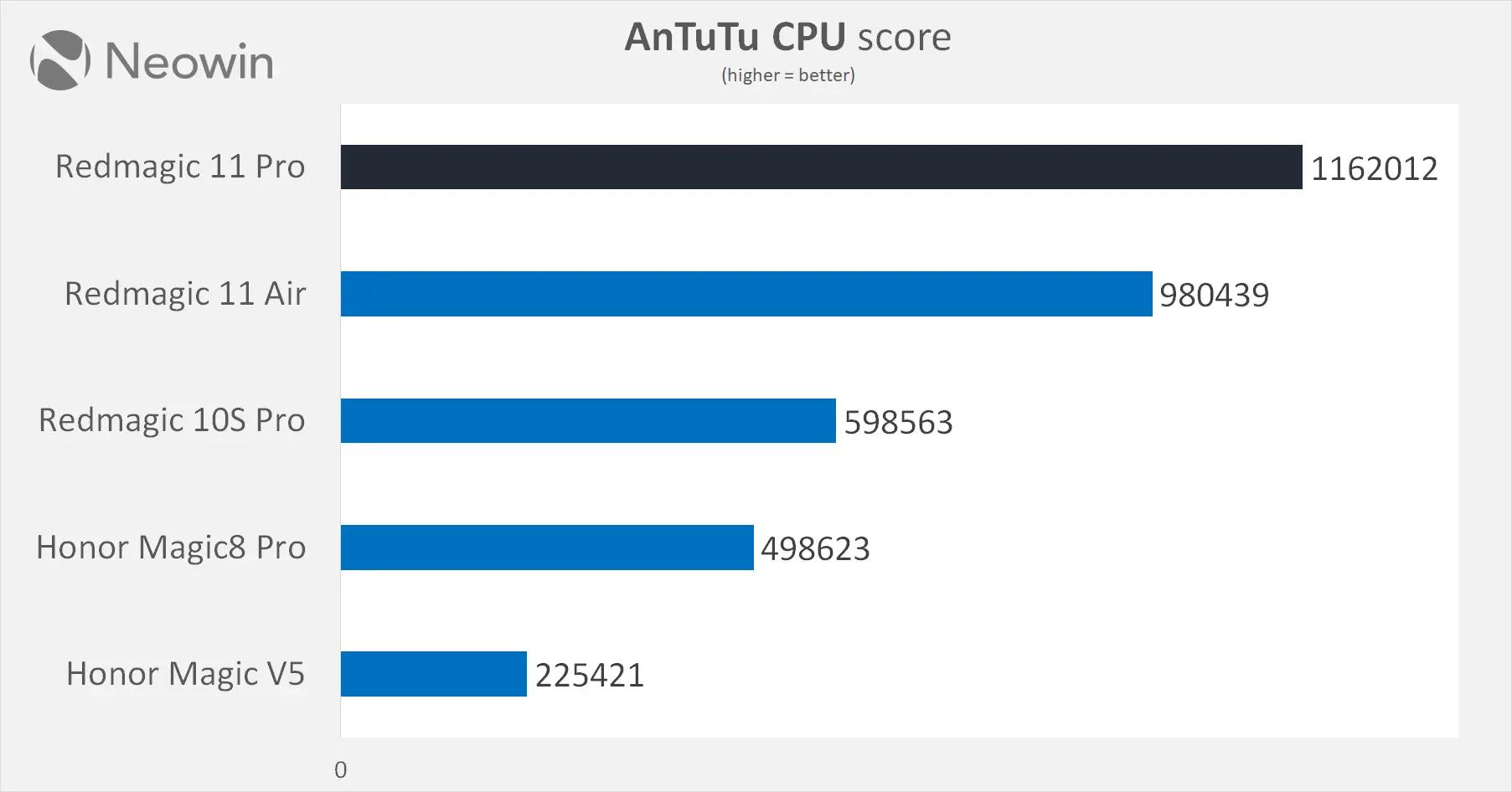
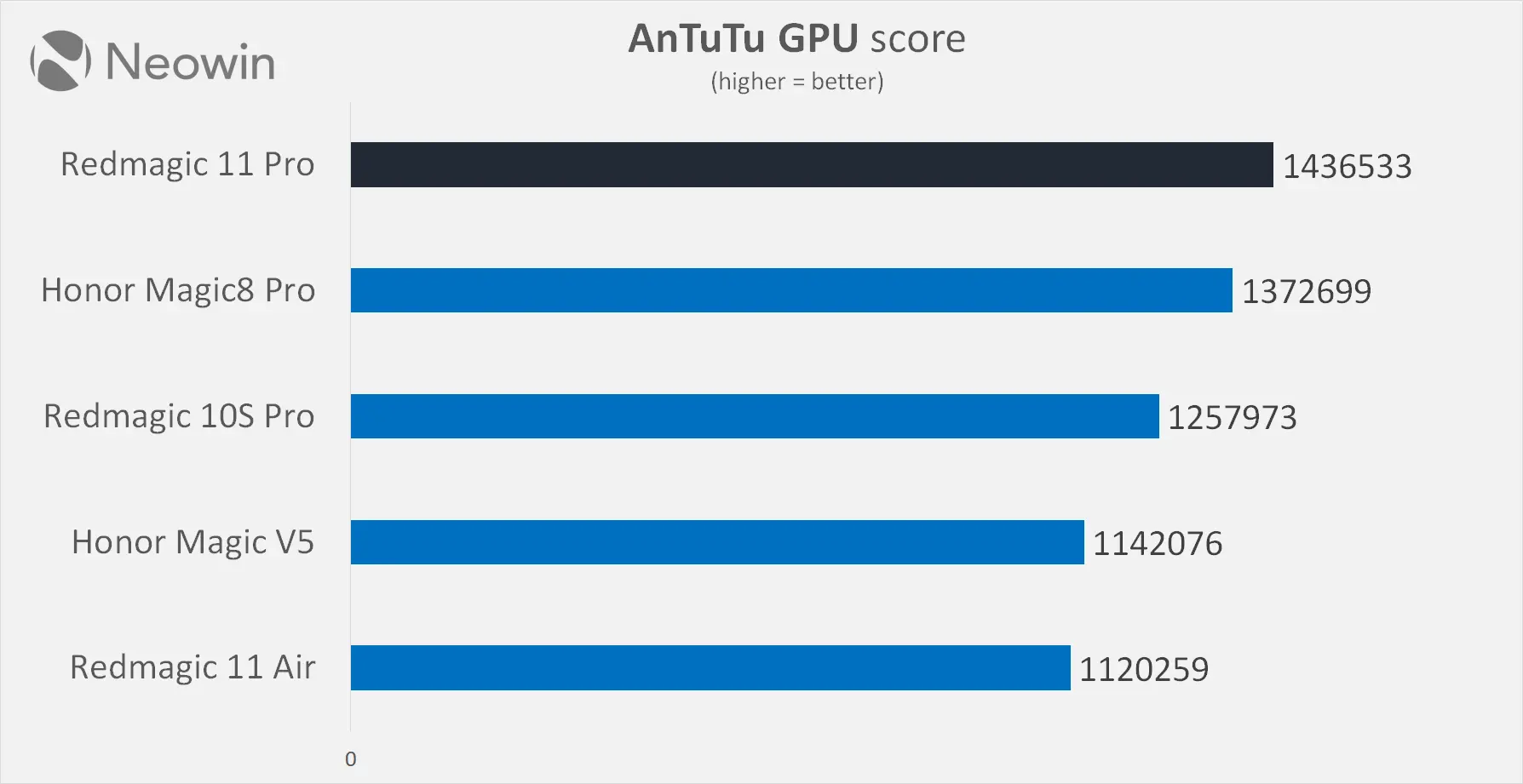
My REDMAGIC 11 Pro device managed to come out in 1st place in the AnTuTu v11 rankings, although quicker REDMAGIC 11 Pro handsets exist with higher scores than what I recorded (3,995,953 at the time of writing vs my 3,972,428).
Geekbench v6
- CPU Single-Core: 3,046 CPU Multi-Core: 9,632 GPU: 21,300
Geekbench 6, which returned a score of 3,046, is 139 points higher than the 2,907 recorded on the Honor Magic7 Pro in Single-Core mode. However, in Multi-Core mode, the REDMAGIC 11 Air soars past the Magic7 Pro's 6,243 score by 3,389 points, recording a score of 9,632. On the GPU front, the 11 Air beats the S24+'s best score by 6,045 (15,255) with a score of 23,100. It's a shame the Galaxy S25 isn't listed in the Compare yet, but the Honor Magic7 Pro is a good enough equivalent. One thing's for sure, it really showcases the overclocks and faster LPDDR5X memory being used in the REDMAGIC 11 Air.
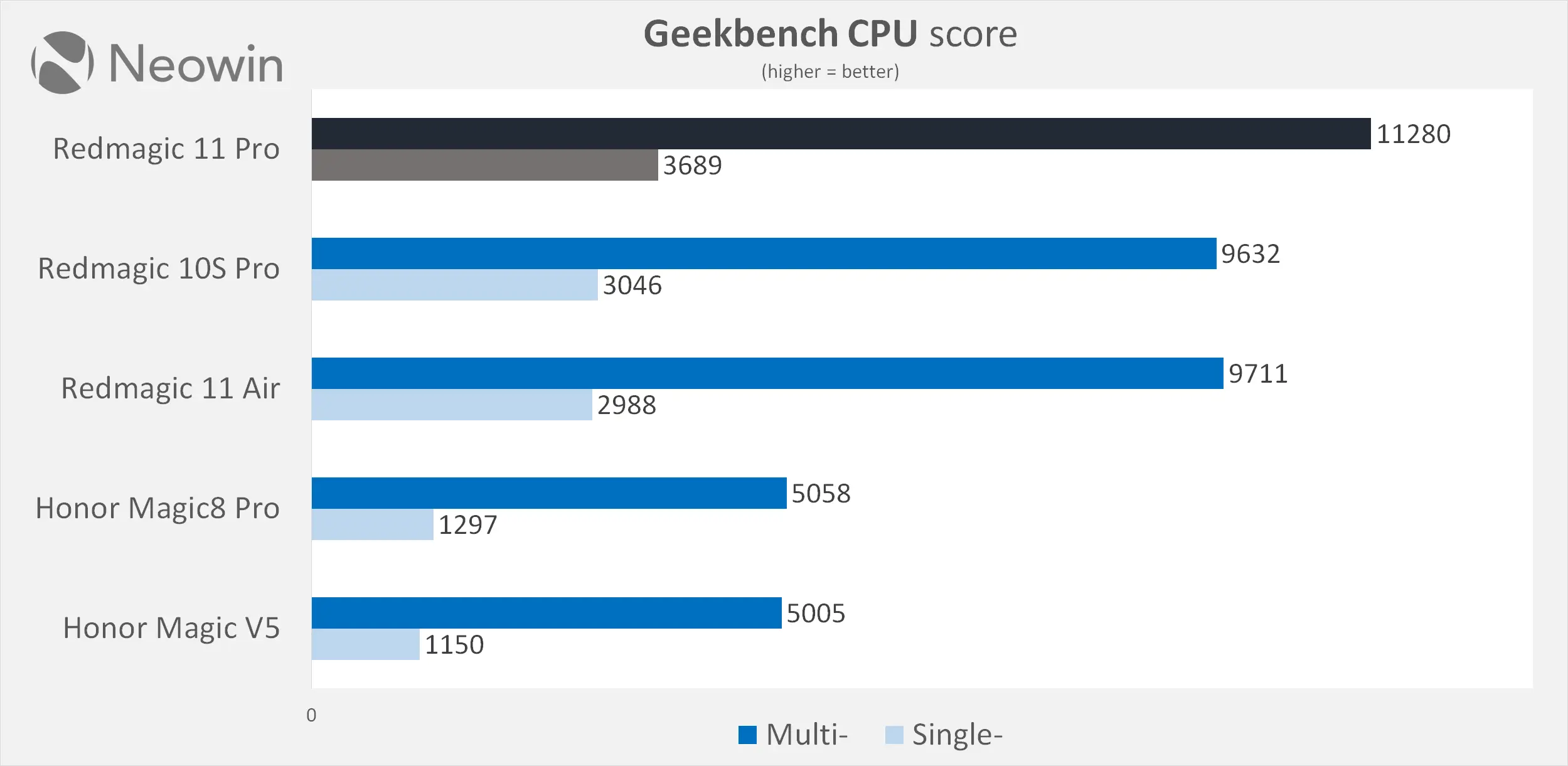
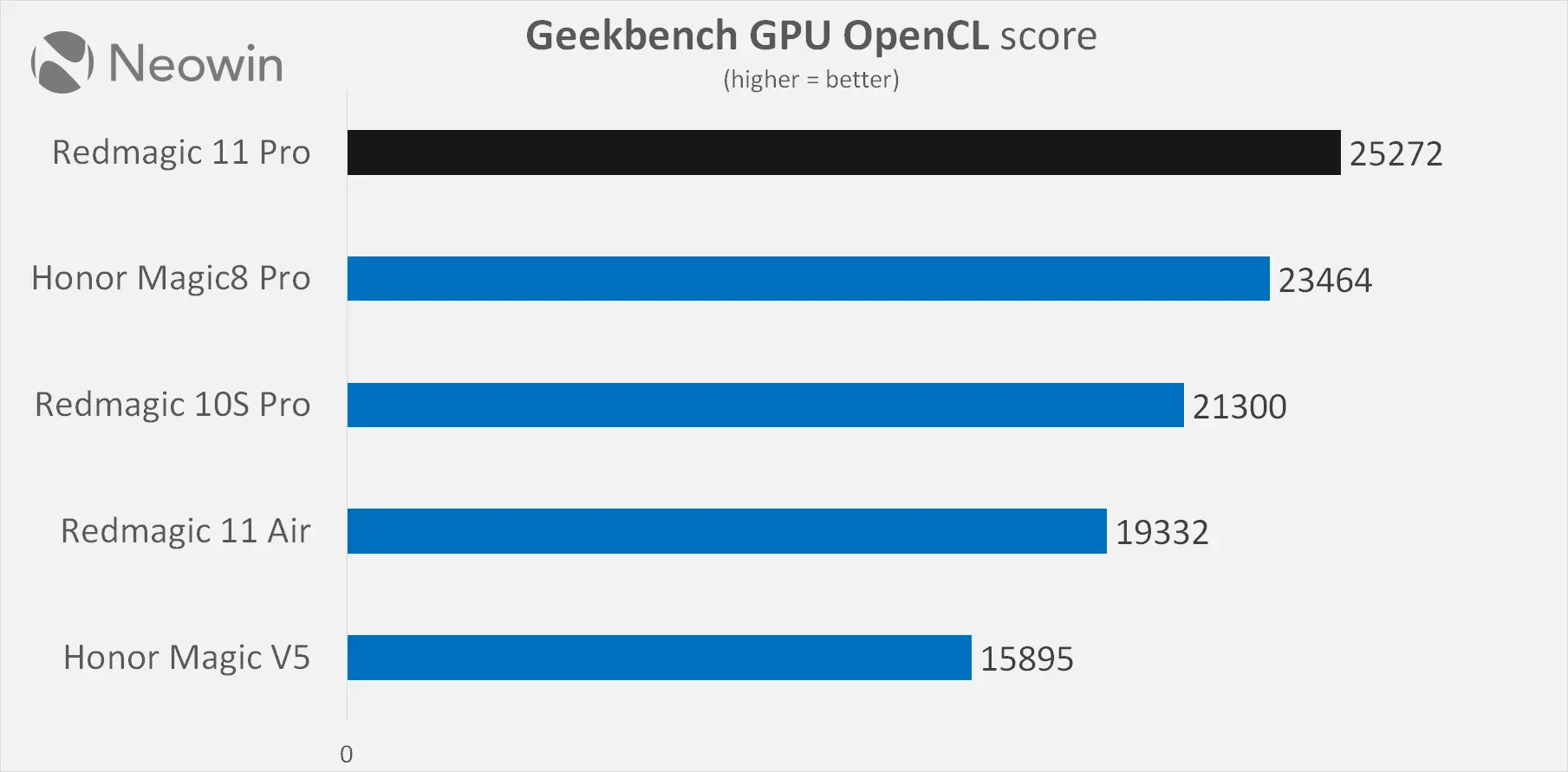
If you are wondering, Geekbench ran a series of short tests which measured things like web browsing, document rendering, text processing, code compilation, various photo editing and processing tasks, and more.
3DMark
- Solar Bay: 14,009 (avg fps 53.61)
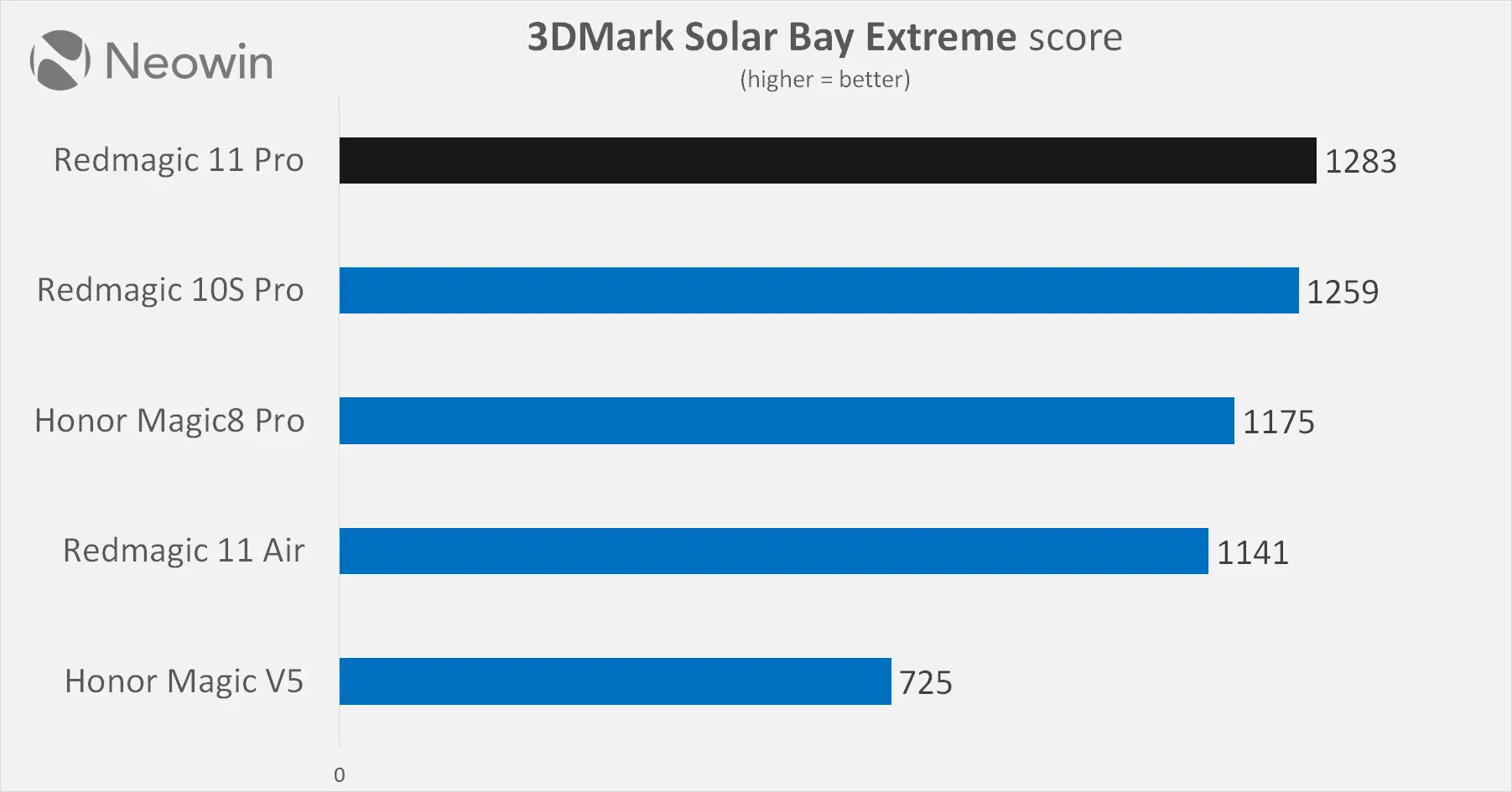
- Solar Bay Extreme: 1,283 (avg fps 8,98)
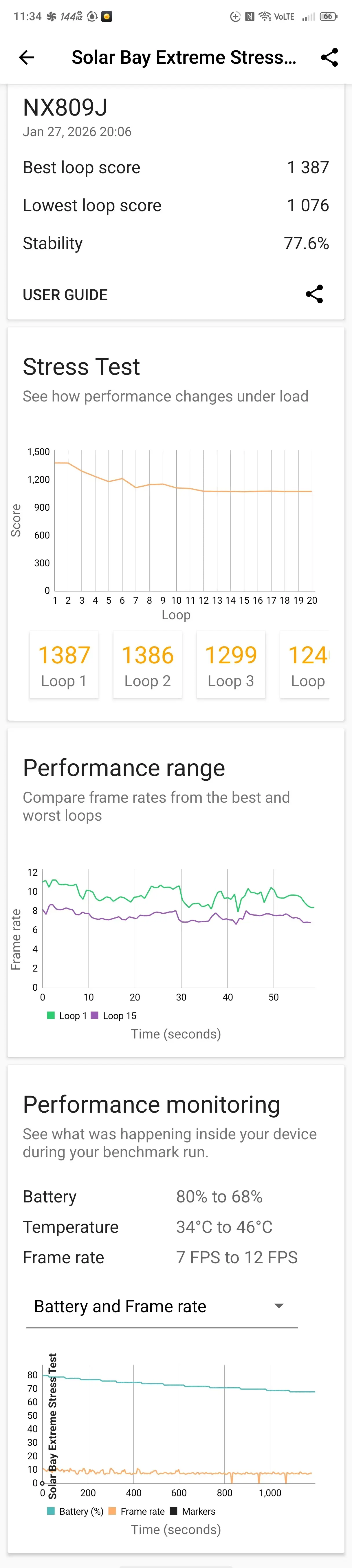
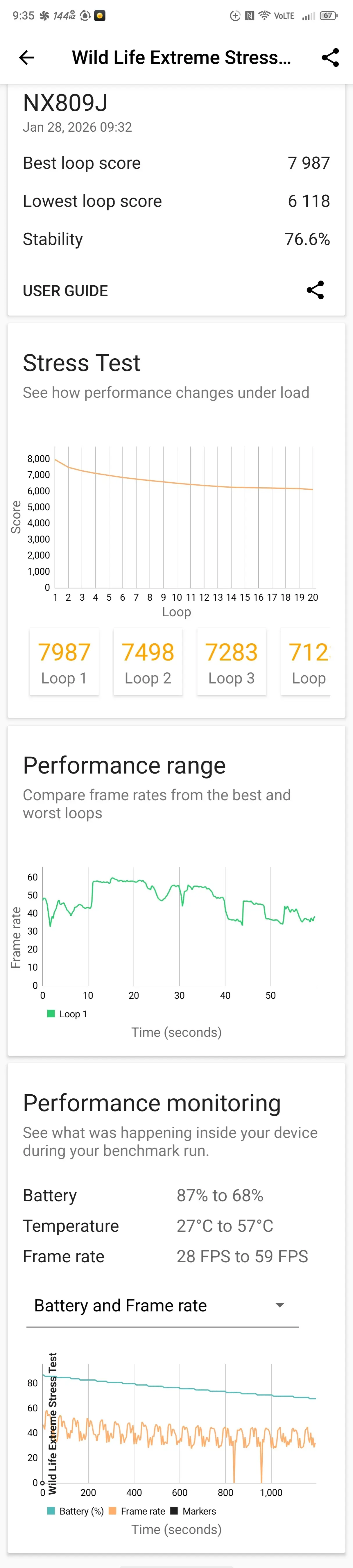
- Solar Bay Extreme Stress Test: Best Loop (1,397) Worst Loop (1,076)
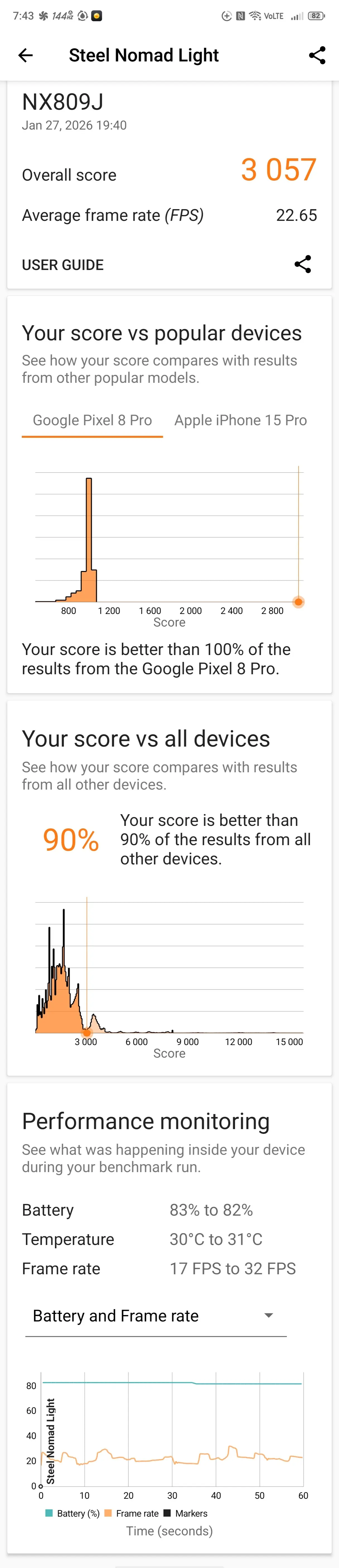
- Steel Nomad Light: 3,057 (avg fps 22,65)
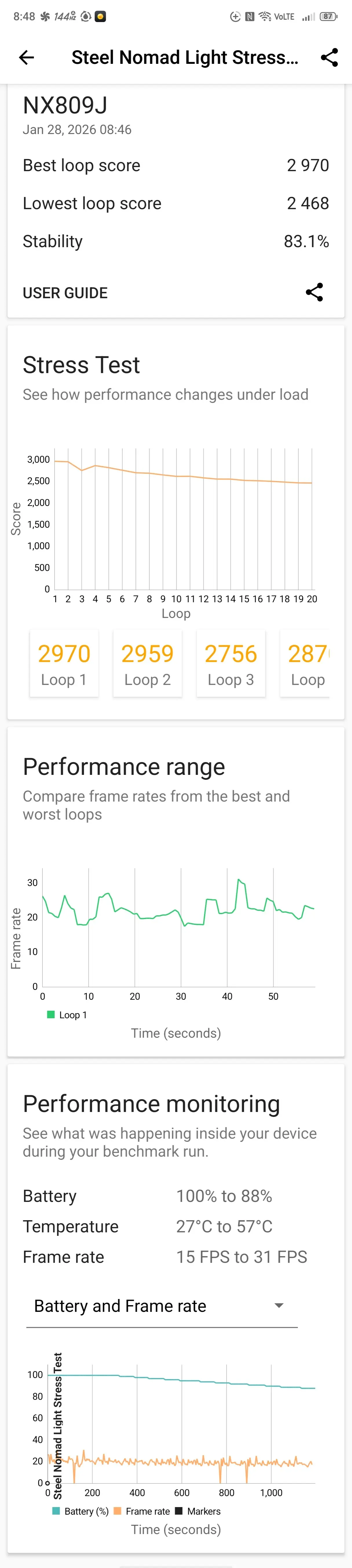
- Steel Nomad Light Stress Test: Best Loop 1 (2,970) Worst Loop 3 (2,468)
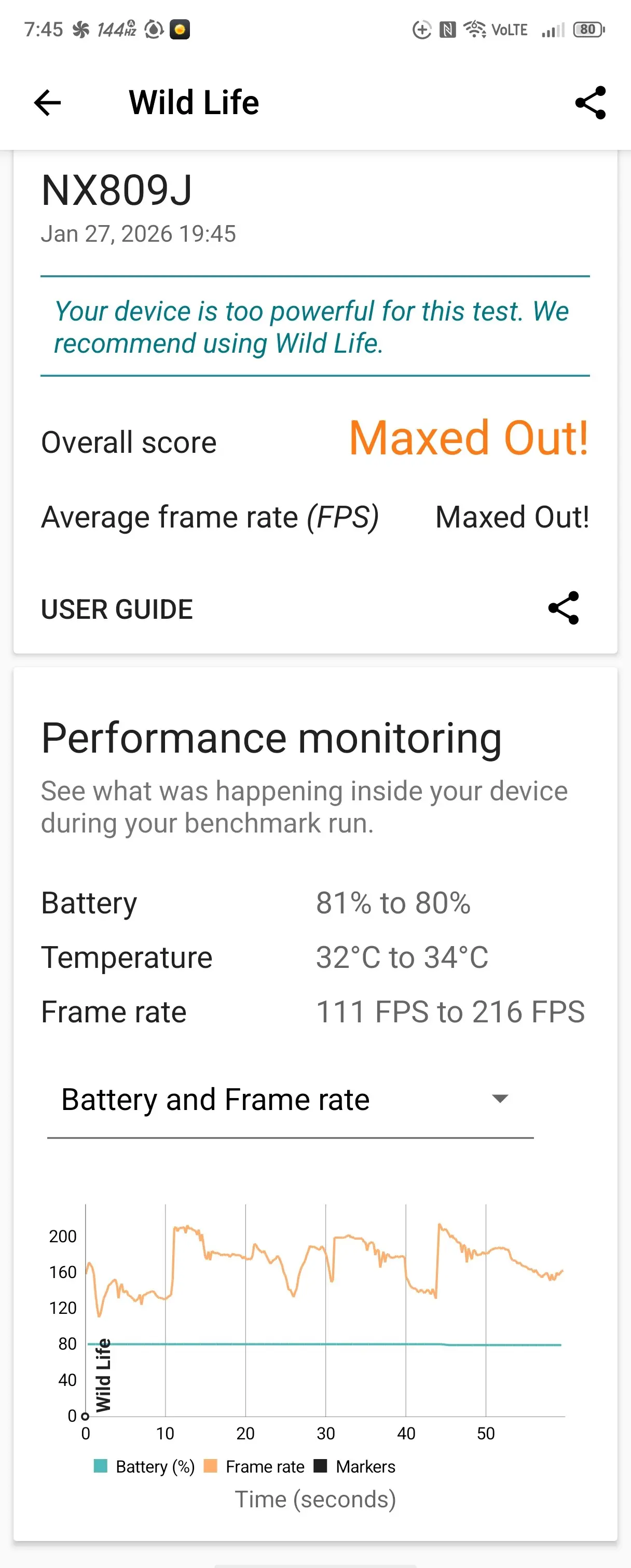
- Wildlife: Maxed Out!
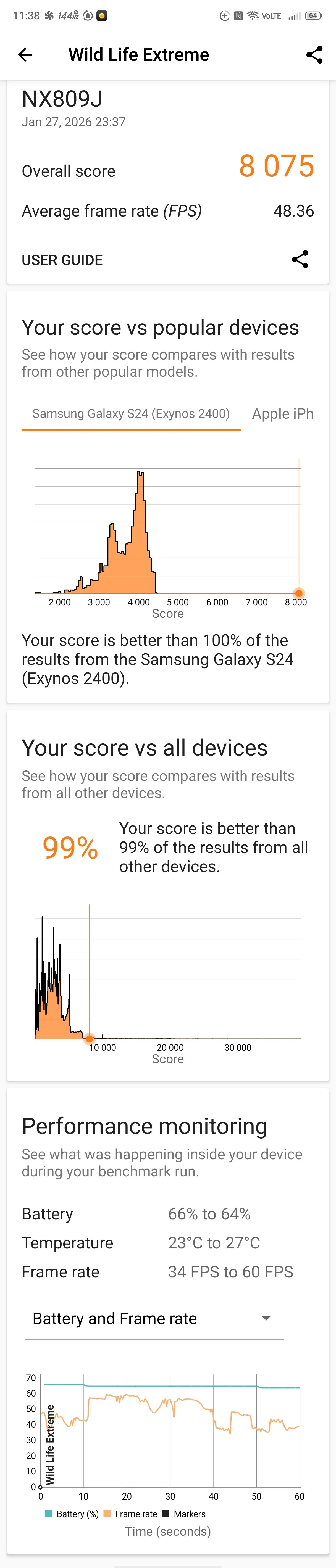
- Wildlife Extreme: 8,075 (avg fps 48,36)
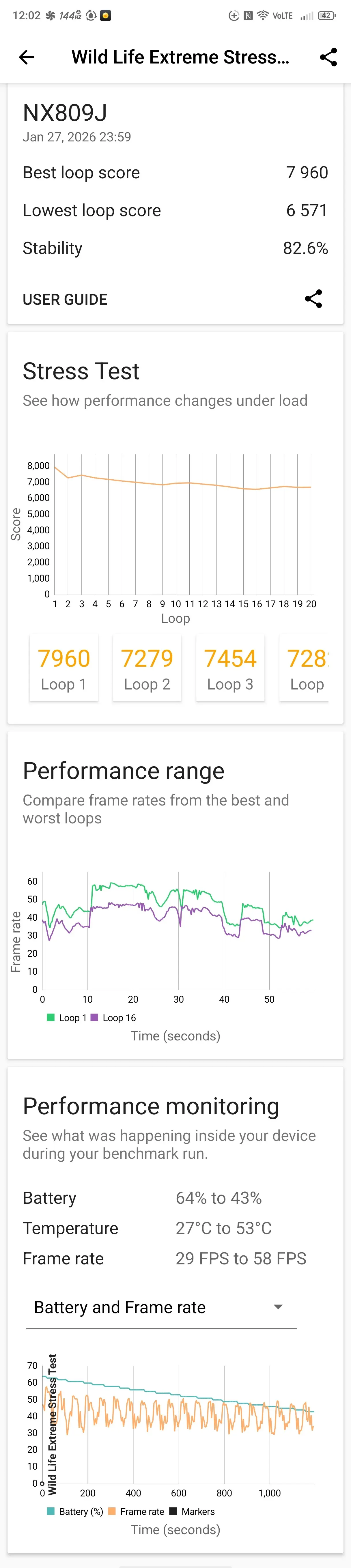
- Wildlife Extreme Stress Test: Best Loop (7,987) Worst Loop (6,118)
3DMark's standard Wild Life test wouldn't even give a score as it was "Maxed Out!", saying that the REDMAGIC 11 Pro was "too powerful" for it, which is when I resorted to the stress tests. This is a Vulkan-based benchmark just like the other 3DMark tests.
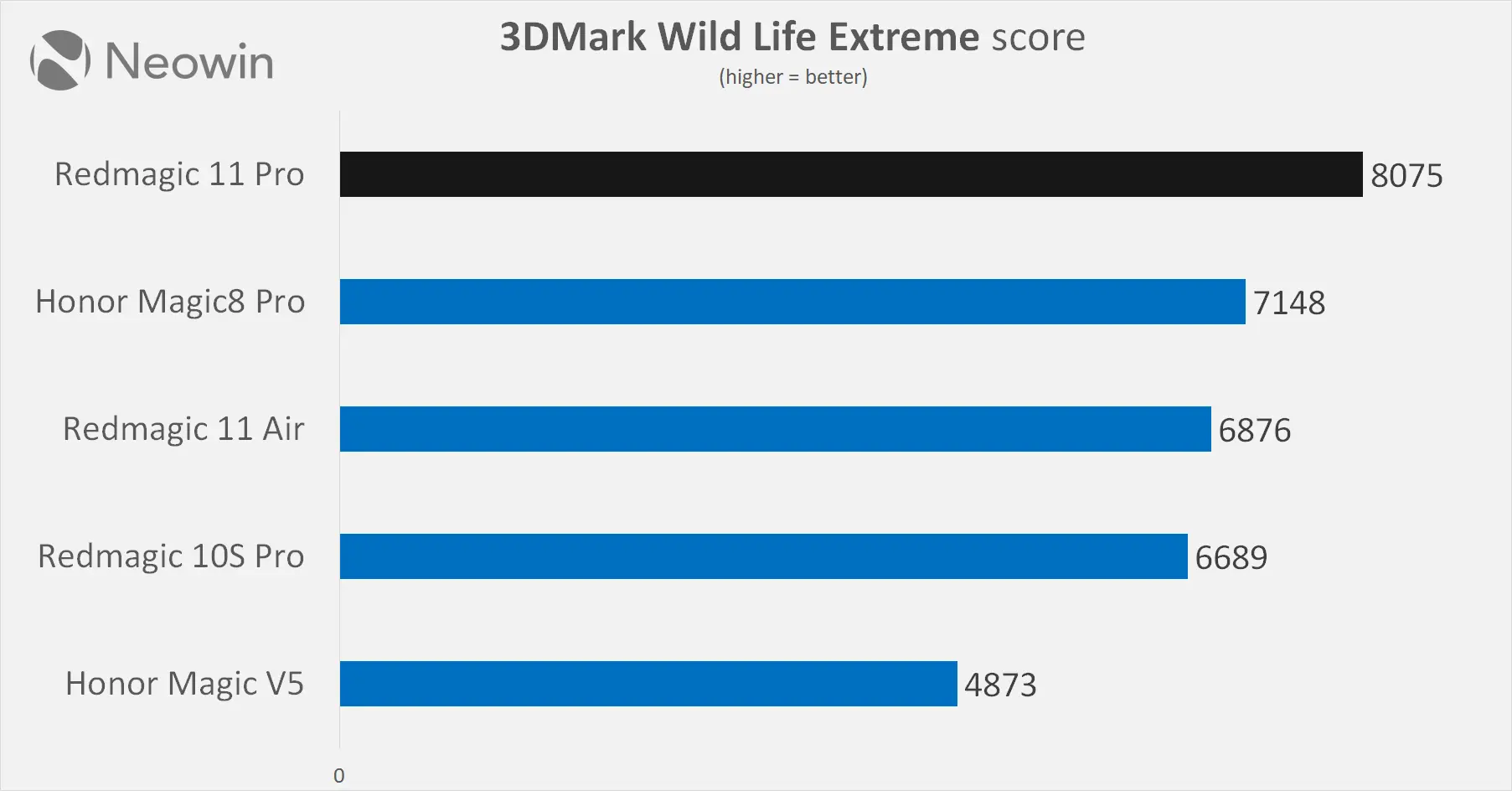
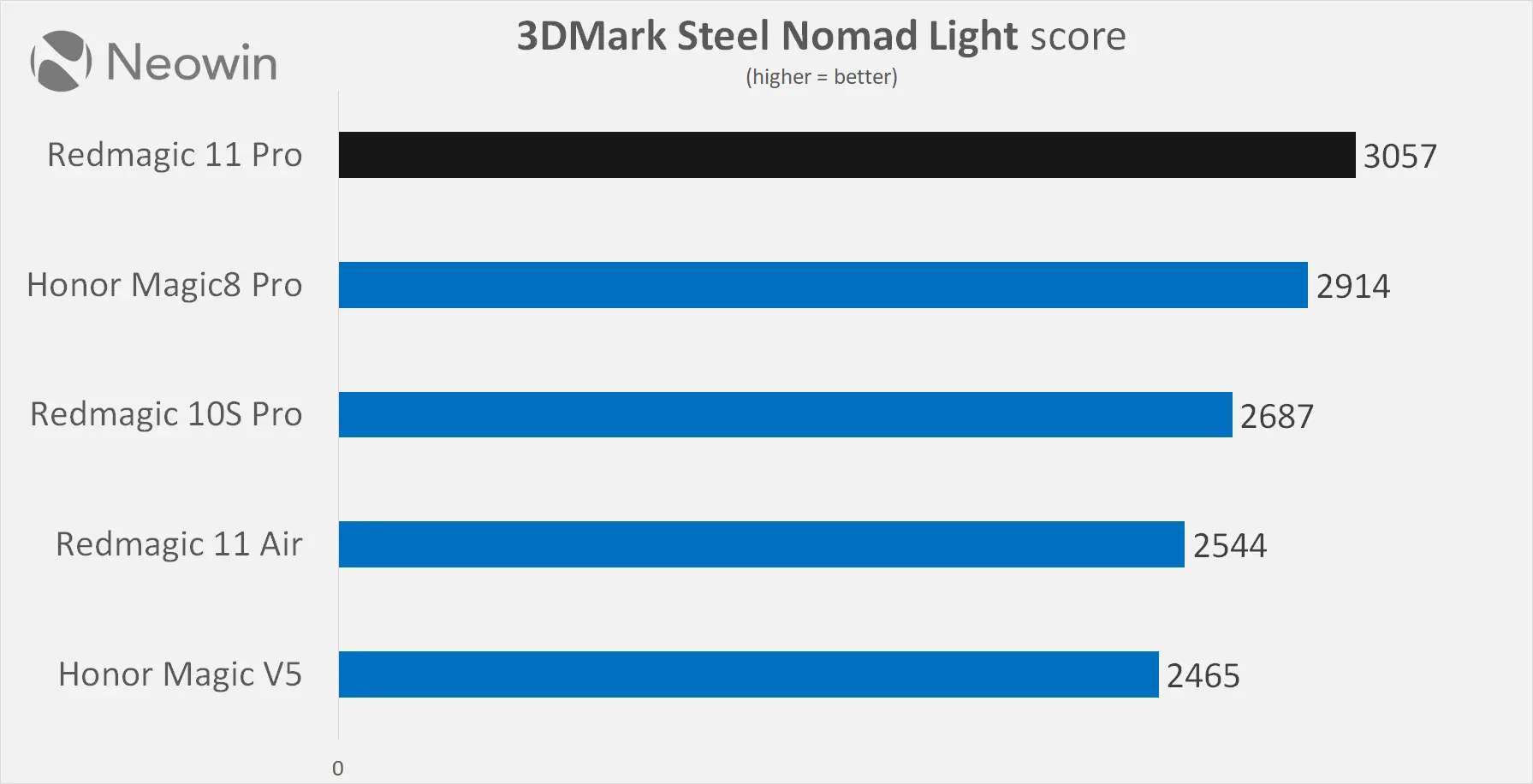
Also, in case you are wondering, Solar Bay measures the ray tracing capabilities of a graphics chip, while Steel Nomad tests rasterization. Meanwhile, the Wild Life benchmark also measures rasterization, though to a lesser scale.
PCMark
Lastly, I ran PCMark, even though you cannot download it from the Google Play anymore (just like AnTuTu, for some reason), it is still a valid test to find out details about the battery life and performance.
| Work 3.0 Battery Life | Work 3.0 Performance |
|---|---|
|
|
|
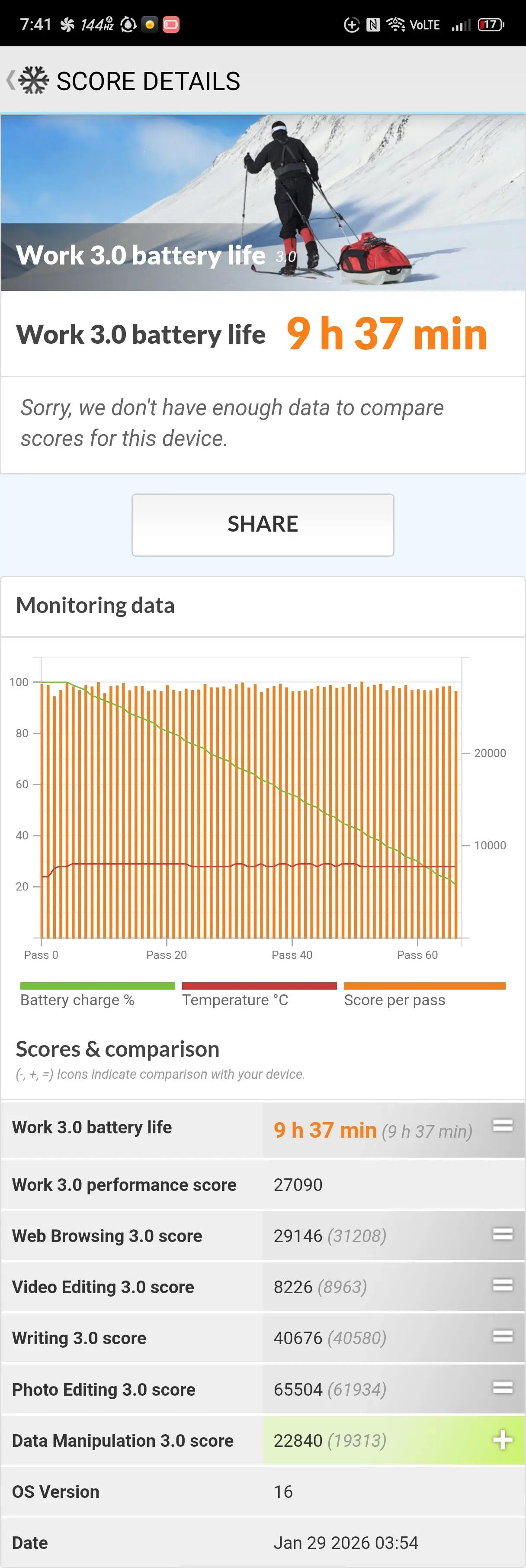
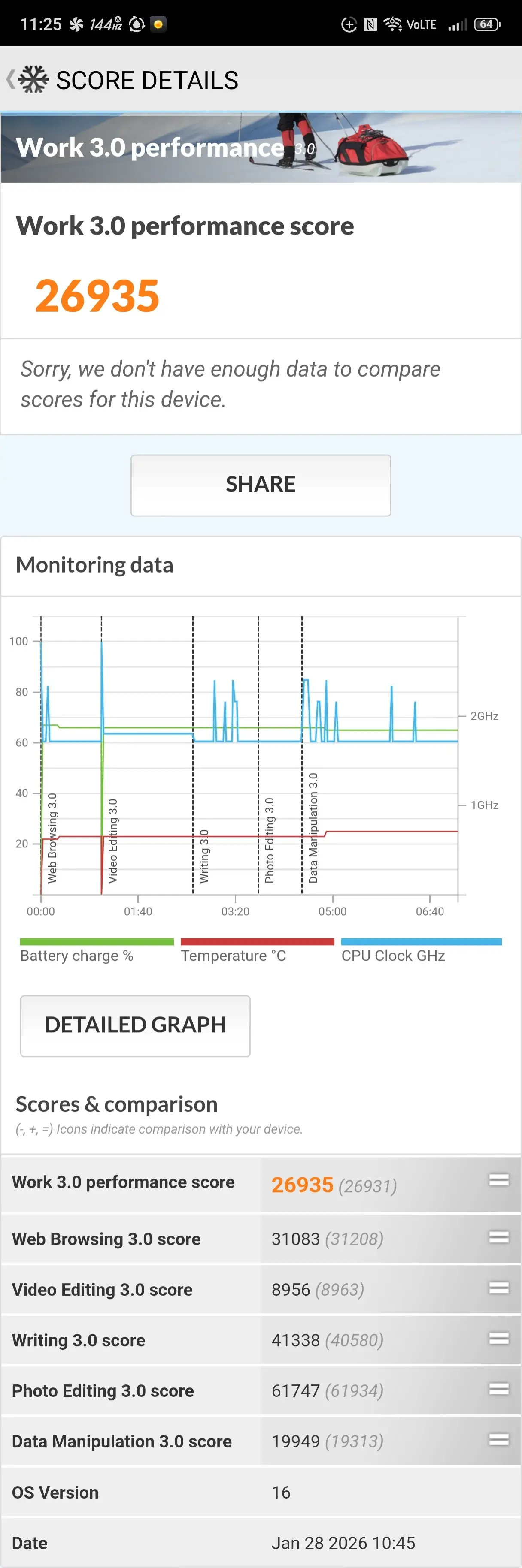
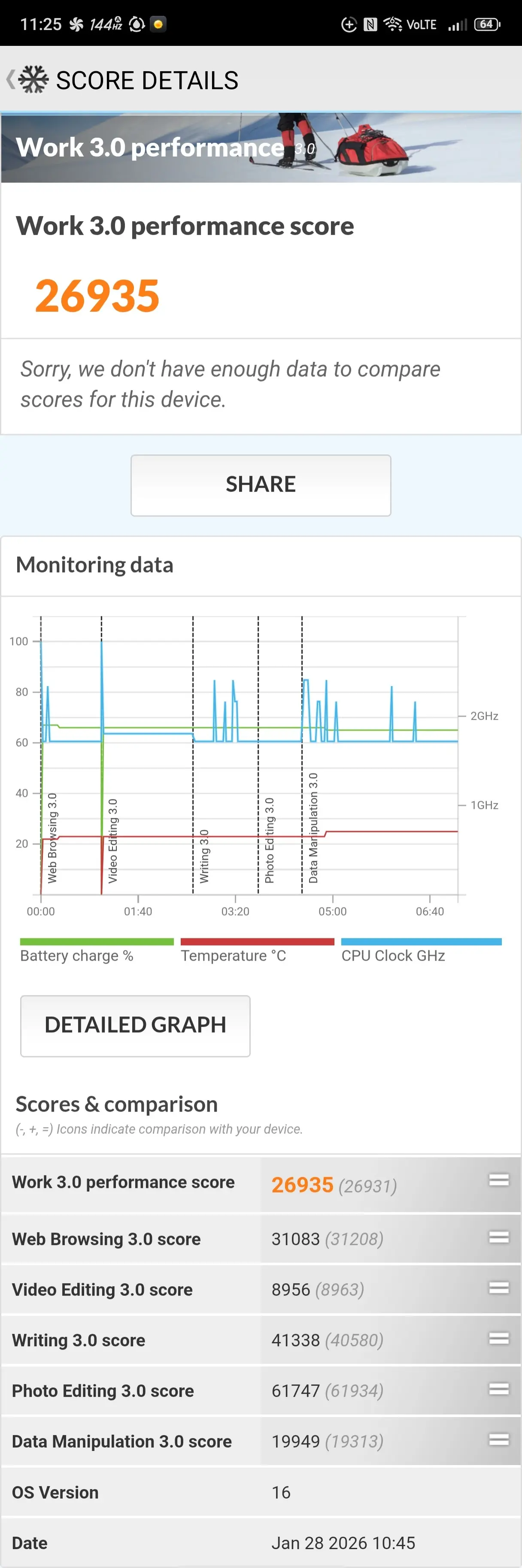
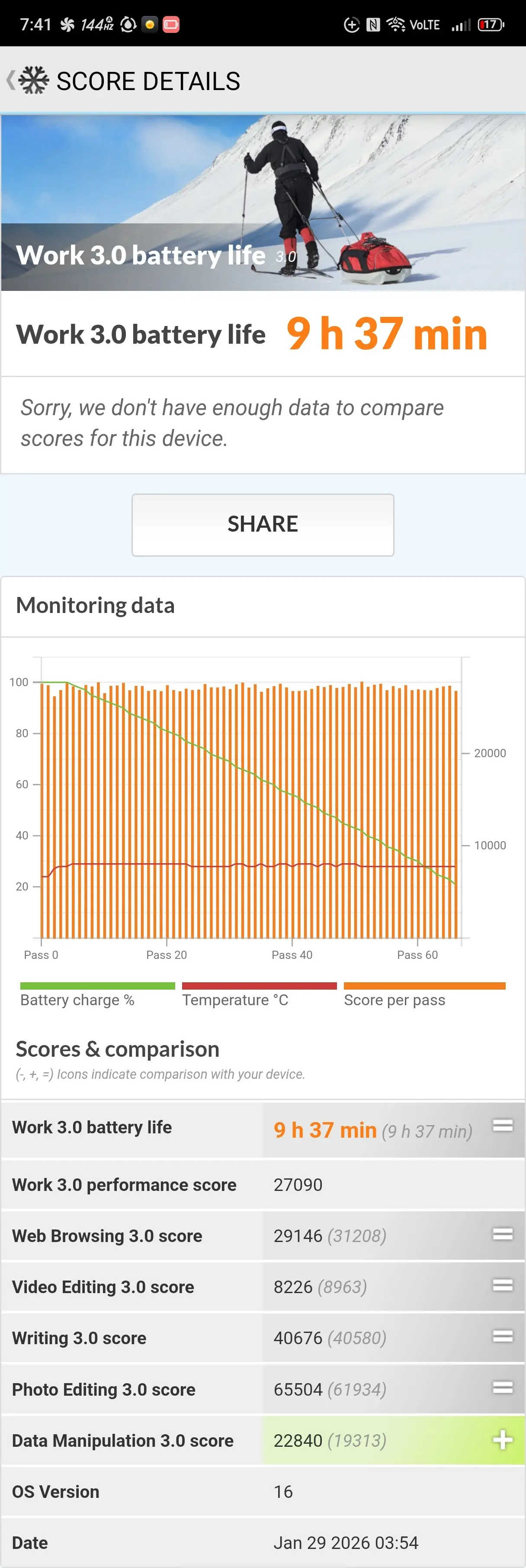
As can be seen above, the entire Battery Life test took over nine and a half hours, generating an average performance score of 27,090 after 67 passes. However, when running the Work 3.0 Performance test after recharging the battery back to 100% and letting the phone cool down, that score went down to 26,935. Please do note that I do not have a Luminance meter, so I was not able to calibrate the screen brightness first. So in this test, the performance score makes more sense.
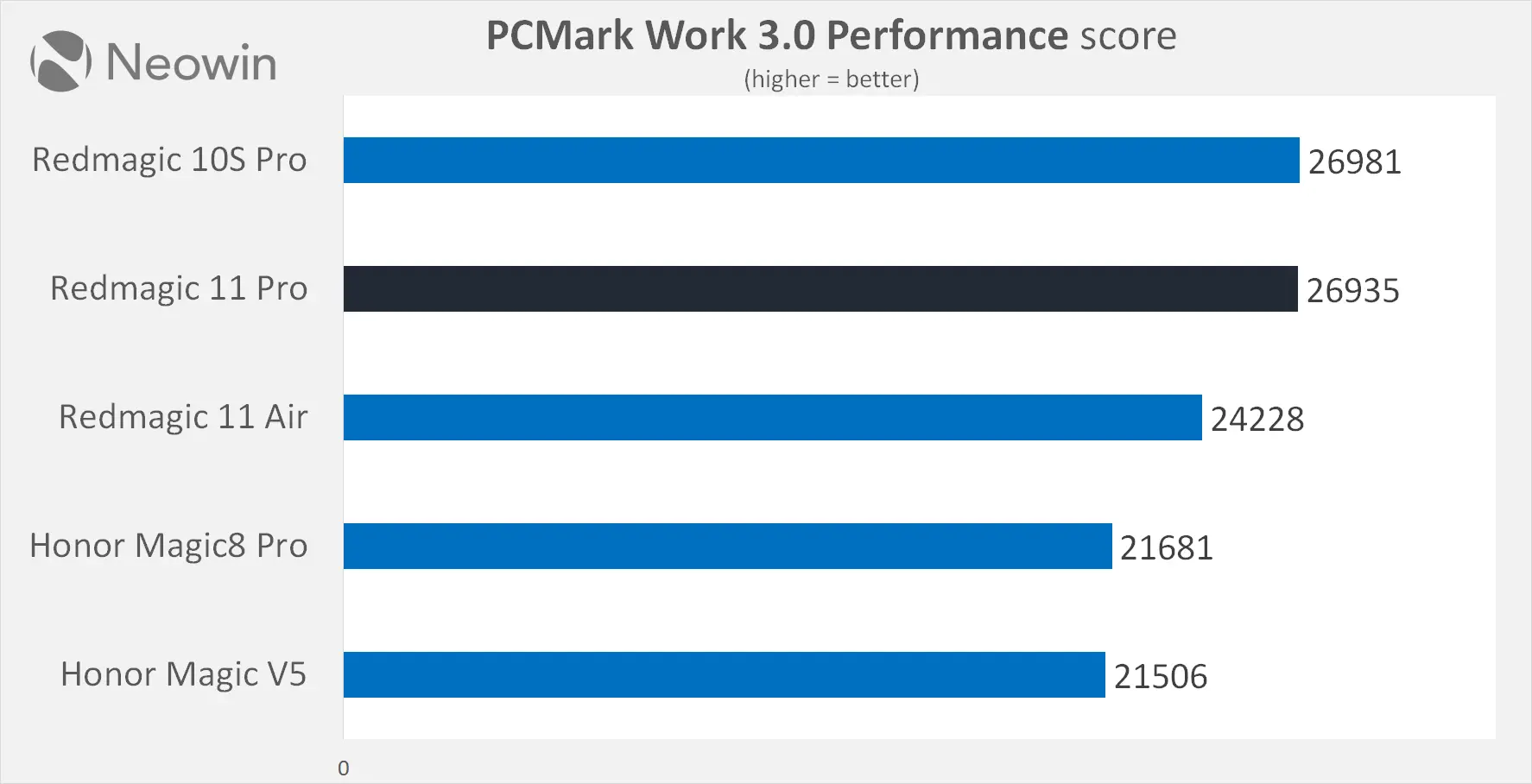
Since the scores are not directly comparable as it is a battery life-based test, we multiplied the obtained scores with how long the phones' batteries lasted in order to obtain an efficiency metric that will allow us to compare each of the phones' efficiencies.
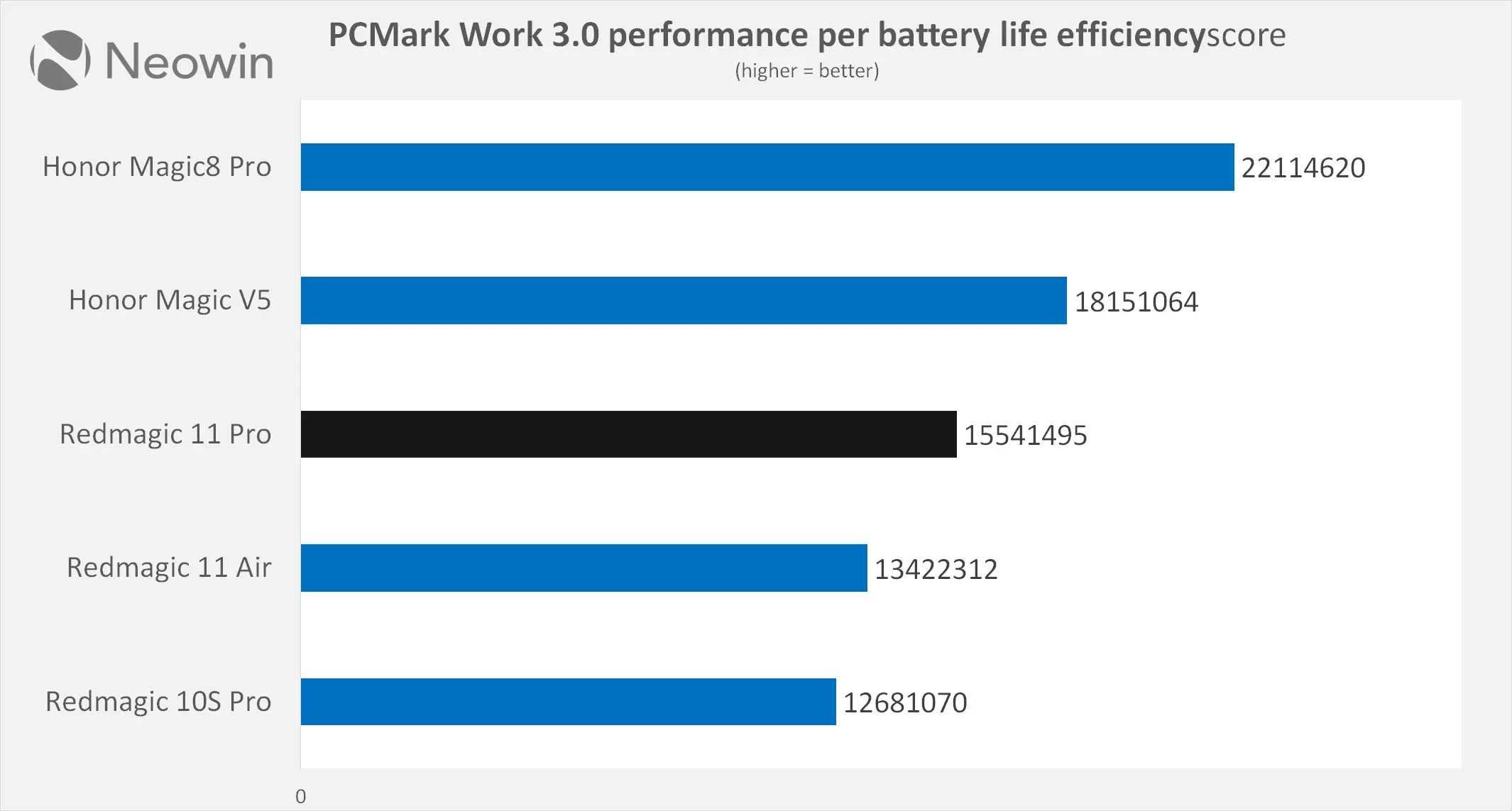
As you can see above, the REDMAGIC 11 Pro, Air and 10S Pro lagged behind the Honor Magic8 Pro and the Magic V5 in this efficiency test of ours. Since these numbers above are multiplicative, the actual performance difference should be the square root of the differential.
For example, the Honor Magic8 Pro is ~64.76% better than the REDMAGIC 11 Air. That means the efficiency difference is approximately 28.36% better on the former. Likewise, the REDMAGIC 11 Pro we are testing today is roughly ~10.7% more efficient than the 10S Pro.
Finally, using this data we have also evaluated a value score which is representative of each of these products. Here's how we obtained these scores by dividing the efficiency scores we got above by the square of the price of each corresponding device, as the efficiency score was multiplicative:

Value-wise, the REDMAGIC 11 Air came out far and away as the best device. The 11 Pro and 10S Pro were quite close to one another with each obtaining around 27 points. All three REDMAGIC devices handily beat the Honor phones. The Magic V5 was by far the worst value in our chart.
Thermals
We should also talk a bit about that cool liquid cooling function of the 11 Pro, and how warm this phone can get!
| Bottom (USB port) | Left side vent | Rear (above CPU) |
|---|---|---|
|
|
|
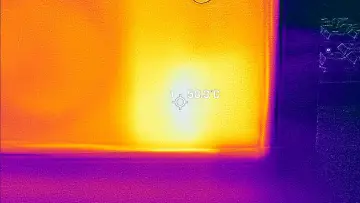 |
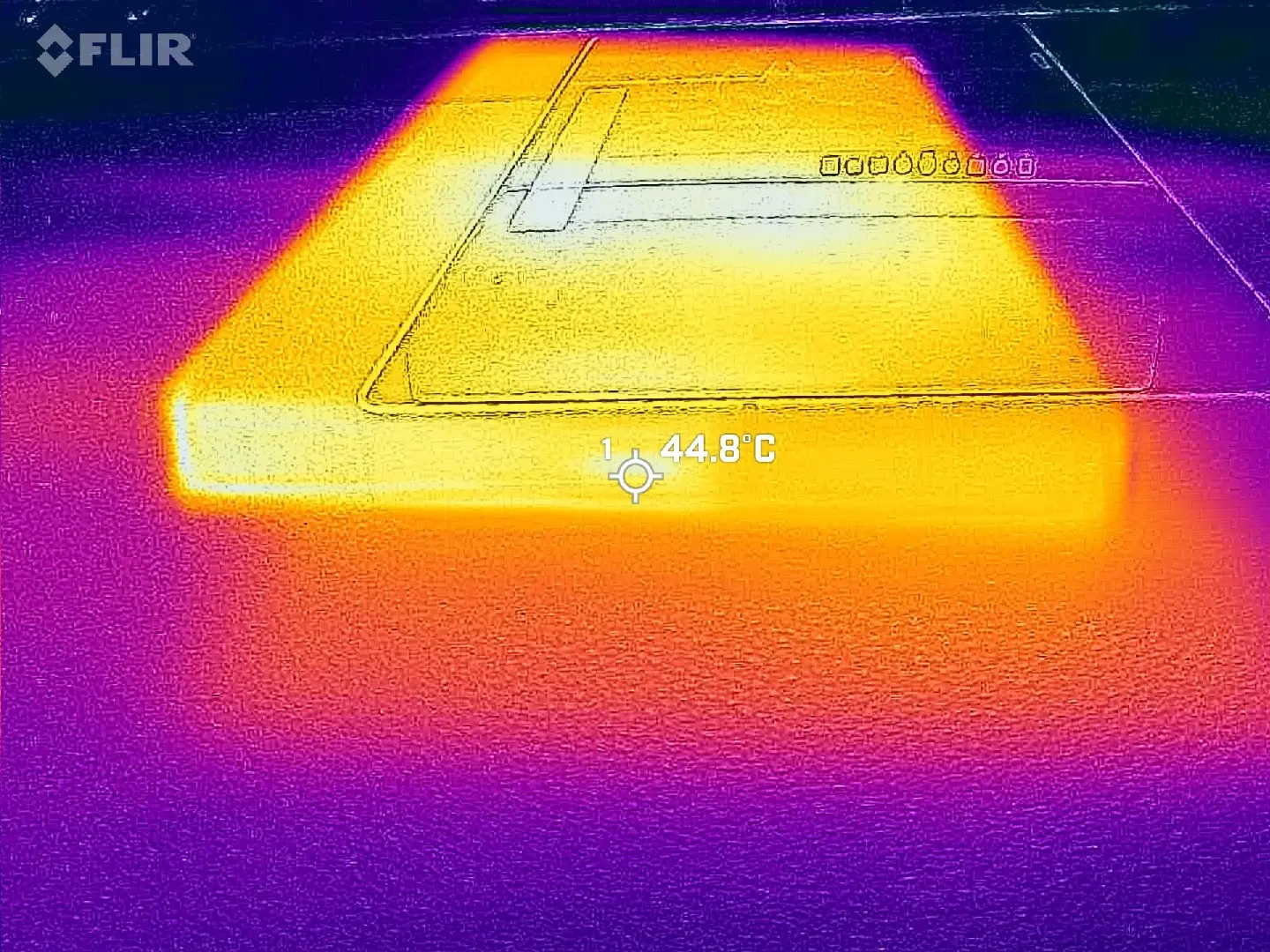
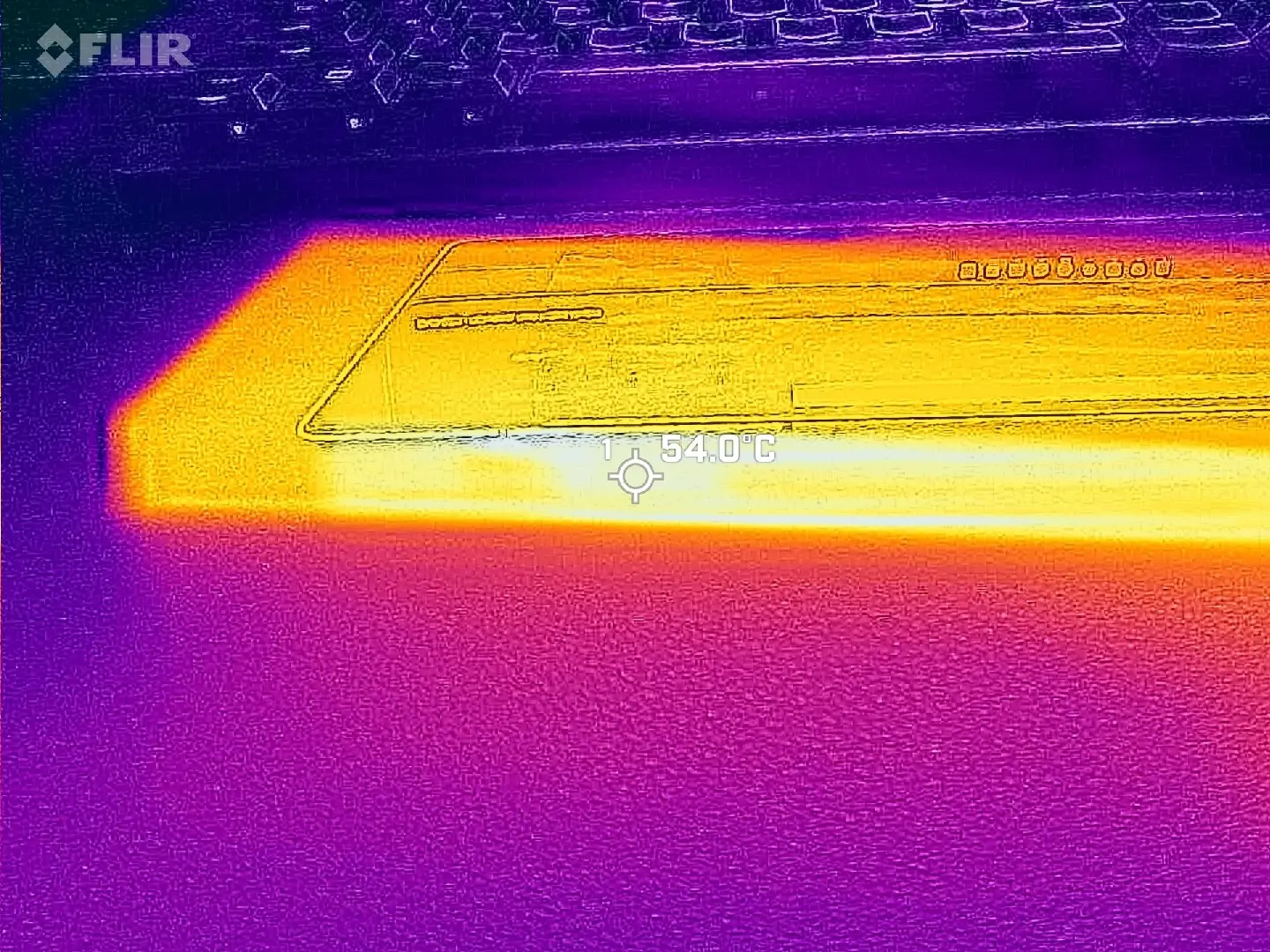
Admittedly, I was running the Wildlife Extreme Stress Test, but it's a gaming phone and we have to test some extreme gameplay on it and see how warm it can get, and the short end of it is that it does get hot! The bottom bezel of the phone's USB port registered 44C, with the left vent (closest to the CPU) blowing out 54C of heat, I also managed to capture a peak of 58.3C over the CPU on the rear of the 11 Pro.
| Right side vent | Screen (hotspot) | Rear (above CPU) |
|---|---|---|
|
|
|
|
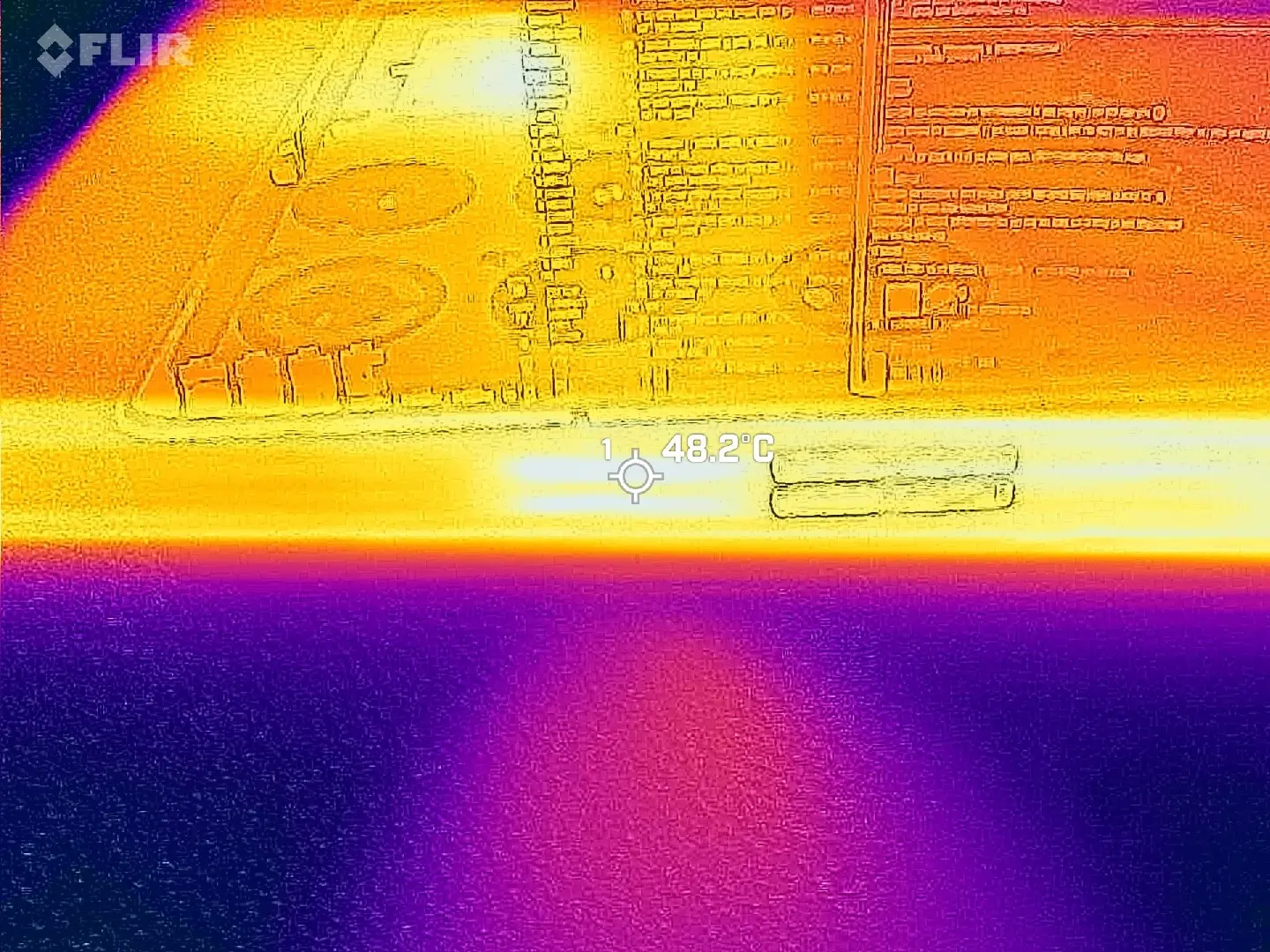
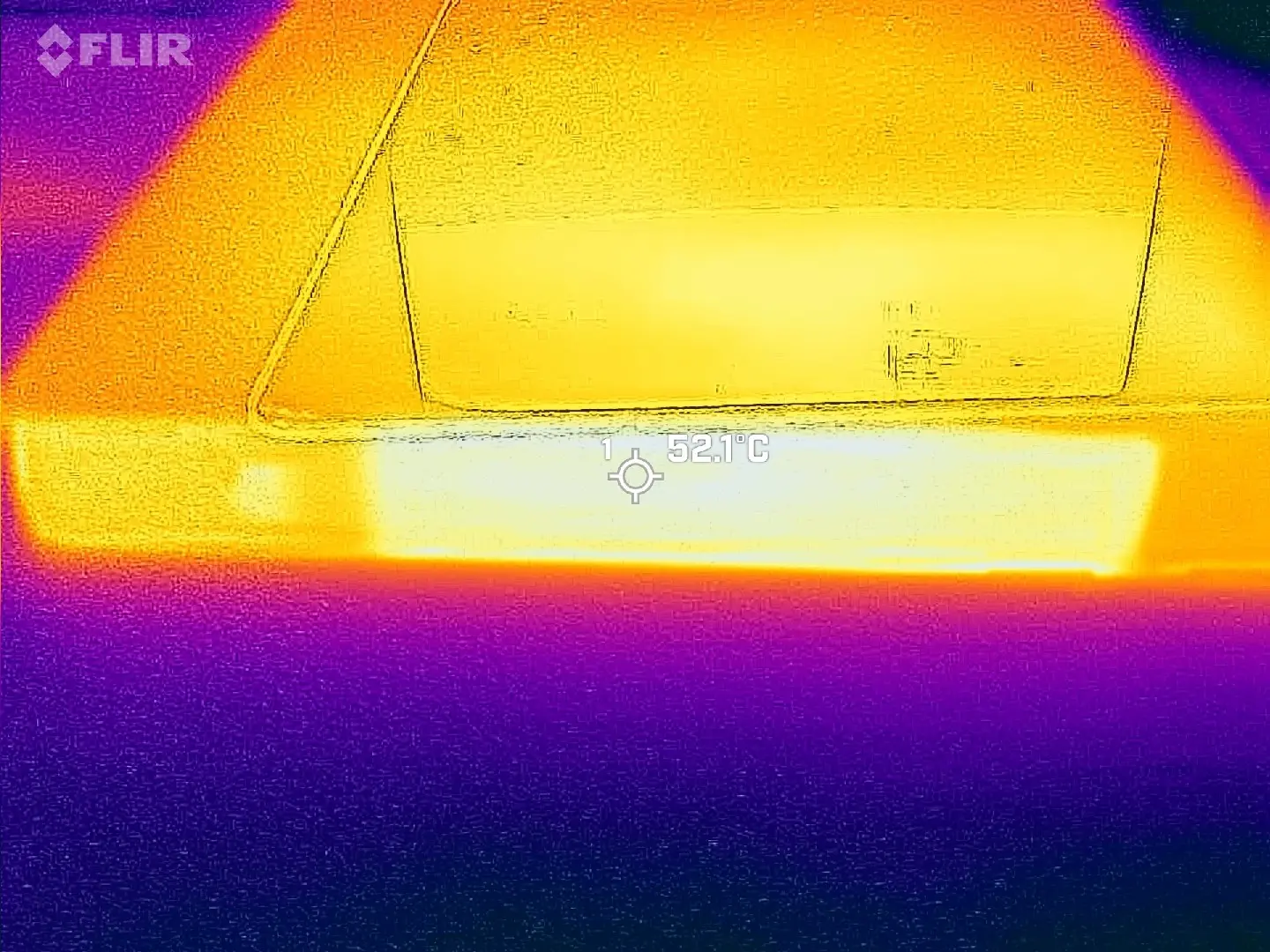
The right side vent, which is furthest from the CPU registered 48.2C, while on the screen side I captured a 53.8C hotspot, finally on the top bezel, it was a pretty warm 52.1C.
If you remember from my unboxing, a case was not included in the box (although it will be for buyers) my recommendation here for those that plan on doing some heavy gaming sessions is to ensure you have a case on the 11 Pro, otherwise it will simply get too hot to hold comfortably.
Battery
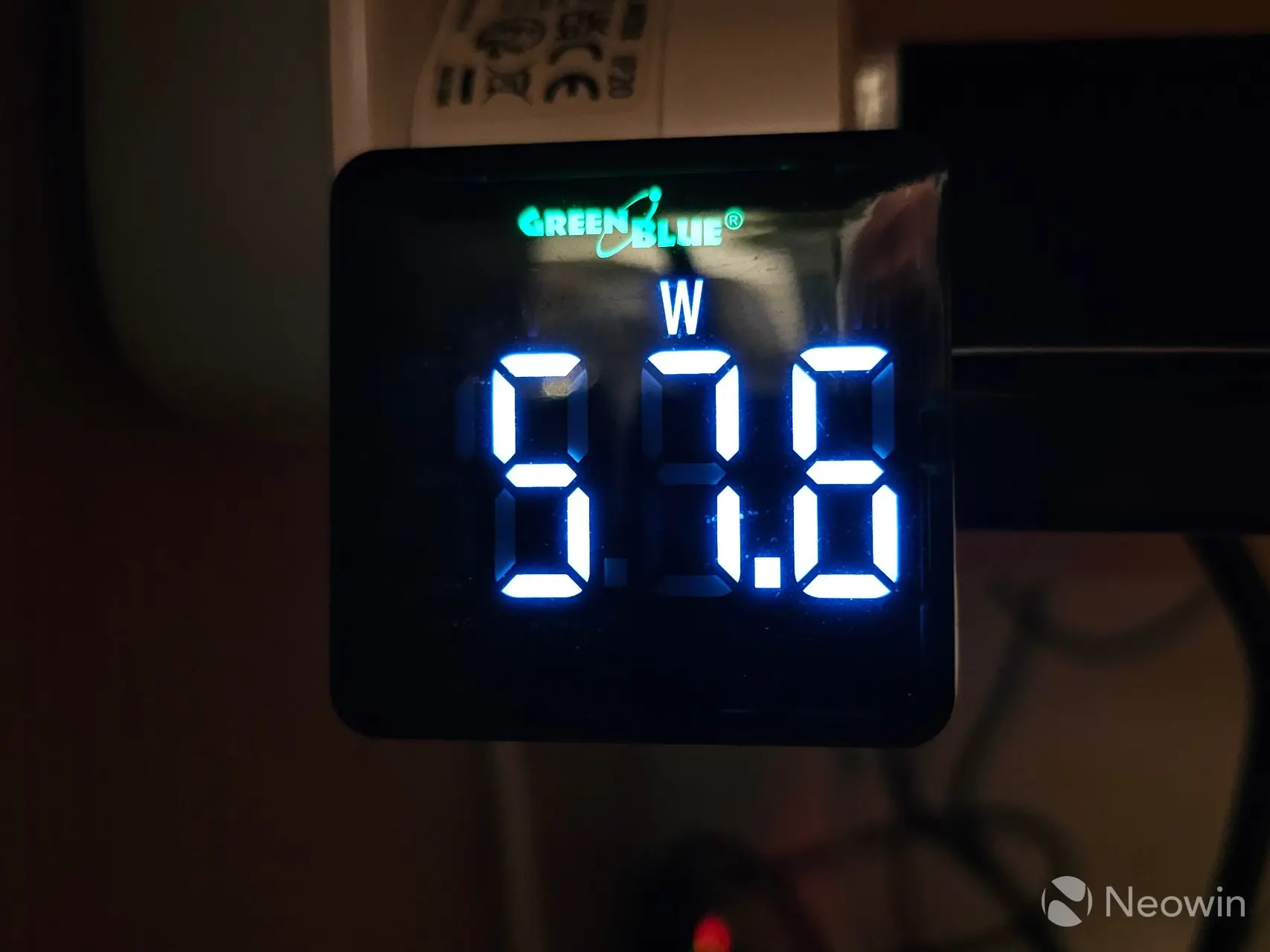
I never managed to see it charging at 80W even when it was drained down to 24% after the 3DMark Battery Life test. I am wondering if 80W charging is reserved for a completely depleted battery to get it up to 20% within a short time, either way this is not mentioned in the reviewers guide that I have. In my observations, it stuck around, and just below 60W using the supplied cable and wall charger.
It took 50 minutes to charge from 24% to 100%, which makes the below claim of 68 minutes total from 0% to 100% believable (wired, and wireless charging offer the same 80W max speed).
REDMAGIC claims the following for the battery performance:
- Daily Usage: up to 34.1 hours
- Standby: up to 267 hours
- Wireless Charging: 68 mins to full
- YouTube Livestream: max brightness, max volume, 1080p, 12.5 hrs
- Genshin Impact Gameplay: up to 7.4 hours at full frame rate
At 7,500mAh, it's clear that this will perform better than the current 5,000mAh battery offered in the top Galaxy flagships; and there's even a rumor that the S26 series will get the same 5,000mAh capacity, with Samsung reportedely being too anxious to change what works, following the S7 Note series battery swelling and explosions from ten years ago.
Reverse charging
Aside from the large battery capacity you will get in the 11 Pro, it also supports 2-way reverse charging, this means you can juice another phone over the USB cable, or pop your earbuds on the rear of the phone and charge them wirelessly
Conclusion
Overall, this is an improvement over the 10S Pro, not only does it include the latest Snapdragon 8 Elite Gen 5 chipset, but it is placed at a very attractive price compared to other flagships with the same CPU.
The Good
Let's first talk about the good things. For one, just like in the 11 Air, I absolutely love the under-display camera. I was never a fan of camera cutouts, but all the flagships moved to it in an attempt to place larger screens and kill off any sort of bezel. I also love the price, the top variant still manages to stay a dollar under $1,000 and it remains cheaper than comparable competition. Another excellent change from the 10S Pro is the addition of wireless charging.
The Bad
Like those before it, the 11 Pro does not support eSIM, which is kind of weird in 2026, and the cameras are just "passable" there's not much good I can say about them, they are good enough to capture memories, but forget about using the zoom feature because it's just poor. This is where the comparison to other flagships breaks down a bit, because the likes of Pixels, Galaxy's and Honor phones are including up to 200MP, even OnePlus makes up for its cheaper price point by having a triple 50MP camera array.
But if you don't care much about trying to emulate professional photography on a smartphone, then it's not a deal-breaker. The cameras are good enough to capture memories during the day and at night.
Would I recommend?
Well, it is a great-looking phone with an awesome display, and thanks to the new Snapdragon 8 Elite Gen 5, it still remains quicker than most others with the same chipset, more than double so compared to my S23 Ultra, which is now showing its age at almost three years old.
Something else we cannot dismiss is the pricing, too. Remember that the top offering 11 Pro with 24GB+1TB is $661 cheaper than the nearest S25 Ultra equivalent (12GB+1TB), and to top it off, the REDMAGIC 11 Pro has 12GB more memory too.
If you are looking for flagship performance at a nice price point, and you do game on your smartphone, you can't go wrong here. You'll just need to ensure you have a physical SIM.
Where to buy
The REDMAGIC 11 Pro is available now, starting at $749, with our 16+512GB variant costing $848.
As an Amazon Associate, we earn from qualifying purchases.







7 Comments
Load the comments and join the conversation!
Read the comments, ask the editors questions, show respect and join the conversation.