





NASA suggests this asteroid may not wipe out humanity, but its potential impact is still not fully known.
Space study RSS

One of Mars' greatest questions was answered, all thanks to Einstein's works that were published over 100 years ago.
One of the most unusual and mysterious galaxies in our Universe may hold vital clues that help scientists answer several long-standing cosmic questions.
A 13-billion-year-old secret about our Universe and and the time of its origin was uncovered, revealing evidence that could fundamentally reshape some existing cosmological theories.
Scientists now have a clearer understanding of when and how the Universe could ultimately reach its final, inevitable end.
An actual cosmic “Eye of Sauron” had been staring directly toward Earth the entire time, watching us from afar.
Scientists may have uncovered a remarkable cosmic mystery, revealing a fascinating glimpse into the precise process by which our Sun could eventually die.
Scientists astonished after astronomers finally confirmed Einstein's 100-year-old mind-bending prediction about black holes twisting spacetime itself.
Scientists may have discovered how extraterrestrial civilizations could actually detect and find Earth.
NASA discovered a bizarre new planet unlike anything previously observed, astonishing scientists and defying existing theories about planetary formation completely.
One of the most fundamental assumptions about our Universe may actually be incorrect, potentially reshaping humanity's entire understanding of cosmology.
One of the most enduring and mysterious puzzles surrounding our Sun may finally have been solved after decades of research.
Stretching an insane 1.4 billion light-years across space, this super-structure is officially the largest known thing ever discovered in our Universe.

These scientists think we may uncover the true origins of our Universe far sooner than expected. Here's why.
For the first time, measurement reveals a black hole's recoil “kick,” observed through gravitational waves traveling across space and time.
One of the most seemingly undeniable and obvious things of our Universe could ultimately prove to be an illusion, with no true existence whatsoever.
 Science
Massive dying stars are hiding secrets of neutrinos, that scientists are starting to unravel
Dying massive stars may act as natural neutrino colliders, revealing hidden interactions that could reshape their collapse and final cosmic fate
 Science
Fastest Intel & AMD supercomputers helped unravel what really happens at a Black Hole's edge
Intel and AMD-powered super-fast supercomputers have helped answer an elusive question regarding Black Holes.
NASA recently learned some interesting, and slightly unexpected things about a bizarre and rare black hole phenomenon.
Science has realized that some of our closest cosmic neighbors are moving at a pace way faster than any theory had predicted.
A recent NASA study about black holes has got scientists quite puzzled as it is different from what was initially thought.
An ancient "fossil" has been found and it could really reshape and redefine our Solar system's history.
Thanks to a new study, scientists may have managed to figure out how our Universe could end one day.
The biggest black hole ever in our observable Universe has been discovered by scientists at the center of a massive galaxy.
If you have been feeling sometimes that the days are shorter from time to time, then you would be right, and scientists now know why.
"Ghost particles" in this universe are thought to be massless, but thanks to breakthrough research, scientists may finally be able to weigh in.
 Science
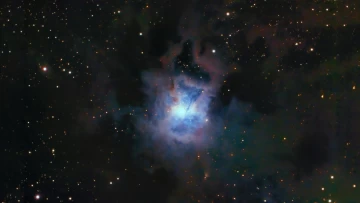
The Edge of the Universe or a "mirror world" could have led to a huge modern science mystery
Scientists propose two theories —one about the Edge of the Universe and the other about a "mirror world" —that could have led to the birth of one of the most mysterious space substances.
An ancient galaxy throws astronomers a curveball as it confuses them, but may also have the answer to a question billions of years old.
The Big Bang may not be the beginning—new research suggests our universe could have bounced from a collapsing black hole.

The James Webb Space Telescope has helped uncover one of the extreme planets out there that was built up of tiny pebbles.
Mars scientists rethink terraforming as new research outlines three steps to make Mars habitable for us humans.
Scientists uncover clues in Mars' "red" dust, hinting at a wetter past and challenging long-held theories about the planet's ancient climate.
Is the cosmic afterglow really a relic of the Big Bang, or did galaxies leave their mark, too? Study digs into it.

The really smart scientists over at CERN are helping build super-high resolution cameras to study antimatter/





2K vs 4K vs 8K vs 16K TV? You may no longer have to guess how much human eyes can truly see

Microsoft releases TypeScript 7.0, and it's 10x faster than the previous version

Microsoft shares new Windows 11 Update install strategy every admin and user must know
